15 Bedroom Trends for 2026 That Are Already Replacing Beige and Grey
If your bedroom still leans on beige or grey, you’re already behind the curve. In 2026, interior designers and creative directors are reaching for deep forest greens, moody indigo blues, sun-baked terracotta, and rich burgundy to craft spaces that feel genuinely considered rather than algorithmically safe.
Warm-toned oak and walnut furniture, sculptural ceramic pendant lighting, and handcrafted artisan pieces are replacing flat-pack minimalism and mass-produced neutrals. What’s driving these material and colour shifts, and how do you apply layered, saturated palettes without visually overcrowding a bedroom? The answers are ahead.
Jewel-Toned Bedroom Walls That Actually Feel Livable
Jewel-toned walls are replacing the safe neutrals that have dominated bedroom design for the past decade, and the shift feels more livable than most homeowners expect. Deep emerald greens, rich sapphire blues, and saturated amethyst purples create an enveloping, cocoon-like atmosphere that flat greiges and warm whites simply can’t achieve. The key to preventing these dramatic colors from overwhelming the space lies in maintaining a moody yet cohesive foundation through careful material selection.
These saturated hues perform best when anchored by warm-toned walnut or oak furniture with visible grain texture, layered linen bedding in undyed natural or oatmeal tones, and brass or unlacquered bronze hardware on nightstands and dressers. A flat or ultra-matte wall finish is essential, as it absorbs light rather than reflecting it, which softens the chromatic intensity and keeps the overall palette feeling grounded and intimate rather than overwhelming.
Deep Green Bedrooms Inspired by the Natural World
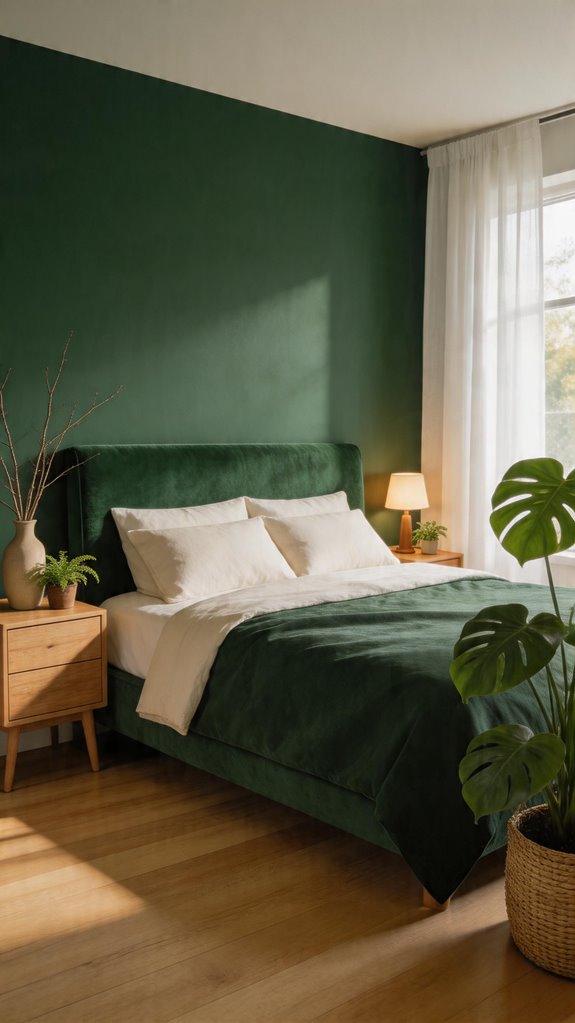
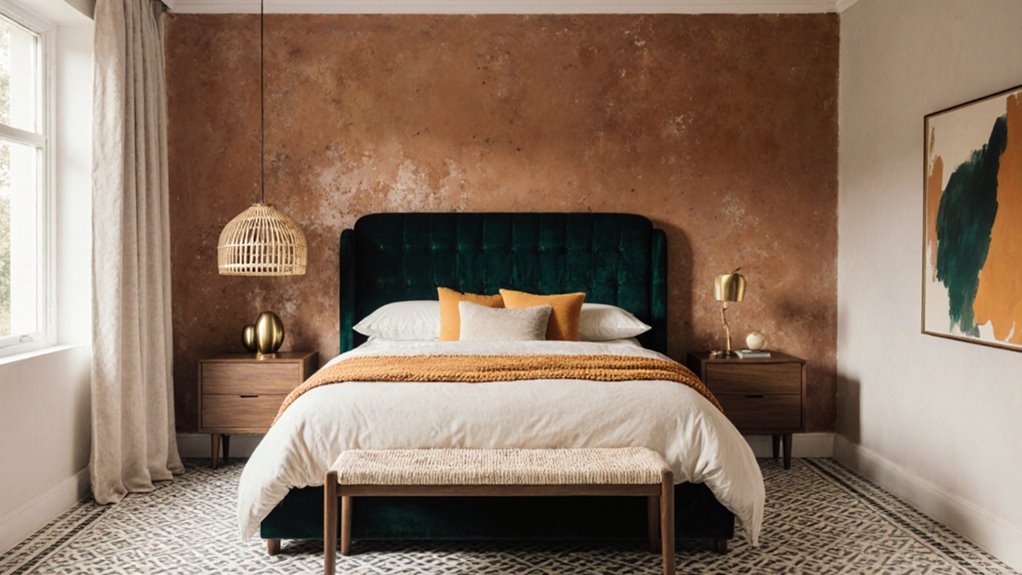
Among jewel tones, deep green holds a particular category of its own, drawing its logic directly from the natural world rather than from color theory alone. Shades like forest green, moss, and hunter green carry an organic weight that cooler or more saturated tones simply can’t replicate — each one evoking dense canopies, lichen-covered stone, and shadowed woodland floors.
You’ll find these rich, matte-finished hues working well on all four walls, wrapping a bedroom in a cocooning sense of depth and enclosure. Pair them with natural linen in oatmeal or undyed ecru, warm walnut furniture with visible grain detail, and aged brass fixtures to ground the palette with tactile, earthy authenticity. For those needing to maintain work-sleep boundaries, deep green’s grounding presence makes it especially effective in bedroom office spaces where mental separation between rest and productivity becomes essential.
Terracotta and Clay Tones Warming Up 2026 Bedrooms
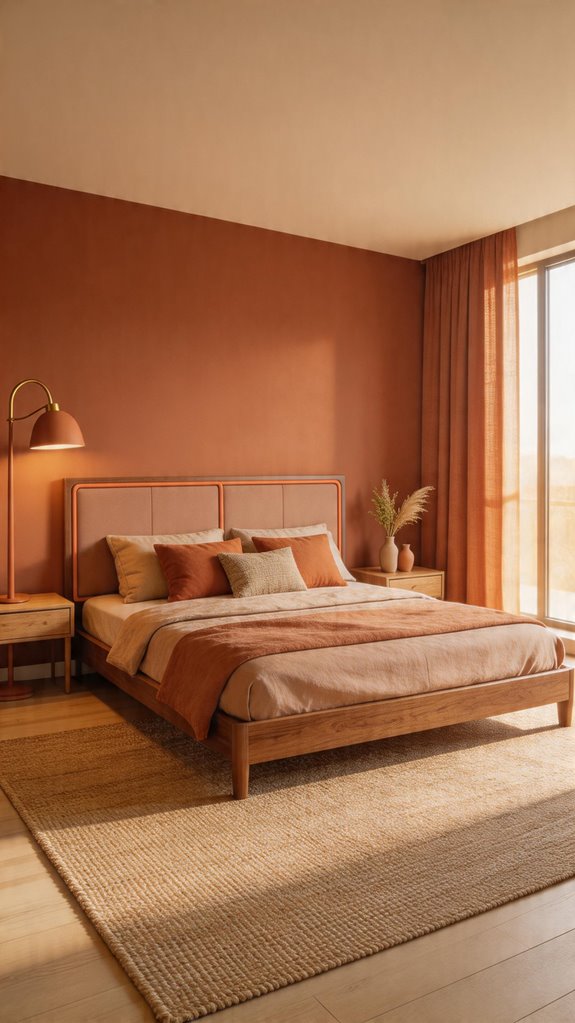
Terracotta and clay tones are moving fast through 2026 bedroom design, replacing the cooler greige and pale gray neutrals that dominated interiors across the last decade with something warmer, more tactile, and more grounded in organic material references.
You’ll find these sun-baked, iron-oxide hues working best when applied to full accent walls or wrapped across all four surfaces, paired with stonewashed linen bedding in oatmeal and ecru, handwoven rattan bed frames, and raw white oak or reclaimed pine furniture with visible grain patterns.
They generate deep visual warmth and a sense of sheltered coziness without visually compressing smaller square footage, making them a high-performing choice for both spacious primary suites and tighter guest bedroom layouts.
Unlike elaborate bedroom aesthetic ideas ranked by difficulty, terracotta’s simplicity makes it an approachable choice for any skill level.
Moody Blues That Make Beige Feel Instantly Outdated
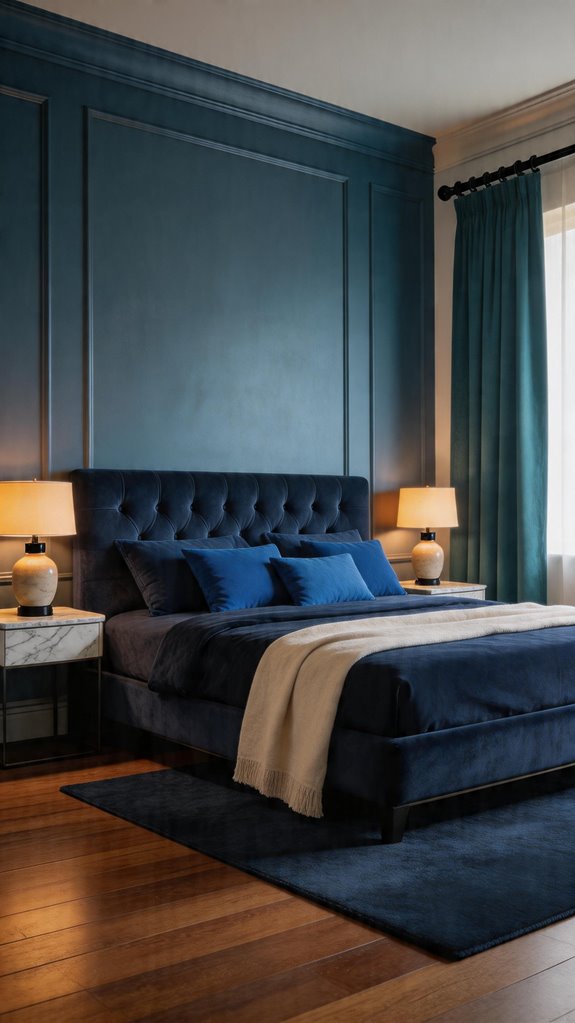
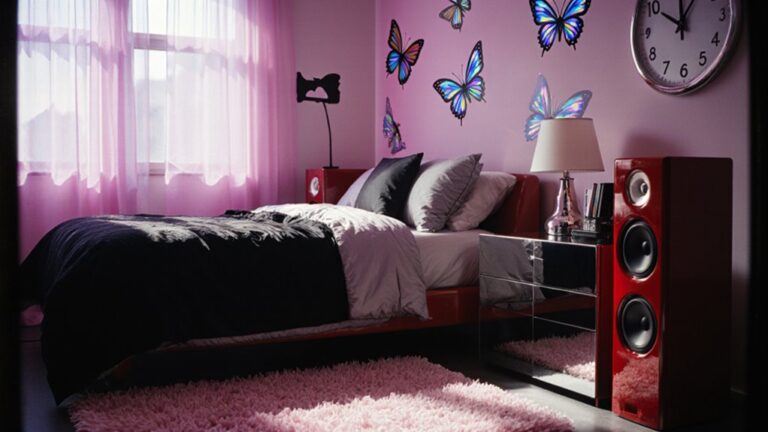
Moody blues have become one of the fastest-moving color stories in 2026 bedroom design, pushing warm neutrals like greige and beige out of the conversation almost entirely. Deep, saturated shades — midnight navy with its near-black undertones, cool-toned slate blue, and the rich violet-tinged dusk indigo — perform beautifully on dramatic accent walls or full four-wall immersive applications. Unlike the Y2K bedroom ideas that dominated with bubblegum pinks and tech-inspired silvers, today’s moody palette favors sophistication over nostalgia.
Pair these high-depth hues with aged brass or unlacquered brass hardware, heavyweight enzyme-washed linen bedding in oat or ivory, and oiled walnut furniture with visible grain and matte finishes. The contrast between the cool wall color and warm organic materials creates dimensional visual tension that grounds the space without sacrificing comfort or warmth.
Rich Burgundy and Wine Hues for a Genuinely Luxe Bedroom
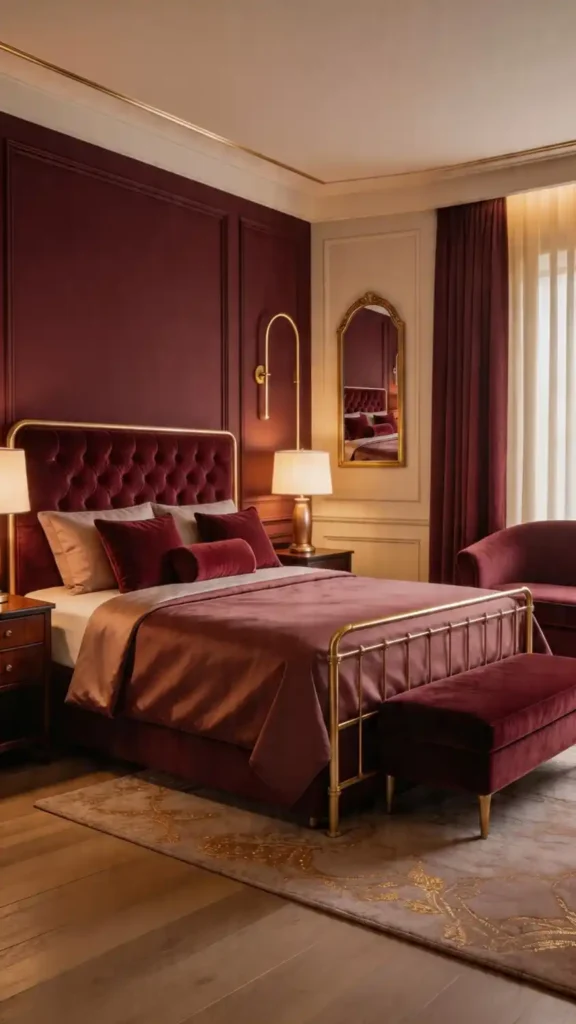
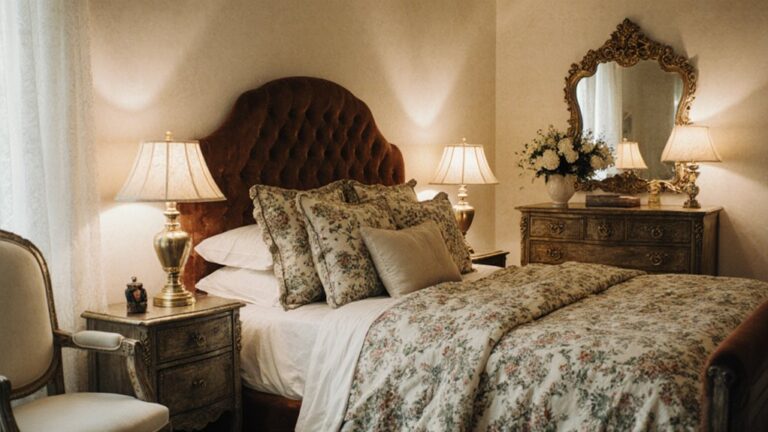
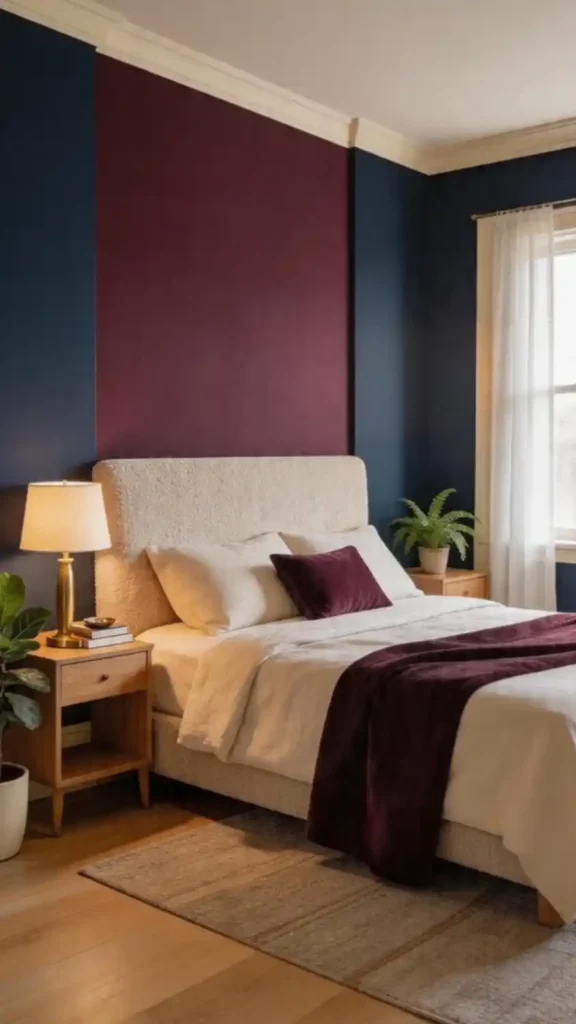
Burgundy is reclaiming serious ground in 2026 bedroom design, replacing grey and beige with a depth and warmth that neither neutral can match. Its deep crimson-wine tones bring saturated, jewel-like richness to spaces that have long been dominated by flat, muted palettes. A striking headboard in this dramatic hue can single-handedly transform the entire feel of your bedroom.
You’ll find it working best on tufted velvet upholstered headboards, floor-length velvet drapes with weighted hems, and matte-finish painted accent walls in deep cabernet or merlot shades. Pair it with aged brass hardware, warm-toned solid oak bed frames, and honey-stained wood nightstands to balance its inherent richness without overwhelming the proportions of the space.
Textured Bedroom Walls That Outperform Paint Alone

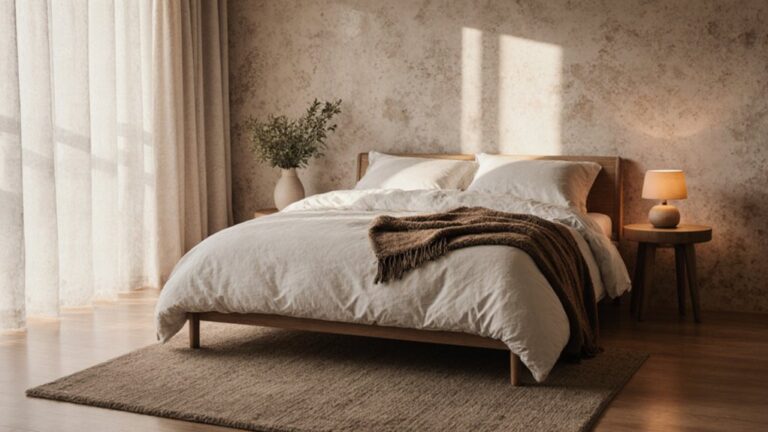
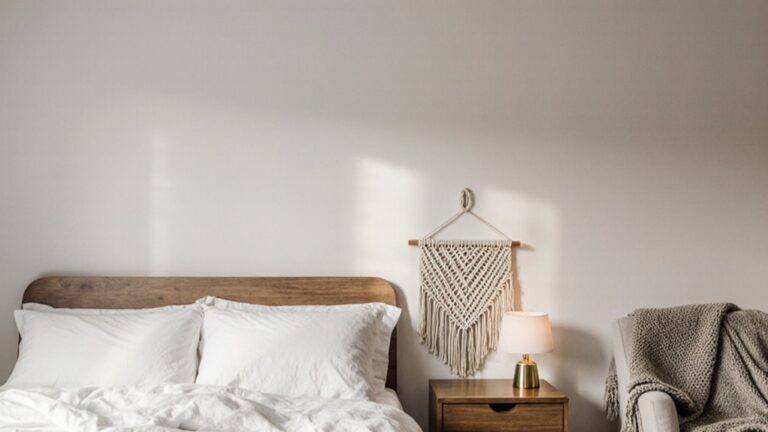
While color choices like burgundy set a room’s emotional tone, the surface texture of your walls shapes how that color lands and how the entire space feels. Limewash, with its calcium hydroxide-based composition and matte chalky finish, creates soft tonal variation that deepens pigment saturation. Italian plaster, applied in thin burnished layers, produces a dense, stone-like surface with subtle luminosity that shifts under natural and artificial lighting conditions. These restrained palette techniques demonstrate how neutral bedroom ideas can achieve remarkable personality and depth through material choice alone.
Grasscloth wallcoverings, woven from natural jute, sisal, or seagrass fibers and mounted on paper backing, introduce organic grain and tactile depth that flat latex or eggshell paint simply can’t replicate. These high-relief, light-scattering surfaces interact with both directional and ambient light sources throughout the day, making your chosen wall color appear richer, more saturated, and visually intentional across morning, afternoon, and evening hours.
Tactile Bedding and Layered Fabrics Worth the Upgrade
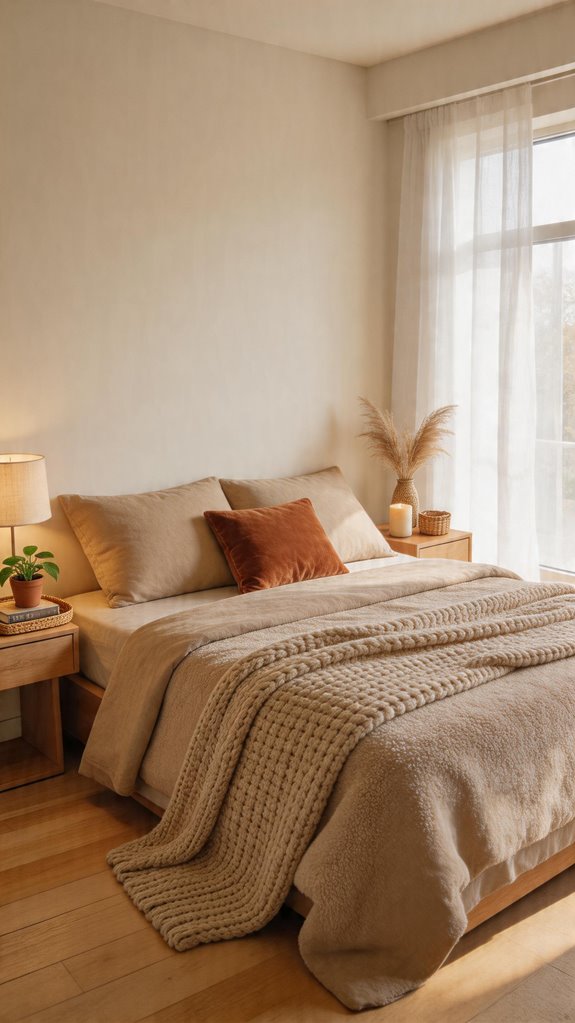
How your bedding feels beneath your hands matters just as much as how it looks from the doorway. Layer a stonewashed linen duvet — breathable, temperature-regulating, and softened through enzyme washing — over a waffle-knit cotton coverlet with its characteristic grid-relief texture and moderate loft.
Then drape a chunky boucle throw, looped and knotted in its weave structure, across the foot of the bed. You’re building deliberate tactile contrast through varied thread counts, weave densities, and fiber weights — not simply stacking warmth. This approach embodies cozy minimalist principles, creating a space that feels inviting rather than cold through intentional material choices. Swap out tired greige palettes for muted terracotta, dusty sage, or cool slate, tones that hold depth under both natural and ambient light without competing with layered textures.
Statement Ceilings That Compete With the Best Bedroom Walls
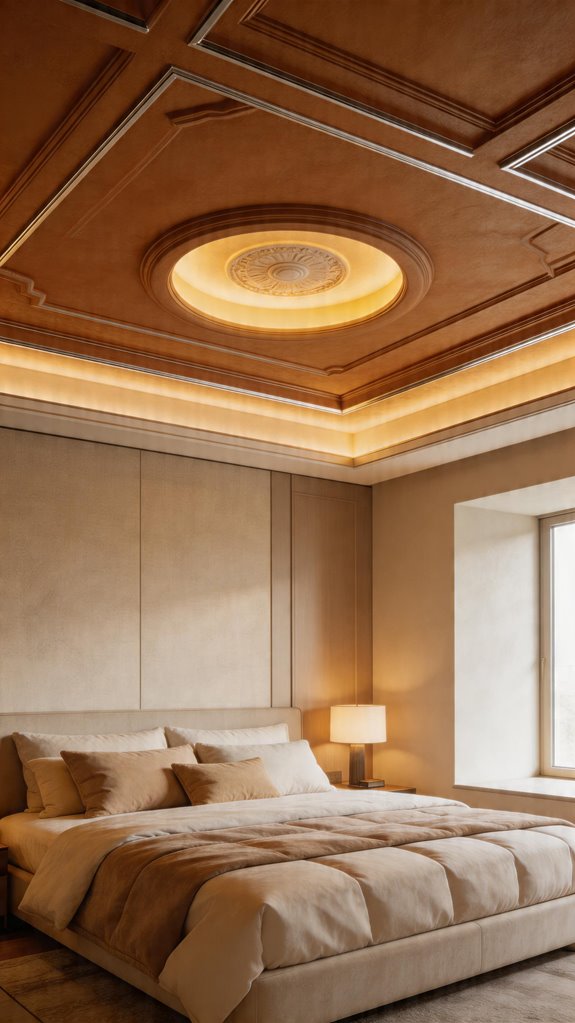
The ceiling is the one surface in your bedroom that most designers still treat as an afterthought — and that’s exactly where the opportunity lives. Techniques like Italian limewash paint, bold botanical or geometric wallpaper, and tongue-and-groove painted wood planks can transform an ignored fifth wall into the room’s most arresting architectural feature.
Deep saturated hues — navy blue, burnt terracotta, and old-growth forest green — are performing especially well in high-end residential interiors right now. A color-drenched ceiling anchors the entire room’s palette, creates a sense of intimate enclosure, and pulls visual weight upward without competing with your existing furniture, textiles, or flooring.
Unlike the maximalist 90s bedroom trends that once overwhelmed every surface, today’s ceiling treatments use strategic color and texture to create focal points without visual chaos.
Why Curved Furniture Is Replacing Sharp-Edged Bedroom Sets
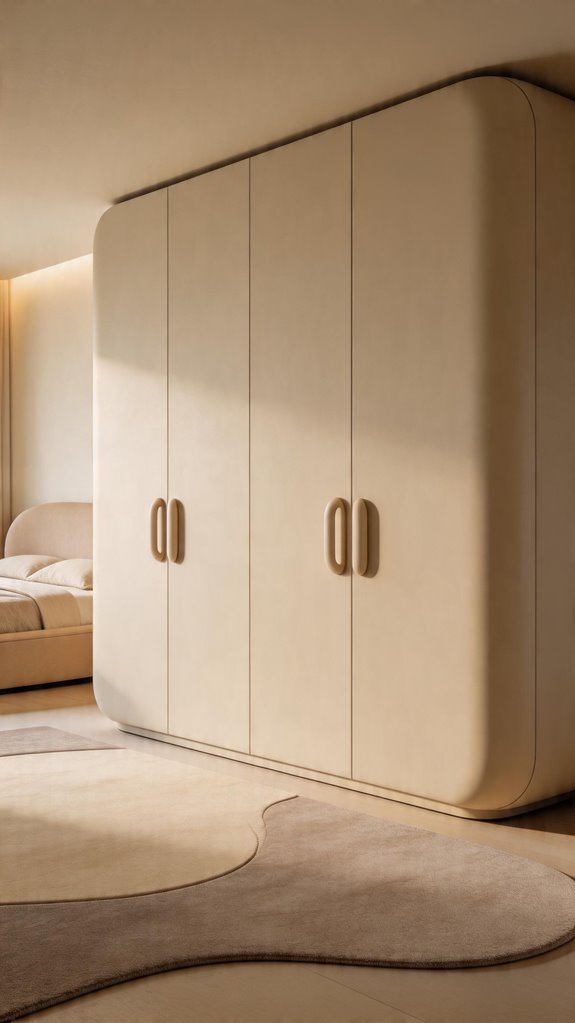
Softening your bedroom’s architecture is only part of the shift happening in high-end interiors right now. Curved furniture is replacing sharp-edged sets because rounded silhouettes — characterized by continuous arcs, fluid transitions, and absence of angular stress points — feel calmer and more intentional.
You’ll find performance boucle ottomans with sculptural barrel frames, arched headboards upholstered in textured linen or velvet, and oval nightstands in matte lacquer or solid walnut dominating 2026 showrooms. These organic forms reduce visual tension across wall-to-floor sightlines, making your space feel cohesive and architecturally resolved rather than rigid or segmented.
This embrace of fluid lines also connects elegantly to Japandi bedroom ideas, where Japanese minimalism and Scandinavian warmth converge to create clutter-free sanctuaries with similarly softened, intentional forms.
Natural Wood Tones That Ground Any 2026 Bedroom Palette
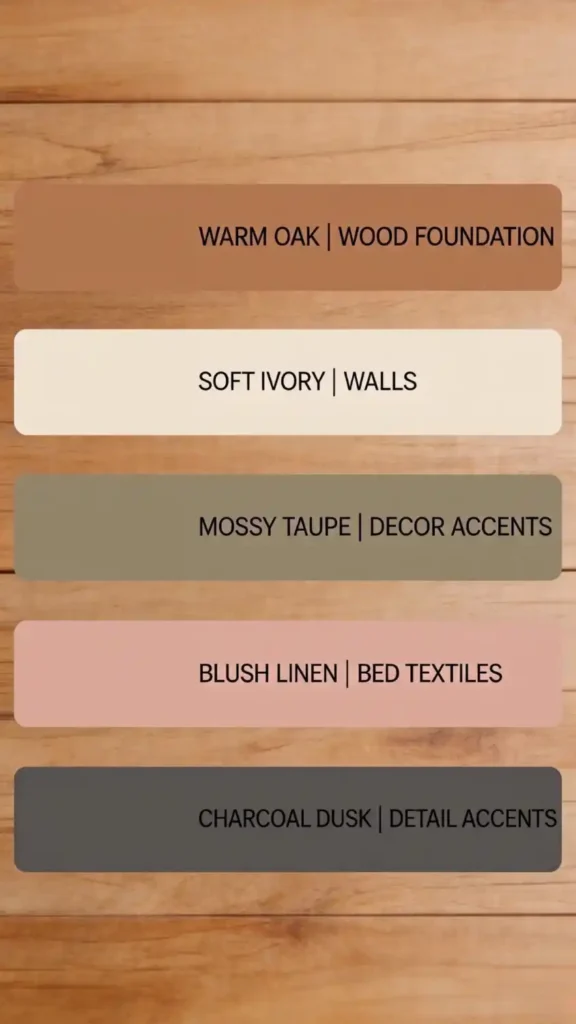
Natural wood tones earn their place in 2026 bedrooms by anchoring bold color choices without competing with them. Walnut’s deep, chocolate-brown grain, oak’s golden-amber warmth, and ash’s pale, silvery-beige finish each bring a distinct organic character to the space.
These materials appear across bed frames with visible joinery, low-profile nightstands with dovetail drawer construction, and wide-plank flooring with open-pore texture. Whether paired with sapphire, emerald, and amethyst jewel tones or terracotta, ochre, and sage earthy palettes, natural wood delivers both visual stability and tactile richness that synthetic finishes can’t replicate. For added dimension, consider bedroom panelling ideas that incorporate these same timber varieties to create a cohesive, luxurious architectural backdrop.
Low-Profile Beds Making a Serious Comeback This Year
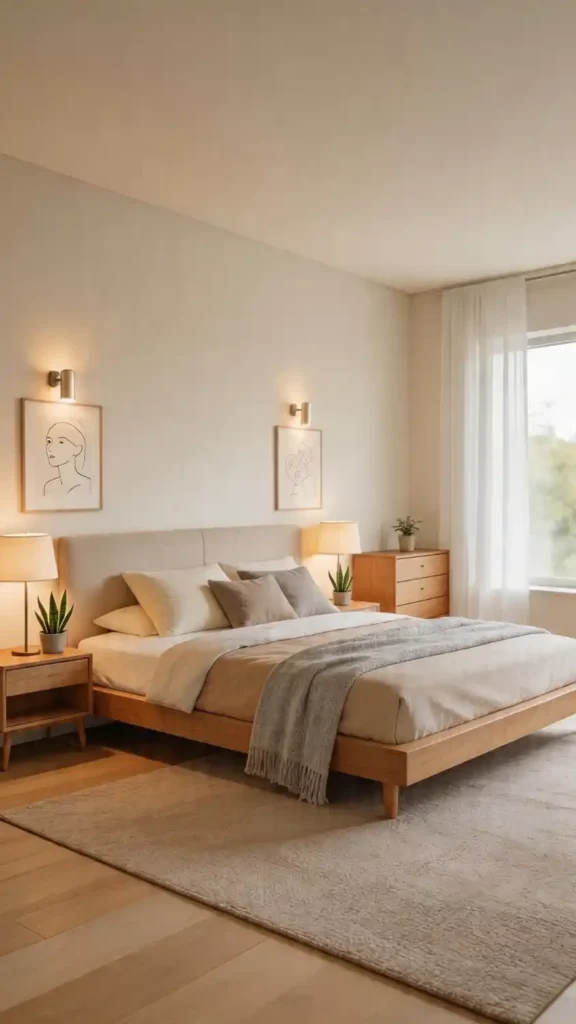
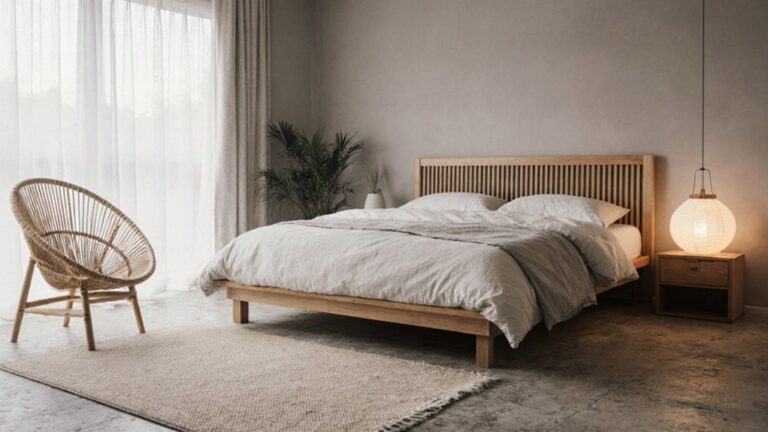
Low-profile beds are reclaiming bedroom floors in 2026, and their appeal goes well beyond simple aesthetics. These solid hardwood and metal frames sit 6–14 inches from the ground, creating a grounded, horizontal silhouette that visually stretches ceiling height and amplifies a sense of open, uncluttered space.
You’ll find them crafted in oiled walnut, white oak, and matte-lacquered MDF finishes, available in platform and slatted base configurations. They pair naturally with the warm, organic palettes, linen bedding, and raw natural wood tones already defining 2026’s bedroom interiors.
Maximalist Bedroom Styling That Looks Intentional, Not Chaotic
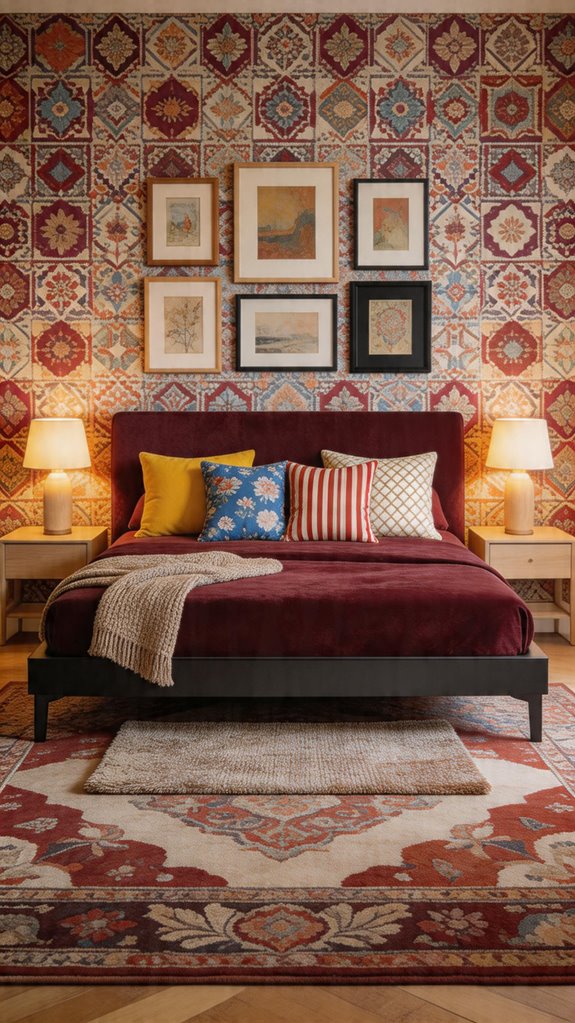
Maximalist bedrooms in 2026 aren’t about filling every corner — they’re about layering with purpose, where each piece earns its place through intentional curation and visual storytelling. You want rich textiles like velvet throw pillows in jewel tones, brass fixtures with aged patinas, and bold pattern mixing across Persian-inspired rugs, geometric duvet covers, and floral wallpaper — all anchored by a single dominant color that threads through the entire space.
Build deliberately outward from that dominant hue, letting warm-toned gallery walls, lacquered nightstands, and curated collections of ceramic vessels or vintage books create depth without visual noise. Placement is everything — a canopied bed draped in layered linen and brocade becomes the room’s gravitational center, with surrounding elements arranged to draw the eye in a natural, unhurried rhythm rather than competing for attention.
Vintage and Artisan Furniture Replacing Generic Bedroom Pieces

More and more homeowners are swapping out mass-produced bedroom furniture for vintage and artisan pieces that carry genuine character and craftsmanship. Hand-carved solid walnut bed frames with mortise-and-tenon joinery, reclaimed white oak dressers with dovetail drawer construction, and wheel-thrown stoneware lamps with organic ash glazes are replacing flat-pack MDF alternatives built to identical specifications.
These one-of-a-kind pieces introduce aged patina, deliberate tool marks, and irregular grain patterns that factory production simply can’t replicate. The result is a bedroom with a grounded, layered aesthetic built from tactile depth, tonal variation, and authentic material history — the kind of visual weight that mass manufacturing systematically removes in favor of uniformity.
Lighting Swaps That Instantly Change the Feel of Any Bedroom
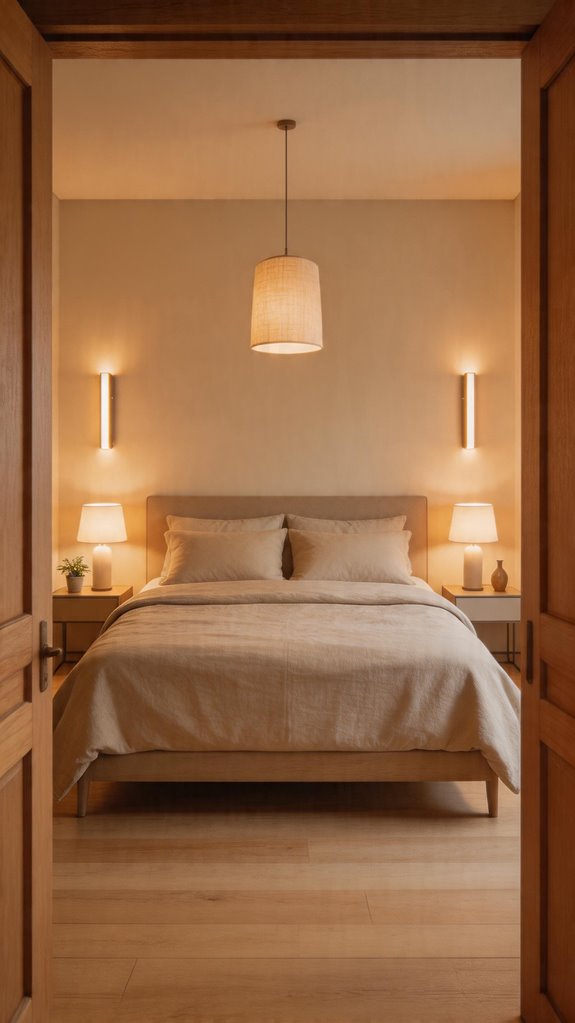
Lighting is one of the fastest, most impactful changes you can make to a bedroom without touching the walls or furniture. Warm-toned sconces—typically emitting 2700K to 3000K color temperature—and brushed brass or matte black pendant lights can replace harsh overhead fluorescents to fundamentally shift the room’s ambient character.
Dimmer switches, particularly those with trailing-edge or TRIAC dimming technology, give you layered control across multiple lighting zones. This lets you transition between high-lumen task lighting for reading or grooming and a low-wattage, soft ambient glow suited to winding down in the evening.
How to Combine These 2026 Bedroom Trends Without Overdoing It
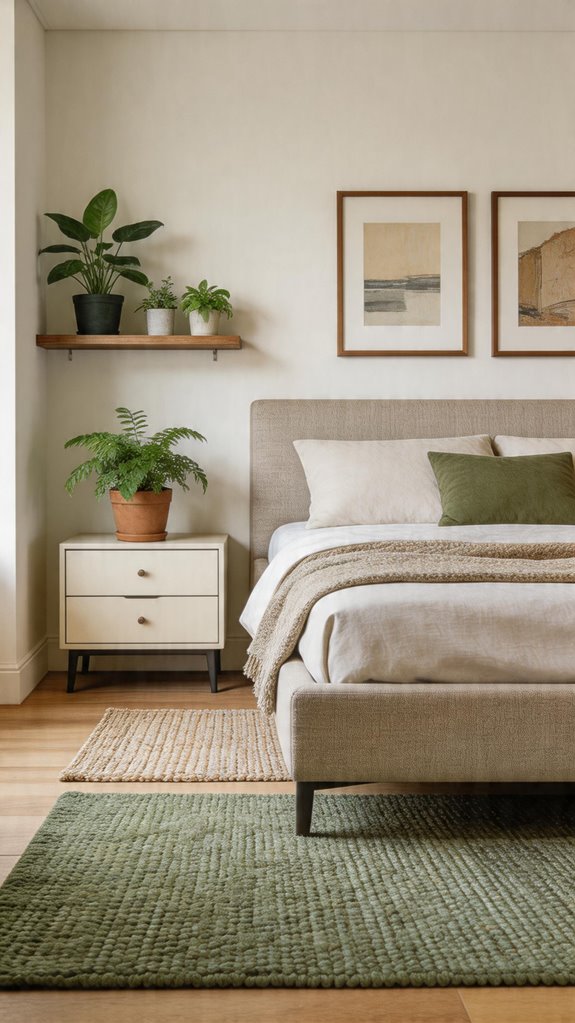
Once you’ve sorted your lighting layers, the real challenge becomes pulling all of 2026’s bedroom trends together without letting the room feel cluttered or confused. The key is hierarchy: choose one dominant color to anchor the space, then layer in no more than two accent trends to support it without competing.
Pair warm terracotta walls with natural linen bedding in undyed, textured weaves, but stop there. “Restraint is what separates a curated room from a chaotic one,” says interior designer Sheila Bridges.
Final thoughts
You don’t need to overhaul your entire bedroom to feel the shift away from beige and grey. Pick one trend that resonates — whether it’s a deep forest-green limewash wall, a warm brushed-brass wall sconce, or a curved solid-walnut nightstand with dovetail joinery — and build from there.
These 2026 design directions aren’t about chasing novelty or cycling through micro-trends. They’re about creating a bedroom that feels grounded in tactile materiality, layered with intentional contrast, and genuinely considered from the ceiling plaster to the hand-stitched linen duvet. Start with one high-impact element, stay deliberate in how you layer texture and tone, and the rest of the room’s character will follow naturally.