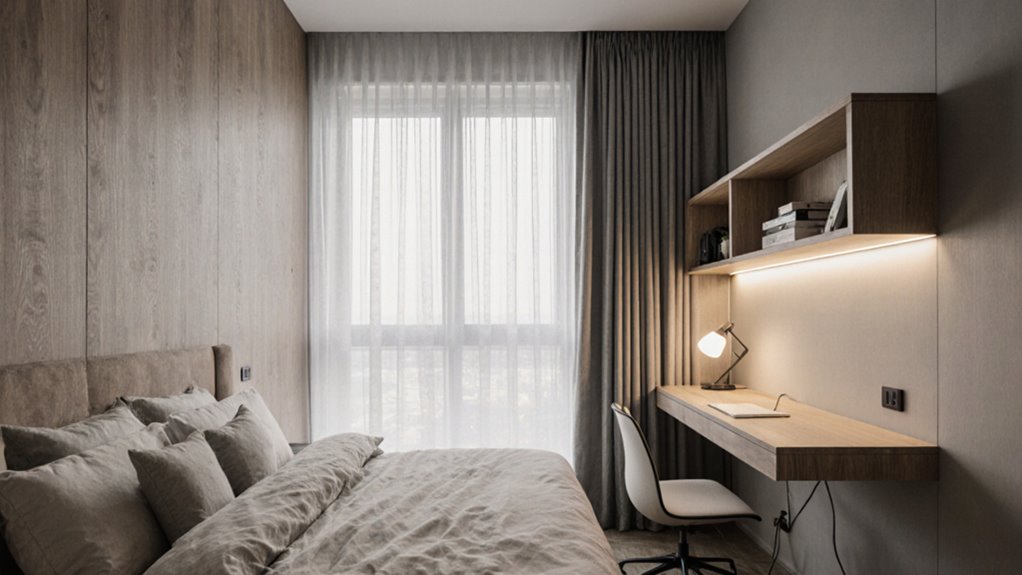
19 Bedroom Office Combo Ideas That Do Not Destroy Your Sleep
You’re juggling competing needs when you blend work and sleep in one room. Your desk demands focus and productivity, while your bed requires calm and restoration. These two purposes naturally conflict, yet strategic design choices—like angular furniture placement, acoustic dividers, and layered lighting systems—can help you separate them without sacrificing either.
Intentional zoning through room dividers, bookcase barriers, curtain partitions, and strategic rug placement allows you to maintain professional boundaries while protecting your sleep quality. The key lies in creating distinct spatial zones that your brain recognizes as functionally different, triggering separate cognitive states tied to productivity and restoration respectively.
Establish a Hard Stop Time to Leave Your Desk

Protecting your sleep starts with setting a firm, non-negotiable stop time — a specific hour when you physically shut down your computer, close your laptop lid, and step away from your workspace. This deliberate, time-bound boundary acts as a psychological trigger, signaling your nervous system to begin its natural wind-down process.
Consistency is the engine that makes this habit work. By anchoring your evenings to a predictable schedule, your brain gains the decompression window it needs — reducing cortisol levels, quieting mental chatter, and easing the transition into restorative, high-quality sleep. Just as timeless design adapts to a child’s evolving needs rather than expiring after one phase, this boundary-setting ritual grows with your changing work demands while always protecting your rest.
Create a Bedroom Office Close-Out Ritual to Signal Day’s End
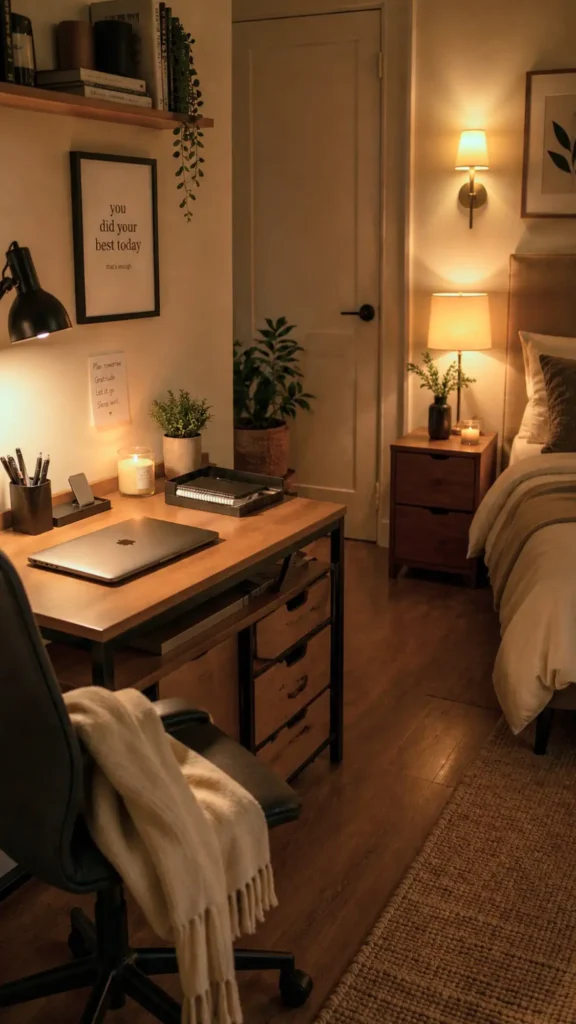
Beyond simply closing your laptop, you’ll want to build a deliberate close-out ritual that mentally separates your work mode from your sleep mode. This consistent sequence of intentional, sensory-driven actions sends a clear neurological signal to your brain that the professional demands of the day have concluded.
Dim the overhead lights to a warm, low-lumen setting, organize your desk by returning pens, notebooks, and peripherals to their designated spots, and change into loose, breathable clothing like cotton pajamas or a soft robe. Consider lighting a beeswax or soy-based candle with a calming lavender or cedarwood scent, or playing a low-volume ambient playlist through a Bluetooth speaker to reinforce the psychological transition between high-focus productivity and deep, restorative rest. Instead of relying on a single overhead fixture, incorporate multiple soft, warm light sources like bedside lamps or wall sconces to gradually lower illumination levels and ease your brain toward sleep.
Position Your Desk Away From the Bed to Physically Separate Zones
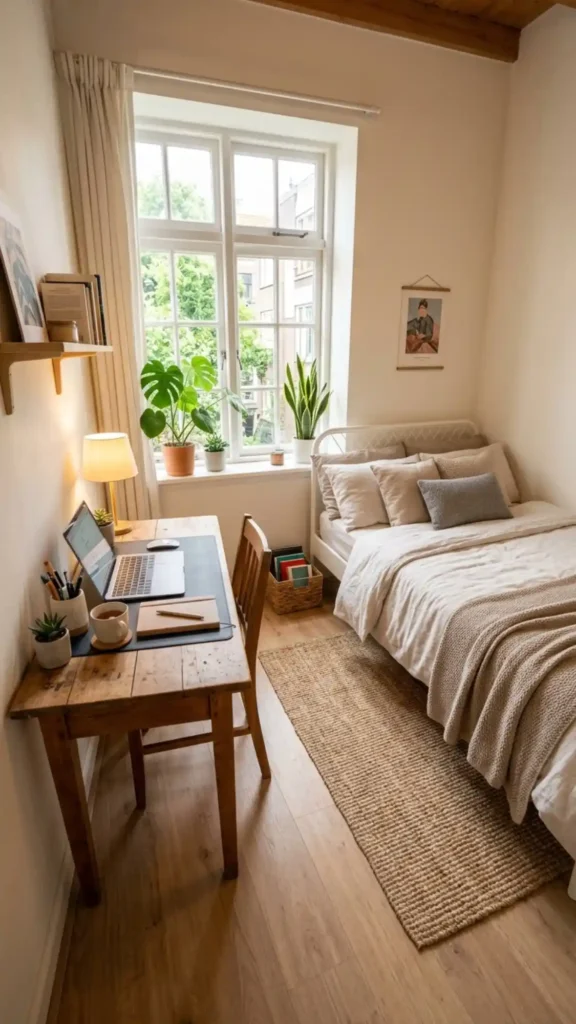
When you’re sleeping and working in the same room, physical distance becomes your most powerful tool for mental separation. Position your desk — ideally a sturdy, dedicated workspace with proper ergonomic support — across the room from your bed, creating two visually and functionally distinct zones that your brain learns to recognize as separate environments.
This deliberate spatial arrangement reinforces strong psychological boundaries between your professional and personal headspace, allowing your mind to transition more efficiently between high-focus work mode and genuine restorative rest. For those sharing space with family or living in rental situations, these principles align perfectly with temporary teen bedroom makeovers that require no structural changes to implement effective zone separation.
Use Room Dividers to Define Work vs. Sleep Space
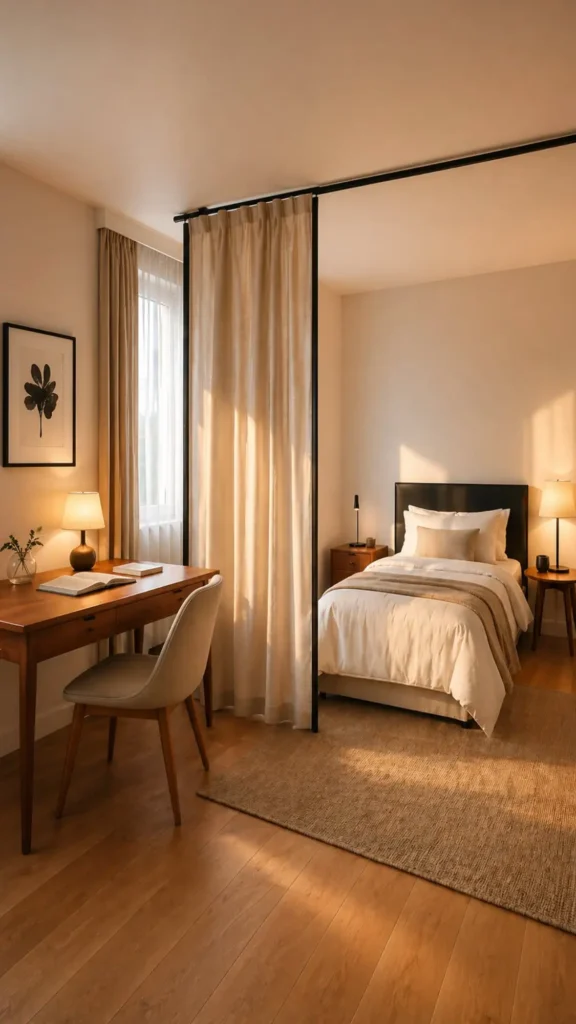
A serene, softly lit bedroom interior featuring a tall natural linen curtain panel suspended from a ceiling-mounted matte black rod, partially separating a wooden desk area from a neatly made bed with white cotton bedding.
Late afternoon light filters through sheer window treatments, casting warm golden tones across light oak flooring and neutral-toned walls.
The desk side shows a lamp and open notebooks, while the sleeping side features layered pillows and a folded throw blanket in soft beige tones.
This approach mirrors the Japandi philosophy of creating functional, harmonious spaces through thoughtful minimalism and natural materials.
Create a Visual Barrier With a Bookshelf or Shelving Unit
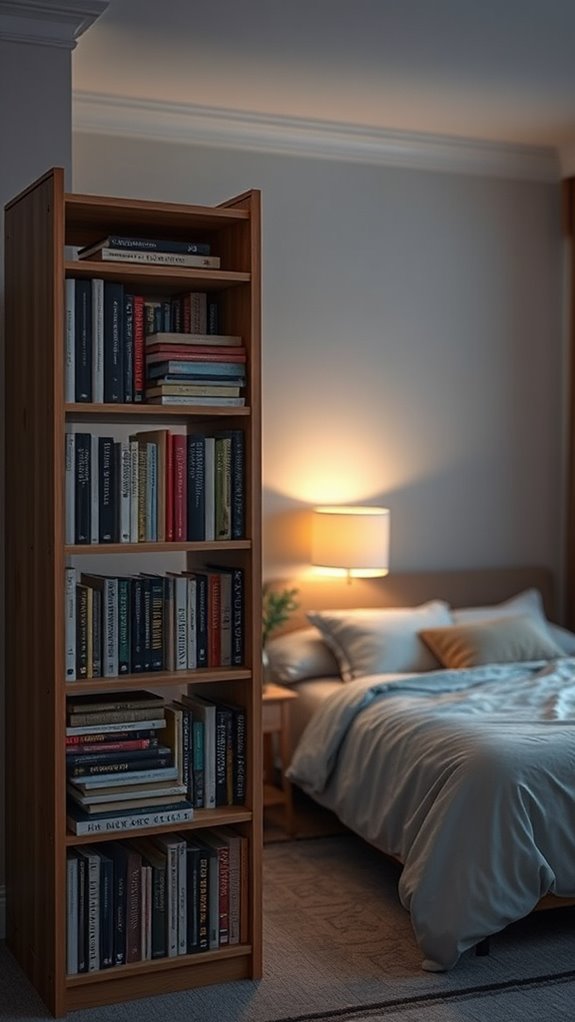
A bookshelf or shelving unit creates a substantial, load-bearing visual barrier between your work and sleep zones — a more architecturally permanent solution than lightweight curtains or freestanding folding screens. Tall, floor-to-ceiling units maximize their room-dividing effect by eliminating sightlines across the full vertical height of the space.
Light-toned wood finishes, such as birch or ash veneer, maintain an airy, open feel by reflecting ambient light. Darker hardwood tones — walnut, espresso oak, or ebony stain — provide stronger, more definitive visual separation. Position the shelving unit perpendicular to your bed’s headboard wall for optimal spatial division between the two functional zones. Just as creative and functional boys’ bedrooms must adapt through ages six to twelve, a well-designed bedroom office should evolve with your changing needs while maintaining clear boundaries between rest and productivity.
Add a Divider Curtain to Conceal Your Office When Not Working
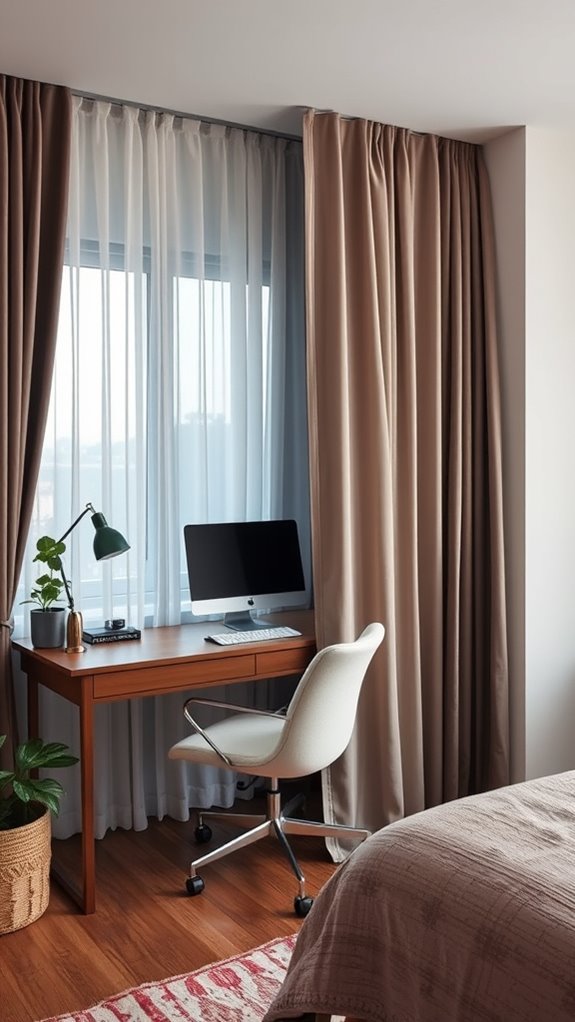
A divider curtain offers a flexible, budget-friendly alternative to permanent architectural solutions, allowing you to fully conceal your home office workspace during non-working hours. Unlike fixed walls or room partitions, fabric curtains can be drawn open during the day to restore an open floor plan and closed at night to create a complete visual barrier between professional and personal living zones. Creating boundaries between work and sleep spaces helps protect both your productivity and rest quality by reinforcing distinct mental associations for each area of your bedroom office combo.
Choose heavy, opaque, light-blocking fabrics such as blackout linen, thick velvet, or layered polyester blends in neutral tones like charcoal gray, slate navy, or warm ivory that simultaneously absorb ambient sound and eliminate visual stimulation. Install a ceiling-mounted double-track curtain rail system or heavy-duty tension rod rated for dense fabric weights, engineered for smooth, effortless operation that reinforces the psychological boundary between your work and sleep environments.
Choose a Desk That Doubles as Bedroom Furniture for Seamless Integration
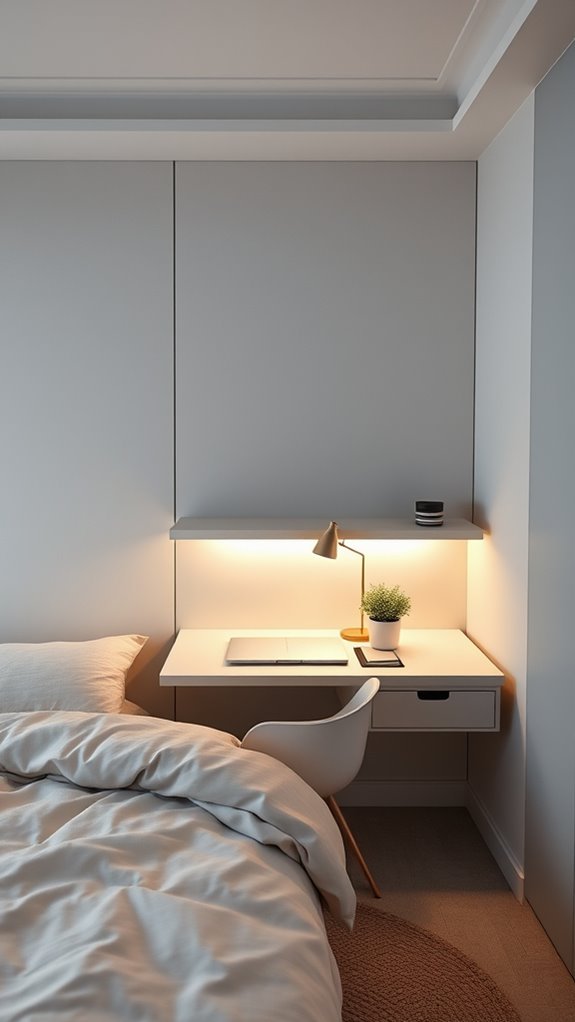
How can you maximize your bedroom’s functionality without sacrificing either workspace or rest space? Choose a desk that doubles as bedroom furniture, such as a wall-mounted floating desk crafted from light oak veneer or a slim console table featuring integrated shelving and concealed cable management.
These dual-purpose pieces integrate seamlessly into your existing décor, maintaining a cohesive aesthetic through matched wood tones, coordinated hardware finishes, and complementary upholstery. This thoughtful approach preserves your bedroom’s restorative atmosphere, preventing the space from feeling office-dominated while still delivering a fully functional, ergonomically sound workspace. Consider incorporating textured wall panelling behind your desk area to visually separate your workspace from your sleep zone without disrupting the room’s overall flow.
Hide Work Materials in Closed Storage to Break the Visual Connection
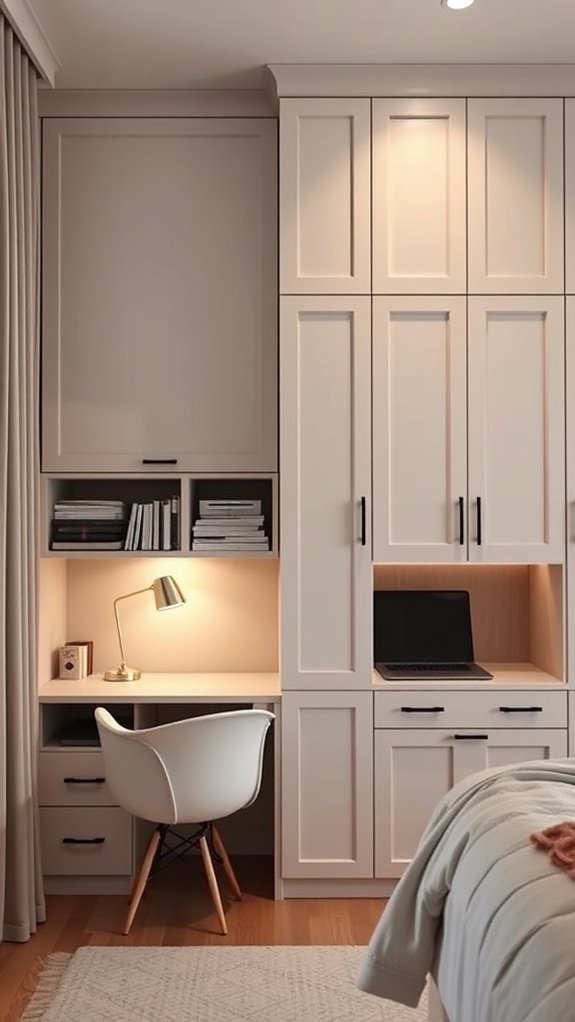
While a well-chosen desk creates visual harmony, the work materials surrounding it can quickly undermine that carefully crafted atmosphere. Store papers, files, and supplies in closed cabinets or drawers — solid-front, handle-equipped furniture pieces in wood, lacquer, or fabric — rather than leaving them exposed on open surfaces.
This physical barrier between you and work-related objects reduces mental stimulation at bedtime. By eliminating visual cues tied to tasks, deadlines, and responsibilities, your brain receives clearer signals to transition from active cognitive engagement toward the slower, quieter rhythms of sleep. Just as thoughtful styling distinguishes a refined Kpop-inspired space from an overwhelming fan cave, intentional concealment of work items preserves your bedroom’s restful atmosphere.
Mount Your Monitor on the Wall to Minimize Desk Clutter
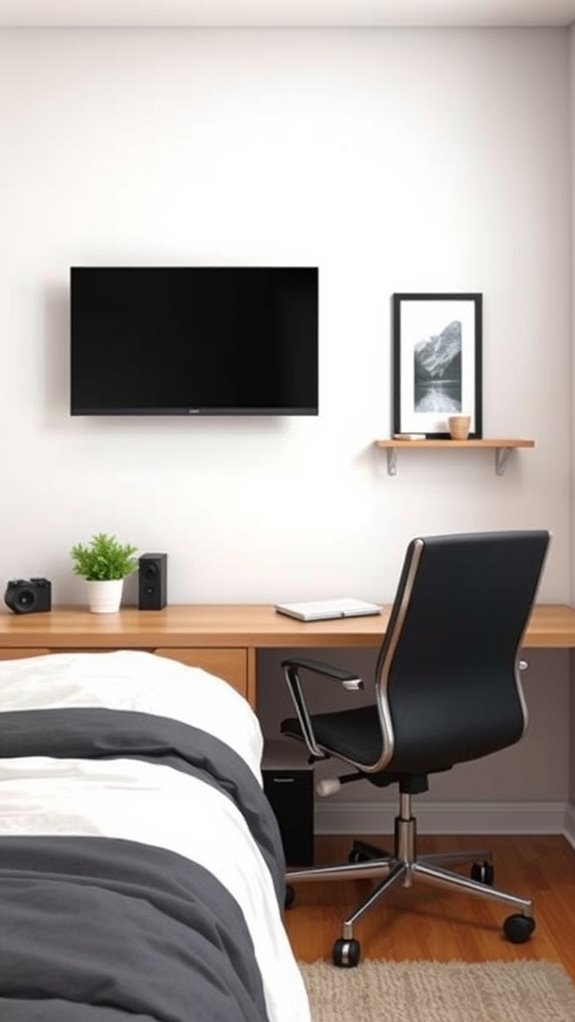
Mounting your monitor on the wall transforms your desk into a cleaner, more intentional workspace, eliminating the bulky, cable-tangled screen that typically dominates your primary surface area. A wall-mounted display reclaims valuable square footage for essential work tools — mechanical keyboards, dual-monitor setups, notebook planners, and task lighting — while simultaneously reducing the visual noise that disrupts focus and cognitive clarity. Consider how professional color palette choices in your surrounding environment can complement this streamlined aesthetic, creating a cohesive atmosphere that supports both productivity and rest.
Pair your wall mount with a heavy-duty, full-motion articulating arm bracket featuring 180-degree swivel rotation, tilt adjustment, and height customization to achieve precise ergonomic screen positioning. Keeping your 24-inch to 32-inch display at direct eye level eliminates chronic neck flexion, reducing cervical strain during extended 8-to-10-hour work sessions.
Use Calming Neutrals to Prevent Mental Activation Before Bed
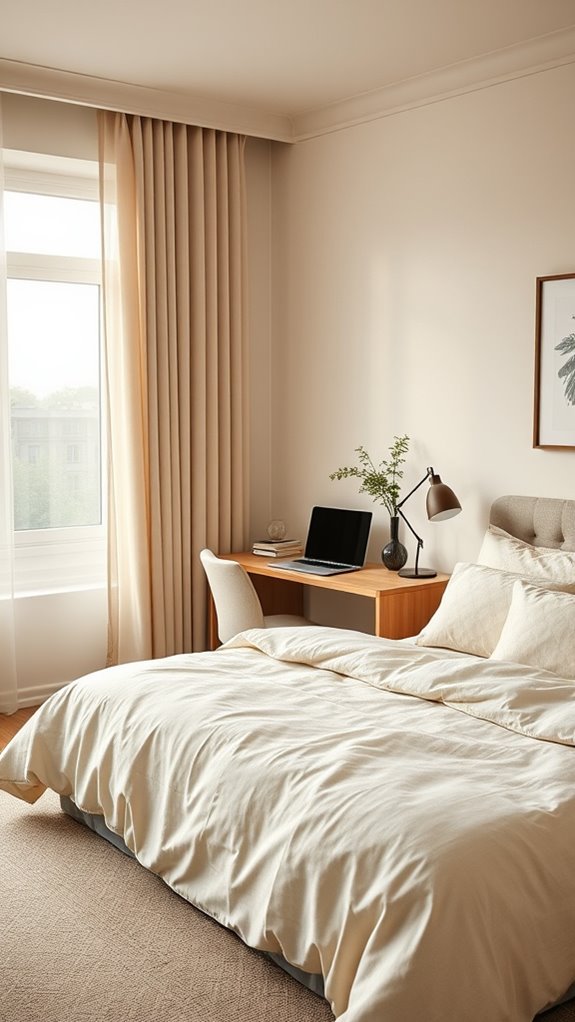
Your workspace’s color palette directly influences your brain’s ability to wind down when evening arrives. Choose soft neutrals like beige, warm taupe, cool gray, and matte warm white for walls, furniture upholstery, and decorative textiles, creating a visually cohesive, low-stimulation environment that signals rest.
These understated, low-saturation tones reduce cortisol-triggering visual stimulation, allowing your prefrontal cortex to gradually disengage from high-focus work mode and transition naturally into a relaxed, sleep-receptive state. Avoid bold, high-chroma colors like saturated red, electric blue, or bright yellow, which activate neural arousal pathways and generate cognitive restlessness that delays melatonin production.
A vintage-inspired bedroom approach to your office design can help these calming neutrals feel intentionally curated rather than randomly assembled, ensuring the space maintains sophistication while supporting your sleep health.
Paint an Accent Wall Behind Your Desk Only
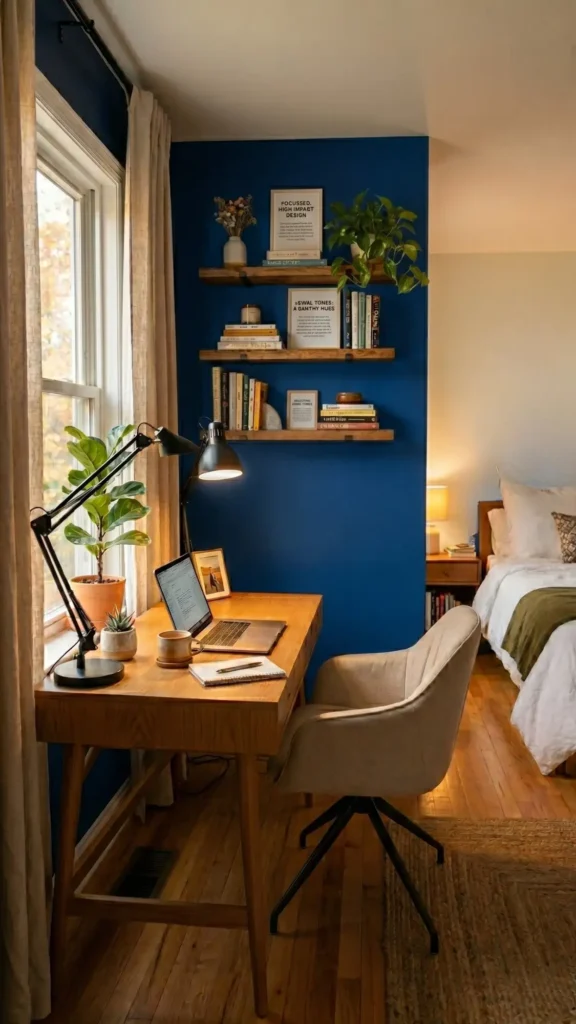
Painting an accent wall directly behind your desk creates a focused, high-impact design element that energizes your dedicated workspace without visually disrupting your sleep zone. This strategic, intentional approach channels bold personality into a single architectural surface, preserving the calming, restorative atmosphere your bedroom’s sleeping area genuinely requires.
Deep jewel tones — rich emerald green, sapphire blue, or moody plum — work exceptionally well, as do muted, earthy hues like terracotta, sage, or warm charcoal. These carefully selected pigments add depth, dimension, and visual weight to your workspace corner while harmonizing with your existing bedroom color palette.
Install Blackout Curtains to Signal the Shift From Work to Sleep
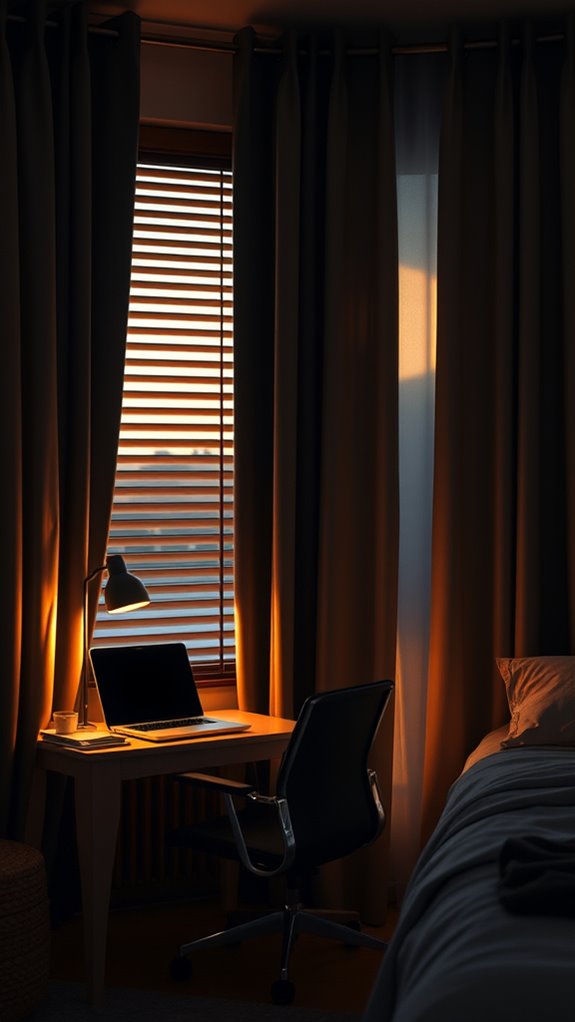
Blackout curtains create a physical and psychological boundary between your work zone and your sleeping space, signaling to your body that it’s time to shift gears. Choose deep navy or charcoal thermal-woven fabrics with triple-layer construction that block ninety-five to one hundred percent of ambient light, allowing melatonin production to begin naturally as cortisol levels drop.
Install them on a separate tension or traverse rod positioned two to four inches above the window frame and extending six inches beyond each side, layered in front of sheer linen daytime curtains. This dual-rod system enables swift, deliberate transitions between high-focus professional environments and dim, sleep-optimized retreats, reinforcing your body’s circadian rhythm through consistent visual and behavioral cues.
Separate Work Lighting From Bedroom Lighting With Strategic Placement
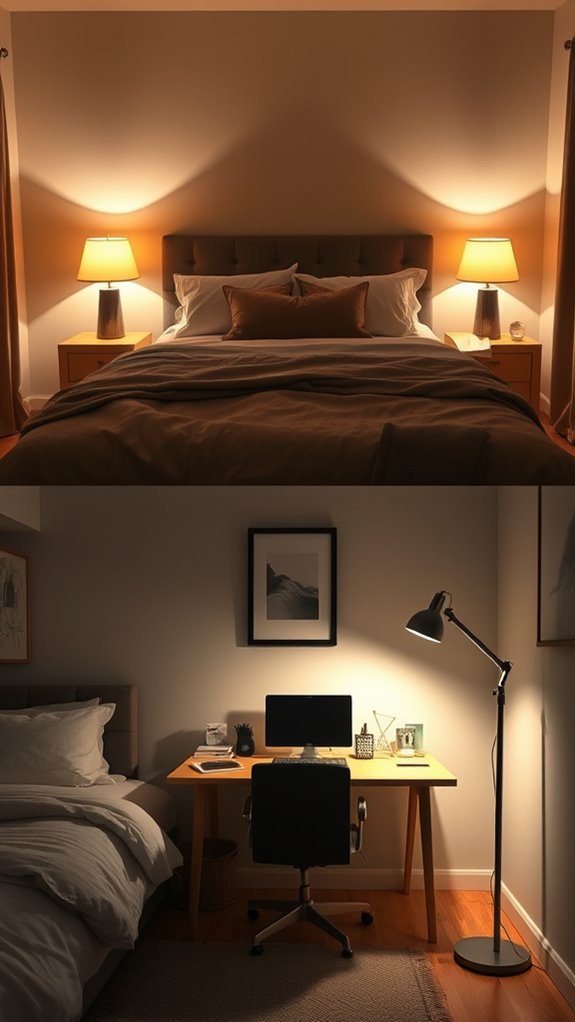
When you’re working and sleeping in the same room, lighting becomes your most powerful tool for signaling which activity should happen when. Install task lighting — specifically a desk lamp with adjustable brightness levels, a directional beam angle, and a color temperature range spanning 4000K–6500K — directly on your dedicated work surface.
Position softer ambient lighting away from your workspace, particularly warm-toned bedside lamps fitted with 2700K–3000K incandescent or LED bulbs that emit a low-lumen, diffused glow. This deliberate physical and tonal separation trains your brain to associate high-intensity, cool-white light with focused productivity, and dim, warm-hued illumination with rest and sleep preparation.
Opt for a Floating Desk to Reduce Visual Weight in Small Spaces
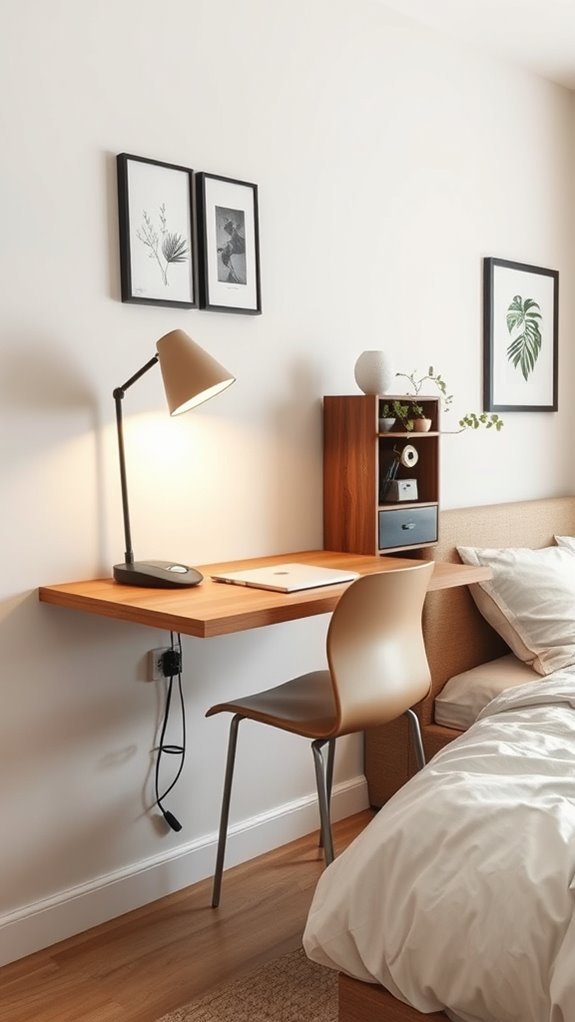
A minimalist bedroom interior featuring a sleek wall-mounted wooden desk with slim metal brackets anchored to a light gray painted wall, warm oak grain surface holding a slim laptop and small potted succulent, below a large window with sheer linen curtains filtering soft natural daylight, polished concrete floors visible beneath the floating desk, a neatly made bed with white linen duvet visible in the background, clean architectural lines throughout, soft shadow detail, interior design photography with wide-angle perspective
Use a Sliding Door or Pocket Door to Hide Your Bedroom Office Entirely
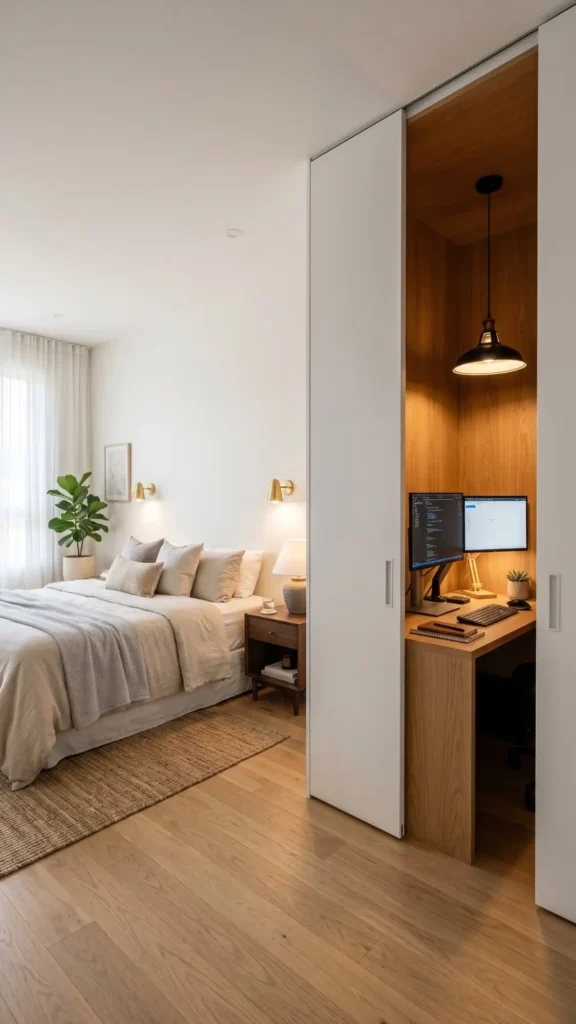
Sliding or pocket doors offer a seamless architectural solution for separating your dedicated work zone from your sleeping area, creating a decisive physical barrier that instantly conceals your desk, monitor, ergonomic chair, and office supplies from view — all without undertaking a full-scale room renovation.
When closed, these space-saving door systems effectively block visual distractions and artificial task lighting, allowing your brain to shift from high-focus productivity mode into a restful sleep state. The installation requires minimal structural construction, yet delivers maximum psychological separation between your professional workspace and your personal rest environment.
Place Furniture First, Layout Second
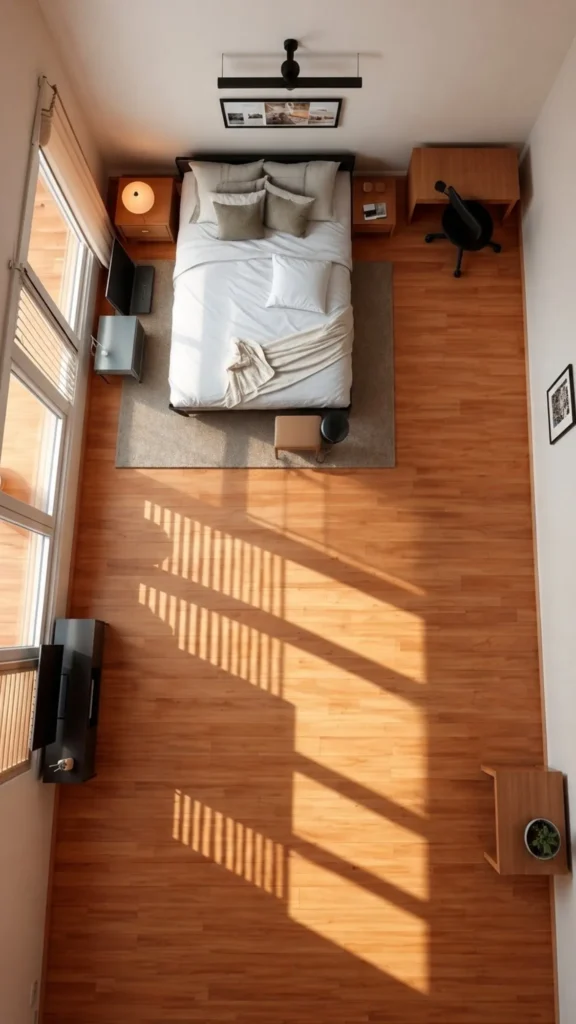
Rather than sketching your bedroom-office layout on paper first, physically position your largest furniture pieces—your bed, desk, filing cabinets, and open-frame shelving units—directly in your actual room before finalizing traffic corridors and sight lines. This hands-on, furniture-first methodology exposes spatial constraints like awkward corner angles, low-clearance ceiling slopes, and narrow doorway approaches that flat diagrams routinely obscure.
Once your anchor pieces are placed, you’ll detect natural light patterns—morning east-facing sun streams, afternoon glare zones, and shadow pockets—along with distinct functional zones: a sleep-recovery quadrant, a deep-focus work zone, and transitional buffer space between them. This real-world positioning process surfaces your optimal desk placement near double-hung or casement windows for sustained productivity while keeping your upholstered bed frame and bedding visually screened from task-oriented work surfaces, preserving essential psychological separation between rest and productivity modes.
Soundproof to Keep Work Noise From Disrupting Sleep
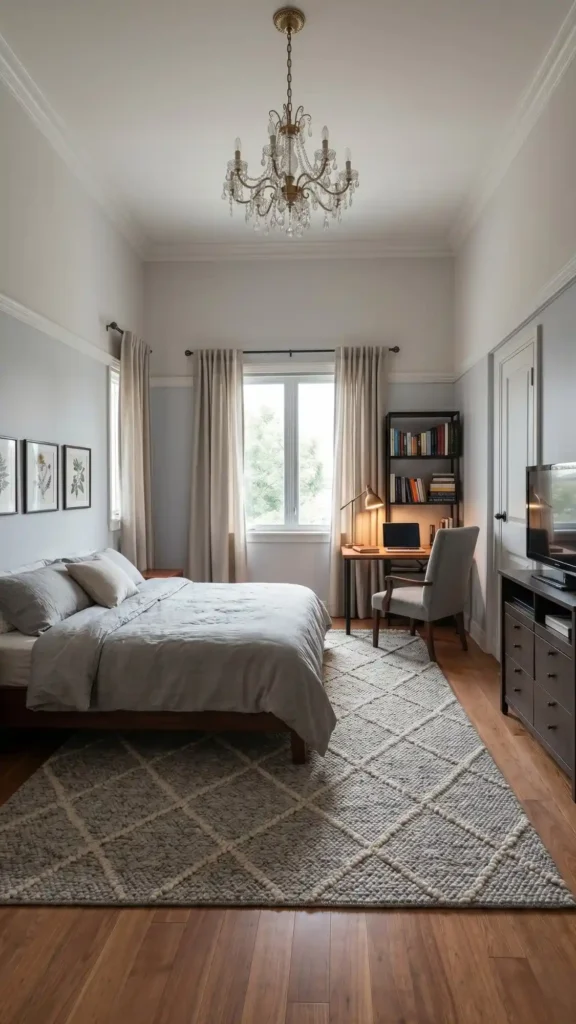
Sound management is essential for protecting sleep quality when your workspace and rest areas share the same environment. Install acoustic foam panels (ideally 2-inch thick, Class A fire-rated) on shared walls, and layer heavy blackout curtains with thermal lining across windows and doorways to absorb mid-to-high frequency noise.
For structural sound blocking, apply mass-loaded vinyl (MLV) sheeting — minimum 1 lb/sq ft density — directly to walls before adding any decorative finish. Seal gaps around door frames with self-adhesive EPDM weatherstripping and place dense wool or synthetic pile rugs (minimum 0.5-inch pile height) on hard flooring surfaces to interrupt impact noise transmission and reduce overall ambient decibel levels.
Choose Sleep-Promoting Plants Like Pothos and Snake Plant
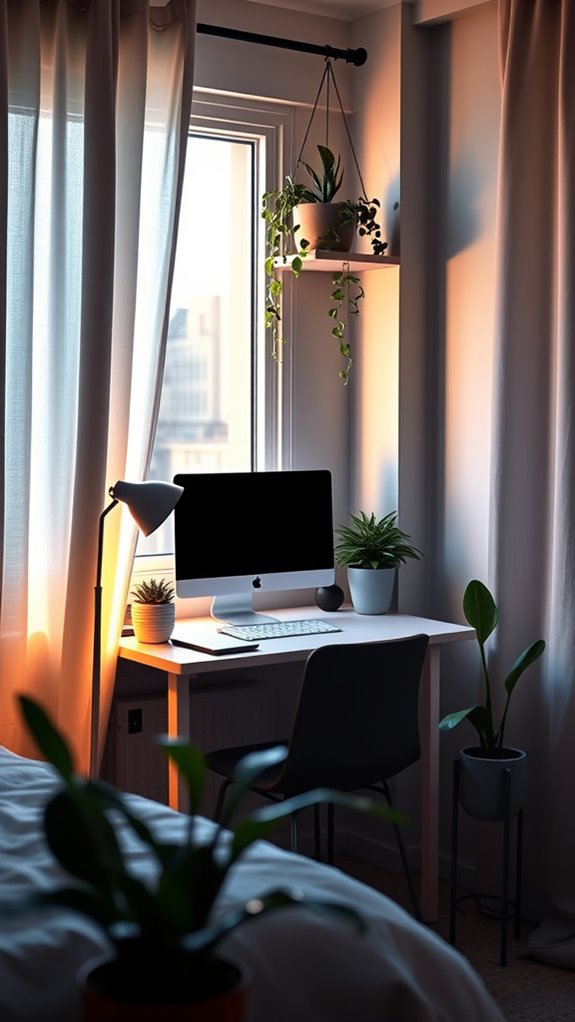
Two plants deserve your attention when you’re designing a bedroom-office combo: pothos and snake plant, both of which actively improve air quality while you sleep. These low-maintenance, drought-tolerant varieties absorb carbon dioxide and release fresh oxygen throughout the night, creating a measurably healthier, humidity-balanced environment with minimal upkeep required.
Position trailing pothos — with its waxy, heart-shaped, variegated green-and-yellow leaves — on floating shelving directly above your standing or seated desk surface. Place the tall, architectural snake plant, characterized by its rigid, upright, dark-green leaves with pale yellow-edged borders, in bedroom corners that receive indirect, diffused light away from harsh direct sunlight for optimal nighttime oxygen output.
Design a Compact Corner With Vertical Storage for Office Supplies
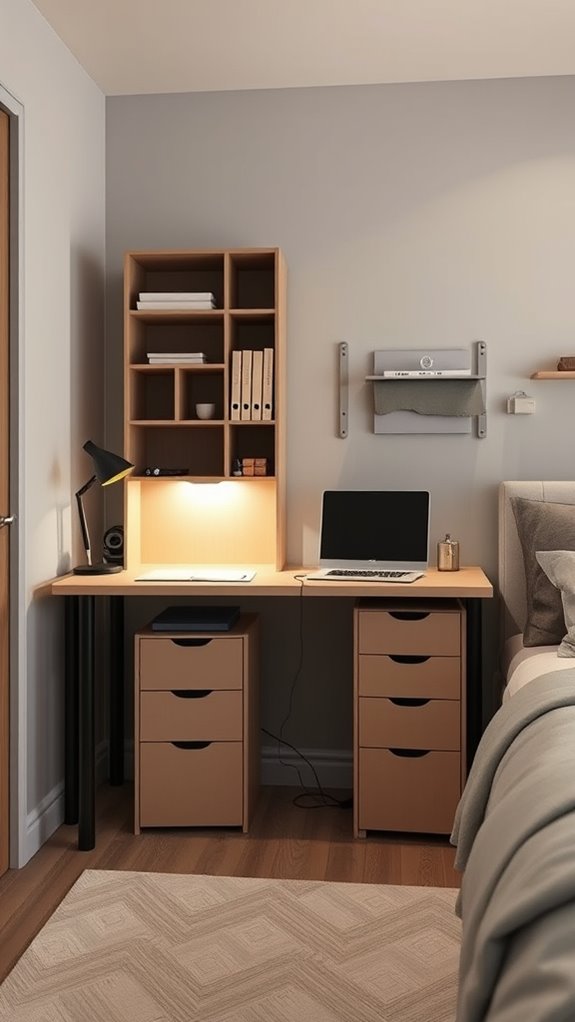
A tight, sun-lit corner of a modern bedroom converted into a compact home office, featuring floor-to-ceiling white oak floating shelves mounted above a slim wall-anchored desk with a matte white surface, a perforated gunmetal pegboard panel on the adjacent wall hung with small wire mesh baskets and metal hooks holding scissors and markers, deep white wall-mounted cabinet with subtle shadow gap detailing, neatly arranged notebooks and small potted succulents on shelves, warm neutral linen bedding partially visible in the background, soft diffused natural light from a nearby window casting gentle shadows across the textured wall surfaces, shot with shallow depth of field, architectural interior photography style
Final thoughts
Creating a functional bedroom office starts with deliberate spatial planning. Position your desk away from the bed to establish a psychological boundary between work and rest, and use room dividers — such as open bookshelves, fabric panels, or frosted glass partitions — to physically separate the two zones. Establishing a firm closing ritual, like shutting down your laptop and dimming the lights at a set time, reinforces the mental transition from productivity mode to rest mode.
Sleep quality is further protected through intentional design choices. Soft, warm-toned lighting with adjustable dimmer switches, neutral wall colors in shades of greige or warm white, and calming greenery like pothos or peace lilies all contribute to a restful atmosphere. These layered adjustments allow the room to function as a high-output workspace during the day while shifting seamlessly into a sleep-supportive environment at night.