21 Neutral Bedroom Ideas That Are Anything But Boring
You can transform your bedroom into a serene retreat without relying on bold colors or trendy patterns. Neutral palettes offer sophisticated depth when you layer textures strategically—think linen duvets, chunky-knit wool throws, and crushed velvet accent pillows combined with natural jute or sisal fiber rugs in geometric flatweave patterns.
Warm whites like Swiss Coffee and Alabaster, earthy taupes, and soft blue-grays create visual interest through tactile material combinations and thoughtful ambient lighting. Recessed LED fixtures, adjustable wall sconces, and linen pendant shades work together with deliberate furniture placement and tonal color blocking to produce a cohesive, calming aesthetic.
Layer Soft Textures for Visual Depth
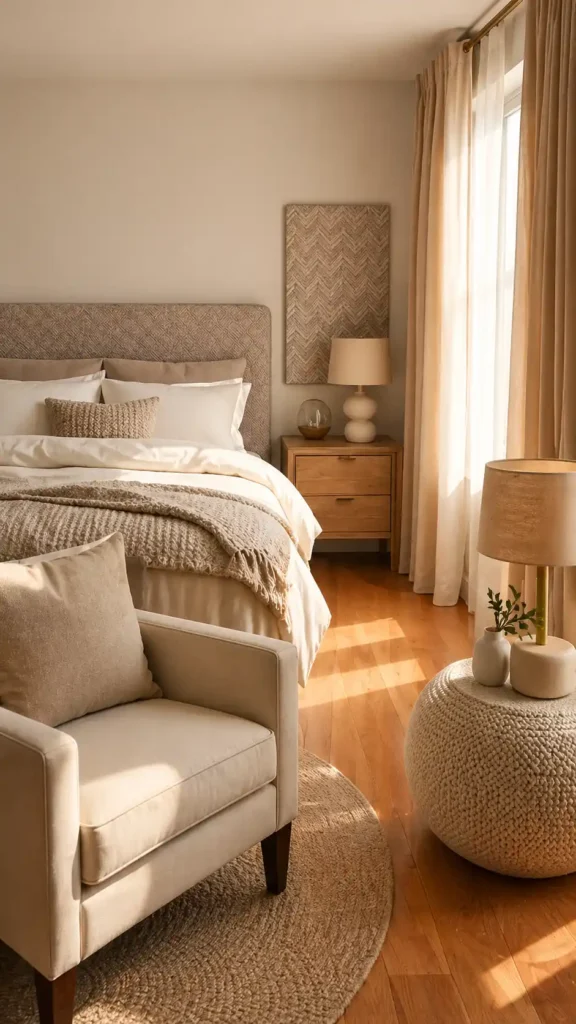
How can you transform a flat, one-dimensional bedroom into a space with sophisticated visual interest? Layer different textures like linen, wool, and cotton across your bedding, pillows, and throws — each fabric bringing its own unique weight, sheen, and tactile character to the overall composition.
Combine a chunky, cable-knit merino wool blanket with smooth, 19-momme silk pillowcases in coordinating neutral tones, then anchor the space with a hand-loomed jute or wool area rug featuring subtle geometric patterning. Finish with a low-profile velvet accent chair in a deep jewel tone, its tightly woven pile catching light differently than the matte linen duvet beneath it. These deliberately varied tactile elements — rough against smooth, matte against lustrous, dense against airy — build rich visual complexity and dimensional depth without relying on bold, saturated color. This approach of a restrained palette with personality proves that neutral spaces can feel deeply considered and emotionally resonant rather than safe or forgettable.
Embrace Warm Whites and Creams
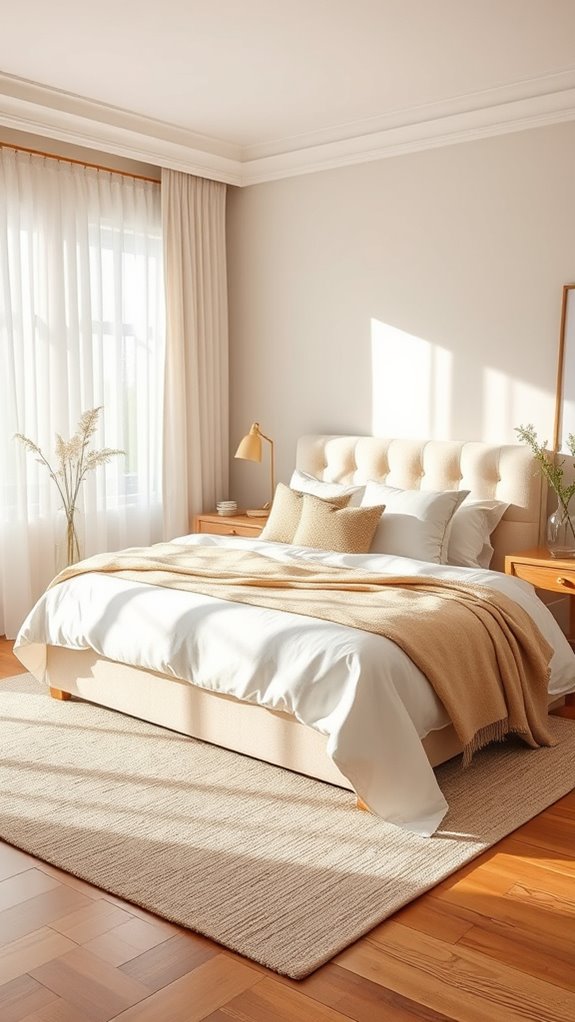
While layered textures create the visual depth in your neutral bedroom, the color palette itself matters just as much. You’ll want to embrace warm whites and creams rather than cool, sterile tones. These softer, pigment-rich hues — think ivory, linen, eggshell, and antique white — radiate a gentle luminosity that cool whites simply can’t replicate.
These warm, yellow-and-red-undertoned shades create a welcoming atmosphere, making your space feel more inviting and deeply restful. Warm whites work beautifully on matte-finish walls, high-thread-count bedding, and semi-gloss trim, establishing a cohesive, tonally layered foundation that feels both curated and effortlessly calm. Drawing from Japandi design principles, this approach merges Japanese minimalism with Scandinavian warmth to create a truly serene retreat.
Add Richness With Taupe and Greige
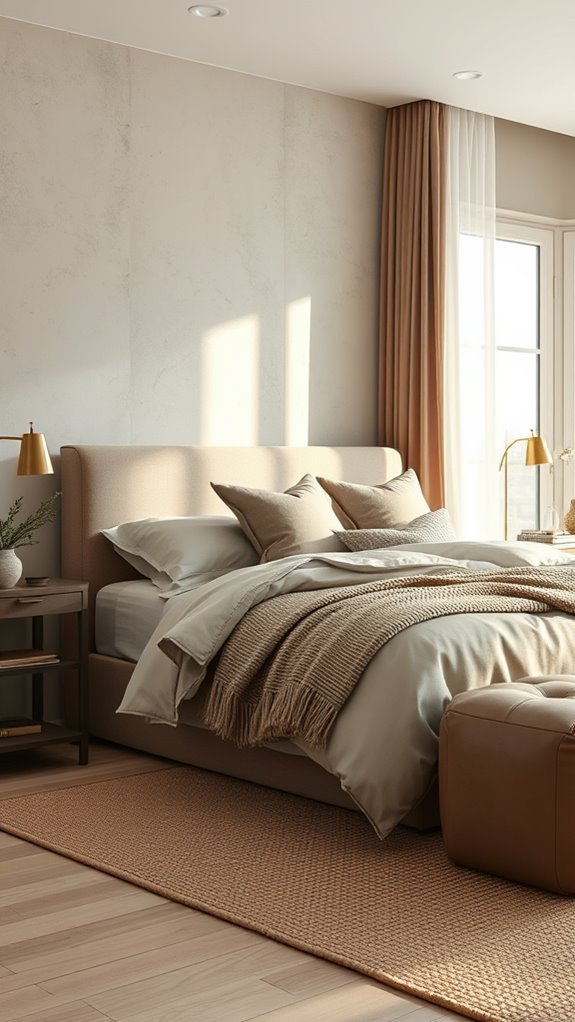
To deepen your neutral bedroom’s visual richness, introducing taupe and greige creates sophisticated layers that warm whites alone can’t achieve. These warm neutrals work beautifully on accent walls, upholstered headboards, and area rugs.
Taupe adds earthy, clay-toned depth with its red-brown undertones, while greige—a gray-beige hybrid with balanced cool and warm pigmentation—bridges contrasting tonal temperatures seamlessly. Layer these muted, low-saturation shades with natural textures like stonewashed linen, raw-edged jute, and honey-toned oak wood for understated, tactile elegance. When designing a bedroom office combo, maintaining clear boundaries between your sleep and work zones helps preserve the calming atmosphere these neutral tones create.
Create Contrast With Soft Grays
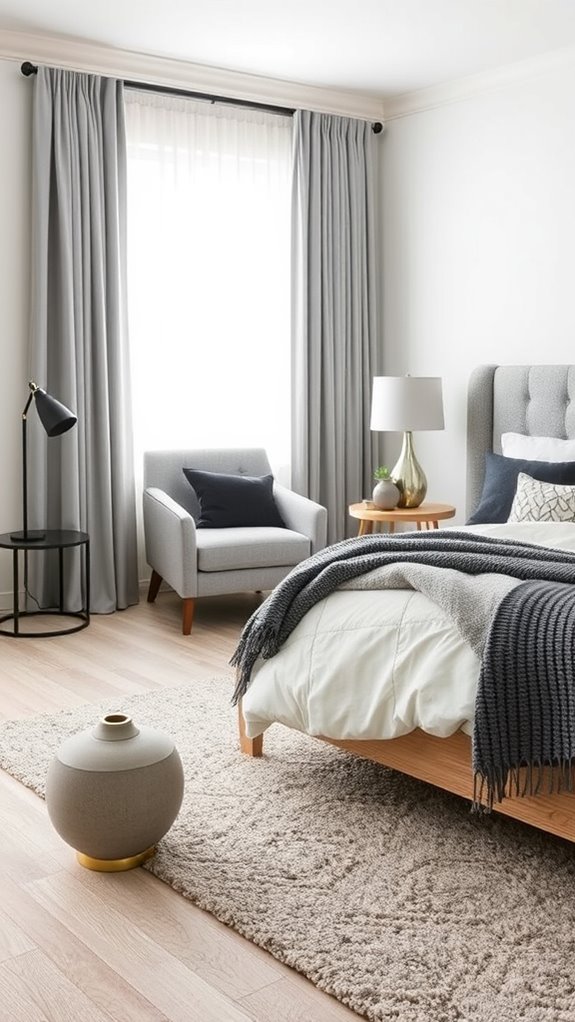
Soft grays offer a distinctly different approach than warm-toned taupe and greige, delivering cooler, blue-undertoned contrast that prevents your neutral bedroom palette from feeling visually monotonous or flat.
Lighter gray walls — particularly those in the 60-70% light reflectance value range — generate compelling visual interest when deliberately paired with crisp white cotton or linen bedding and deeper charcoal accent pieces.
This intentional layering strategy builds dimensional depth without overwhelming the overall space or disrupting the room’s calm, cohesive atmosphere.
You can strategically introduce tactile texture through heavyweight Belgian linen throw pillows, tightly woven wool area rugs in heather tones, and brushed nickel or gunmetal metal hardware elements that collectively reinforce the room’s polished, sophisticated aesthetic.
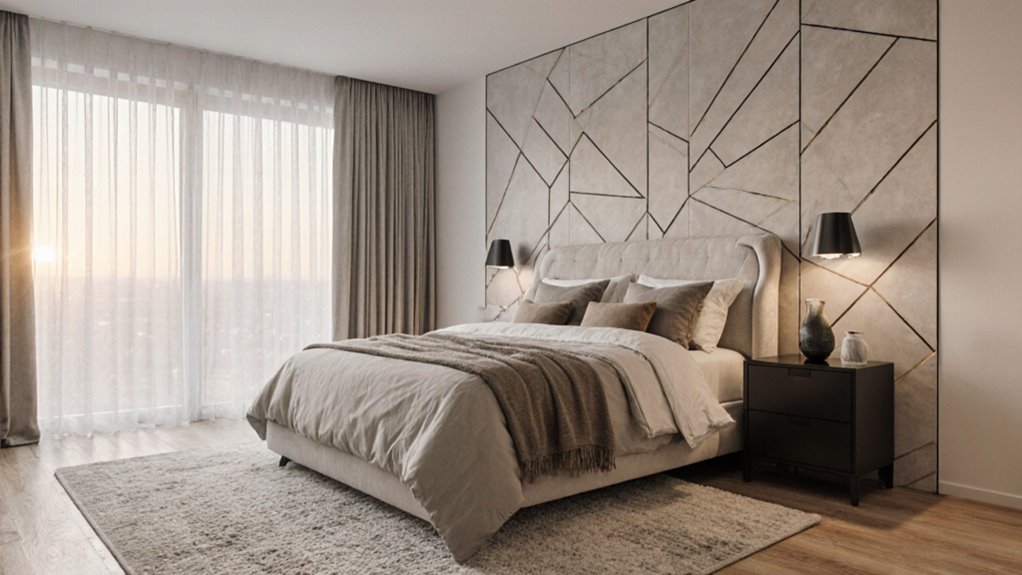
For added architectural interest, consider extending your gray palette beyond paint alone by incorporating accent wall paneling that introduces subtle shadow lines and dimensional movement to the bedroom’s focal wall.
Use Window Treatments as Design Features
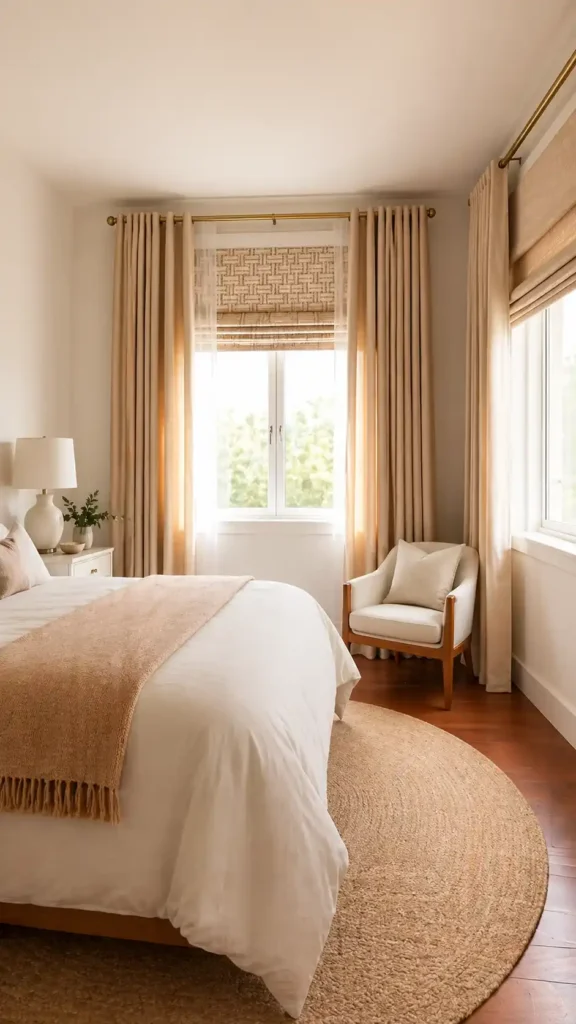
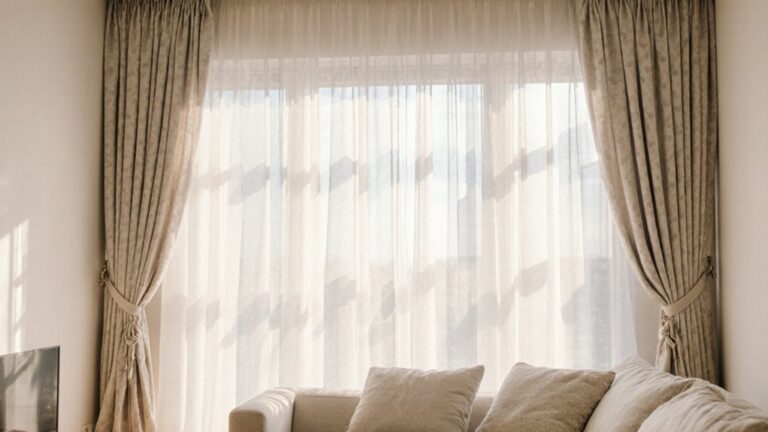
Window treatments are far more than a functional necessity—they’re one of the most visually dominant design elements in any bedroom, yet they’re consistently treated as an afterthought. Heavyweight linen drapes, tailored roman shades, or floor-to-ceiling silk-blend panels in warm ivory, soft greige, or pale champagne instantly communicate intentionality and design sophistication.
These textiles introduce tactile depth, visual layering, and light-diffusion qualities that bare windows simply can’t achieve. When coordinated with a neutral palette, they serve as a unifying anchor—pulling together bedding textures, wall tones, and furniture finishes into a cohesive, polished aesthetic. Unlike grunge bedrooms that embrace moody yet cohesive darkness through heavy fabrics and layered textiles, neutral window treatments achieve their impact through refined restraint and luminous materiality.
Choose Natural Wood for Warmth and Grounding
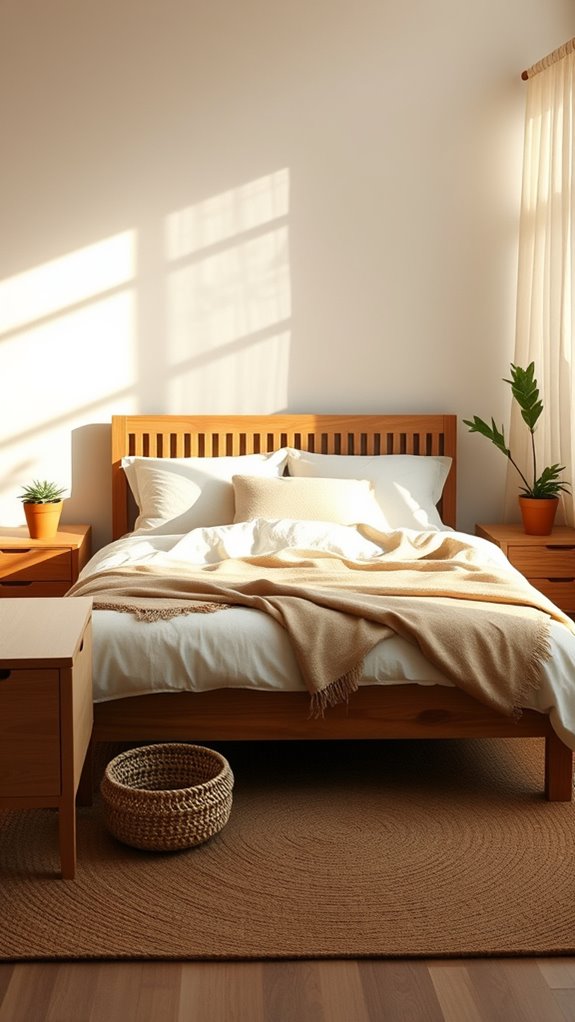
Natural wood furnishings ground a neutral bedroom by introducing warmth, organic texture, and visual interest that paint and textiles alone can’t provide. Species such as American black walnut, white oak, and knotty pine — selected in medium to light tonal ranges — complement soft greige, warm ivory, and muted linen palettes with remarkable cohesion. Efficient small bedroom ideas often rely on natural wood’s ability to maximize every square foot while maintaining visual warmth and sophistication.
A solid wood bed frame with visible grain patterning, dovetail-jointed nightstands, and a six-drawer dresser with brushed brass hardware establish the room’s structural foundation. Wide-plank hardwood flooring in a natural matte finish, or a hand-knotted wool area rug in earthy tones, amplifies the grounding effect and ties these organic elements together across the full floor plane.
Mix Matte and Metallic Finishes
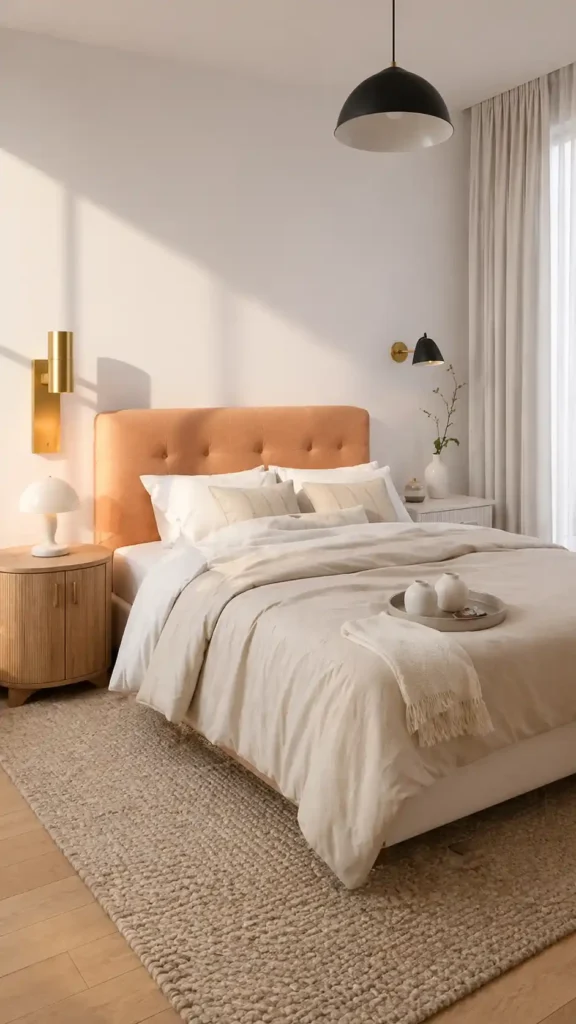
Layering contrasting finishes—matte and metallic—creates visual depth and prevents your neutral bedroom from feeling flat or one-dimensional. Consider pairing matte nightstands with brushed gold lamps, or combine a flat-finish dresser with chrome hardware.
These textural contrasts add sophistication without introducing bold colors. Metallic accents catch light dynamically across their reflective surfaces, while matte finishes absorb ambient light and ground the space, achieving balanced visual interest and a curated, intentional aesthetic throughout your room. Dark or overly saturated paint colors can make even spacious bedrooms feel cramped and visually smaller, so maintaining your neutral palette with these mixed finishes helps preserve an open, airy atmosphere.
Pick Lighting That Layers Function and Style
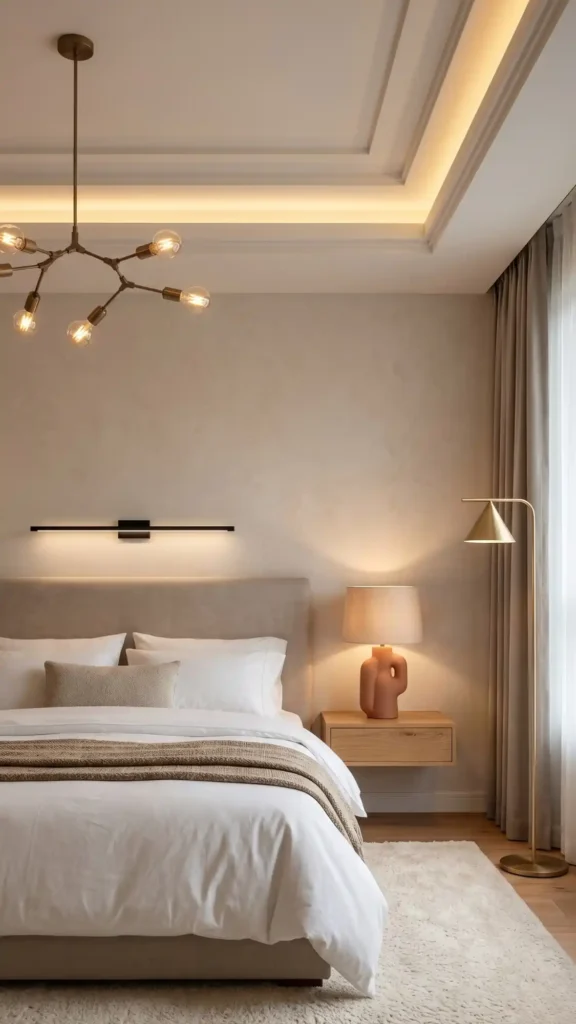
Thoughtful lighting design transforms your neutral bedroom from a simple retreat into a functional, aesthetically refined sanctuary. Layer ambient, task, and accent lighting using warm-toned fixtures — think soft-white LED bulbs in the 2700K–3000K range — that complement your existing neutral palette of whites, beiges, taupes, and greiges. Install dimmer switches on all primary circuits for full-spectrum brightness control, allowing seamless transitions from high-lumen daytime functionality to low-lux evening relaxation.
Add wall-mounted bedside sconces with adjustable articulating arms at approximately 56–60 inches from the floor for targeted, glare-free reading light. Incorporate subtle LED strip lighting behind upholstered or wooden headboards and along recessed wall niches to create a soft backlit glow, adding measurable visual depth, layered shadow play, and a polished, hotel-inspired ambiance to the overall space. Effective layered bedroom lighting combines ceiling, bedside, and ambient sources for a fully designed look that elevates the entire room.
Layer Lighting for Ambiance and Function
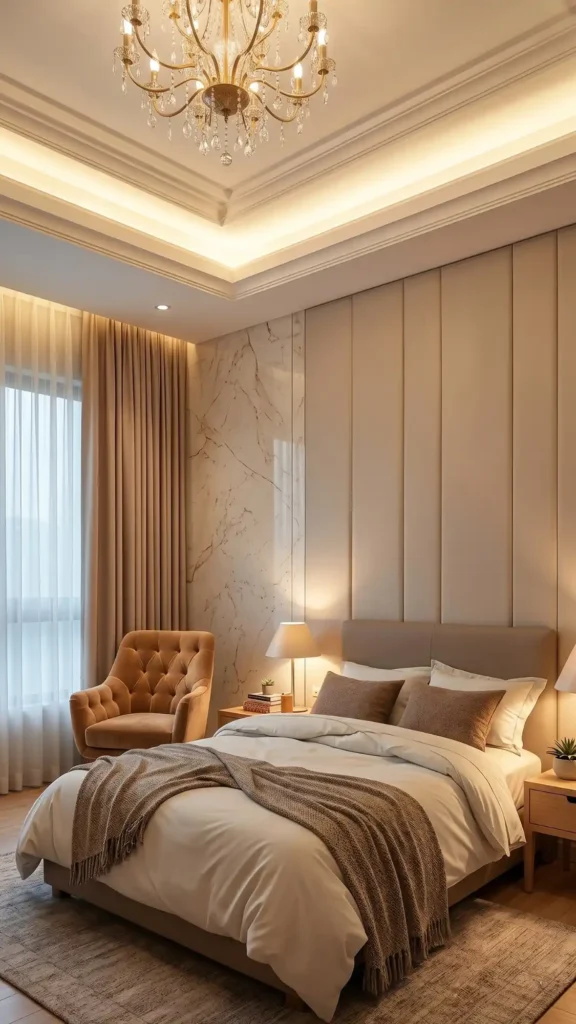
How does your bedroom lighting currently serve you during different times of day? You’ll want to combine ambient, task, and accent lighting, creating flexibility for various activities — from early-morning grooming routines to late-night reading sessions. Install dimmer switches on overhead fixtures like flush-mount LED ceiling lights or chandelier-style pendants, allowing precise lumen control across a 10-100% brightness range. Pair these with adjustable bedside lamps featuring warm 2700K-3000K color temperature bulbs for focused task lighting, and incorporate low-wattage wall sconces at eye level for soft, shadow-diffused evening ambiance. This deliberate, multi-source layering balances high-CRI functional illumination with mood-enhancing atmospheric glow throughout every zone of your space. Under-bed storage drawers and other compact solutions can help maximize floor space when positioning your layered lighting fixtures in smaller bedrooms without closets.
Play With Bedding Layers and Patterns

Your bedding choices set the visual foundation for a neutral bedroom, so consider starting with a quality base layer in soft whites, creams, or warm grays. Layer contrasting textures — breathable linen, crisp cotton percale, and chunky wool knit — to create tactile depth and dimensional visual interest.
Add patterned throw pillows in subtle geometric or botanical designs to introduce visual complexity without disrupting the serene, cohesive atmosphere of your space. A mix of pillow sizes, from standard Euro shams to lumbar pillows, adds architectural structure while keeping the overall palette calm and intentional.
Professional designers often rely on neutral color combinations to achieve effortless, sophisticated results that feel curated yet approachable.
Match Bedding to Your Neutral Palette
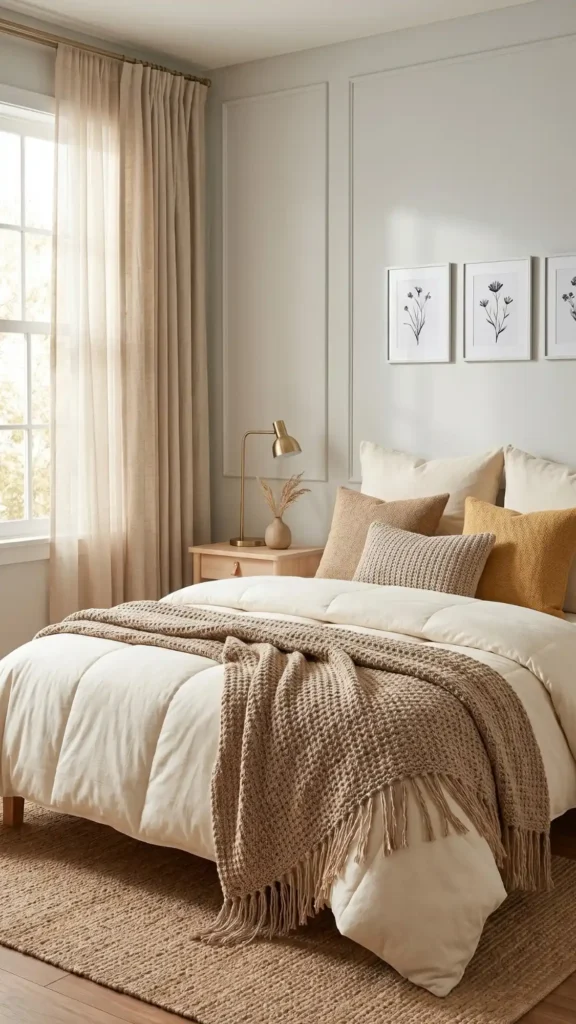
Once you’ve established your neutral color foundation, you’ll want to guarantee all bedding elements work cohesively within that palette. Select sheets, comforters, and pillowcases in complementary neutrals like warm ivory, stone-washed taupe, or cool soft gray — fabrics with thread counts between 400-600 for a refined, hotel-quality finish.
Layer textures strategically by combining breathable Belgian linen shams with crisp Egyptian cotton flat sheets and a down-alternative comforter wrapped in a textured waffle-weave duvet cover. Ensure your bedding coordinates with your wood-toned headboard, brushed nickel or matte black nightstand hardware, and any upholstered elements, creating a unified, sophisticated sleeping environment with intentional tonal depth.
Showcase Collections to Tell Your Story
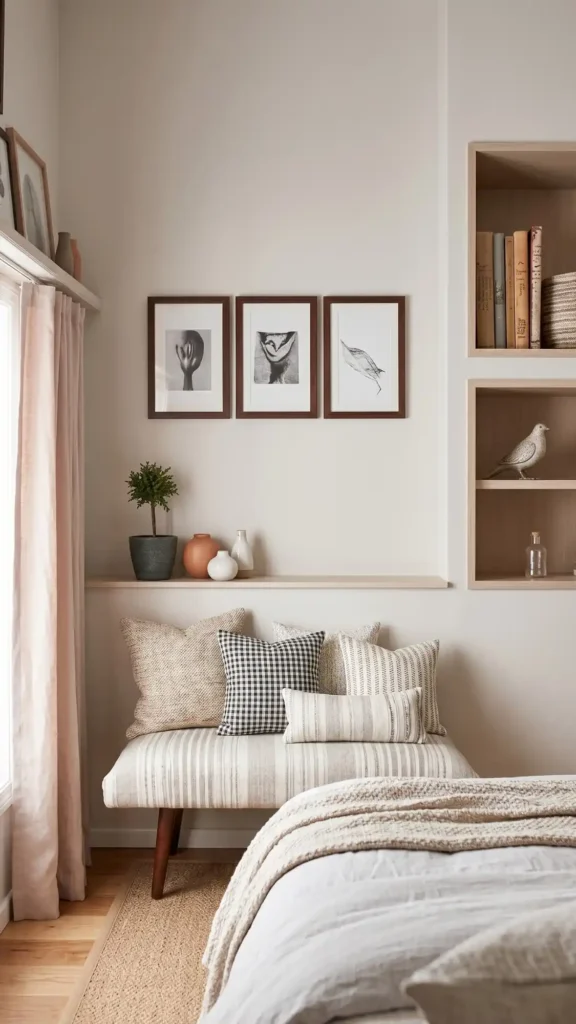
What transforms a neutral bedroom from merely restful to truly personal? Your collections do. Display meaningful items—vintage hardcover books with weathered spines, hand-painted travel souvenirs, ceramic art pieces, or framed botanical prints—on white oak floating shelves or antique oak dressers. These curated, intentional objects break visual monotony while simultaneously reflecting your passions, experiences, and aesthetic sensibilities.
Layer them thoughtfully using deliberate height variation, asymmetric spacing, and contrasting textures—pairing matte terracotta vases alongside glossy lacquered boxes or aged brass bookends. Your bedroom evolves into a deeply personal gallery, a curated narrative showcasing your identity, values, and lived experiences—far beyond its function as a place to simply sleep.
Float Shelves for Display and Balance

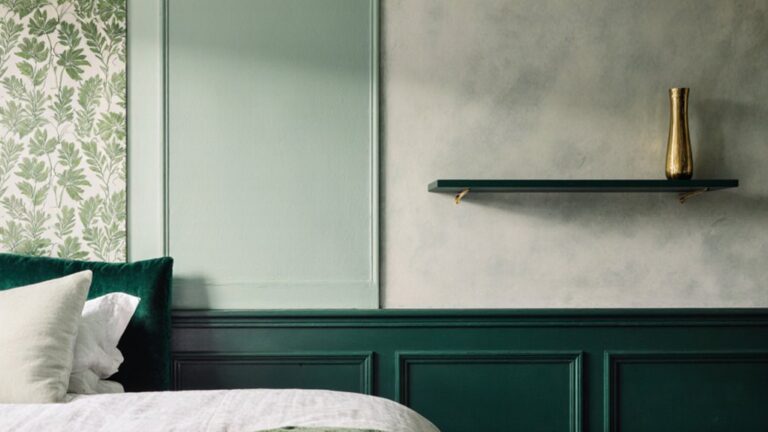
Floating shelves serve as the architectural foundation for displaying your curated collections, offering both functional storage and visual breathing room in a neutral bedroom. You’ll appreciate how they create clean lines that enhance minimalist aesthetics, eliminating visual clutter while maintaining purposeful organization.
Mount them at varying heights, spacing them 12 to 18 inches apart for balanced proportions and optimal visual weight distribution. Choose solid oak, walnut, or brushed steel finishes that complement your existing neutral palette, maintaining cohesive tonal harmony across your wall surfaces.
Add Area Rugs to Define Space
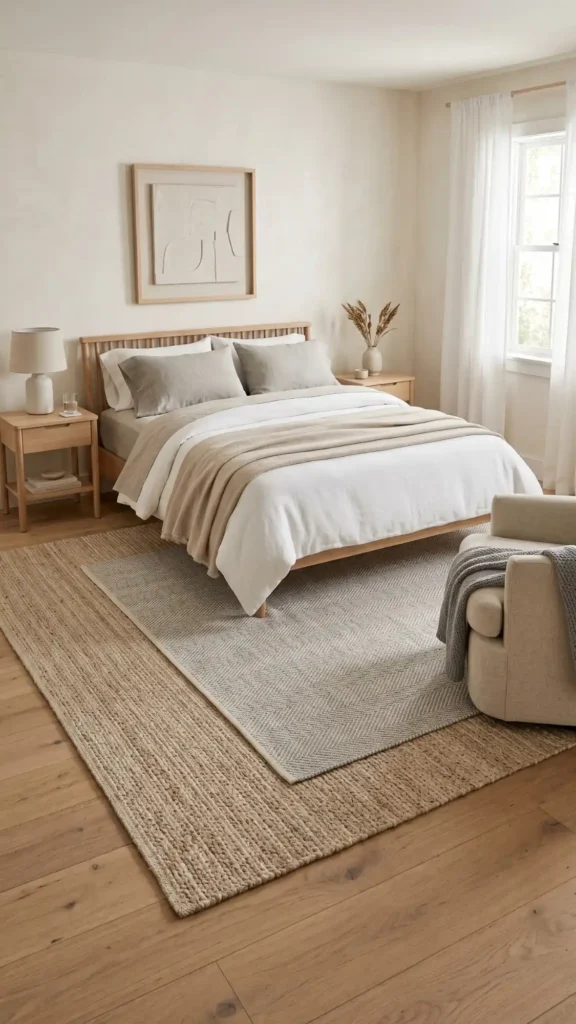
How do you anchor a neutral bedroom without overwhelming its serene aesthetic? Area rugs define space while maintaining calm. Choose natural textures like jute or wool in warm beiges and soft grays, placing them beneath your bed frame and seating areas to establish clear functional zones.
Layering a smaller flatweave cotton rug over a larger natural-fiber base rug adds visual dimension and tactile depth without introducing bold colors or disruptive patterns. This deliberate furniture-grounding technique creates strong visual cohesion throughout the room, unifying your bed, nightstands, and upholstered accent chairs into a single harmonious arrangement.
Curate a Gallery Wall in Neutrals
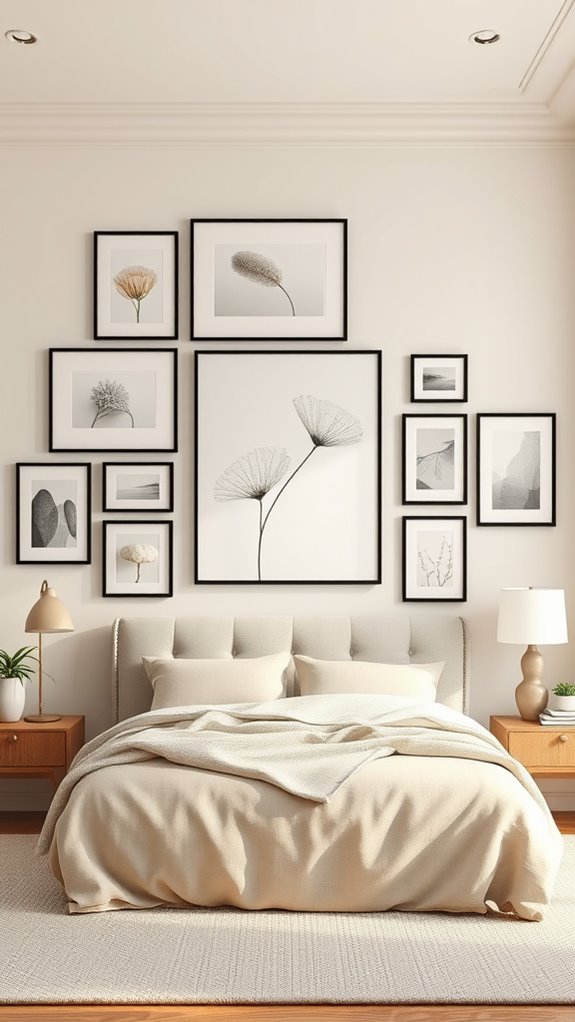
A gallery wall in neutral tones creates a compelling focal point that draws the eye upward without disrupting your bedroom’s serene, peaceful atmosphere. Curate a thoughtful mix of framed fine-art prints, hand-drawn botanical sketches, and dimensionally textured pieces — think linen-wrapped canvases or layered paper art — selecting a restrained palette of warm whites, cool grays, and soft beiges to maintain visual harmony.
Varying your frame styles deliberately adds depth and personality: pair slim black metal frames with chunky natural wood frames, and experiment with different mat widths — narrow 1-inch mats alongside wider 3-inch mats — to create rhythmic visual interest across the arrangement. This intentional layering of textures, tones, and proportions builds a cohesive, curated aesthetic that feels artful rather than cluttered.
Select Artwork That Reflects Your Aesthetic
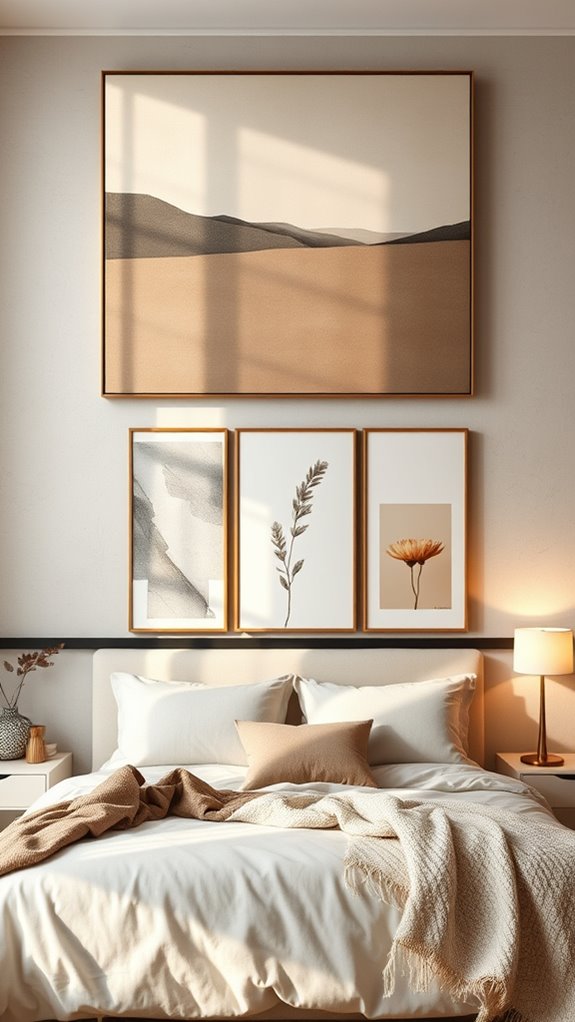
Start by identifying what genuinely draws your eye—whether that’s the layered complexity of abstract expressionist prints, the delicate linework of vintage botanical illustrations, or the stark compositional restraint of minimalist black-and-white photography. These instinctive reactions reveal your core aesthetic identity and should anchor every selection you make for your gallery wall.
Once you’ve identified your visual preferences, prioritize artwork rendered in a carefully controlled palette of muted tones—deep charcoals, cool grays, warm whites, and soft greige neutrals—that integrate harmoniously with your existing interior color scheme. This deliberate tonal cohesion transforms individual pieces into a curated collection that feels intentional, personal, and visually unified rather than arbitrarily assembled.
Add Living Plants for Movement and Life
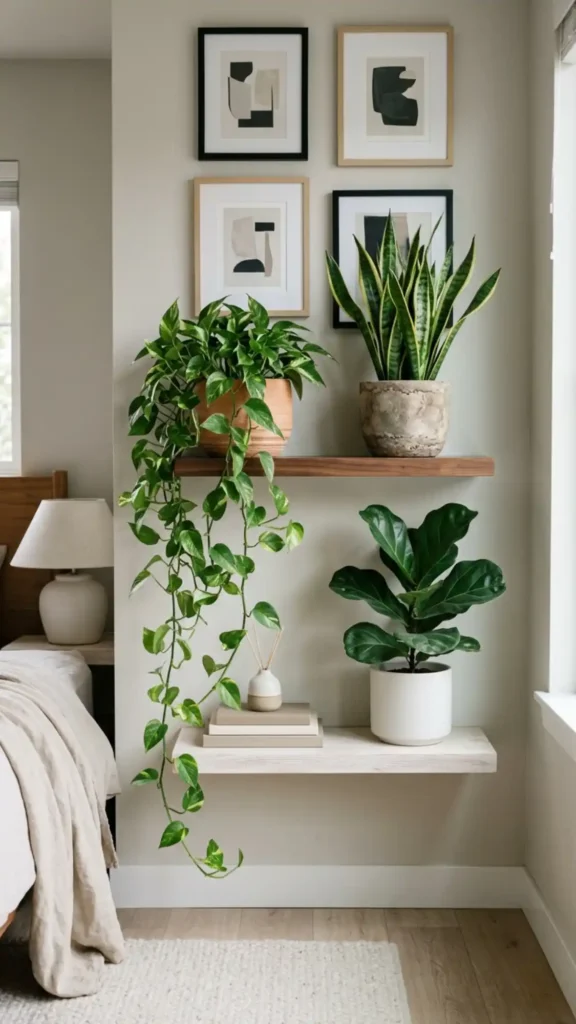
While your gallery wall establishes visual interest through static imagery, introducing living plants brings organic movement and a natural, breathing quality to your neutral bedroom. Pothos with their cascading, heart-shaped leaves, architectural snake plants with rigid, sword-like variegated foliage, and sculptural fiddle leaf figs with their large, waxy, violin-shaped leaves all complement beige, greige, and cool gray palettes effortlessly.
Position trailing varieties along floating walnut shelves or whitewashed wooden ledges, creating layered depth through varied heights and textures. Select matte ceramic planters in warm terracotta, stone-finish concrete vessels, or minimalist white stoneware pots to anchor the organic elements within your existing monochromatic aesthetic.
Use Textured Walls to Add Depth
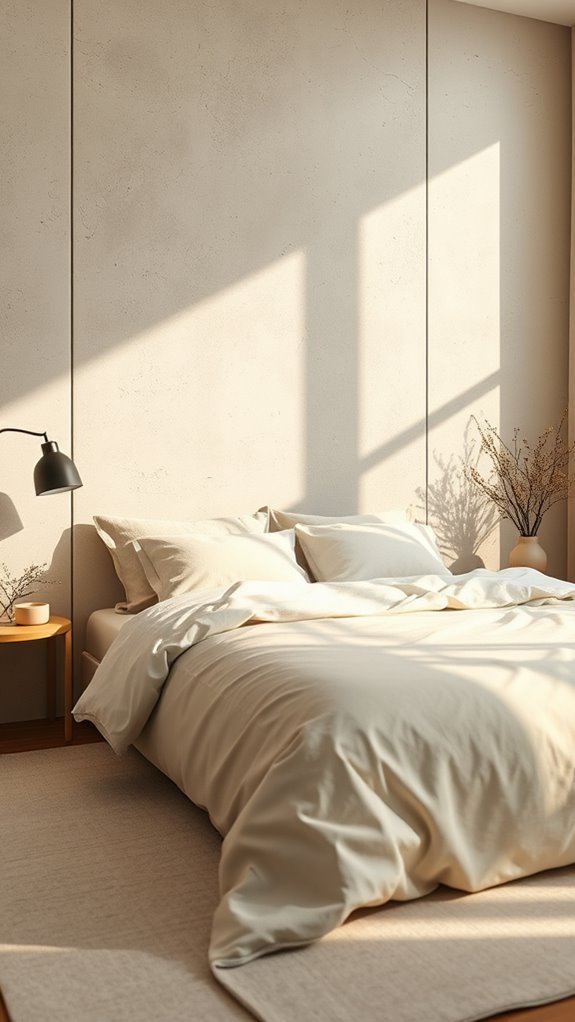
Textured walls transform your neutral bedroom from flat and one-dimensional into a space with genuine depth and visual interest. Consider shiplap with its horizontal planking and clean shadow lines, grasscloth with its woven natural fiber construction, or embossed textured wallpaper with raised geometric or organic patterns to add tactile dimension without introducing bold colors.
These materials catch ambient and directional light differently throughout the day, creating subtle visual movement across the surface as sunlight shifts in angle and intensity. Pairing richly textured walls with streamlined, low-profile furnishings in muted tones allows the wall treatment to become your room’s dominant focal point and primary design statement.
Choose Furniture With Clean Lines
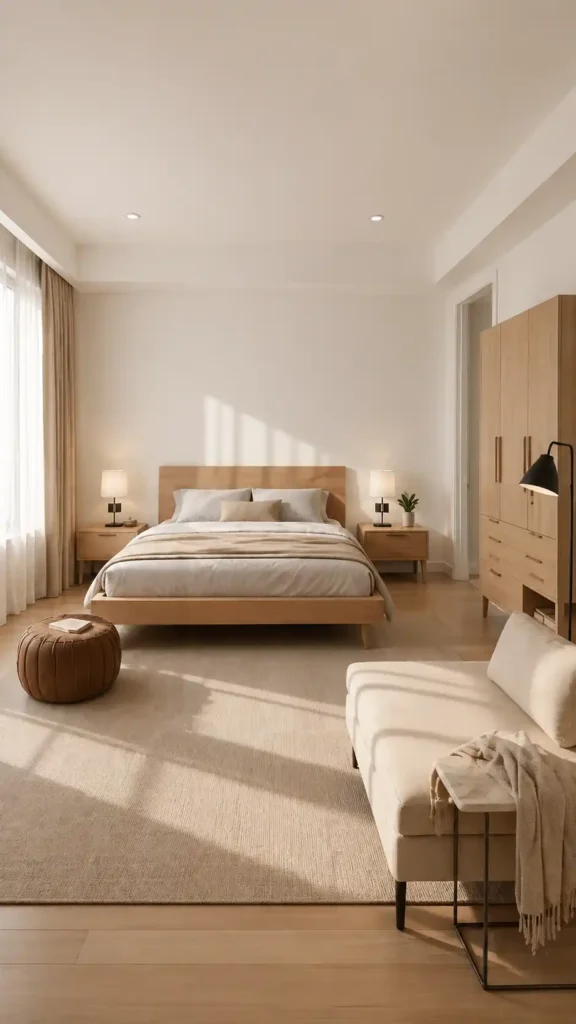
Furniture with clean lines complements your textured walls by maintaining visual balance and preventing your neutral bedroom from feeling cluttered or chaotic. Select pieces with straight edges, minimal ornamentation, and streamlined silhouettes — prioritizing low-profile platform beds with solid wood or powder-coated metal frames, angular nightstands with flush drawer fronts, and unadorned six-drawer dressers in matte-finish oak, walnut, or brushed steel.
These minimalist furniture forms — characterized by sharp 90-degree corners, recessed hardware, and monochromatic surfaces — create calm, organized spaces with deliberate negative space between pieces. This intentional restraint allows richly textured elements like grasscloth wallcovering, linen upholstery, and woven area rugs to function as dominant focal points throughout your bedroom’s overall design composition.
Introduce Soft Accent Colors Thoughtfully
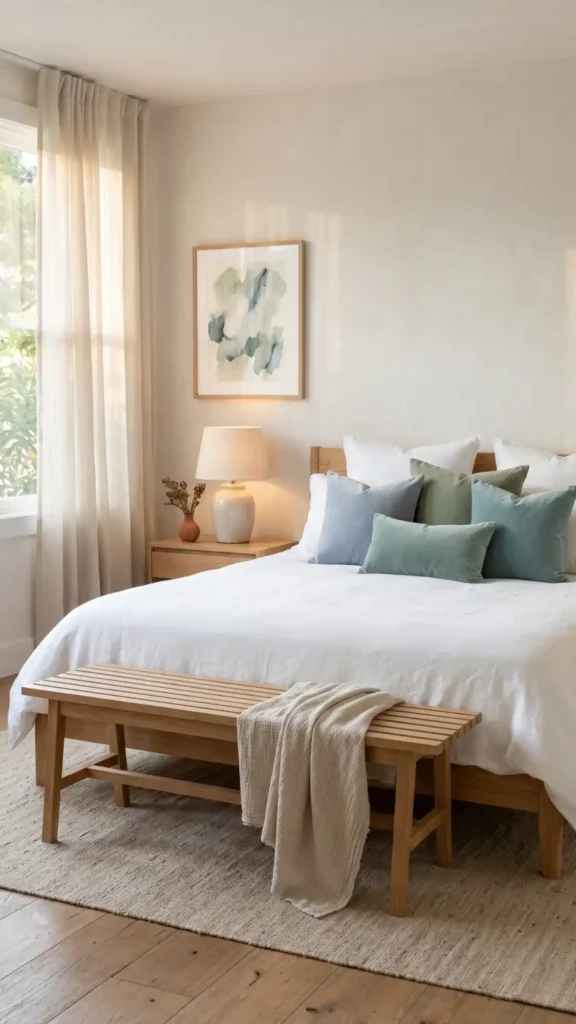
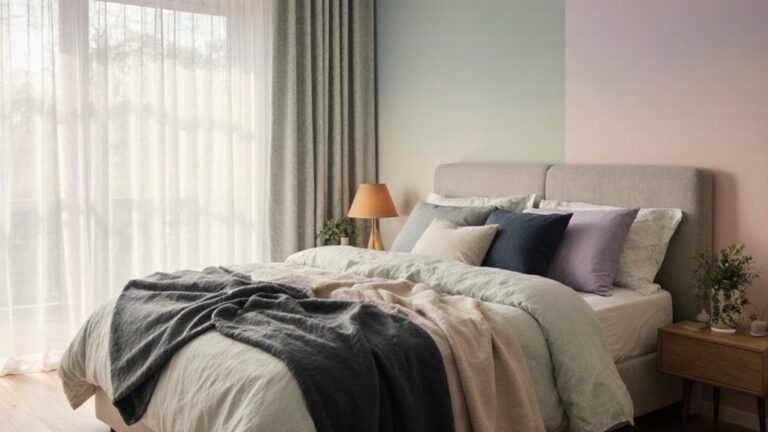
To prevent your neutral bedroom from feeling sterile or one-dimensional, introduce soft accent colors that enhance rather than overwhelm your calming foundation. Muted, low-saturation hues — pale dusty blues, warm greige tones, or sage and eucalyptus greens — integrate seamlessly into a restrained color palette without creating visual tension or disrupting tonal harmony.
Layer these understated chromatic accents through tactile, high-impact accessories: linen or velvet throw pillows in a 20×20 or 22×22 format, lightweight woven cotton throws draped across a upholstered bench or slatted wood footboard, and framed abstract or botanical artwork featuring soft watercolor washes. These deliberate, low-contrast touches generate visual depth and dimensional interest while preserving the serene, restorative atmosphere anchored by your clean-lined, minimal furniture silhouettes.
Build a Reading Corner as a Focal Point
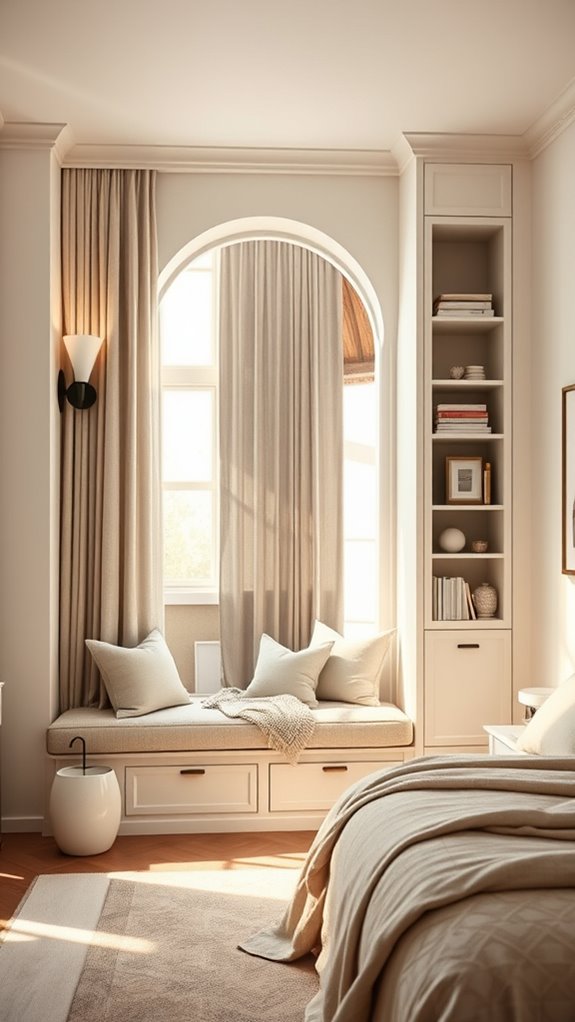
A dedicated reading corner anchors your neutral bedroom with purpose, merging ergonomic comfort, filtered natural light, and deliberate layering into one cohesive focal point.
Position a deep-seated, linen-upholstered armchair—ideally wingback or barrel-style with a solid hardwood frame—directly adjacent to a window that receives soft, diffused daylight throughout the morning or afternoon hours.
Layer the seating surface with two to three throw pillows in varying textures such as boucle, waffle-knit, or brushed cotton, keeping the palette within a warm greige, ivory, or oat-tone range. Drape a chunky-knit or woven wool blanket over one arm for tactile contrast and visual depth.
Position a solid wood or marble-topped side table within easy reach to hold a ceramic mug, a curated stack of hardcover books, and a small potted plant such as a trailing pothos or compact fiddle-leaf fig. Complete the vignette with a brass or matte black arc floor lamp featuring a linen shade, providing warm, focused ambient light for evening reading sessions.
Final thoughts
Neutral bedrooms thrive on layered textures, cohesive color palettes, and thoughtful lighting. By combining linen throw pillows, velvet upholstered headboards, and chunky wool blankets with warm whites, taupe wall paint, and greige undertones, you’ll create depth and visual interest that prevents the space from feeling flat or monotonous.
Incorporate textured plaster walls, clean-lined solid oak furniture, and soft dusty rose or sage green accent colors placed strategically across the room. Your dedicated reading corner — featuring a curved bouclé armchair, a brass arc floor lamp, and a slim walnut side table — becomes a functional focal point. Gallery walls displaying black-and-white photography alongside trailing pothos and sculptural fiddle-leaf fig trees inject organic personality into the composed, restrained palette. These carefully selected elements transform your neutral bedroom into a serene, sophisticated retreat with quiet visual richness.