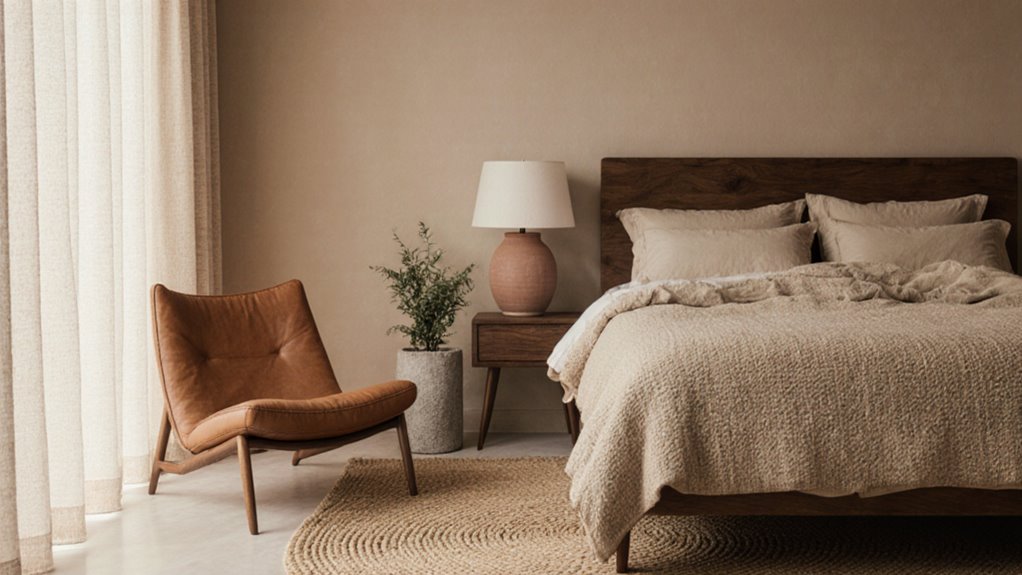
13 Earth Tone Bedroom Ideas That Feel Grounded Not Boring
You’re looking for a bedroom that feels calm and connected to nature without falling flat. Earth tones—terracotta, taupe, greige, and golden ochre—offer warmth when layered thoughtfully.
The challenge isn’t choosing these colors; it’s combining them with hand-loomed textures, organic materials like linen and raw wood, and strategically placed accent pieces to create visual depth and interest. Your space can feel both grounded and sophisticated with the right approach.
Start With Your Neutral Earth Tone Foundation
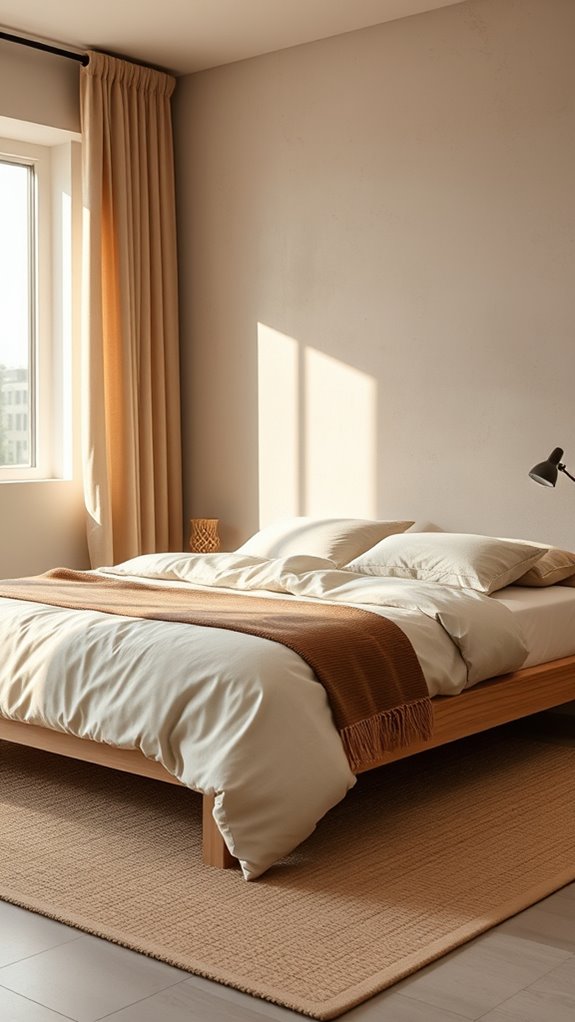
Start by selecting neutral earth tones like warm beige, soft taupe, or muted clay as your foundation for a naturally calming bedroom. These timeless, non-trendy hues generate immediate visual calm through their low saturation and warm undertones, making them ideal base colors for a restful sleep environment.
With your neutral palette established, layer in tactile depth through organic, natural materials. Stonewashed linen bedding, solid oak or walnut furniture, and hand-woven jute or sisal accents introduce rich sensory texture that grounds the space with an earthy, cohesive authenticity.
To achieve a look that feels intentionally curated rather than accidentally unmatched, let each material choice reinforce the overall narrative of organic warmth and quiet sophistication.
Layer Warm and Cool Earth Tones for Visual Depth
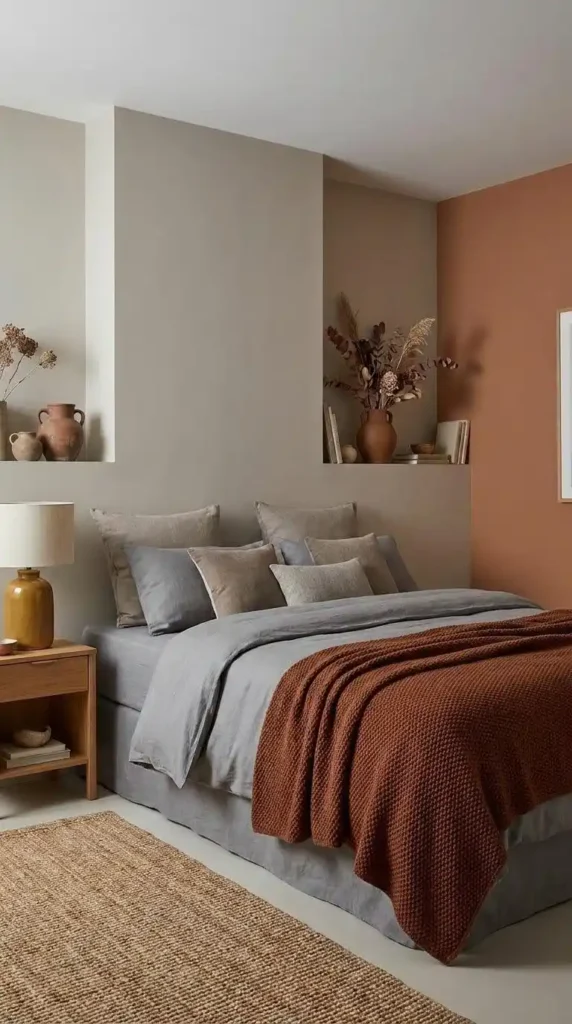
Creating visual depth in your bedroom becomes effortless when you layer both warm and cool earth tones together. Combine rich terracotta and golden ochre with sophisticated cool taupe and muted greige across your walls, bedding, and decorative accessories. This intentional temperature contrast prevents visual monotony while maintaining a cohesive, harmonious aesthetic throughout the space.
A restrained palette can still deliver remarkable personality and depth when executed with thoughtful intention.
To balance these tones effectively, drape a deep rust-colored throw blanket over cool gray linen pillows, allowing each element to complement rather than compete with the other. This layering technique distributes warmth and coolness evenly, giving your bedroom a grounded, visually dynamic quality that feels both inviting and intentional.
Mix Textures: Linen, Jute, and Leather
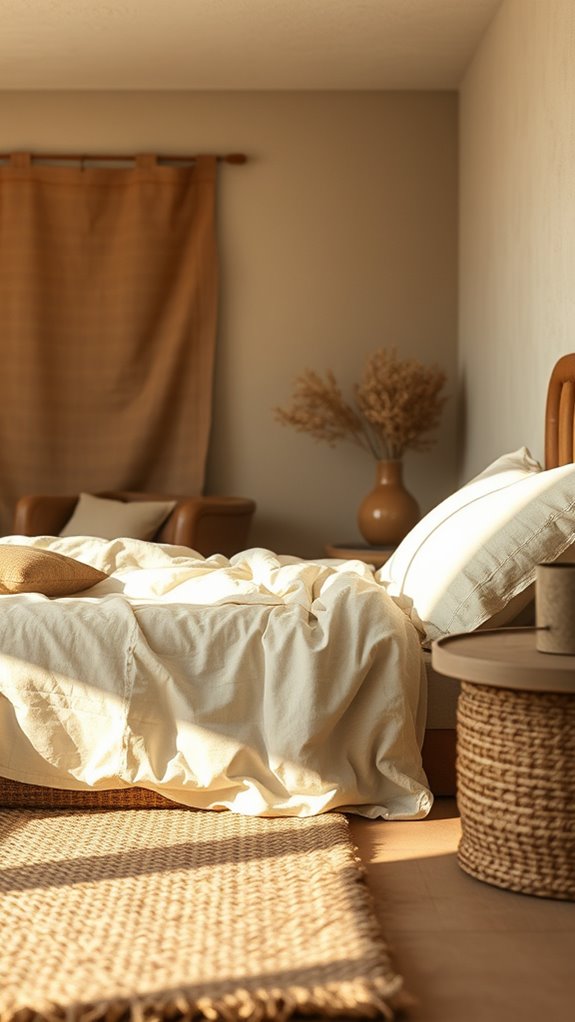
Layered earth tones — warm ochres, deep terracottas, and muted taupes — establish the visual foundation of a bedroom, but it’s the deliberate interplay of contrasting tactile surfaces that elevates the space from visually flat to sensorially rich. Linen bedding, with its naturally slubbed weave, breathable open structure, and soft-yet-crisp hand feel, introduces an effortless, lived-in softness across the sleeping surface. Beneath the bed, a hand-woven jute rug — dense, coarse-fibered, and warm amber-brown in tone — grounds the room with an organic, earthy weight underfoot.
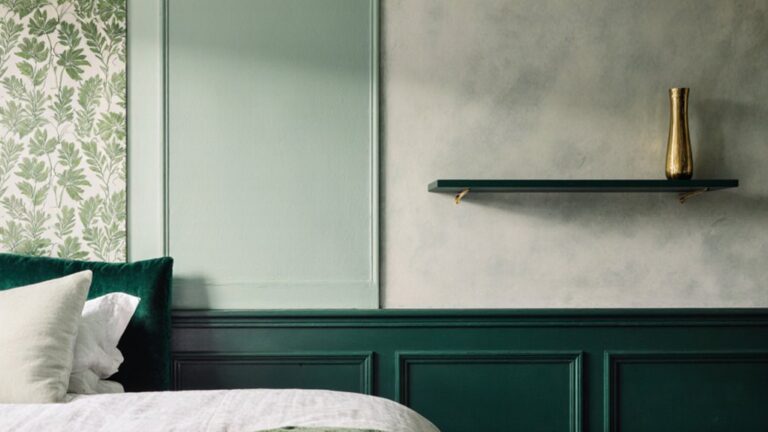
Leather accents, whether a tawny full-grain throw pillow, a weathered cognac headboard panel, or a burnished saddle-leather ottoman, introduce a smooth, cool, and subtly structured contrast against the softer textiles surrounding them. Together, these three material types — porous linen, rough-hewn jute, and supple leather — create a layered sensory composition that prevents visual monotony, rewards close observation, and anchors the room in a sophisticated, grounded aesthetic. For added depth, consider integrating luxurious-looking wall panelling behind the bed to introduce architectural texture that complements these organic materials.
Incorporate Natural Materials: Wood and Stone
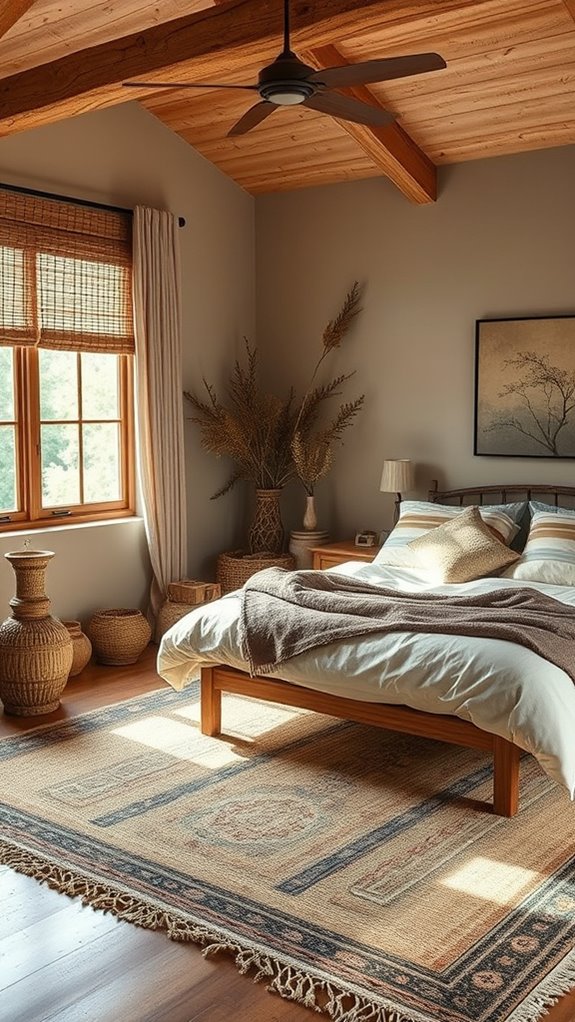
Raw natural materials serve as the foundation of a well-grounded earth-tone bedroom, creating an organic bridge between the room’s warm ochre, terracotta, and sienna palette and the textures found in nature itself. Solid oak or walnut bed frames with deeply etched, visible grain patterns anchor the space with structural warmth, while hand-scraped hardwood flooring or wide-plank reclaimed pine boards underfoot reinforce that same tactile, organic quality.
Rough-hewn limestone accent tiles, slate feature walls, or stacked fieldstone panels introduce cool-toned mineral depth that offsets the warmth of wooden furnishings, preventing the palette from reading as overly heavy or monotonous. Brushed travertine nightstand surfaces, river stone decorative objects, or a carved sandstone vessel can layer in additional textural contrast at a smaller scale, enriching the room’s sensory complexity without overwhelming its cohesive, nature-rooted aesthetic. Colour mistakes that make rooms feel smaller can easily occur when warm earth tones dominate without the balancing presence of these cooler natural materials and varied textures.
Add Living Plants to Deepen the Connection
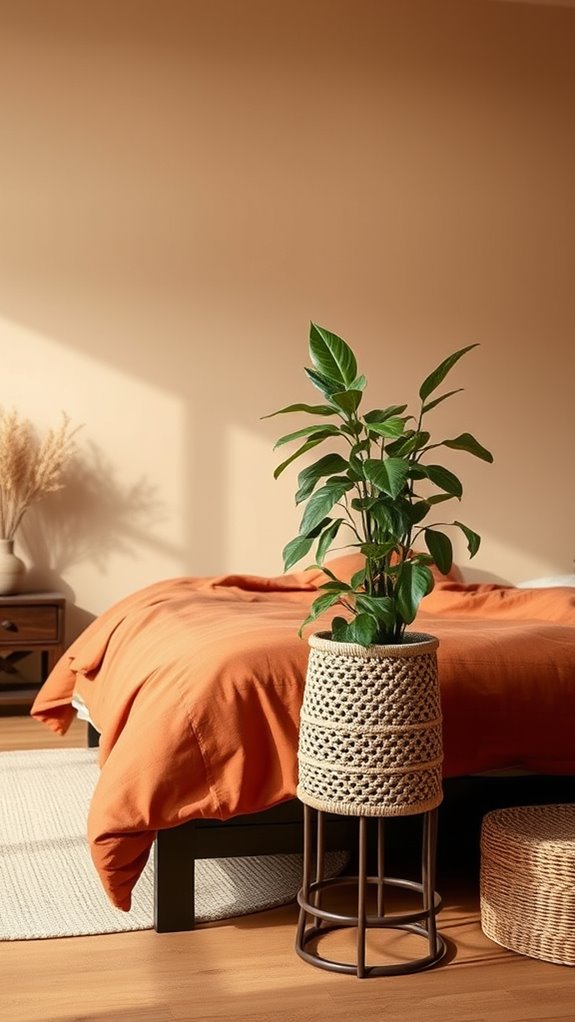
Living plants transform an earth-tone bedroom from a static collection of materials into a breathing, evolving space that mirrors the natural world you’re drawing inspiration from. Choose low-maintenance varieties like golden pothos (*Epipremkos aureum*) with its trailing vines and variegated heart-shaped leaves, or the architectural snake plant (*Sansevieria trifasciata*) with its rigid, sword-like foliage edged in pale yellow.
Position these specimens strategically on reclaimed wood nightstands, terracotta-glazed ceramic pots on floating shelves, or macramé hangers near windows with filtered natural light. Their rich chlorophyll-dense green foliage creates striking chromatic contrast against warm ochre, sienna, and sandstone neutrals, while simultaneously improving indoor air quality through photosynthetic oxygen exchange and adding layered organic visual depth throughout your restful sanctuary. Soft, warm bedroom lighting placed at varying heights around your plants will cast gentle shadows and highlight their organic forms after sunset.
Use Accent Walls to Ground Your Bedroom
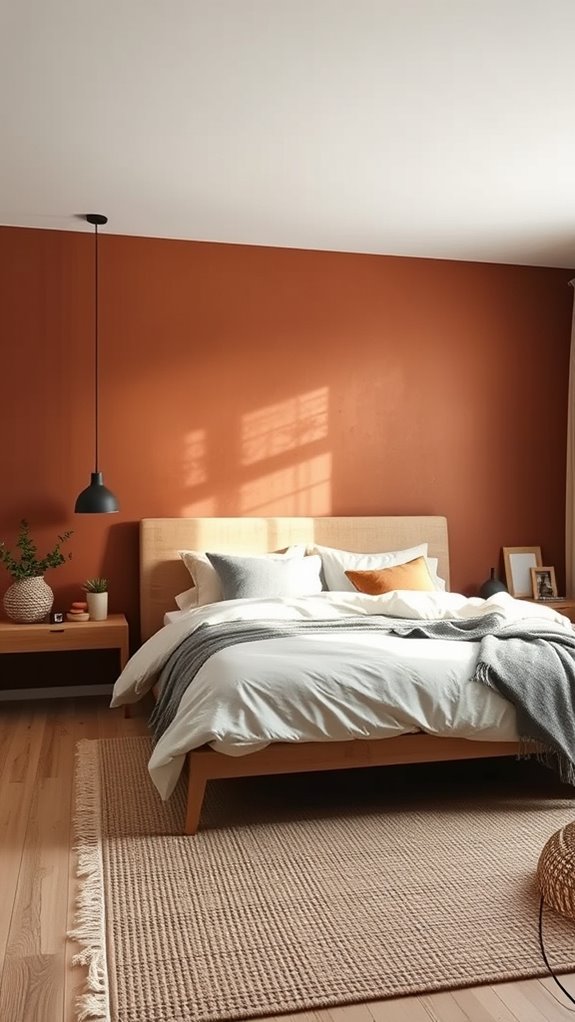
Anchor your bedroom’s visual foundation by painting one wall in deep terracotta, warm taupe, or rich chocolate brown — a single bold surface that creates dramatic focal point interest without overwhelming the remaining three neutral walls. This deliberate contrast grounds the entire room’s color palette while preserving an open, breathable atmosphere throughout the space.
For maximum visual impact and dimensional depth, select either the wall directly behind your upholstered or wooden bed frame, or the wall positioned opposite your primary windows to capture natural light and amplify the richness of your chosen pigment.
When considering furniture placement, establish a clear boundary between sleep and work areas by positioning your desk on a different wall than your bed, ensuring the accent wall serves rest rather than labor.
Balance Earth Tones With Unexpected Metallics
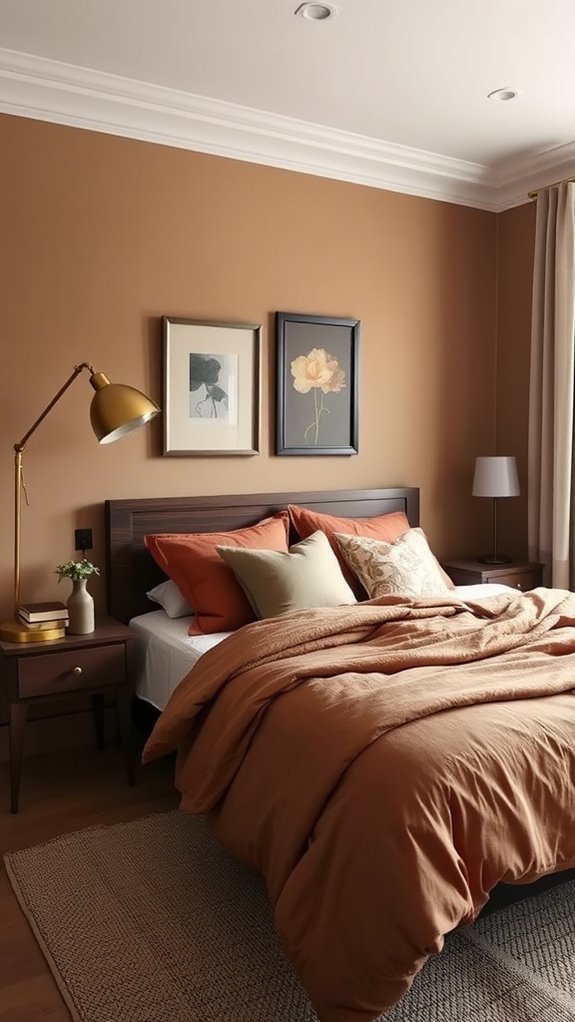
Earth tones needn’t feel muted or flat when you introduce metallic accents throughout your bedroom’s design scheme. Brass fixtures, copper hardware, and gold-trimmed mirrors add sophistication and visual interest, catching ambient light and creating luminous focal points across the room.
Layer these warm, reflective metallics against taupe-painted walls with an undertone of gray-beige, rust-hued terracotta textiles featuring woven or embroidered textures, and natural wood furniture with visible grain and honey-toned finishes. This deliberate combination creates dimensional depth while maintaining tonal cohesion, preventing the overall space from reading as flat, predictable, or visually underwhelming.
Consider how a striking headboard design in brushed bronze or hammered metal can serve as the room’s anchor, transforming the entire bedroom’s atmosphere while reinforcing your earth-toned palette with sculptural presence.
Bring in Soft Lighting to Enhance Warmth
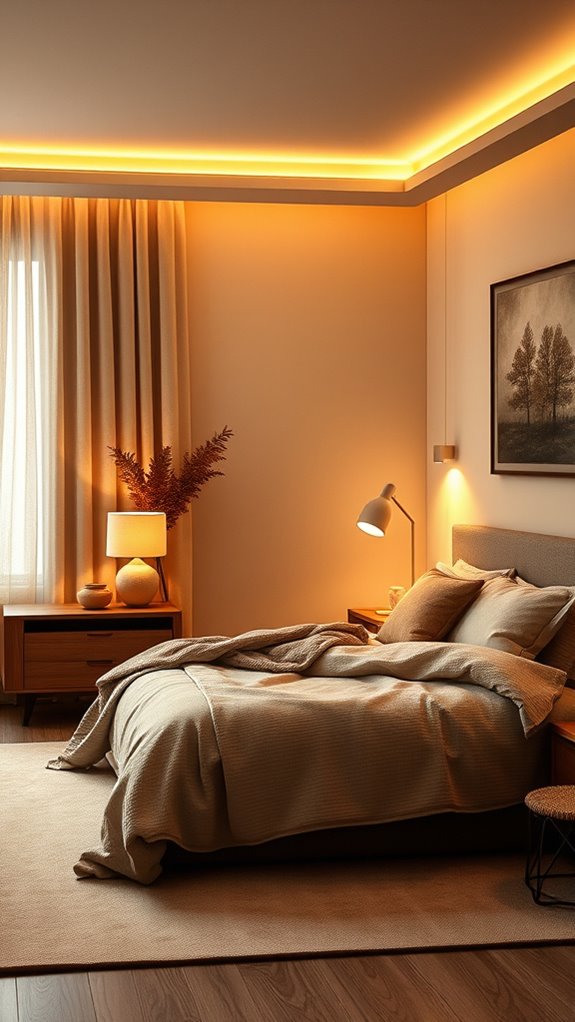
Metallic accents shine brightest when paired with thoughtfully layered lighting that amplifies the warmth already embedded in an earth-toned palette. Warm-white LED bulbs — rated between 2700K and 3000K color temperature — installed in bedside lamps, ceiling-mounted pendant fixtures, and brushed-brass wall sconces create rich ambient depth with a honeyed luminosity. Consider how a cohesive headboard wall can serve as the perfect backdrop for your layered lighting scheme, treating the entire vertical plane as one integrated design statement.
Dimmer switches with smooth rotary or slide controls give you precise command over light intensity across every hour of the day. Linen lampshades in natural, undyed fabric diffuse bulb output softly, scattering warm-toned light across terracotta walls, aged-wood surfaces, and hammered-metal decorative objects to reinforce the cozy, grounded atmosphere you’ve carefully constructed.
Layer Earth Tone Bedding in Coordinating Shades
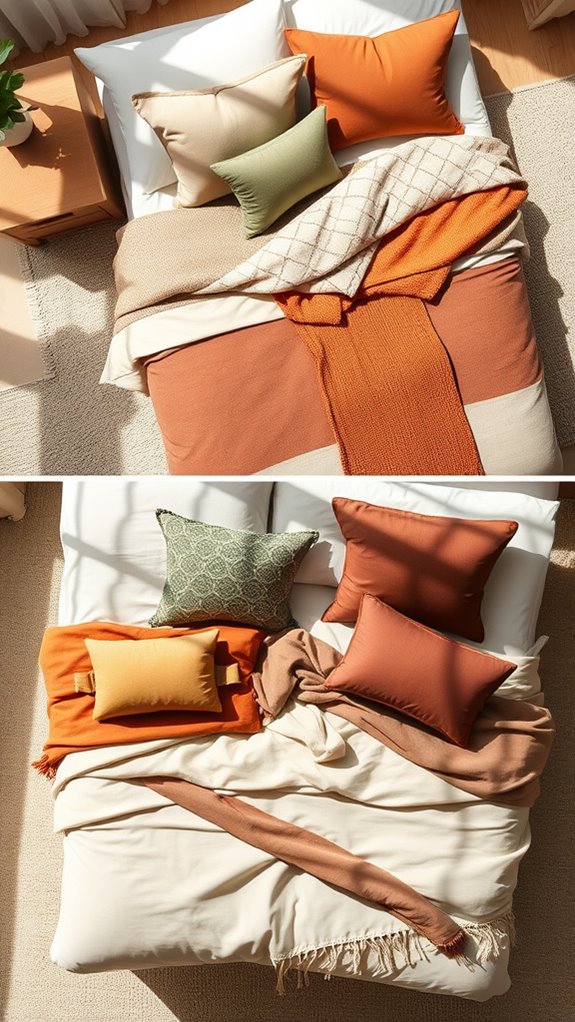
Start with a foundation of warm terracotta sheets, their oxidized clay hue setting a grounded, earthy tone across the mattress. Layer taupe pillowcases and shams overtop, their greige-toned textile surfaces bridging the gap between warm and neutral. Earth tone bedroom ideas work best when each layer contributes distinct warmth while maintaining visual cohesion.
Introduce a deep chocolate duvet as the dominant mid-layer, its rich cocoa saturation adding visual weight and dimensional contrast against the lighter underlayers. Finally, drape a chunky-knit or woven cream throw blanket across the foot of the bed, its off-white, ivory-adjacent tone softening the overall palette without disrupting the cohesive earth-tone harmony.
This intentional, multi-layered approach builds a sleep space with measurable visual depth, textural complexity, and a sophisticated tonal range that feels curated rather than accidental.
Play With Pattern: Geometric and Botanical Designs
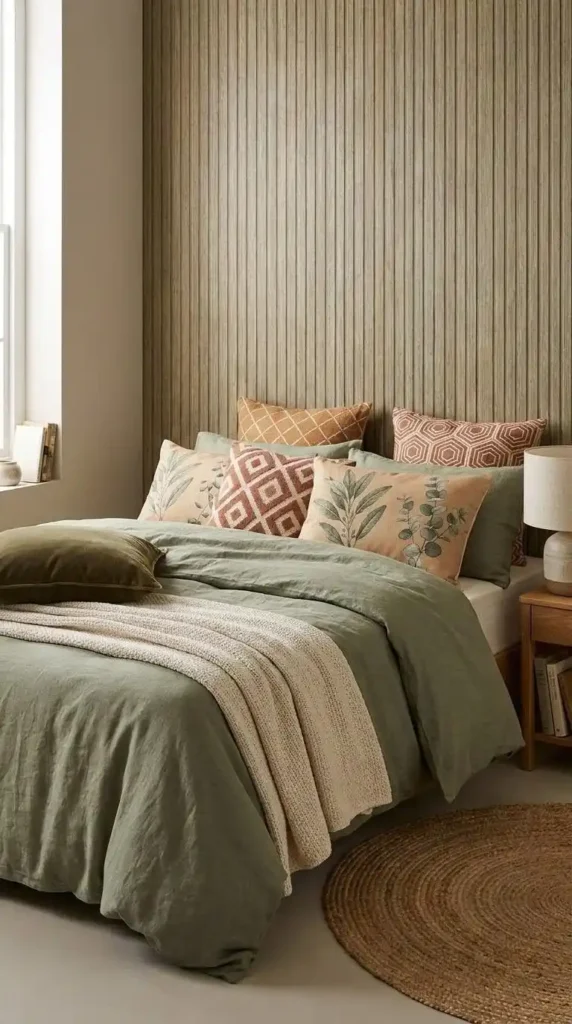
Breaking up solid earth tones with strategic pattern work prevents your bedroom from feeling flat or one-dimensional. Consider geometric throw pillows in terracotta and cream, featuring sharp-edged diamond motifs, interlocking hexagons, or bold chevron configurations that introduce angular contrast against soft linen duvet covers.
Botanical bedding featuring hand-illustrated sage leaves, trailing eucalyptus stems, or oversized fiddle-leaf silhouettes against warm ochre or biscuit-toned backgrounds delivers organic visual movement. These layered patterns add dimensional interest while maintaining tonal cohesion, allowing you to stack woven cotton textures, brushed velvet accents, and raw-edged jute elements without overwhelming your restful sanctuary with competing or clashing designs. For a more architectural approach,bedroom wall panelling can introduce subtle geometric texture that complements your patterned textiles while maintaining those grounding earth tones throughout the space.
Select Artwork That Echoes Your Warm Palette
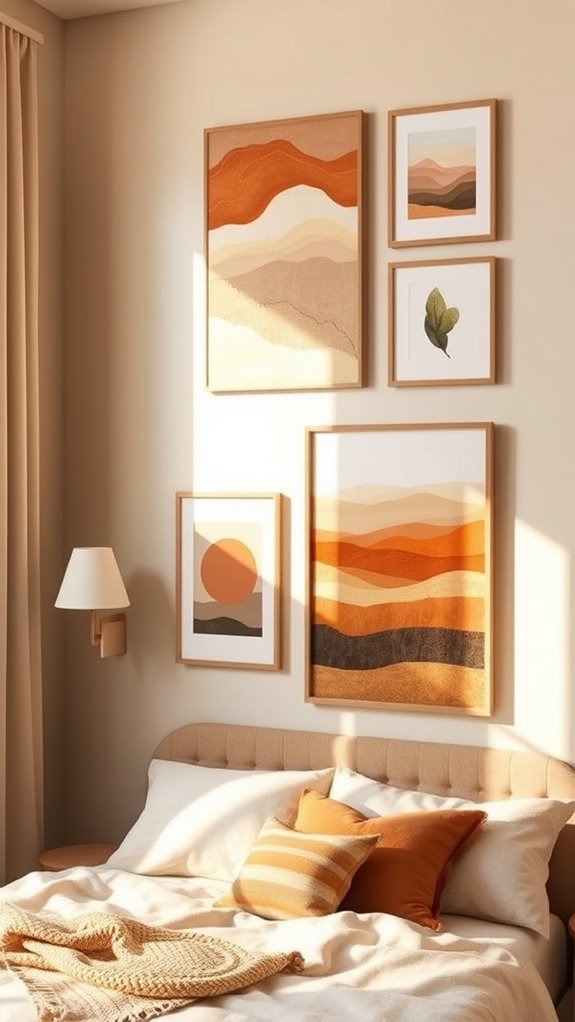
Once you’ve established pattern and texture through your bedding and pillows, artwork becomes the visual anchor that ties your earth-toned palette together. Choose pieces featuring warm ochres, sun-baked terracottas, burnished ambers, and soft umber browns that complement your existing layered décor.
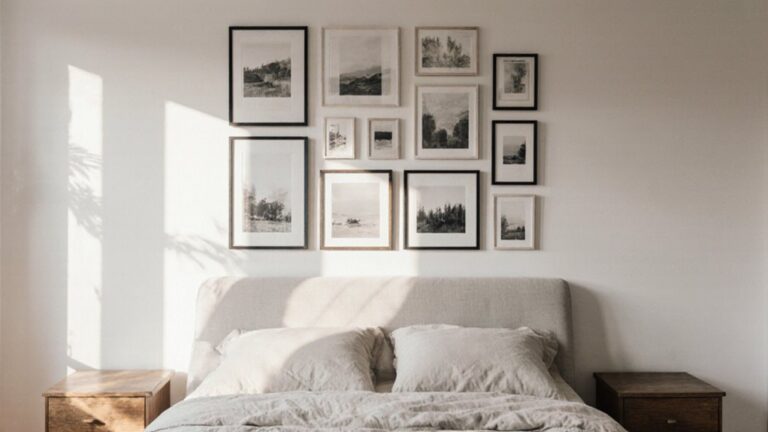
Abstract landscapes with hazy horizon lines, detailed botanical prints showcasing dried grasses and seed pods, and richly saturated nature photography all integrate seamlessly into warm, organic interiors. Hang selected pieces at seated eye level — approximately 57 to 60 inches from floor to center — ensuring each work resonates with your room’s underlying warmth and reinforces visual cohesion across walls, textiles, and natural wood surfaces.
Introduce Terracotta or Rust for Bold Warmth
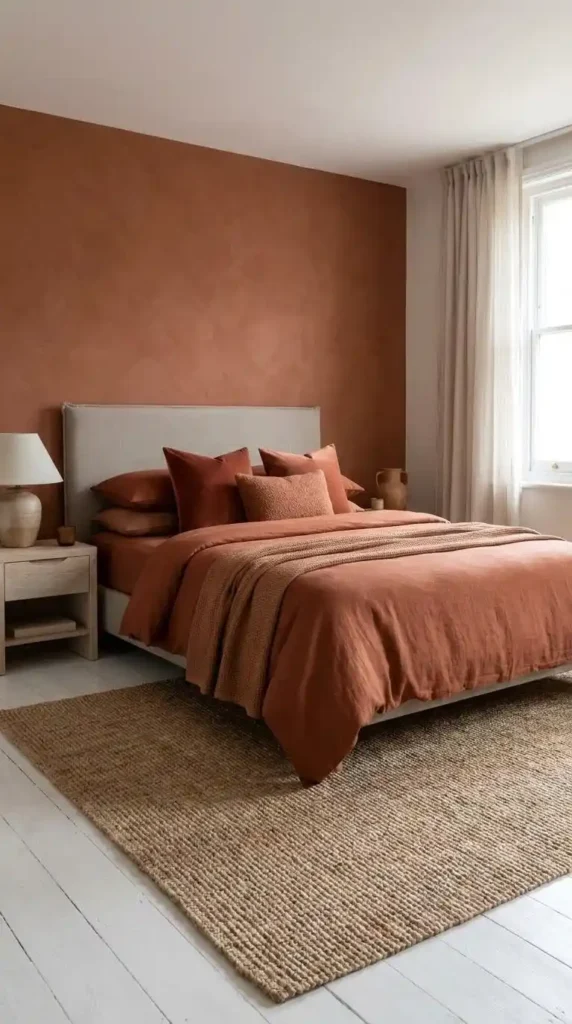
While soft earth tones establish a muted, grounding foundation, introducing terracotta or rust accents injects chromatic depth and layered visual interest into your bedroom’s warm palette. Consider terracotta bedding featuring brushed cotton or linen weaves, rust-colored throw pillows in velvet or bouclé textures, or a statement accent wall saturated in these bold, clay-fired hues.
These warm, high-saturation pigments create commanding focal points within the room without visually overwhelming the surrounding space. Layer rust-toned textiles against bleached oak furnishings, whitewashed wooden frames, or greige upholstered headboards to maintain a grounded balance and refined sophistication throughout every corner of your room.
Ground Your Space With Intentional Accessories
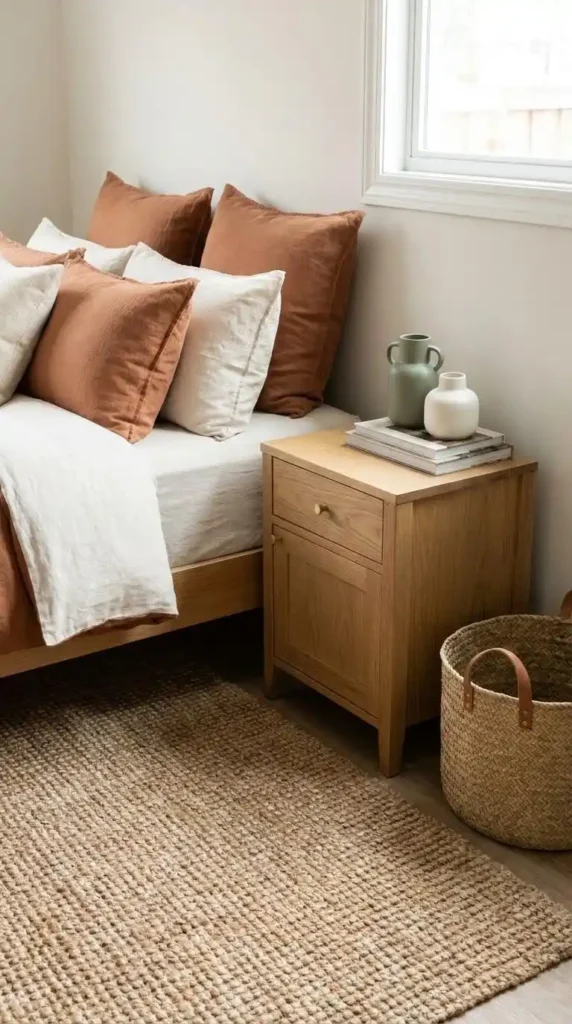
How do you transform a bedroom’s foundation into a cohesive, intentional space that reflects your personal aesthetic? Select accessories deliberately, choosing handwoven seagrass baskets with reinforced leather handles, stonewashed linen throw pillows in warm terracotta and ivory, and solid oak nightstands with brass hardware that complement your earth tone palette.
Layer textures thoughtfully with chunky hand-knotted jute rugs in natural undyed fibers and matte-glazed ceramic vessels in sage green and warm white, creating dimensional visual interest without overwhelming the room’s calm, grounded foundation.
Final thoughts
Creating an earth tone bedroom that feels sophisticated and calming comes down to intentional layering. Warm amber and rust tones balanced against cooler sage greens and slate grays build visual depth, while raw linen upholstery, hand-thrown terracotta vessels, and white oak furniture introduce tactile richness that rewards closer inspection.
Natural jute rugs, boucle throw pillows, and live trailing pothos or sculptural fiddle-leaf figs anchor the space organically without forcing a theme. Original artwork in ochre, burnt sienna, or muted olive tones ties the palette together and adds a layer of personal expression that makes the room feel genuinely curated rather than assembled.