11 Grunge Bedroom Ideas That Are Moody Without Being a Mess
You’re drawn to grunge aesthetics but worry that dark walls and distressed furniture will trap you in a cluttered, oppressive space. The balance between moody atmosphere and functional design requires intentional choices—from your foundational color palette to how you layer textures and organize zones.
Understanding which specific elements create depth without chaos—exposed brick, matte black iron fixtures, weathered wood grain surfaces, and layered charcoal textiles—transforms your bedroom into a sophisticated, atmospheric retreat that actively supports your daily routines and sleep environment.
Start Your Grunge Bedroom With a Dark Color Foundation
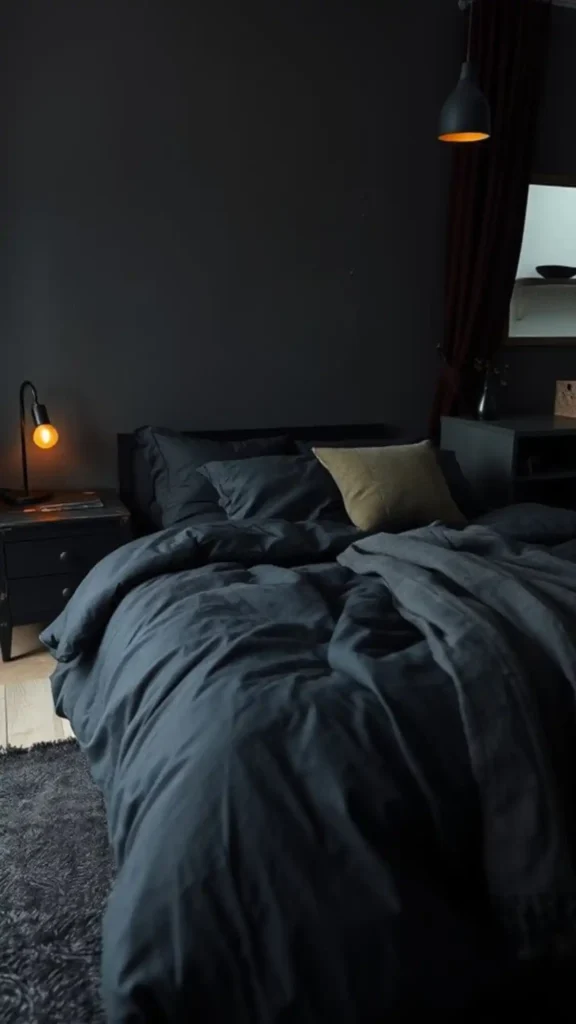
Start by selecting a dark color foundation — charcoal, deep gray, or matte black — for your walls, as these moody, pigment-rich hues establish the grunge aesthetic’s defining character. The raw, absorptive quality of these colors creates visual weight and atmospheric tension that synthetic or pastel alternatives simply can’t replicate.
Balance this darkness with strategic, layered lighting and carefully chosen lighter accent pieces — distressed white textiles, weathered wood tones, or faded vintage prints — to prevent the space from feeling oppressive or cave-like while preserving an authentic, unpolished grunge identity. This approach ensures your moody yet cohesive spaces maintain their atmospheric edge without descending into visual chaos.
Layer Textures Without Creating Visual Chaos
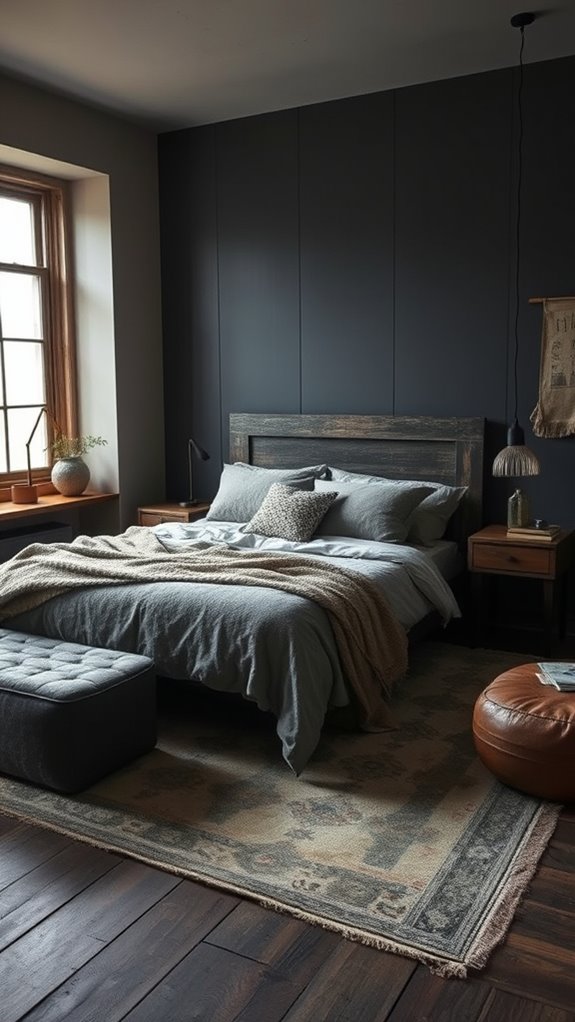
What separates a refined grunge bedroom from a cluttered one is your deliberate approach to layering textures, which requires restraint and intentionality rather than random accumulation.
Combine rough, weathered elements like exposed brick walls or distressed reclaimed wood furniture with softer, tactile materials such as velvet throws, chunky wool rugs, and worn linen bedding.
This tactile contrast prevents visual overwhelm while preserving an authentic, raw grunge aesthetic. Select three primary textures maximum, then anchor them through a consistent, muted color palette — think charcoal grays, deep burgundies, or faded blacks — to achieve a cohesive, deliberately curated design with depth and intentionality.
Drawing from color theory for bedrooms, earthy green tones can also ground a grunge space, connecting the raw, weathered elements to something organic and naturally aged.
Hide Clutter With Smart Storage Solutions
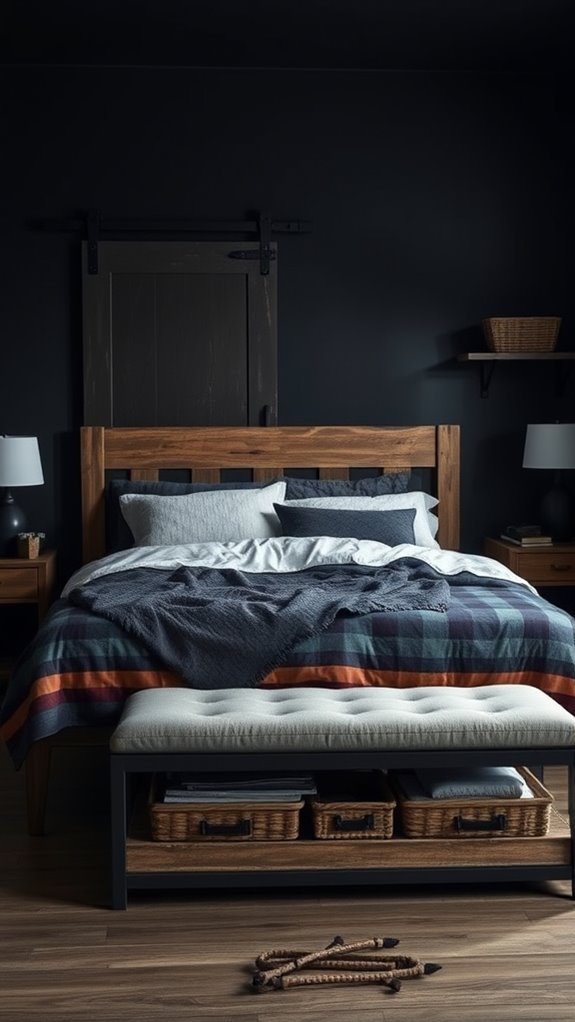
The most effective grunge bedrooms maintain their moody aesthetic while keeping clutter hidden behind intentional storage solutions that work harder than typical bedroom furniture. Consider black metal shelving units, industrial wire baskets, and under-bed drawers that blend seamlessly with darker palettes.
Vertical storage maximizes floor space in compact or sprawling rooms alike, while closed cabinets with matte-black hardware conceal everyday items from view, preserving your room’s deliberately curated, high-contrast appearance. To complete the layered atmosphere, incorporate bedside and ambient sources alongside your overhead fixtures, allowing you to adjust illumination levels without disrupting the room’s brooding character.
Choose Distressed Furniture That Tells a Story

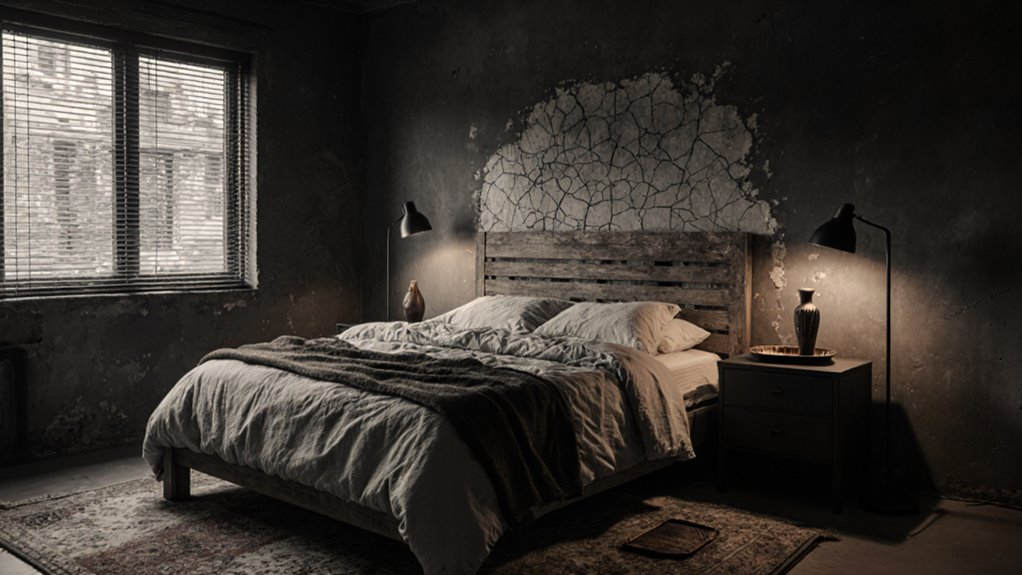
Where do you find furniture that truly anchors a grunge bedroom’s authentic character? You’ll want pieces with visible surface wear, deeply weathered wood finishes, distressed raw edges, and time-worn textures that expose their layered history.
Vintage iron bed frames with chipped black paint, reclaimed oak dressers scarred with dents and faded stains, and cracked full-grain leather armchairs with worn armrests work as ideal foundational pieces. These structurally substantial, high-character items build visual depth through their naturally accumulated patina, establishing the moody, lived-in aesthetic you’re seeking without requiring excessive decorative layering. Since most grunge-style furniture pieces are heavy and freestanding, they function perfectly as no nails solutions that won’t violate rental agreements or damage walls.
Arrange Your Bed as the Room’s Centerpiece
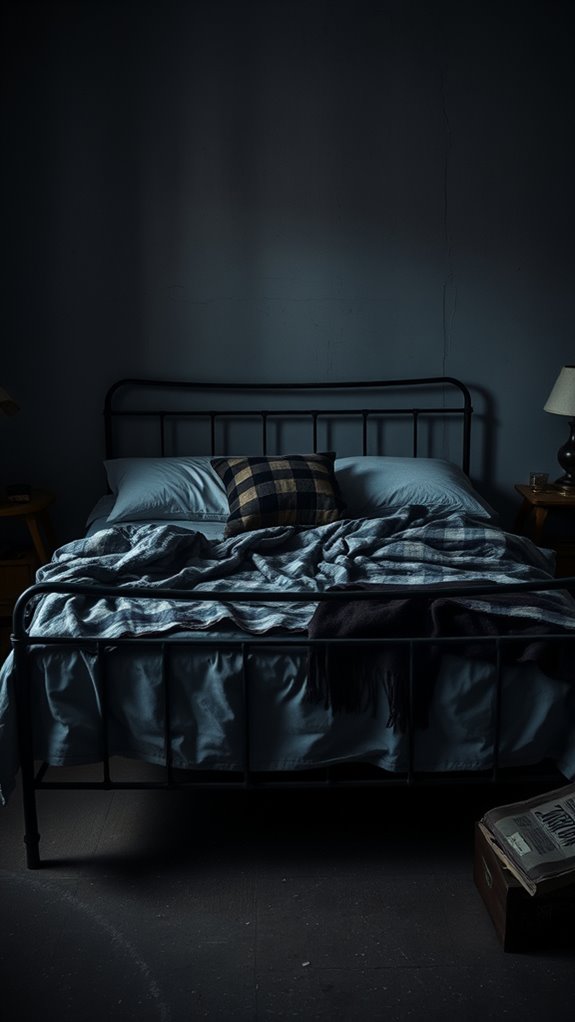
How you position your bed establishes the visual and spatial foundation for your entire grunge bedroom’s design scheme. Place your bed against the room’s largest wall, creating a dominant focal point that anchors the space with structural authority and intentional weight. Unlike earthy bedroom ideas that favor natural, grounded palettes to feel fresh without becoming muddy, grunge aesthetics embrace shadow and deliberate imperfection.
Layer dark, heavyweight bedding in deep charcoal, matte black, or distressed burgundy tones with textured, worn-fabric throws and mismatched pillow arrangements in varying sizes and rough-woven materials. This deliberate, curated layering allows the bed to command attention while reinforcing the raw, moody aesthetic you’re cultivating throughout the broader bedroom environment.
Display Band Posters With Intention
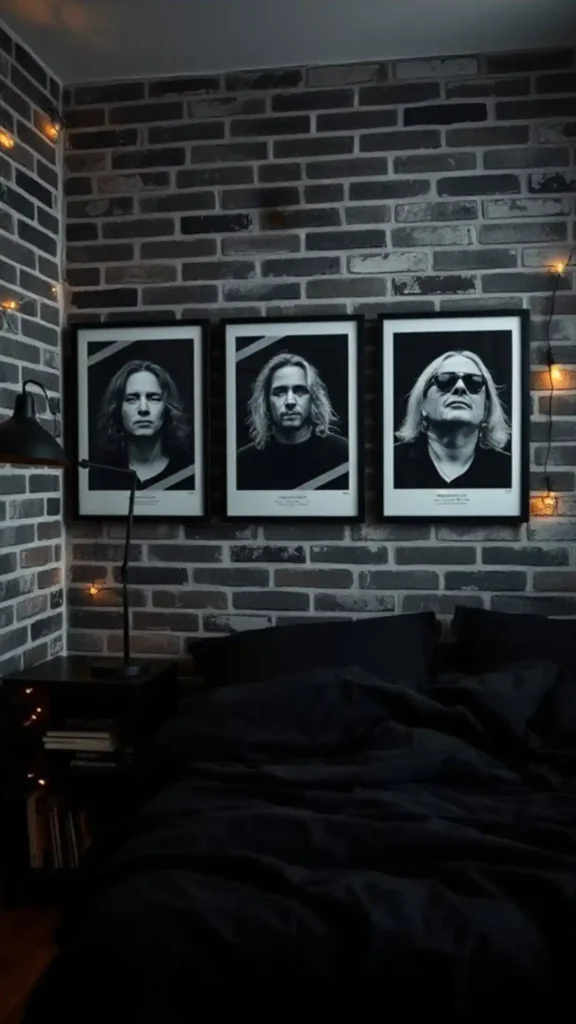
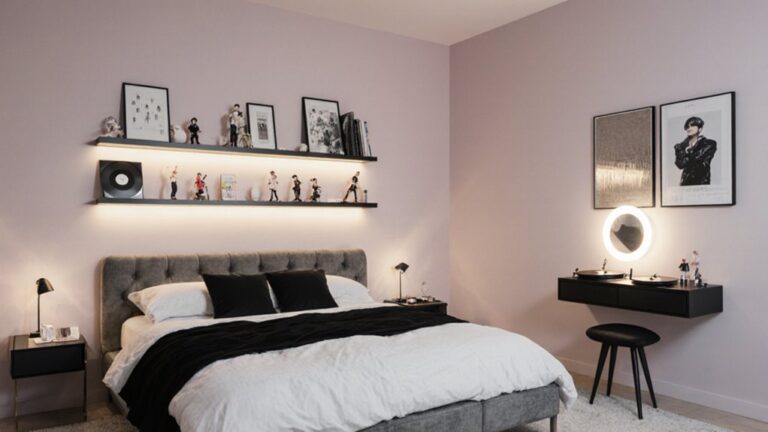
Band posters serve as essential visual anchors in your grunge bedroom, yet their placement requires deliberate curation rather than haphazard arrangement. Choose a single dedicated feature wall for your curated collection, positioning weathered, sun-faded posters at consistent eye level with intentional spacing between distressed frames. timeless design approach allows personal expression to evolve organically without demanding complete room reinvention.
Consider matte black metal or dark-stained reclaimed wood frames that amplify moody, atmospheric aesthetics while unifying mismatched vintage artwork. This focused, gallery-style approach prevents visual chaos and fragmented energy while preserving the raw, authentic grunge atmosphere you want permeating throughout your entire space.
Install Moody Lighting That Sets the Tone
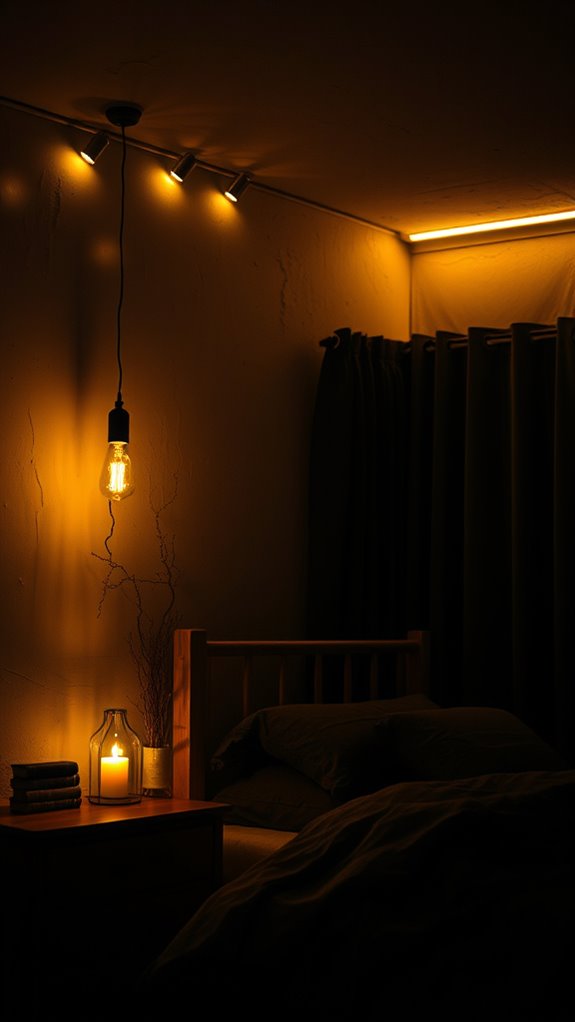
Lighting transforms your grunge bedroom from a space that merely looks dark into one that feels intentionally atmospheric, anchoring the mood you’ve established with your curated band posters and carefully chosen furnishings. Install dimmable warm-toned bulbs in the 2200K–2700K amber spectrum, Edison-style filament fixtures with visible tungsten coils, or vibrant neon tube accents in deep crimson, electric violet, or acid green that you can modulate based on your shifting needs throughout the day and night.
Layer multiple light sources across distinct vertical zones, combining low-wattage overhead pendants with ceramic or wrought-iron bedside lamps and weathered copper-wire string lights draped across exposed brick walls or raw wooden shelving units. This multi-point illumination strategy eliminates harsh single-source shadows while creating rich pockets of controlled, directional ambiance that reinforces the raw, textured aesthetic of your intentionally curated grunge environment. For added depth and sophistication, incorporate textured wall panelling behind your bed or along a feature wall, which catches directional light to cast dramatic shadows that amplify the moody atmosphere.
Mix Vintage Finds With Modern Pieces

Pairing vintage dressers—think oak-finished mid-century pieces with original brass hardware—alongside sleek brushed-steel nightstands creates compelling visual contrast. This deliberate tension between weathered craftsmanship and contemporary clean lines generates a layered, curated aesthetic that neither style achieves independently. Strategic placement of fewer, larger pieces can maximize small spaces by allowing each item sufficient visual breathing room, creating an unexpectedly luxurious feel even in compact quarters.
Distressed full-grain leather armchairs positioned beside crisp linen duvet covers and geometric-patterned throw pillows establish tactile and visual balance. Reclaimed solid-wood shelving, featuring natural knots and grain variations, paired with minimalist matte-black accents and low-profile sculptural objects, gives each piece sufficient negative space to breathe—preventing the room from reading as cluttered, chaotic, or stylistically confused.
Add Plants and Wood to Balance Dark Walls
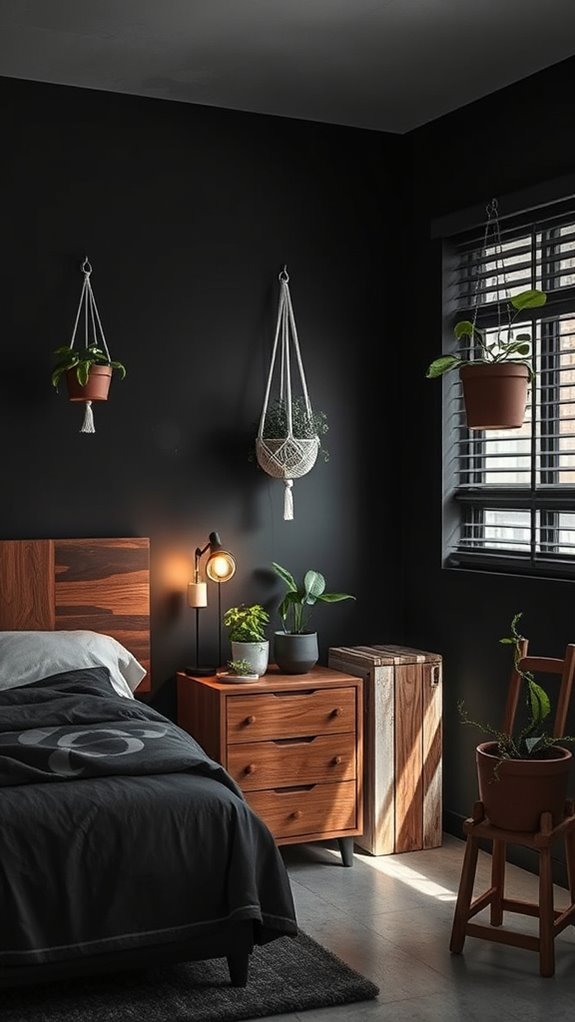
Since dark walls can absorb light and create visual heaviness, you’ll want to introduce natural elements that brighten the space and add organic texture. Position moisture-loving potted plants, such as broad-leafed monstera deliciosa, architectural snake plants (*Sansevieria trifasciata*), or cascading pothos vines, near south- or east-facing windows to maximize filtered natural light exposure while simultaneously improving indoor air quality through active oxygen production.
Incorporate warm-toned wooden elements — think solid oak shelving units, teak credenzas, walnut dining tables with visible grain patterns, or wide-plank reclaimed pine flooring — to shift the room’s color temperature toward amber-rich, earthy hues. These tactile, matte-finished surfaces create deliberate visual contrast against deep charcoal, navy, forest green, or espresso-toned walls, breaking up the moody saturation with natural warmth and dimensional layering. This approach aligns with the bold bedroom trends for 2026, where designers are actively pushing beige and grey out of design conversations in favor of more daring, personality-driven spaces.
Keep Accessories Minimal and Meaningful
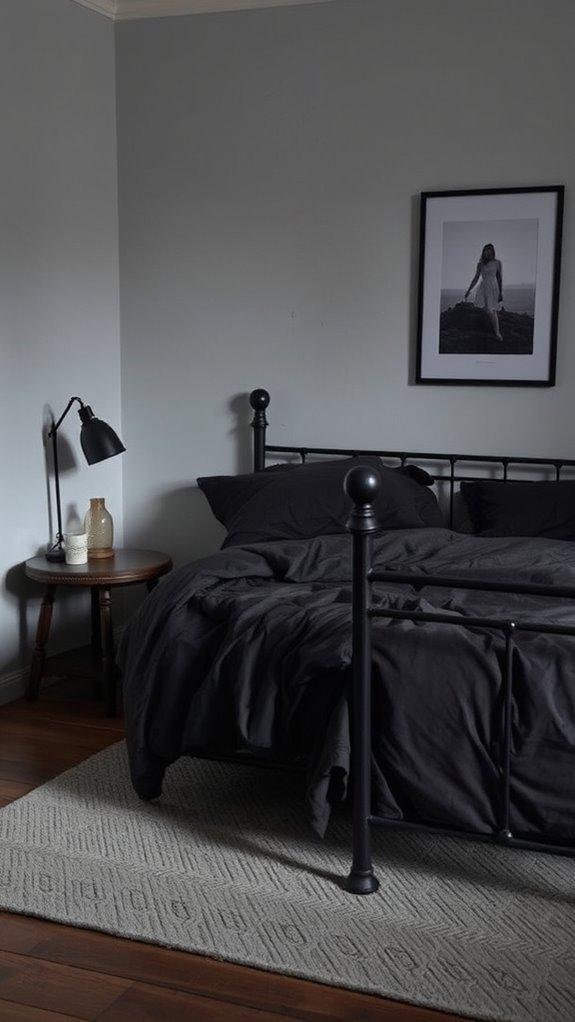
Once you’ve established visual balance with natural wood and greenery, resist the urge to fill every surface with decorative objects. Curate pieces that serve a dual function — both purposeful and personally resonant — such as a matte-glazed ceramic vessel, a leather-bound vintage hardcover, or a brass-framed monochrome photograph.
This deliberate restraint prevents visual clutter while preserving the room’s layered, moody aesthetic. Each carefully chosen object becomes an anchor point within the composition, contributing to a sophisticated, cohesive atmosphere rather than competing for attention. restrained palettes can achieve remarkable personality and depth through thoughtful, intentional curation rather than abundance.
Organize Different Zones for Purpose and Flow
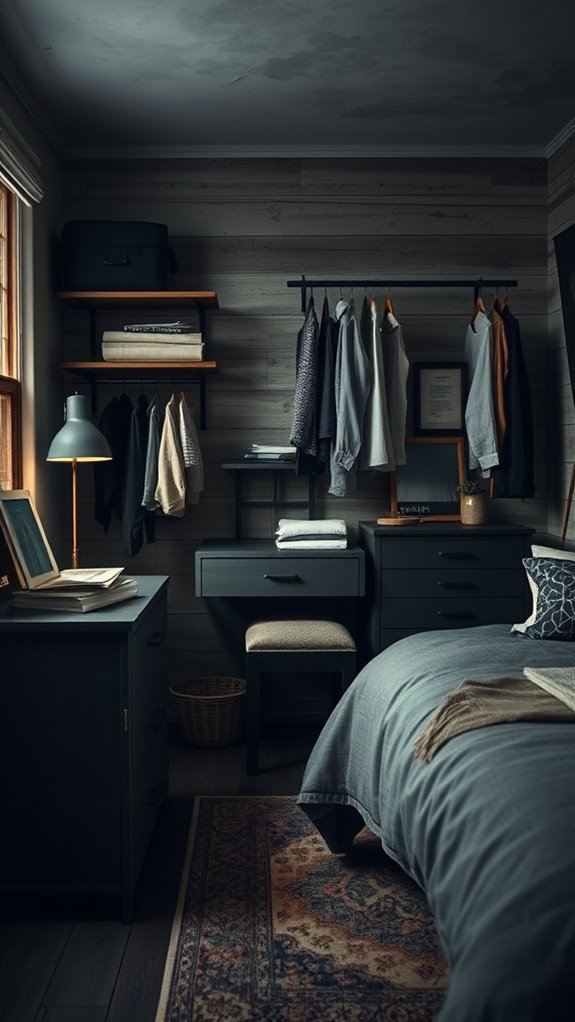
How you arrange your bedroom’s functional areas directly shapes both your daily routine and the room’s overall visual coherence. Designate specific zones for sleeping, working, and dressing, using furniture placement and subtle lighting to define boundaries.
This intentional zoning strategy prevents clutter accumulation, preserves the moody, layered aesthetic you’re cultivating, and ensures each dedicated area fulfills its distinct functional purpose without creating visual chaos or spatial confusion.
Final thoughts
You’re creating a grunge bedroom that balances moodiness with intentional design. By anchoring dark walls, layering textures strategically, and incorporating smart storage solutions like vintage crates, industrial shelving, and distressed wooden wardrobes, you’ll achieve atmosphere without clutter.
Warm Edison bulb lighting, carefully curated trailing pothos or dried pampas grass, and weathered furniture with chipped paint finishes transform your space into a functional sanctuary. Remember, restraint defines grunge style—every deliberately chosen piece should serve both a strong aesthetic purpose and a practical one.