23 Bedroom Aesthetic Ideas Ranked by How Easy They Are to Pull Off
Your bedroom doesn’t have to feel like a project you can’t finish. Some aesthetic upgrades take minutes, while others require a weekend and a dedicated budget.
Knowing where to start saves you both time and money. These 23 ideas are ranked so you can match your energy level to the right amount of effort—and the easiest ones might genuinely surprise you.
Throw Pillow Refresh: The Easiest Bedroom Glow-Up

Swapping out your throw pillows is one of the fastest ways to shift the entire mood of your bedroom without touching the walls or furniture. Choose two to four pillows in complementary tones — warm ivory, dusty sage, or deep terracotta — mixing tactile textures like crushed velvet, stonewashed linen, or chunky boucle weave to add dimension and sensory contrast.
Layer sizes intentionally, positioning oversized 26-inch euro shams flat against the headboard, followed by standard 20-inch inserts in the middle, and finishing with smaller 12-inch lumbar pillows in the foreground. This deliberate stacking creates visual depth and a styled, editorial look without rearranging any structural elements of the room. This simple swap ranks among the easiest bedroom updates you can complete in under an hour, making it ideal for anyone hesitant to start larger aesthetic projects.
Cozy Minimalist: Less Stuff, More Calm
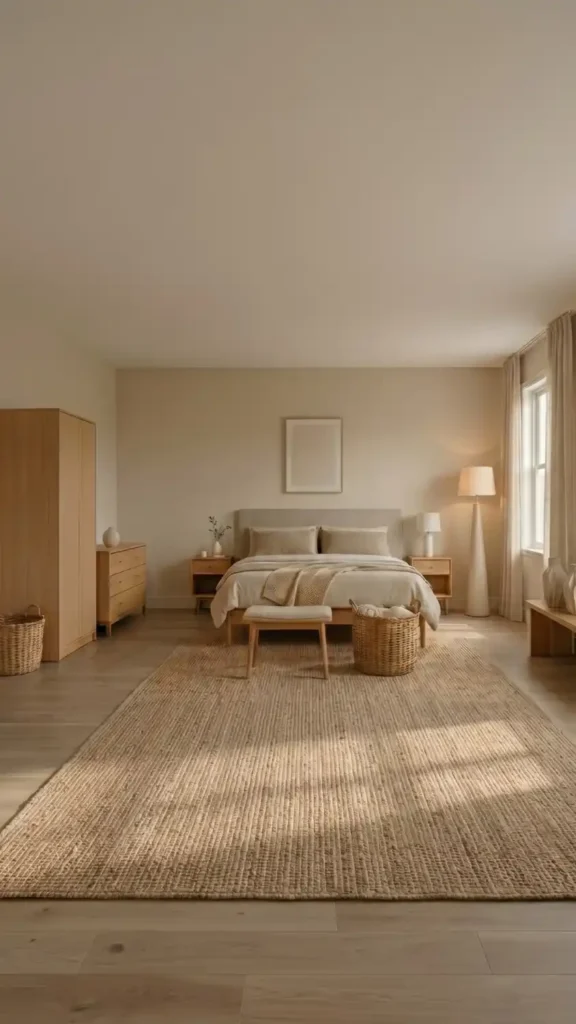
Cozy minimalism follows three core principles — intentional editing, tactile warmth, and deliberate negative space — and applying them transforms a cluttered, overfurnished bedroom into a calm, highly functional personal retreat. Start by removing non-essential furniture pieces you don’t interact with daily, stripping the room down to its hardworking, purposeful core elements.
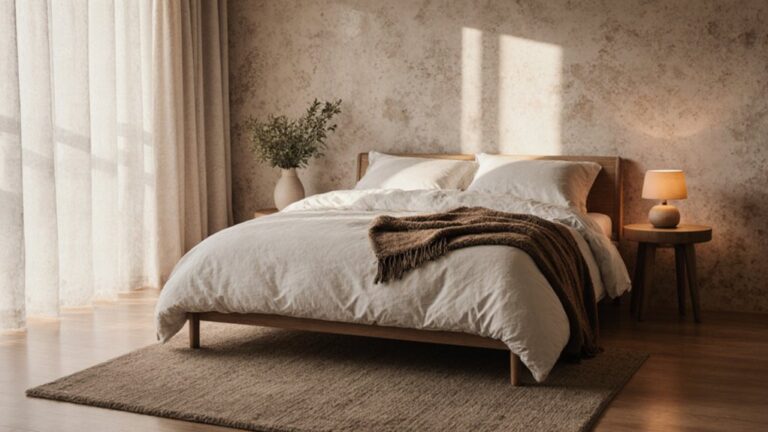
Keep your palette anchored in warm neutrals — soft warm whites, versatile greiges, or muted taupes with underlying amber or pink undertones. Layer in rich tactile warmth through a chunky hand-knit merino throw or stonewashed linen bedding in undyed natural tones, while allowing generous stretches of bare, unadorned wall space to breathe with full intentionality.
This approach naturally overlaps with Japandi design sensibilities, where Japanese restraint meets Scandinavian comfort to create bedrooms that feel lived-in yet uncluttered.
Neutral Bedroom Tones That Make Any Room Feel Bigger
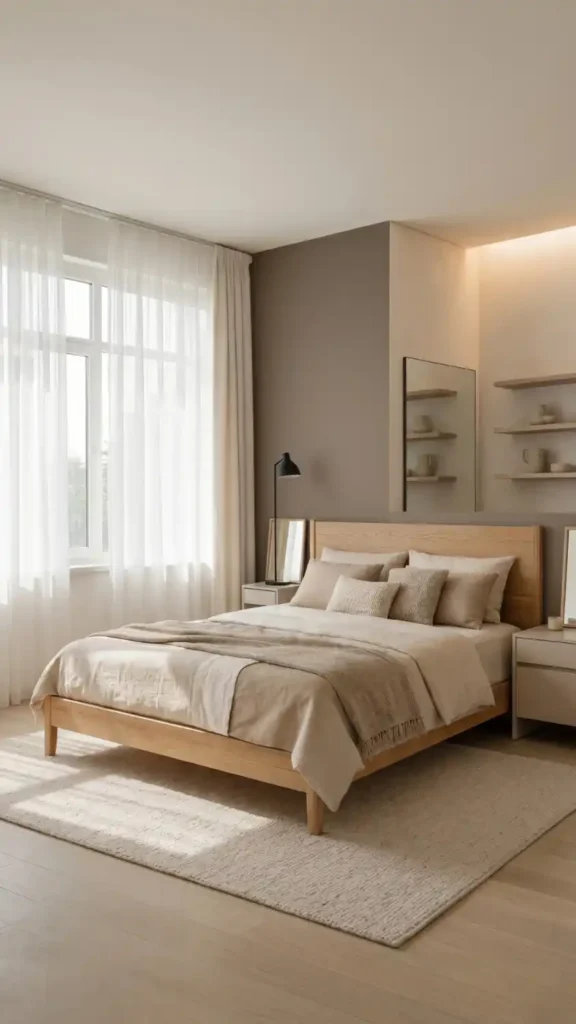
The science behind neutral bedroom tones is simple: soft white paint and pale ivory walls reflect natural and artificial light, causing surfaces to visually recede and expand perceived square footage. Warm-toned neutrals like greige (a gray-beige hybrid), raw linen, and bone white work together in layered compositions to create dimensional depth without visual clutter. A restrained palette can still deliver remarkable personality and depth through thoughtful material combinations and subtle tonal variations.
To execute this effect, select matte-finish paint in Benjamin Moore White Dove or Sherwin-Williams Accessible Beige, then anchor the space with natural oak or walnut furniture featuring low-profile silhouettes. Layer 400-thread-count linen bedding in oat or flax tones over a platform bed frame, and finish with woven jute area rugs and ceramic table lamps in unglazed finishes. “Neutrals create visual continuity that expands perceived space,” says interior designer Sarah Sherman Samuel.
The Scandinavian Bedroom Look Without the Price Tag
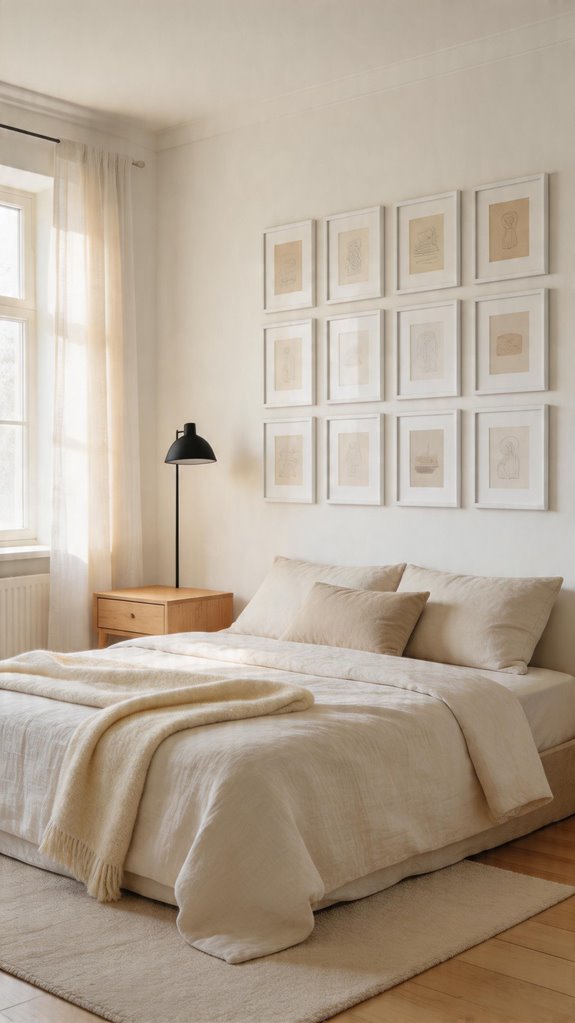
Scandinavian design shares much of the same neutral foundation you’ve already built, but it layers in warmth through texture, natural materials, and a philosophy called hygge—the Danish concept of cozy intentionality.
The core elements are tactile and grounded: a chunky hand-woven sheepskin throw draped across a low-profile bed frame, a bleached birch wood nightstand with tapered legs, and stonewashed linen bedding in muted oatmeal or raw ivory tones.
You don’t need expensive Scandinavian imports to achieve this look.
IKEA’s MALM line—constructed from birch veneer with clean, unornamented silhouettes—delivers authentic Nordic minimalism at a fraction of the cost, making it one of the most accessible entry points into the aesthetic.
This approach relies on soothing bedroom color palettes that designers favor for creating serene, cohesive spaces without overthinking the process.
Boho Bedroom Vibes on a Budget: Macramé and Warm Layers
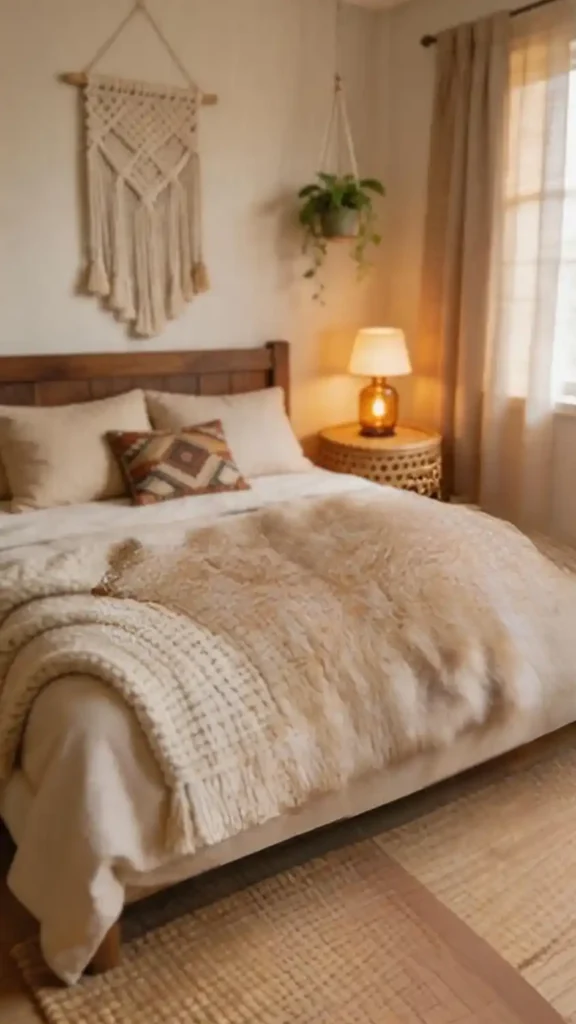
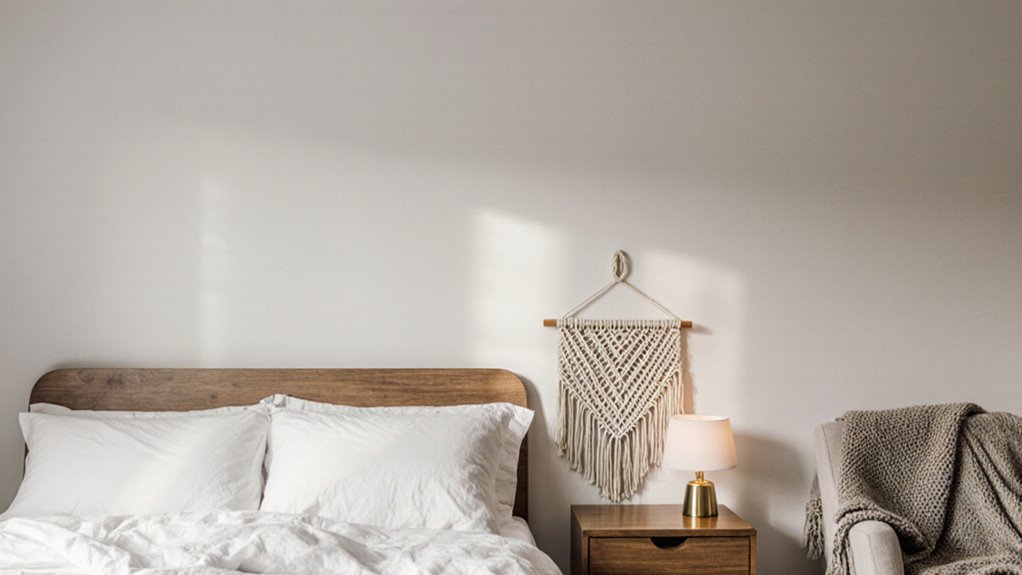
Bohemian style is one of the most forgiving aesthetics you can work with, layering hand-knotted textures, globally-inspired patterns, and intentionally collected-looking pieces without demanding rigid symmetry or precise arrangement. Hang a large-scale macramé wall hanging — ideally featuring intricate knotwork, fringe detailing, and natural undyed cotton cord — directly above your bed as a grounding focal point.
Stack warm-toned throw blankets across your mattress in earthy terracotta, burnt sienna, dusty burnt orange, and raw cream tones, mixing chunky-knit wool, woven cotton, and velvet-finished fabrics for maximum tactile depth. Rattan accent pieces — think curved nightstands, pendant light shades, or woven baskets — paired with an intentionally mismatched collection of embroidered, tasseled, and patterned throw pillows will complete the layered, lived-in, globally-traveled aesthetic effortlessly. To achieve a vintage-inspired curated look that feels intentional rather than accidentally mismatched, source your textiles and accent pieces from estate sales or artisan markets rather than mass retailers.
Pull Off the Cottagecore Aesthetic in a Weekend

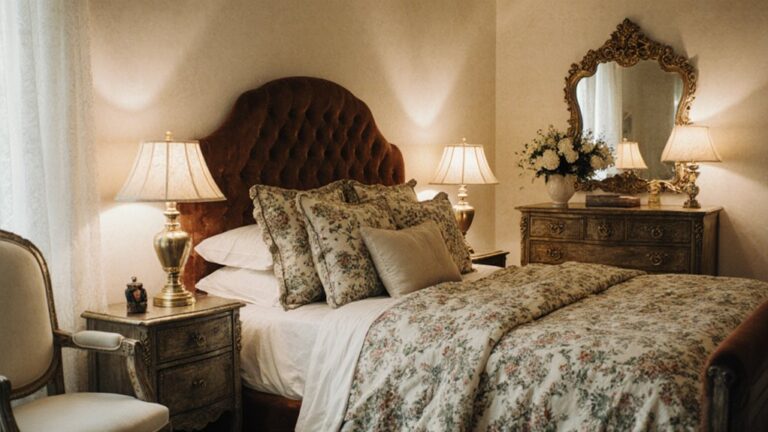
Cottagecore is one of the most achievable bedroom aesthetics you can commit to, requiring nothing more than soft botanical florals, breathable natural linen, and a few carefully chosen vintage-inspired accent pieces in muted earth tones and dusty roses. Layer a floral duvet cover in faded sage and cream over loosely woven linen bedding, then add a weathered oak nightstand with antique brass hardware and a small ceramic bud vase holding dried lavender sprigs. Finish the look by hanging a hand-woven dried wildflower wreath above your linen upholstered headboard. You’ll achieve an effortlessly pastoral, sun-dappled cottage aesthetic without significant financial investment. This approach proves that cozy minimalist bedroom ideas can actually invite warmth and comfort rather than feeling cold and sterile.
Dark Academia Bedroom Ideas That Feel Instantly Moody
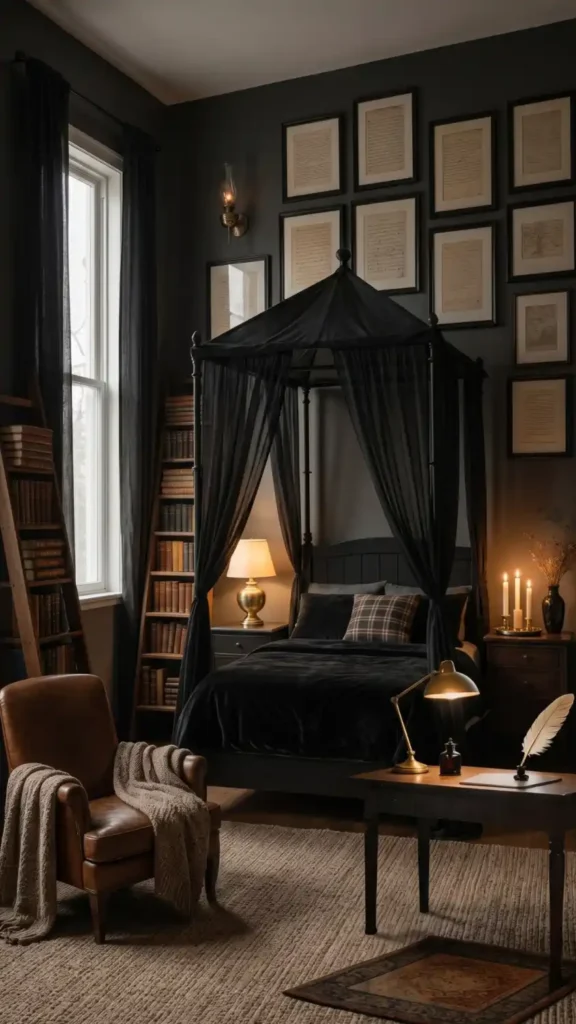
Dark academia pulls you in the opposite direction from cottagecore’s softness and light, favoring richness, shadow, and intellectual weight. Start with deep walnut furniture featuring carved edges and warm amber undertones, paired with forest green or oxblood walls that absorb rather than reflect light.
Layer heavyweight wool textiles in charcoal, burgundy, and tobacco brown across the bed and reading chair. Finish with vintage brass accents showing natural patina, densely stacked leather-bound books, and a wooden desk lamp casting a warm, concentrated glow — all working together to build that moody, scholarly atmosphere without requiring a full renovation. If your dark academia space doubles as a workspace, establishing physical and visual boundaries between your desk and sleep area helps protect both your rest and your productivity.
The Coastal Bedroom Aesthetic That Doesn’t Look Cheesy
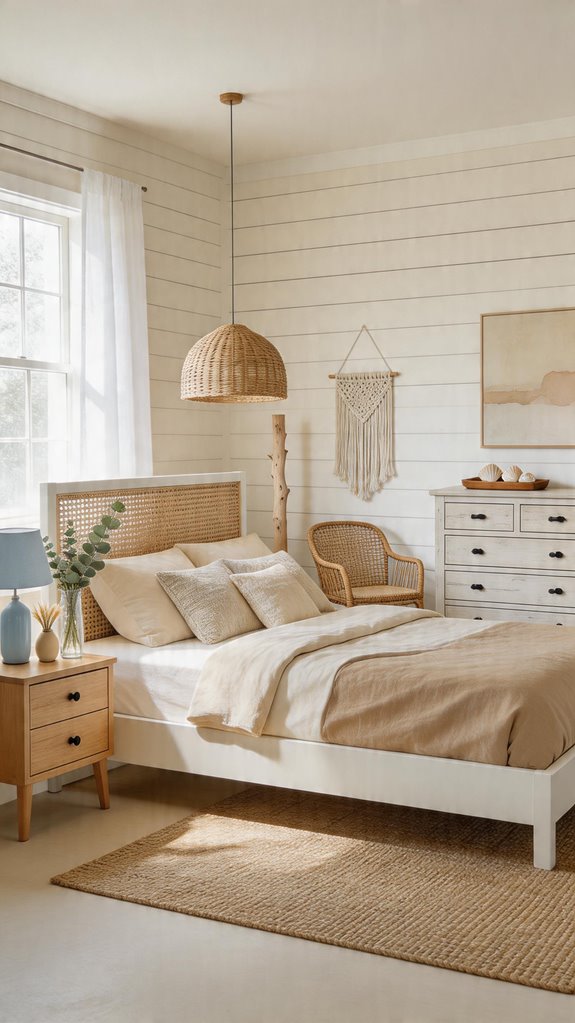
The coastal aesthetic trades dark academia’s heaviness for breathability and open air — but executing it without falling into seashell kitsch and novelty anchor motifs demands genuine restraint and a precise material vocabulary. Stonewashed linen bedding in warm white and undyed natural tones, whitewashed oak or driftwood-finish furniture with visible grain texture, and a tightly controlled palette of weathered sand, muted slate blue, and soft chalk white form the foundational layer.
Novelty decor — rope accents, ceramic fish, framed beach quotes — gets cut entirely. Instead, diffused natural light through sheer linen curtains, raw-edged jute area rugs, and the quiet interplay of matte and woven surfaces carry the full atmospheric weight of the space. Multiple soft, layered lighting sources replace harsh overhead fixtures, with warm table lamps and wall sconces extending the organic tranquility into evening hours.
Japandi Style: Where Minimalism Meets Warmth
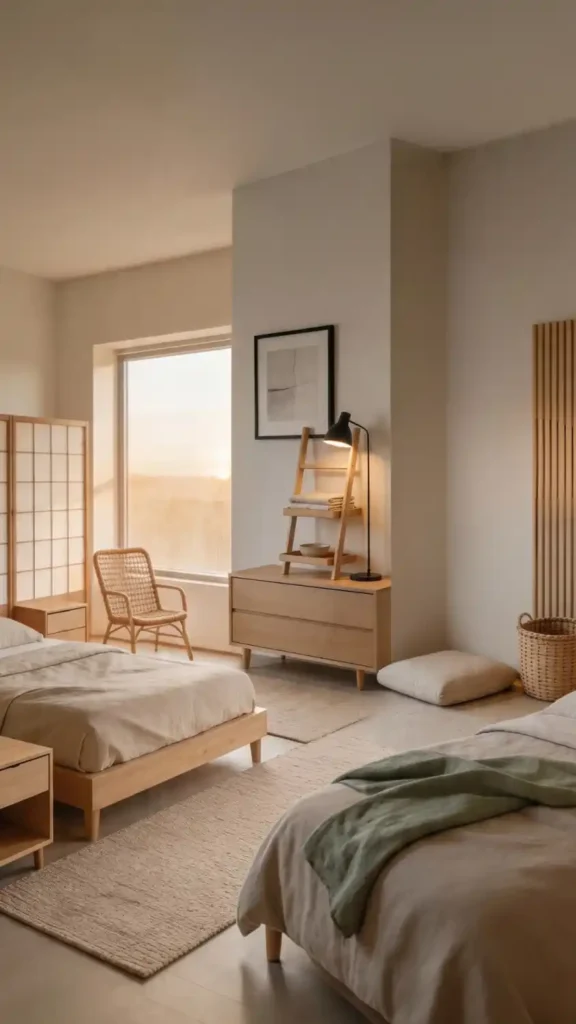
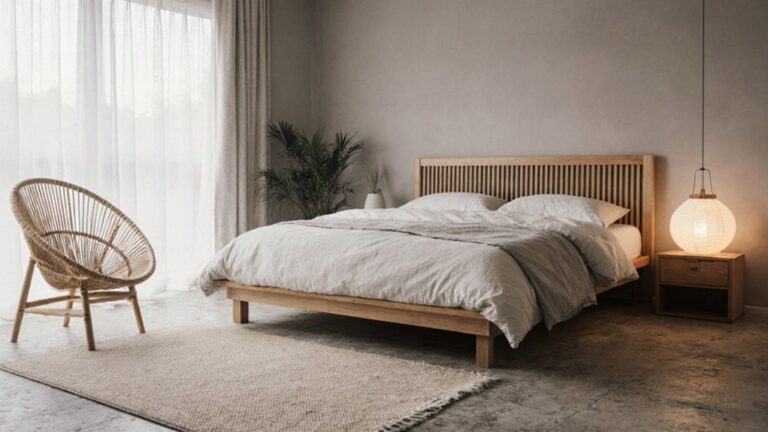
Japandi draws warmth inward through deliberate material choices and quietly structured form — a contrast to coastal aesthetics that rely on openness and breezy light texture. Think raw, unfinished wood tones in ash, oak, and walnut; muted earth palettes anchored in terracotta, warm grey, and soft sage; and low-profile furniture like solid-frame platform beds, floor-seated lounges, and slatted timber shelving.
By combining Japanese wabi-sabi principles — the acceptance of imperfection and transience — with Scandinavian functionality rooted in clean lines and purposeful craft, you create a space that feels intentional and visually calm without tipping into cold or sterile minimalism. To bring this intentionally styled serenity into your own bedroom, consider how each piece interacts with negative space rather than competing for attention.
Romantic Bedroom Aesthetics Without Going Over the Top
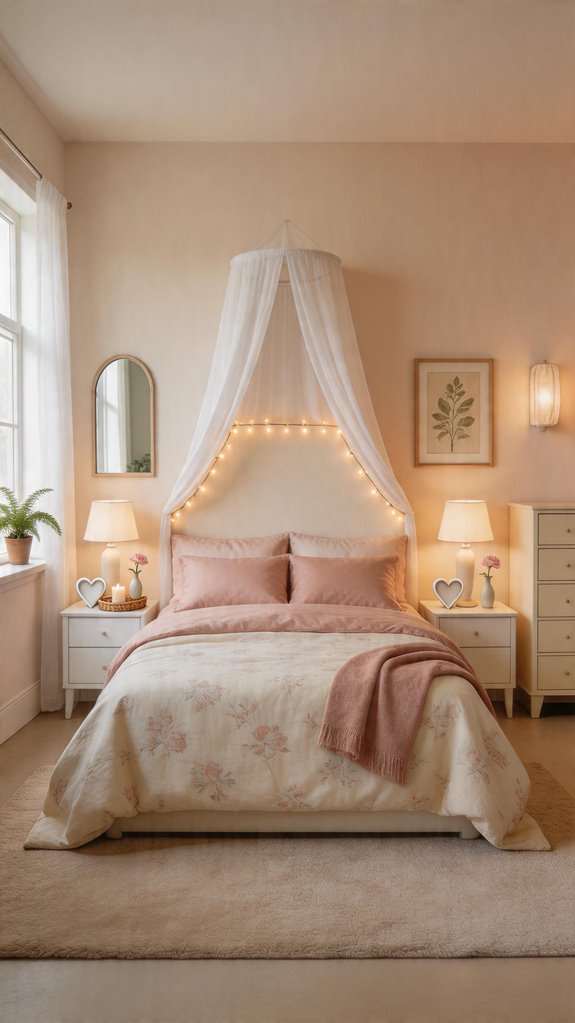
Romance in bedroom design tends to get oversaturated fast — layers of red velvet, excessive candles, and ornate gilded frames can quickly overwhelm a space, pushing the aesthetic from intimate to theatrical.
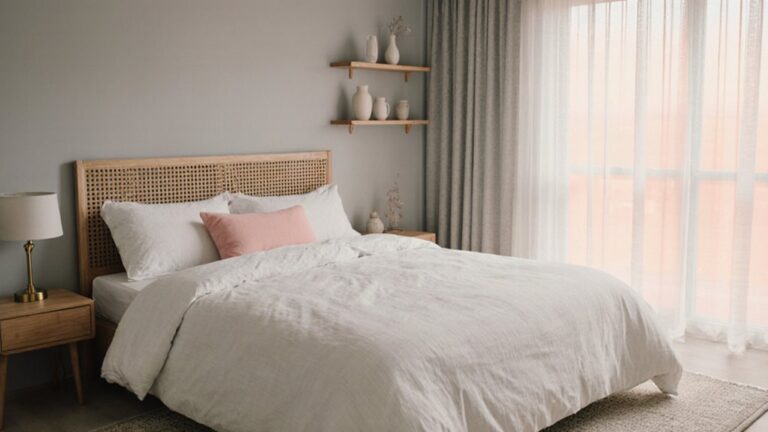
You’ll achieve a more refined romantic look by focusing on soft blush tones, warm ivory linen bedding with a 400-thread-count weight, and layered ambient lighting from dimmable sconces and low-wattage Edison bulbs. Choose a tufted upholstered headboard in dusty rose or muted champagne velvet, keep nightstand surfaces minimal with just a single ceramic vase or small hardcover book, and let tactile texture — through a chunky knit throw, a jute area rug, or a pleated duvet — carry the emotional warmth of the room. Consider adding luxurious wall panelling behind the headboard to introduce subtle architectural depth and elevate the entire space without additional clutter.
Earthy Bedroom Ideas Built Around Natural Materials and Textures
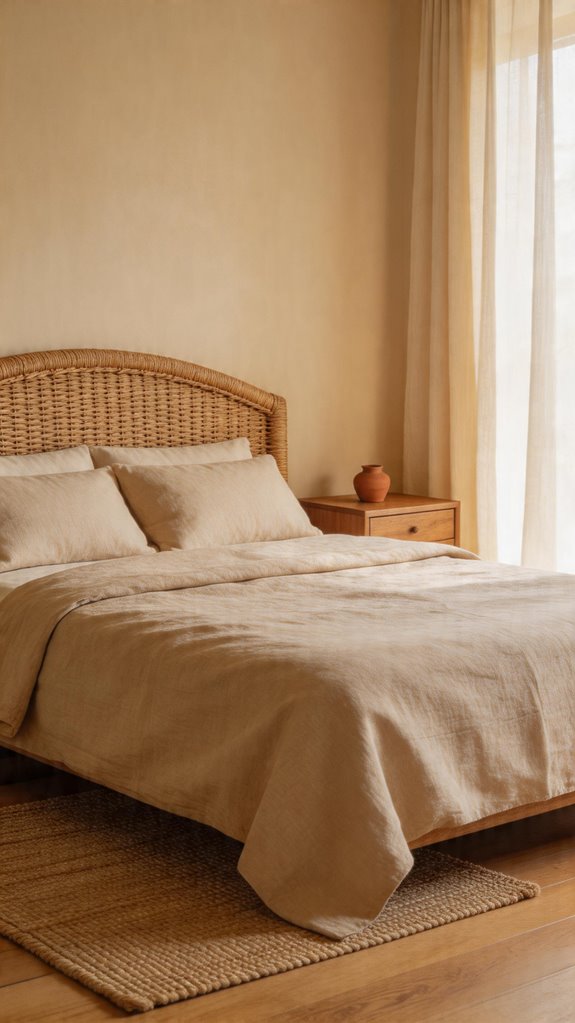
Most earthy bedroom aesthetics succeed or fail based on one thing: whether the materials you choose feel genuinely organic or just decorative imitations of nature. Belgian linen bedding in undyed oatmeal tones, raw-edge solid oak furniture with visible grain patterns, and hand-woven jute rugs with tight herringbone weaves all anchor the space in tactile authenticity.
Your color palette should stay within warm neutrals like beeswax and warm white, sun-baked terracotta, and muted sage with gray undertones. Layer textures deliberately, pairing the rough, porous surfaces of unglazed ceramic vessels and chunky boucle throw pillows against the smooth, cool finish of plaster walls and stone accent pieces to create visual depth and dimensional contrast without visual clutter.
Vintage and Thrifted Finds That Elevate Any Bedroom Aesthetic

Three well-chosen vintage pieces — a thrifted wooden dresser with original hardware, a brass lamp with a burnished patina, or a beveled mirror with a tarnished gilt frame — can shift a bedroom from generic to genuinely layered.
This collected-over-time quality, built through aged textures, worn finishes, and mismatched decades, is something new furniture rarely achieves regardless of price point. You don’t need many pieces — you need the right ones placed with intention.
The Modern Industrial Bedroom Look for Renters
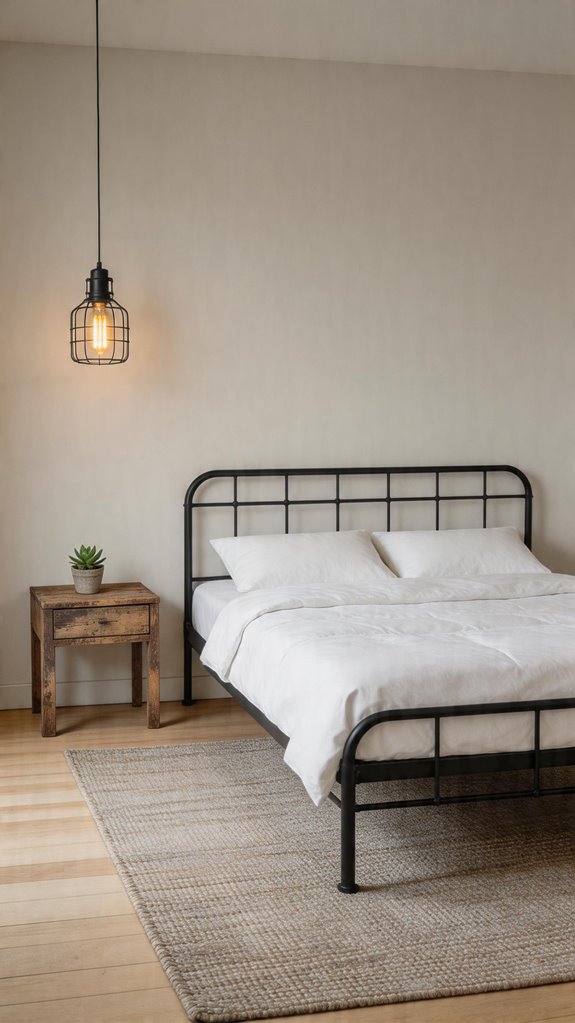
The modern industrial look is one of the few bedroom aesthetics that actually works in a renter’s favor, since exposed brick, concrete walls, and metal fixtures become defining assets rather than cosmetic problems to hide. Architectural raw materials like weathered reclaimed wood bed frames, cast iron pipe shelving units, and brushed steel nightstands layer visual texture and structural character into the space.
Matte black accents — think powder-coated curtain rods, flat-finish hardware, and wrought iron wall brackets — anchor the room without overwhelming it. Edison bulb pendants and vintage-style filament sconces cast warm amber light that softens the hardness of industrial materials. Keep your palette tightly curated around charcoal, warm gray, and oxidized rust tones for a cohesive, intentional finish.
Cottagecore After Dark: The Moody Floral Bedroom Aesthetic
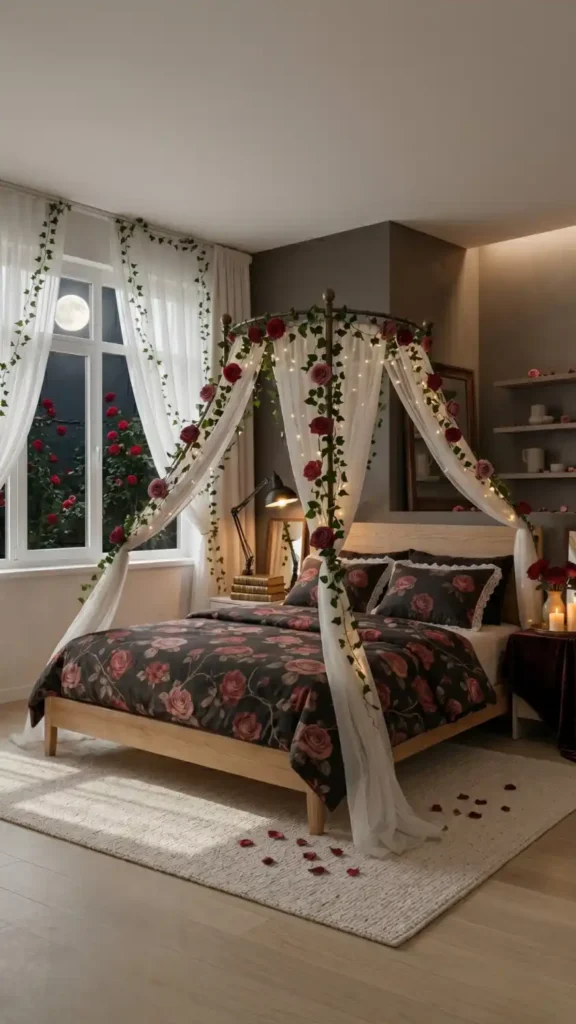
Cottagecore after dark trades the aesthetic’s signature pastel softness for something richer, layering deep botanical prints, moody florals, and shadowed greens across a bedroom that feels genuinely intimate. Choose velvet bedding in forest green or burgundy, selecting fabrics with a crushed or lustrous pile that absorbs candlelight and catches shadow in equal measure.
Hang dark floral wallpaper — think overscale cabbage roses, trailing vines, or ink-washed botanical illustrations in charcoal, oxblood, and deep sage — across one accent wall to anchor the room’s atmosphere without overwhelming the space. An ornate iron bed frame with scrolled detailing grounds the composition structurally, while aged brass or blackened bronze hardware on nearby furniture reinforces the period-adjacent mood. You’ll spend moderately across these layered elements, but the resulting atmosphere — warm, shadowed, and genuinely enveloping — rewards that investment completely.
Art Deco Bedroom Ideas That Feel Glamorous Without Being Gaudy
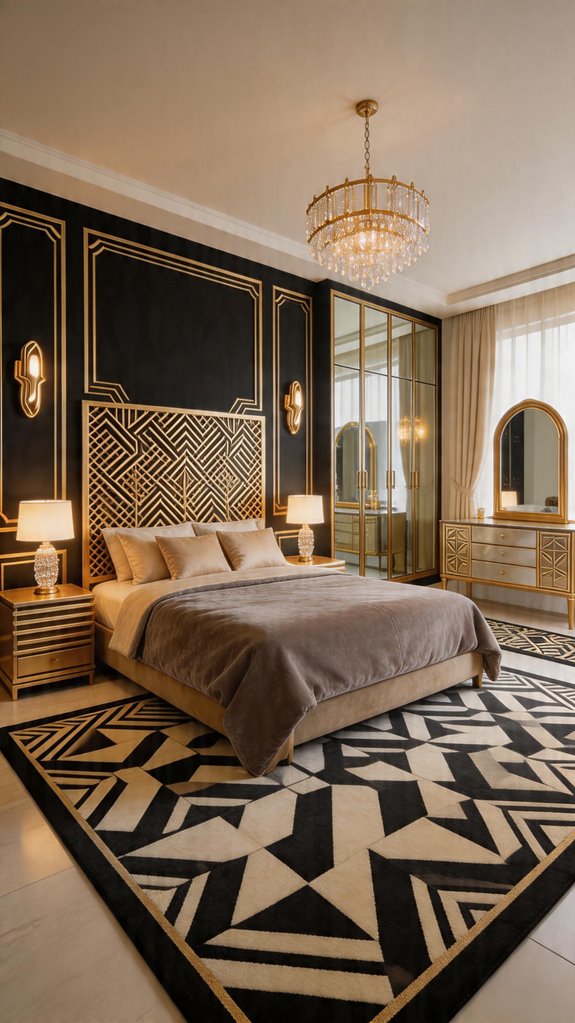
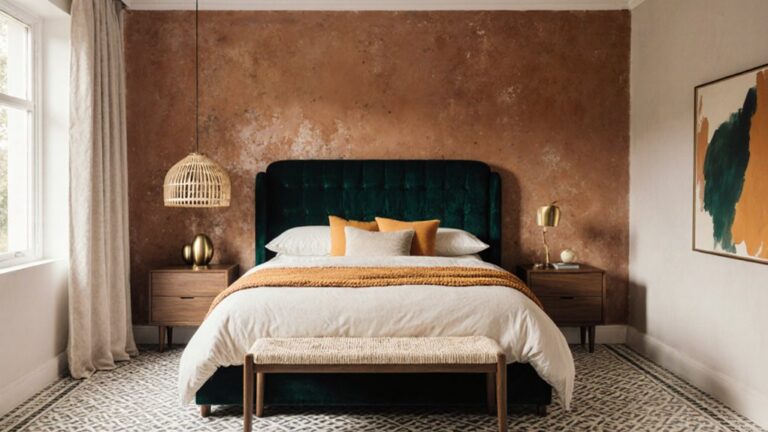
Art Deco gets misread constantly — people assume it demands gold everything and mirrored excess, but restraint is actually the aesthetic’s most powerful tool. Choose a velvet upholstered headboard in deep emerald or midnight navy, then pair it with geometric brass hardware featuring angular sunburst or stepped pyramid motifs on drawer pulls and cabinet knobs.
Keep your palette tight — two or three saturated colors maximum — and let deliberate bilateral symmetry do the heavy visual lifting across matching nightstands, twin sconces, and mirrored side tables with beveled edges.
How to Style an Eclectic Bedroom Without It Looking Chaotic
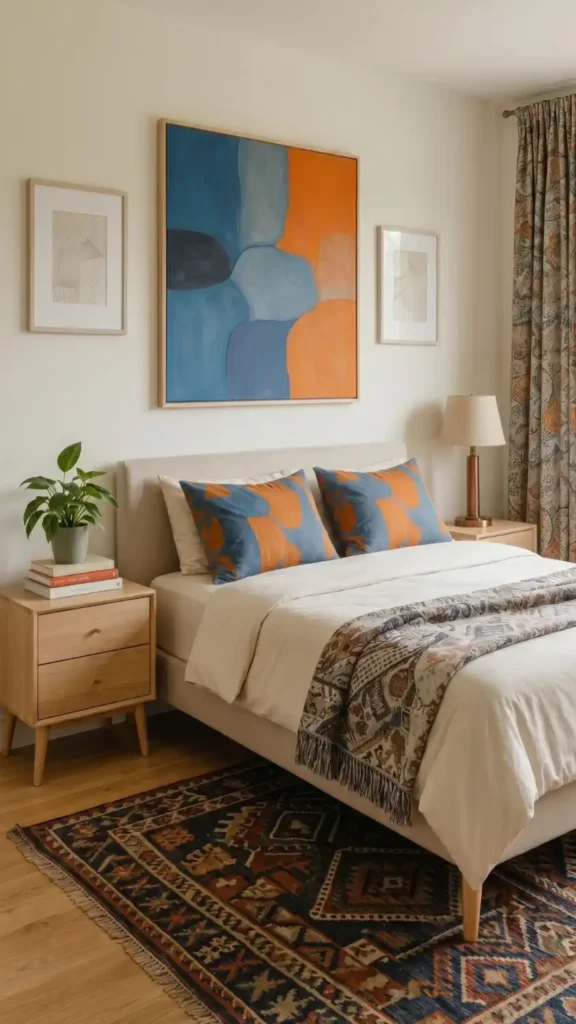
Eclectic bedrooms fail not because of too many styles, but because they lack a unifying thread that holds everything together visually. A single, consistent color palette — whether muted earth tones, soft monochromes, or saturated jewel hues — acts as the invisible framework that allows mismatched furniture, layered textiles, and contrasting eras to coexist without visual tension.
Your furniture pieces don’t need to match in style or period, but they should share similar visual weight and scale. A chunky reclaimed-wood nightstand and a streamlined mid-century dresser can coexist if their proportions feel balanced. Repeating one tactile or metallic material — aged brass hardware, raw linen upholstery, or hand-thrown ceramic accents — quietly anchors the space and creates cohesion across otherwise unrelated objects.
Maximalist Bedroom Ideas Worth the Extra Effort
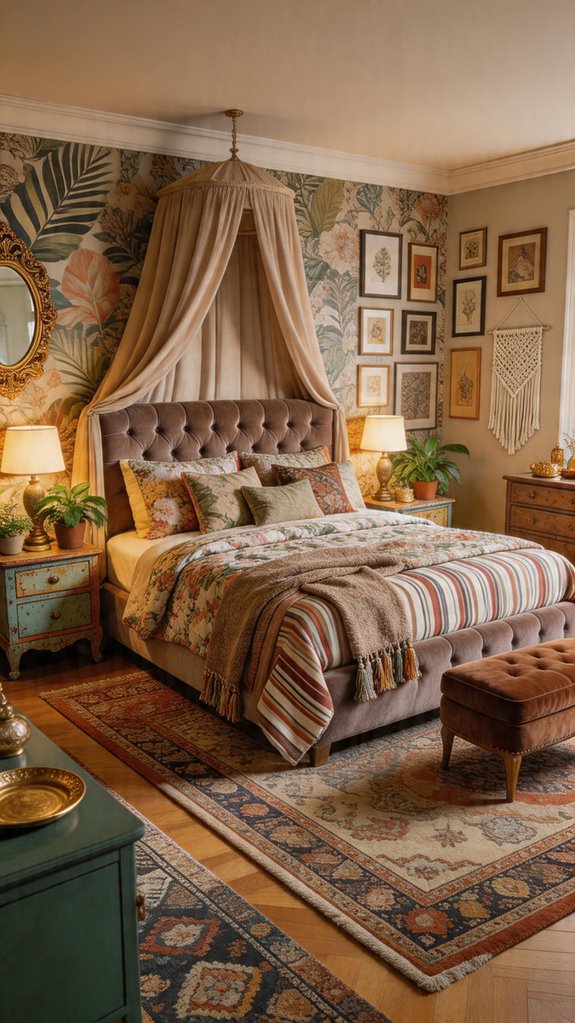
Maximalism done right takes real commitment, but the payoff is a bedroom that feels genuinely layered, intentional, and alive with personality. Start with a cohesive color story built around a dominant hue — deep emerald, saturated burgundy, or inky midnight blue — then build outward using patterned textiles like jacquard throw pillows, Persian-inspired wool rugs, and embroidered linen duvet covers.
Curate objects with deliberate intention: hand-thrown ceramic vessels, gilt-framed oil paintings, antique brass candlestick holders, and sculptural table lamps with pleated silk shades. Layer velvet upholstered headboards, warm-toned brass hardware, and rich jewel-toned accent chairs strategically, ensuring visual weight stays balanced across the full composition of the room — wall to wall, floor to ceiling.
How to Make a Small Bedroom Feel Like a Luxury Suite
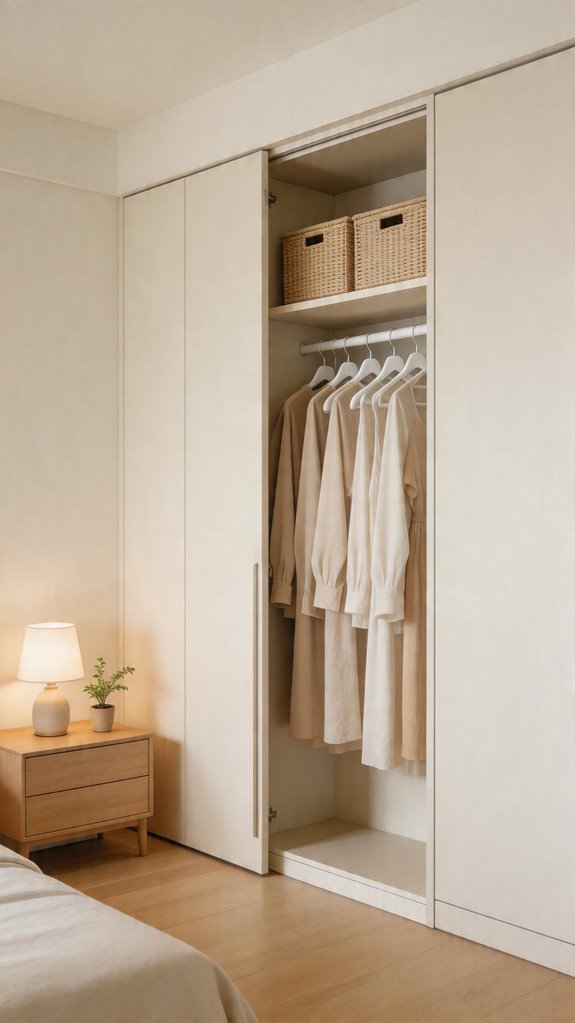
Square footage doesn’t determine how luxurious a bedroom feels — thoughtful, intentional design decisions do.
Choose a monochromatic palette, like soft ivory, warm greige, or dusty champagne, to visually expand the space and create a seamless, high-end aesthetic.
Mount your floor-length linen or velvet curtains close to the ceiling to elongate the walls, incorporate mirrored or lacquered furniture pieces to reflect light and add depth, and invest in 600-thread-count Egyptian cotton or bamboo-blend bedding in neutral tones.
These curated, tactile details signal five-star luxury without requiring a single extra square foot.
Plant-Heavy Bedroom Looks and the Low-Effort Way to Keep Them Alive
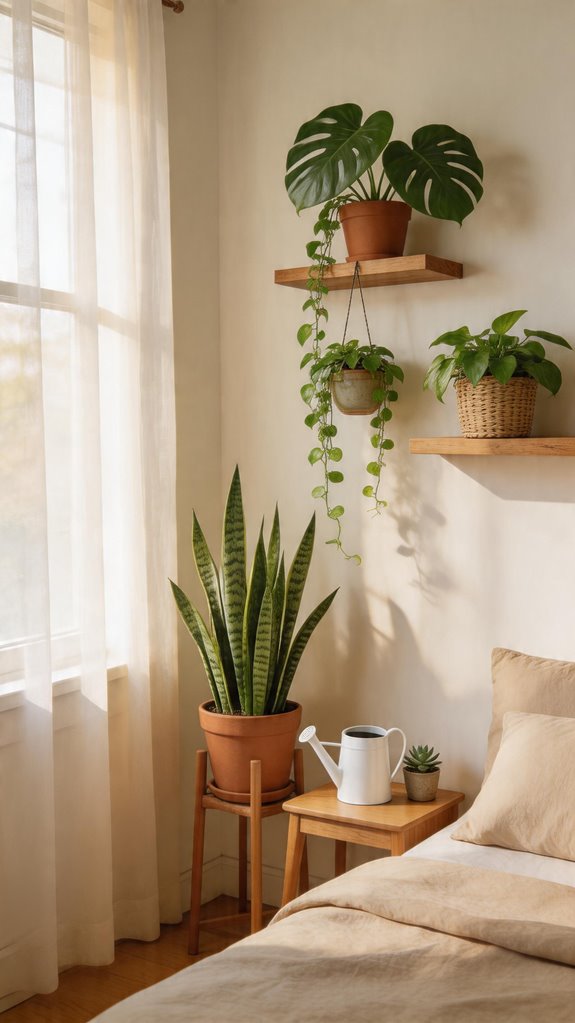
Nothing transforms a bedroom’s energy quite like living greenery, and the good news is you don’t need a green thumb to pull it off beautifully. Resilient, low-maintenance species like golden pothos (*Epipremromnum aureum*) with its trailing, heart-shaped variegated leaves, architectural snake plants (*Dracaena trifasciata*) with their upright, sword-like foliage banded in deep green and pale yellow, and waxy, drought-tolerant ZZ plants (*Zamioculcas zamiifolia*) with their glossy, dark emerald leaflets all thrive in low-light interiors and tolerate irregular, infrequent watering schedules.
Group these plants near your nightstand or dresser to create intentional, layered vignettes — pairing varying heights, textures, and pot materials like matte terracotta, glazed ceramic, or woven seagrass baskets — without visually overwhelming your sleep space.
Regencycore Bedroom Aesthetics for the Maximalist Romantic
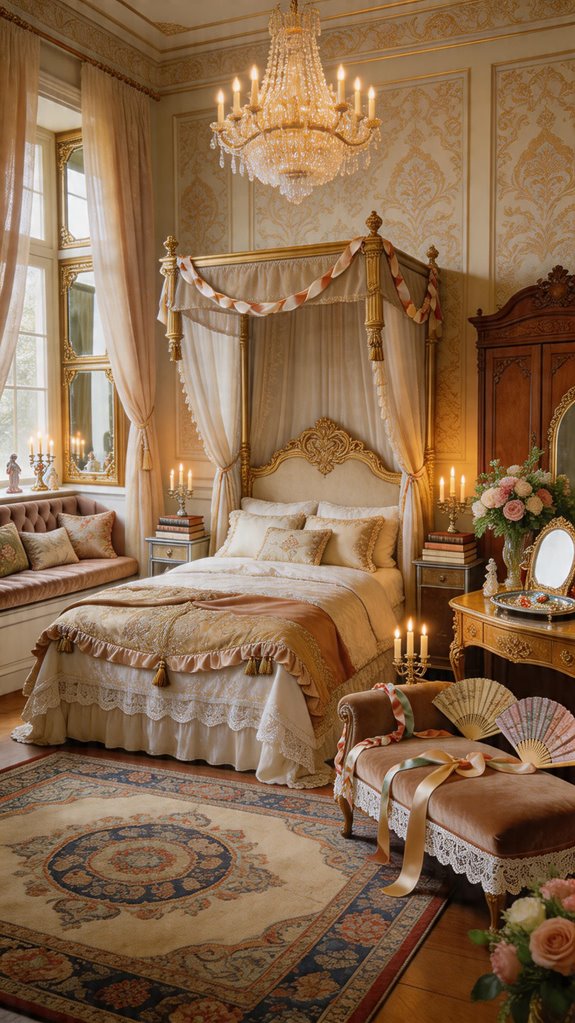
If you’re drawn to the drama of Bridgerton-style interiors, Regencycore is the aesthetic that lets you lean fully into ornate, layered, and unapologetically romantic design. Think tufted velvet headboards in dusty rose or midnight navy, hand-carved gilded mirrors with distressed gold-leaf frames, and rich jewel tones like deep emerald, sapphire blue, and burgundy wine saturating every surface.
Layer silk-textured bedding with damask-patterned floral wallpaper in ivory and blush, and anchor the room with a button-tufted velvet chaise longue in forest green or antique mauve positioned near a tall, curtained window draped in floor-length duchess satin.
Ornate brass candelabras, oil-painted botanical prints in gilded frames, and Persian-style area rugs with intricate medallion motifs complete the composition. This aesthetic rewards deep commitment to layering and ornamentation, not minimalism.
Y2K Bedroom Aesthetics That Actually Work for Adults
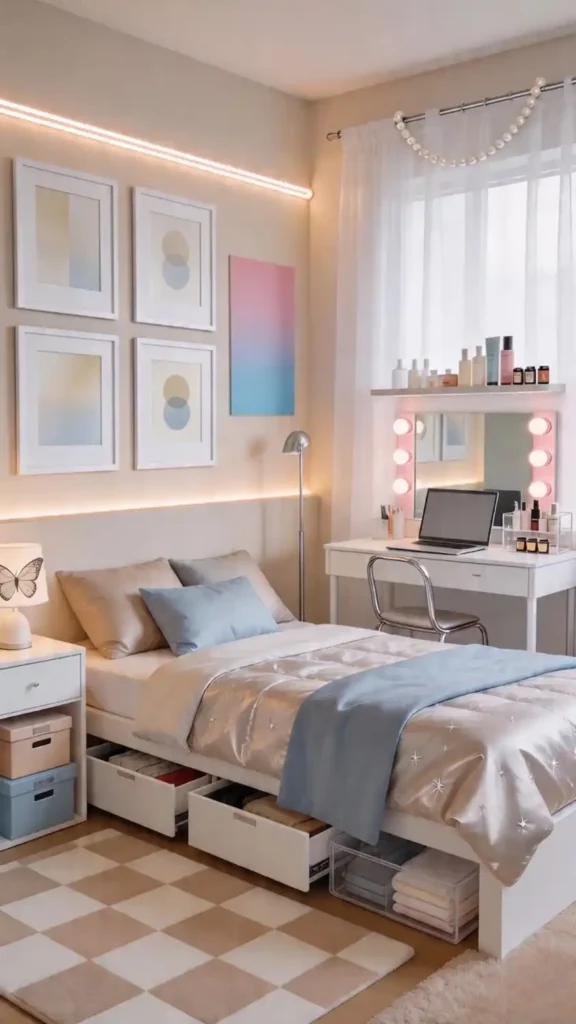
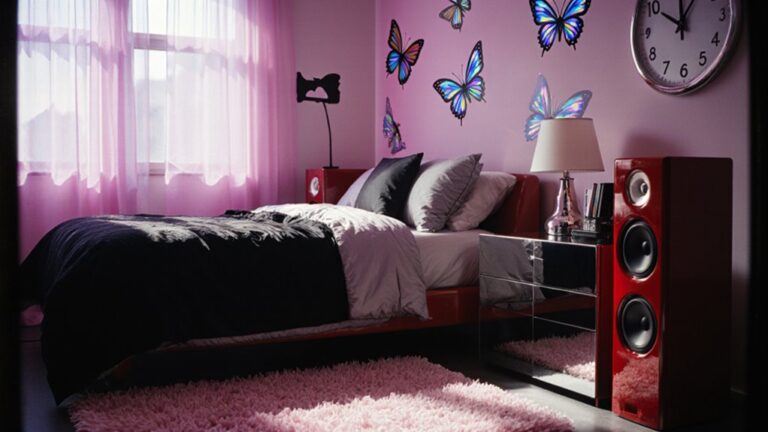
Y2K bedroom aesthetics have made a genuine comeback, and you don’t have to sacrifice sophistication to pull them off as an adult. Choose frosted acrylic nightstands with brushed-chrome hardware, silver metallics in textured throw pillows and mirrored dresser trays, and translucent polycarbonate furniture pieces that diffuse ambient light to capture the era’s signature futurist look.
Keep your color palette restrained, favoring icy blues in high-thread-count duvet covers, crisp optical whites on lacquered wall panels, and soft muted purples in velvet accent cushions. Avoid overcrowding surfaces, letting each curated statement piece — a single iridescent vase, a holographic-finish lamp base — breathe naturally within the composition.
Moody Color Palettes That Transform a Bedroom Completely
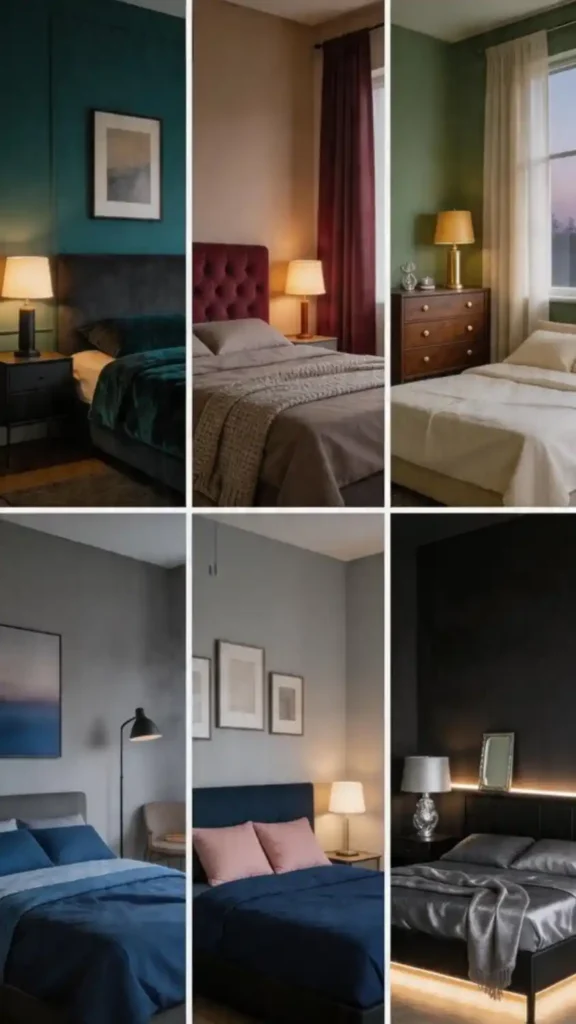
Moody color schemes pull your bedroom in the opposite direction from cool, polished palettes, wrapping the space in depth, shadow, and warmth. Choose deep forest green, rich charcoal, or oxblood red for your walls — each hue absorbing light rather than reflecting it, building an atmosphere that feels saturated and immersive.
Layer in velvet textiles with visible pile texture, dark-stained oak or walnut furniture with carved or tapered detailing, and aged brass fixtures with a warm, burnished finish. These deliberate tonal choices create an enveloping environment that feels both intentional and deeply grounded.
Maximalist and Statement Bedroom Overhauls Worth the Investment
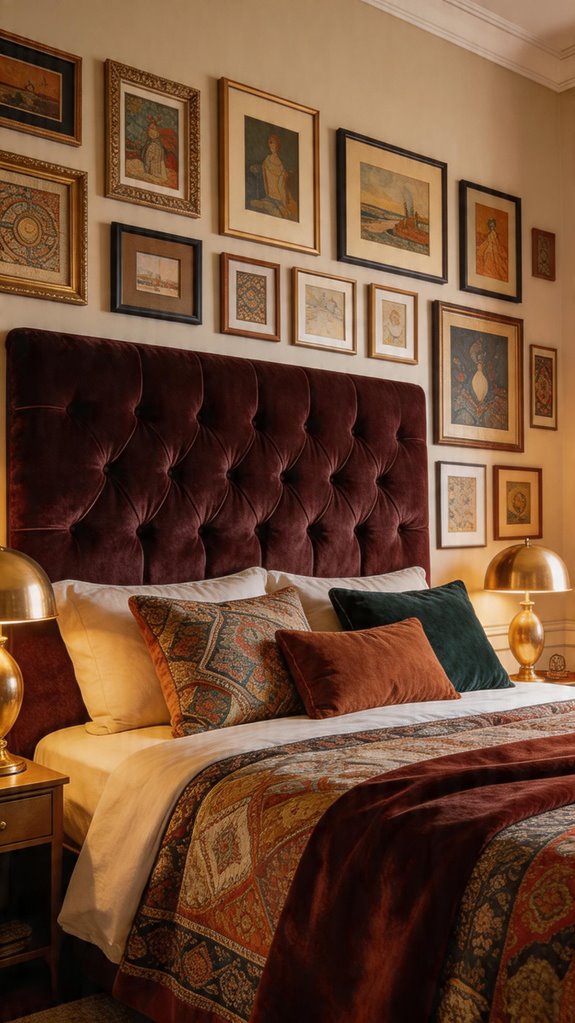
Maximalism rewards commitment — the more deliberately you layer pattern, texture, and color, the stronger the result becomes. Start with a bold anchor piece, like a hand-carved mahogany canopied bed draped in silk velvet or an oversized gilded vintage armoire with original brass hardware. Build outward using contrasting prints — think William Morris florals against Moroccan geometric tiles — rich jewel tones like deep sapphire, emerald, and oxblood, and varied textiles including embroidered throw pillows, Persian wool rugs, and fringed brocade curtains.
Every addition should feel intentional, not accidental. Layer antique Persian ceramic table lamps, oil-painted portraits in ornate gold frames, and stacked hardcover art books with cloth-bound spines to create curated visual weight. Done correctly, maximalism produces a visually cohesive, deeply personal sanctuary — one where every surface, material, and heirloom-quality object tells a deliberate story worth every investment.
Final thoughts
Your bedroom doesn’t need a full renovation to feel intentional and put-together. Start with what’s easiest—a pillow swap in textured boucle or linen, a warm neutral palette anchored by greige or warm white tones, or a stone-washed linen duvet in muted sage or oat—and build from there. Each small, deliberate change compounds into something cohesive and visually layered over time.
Whether you’re drawn to Scandinavian simplicity with its low-profile oak bed frames and pared-back monochrome textiles, or maximalist drama featuring jewel-toned velvet headboards, gallery walls, and layered Persian rugs, there’s a clear, structured path to your ideal space. Pick one high-impact idea, execute it with precision, and let that momentum carry you forward into the next.