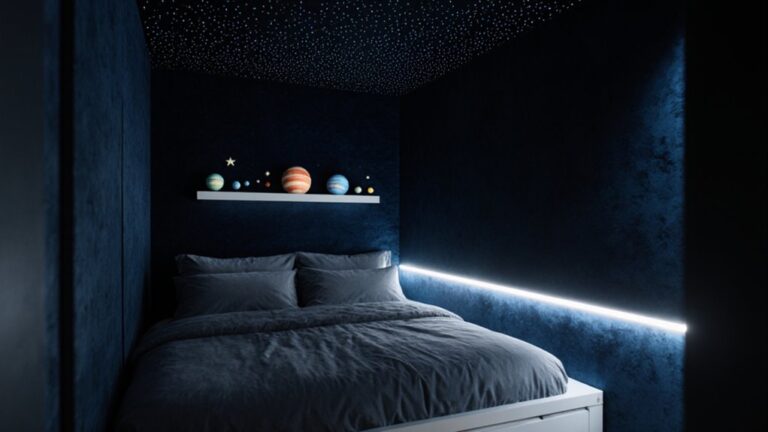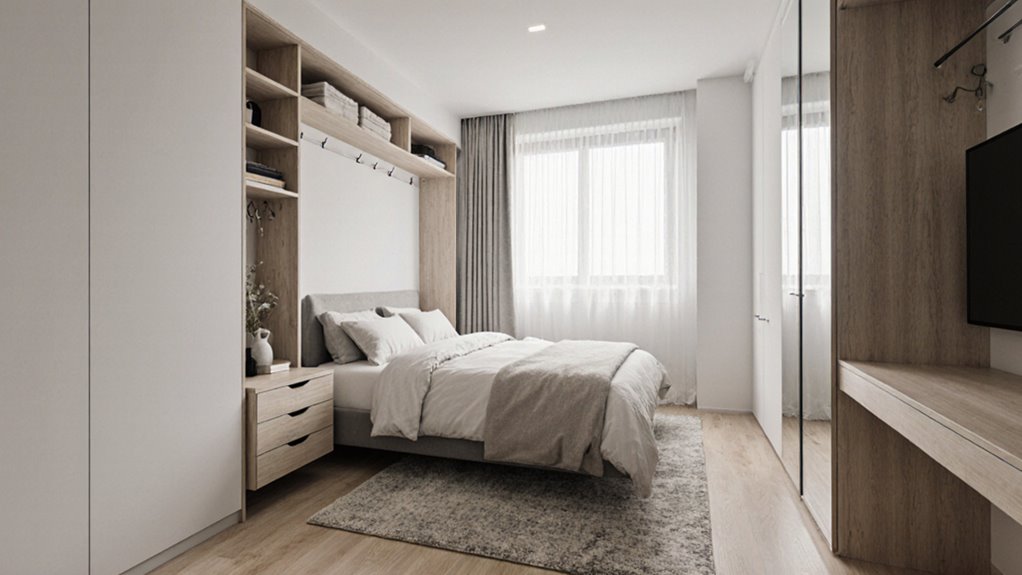
29 Small Bedroom Ideas That Make Every Square Foot Count
You’re working with limited square footage, and every design choice matters. Small bedrooms demand strategic planning—from vertical storage solutions to multipurpose furniture that serves dual functions.
By selecting the right elements and maintaining a cohesive aesthetic, you’ll transform cramped quarters into a functional, calm sanctuary. The following strategies reveal how professional designers maximize compact spaces, and which specific techniques work best for your situation.
Go Vertical to Maximize Wall Space
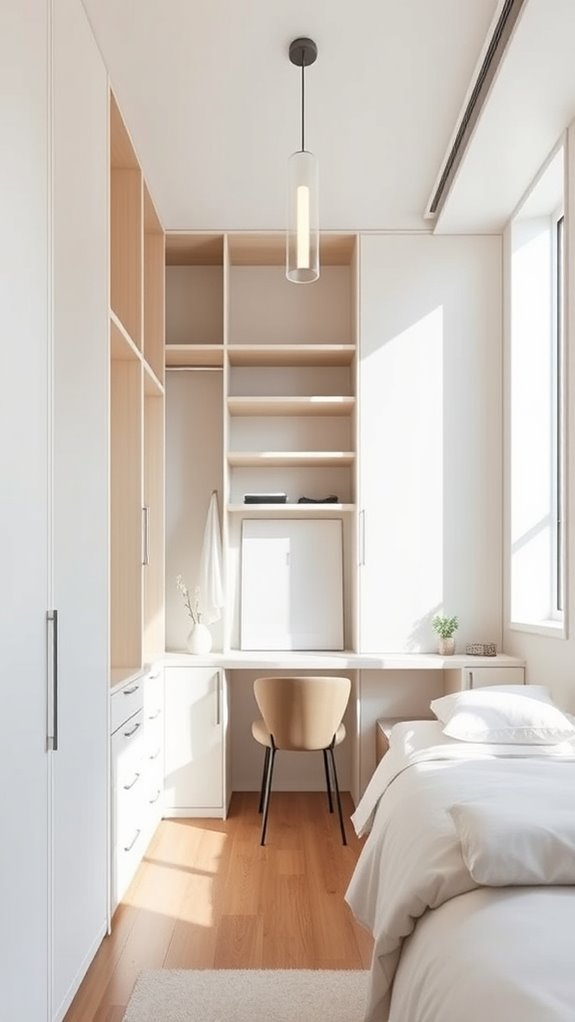
A narrow bedroom interior featuring floor-to-ceiling built-in shelving units along a white wall, filled with neatly arranged books, small potted plants, and decorative objects.
Floating wooden shelves in a light oak finish bracket a window with sheer linen curtains filtering soft natural daylight.
The hardwood floor is uncluttered, with a low-profile bed frame in pale linen fabric positioned beneath the shelving.
Soft shadow gradients fall across the shelves, highlighting the layered depth of stored items against a matte white wall.
For an even more impactful look, consider treating the shelf wall as a cohesive headboard wall that makes a unified design statement.
Choose a Low-Profile Bed Frame
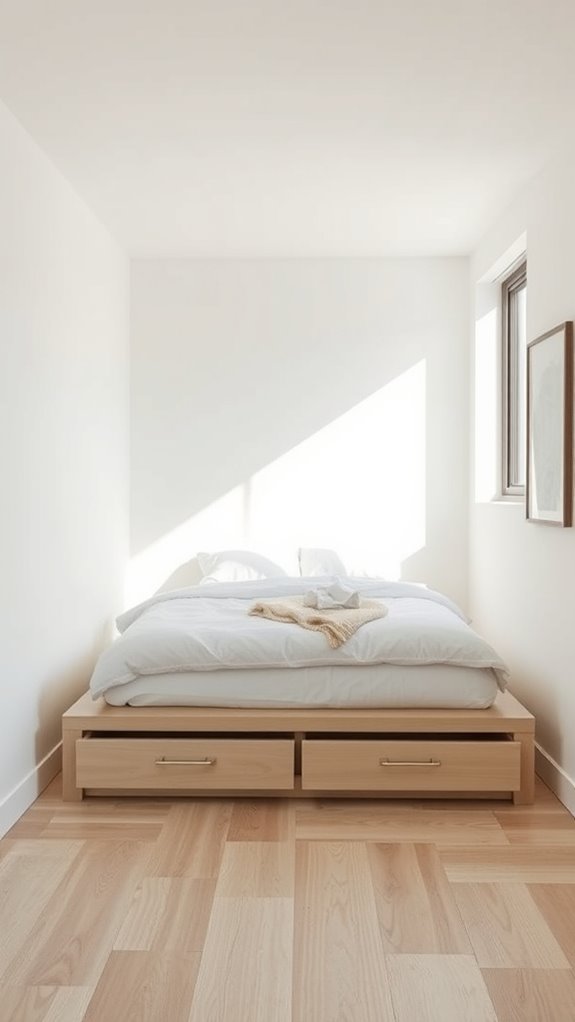
While vertical shelving draws the eye upward and opens up wall space, your bed itself plays an equally important role in keeping your small bedroom feeling spacious and uncluttered. Low-profile bed frames sit closer to the floor, typically ranging from 6 to 12 inches in total height, creating visual lightness and dramatically improving horizontal sightlines throughout compact rooms.
Platform beds with solid wood or upholstered bases and minimalist powder-coated metal frames work particularly well in tight spaces, reducing overall bulk and visual weight while maintaining full structural support for standard mattresses, memory foam toppers, and layered bedding sets. For those needing to combine work and sleep in the same room, a low-profile frame also helps maintain necessary boundaries between your rest zone and any desk area you might incorporate.
Use Under-Bed Storage Strategically
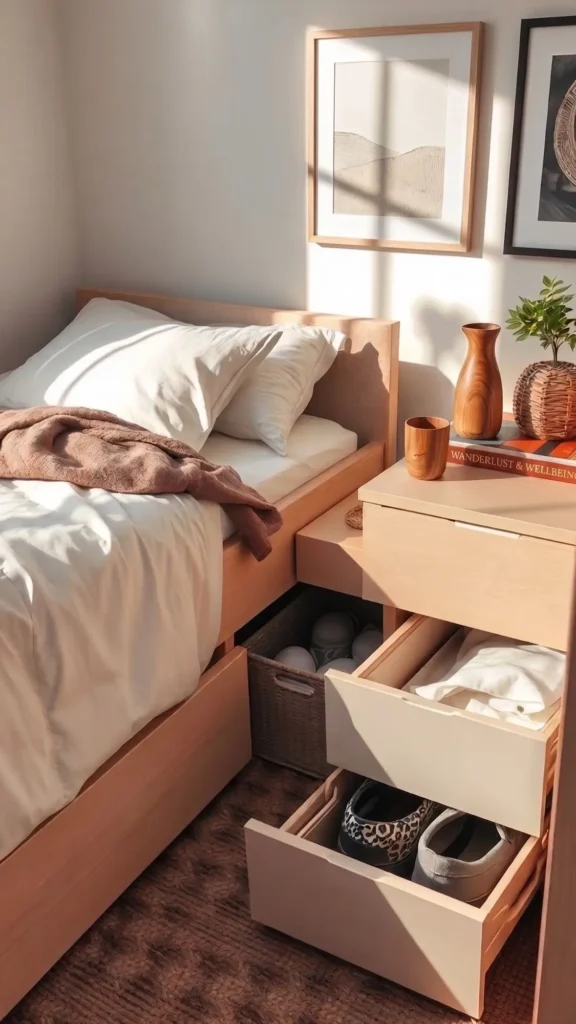
A neatly organized bedroom with a low-profile wooden bed frame, underneath which several clear plastic storage containers with snap lids are visible, partially pulled out on smooth wooden floors.
Soft natural light filters through sheer white curtains, illuminating folded sweaters and neatly rolled linens inside the transparent bins.
The room features neutral beige walls, minimalist furniture, and a light gray area rug partially tucked beneath the bed frame.
This approach exemplifies how maximizing small master bedrooms can create a luxurious space feel without requiring extra square footage.
Select the Right Vertical Storage for Your Walls
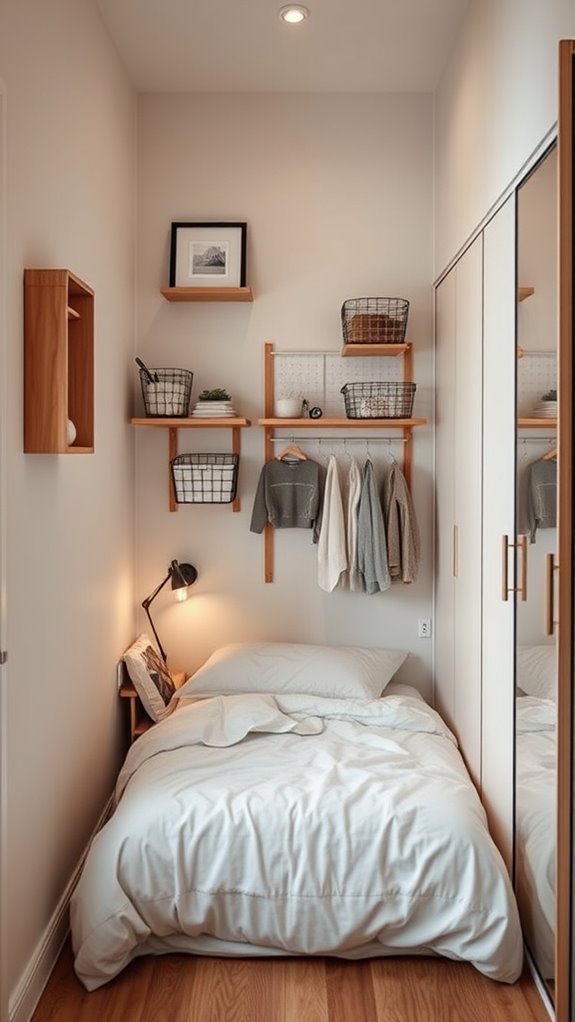
When you’re working with limited floor space, your walls become valuable real estate that shouldn’t go unused. Install floating shelves, wall-mounted cabinets, or pegboards to maximize vertical storage capacity without consuming precious floor area. Opt for light-toned, matte-finish shelving units in white, cream, or pale wood to maintain an airy, open aesthetic while reflecting natural light.
Vertical storage solutions with adjustable shelf brackets, deep-wall anchoring hardware, and modular configurations keep frequently used items within arm’s reach while eliminating bedroom clutter. Combine open-display floating shelves for decorative objects with closed-door wall cabinets for concealed storage of personal items, creating a layered, functional wall system that balances accessibility with visual tidiness. For bedrooms without closets, vertical clothing racks or wall-mounted garment rods can supplement your storage system by keeping everyday apparel organized and accessible.
Invest in Multipurpose Furniture
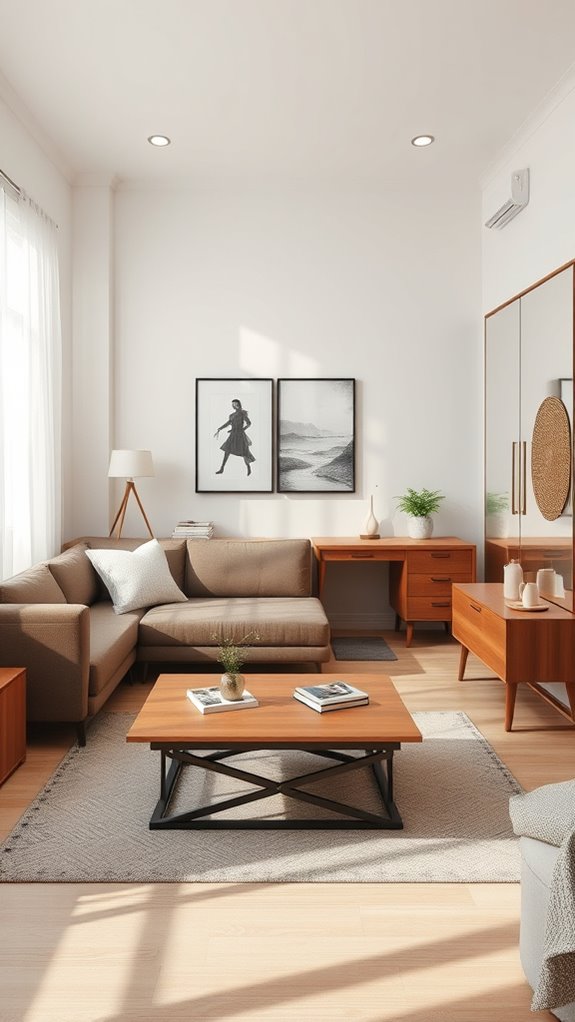
How can you maximize your bedroom’s functionality without expanding its footprint? Invest in multipurpose furniture that serves double duty, such as solid wood bed frames with built-in deep-drawer storage, tufted leather ottomans with hinged-lid compartments, or wall-mounted fold-away desks with integrated cable management.
These space-efficient, dual-function pieces consolidate your belongings within their own structure while maintaining an open, uncluttered hardwood floor plan — a critical design principle for compact, square-footage-limited bedrooms.
Professional designers often rely on color combinations to create visual harmony when selecting finishes for these multifunctional pieces, ensuring cohesive results in even the smallest spaces.
Add Depth to Your Small Bedroom With Color
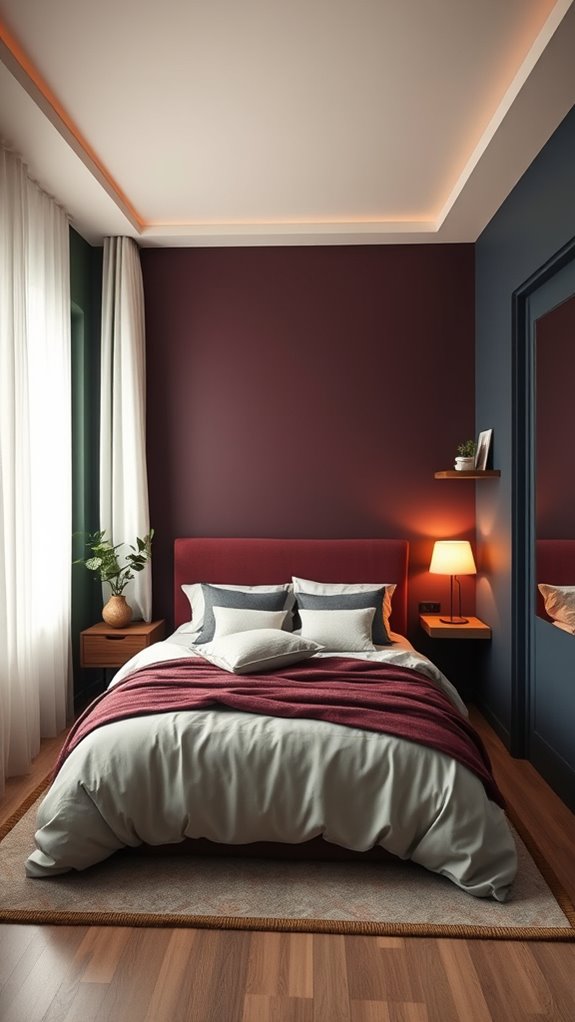
Strategic color choices can transform your small bedroom from feeling cramped into a space that feels larger, deeper, and more intentional. Light, cool tones like soft powder blues, sage greens, and misty aquamarines recede visually, expanding your room’s perceived dimensions through chromatic manipulation of depth perception. Incorporating Japandi design principles of restraint and warmth pairs beautifully with these cooling palettes, fostering a sense of calm without visual clutter.
Paint a single accent wall in deeper jewel tones — rich sapphire, emerald, or amethyst — creating bold focal points that anchor the room without overwhelming tight, constrained spaces. Monochromatic color schemes, built from a single base hue expressed across multiple tonal values, unify walls, bedding, and furnishings seamlessly, enhancing spatial flow and creating an uninterrupted visual continuity throughout your bedroom’s interior.
Install Recessed Lighting to Free Up Floor Space
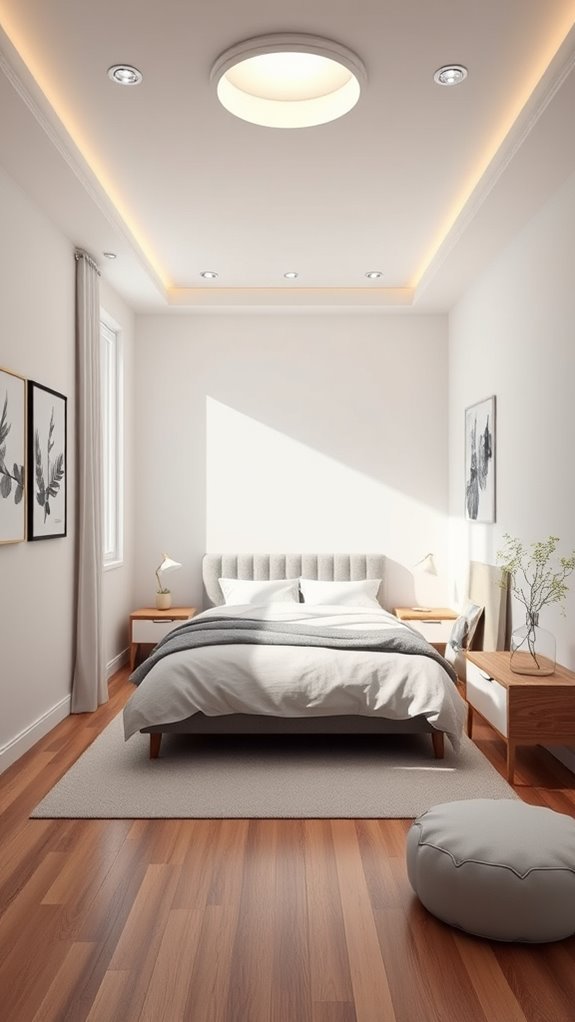
Because traditional floor lamps and table lamps consume valuable square footage in compact bedrooms, recessed lighting offers a practical alternative that illuminates your space without cluttering surfaces. You’ll maximize usable floor area by installing recessed fixtures in your ceiling, creating an unobstructed layout.
This approach provides warm, even ambient lighting distributed across the entire room while keeping your nightstands, corners, and wall space free for essential furniture pieces, decorative accents, and personal storage items. Thoughtful recessed lighting can even complement curated Kpop-inspired bedroom styling without overwhelming the space with bulky fixtures.
Mount Your TV on the Wall
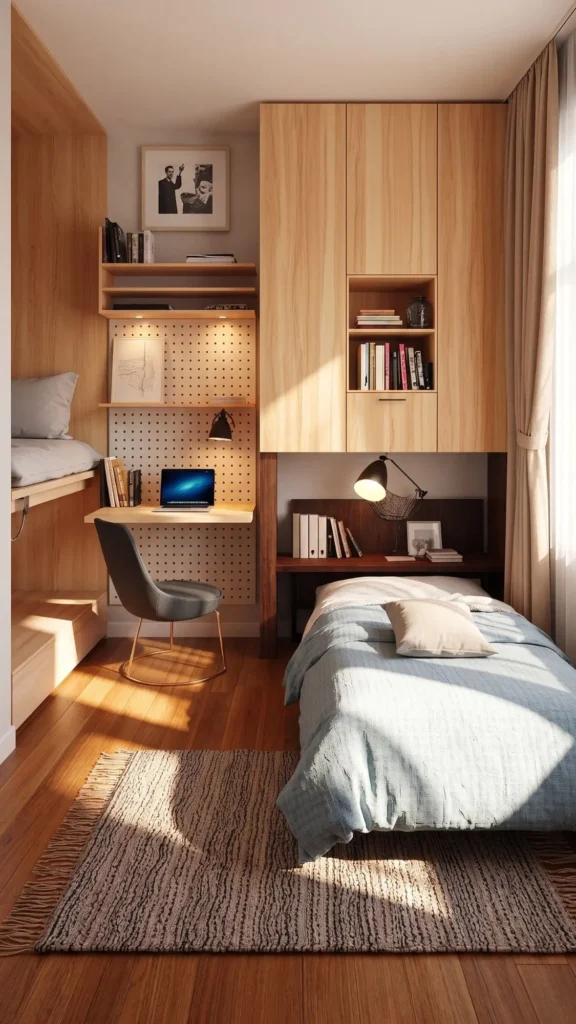
Wall-mounted TVs offer a smart storage solution for small bedrooms, eliminating the need for a bulky entertainment stand or media console and freeing up valuable square footage of floor space.
Low-profile full-motion or fixed-position wall mounts secure flat-screen displays flush against drywall or concrete surfaces, creating a clean, streamlined aesthetic that keeps the room feeling open and uncluttered.
This space-saving configuration maintains comfortable sightlines and optimal viewing angles from a bed or seating area, while also concealing power cables and HDMI connections within wall-mounted cable management channels or in-wall conduit systems for a polished, professional finish.
A restrained palette of finishes for the mount and visible hardware helps the TV blend seamlessly into the bedroom’s design rather than becoming a distracting visual element.
Use Mirrors to Amplify Light and Space
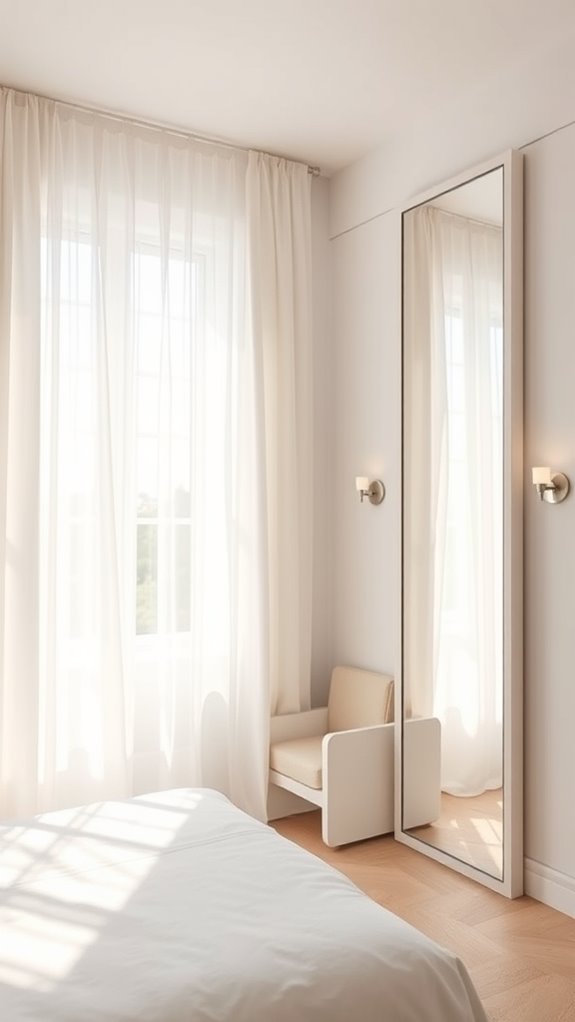
Mirrors are one of the most effective tools for making small bedrooms feel larger and brighter, reflecting both natural and artificial light throughout the space. Position full-length, beveled-edge mirrors directly opposite double-hung or casement windows to maximize incoming daylight, and select frames in brushed gold, polished chrome, or aged silver metallic finishes that complement your existing décor palette.
Large, frameless floor-to-ceiling mirrors create seamless, uninterrupted visual expansions across compact walls, while strategically placed convex or flat accent mirrors bounce warm and cool light tones into shadowed corners, instantly amplifying your room’s perceived square footage and luminosity.
Opt for Light, Neutral Colors
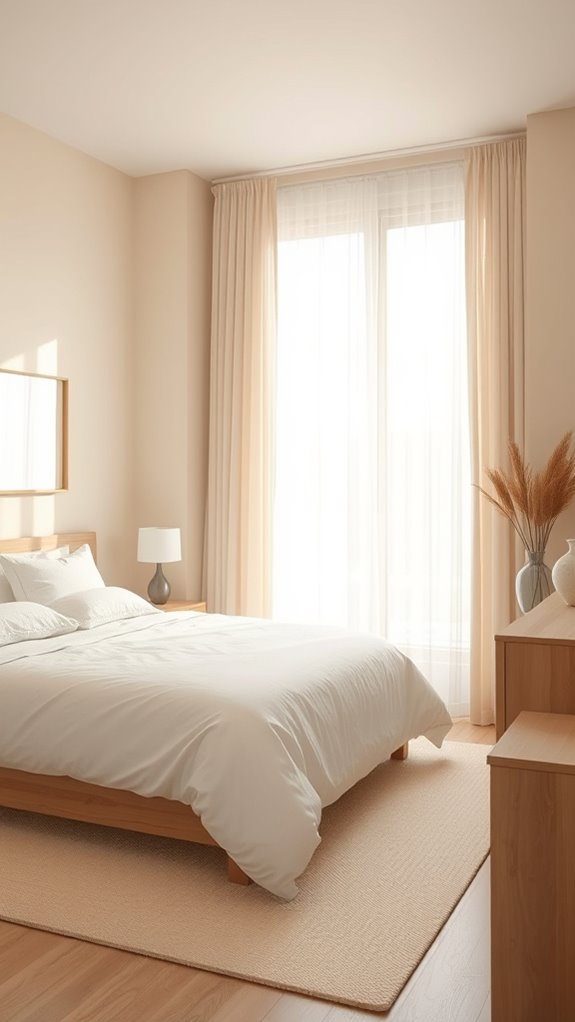
The colors you choose for walls, furniture, and textiles work alongside mirrors to create an airy, open atmosphere. Paint your walls in soft white, warm beige, or pale gray — matte or eggshell finishes that reflect natural light evenly across every surface throughout the space.
Choose neutral upholstery and bedding in cream, taupe, or light gray tones, selecting tightly woven linen or cotton fabrics that maintain a clean, cohesive look. Avoid deep charcoal, navy, or espresso tones, which absorb ambient and natural light, visually compressing the room and reducing its perceived square footage.
The right earthy neutral palettes keep small spaces feeling grounded and fresh rather than cold or sterile, bridging the gap between airy openness and warm comfort.
Combine Task, Accent, and Ambient Lighting
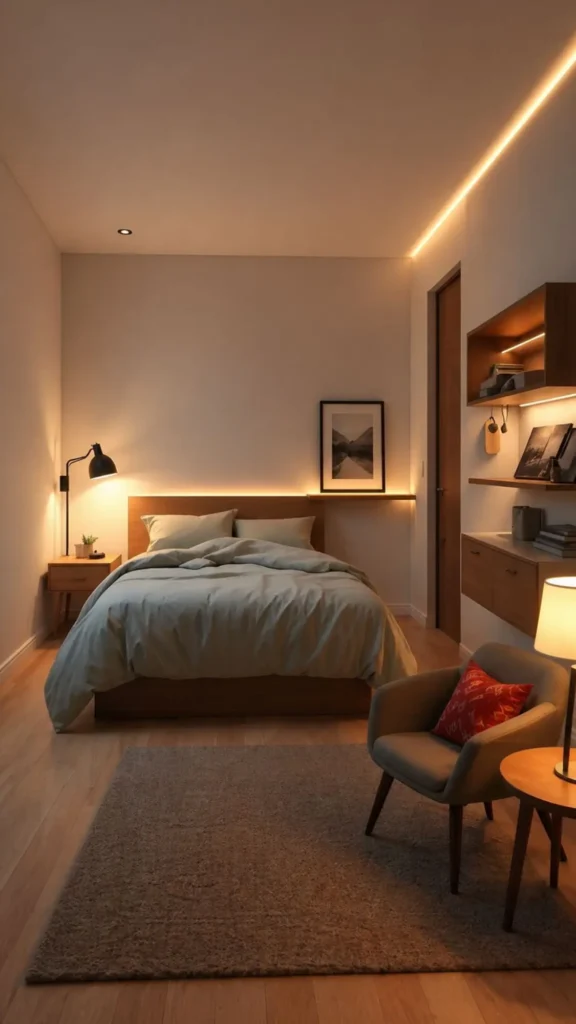
How does lighting transform a small bedroom from feeling cramped to feeling intentional and welcoming? The answer lies in strategic layering across three distinct fixture tiers.
Use ambient overhead lighting — such as a dimmable flush-mount or semi-flush ceiling fixture — for broad, even general illumination that fills the room without harsh contrasts. Pair this with task lighting positioned near your bed or desk, like a swing-arm wall sconce or an adjustable LED desk lamp, to support focused functional activities such as reading or working. Complete the system with accent lighting — recessed directional spotlights, LED strip lighting tucked behind a headboard, or a narrow-beam picture light — to highlight architectural features like exposed beams, textured walls, or built-in shelving.
This three-tier approach creates visual depth through overlapping light zones, eliminates flat one-dimensional shadows, and tricks the eye into perceiving greater square footage by drawing attention to vertical surfaces and corners. For those drawn to 90s bedroom aesthetic principles, minimal lighting layers offer that nostalgic warmth without the decade’s notorious visual clutter.
Choose Sliding Doors Over Swing Doors
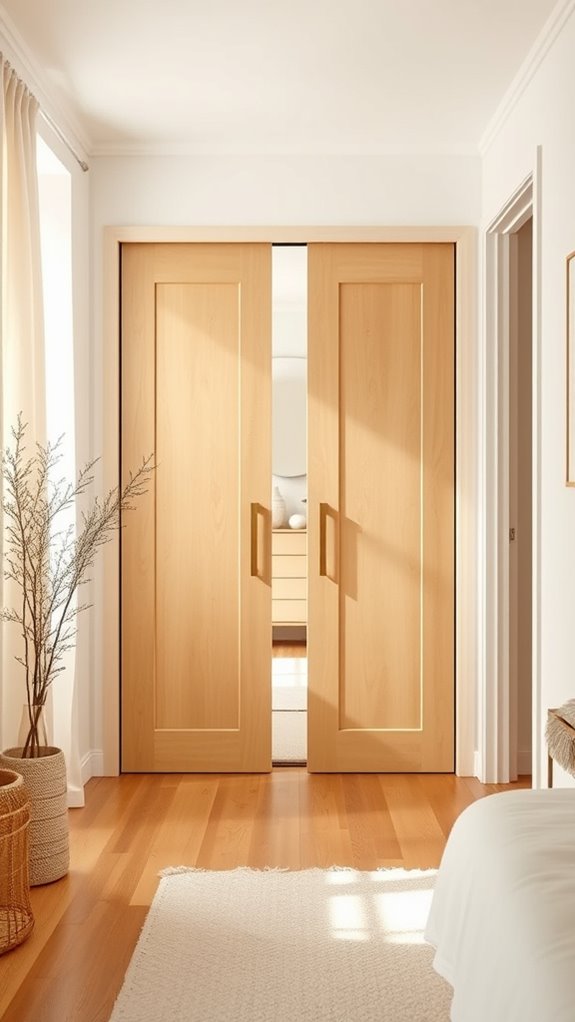
A minimalist bedroom interior featuring floor-to-ceiling frameless glass sliding doors mounted on sleek silver ceiling tracks, reflecting soft natural daylight across pale oak hardwood flooring, with a low-profile platform bed in cream linen positioned close to the wall, a compact walnut nightstand, and unobstructed open floor space stretching toward a window with sheer white curtains billowing gently in ambient light.
Declutter and Keep Only Essentials
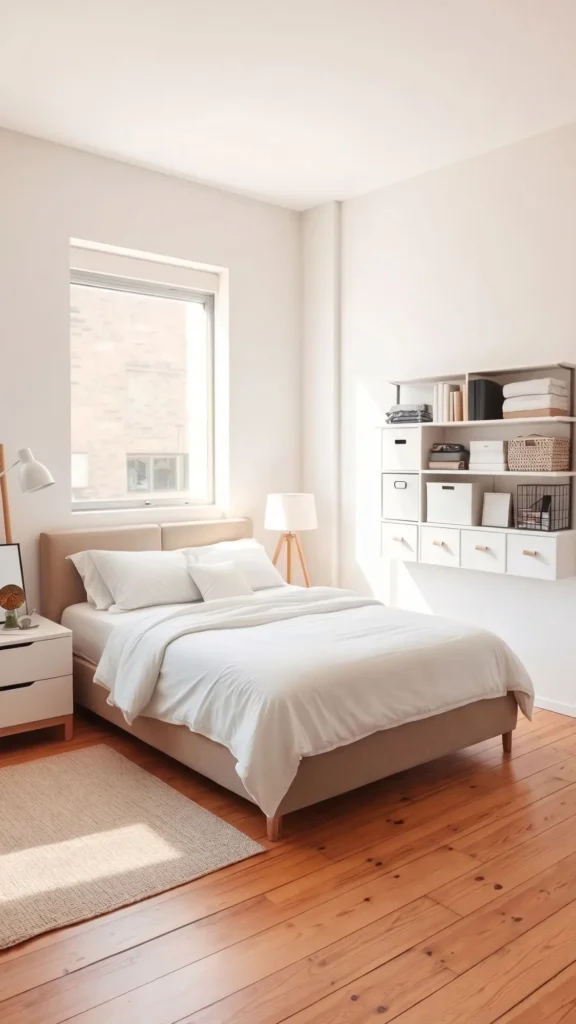
Once you’ve optimized your room’s layout with sliding doors, the next critical step is removing everything that doesn’t serve a daily, functional purpose. Evaluate each item honestly and methodically, retaining only high-utility furniture pieces and personal belongings you engage with on a consistent, regular basis. Storage expert and bestselling author Marie Kondo emphasizes that minimally furnished spaces with reduced object density create a heightened perception of square footage and psychological calm.
Remove duplicate household items, donate unworn or rarely used clothing, and eliminate purely decorative accent pieces that contribute visual noise without practical value. This deliberate, intentional decluttering approach maximizes both functional usability and visual breathing room, transforming even the most compact, space-restricted bedrooms into streamlined, efficient personal sanctuaries.
Organize Your Closet With Drawer Dividers

Drawer dividers are powerful organizational tools that maximize how you store and access your clothing, keeping every item visible and neatly separated within your bedroom’s limited storage space.
Using rigid acrylic dividers or sustainably sourced bamboo sectioners, you can categorize folded garments by type, fabric weight, and frequency of use.
This systematic approach prevents fabric creasing, eliminates drawer overflow, and dramatically reduces morning decision fatigue — particularly valuable in compact bedrooms where every square inch of drawer depth and vertical real estate counts.
Install a Wall-Mounted Headboard With Storage
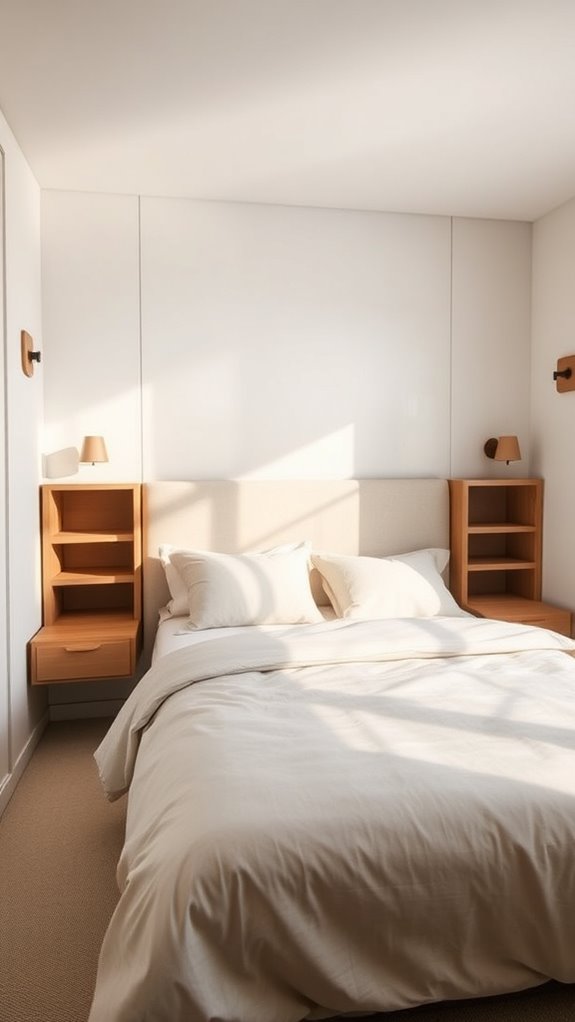
Wall-mounted headboards with built-in storage offer a smart solution for reclaiming valuable floor space in your bedroom while adding functional style above your bed. These structural installations typically anchor directly into wall studs using heavy-duty mounting brackets, lag bolts, and reinforced backplates rated for 50–200 lbs of load capacity.
You’ll find shelving units, open cubbies, or floating cabinets integrated into headboard designs, constructed from materials like MDF, solid walnut, white oak, or powder-coated steel. These configurations allow you to display hardcover books, trailing pothos plants, ceramic sculptures, or warm-toned LED strip lighting. This approach eliminates the need for separate nightstands, maximizing your room’s usable square footage while consolidating charging stations, reading lamps, and personal items into a single cohesive unit.
Stack Hangers for Double the Closet Space
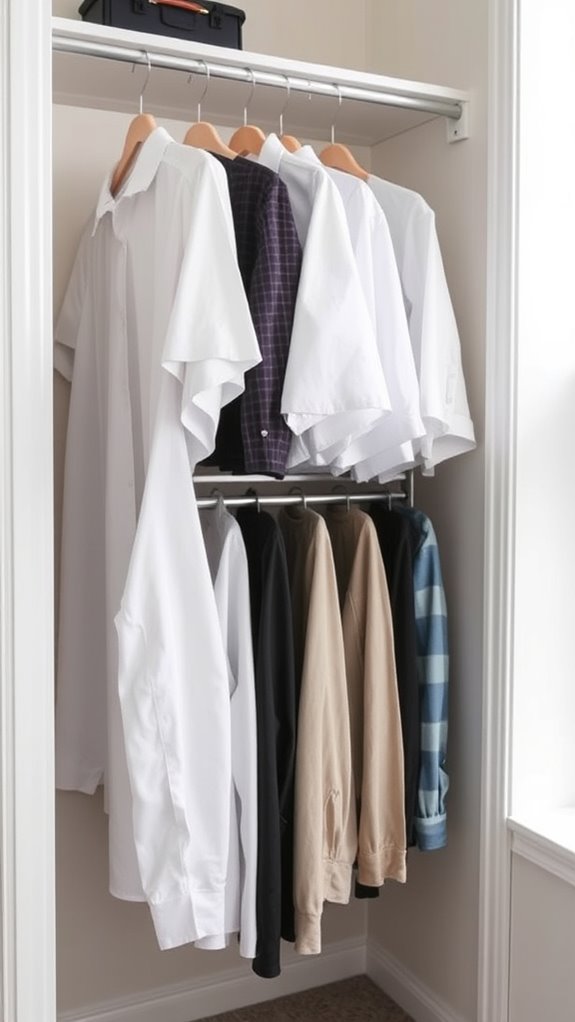
How much closet space are you actually using right now?
Stack hangers vertically using cascading hooks or tiered hanger systems, doubling your storage capacity instantly. This space-maximizing method fully utilizes your existing horizontal rod’s structural potential without requiring additional wall anchors, brackets, or permanent installation hardware.
You’ll suspend multiple garments — lightweight blouses, structured blazers, folded trousers — within a single vertical zone, creating organized, layered arrangements that maintain full visual accessibility and easy retrieval within your existing square footage.
Leverage Clear Storage Containers for Visibility
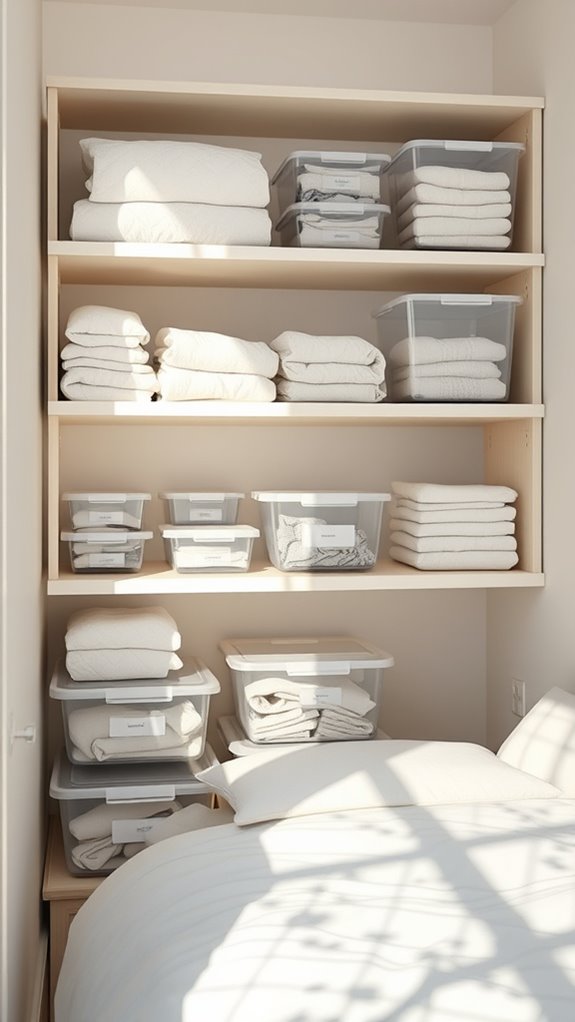
Clear storage containers transform small bedrooms by eliminating the guesswork that comes with opaque boxes and closed drawers. You’ll quickly locate seasonal clothing, accessories, and bedding without opening multiple containers.
Stack transparent, heavy-duty polycarbonate or BPA-free plastic bins vertically along walls or beneath low-profile bed frames, maximizing every square inch of underutilized floor and vertical space. Affix bold, waterproof adhesive labels to each airtight, dust-resistant container, ensuring your organizational system remains consistently functional, visually coherent, and immediately accessible throughout all four seasons.
Add a Narrow Wall-Mounted Nightstand
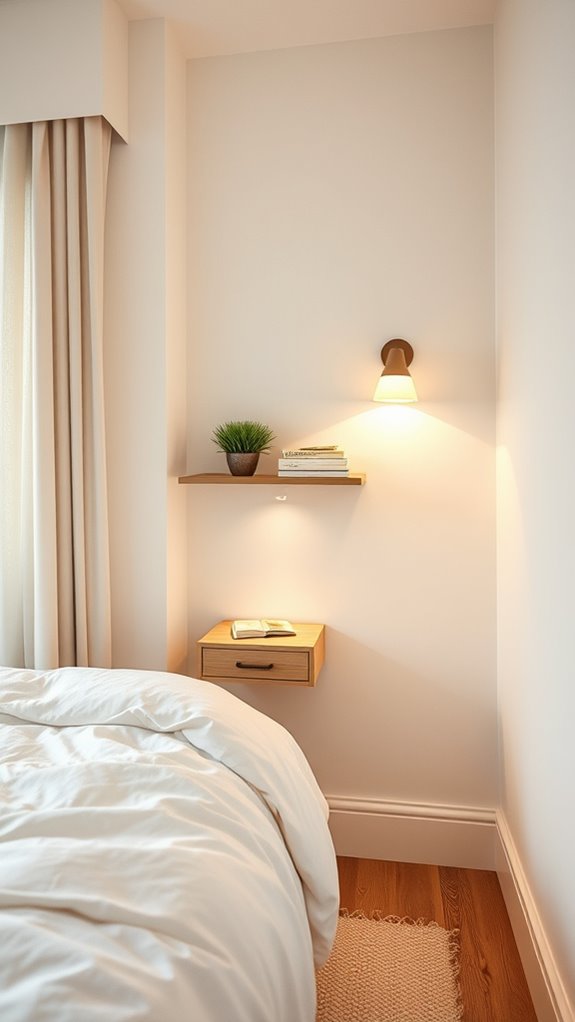
A minimalist bedroom featuring a slim rectangular wall-mounted wooden shelf attached to a white painted plaster wall beside a low-profile platform bed with linen bedding in neutral tones, a small cylindrical ceramic table lamp with warm Edison bulb glow resting on the floating shelf surface alongside a hardcover book and small succulent plant in a terracotta pot, natural morning light streaming through sheer white curtains, light oak hardwood flooring visible below, shallow depth of field emphasizing the mounted shelf’s clean horizontal silhouette against the textured wall.
Float Furniture Away From Walls
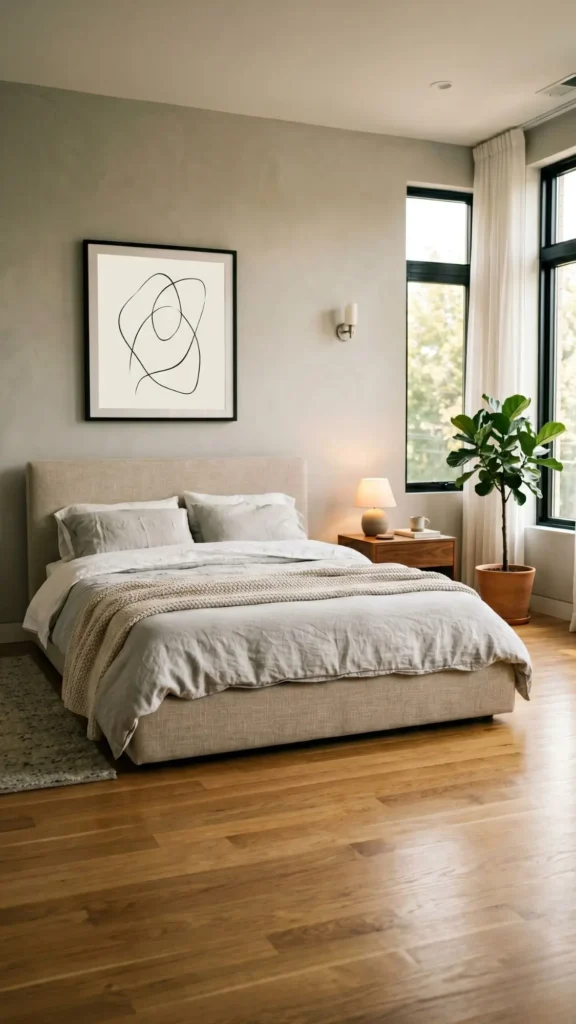
Floating your furniture away from walls creates an illusion of spaciousness, making even compact bedrooms feel larger and more open. You’ll define distinct functional zones, improve natural traffic flow, and allow both artificial and natural light to circulate freely around the room’s perimeter.
Position your bed several inches from the wall, creating a deliberate gap between the upholstered headboard and the painted drywall surface, then arrange a small wooden nightstand beside it. This intentional layout maximizes perceived square footage and enhances your bedroom’s overall spatial functionality and aesthetic balance.
Add Shelves Above Your Closet Rod
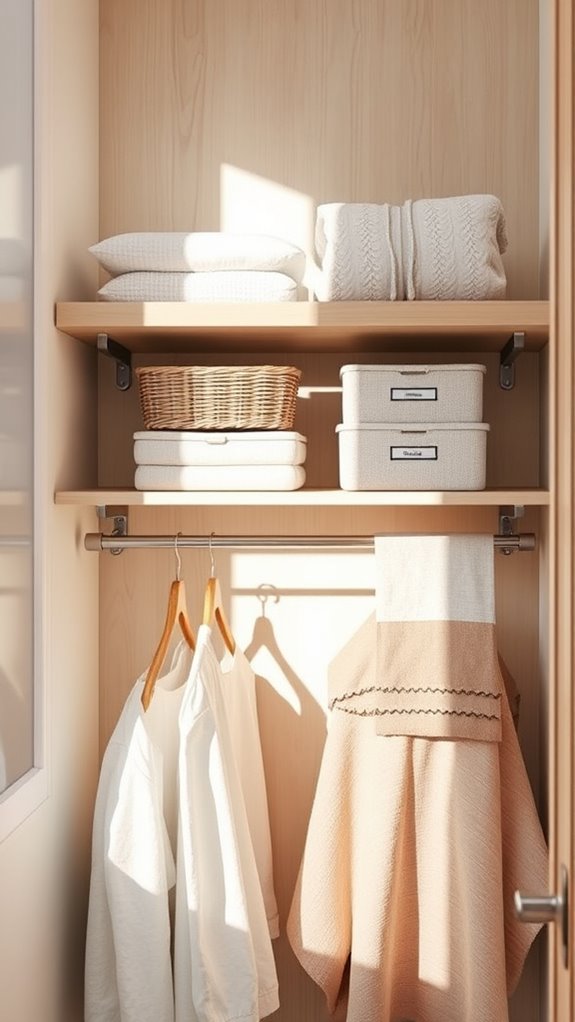
Installing shelves directly above your closet rod is a practical, space-maximizing solution that reclaims vertical wall space without consuming valuable floor area. This dual-level storage configuration creates dedicated zones for folded garments, leather-strap accessories, woven baskets, and off-season clothing like bulky sweaters or lightweight sundresses.
Select solid wood, laminate-finished MDF, or powder-coated metal shelving units that complement your bedroom’s existing aesthetic — whether that’s a warm walnut tone, a crisp white finish, or an industrial matte black frame. Arrange contents by category using labeled fabric bins, acrylic dividers, or stacked folded items to ensure effortless accessibility and a clean, streamlined visual appearance.
Don’t Forget the Back of Your Door
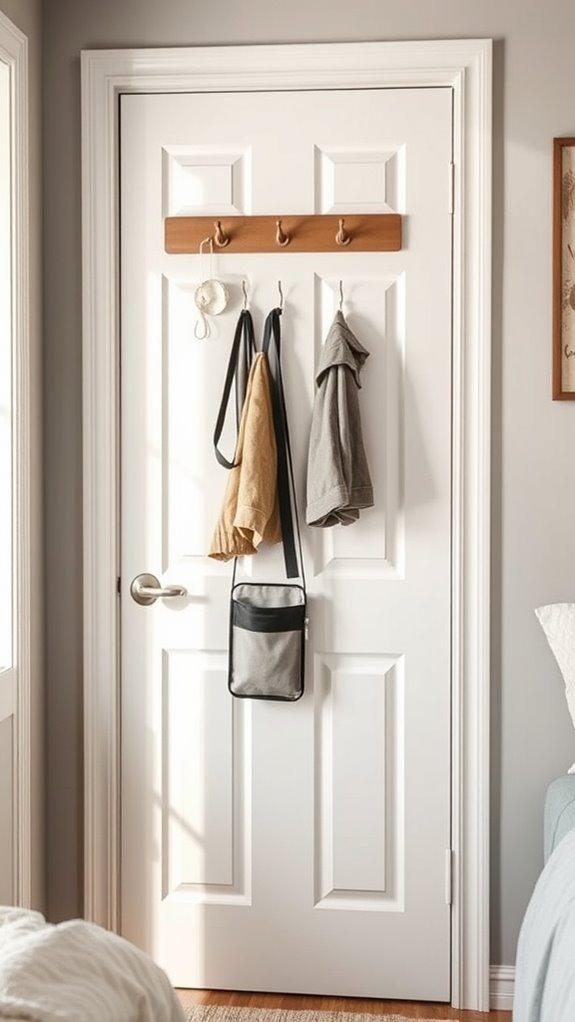
Your bedroom door’s back offers prime real estate you’ve likely overlooked — a vertical surface capable of expanding storage capacity without consuming valuable floor space or disrupting your room’s existing layout.
Install over-the-door organizers crafted from canvas, metal wire, or clear acrylic pockets, alongside double-pronged chrome hooks or narrow floating shelves to store leather handbags, woven tote bags, silk scarves, and bulky off-season accessories. These space-efficient, wall-mounted solutions maximize underutilized vertical space, keeping high-frequency-use belongings within arm’s reach while preserving the open, uncluttered aesthetic and functional flow of your bedroom.
Choose Lightweight or Sheer Curtains
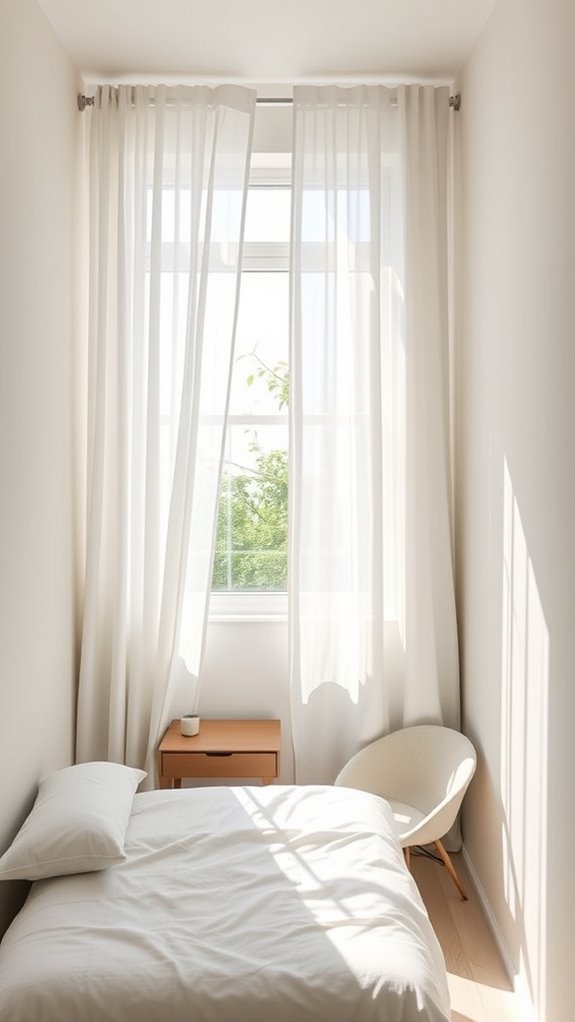
A sunlit small bedroom featuring floor-to-ceiling sheer white linen curtains softly billowing near an open window, warm diffused morning light filtering through the translucent fabric, casting gentle shadows across a light oak hardwood floor, a low-profile upholstered bed in cream-toned fabric positioned against a pale white wall, minimal bedside furniture in natural wood tones, soft ambient glow filling the entire room, wide-angle perspective emphasizing spaciousness and airflow.
Mount a Fold-Down Desk
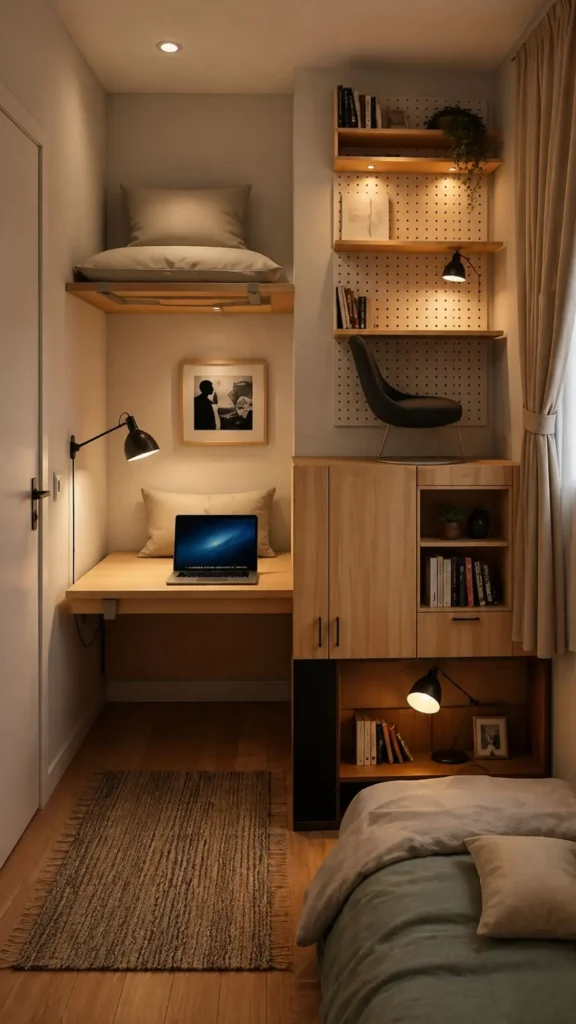
A fold-down desk mounts directly to your wall studs using heavy-duty hardware, providing a rigid, cantilevered work surface that collapses flush against the wall when not in use. This space-saving solution eliminates the permanent footprint of a traditional freestanding desk, reclaiming valuable square footage in compact bedrooms.
Choose a sturdy model featuring solid hardwood or MDF construction in white lacquer or natural oak finishes, ensuring the piece complements your existing bedroom aesthetic while maintaining visual lightness. Look for built-in cable management channels, integrated storage compartments, and a smooth piano-hinge mechanism rated for repeated daily use.
Paint Your Ceiling Light to Expand the Room

Ceilings occupy a substantial portion of your bedroom’s total visual field, making their color choice a high-impact, low-cost design decision. Opting for bright whites, warm ivory creams, or soft pastel tones — such as blush pink, pale lavender, or powder blue — actively reflects natural and artificial light downward into the room.
This light-bouncing effect creates a powerful vertical illusion, drawing the eye upward and amplifying the perceived ceiling height by several visual inches. The result is a bedroom that feels noticeably more expansive, open, and airy — all without demolition, structural modification, or significant financial investment.
Install Vertical Hangers and Organizers
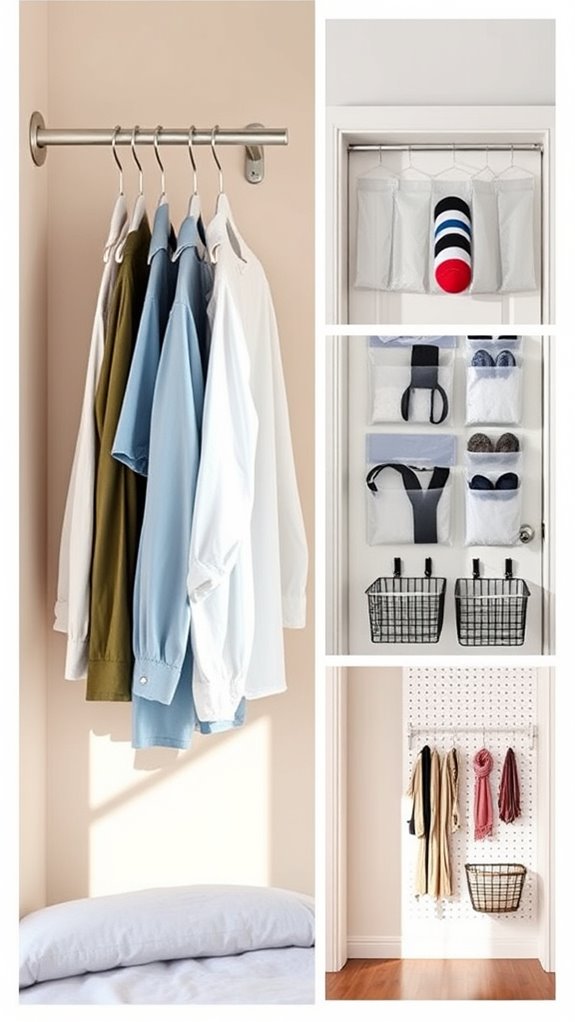
Maximizing floor space in a compact room requires a deliberate, multi-layered approach to vertical storage and clothing organization. Install wall-mounted metal or wooden hangers, perforated pegboards with customizable hook configurations, and weight-bearing floating shelves at varying heights to exploit every inch of unused wall space. These purpose-built solutions keep frequently accessed belongings within arm’s reach while reclaiming valuable square footage on the floor below.
Opt for ultra-slim, velvet-coated hangers measuring no more than 5mm in thickness, and spring-loaded over-the-door organizers with reinforced brackets that sit flush against the door panel, minimizing protrusion into the room’s usable interior space.
Build a Window Seat With Storage
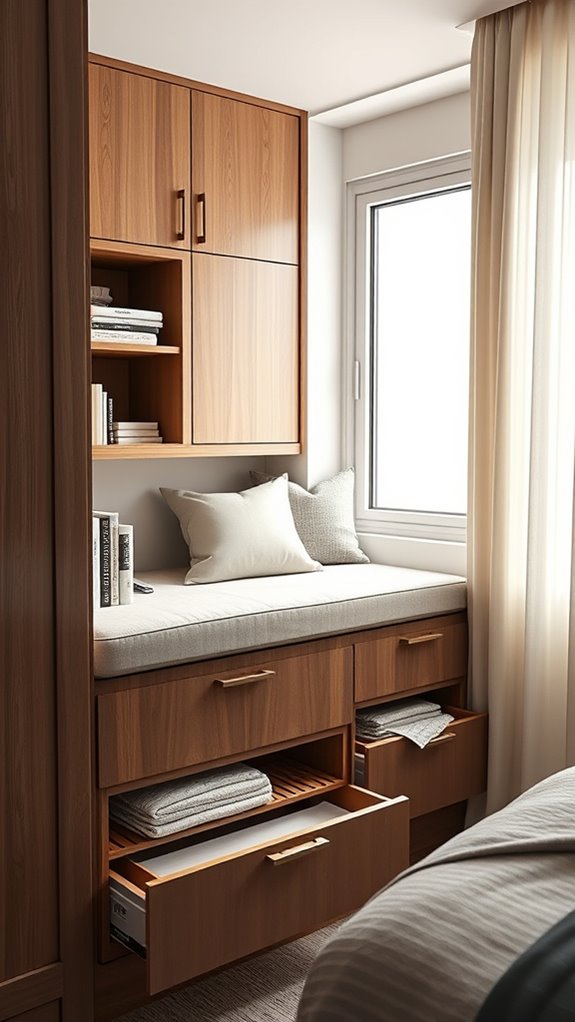
A window seat transforms an underutilized architectural feature into dual-purpose furniture, combining padded seating comfort with concealed storage capacity beneath a hinged cushion platform. The structural base typically consists of plywood or MDF framing, reinforced with pocket screws and wood glue, housing a hollow interior compartment accessible through lift-top piano hinges rated for repeated daily use.
Install tight-woven, stain-resistant cushioning in warm neutral tones — ivory, greige, or soft taupe — to maintain visual cohesion with surrounding trim and millwork. Layer coordinating throw pillows in contrasting textures like linen, velvet, or woven cotton to introduce personalized comfort and dimension without consuming valuable floor space.
Keep Nightstands Functional, Not Decorative
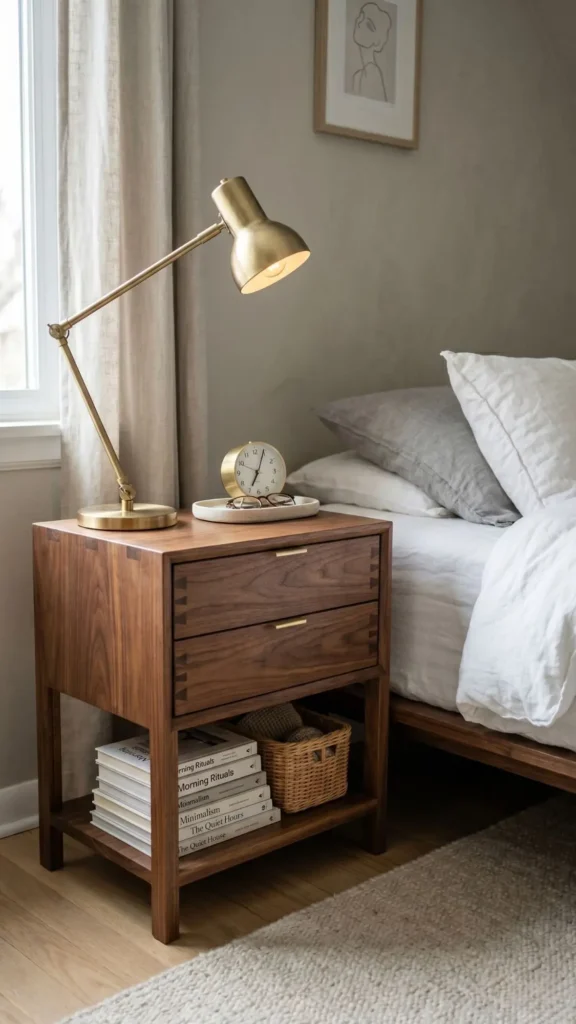
In small bedrooms, nightstands serve as essential storage solutions rather than mere decorative surfaces. Prioritize function over aesthetics when selecting and styling them, choosing hardwood or MDF units with deep-set drawers, open lower shelves, and cable management ports to maximize vertical storage capacity for paperback novels, prescription bottles, reading glasses, and personal care items.
Keep surfaces deliberately sparse, maintaining only a warm-toned LED lamp with adjustable brightness and a single tray corralling absolute bedside necessities — a phone charger, a glass of water, perhaps a slim alarm clock — to preserve both functional efficiency and a visually uncluttered, restful atmosphere in a space-constrained room.
—
Use Removable Wall Decals Instead of Heavy Art
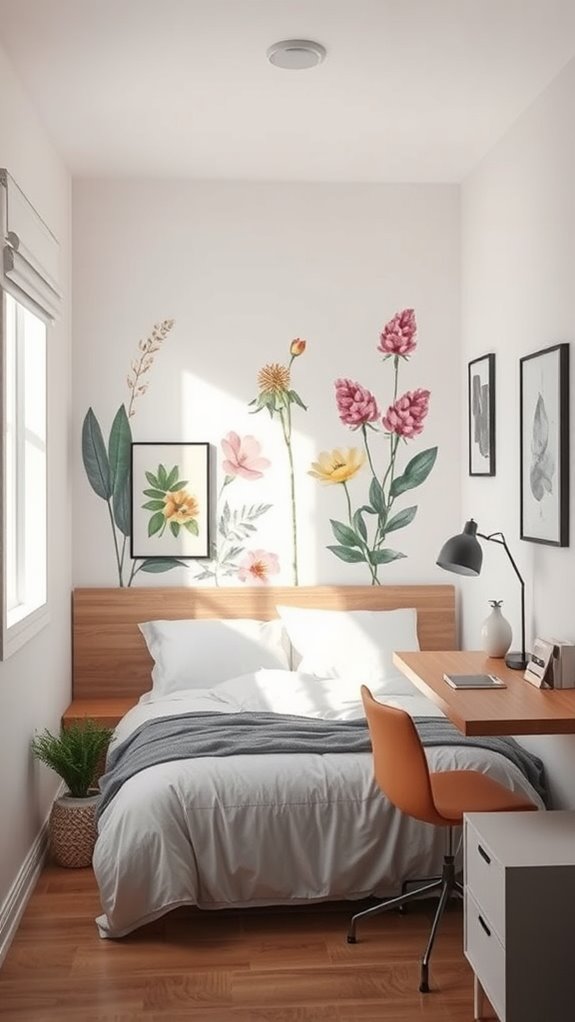
Heavy framed artwork demands valuable wall space and requires permanent installation holes — a significant drawback in compact bedrooms where every square inch and surface matters.
Removable wall decals offer a flexible, damage-free alternative that transforms bare walls without long-term commitment. Their pressure-sensitive vinyl construction allows effortless repositioning or full replacement as your aesthetic preferences evolve, and their clean-release adhesive backing leaves zero residue on painted drywall surfaces — making them a particularly smart solution for renters navigating strict security-deposit restrictions.
Commit to a Cohesive Color Palette
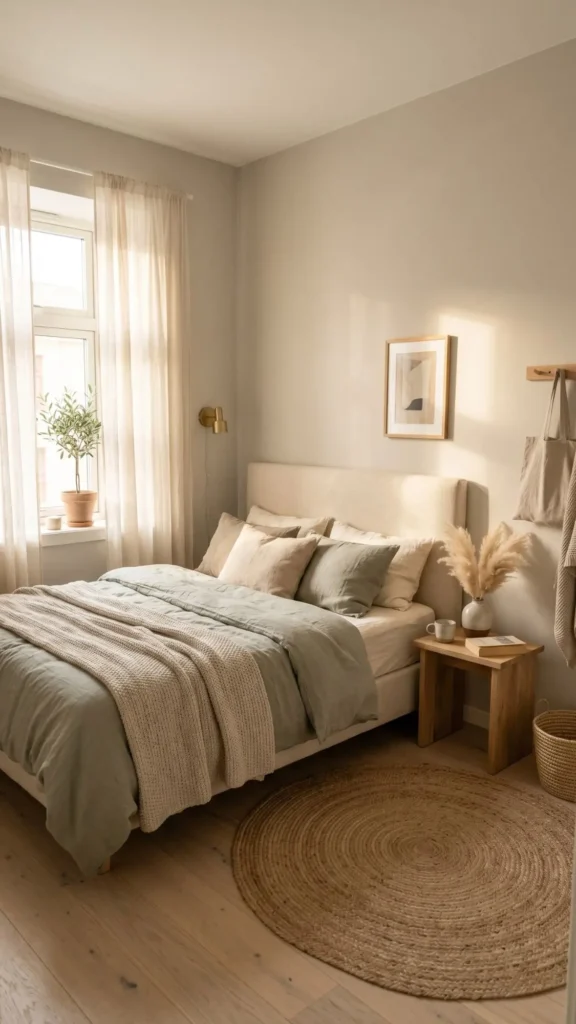
Selecting a unified color scheme forms the foundation of an optically spacious bedroom, because visual harmony makes compact rooms feel larger and more intentional. Choose two to three complementary hues — such as warm ivory paired with dusty sage or soft greige balanced against muted terracotta — then apply them consistently across wall paint, linen bedding, upholstered headboards, window treatments, and decorative accessories.
Soft, neutral palettes featuring low-saturation tones, matte finishes, and tonal layering expand perceived square footage, while deeper jewel tones and charcoal anchors create intimate atmosphere without visually compressing tight quarters. Maintain your chosen palette with disciplined consistency across every surface and textile to establish seamless visual continuity and a polished, architect-designed aesthetic.
Final thoughts
You can transform your small bedroom into a functional, peaceful retreat by combining vertical storage solutions, multipurpose furniture pieces, and a unified color scheme. These strategies work together to create the powerful illusion of expanded space while maximizing every usable inch of your floor plan.
By implementing thoughtful design choices—from low-profile platform beds to strategic layered lighting—you’ll develop a bedroom environment that feels noticeably larger, calmer, and perfectly tailored to your daily needs.