16 Relaxing Bedroom Ideas That Help You Unwind
Your bedroom should be a sanctuary where you can genuinely relax, yet most spaces work against restful sleep. You’re likely dealing with harsh lighting, cluttered surfaces, or colors that overstimulate your mind. The right design choices—from paint selection to bedding quality—can transform your environment into a calming retreat. Understanding how these elements work itogether will help you discover which changes matter most for your specific needs.
Choose Calming Paint Colors to Set the Mood

How can you transform your bedroom into a peaceful retreat? Start by selecting soft, muted paint colors like pale blues, soft greens, or warm neutrals. These hues reduce visual stimulation and promote relaxation. Color psychologist Angela Wright states, “Cool tones lower heart rate and create calming environments.” Avoid bright whites and bold shades, which can feel jarring and energizing instead of restful. Pairing calming colors with minimalist bedroom designs can further reduce visual clutter and amplify the stress-reducing effects of your space.
Optimize Lighting to Support Better Sleep
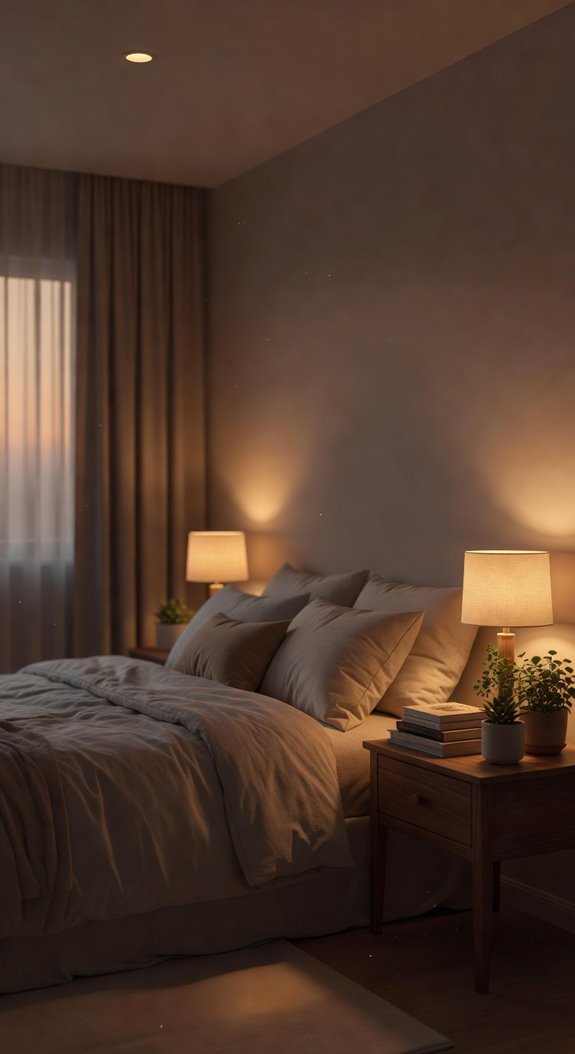
Why does lighting matter so much for sleep quality?
Your bedroom’s light exposure directly influences your circadian rhythm, the internal clock regulating sleep and wakefulness.
Install dimmer switches, allowing you to reduce brightness gradually as evening approaches.
Choose warm-toned bulbs emitting soft, amber light rather than harsh blue wavelengths, which suppress melatonin production and keep you alert when you’d rather rest.
Incorporating LED ambient accents into your bedroom design can create layered, low-light zones that ease the transition from wakefulness to sleep.
Invest in Quality Bedding and Pillows

While optimizing your lighting sets the stage for better sleep, the foundation of genuine rest actually lies in what you’re sleeping on.
You’ll want to invest in high-quality sheets made from breathable cotton or linen, paired with supportive pillows that maintain proper neck alignment.
A comfortable mattress directly impacts sleep quality, so prioritize materials that suit your personal preferences and body type. For those looking to take their sleep sanctuary further, whimsical bedroom designs can blur the line between dreams and reality, transforming your space into a truly imaginative retreat.
Declutter Your Bedroom for a Clearer Mind
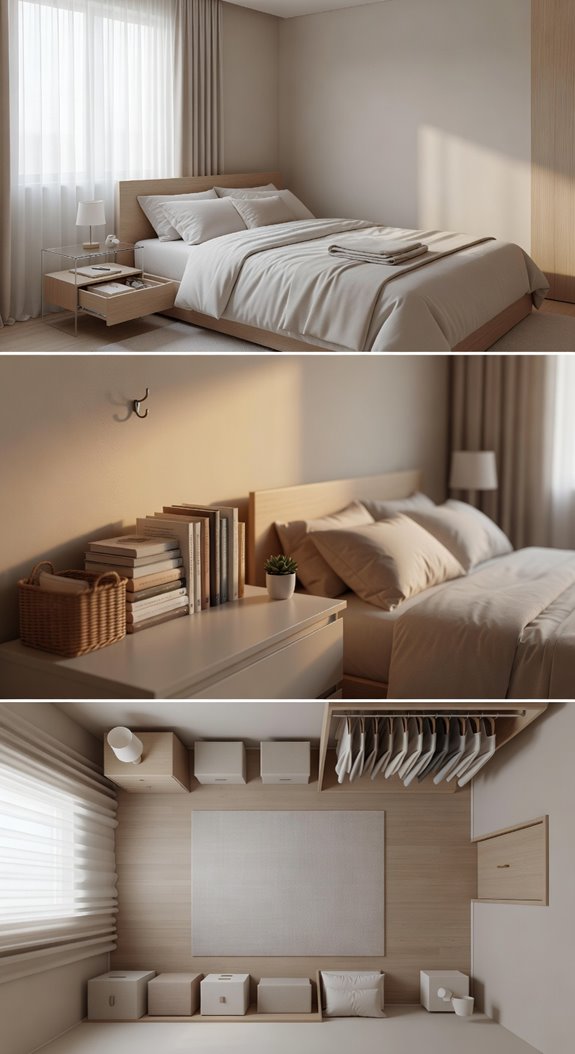
Once you’ve created a comfortable sleeping surface, the next critical step involves removing unnecessary items from your bedroom environment. A cluttered space creates mental chaos, preventing true relaxation.
Organize your nightstands, closets, and floors by removing items you don’t use regularly. This intentional minimalism calms your mind and promotes better sleep quality throughout the night. Complementing a tidy space with soft pastel lighting can further enhance relaxation and help signal to your brain that it’s time to wind down.
Add Soft Textures and Layered Fabrics
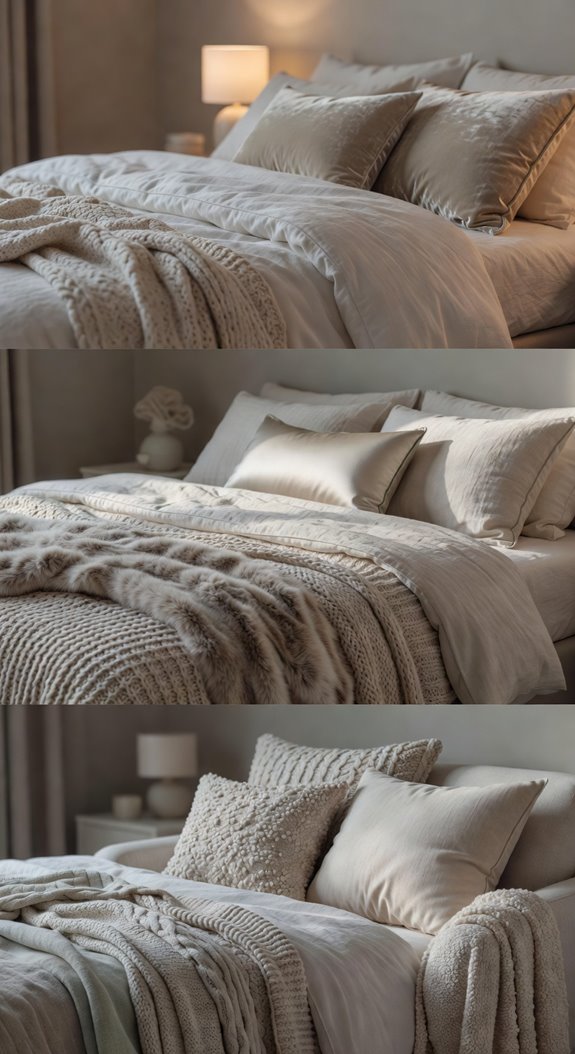
Soft textures and layered fabrics transform your bedroom into a tactile sanctuary that encourages relaxation and comfort. You’ll want to incorporate plush area rugs, weighted blankets, and high-thread-count sheets that invite touch. Layer linen throw pillows over your bed, add velvet cushions to seating areas, and drape soft blankets across furniture. These elements create visual depth while providing genuine tactile comfort that supports better sleep. For a dreamy finishing touch, consider incorporating fairycore aesthetic elements like ethereal lighting and nocturnal-inspired designs that add a soft, magical glow to your layered bedroom space.
Incorporate Plants for Natural Air and Calm
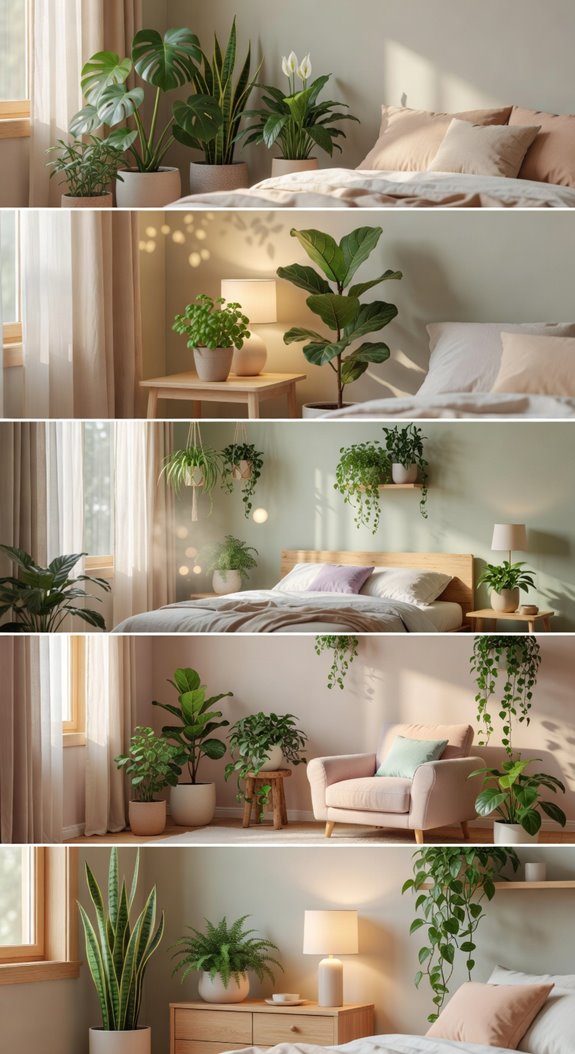
How can you transform your bedroom into a fresher, more peaceful space? Plants naturally purify your air while creating a calming visual environment. Place low-maintenance varieties like pothos or snake plants on nightstands and shelves. Their green foliage reduces stress, and they require minimal care. Indoor plants genuinely improve air quality and promote better sleep through improved oxygen levels. For even more inspiration, sun-drenched plant-filled rooms show just how transformative greenery can be when paired with natural light.
Choose Essential Oils and Scents That Relax You
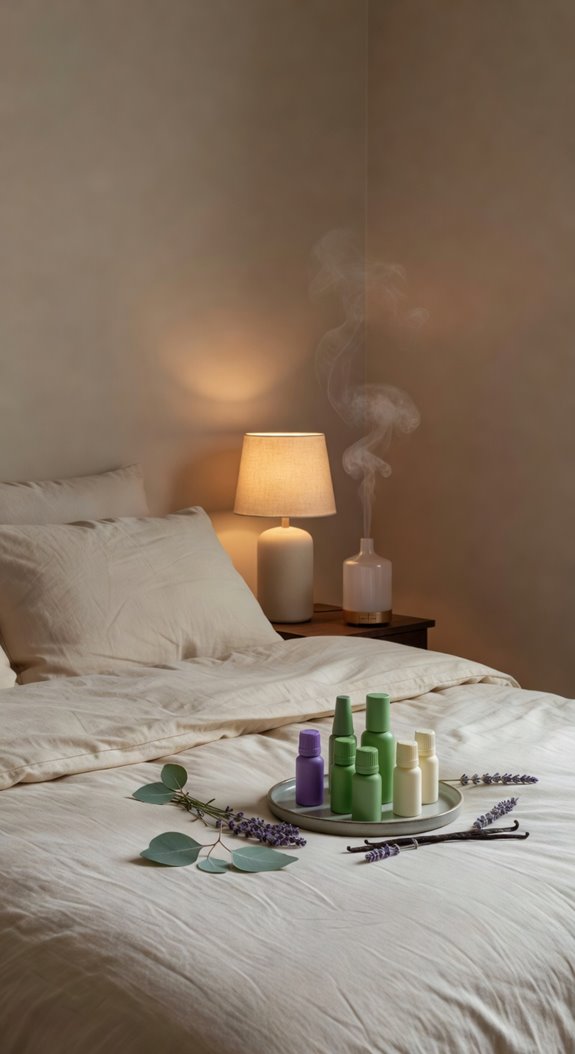
What role do scents play in creating your ideal sleep environment? Essential oils like lavender, chamomile, and eucalyptus activate your brain’s relaxation response, promoting deeper sleep. You’ll want to use a diffuser or place scented sachets near your bed. Lavender particularly reduces anxiety, while chamomile calms racing thoughts. Select high-quality oils, apply them consistently, and you’ll notice improved sleep quality within days. Pairing your essential oils with candlelight aromatherapy rituals can deepen the sensory experience, helping to signal your mind and body that it’s time to rest.
Protect Your Bedroom From Digital Distractions
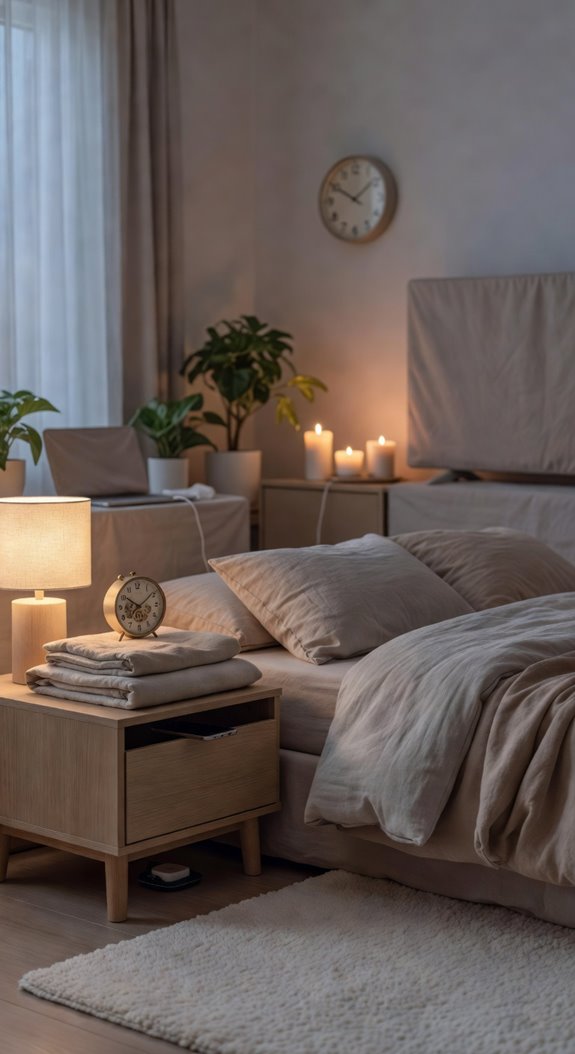
Your bedroom’s quality as a sleep sanctuary depends considerably on eliminating digital devices, which emit blue light that disrupts your circadian rhythm and keeps your mind engaged when it should be winding down.
Remove smartphones, tablets, and televisions from your sleeping space entirely.
Establish a charging station outside your bedroom, creating physical distance between you and notifications that fragment your attention during critical rest hours. Instead, consider replacing screen time with forest-themed fantasy decor that draws on natural elements to create a calming, immersive environment that eases your mind into rest.
Create a Relaxation Zone Within Your Bedroom
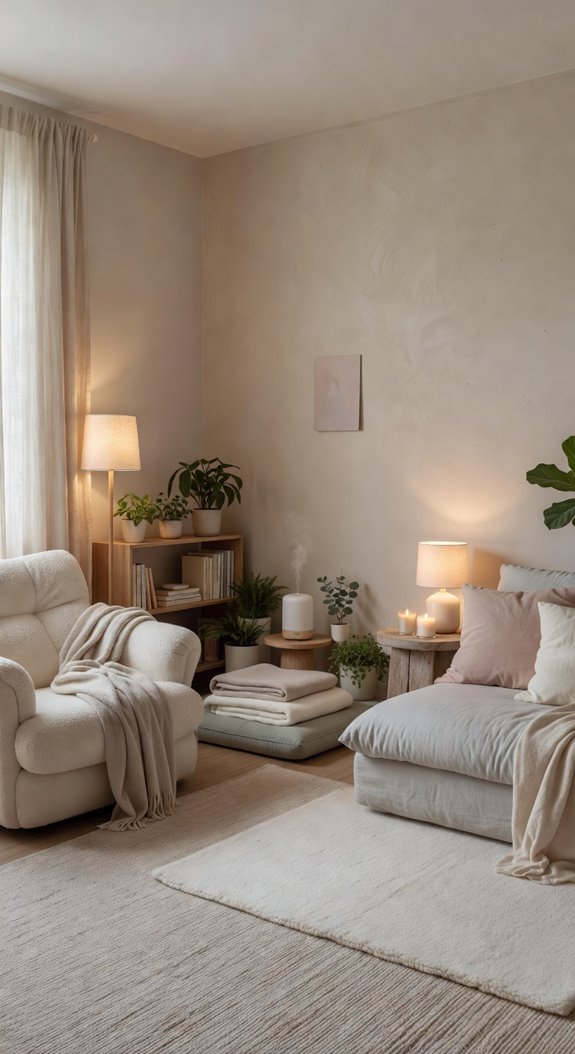
Beyond removing distractions, you’ll want to designate a specific corner or nook where you can unwind before bed, separate from where you sleep. Add a comfortable armchair, soft throw blanket, and warm lighting to create an inviting retreat. Include a small side table for tea or books. This dedicated space signals to your brain that relaxation is beginning, establishing a calming pre-sleep routine. Incorporating sanctuary design elements like layered textiles and intentional lighting can further enhance the sense of refuge this zone provides.
Regulate Temperature and Air Quality
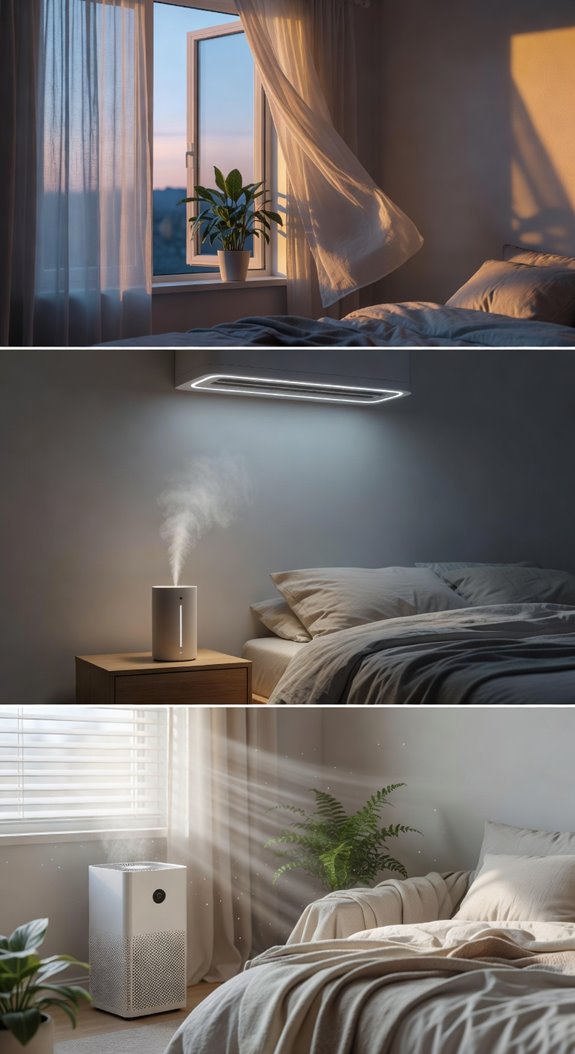
Since your bedroom’s temperature and air quality directly influence how well you sleep, controlling these elements becomes essential to your relaxation efforts.
Keep your room between 60-67 degrees Fahrenheit, which sleep experts recommend for optimal rest.
Add a humidifier to maintain moisture levels, preventing dry air that disrupts sleep.
Open windows regularly for fresh air circulation, or use an air purifier to remove allergens and pollutants effectively.
For an added layer of comfort, consider drawing inspiration from storybook bedroom design to create a whimsical atmosphere that makes your sleep environment feel like a true sanctuary.
Choose White Noise and Sounds That Promote Sleep
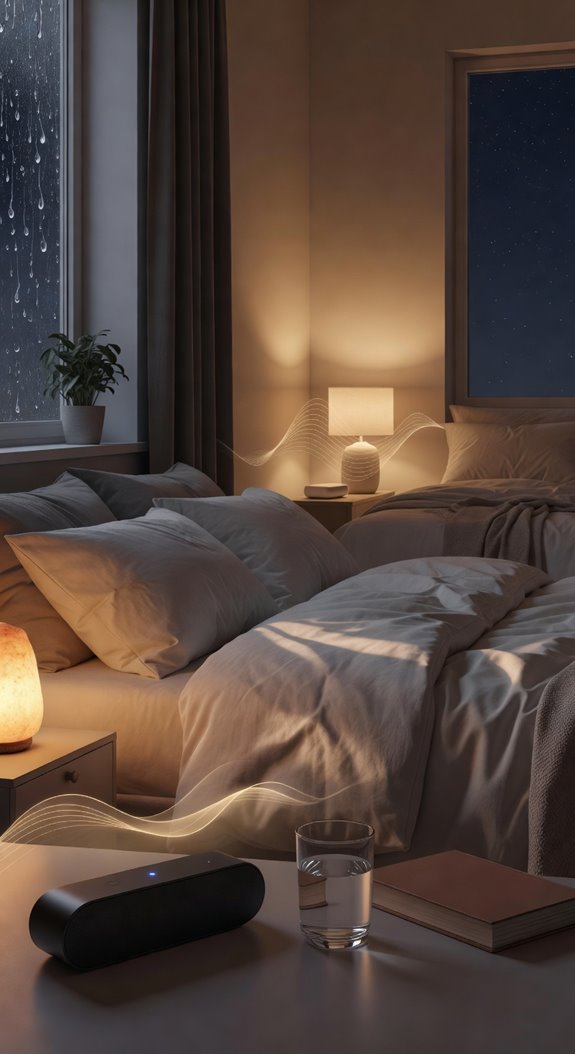
How can you create an auditory environment that supports deep, restorative sleep?
White noise machines, fan sounds, and nature recordings mask disruptive noises, promoting uninterrupted rest.
You’ll find that consistent, monotonous sounds, like rainfall or ocean waves, calm your nervous system.
Consider apps or devices offering ambient soundscapes tailored to your preferences, ensuring your bedroom becomes a sanctuary for quality sleep.
Select Comfortable Furniture That Encourages Rest
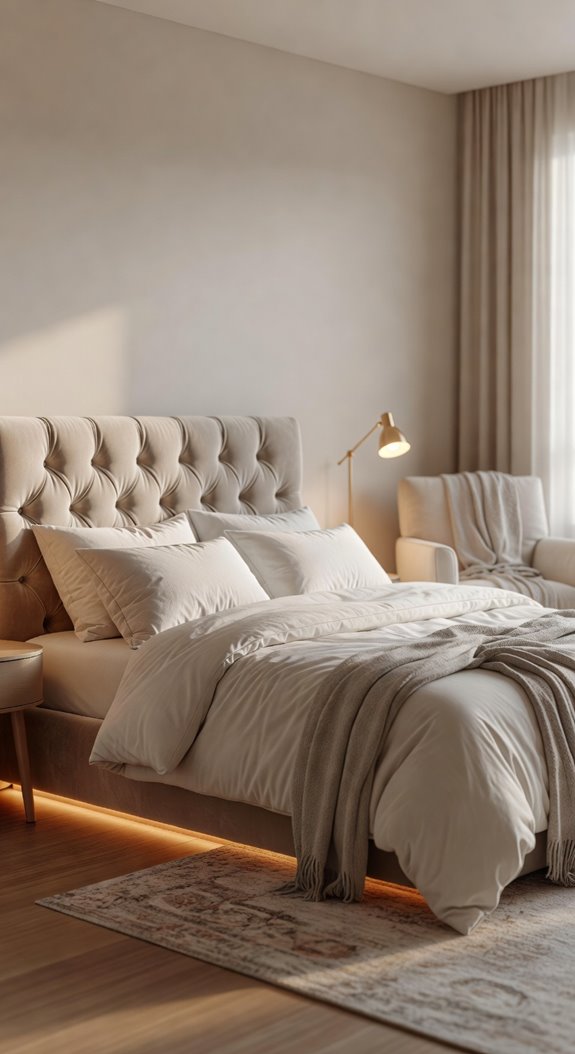
Your bedroom furniture plays a essential role in establishing the physical comfort that enables restorative sleep. Invest in a high-quality mattress with medium firmness, supportive pillows, and breathable bedding materials like cotton or linen. Choose a bed frame that provides proper elevation, and add a comfortable chair or reading nook for relaxation. Quality furniture directly improves sleep quality.
Hang Art That Soothes (Not Stimulates)
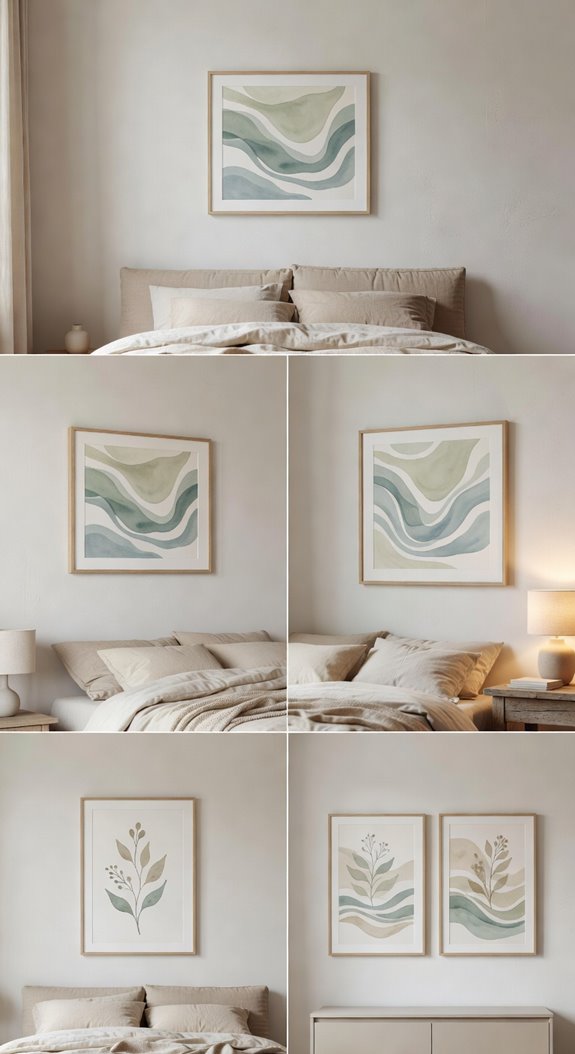
Once you’ve created a physically comfortable sleeping environment with quality furniture, the visual elements in your bedroom become equally important in supporting relaxation.
Choose artwork featuring calm landscapes, abstract designs in soft blues and greens, or minimalist pieces.
Avoid busy patterns, bright colors, and emotionally intense imagery.
These selections establish a tranquil visual atmosphere conducive to rest.
Build a Relaxing Bedtime Routine That Sticks
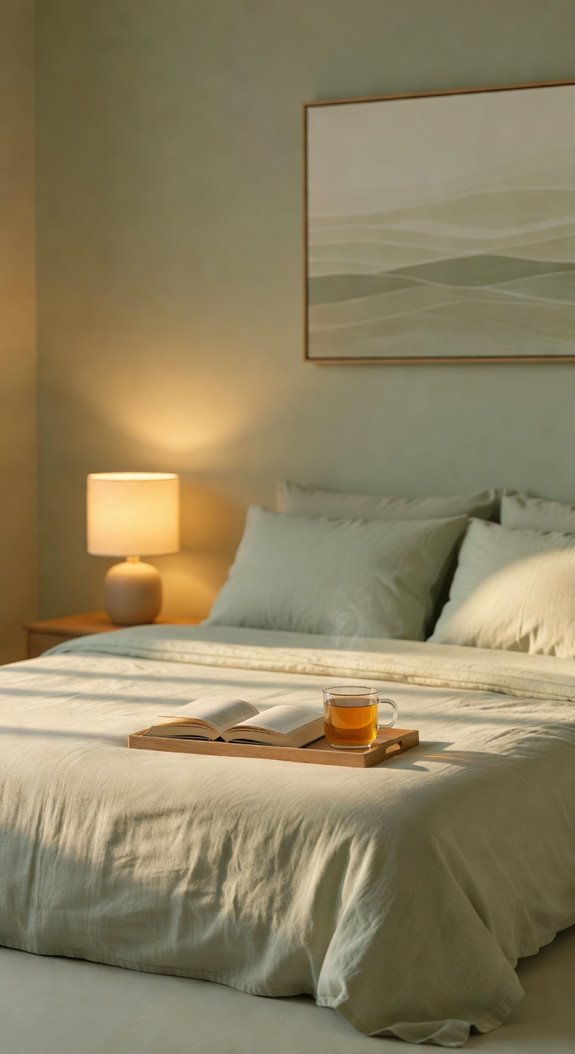
Why do so many people struggle to fall asleep despite having a comfortable bedroom? Your routine matters as much as your environment. You’ll benefit from establishing consistent bedtime practices, like dimming lights an hour before sleep, avoiding screens, and practicing deep breathing. These habits signal your body that rest approaches, making sleep come more naturally and reliably each night.
Protect Your Bedroom as a Rest-Only Space

How often do you find yourself working at your desk, scrolling through your phone, or watching television in bed? Reserve your bedroom exclusively for sleep and rest, removing work materials and electronic distractions. This boundary strengthens your mind’s association between the space and relaxation. Keep your nightstand minimal, displaying only a lamp and perhaps a book, supporting better sleep quality.
Budget-Friendly Upgrades That Make the Biggest Impact
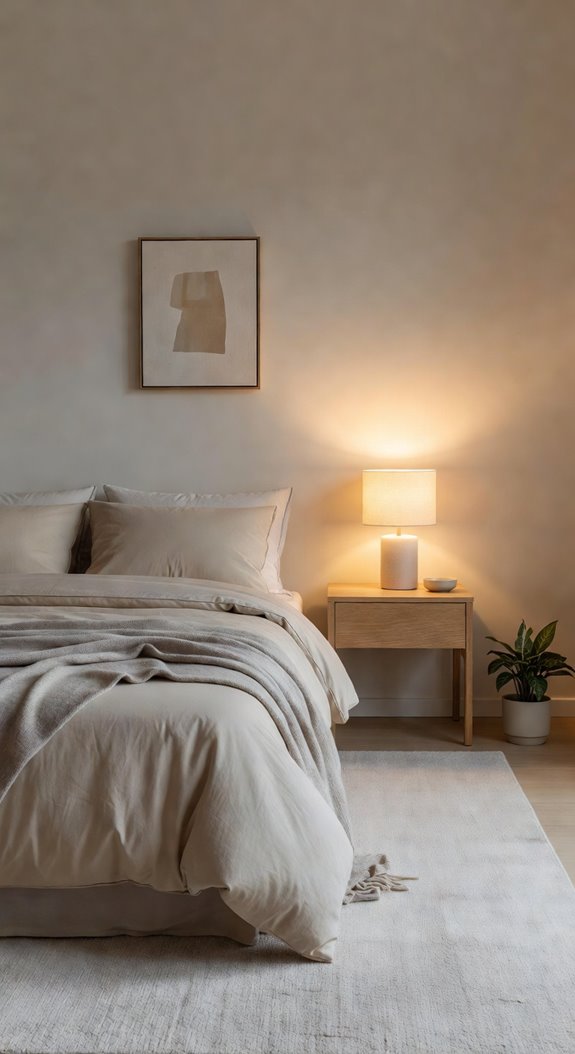
You don’t need to spend thousands of dollars to transform your bedroom into a restful sanctuary, since strategic, affordable improvements deliver substantial results.
Soft, neutral bedding, ambient lighting like warm-toned lamps, and decluttering create immediate calming effects.
Paint an accent wall in muted blues or greens, add blackout curtains, and introduce plants for improved air quality and visual tranquility.
Color Psychology for Sleep

The colors surrounding you in your bedroom influence your brain’s sleep-wake cycle, often more powerfully than you’d realize. Cool tones like soft blues, greens, and muted purples calm your nervous system, promoting restful sleep. Warm colors like red and orange stimulate alertness, so you’ll want to avoid them. Neutral palettes create balance, letting your mind settle into relaxation without overstimulation or visual distraction.
Common Mistakes

Despite your best intentions with color choices, many people undermine their bedroom’s relaxation potential through common decorating mistakes. You’re likely overcomplicating your space with too many colors or patterns, which overstimulates your mind. Clutter disrupts sleep quality significantly. You’ll want to avoid bright overhead lighting and select soft, layered illumination instead. Keep furnishings minimal and intentional for optimal tranquility.
Final thoughts
You’ve now learned the essential steps to transform your bedroom into a tranquil retreat. By implementing calming colors, optimizing lighting, and investing in quality bedding, you’ll create an environment that naturally supports restful sleep. Decluttering removes mental distractions, while soft textures enhance comfort. Protecting your space as rest-only reinforces its purpose. These thoughtful changes work together, establishing the calm sanctuary you need for genuine relaxation and rejuvenation.