13 No-Headboard Bedroom Ideas That Look Intentional Not Unfinished
You can create a no-headboard bedroom that feels deliberately designed rather than bare. By anchoring your bed with layered rugs, positioning floating nightstands, and introducing dramatic focal points—whether through bold accent walls or large-scale art—you’ll establish a curated, purposeful aesthetic.
The key lies in understanding how strategic furniture placement, recessed or pendant lighting, and textural elements like linen bedding, velvet cushions, and woven throws work together to define your sleeping space with intention.
Anchor a No-Headboard Bed With an Area Rug
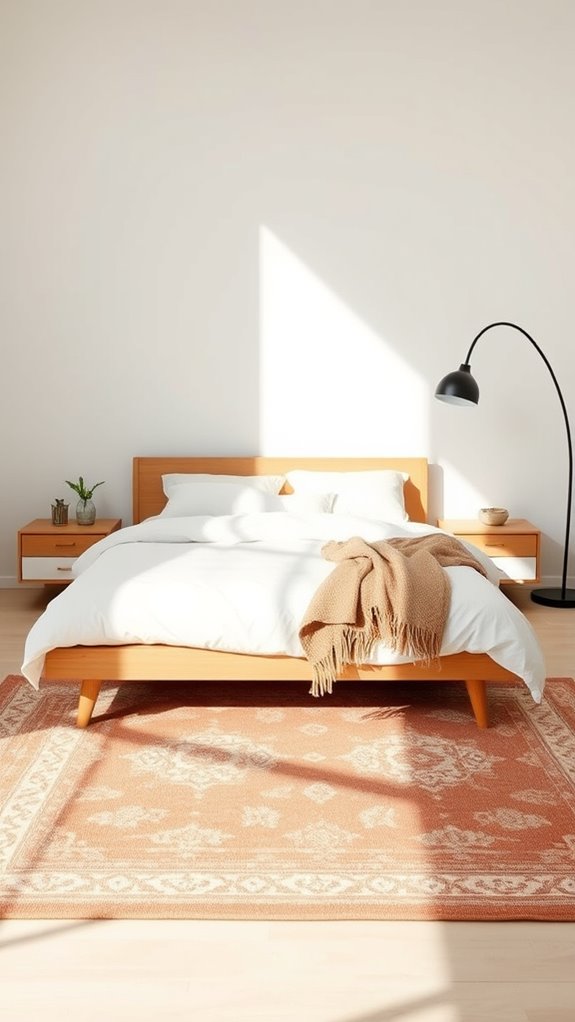
While a traditional headboard provides an instant focal point, you don’t need one to create a polished, well-composed bedroom design. Anchor your bed by layering a large area rug — ideally extending 18–24 inches beyond each side of the bed frame — and positioning it beneath both the frame and the flanking nightstands.
Choose rugs in warm neutral tones like ivory, taupe, or charcoal, or opt for low-contrast geometric patterns such as subtle diamond grids or linear stripes that complement your existing bedding textures. This deliberate placement establishes visual weight, ground-level definition, and a cohesive spatial boundary without relying on any architectural or structural wall elements. Use rugs to create physical boundaries that help your bedroom serve multiple purposes, keeping rest and daily activities comfortably separated.
Float Your Nightstands for Visual Lightness
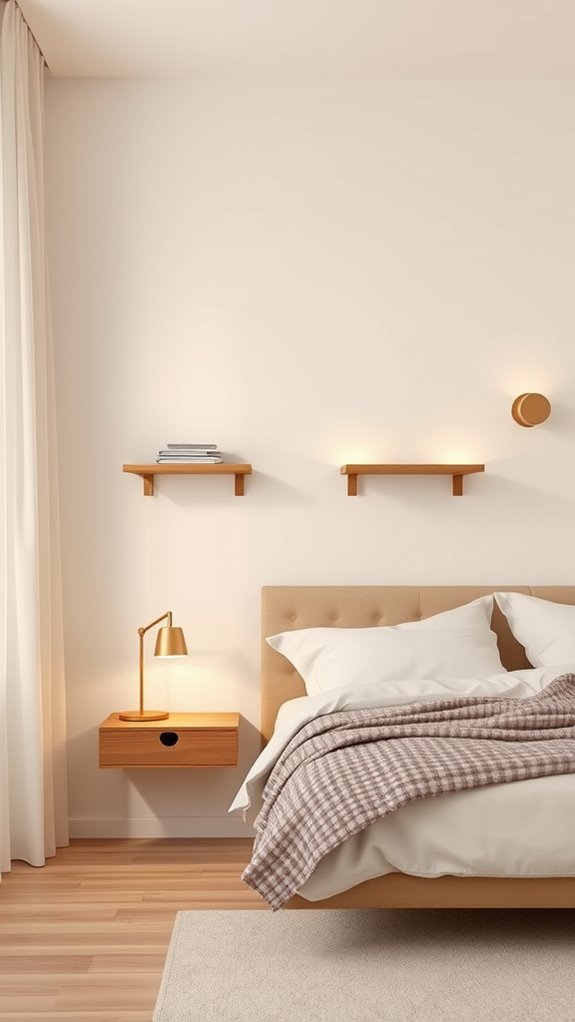
Float your nightstands on sleek wall-mounted brackets instead of resting them on the floor. This deliberate design choice eliminates visual weight at ground level, making your bedroom feel airier, more expansive, and intentionally curated.
Floating nightstands pair exceptionally well with low-profile, minimal bedframes in natural wood or powder-coated metal, reinforcing a clean, contemporary aesthetic. The exposed floor space beneath each suspended surface creates an uninterrupted sightline that amplifies the sense of openness — a particularly valuable effect in rooms without a traditional headboard anchoring the space.
When thoughtfully executed, these deliberately designed spaces transcend the absence of a headboard and feel complete rather than unfinished.
Layer Lighting Around Your No-Headboard Bed
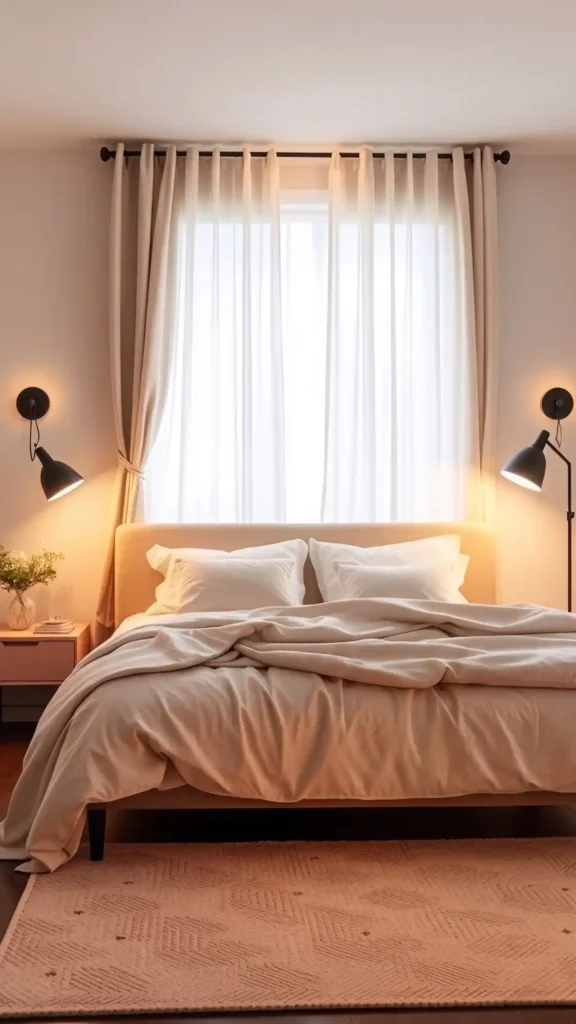
Without a headboard to anchor visual interest, strategic lighting becomes essential to create depth and definition around your bed. Install wall sconces on either side of your mattress, positioning them at seated eye level — roughly 48 to 60 inches from the floor — with warm-toned, dimmable bulbs in the 2700K to 3000K range.
Layer in a statement pendant fixture suspended 12 to 18 inches above your headboard zone, then add a compact table lamp with a linen or opaque shade on your nightstand. This deliberate three-tier combination draws the eye upward along the vertical wall plane and firmly establishes the bed as the room’s dominant architectural focal point. This approach creates layered bedroom lighting that transforms the space through ceiling, bedside, and ambient sources working together.
Create Drama With a Statement Accent Wall
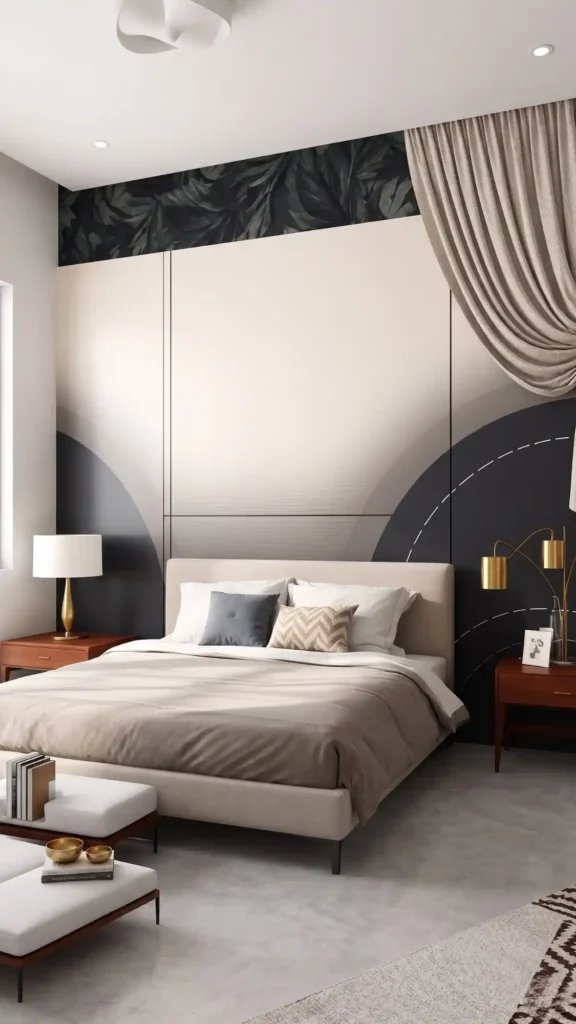
A bold accent wall behind your bed instantly compensates for the missing headboard, drawing focus upward and creating strong architectural definition in an otherwise bare sleeping zone. Consider deep jewel tones like sapphire, emerald, or burgundy, textured wallpaper with raised geometric or botanical patterns, or contrasting paint finishes such as matte against satin.
You’ll establish rich visual interest and anchor your bed’s placement without requiring traditional furniture pieces. This intentional approach transforms your no-headboard setup into a deliberate, high-impact design choice that reads as curated rather than incomplete. Channel 90s minimalism by keeping surfaces streamlined and purposeful, avoiding the decade’s tendency toward excessive collectibles and visual noise.
Make Large-Scale Art Your Focal Point
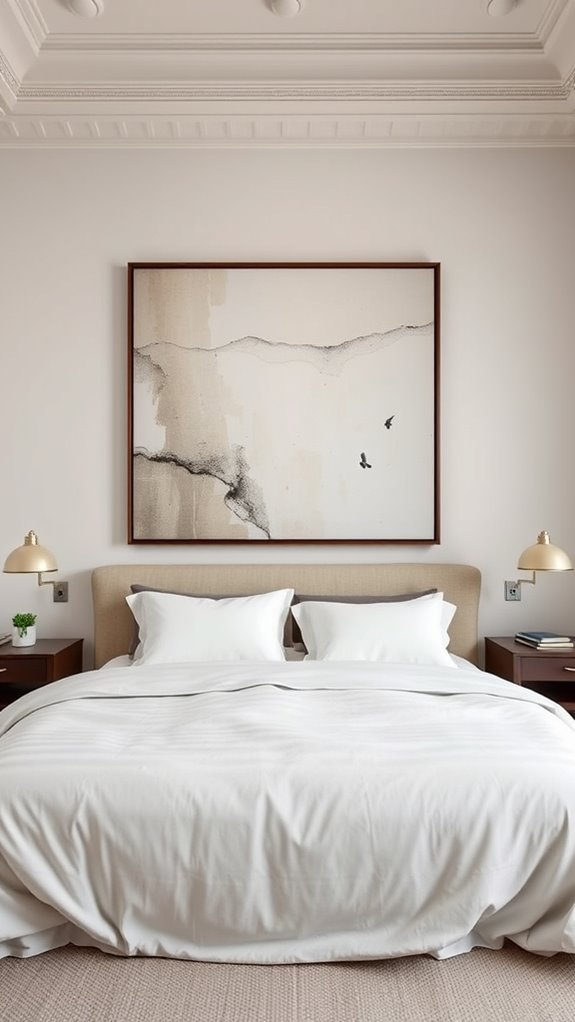
Large-scale art transforms a no-headboard bedroom into a visually commanding, intentionally designed space. A single oversized canvas painting, spanning 4–6 feet wide, anchors the wall directly behind the bed with bold color, texture, and compositional weight.
Gallery-style fine art prints in wide-format frames or unframed linen-mounted textile tapestries in geometric, abstract, or botanical patterns add depth, warmth, and a curated aesthetic that mimics the structural presence of a traditional headboard. Positioning the artwork centered, low-hung, and proportional to the bed’s width eliminates any unfinished, sparse appearance while establishing a polished focal point. For bedrooms with no built-in closet and minimal wall clearance, consider leaning a tall framed canvas against the wall behind the bed to maximize vertical storage and visual impact simultaneously.
Design a Living Wall or Botanical Installation
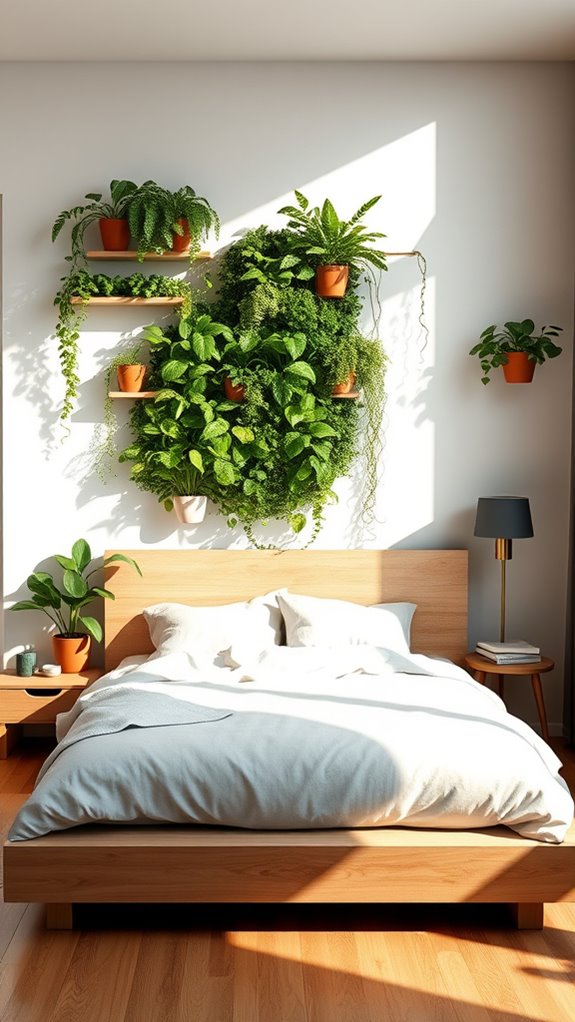
Living walls and botanical installations offer an organic alternative to static artwork, bringing rich texture, dynamic movement, and vibrant natural color into your bedroom environment. You can arrange a diverse collection of potted plants in varying heights and species, cascading hanging planters in woven or ceramic vessels, or lush preserved moss panels mounted directly behind your bed.
This verdant layering creates a dense, immersive focal point that commands visual attention while introducing biophilic design principles proven to reduce stress and improve air quality. Like restrained neutral palettes that achieve personality through thoughtful curation rather than bold color, a living wall builds depth through organic variation rather than traditional decorative elements. The installation establishes compelling visual interest through contrasting leaf shapes, varied shades of green, and organic forms — all without requiring conventional wall treatments such as paint, wallpaper, or framed artwork.
Hang Tapestries Behind Your No-Headboard Bed
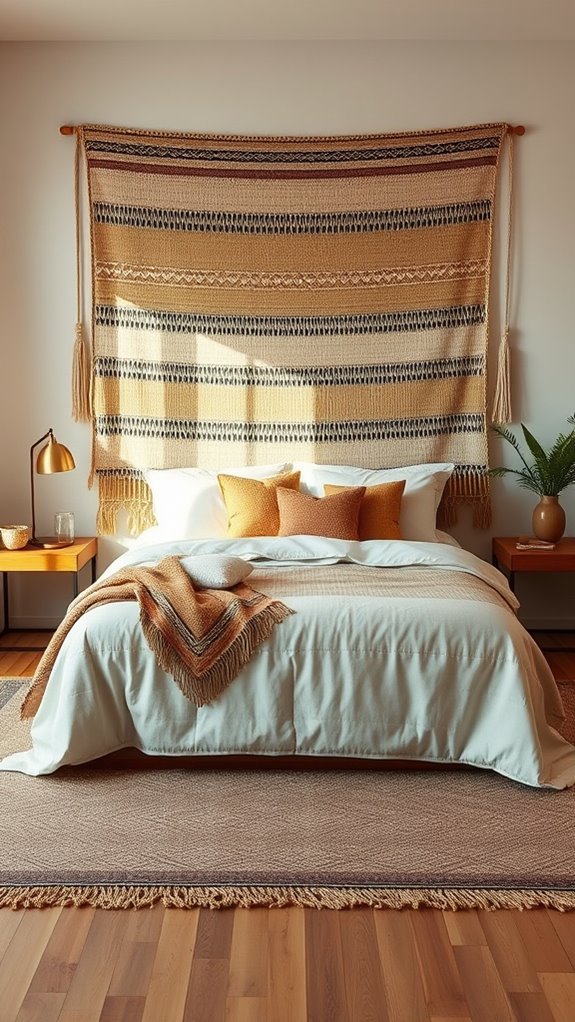
Tapestries offer an accessible, versatile solution for creating visual depth and personality behind a bed without permanent installation. Choose from macramé, woven cotton, or digitally printed canvas designs that complement your existing aesthetic — whether bohemian, minimalist, or maximalist.
Layer tapestries alongside brushed brass wall sconces or raw-edge floating wooden shelves, anchoring the textile securely using tension rods, decorative dowels, or adhesive hooks rated for heavier fabric weight. This layered approach transforms your bedroom’s focal wall while maintaining full flexibility for future redesigns or seasonal style refreshes. Among bedroom aesthetic ideas, tapestries rank among the easiest to implement, making them ideal for renters or anyone hesitant about permanent changes.
Frame the Window With Intentional Treatments
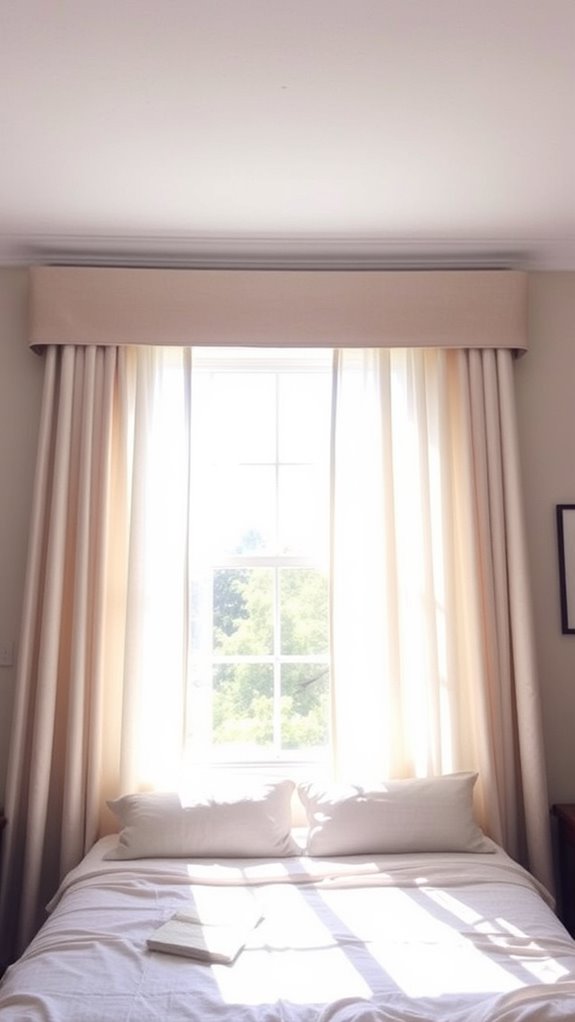
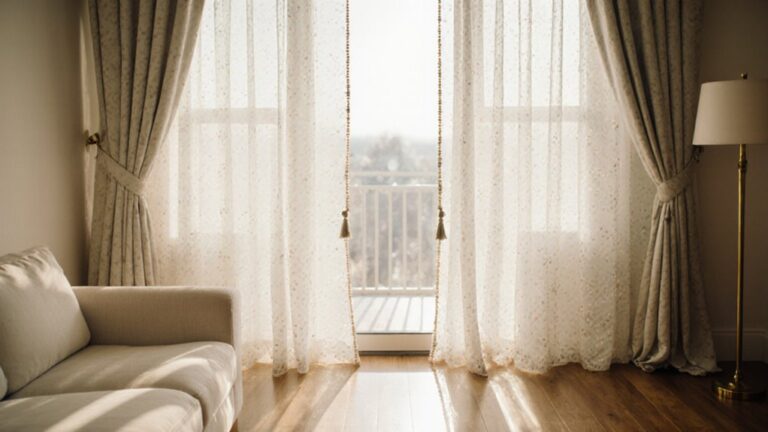
Window treatments are a critical design element that can elevate or undermine your bedroom’s overall aesthetic. Install floor-to-ceiling curtains in warm neutral tones like ivory, greige, or soft linen, or opt for layered panels combining sheer voile with heavyweight blackout drapes in complementary textures.
For a more structured, architectural look, consider Roman shades crafted from woven cotton, jute, or bamboo, pairing them with matte black, brushed brass, or antique bronze curtain rods and coordinating finials. Intentional window treatments anchor your space visually, eliminate unfinished edges, and create a seamless, polished aesthetic that cohesively ties together the room’s design elements. While many bedrooms rely on striking headboard ideas to define the space, a well-designed window can serve as an equally powerful focal point when framed with deliberate attention to proportion, texture, and scale.
Mix Textures and Patterns on Your Bedding
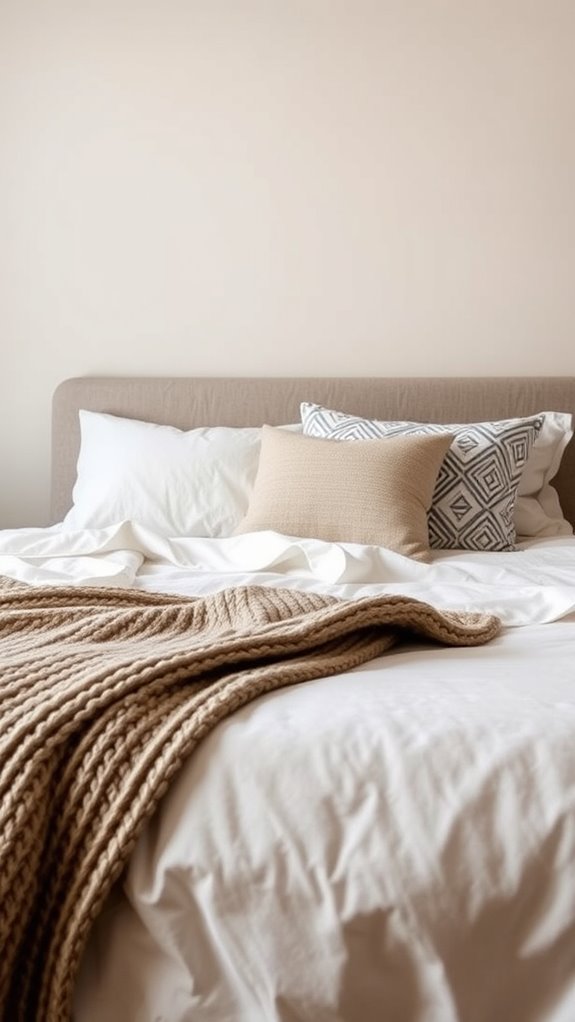
Layer your bedding with contrasting textures and patterns that draw the eye upward, establishing a strong focal point where a headboard would traditionally sit. Combine a quilted duvet with heavyweight linen pillowcases, then introduce a chunky-knit or jacquard-woven throw blanket draped across the foot of the bed.
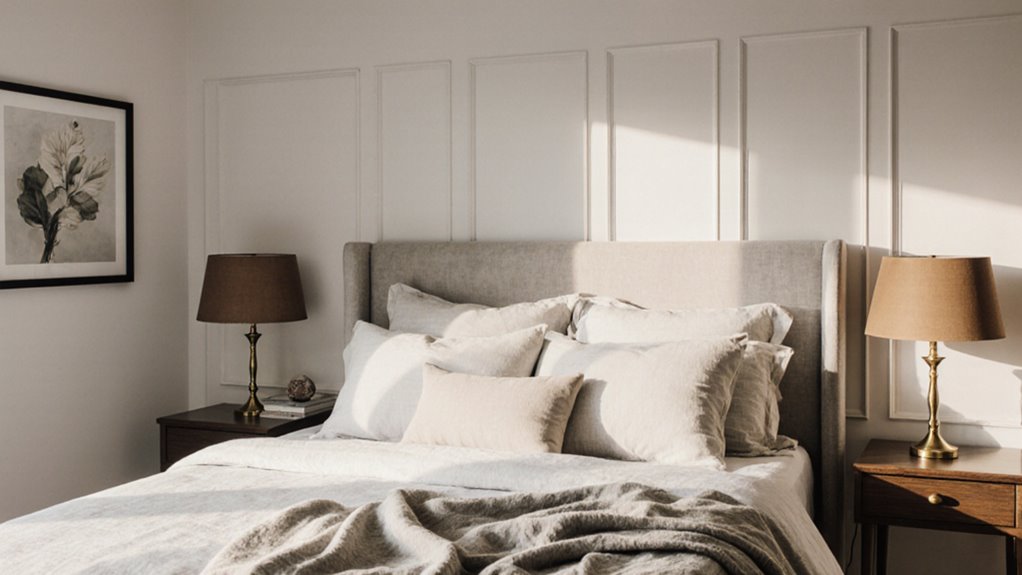
This deliberate layering technique compensates for the absent headboard by building visual dimension through varied fabric weights, weave structures, and surface finishes. The interplay of matte and tactile elements creates a sophisticated, designer-curated aesthetic that anchors the entire bedroom space. For added architectural interest, consider incorporating luxurious-looking wall panelling behind the bed to introduce texture and elevate the room’s perceived value without traditional upholstery.
Install Floating Shelves for Styled Storage
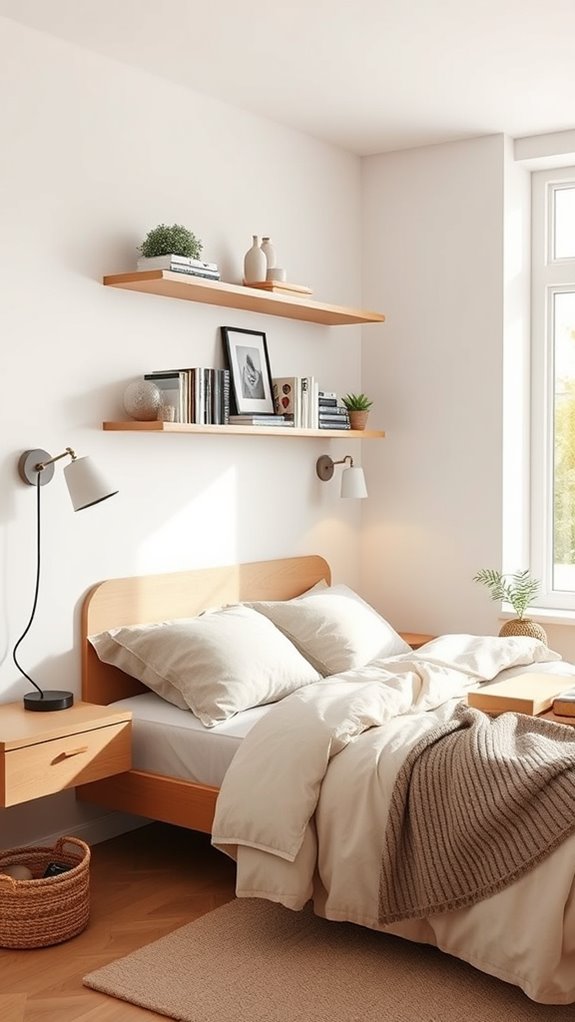
Floating shelves positioned above your bed create an intentional design feature, drawing the eye upward and establishing visual interest where a traditional headboard would anchor the space. Choose shelves in solid walnut, white oak, or matte black powder-coated steel finishes that complement your bedroom’s existing color palette and material language.
Style them with a curated mix of hardcover books arranged both vertically and horizontally, trailing pothos or sculptural cacti in terracotta pots, and decorative objects like ceramic vessels, brass candleholders, or framed artwork. Ensure bracket hardware is rated for the shelf’s load capacity and anchored directly into wall studs or masonry anchors for long-term safety and structural stability. For renters seeking temporary solutions that won’t violate lease agreements, these shelves offer a perfect no nails, no paint approach to bedroom personalization that can be easily removed when you move out.
Arrange Furniture as Sculptural Focal Points
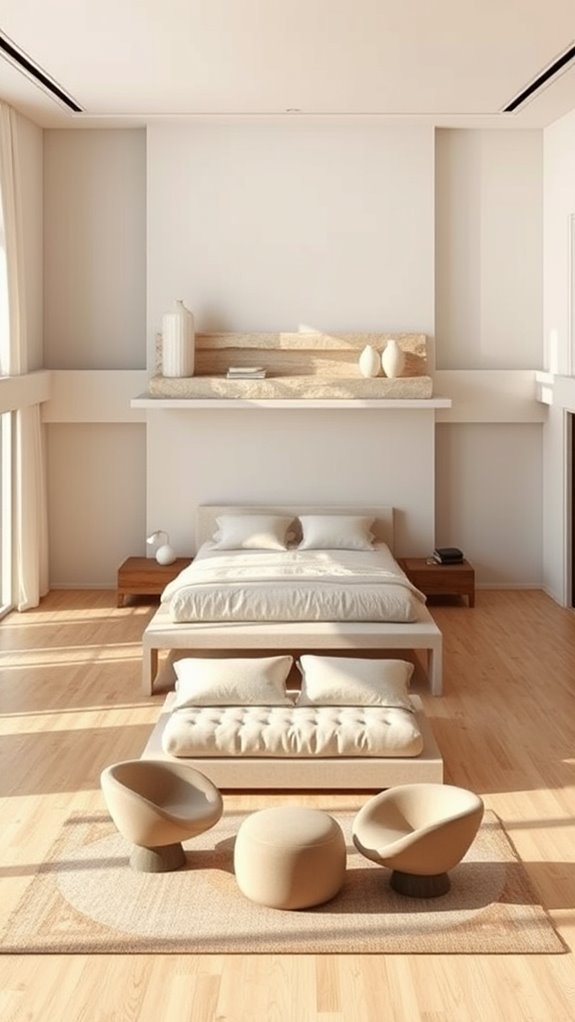
Without a traditional headboard anchoring your bedroom, you can strategically position substantial, high-mass furniture pieces — dark-stained oak dressers, burnished walnut armoires, or low-slung teak storage benches — to generate visual weight and establish intentional design direction. A sleek, upholstered bench with tapered brass legs placed at the bed’s foot creates a deliberate horizontal counterpoint, while a tall, six-drawer dresser with sculptural hardware angled at 15–30 degrees nearby introduces dynamic asymmetry.
These architecturally intentional, freestanding sculptural elements draw the eye across the room’s plane, establish spatial balance through considered mass distribution, and anchor the overall layout with a curated, purposeful arrangement that reads as deliberately composed rather than aesthetically incomplete.
Position a Room Divider or Screen
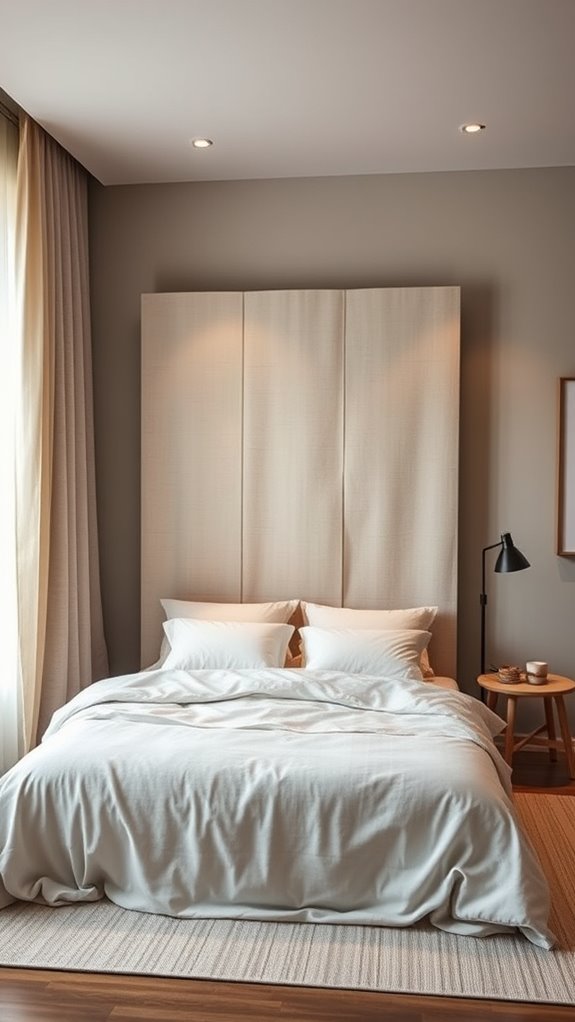
A strategically placed room divider or screen creates distinct spatial zones without requiring permanent architectural changes. You can position a folding screen behind your bed to define the sleeping area, or place a decorative partition to carve out a dedicated dressing or vanity nook.
Rattan, fabric-paneled, and solid wood screens each offer unique textural and aesthetic qualities — from airy, woven geometrics to upholstered softness and rich, grain-forward warmth — while maintaining a sense of openness and visual flow throughout the room’s full square footage.
Let Minimal Walls Showcase Your Bed
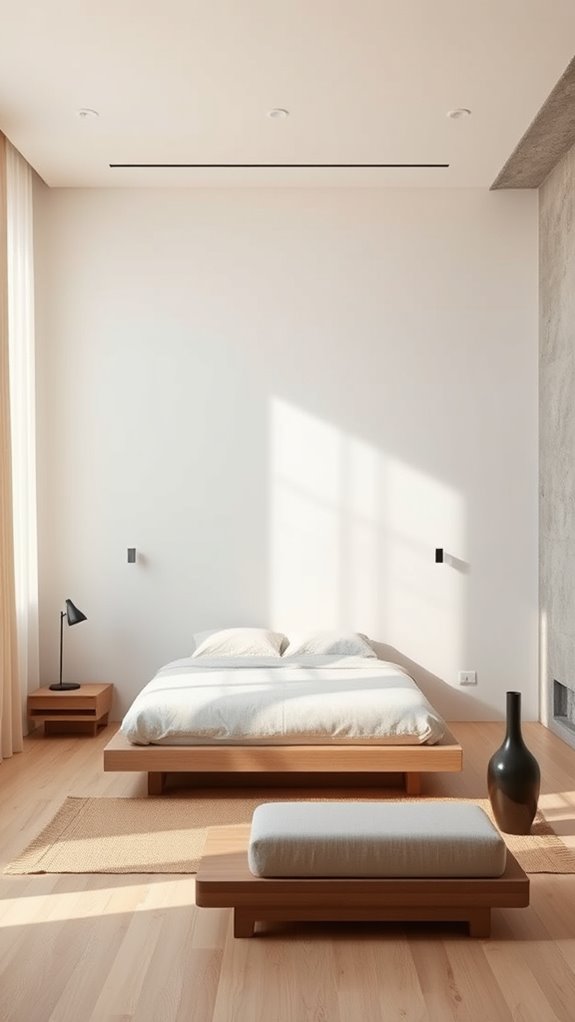
A bedroom’s walls serve as a quiet backdrop, deliberately understated to let your bed command full visual authority. Opt for soft, warm neutrals — matte greige, dusty white, or pale linen tones — applied to smooth, unadorned wall surfaces that recede gracefully into the background.
Layer your bed with high-thread-count cotton percale sheets, a textured boucle or waffle-knit coverlet, and a generously filled European linen duvet. These tactile, dimensional materials create organic visual interest directly on the bed itself, drawing the eye inward rather than outward across the room.
Position a single sculptural nightstand or a slim-profile ceramic floor lamp nearby, allowing the surrounding negative space to breathe. This intentional restraint produces a calm, sophisticated atmosphere where clean sightlines and curated simplicity replace decorative excess entirely.
Final thoughts
A no-headboard bedroom becomes a deliberately designed retreat when you layer intentional elements throughout the space. Anchor your bed with a large-format, low-pile area rug in a neutral or textured weave, and establish a strong visual focal point through a full-width statement wall finished in limewash plaster, deep saturated paint, or a gallery arrangement of oversized, gallery-wrapped canvas art.
Incorporate layered lighting using a combination of wall-mounted swing-arm sconces, a sculptural pendant or chandelier centered above the bed, and low-profile bedside table lamps with linen or ceramic bases. Float your nightstands several inches from the bed frame, arrange architectural furniture pieces like a cane-back accent chair or a solid wood bench at the foot of the bed, and introduce a slatted or rattan room divider to define sleeping zones within open-plan layouts.
These strategic, high-intentionality design choices produce a curated, cohesive aesthetic that reads as purposeful and considered rather than unfinished or transitional, allowing your bedroom interior to authentically reflect a confident, editor-level design vision.