14 Cloud Ceiling DIY Ideas That Make Your Room Feel Like the Sky
Turning your ceiling into a sky doesn’t require a contractor or a large budget. You can achieve a convincing cloud effect using cotton batting, tissue paper, LED strips, or even a projector. Each method suits a different room size, skill level, and spending limit. The 14 approaches ahead cover every realistic option, so you’ll find the right fit before spending a single dollar.
How to Match Your Cloud Ceiling Style to Your Room Size and Budget
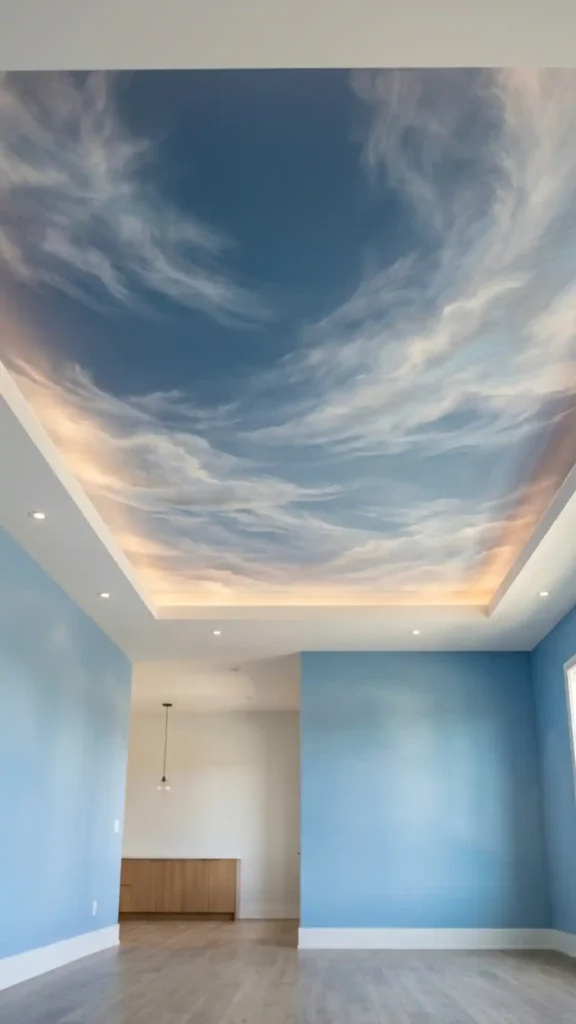
Choosing the right cloud ceiling style depends on your room’s square footage, ceiling height, and how much you’re willing to spend. Small rooms suit minimalist cotton batting clouds, while larger spaces handle layered polyester fill installations. Tight budgets work well with paint-only techniques, whereas mid-range budgets allow fabric and LED lighting combinations. Match scale to your room first.
Projector-Based Cloud Ceilings With No Permanent Changes
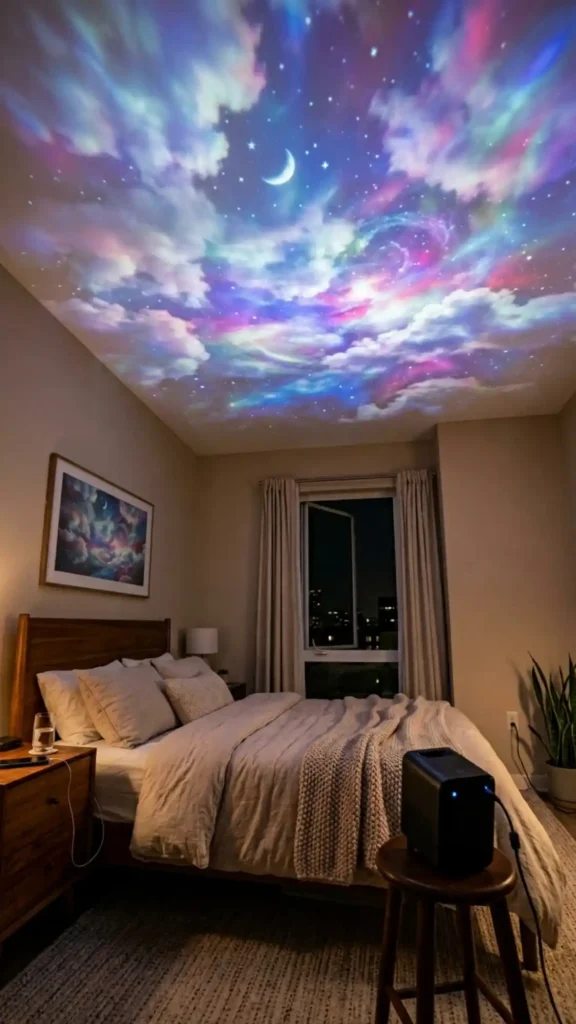
Once you’ve matched your cloud ceiling style to your room’s size and budget, projectors offer a flexible option that requires no drilling, painting, or permanent fixtures.
You simply aim a cloud-effect projector at your ceiling, adjust the focus, and you’re done.
This works especially well in rentals, where you can’t modify surfaces but still want an immersive, sky-like atmosphere overhead.
Cotton Batting Clouds You Hang From the Ceiling

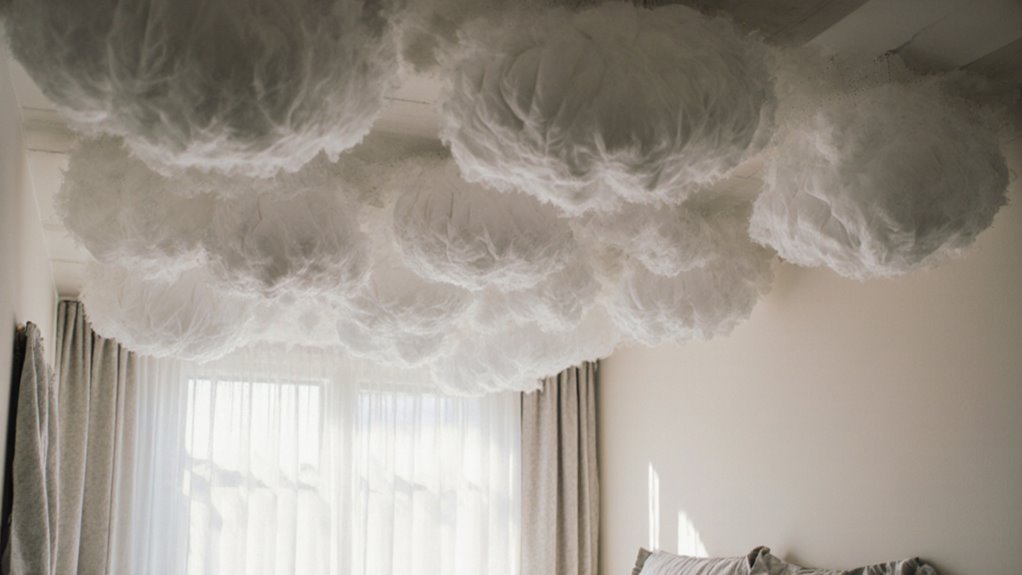
If you want soft, tactile clouds overhead without any paint or projection equipment, cotton batting is one of the most affordable and beginner-friendly materials you can use. Pull apart polyester fiberfill into irregular shapes, then attach each cluster to monofilament wire and hang them at varying heights. You’ll create natural-looking depth without permanent installation.
Paper Lantern Cloud Ceiling Installations

Paper lanterns transform a flat ceiling into a layered, cloud-like canopy when you cluster them together in varying sizes and heights.
Choose white or soft gray lanterns, then hang them at staggered depths using clear fishing line.
Mix 6-inch and 12-inch sizes to create visual depth.
You’ll achieve a cohesive, dimensional look without complicated installation work.
Tissue Paper Clouds That Work Perfectly in a Kid’s Room
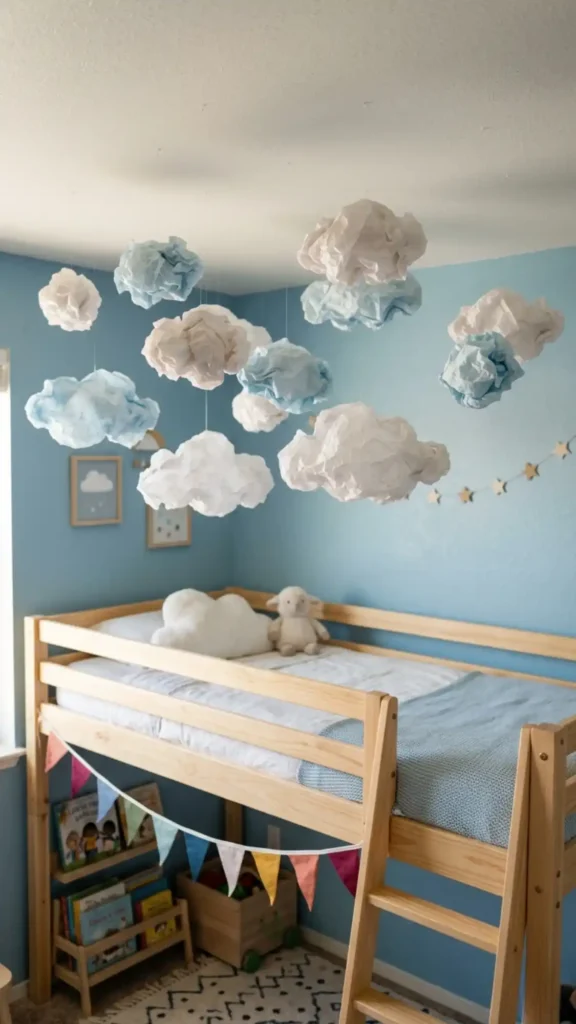
Tissue paper clouds bring a playful, tactile dimension to a child’s ceiling that flat paint simply can’t match. You’ll scrunch white and pale blue tissue paper into rounded shapes, securing each with a hot glue gun.
Hang them above a crib or loft bed using clear fishing line. They’re lightweight, inexpensive, and easy to replace as your child’s tastes evolve.
Sheer Curtain Clouds Draped Into a Canopy

Sheer curtain clouds create a soft, layered canopy effect that transforms any bedroom ceiling into a dreamy, cloud-like space. You’ll need white or ivory sheer panels, ceiling hooks, and a tension rod. Gather the fabric loosely and drape it in billowing sections overhead. Secure each panel at different heights to mimic natural cloud depth and movement.
Layered Cheesecloth Clouds for a Wispy, Ethereal Effect

For a look that’s even more wispy and delicate than sheer curtains, cheesecloth gives you that loose, gauzy texture that mimics real clouds almost perfectly.
Layer multiple pieces at varying heights, then scrunch and pin them to your ceiling using small hooks.
You can lightly bleach the fabric for a brighter white finish.
Painted Watercolor Sky Murals That Cover the Whole Ceiling
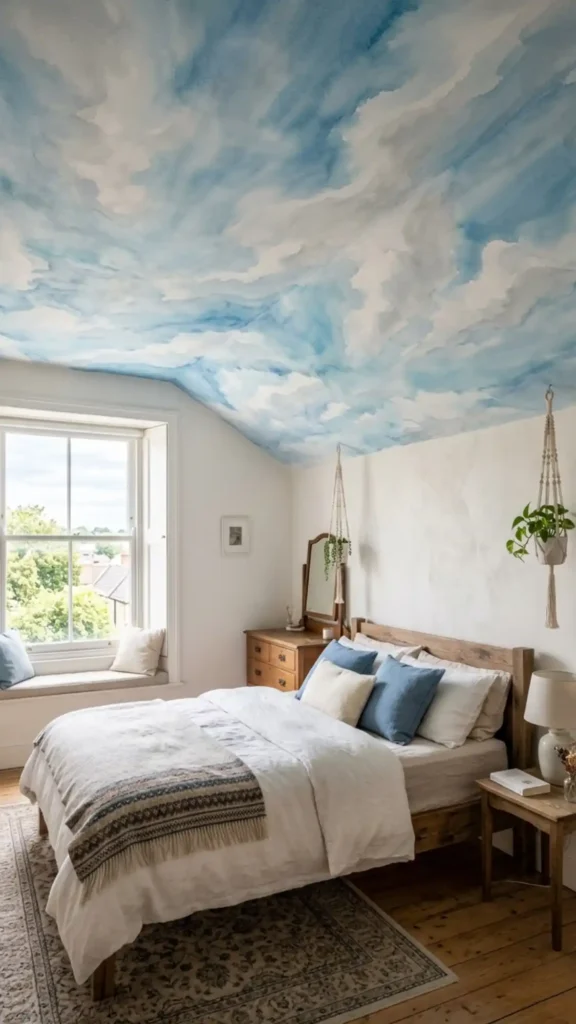
A watercolor sky mural transforms your entire ceiling into a soft, blended canvas of blues, whites, and pale grays that mimics a real daytime sky. You’ll need diluted latex paint in cerulean, titanium white, and cool gray. Apply layers with a damp roller, blending while wet. Work in sections to maintain seamless transitions across the full ceiling.
Spray Paint Techniques for Realistic Cloud Ceiling Textures

Spray painting realistic clouds onto your ceiling takes more control than brushwork, but it lets you build soft, layered textures quickly. Hold the can about twelve inches away, using short bursts to layer titanium white over a sky-blue base. Feather your edges by moving the can in slow, circular motions, blending each pass before it dries completely.
Stretch Fabric Cloud Ceilings for a Seamless Dreamy Look
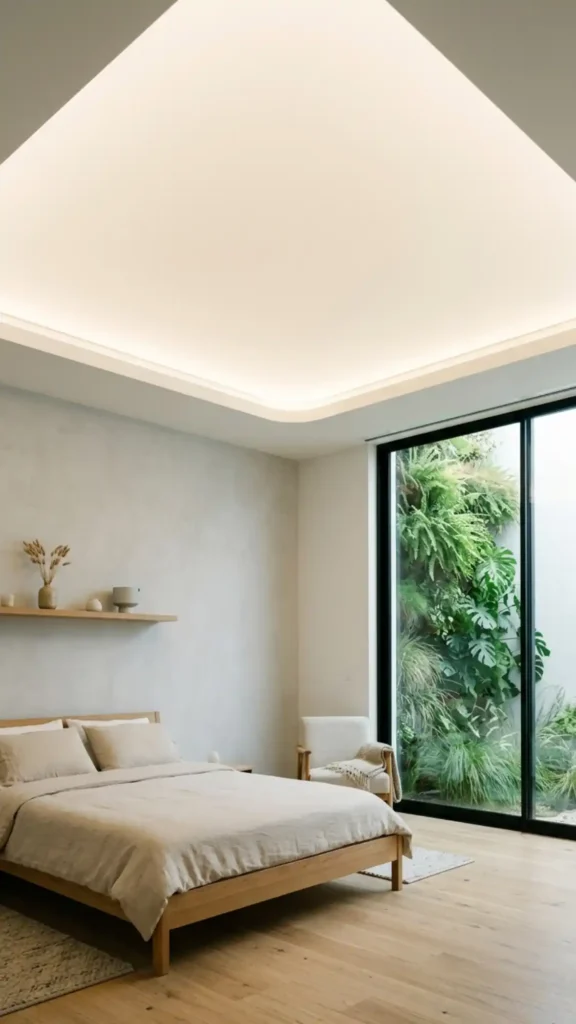
If spray painting feels too freehand for your style, stretch fabric ceilings give you a cleaner, more controlled result.
You’ll attach lightweight white or pale blue polyester fabric to a tension frame, creating a smooth, seamless surface overhead.
Layer soft LED lighting behind the fabric to mimic natural sky diffusion, producing a soft, even glow across your entire ceiling.
Foam Cloud Sculptures You Mount Directly to the Ceiling
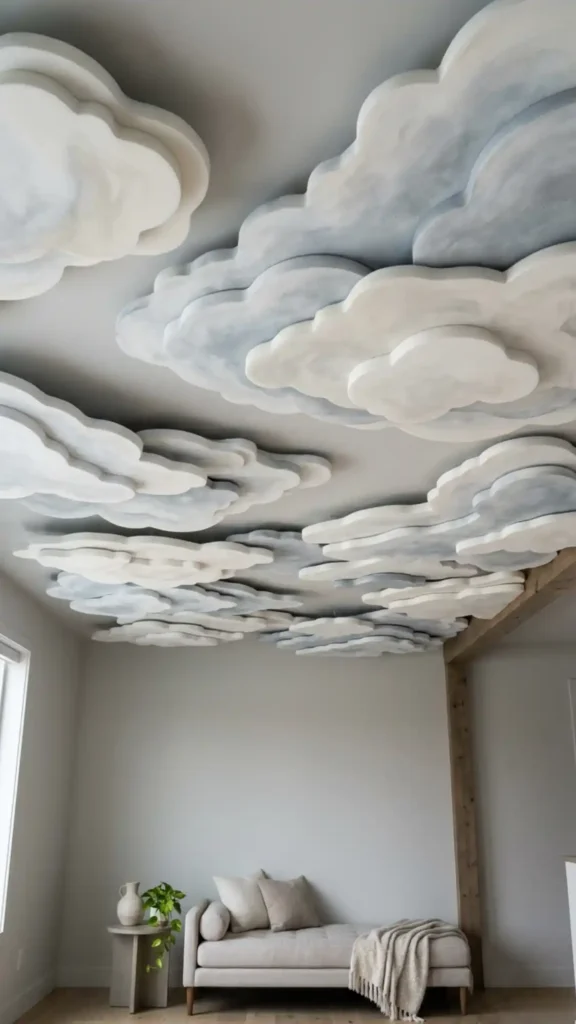
Foam cloud sculptures offer one of the most tactile, three-dimensional approaches to a cloud ceiling, giving your room genuine depth and texture. Cut high-density foam into organic cloud shapes, then sand the edges smooth. Paint each piece in layered whites and soft grays before mounting them with construction adhesive or ceiling anchors, creating a dimensional cloudscape directly overhead.
LED-Backlit Cloud Ceilings That Glow Like a Real Sky
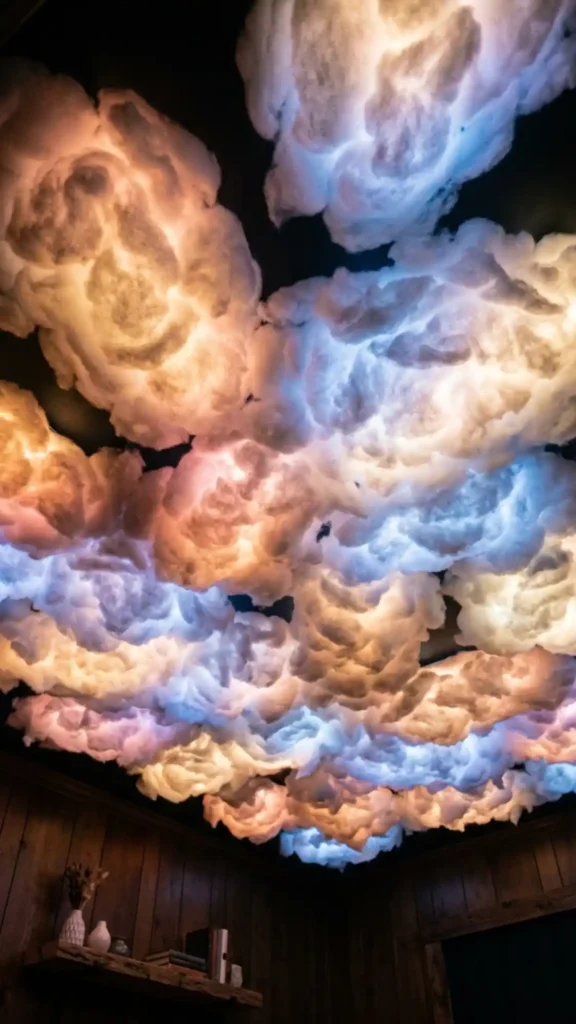
While foam sculptures add physical dimension, LED backlighting takes your cloud ceiling a step further by adding dynamic, color-shifting light. You’ll attach RGB LED strips behind batting or fabric clouds, letting light diffuse softly through the material. Program your controller to cycle through warm whites, soft blues, and sunset oranges, creating a sky that shifts naturally throughout your day.
Fiber Optic Cloud Ceilings That Blend Stars and Sky
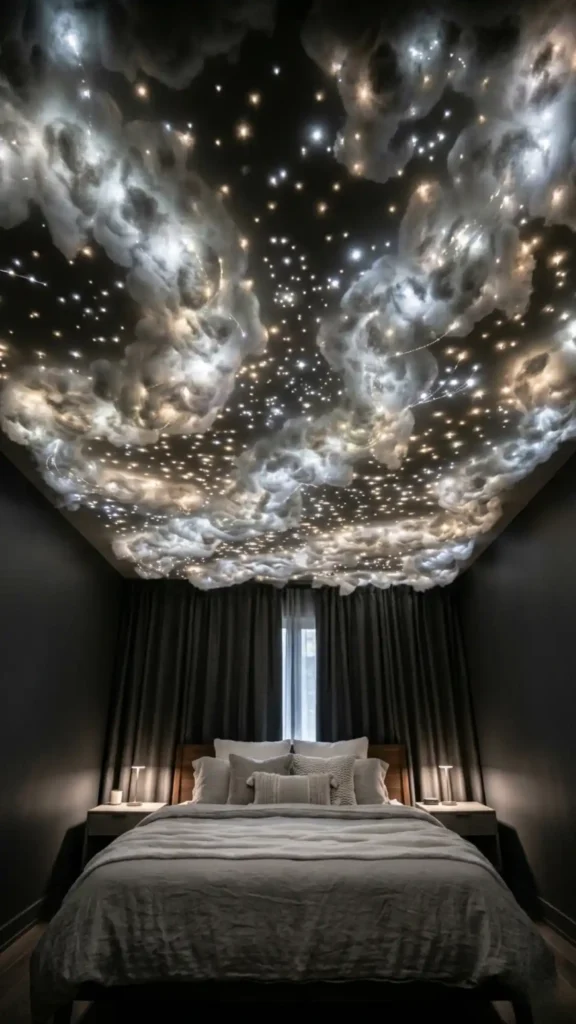
Fiber optic cloud ceilings take the illusion one step further by weaving tiny pinpoints of light directly into your cloud materials, simulating a star-filled night sky.
You’ll embed fiber optic strands into polyester fiberfill, then connect them to a light engine. This setup lets you adjust brightness and twinkle speed, creating a dynamic, immersive overhead display.
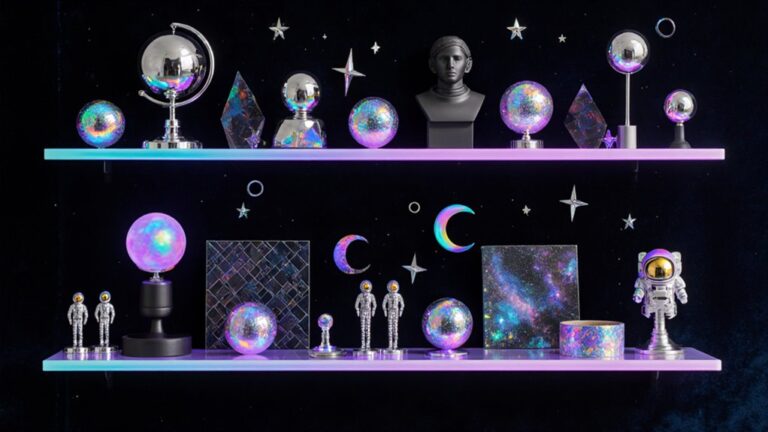
Metallic and Iridescent Cloud Panels You Can Make at Home
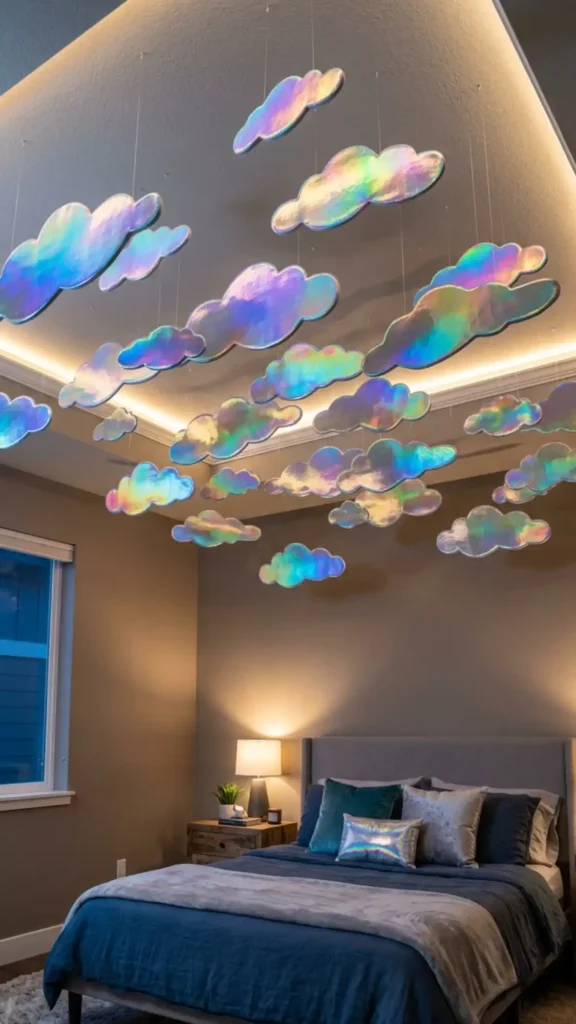
Metallic and iridescent cloud panels bring a modern, light-catching quality to ceilings that standard white installations simply can’t match.
You’ll want to use holographic foam sheets or Mylar fabric, cutting them into organic cloud shapes.
Suspend them at varied heights using clear monofilament.
As light hits each panel, it shifts color, creating a dynamic, iridescent canopy above you.
How to Choose Cloud Materials
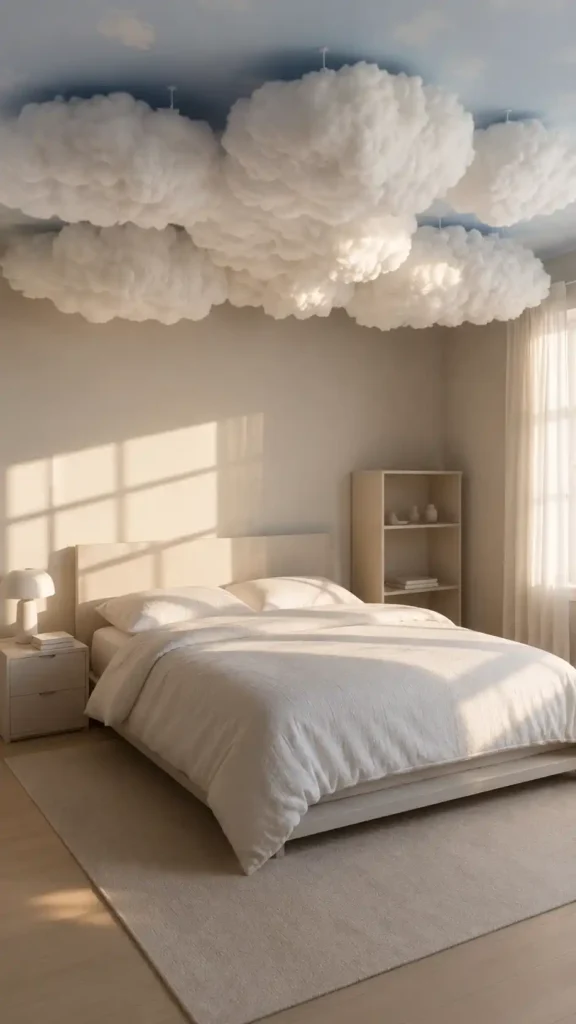
Once you’ve explored metallic and iridescent options, the broader world of cloud materials opens up with just as many creative possibilities. You’ll find polyester batting, gauze, and foam all work well. Choose materials based on your ceiling height, room lighting, and desired texture. Lightweight fabrics diffuse light softly, while denser materials create stronger visual depth and dimension.
Common Mistakes
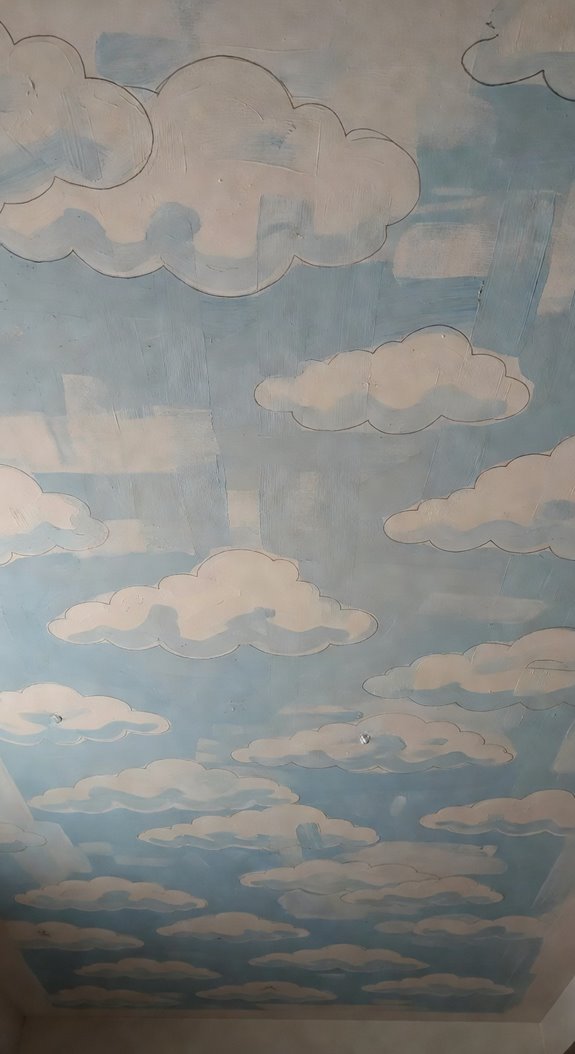
When creating a cloud ceiling, many DIYers rush the installation process and end up with uneven clusters that look flat rather than dimensional.
You’ll also want to avoid using pure white alone, since clouds contain subtle gray and blue undertones.
Skipping a ceiling anchor assessment is another costly error, as lightweight batting still requires secure attachment points to prevent sagging.
Final thoughts
You now have 14 solid options for building a cloud ceiling that fits your space, budget, and skill level. Whether you’re hanging cotton batting with monofilament or installing RGB LEDs behind microfiber panels, each method gives you a distinct result. Start with your room size, set a firm budget, and choose materials that match your timeline. Your ceiling doesn’t have to stay flat and forgettable.