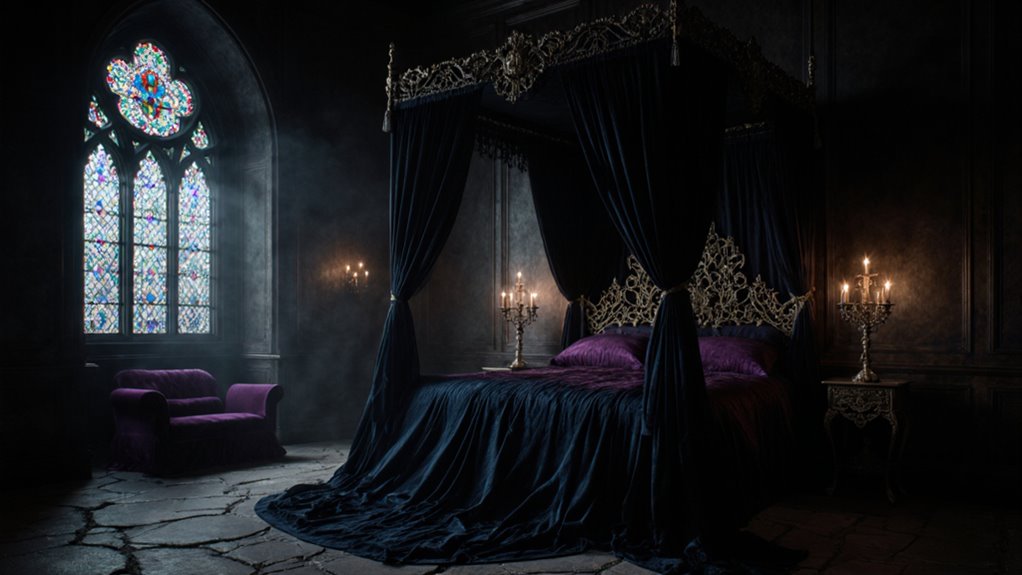
14 Gothic Fantasy Bedrooms That Feel Dramatic
You can transform your bedroom into a gothic sanctuary by layering velvet textures, jewel tones, and candlelit ambiance. The key lies in selecting a dramatic focal point—typically a four-poster bed with wrought-iron hardware—then anchoring it with emerald, sapphire, or amethyst hues.
Strategic lighting from iron candelabras, taper candles, and antique brass sconces, paired with ornate gilded mirrors featuring beveled edges and distressed frames, amplifies the theatrical mood. But achieving this look without overwhelming your space or draining your budget requires understanding which elements truly matter.
Velvet Four-Poster Beds as Dramatic Focal Points
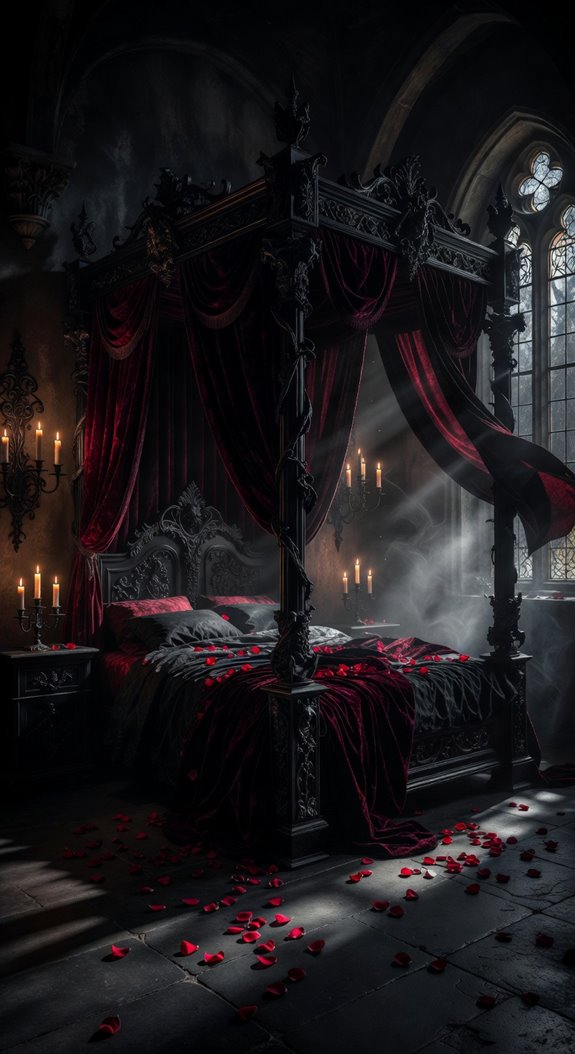
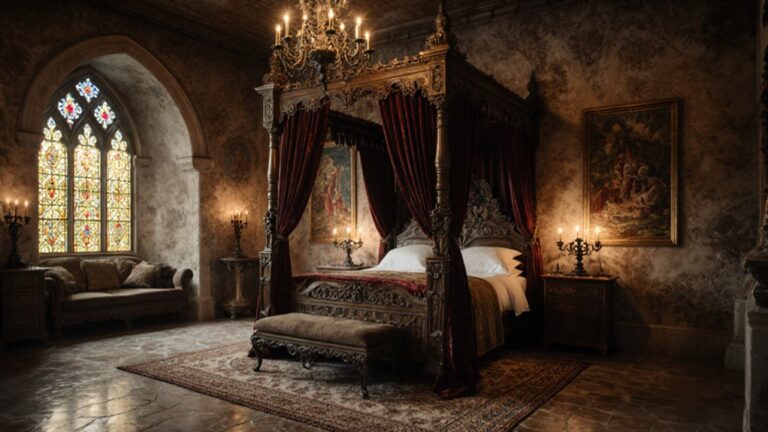
The velvet four-poster bed, with its towering carved mahogany or wrought-iron posts and sweeping canopy frame, functions as an architectural anchor that commands immediate visual dominance in any gothic-inspired bedroom.
Deep jewel-toned upholstery — rich emerald velvet, midnight sapphire, or blood-dark burgundy — generates intense chromatic contrast against shadowed walls, while the fabric’s dense pile absorbs and reflects candlelight with a distinctive luminous depth.
The bed’s structural silhouette, characterized by soaring vertical posts and heavy horizontal crossbeams, creates an imposing geometric framework that naturally organizes the surrounding spatial composition.
This layered combination of dramatic scale, luxurious tactile texture, and saturated color establishes a powerfully gothic atmospheric foundation before a single additional décor element enters the room. Complementing this foundation with earthy witchy decor elements such as dried botanicals, crystals, and dark candles woven throughout the space deepens the mystical atmosphere and reinforces the room’s enchanted character.
Jewel Tones: Emerald, Sapphire, and Amethyst
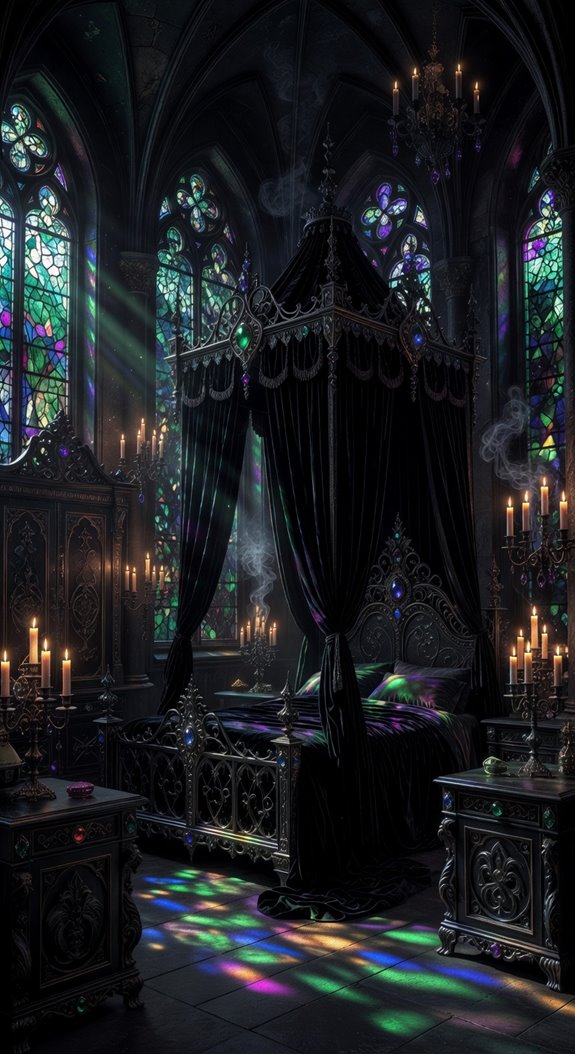
Jewel tones possess a commanding presence in gothic bedrooms because emerald, sapphire, and amethyst create depth and richness that darker neutrals simply can’t match. These saturated, high-chroma hues carry an inherent visual weight and luminosity that transforms flat surfaces into layered, atmospheric statements. Their chromatic density draws the eye inward, producing a sense of enclosed luxury and mysterious dimensionality.
These colors perform exceptionally well on accent walls finished in matte or satin sheens, velvet upholstery with its light-absorbing pile texture, and floor-length heavy drapery in silk or brocade fabrics. Layering them strategically — emerald walls paired with sapphire bedding and amethyst throw pillows — builds a richly saturated atmosphere without overwhelming the spatial composition. As one design expert notes, “Jewel tones ground gothic interiors in luxury and sophistication,” functioning as chromatic anchors that elevate every surrounding material and finish. Among the fourteen gothic fantasy bedroom concepts that embrace bold elegance, jewel-toned palettes consistently rank as the most transformative in conveying dramatic, immersive atmosphere.
Ornate Mirrors and Vintage Gold Accents
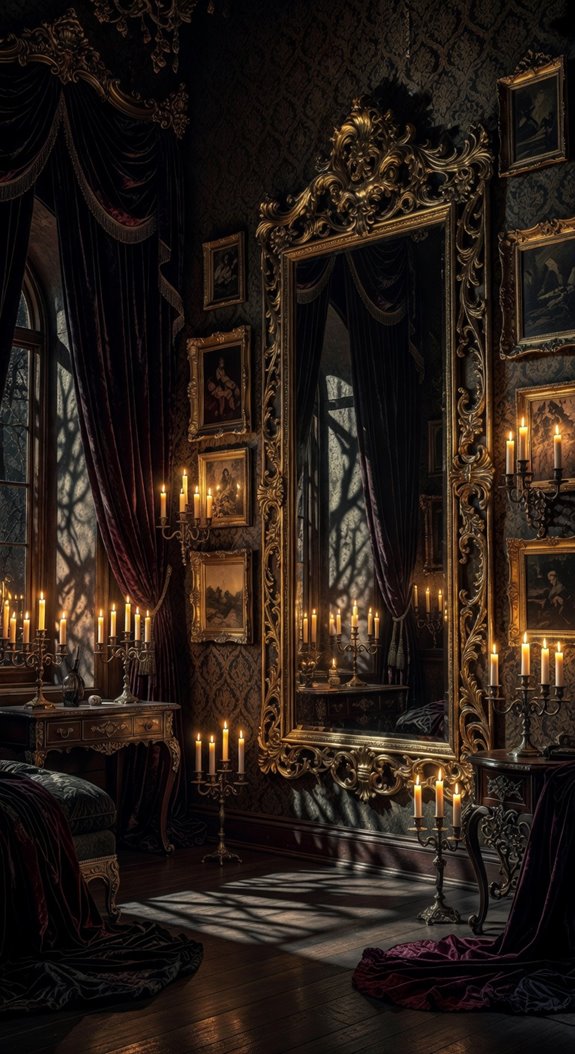
Ornate mirrors and vintage gold accents serve as reflective anchors that amplify light and create visual depth within gothic bedrooms, transforming intimate spaces into galleries of reflected elegance. Ornate frames with intricate hand-carved detailing, beveled edges, and antiqued patina catch ambient candlelight and pendant illumination with remarkable efficiency, while positioning these statement pieces directly opposite mullioned or arched windows maximizes natural daylight penetration throughout shadowed interiors.
Vintage gold finishes applied to carved mahogany furniture, wrought iron fixtures, tarnished brass wall sconces, and gilded picture rail moldings introduce a warm amber luminosity that counterbalances deeper jewel tones — midnight sapphire, oxblood crimson, and emerald velvet — preventing heavy color palettes from absorbing all available light and collapsing spatial perception inward.
Layering small floating ambient lights among gold-accented vignettes and near ornate mirror groupings introduces an enchanted sense of weightlessness that softens the dramatic gravity of gothic interiors without diminishing their ceremonial grandeur.
Candlelit Sconces for Atmospheric Lighting
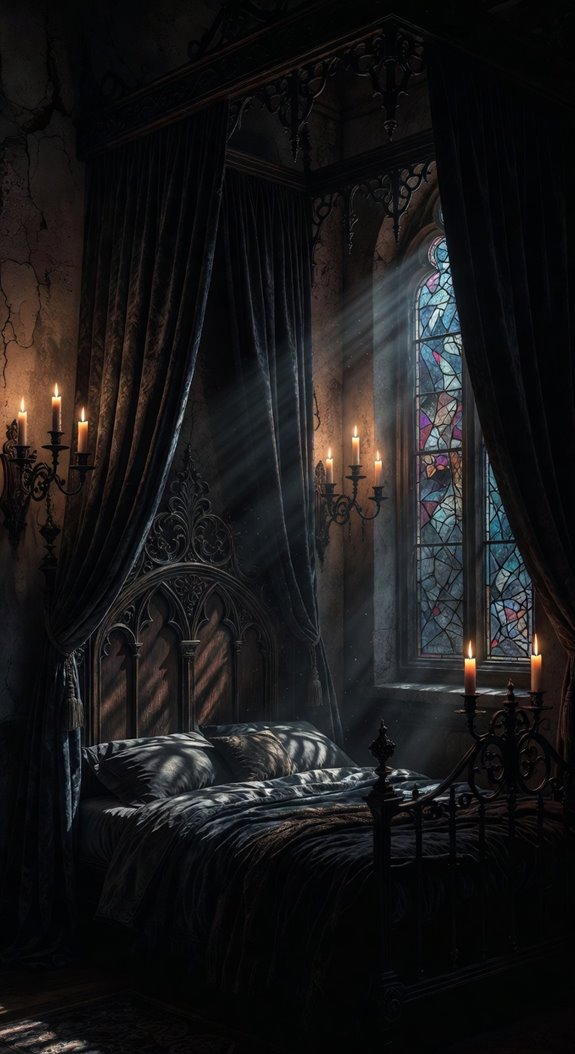
When you’re designing a gothic bedroom, candlelit sconces become essential elements that transform harsh overhead lighting into soft, flickering ambiance. You’ll want to position wrought-iron, wall-mounted sconces strategically around your room, placing them at eye level beside your ornate, carved-wood bed frame and flanking your aged, mercury-glass mirrors to maximize atmospheric light diffusion.
Choose oxidized black metal fixtures featuring hand-blown, amber-tinted glass shades etched with intricate gothic tracery patterns. These deep-toned, soot-darkened enclosures soften candlelight into warm, honey-colored pools that cast dramatic, elongated shadows across your stone-textured walls. Together, these layered, multi-source lighting elements establish brooding visual depth while preserving practical, functional illumination throughout your shadowed, vaulted space. If you’re drawn to pushing atmospheric design even further, surreal room concepts can inspire unexpected lighting placements that blur the boundary between functional and fantastical.
Victorian Architectural Details: Molding and Hardware
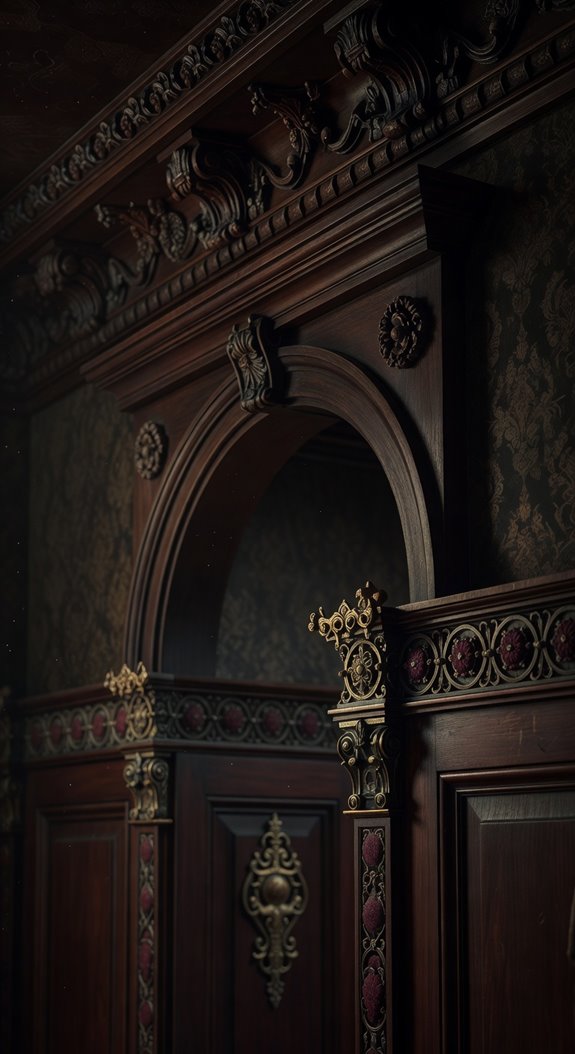
Victorian architectural molding and hardware serve as the structural backbone of an authentic gothic bedroom, transforming bare walls into richly layered, period-accurate environments. Crown molding with egg-and-dart or acanthus leaf carvings in deep mahogany or matte black finishes creates dramatic ceiling transitions, while chair rails with ogee profiles divide walls into distinct decorative zones and solid baseboard trim with stepped reveal detailing anchors the room to the floor.
Ornate door and drawer hardware in aged brass or oil-rubbed bronze adds tactile authenticity, with ring pulls, backplates stamped with Gothic tracery, and mortise lock escutcheons featuring pointed arch motifs reinforcing the overall aesthetic with period-accurate, handcrafted detailing.
Black and Deep Burgundy Color Schemes
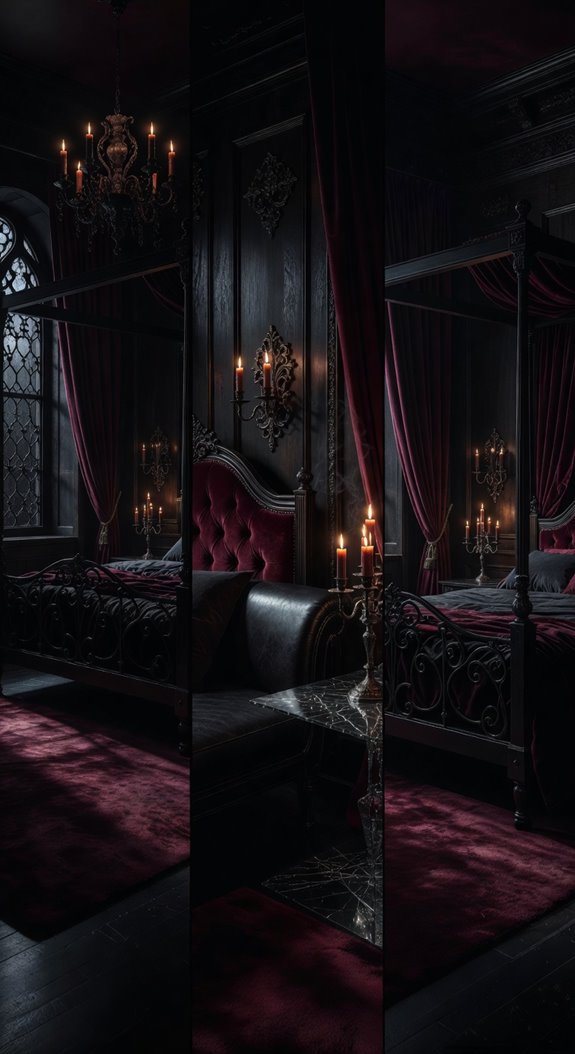
Black and deep burgundy form the chromatic foundation of authentic gothic bedrooms, creating moody, sophisticated environments that feel both grounded and luxurious. You’ll layer these rich jewel tones through crushed velvet upholstery, ornate damask wallpaper with raised textile patterns, and heavily carved dark wood furnishings featuring intricate scrollwork and claw-foot detailing.
Burgundy accent walls in deep wine and oxblood hues paired with matte black trim and wrought iron hardware establish dramatic visual contrast with strong architectural definition.
Deep-toned bedding in midnight black and claret silk anchors the space, while the full color combination transforms your bedroom into a refined sanctuary that masterfully balances chromatic intensity with tactile elegance and enveloping comfort. Drawing inspiration from fairy tale decor ideas can further elevate the enchanting atmosphere, layering in storybook-worthy details that deepen the gothic fantasy aesthetic.
Bold Headboards as Bedroom Statement Pieces
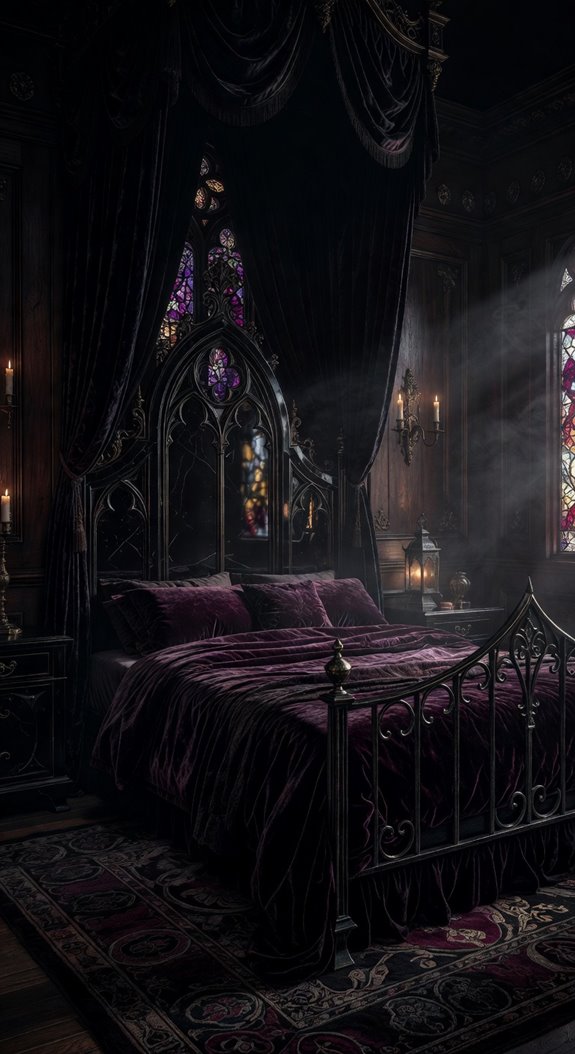
Why settle for a conventional headboard when you can anchor your gothic bedroom with an architectural focal point that commands attention? Choose upholstered headboards in deep, jewel-toned velvet or full-grain leather, featuring hand-carved ornamental details, cathedral-inspired arches, or dramatic high-contrast geometric patterns with sharp angular lines.
Tall, floor-to-ceiling imposing designs constructed from solid hardwood or wrought iron create powerful visual drama and architectural gravitas. Incorporating hammered metal accents, antique brass nail head trim, or richly saturated gemstone hues — obsidian black, bloodstone crimson, or deep amethyst purple — intensifies the gothic aesthetic and creates layered visual depth throughout your entire sleeping space. Layering in elements of dark academia aesthetics — think richly stained wood, aged brass hardware, and an atmosphere of quiet intellectual mystery — adds a sophisticated, almost enchanted dimension to the gothic bedroom experience.
Layering Textures: Lace, Velvet, and Dark Tapestries
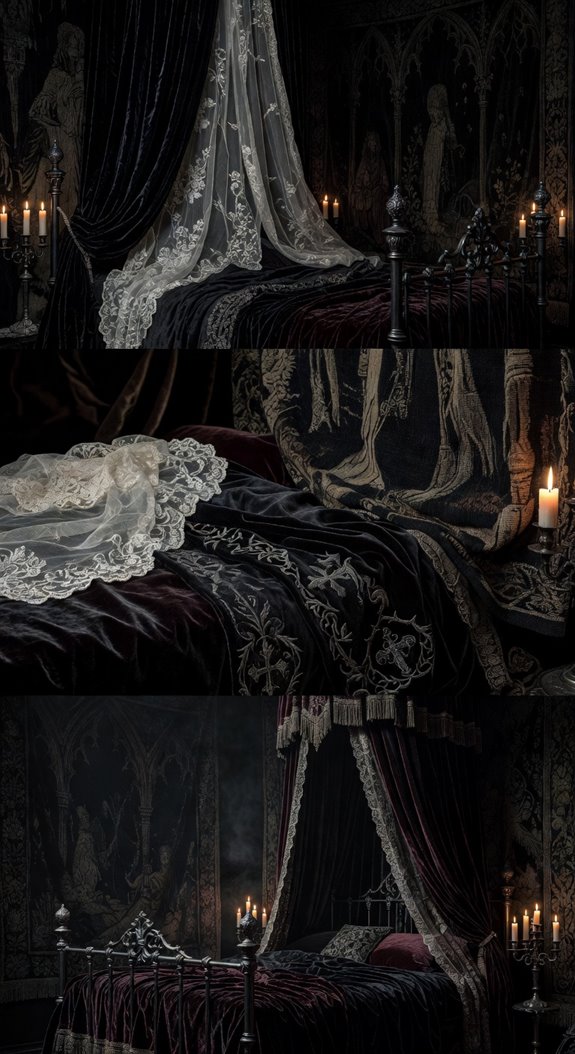
What transforms a gothic bedroom from simply dark to genuinely luxurious is the deliberate layering of contrasting textures that create visual interest and tactile depth throughout your space.
Combine delicate hand-stitched lace curtains with sumptuous crushed velvet upholstery in deep jewel tones like burgundy or midnight black, then drape heavy woven dark tapestries featuring intricate medieval or occult motifs across your walls. These richly detailed materials work together, establishing dimensional depth and sophisticated visual complexity while maintaining the brooding, atmospheric aesthetic you’re cultivating throughout your gothic bedroom design. Drawing from timeless fantasy aesthetics, you can merge historically inspired ornamental patterns with enduring design sensibilities to ensure your layered textile choices feel both dramatically evocative and classically refined rather than merely trendy.
Chandeliers and Candelabras as Gothic Focal Points
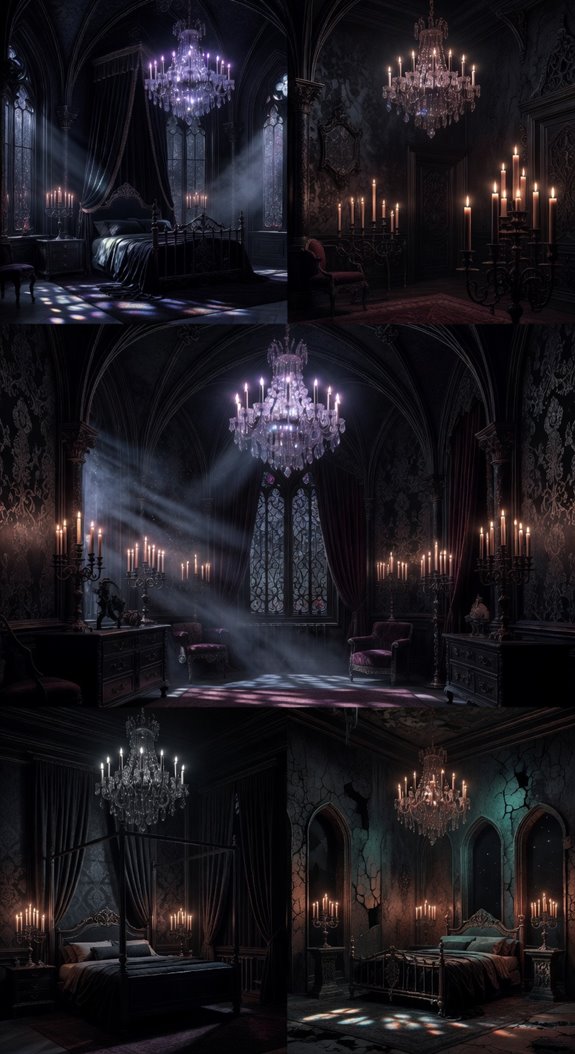
The lighting fixtures you select for your gothic bedroom function as architectural anchors, commanding immediate attention and defining the space’s overall atmospheric character. Ornate chandeliers featuring wrought-iron or blackened-steel frames, adorned with candle-style bulbs, dripping faux wax, or carved obsidian-toned accents, deliver the dramatic overhead presence this aesthetic demands.
Candelabras offer a complementary alternative, their multi-armed silhouettes casting layered, asymmetrical shadows across stone-textured walls and velvet drapery. Whether freestanding floor candelabras with twisted iron shafts or tabletop versions with aged-bronze patinas, these pieces introduce intricate detailing at varying heights throughout the room.
Position your primary chandelier centrally above the bed’s canopy or directly over the room’s architectural core to maximize visual impact. This deliberate placement amplifies atmospheric depth, creates dramatic interplay between light and shadow, and establishes an undeniable focal point that anchors the entire gothic composition. For those seeking contrast, incorporating soft pastel lighting in a secondary sleeping nook or reading corner can balance the room’s intensity with gentle, diffused warmth.
Faux Stone Archways and Castle-Inspired Details
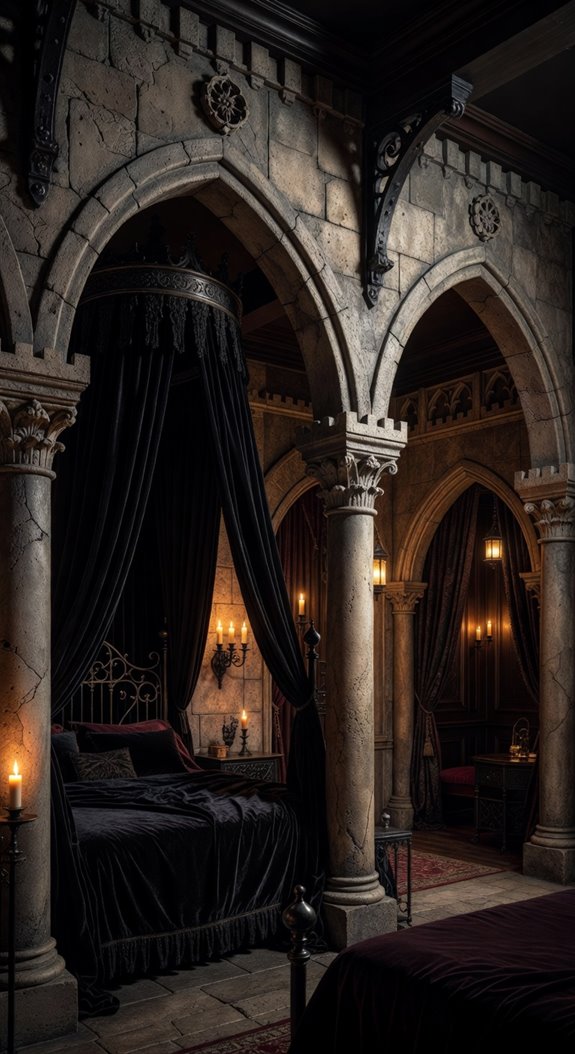
Faux stone archways transport your bedroom directly into a medieval castle aesthetic, creating dramatic architectural divisions that anchor the gothic environment. You’ll install these curved, barrel-vaulted structures above doorways or use them to partition open spaces, relying on lightweight, high-density polyurethane or hand-troweled plaster composites that replicate the rough-hewn texture, irregular surface variation, and cold grey tonality of authentic cut limestone or fieldstone masonry.
Pair these architectural focal points with hand-forged wrought iron wall sconces featuring candle-style Edison bulbs, dark-stained reclaimed oak furnishings with carved decorative detailing, and floor-to-ceiling wool or velvet tapestries depicting heraldic motifs to complete the fully immersive, cohesive castle-inspired interior design environment you’re constructing. For contrast, you might explore fairycore nocturnal designs that incorporate ethereal, glowing light elements as a softer counterpoint to the gothic drama you’ve established throughout the space.
Selecting Dark Fantasy Artwork for Gothic Spaces
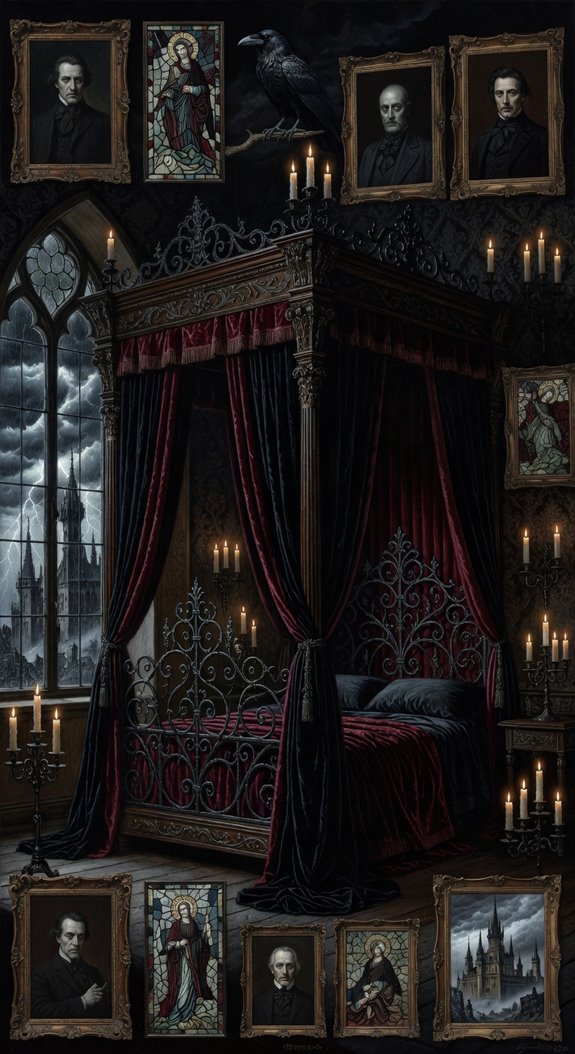
Selecting the right dark fantasy artwork fundamentally transforms a gothic bedroom from a superficially themed space into a richly atmospheric, deeply immersive sanctuary. Prioritize pieces showcasing medieval subjects — armored knights, crumbling stone cathedrals, spectral figures — alongside mythological narratives featuring ravens, serpents, or lunar deities rendered in deep crimson, amethyst, obsidian, and aged gold pigmentation.
Heavily carved wooden frames, blackened wrought-iron frames, or antiqued gilded frames with baroque scrollwork and grotesque detailing amplify the gothic character of each selected piece. Hang larger statement canvases — atmospheric fog-laden landscapes, towering dark architecture, dramatic figurative works — at precise eye level, then cluster smaller skull studies, botanical illustrations of poisonous flora, or celestial maps as intentional satellite groupings throughout the remaining wall space. While gothic spaces lean into darkness and drama, principles drawn from light and airy design remind us that intentional contrast — even a single luminous element — can prevent a richly layered room from feeling visually oppressive.
Maximalist Decor: Rugs, Throws, and Wall Hangings
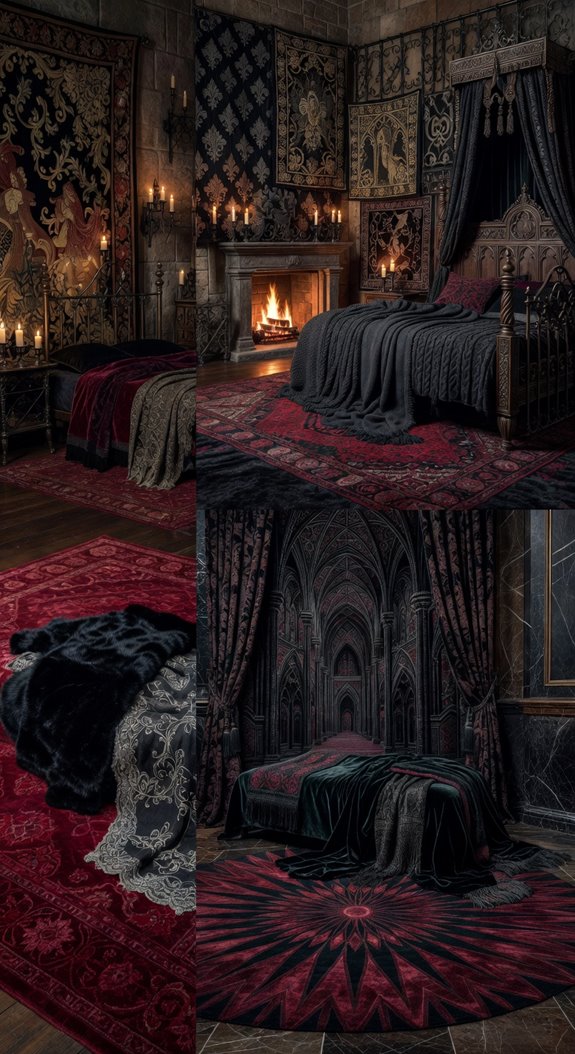
Layering richly textured rugs, throws, and wall hangings creates visual density and tactile depth that define maximalist gothic interiors. Combine deep jewel tones — sapphire, oxblood, and amethyst — with ornate brocade patterns and varied materials like crushed velvet, heavy damask, and hand-knotted wool.
Drape fringed velvet throws across tufted chaise lounges and carved wooden bed frames, then layer Persian-style area rugs over distressed hardwood floors for dimensional warmth. Hang large-format tapestries featuring gothic motifs — cathedral arches, ravens, and trailing botanical vines — anchored with wrought iron rods. This deliberate accumulation of rich surfaces transforms your bedroom into a cohesive, enveloping sanctuary.
Heavy Drapery and Sheer Window Overlays
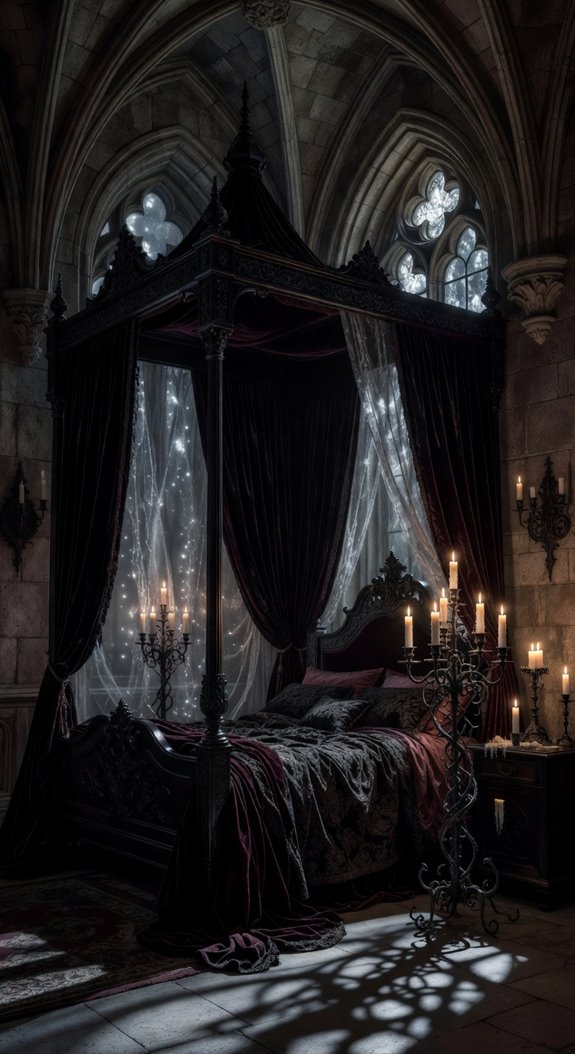
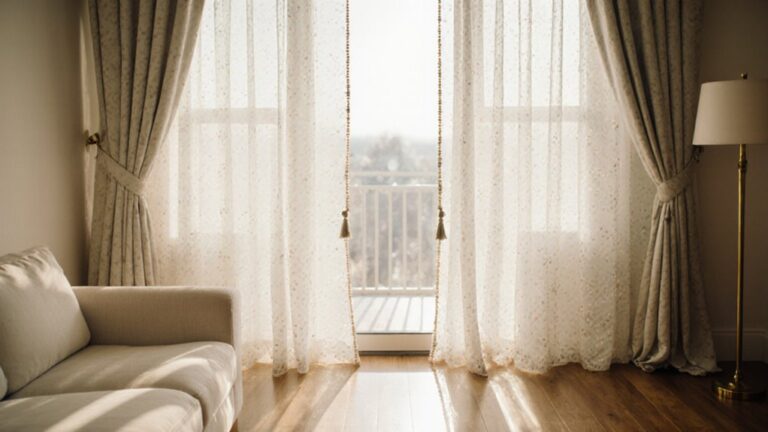
Windows serve as your bedroom’s most dramatic architectural feature, and drapery choices determine whether light enters softly or gets filtered entirely. You’ll layer heavyweight velvet or jacquard-woven brocade curtains with translucent sheer overlays, creating dimensional depth and precise ambient light filtration.
Dark jewel tones like deep emerald, oxblood burgundy, and midnight sapphire reinforce gothic aesthetics through saturated pigmentation and rich textile weight. This dual-layer combination delivers flexible illumination control — from full diffusion to near-blackout — while sustaining visual drama, textural contrast, and atmospheric density throughout your sleeping space.
Budget-Friendly Gothic Elements and Thrift Finds
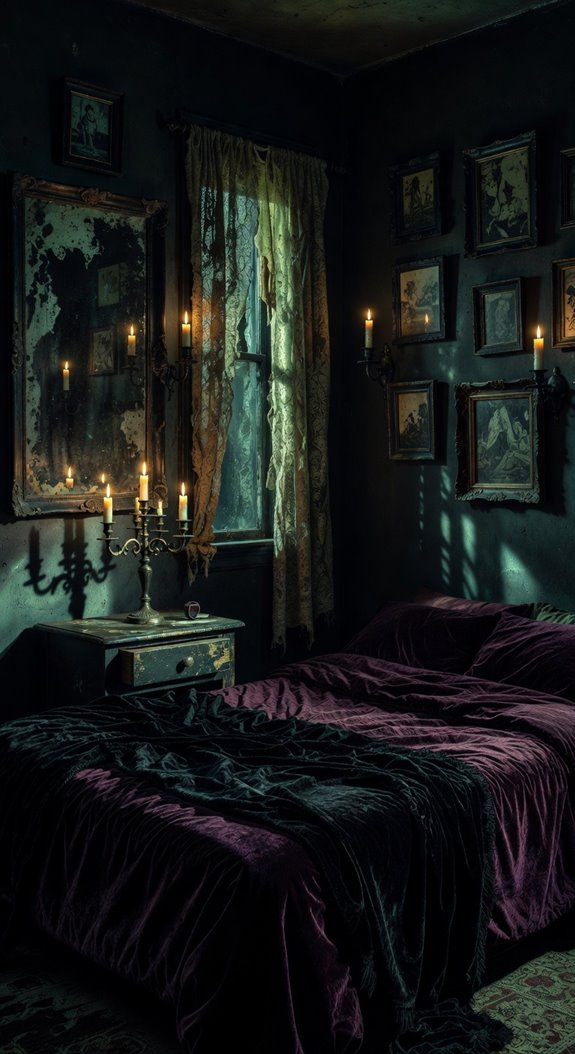
Thrift stores, estate sales, and secondhand markets consistently yield ornate Victorian mirrors with gilded frames, wrought iron wall sconces, darkly stained oak furniture, and elaborately carved wooden accents — all at deeply discounted prices that make authentic gothic styling financially accessible.
Crushed velvet curtains in deep burgundy or midnight black, brass and iron candelabras with aged patina, and distressed vintage frames housing macabre artwork serve as high-impact, low-cost dramatic elements that anchor a gothic interior with remarkable visual density.
Strategic placement of these curated thrift finds — a tarnished silver candelabra on a dark mahogany sideboard, a heavy brocade textile draped across a carved wooden chair — creates layered, atmospheric gothic composition without requiring significant financial investment.
How to Choose
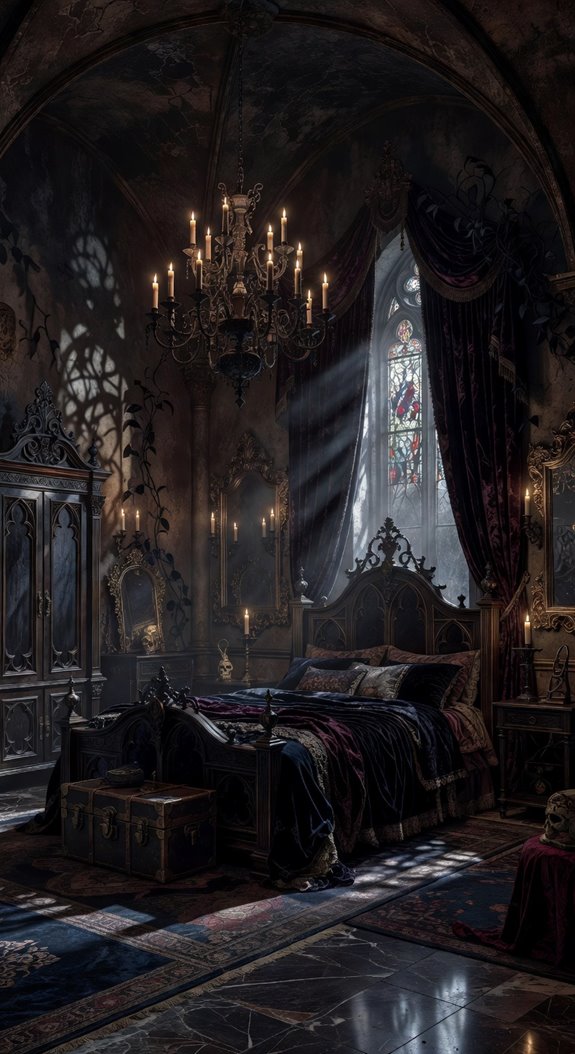
Finding the right pieces for your gothic bedroom requires careful consideration of scale, quality, and how individual items will function within your overall design scheme. Prioritize furniture that balances proportion with your room’s dimensions, ensuring towering four-poster beds with hand-carved mahogany finials don’t overwhelm compact spaces, while ornately scrolled wrought-iron candelabras and baroque-framed mirrors anchor larger rooms with commanding visual weight.
Select pieces in deep jewel tones — arterial crimsons, midnight blacks, and antiqued brass or tarnished silver metallics — evaluating each item’s joinery, material density, and surface detailing for long-term structural integrity. Consider how crushed velvet upholstery in plum or charcoal, hand-forged wrought iron hardware, and heavily carved gothic-arch woodwork interact with your existing architectural elements, layering textures that reward close inspection while maintaining cohesive visual darkness throughout the space.
Common Mistakes
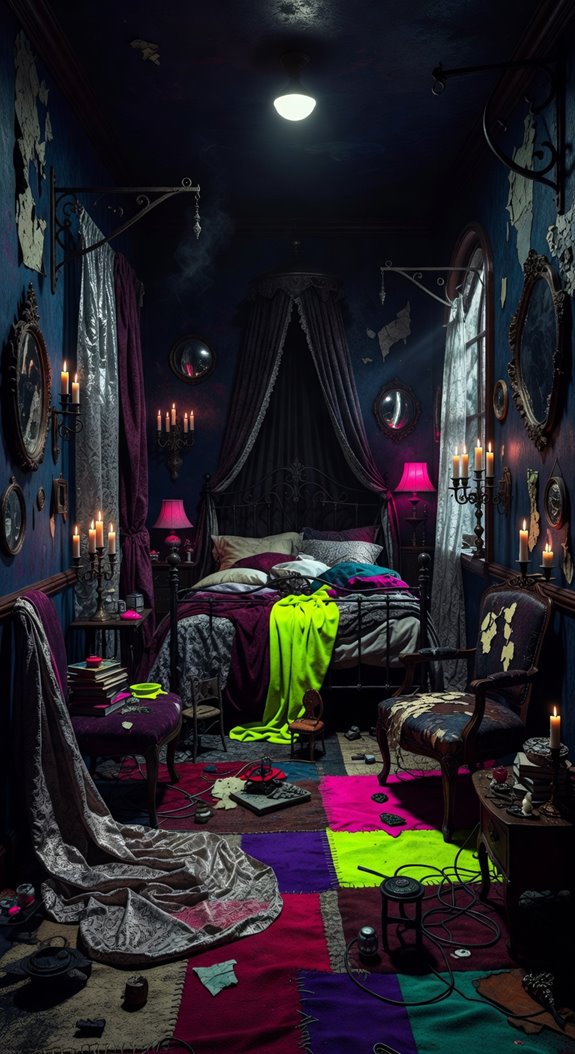
Gothic bedrooms frequently veer into theatrical excess, sacrificing sophisticated appeal through overcrowding and poor spatial planning. Cluttered surfaces laden with excessive ornaments diminish visual impact, while an unrestrained color palette loses its dramatic intentionality. Strategic deployment of black, deep purple, and burgundy creates depth without visual noise.
Dark, heavily pigmented walls demand counterbalancing elements: adequate ambient and accent lighting, generous negative space, and deliberate furniture placement. Oversized, ornately carved pieces in compact rooms generate cramped, unwelcoming atmospheres that undermine the refined eeriness gothic aesthetics strive to achieve.
Final thoughts
Creating your gothic fantasy bedroom begins with foundational choices that set the dramatic tone. Anchor the space with a ornate four-poster bed crafted from dark mahogany or wrought iron, then layer richly pigmented velvet drapery in deep burgundy, midnight navy, or amethyst purple across floor-to-ceiling windows.
Build atmosphere through carefully curated lighting and decorative elements. Install antique-styled candlelit sconces with amber-toned Edison bulbs along stone-textured accent walls, and position oversized gilded mirrors with baroque detailing to amplify the moody, shadowy glow throughout the room.
Don’t overlook budget-conscious sourcing through architectural salvage shops and thrift stores, where ornate crown molding pieces, tarnished silver candelabras, and vintage oil paintings can be found at accessible price points. Every carefully chosen relic adds narrative depth and visual weight to the overall composition.
Balance theatrical maximalism with intentional spatial planning to prevent visual overcrowding. Each velvet throw pillow, Gothic arch headboard, and iron chandelier dripping with crystal pendants should occupy deliberate placement, allowing the darkness and wonder of the aesthetic to breathe fully through the layered, richly textured environment.