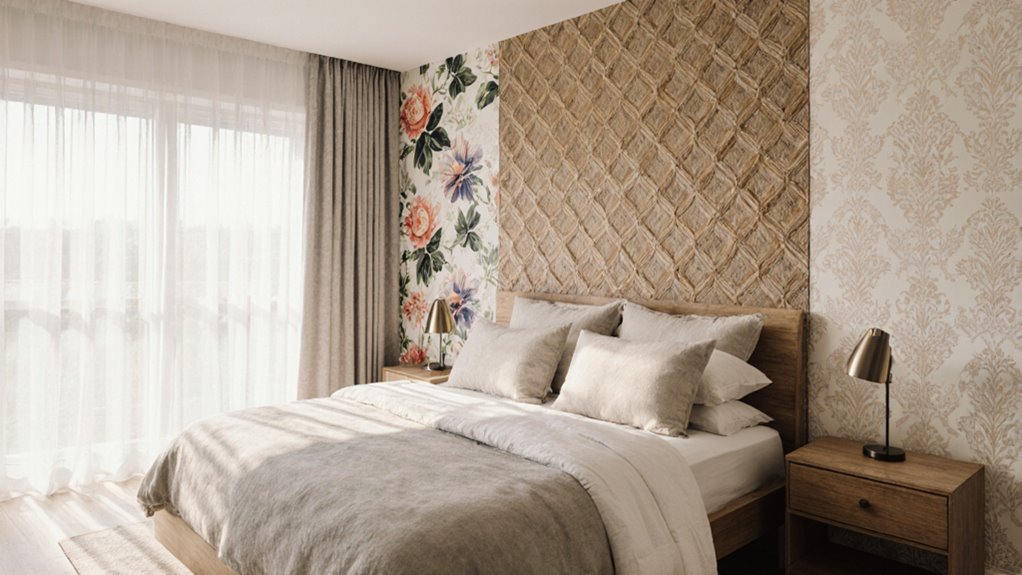
17 Bedroom Wallpaper Ideas That Work in Real Rooms Not Just Photoshoots
Bedroom wallpaper behaves differently in real spaces than it does in magazine spreads. Lighting conditions shift color temperatures dramatically, with north-facing rooms pulling warm tones toward gray while south-facing rooms intensify saturated hues. Geometric and large-scale patterns compress visually in compact 10×12 rooms but expand naturally in primary suites exceeding 200 square feet.
Material durability and installation practicality separate functional choices from purely aesthetic ones. Grasscloth, a woven natural fiber wallcovering, resists moisture poorly in humid climates but delivers unmatched organic texture in climate-controlled spaces. Peel-and-stick vinyl options, rated for 50-100 removal cycles, solve the renter dilemma without sacrificing visual impact. Understanding these real-world variables—room orientation, square footage, wall surface condition, and humidity levels—converts wallpaper selection from decorative guesswork into a durable, room-specific decision.
How Bedroom Lighting Shifts Wallpaper Color and Mood
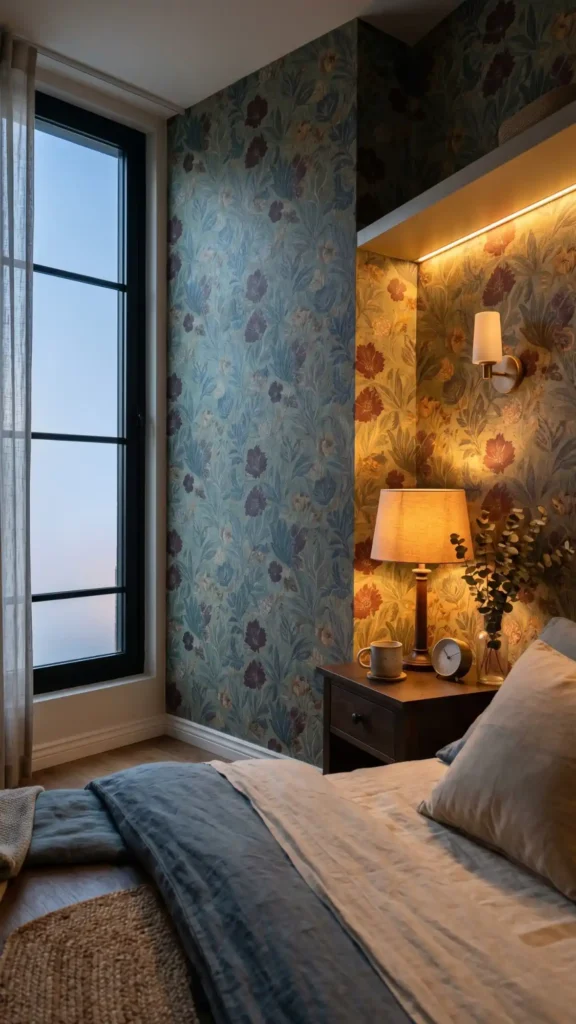
How notably does your bedroom’s lighting actually transform the wallpaper you’ve selected? Natural light enhances cool tones like slate blue, sage green, and soft lavender, while warm-spectrum incandescent or Edison bulbs intensify deeper hues—burgundy, terracotta, and forest green gaining richness after dusk. Your wallpaper’s perceived color shifts dramatically throughout the day as sunlight angles change, moving from golden morning warmth to harsh midday brightness to the amber softness of evening.
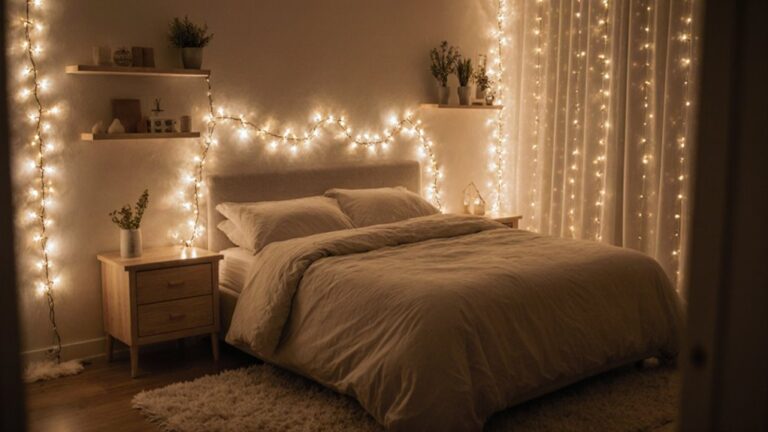
Layered lighting—combining ambient ceiling fixtures, targeted task lamps, and directional accent sources like wall sconces or LED strip lighting—creates dimensional depth that flat overhead illumination can’t achieve alone. Consider your room’s cardinal orientation when selecting patterns and palettes; north-facing bedrooms receive consistently cooler, blue-toned indirect light and require wallpapers with warmer undertones—cream, ochre, or blush—to counterbalance that chromatic coldness. South-facing rooms enjoy intense, color-saturating sunlight that can wash out delicate patterns by midday. Test physical samples of your chosen wallpaper under your actual lighting conditions—morning, afternoon, and evening—before committing to full installation. Establishing clear boundaries between work and sleep zones through thoughtful lighting design becomes especially crucial in bedroom offices, where screen glare and late-night tasks can disrupt your circadian rhythms if not properly managed.
Pattern Scale: Why Size Matters in Small Versus Large Rooms
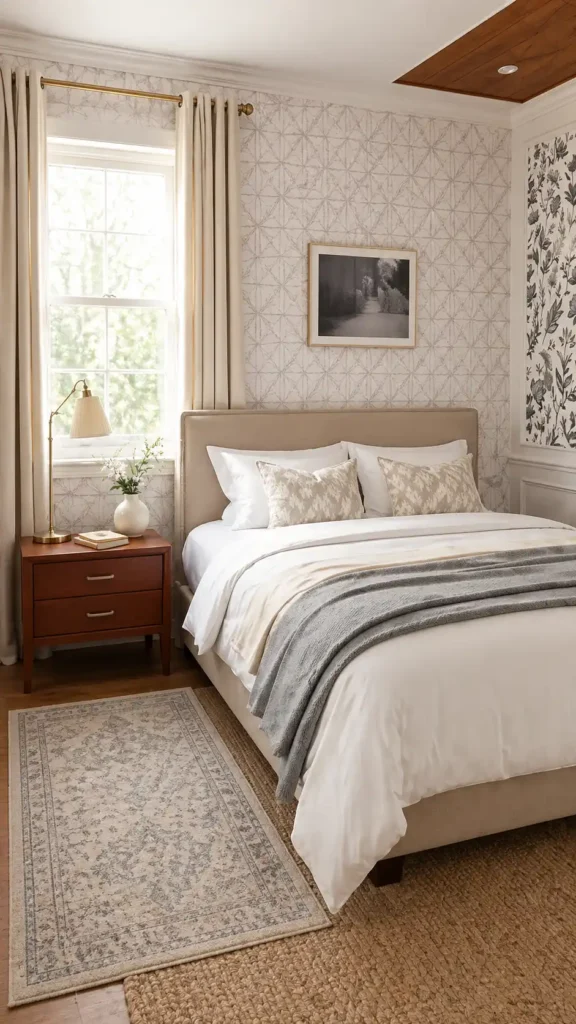
When you’re selecting wallpaper patterns, the scale of your design becomes as critical as the color itself, directly determining whether your bedroom feels expansive or cramped. Small rooms benefit from delicate, fine-scaled patterns — think narrow toile stripes, miniature botanical prints, or petite geometric repeats — that won’t overwhelm confined square footage or compress low ceilings.
Larger bedrooms, by contrast, accommodate bolder, oversized designs: wide-format damasks, dramatic oversized florals, or large-scale abstract motifs that fill generous wall expanses with confident visual weight. Matching pattern scale to room dimensions creates precise spatial harmony, balancing visual density against architectural proportion to achieve a finished, intentional aesthetic. Even within a restrained palette, thoughtful scale selection ensures your bedroom maintains personality and depth without relying on bold color alone.
Durability in Bedrooms: Which Wallpapers Handle Daily Life
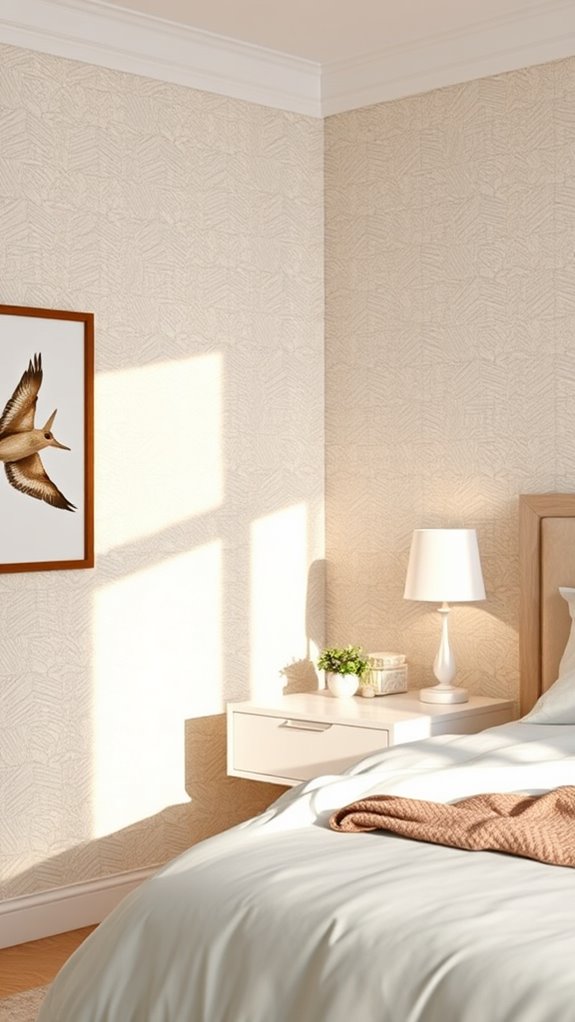
Beyond pattern selection, your wallpaper’s ability to withstand bedroom conditions determines whether your design choice remains beautiful or deteriorates within months. Vinyl and vinyl-coated papers — constructed with a durable polyvinyl chloride surface layer bonded to a paper or fabric substrate — resist moisture infiltration, airborne dust accumulation, and surface abrasion with consistent long-term performance. Fabric-backed wallpapers, woven from synthetic or natural fiber reinforcement layers, deliver structural integrity and tear resistance while preserving rich texture and visual depth. Washable and scrubbable finishes, rated on a Class 1 to Class 3 durability scale, are essential selections for households with young children or active pets, protecting your financial investment against fingerprints, pet dander, and repeated surface contact. Selecting durable materials supports cozy minimalist principles by ensuring your bedroom remains a comfortable, uncluttered retreat without the stress of frequent repairs or replacements.
Grasscloth and Natural Fibers: Texture That Ages Well
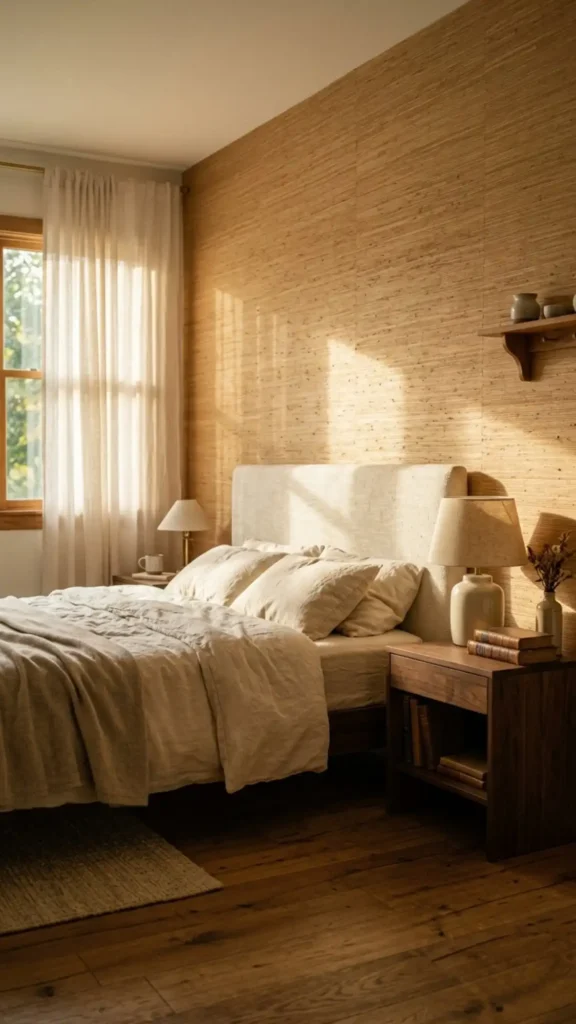
A sun-drenched bedroom interior featuring a wall covered in tightly woven, warm honey-toned grasscloth wallpaper with visible fiber texture and subtle horizontal striations. Soft morning light rakes across the woven surface, casting delicate shadows that emphasize the dimensional, organic weave pattern. This Korean bedroom aesthetic approach prioritizes natural materials and soft, diffused light to create that clean, dreamy atmosphere that feels effortlessly lived-in rather than staged.
A linen-upholstered headboard in aged ivory sits against the textured wall, flanked by ceramic table lamps with matte glazed bases.
Dark walnut nightstands hold weathered leather-bound books.
Dust motes float in amber light streaming through sheer linen curtains.
Wide-plank oak flooring visible in the foreground.
Soft Botanical Prints: Calming Patterns That Don’t Overwhelm
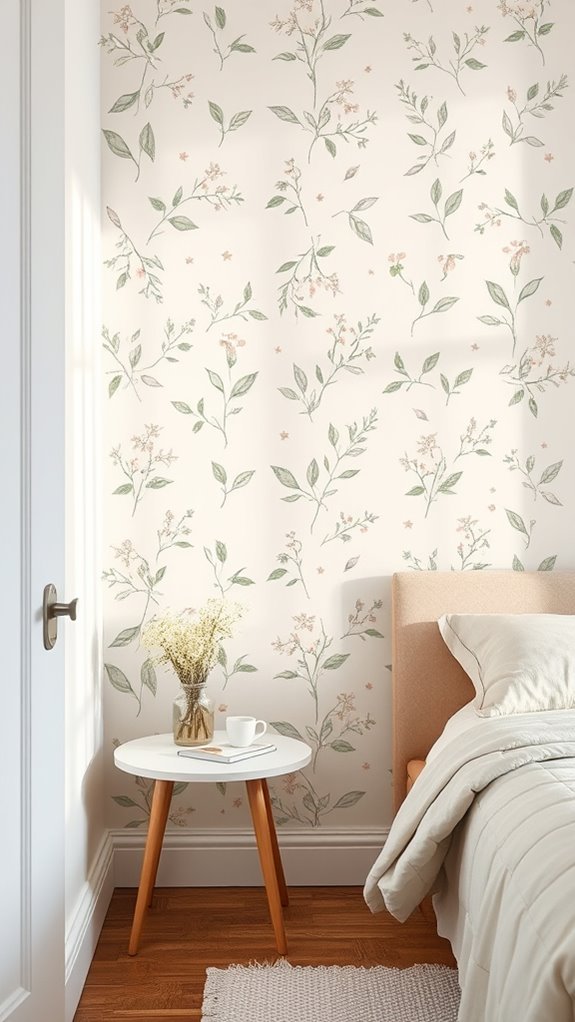
Soft botanical prints offer an elegant solution for introducing pattern into a bedroom without creating visual chaos. Rendered in muted, nature-inspired tones — subdued sage greens, weathered grays, dusty blue-greens, and pale ivory — these motifs of trailing leaves, slender branches, and delicately outlined florals deliver gentle visual texture rather than stimulating, high-contrast noise.
Choose wallpapers with fine linework, watercolor-style washes, or pressed-specimen illustrations to anchor the room’s atmosphere. Pair these surfaces with low-profile furniture in natural linen, raw oak, or soft stone finishes, allowing the restrained botanical imagery to breathe and serve as the room’s quiet focal point.
For those seeking alternatives beyond wallpaper, wood wall paneling offers similar organic warmth with added dimensional texture.
Muted Geometric Designs: Modern Without Trend Fatigue
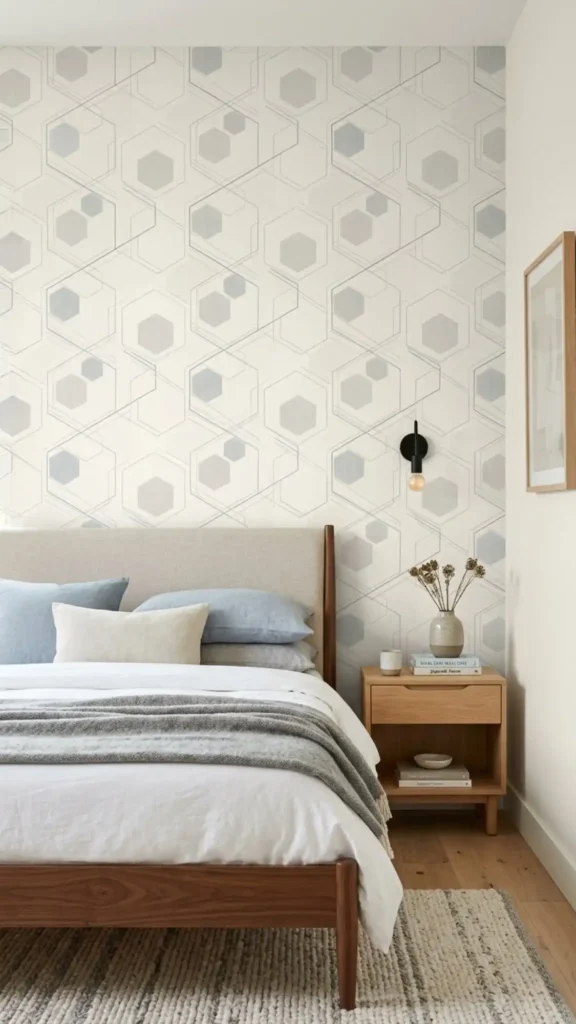
Geometric wallpapers bring contemporary sophistication to a bedroom without locking you into fleeting design trends, provided you select patterns rendered in restrained color palettes and subtle scales. Soft grays, warm whites, and muted dusty blues paired with understated, thin-line geometric work — such as hexagons, chevrons, or interlocking diamonds — create layered visual interest without demanding attention or overwhelming the senses.
These low-contrast, tonally cohesive designs complement a wide range of furniture styles, from mid-century walnut bed frames and linen upholstered headboards to Scandinavian oak nightstands and minimalist iron fixtures, while maintaining a composed, enduringly timeless aesthetic that resists the wear of passing microtrends.
The quiet restraint of these patterns naturally aligns with Japandi design principles, blending the clean lines of Japanese minimalism with the warm, livable quality of Nordic interiors for a bedroom that feels both curated and genuinely restful.
Subtle Striped Wallpapers: Elegance That Stays Timeless
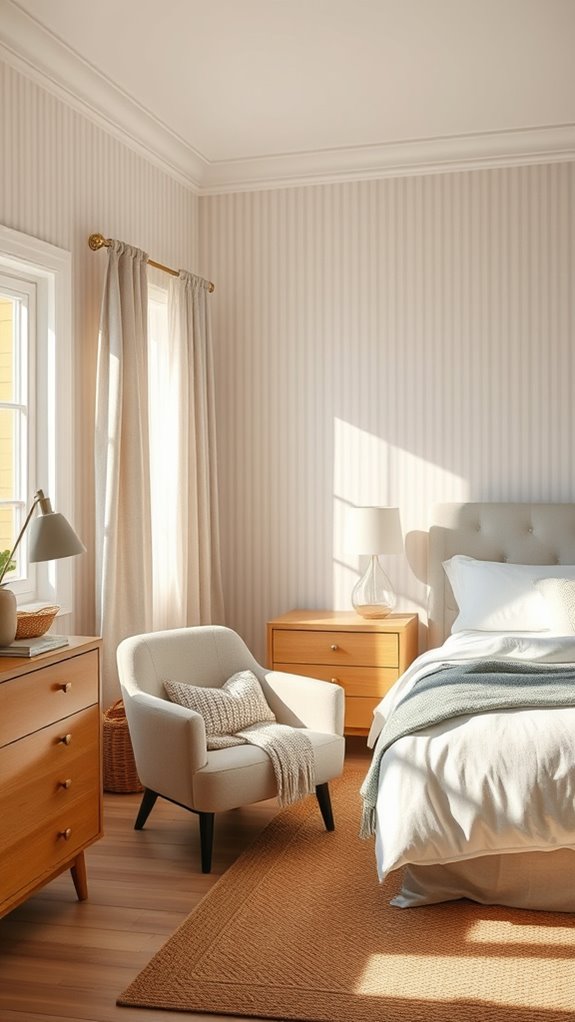
Vertical and horizontal stripes deliver elegance through directional simplicity and proportional restraint, distinguishing them from the visual complexity of geometric patterns.
Narrow stripe configurations generate upward optical movement, transforming compact, low-ceilinged bedrooms into spaces that register as taller and more expansive.
Soft neutral base tones — ivory, warm greige, pale linen — paired with muted secondary tones in sage, dusty blue, or taupe maintain timeless visual appeal without triggering premature renovation cycles.
Classic pinstripe and wide-band stripe wallpapers integrate seamlessly with both traditional carved-wood furniture and contemporary low-profile pieces, delivering enduring sophistication across shifting interior design trends.
For those seeking bolder alternatives, forest green walls offer dramatic depth while maintaining the same timeless quality as neutral stripes.
Vintage Florals: Nostalgia That Feels Intentional

Vintage florals solve the common dilemma of loving botanical patterns while fearing they’ll skew too precious or feel frozen in another era. The key lies in intentional styling choices — smaller-scale botanical prints with fine linework and muted pigmentation, placed against neutral plaster walls in warm white or greige tones. Dusty rose, faded sage, and aged cream palettes carry that soft, weathered quality that reads as curated rather than costume. Neutral accent wall colors serve as the ideal backdrop for these vintage patterns, allowing the florals to remain the focal point without competing for attention in the space.
Layer those floral textiles — think upholstered headboards, duvet covers, or a single statement curtain panel — against clean-lined contemporary furniture with low profiles and natural wood grain. The contrast between old-world pattern and modern form is exactly what keeps the space feeling purposeful and visually anchored rather than thematically overdone.
Textured Solids: Interest Without Visual Fatigue
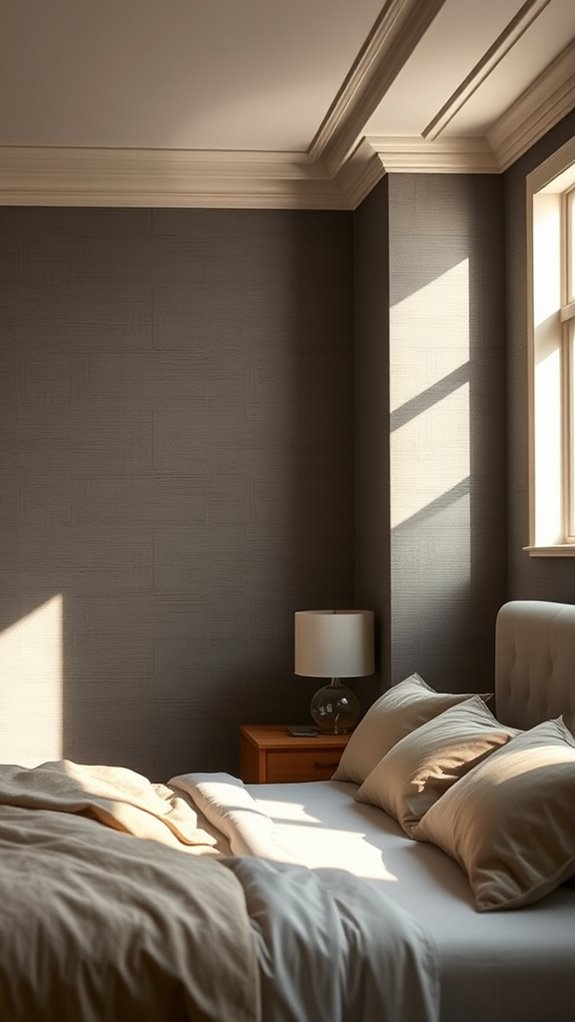
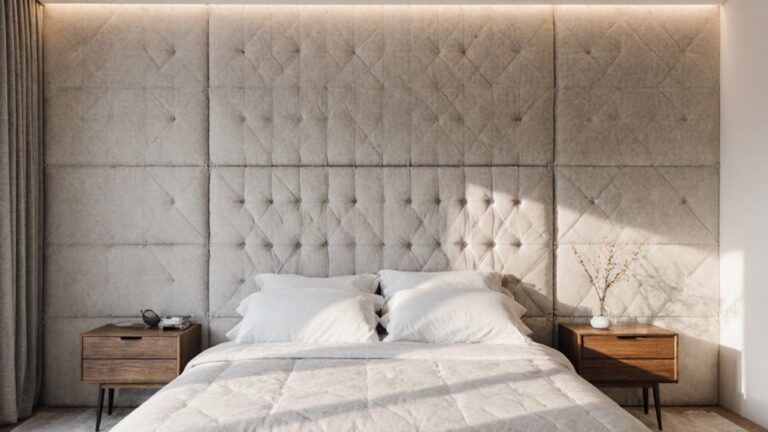
Solid-colored walls offer a quieter alternative to patterned designs, yet they needn’t feel bland or monotonous in your bedroom space. Textured wallpapers in neutral tones — such as hand-woven linen weaves with tight, interlocking fiber patterns or natural grasscloth finishes with their characteristic horizontal ribbing — create layered visual depth without overwhelming the senses.
These tactile materials catch ambient and directional light subtly across their raised surfaces, adding three-dimensional dimension that flat matte or eggshell paint can’t achieve. Consider warm whites with creamy undertones or soft blue-grays that complement wood-toned and upholstered furniture while maintaining a low-stimulation, restful environment conducive to sleep. When done thoughtfully, these intentionally styled surfaces create the same curated feel as a well-designed gallery wall, grounding the room with quiet confidence.
Small-Scale Repeats: Visual Interest Without Overstimulation
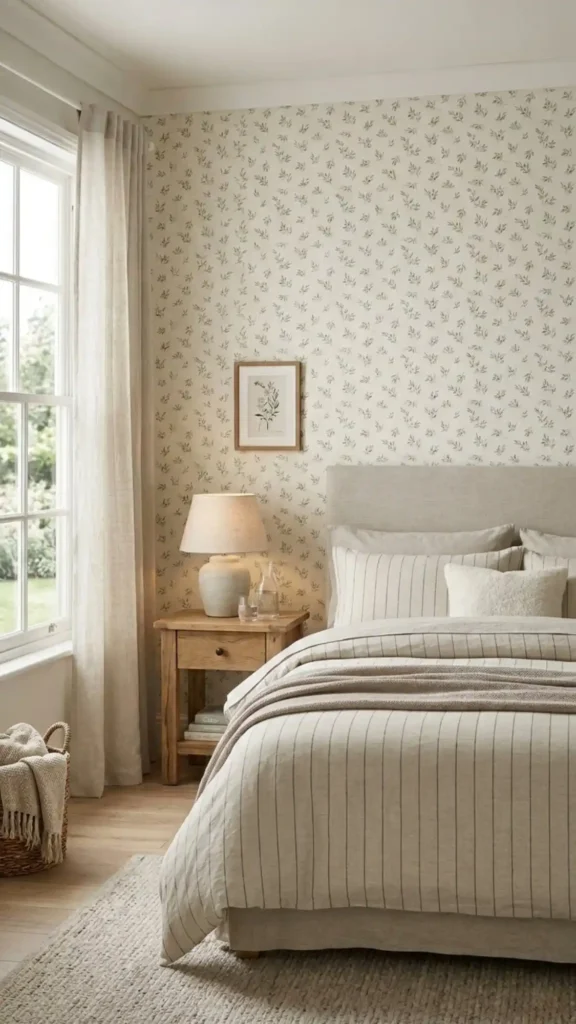
Small-scale repeats offer a practical solution for adding visual interest to your bedroom without triggering overstimulation from busy, high-contrast patterns. These understated, rhythmically spaced motifs create subtle movement across walls and textiles, engaging the eye without overwhelming the senses.
Whether geometric or botanical in nature, these delicate, small-footprint designs generate depth and dimension across surfaces. They photograph exceptionally well in natural and artificial light, and they function beautifully in everyday living spaces dedicated to relaxation and restorative sleep.
This makes them one of the easiest aesthetic upgrades to complete for anyone hesitant about committing to a full bedroom transformation.
Dark Accent Walls: Making Moody Wallpaper Practical
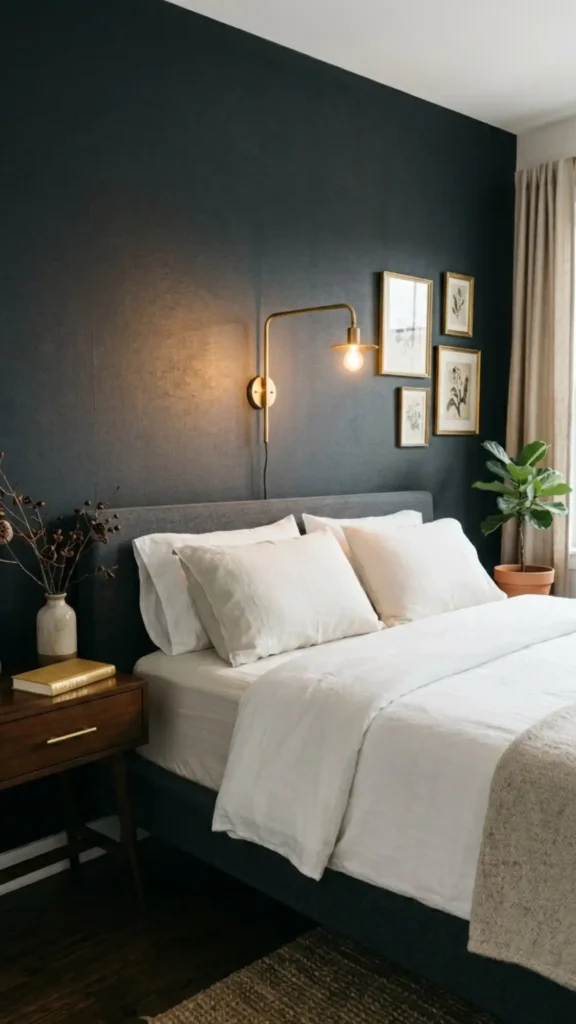
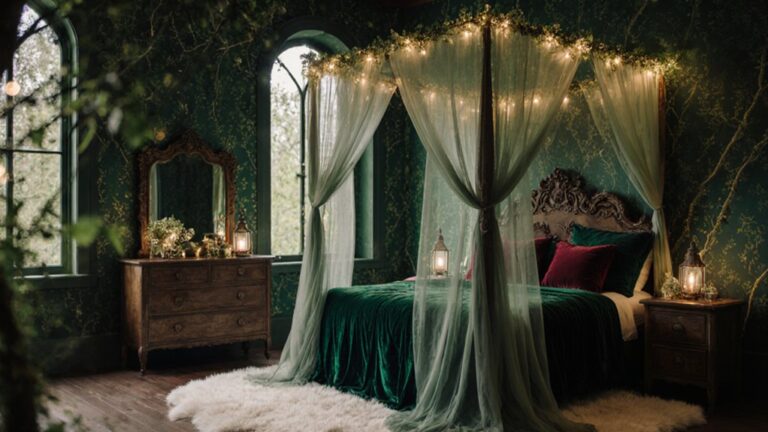
Dark accent walls transform bedrooms by creating intimate focal points, yet they require thoughtful planning to avoid making spaces feel cramped or cold. Choose one wall — ideally the primary feature wall directly behind a low-profile upholstered bed frame — and apply deep jewel tones like sapphire, emerald, or amethyst, or rich neutrals like charcoal and slate, using matte or textured wallpaper finishes that absorb light without creating harsh reflections.
Pair the dark wallpaper with high-contrast elements: crisp white or ivory linen bedding, warm-toned brass or antique gold hardware, and layered ambient lighting from bedside sconces with warm-spectrum bulbs. This deliberate balance of light and dark materials prevents visual suffocation while establishing meaningful depth and a cohesive, moody aesthetic.
Neutral Wallpapers With Subtle Details: Quiet Sophistication
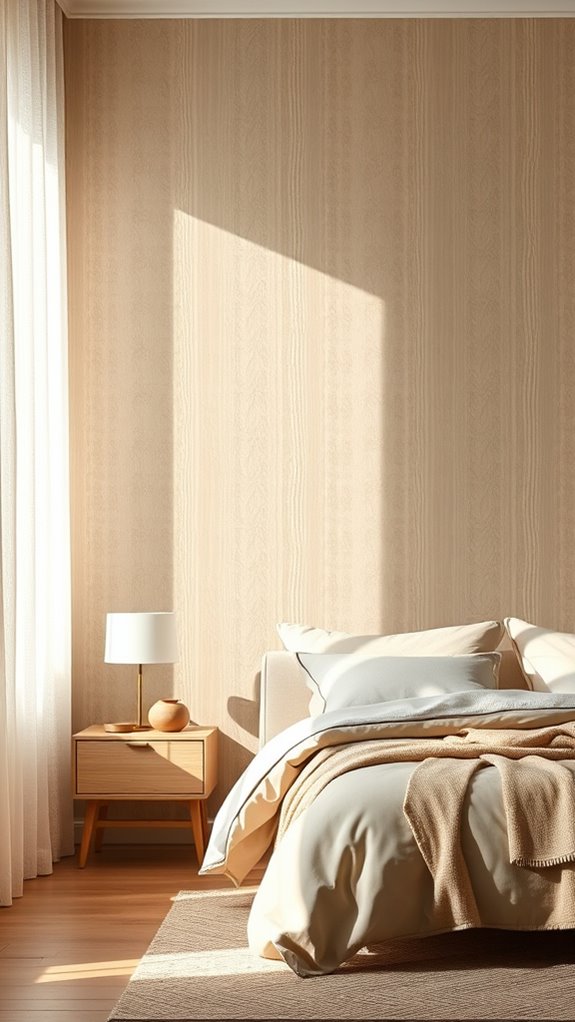
A serene, softly lit master bedroom featuring a wall covered in warm greige grasscloth wallpaper with fine horizontal woven texture, flanked by brushed brass wall sconces casting a warm amber glow.
A linen upholstered platform bed with a tall channeled headboard sits centered against the wall, dressed in layered ivory and oatmeal cotton bedding with subtle waffle-knit throw blanket.
Dark walnut nightstands with hairpin legs hold ceramic table lamps with cream drum shades.
Natural morning light filters through sheer linen curtains pooling softly onto wide-plank whitewashed oak flooring.
Maximalist Patterns: Going Bold Without Overwhelm
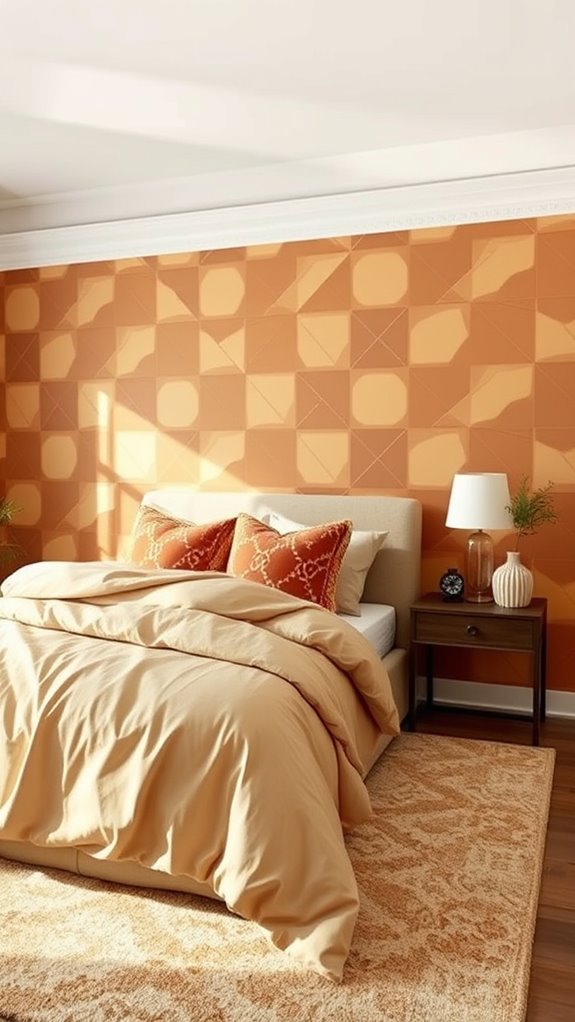
If you’re drawn to bold, large-scale geometric or floral wallpaper patterns but worry they’ll visually overwhelm your bedroom’s intimate atmosphere, you’re not alone in that concern. A single dramatic feature wall — whether showcasing hand-printed botanical prints, oversized damask, or richly pigmented abstract designs — consistently outperforms full four-wall coverage in maintaining spatial balance.
Balance your maximalist wallpaper by keeping surrounding architectural elements deliberately restrained. Paint crown molding, baseboards, and window trim in crisp white or warm off-white neutrals, select streamlined low-profile furnishings in solid muted tones, and limit your accent color palette to two or three coordinating hues pulled directly from the pattern itself. This layered, intentional approach allows your statement wallpaper to function as the room’s primary visual anchor without generating the cognitive fatigue and sensory chaos that often disrupts quality sleep.
High-Impact Wallpapers Under $50 Per Roll

You don’t need to spend hundreds per roll to achieve a professionally designed bedroom with statement wallpaper. Brands like Peel and Stick offer removable, pressure-adhesive options under $50, featuring sharp geometric patterns, botanical line drawings, and muted jewel tones like dusty emerald and slate blue.
Grasscloth textures woven from natural jute and seagrass fibers create tactile depth at accessible price points, while durable PVC vinyl wallpapers resist moisture, scuffs, and daily wear. These budget-conscious selections deliver genuine visual impact without sacrificing print resolution, colorfastness, or long-term adhesion quality.
Removable Wallpaper: When You Want to Keep Your Options
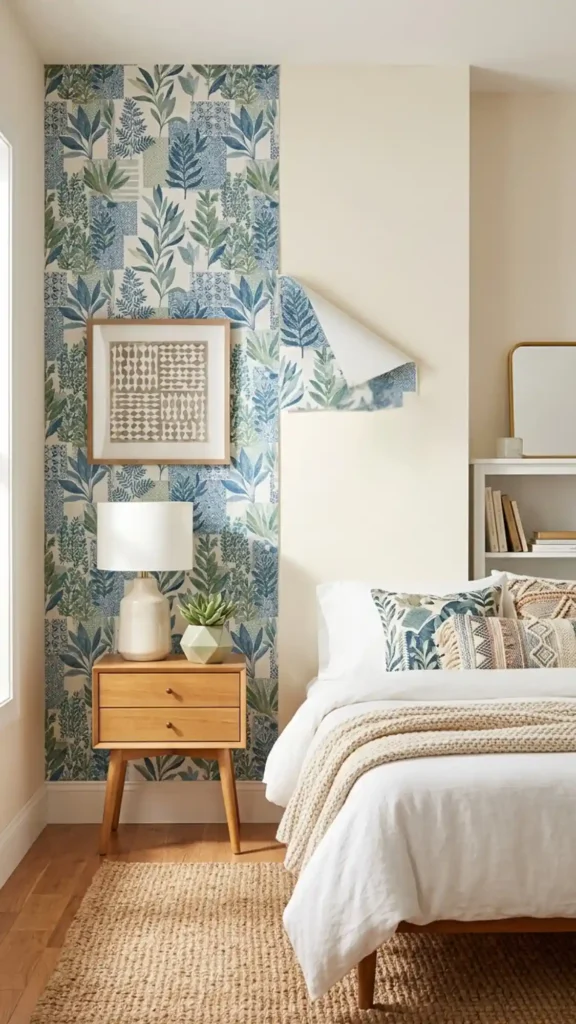
Renting an apartment or staging a bedroom for eventual resale makes permanent wallpaper installation impractical, which is where removable options prove invaluable. Peel-and-stick wallpapers feature pressure-sensitive acrylic adhesive backing that bonds firmly to smooth, primed drywall, painted surfaces, and even some textured finishes without leaving residue, tearing paint layers, or compromising existing wall treatments upon removal.
These products span an extensive catalog of geometric prints, botanical motifs, faux brick and marble textures, and solid colorways engineered to complement Scandinavian minimalism, maximalist eclectic, bohemian, and mid-century modern décor styles. Application requires only a smoothing squeegee, utility knife, and level, making the installation process accessible to renters, first-time homeowners, and interior design enthusiasts pursuing cost-effective, damage-free aesthetic transformations.
Wallpaper Plus Paint: When and How to Combine Both
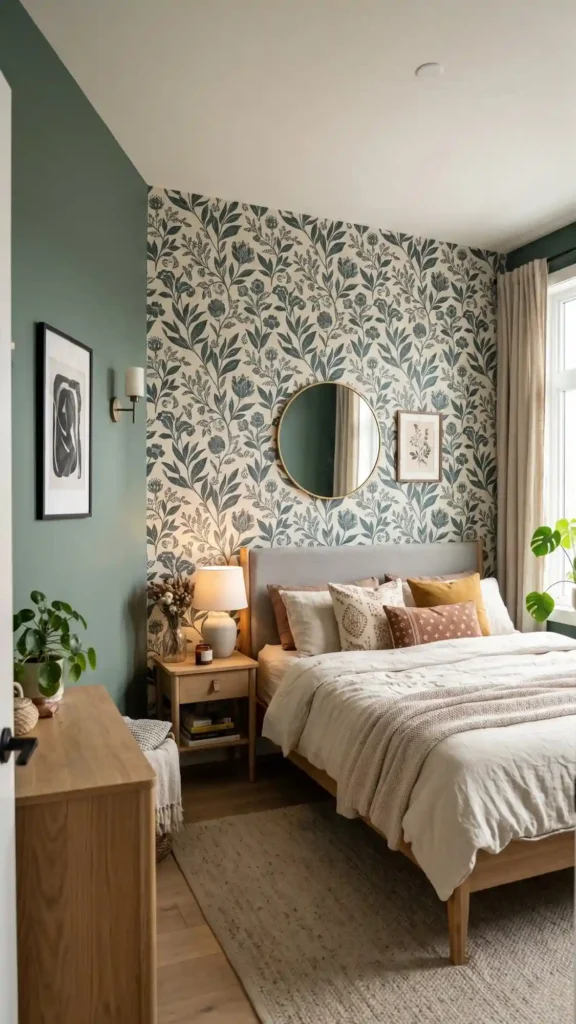
Combining wallpaper with painted surfaces creates depth and visual interest that neither treatment achieves alone. Removable wallpaper offers flexibility for renters and design experimenters, while permanent installations deliver a more polished, long-term aesthetic.
Accent one feature wall with bold, patterned wallpaper — geometric prints, botanical motifs, or textured grasscloth — then coat the remaining three walls in a complementary matte or eggshell solid. This deliberate contrast balances visual impact with restraint, preventing pattern saturation while establishing a layered, cohesive bedroom aesthetic with intentional focal hierarchy.
Wallpaper Care: Cleaning and Maintenance That Lasts
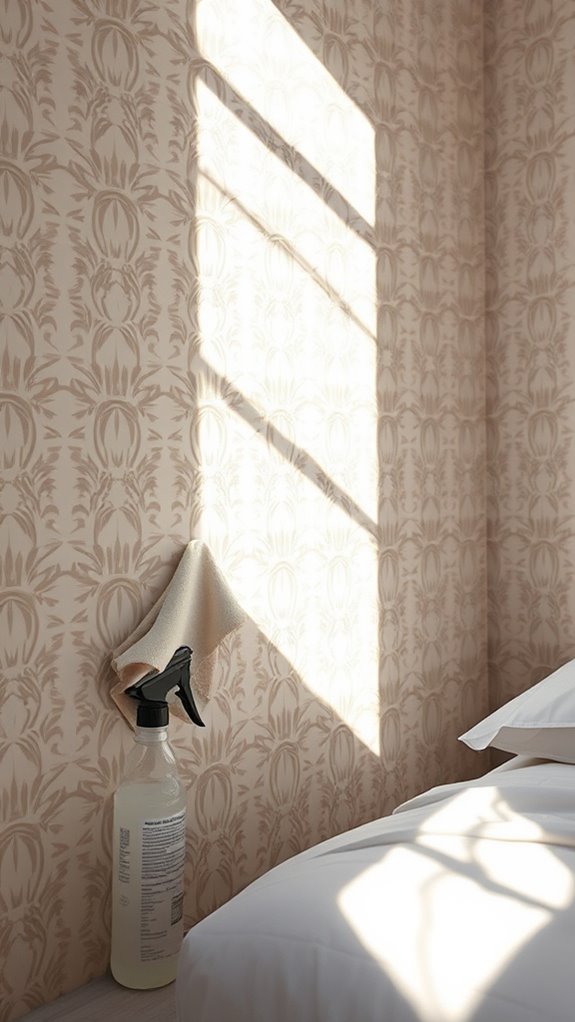
How long does your bedroom wallpaper actually last? With proper care, quality wallpaper maintains its appearance for decades, preserving vibrant pigments, textured surfaces, and precise pattern alignments throughout its lifespan. Routine dusting with microfiber cloths removes particulate buildup without abrading delicate vinyl coatings, embossed textures, or water-sensitive paper fibers.
High-humidity environments demand moisture-resistant wallpaper varieties featuring sealed acrylic backings, mold-inhibiting compounds, and reinforced woven substrates. Targeted spot cleaning with pH-neutral soap solutions dissolves grease deposits and airborne contaminants without degrading adhesive bonds or causing seam separation. Professional installation using premium wheat-starch paste or solvent-free adhesives, combined with certified installer expertise, dramatically extends service life while preventing premature edge lifting, bubble formation, and color distortion from direct UV exposure.
Final thoughts
Selecting the right bedroom wallpaper means weighing your room’s specific dimensions, natural light exposure, and daily wear requirements before committing to any pattern or material. Feature walls anchored by muted, complementary palettes create visual balance without overwhelming smaller or low-ceiling spaces.
Layer ambient, task, and accent lighting strategically to reveal your wallpaper’s true texture and color depth across different times of day. Prioritize moisture-resistant, scrubbable vinyl or coated paper stocks that maintain their integrity through humidity fluctuations and routine cleaning. A well-chosen, high-quality wallpaper installation delivers both aesthetic impact and structural longevity well beyond its first few years on the wall.