11 False Ceiling Designs for Bedrooms That Add Instant Character
Your bedroom ceiling is rarely the first surface you notice, yet it profoundly shapes the room’s atmosphere and visual depth. False ceilings offer you a practical method to transform overhead space through architectural elements—from coffered grids to curved vaults—that anchor your design scheme.
Each approach carries distinct advantages for different bedroom styles and spatial constraints. Understanding which design aligns with your aesthetic vision requires examining specific options that balance form and function.
Coffered Ceilings: Timeless Elegance With Architectural Depth
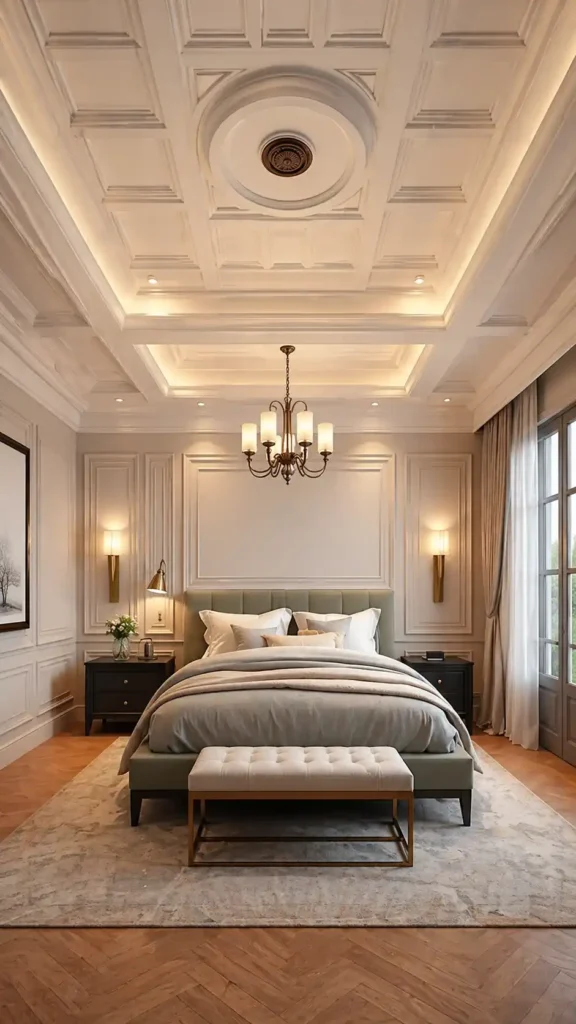
Coffered ceilings transform a plain bedroom ceiling into a commanding architectural focal point through recessed rectangular panels that create dramatic depth and layered visual interest.
The structural grid of wooden beams, typically crafted from oak, pine, or MDF, forms precise geometric patterns across the ceiling plane, with inset panels nestled between each intersecting beam.
Paint the solid hardwood or painted MDF beams in deep charcoal, rich walnut stain, or warm espresso to contrast sharply against lighter wall tones, or execute the entire ceiling in crisp, uniform white for refined, understated elegance.
While bold colors often dominate design discussions, a restrained palette with personality proves equally powerful for creating bedroom spaces that feel both sophisticated and deeply personal, with coffered ceilings serving as the perfect architectural anchor.
This versatile design integrates seamlessly into both traditional bedroom settings with crown molding and wainscoting, and contemporary minimalist spaces with clean-lined furniture and neutral palettes.
Tray Ceilings: Simple Dimension Without Ornament
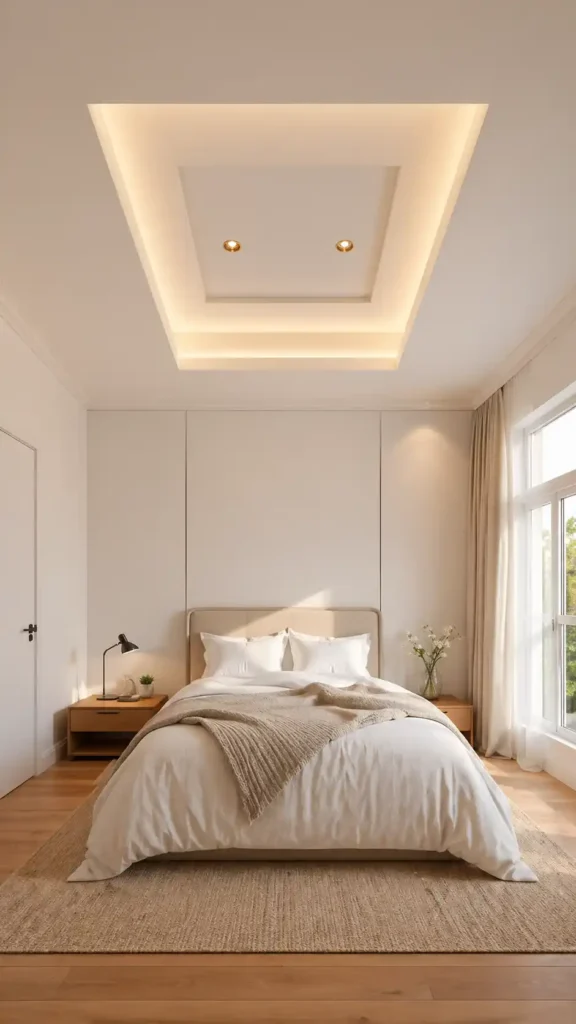
Tray ceilings offer architectural depth through recessed rectangular or polygonal ceiling planes, elevated 6–12 inches above the surrounding perimeter soffit. The inward-stepping geometry creates layered shadow lines and perceived vertical lift without requiring elaborate plaster moldings, carved medallions, or decorative corbels.
The structural recess works across diverse interior typologies — primary bedrooms, formal dining rooms, and open-concept living spaces — adapting equally to contemporary flat-panel aesthetics and traditional coffered frameworks. Painted in contrasting hues or finished with subtle sheen differentials, the recessed field draws the eye upward, elongating spatial volume in rooms with standard 8–9 foot ceiling heights.
Lighting integration represents a functional advantage inherent to the form. Rope lighting, LED strip channels, and cove fixtures mount discreetly within the perimeter ledge, producing indirect ambient illumination that wraps the ceiling plane in diffused, glareless light. This embedded approach eliminates pendant intrusion into usable headspace while reinforcing the dimensional boundary of the tray.
Material finishes within the recessed field range from matte drywall to tongue-and-groove wood planking, stretch fabric panels, or metallic spray finishes — each amplifying the geometric contrast between the lowered soffit border and the elevated central plane. Crown molding at the perimeter step remains optional, preserving clean shadow-line minimalism when omitted. For homeowners seeking to transform any corner into a cozy reading nook, the dimensional ceiling treatment establishes an intimate overhead canopy that enhances the enveloping atmosphere ideal for relaxation.
Curved and Vaulted Ceilings: Sculptural Impact Overhead
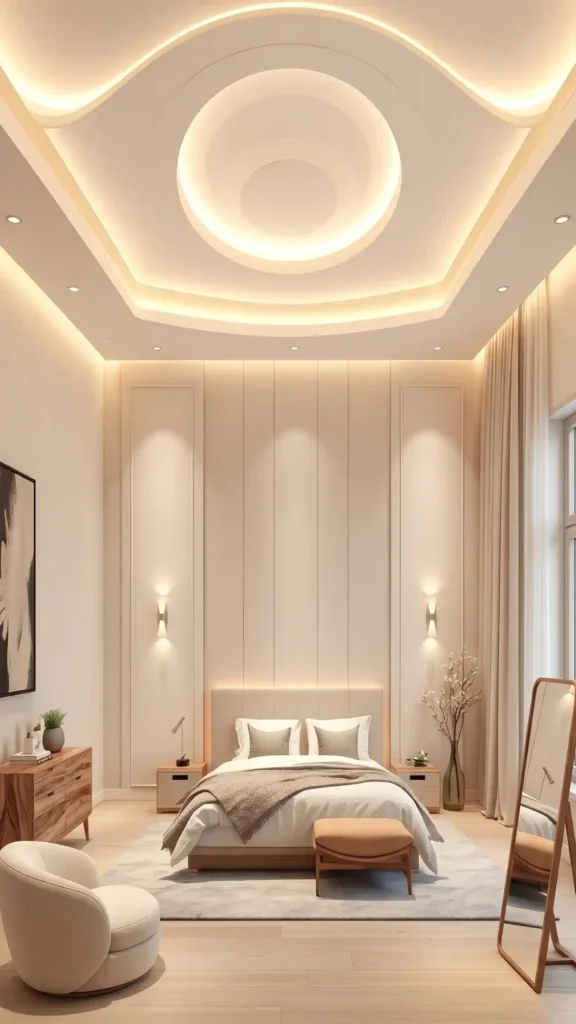
Curved and vaulted ceilings create architectural drama by drawing eyes upward and expanding perceived room dimensions through their sweeping geometric forms.
Unlike flat overhead surfaces, these sculptural ceiling treatments introduce dynamic spatial movement, transforming a bedroom’s entire volumetric character through barrel vaults, groin vaults, coved edges, or elliptical arches executed in plaster, wood, or concrete.
These structural ceiling designs enhance natural light distribution by redirecting ambient illumination across curved surfaces, softening shadows and creating luminous gradients throughout the space.
They establish sophisticated visual hierarchy, making the overhead plane the room’s dominant focal point — a quality that pairs exceptionally well with low-profile, minimalist furnishings in muted palettes, allowing the ceiling’s architectural musculature to command undivided attention.
The interplay between dramatic overhead architecture and understated minimalist elements creates a balanced sanctuary that feels intentional and welcoming rather than stark or impersonal.
Wooden Beam Ceilings: Rustic Warmth and Natural Texture
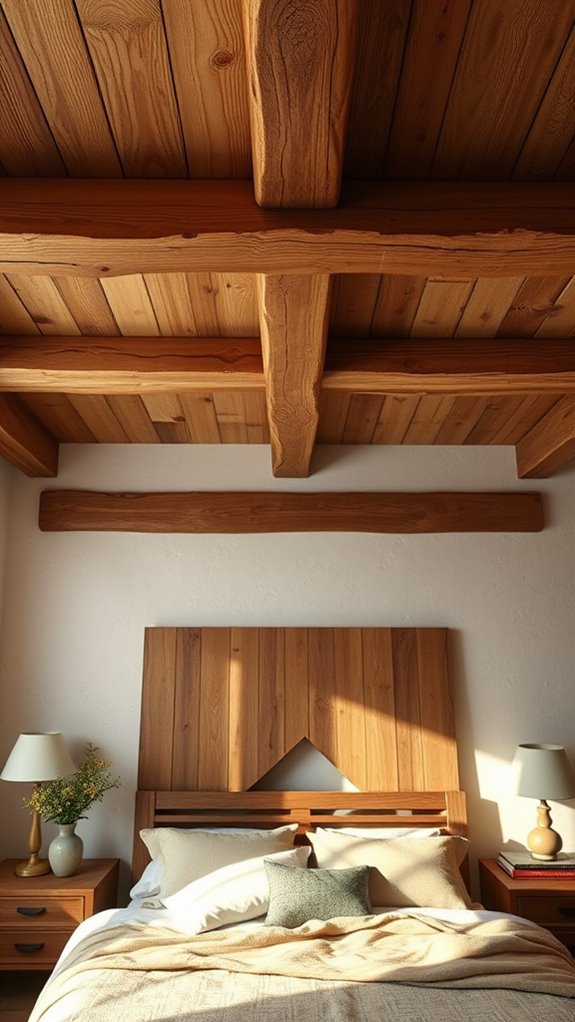
Wooden beam ceilings introduce warmth and authenticity to your bedroom by showcasing the natural grain, knots, and color variations inherent in timber construction. Exposed beams deliver strong architectural interest, particularly when positioned against neutral-toned plaster or shiplap walls, creating dramatic visual contrast between raw organic material and refined surfaces.
Reclaimed wood options bring century-old character through weathered patinas, saw marks, and rich oxidized tones, while dark-stained finishes in walnut or ebony enhance visual depth and dimensional richness. This structural design element integrates seamlessly across rustic, farmhouse, and contemporary interior styles, anchoring the ceiling plane with substantial textural weight and material authenticity. For bedrooms with no built-in closet, wooden beams can draw the eye upward and create the illusion of greater vertical space, making the room feel larger despite limited storage options.
Recessed Panel Ceilings: Minimalist Sophistication
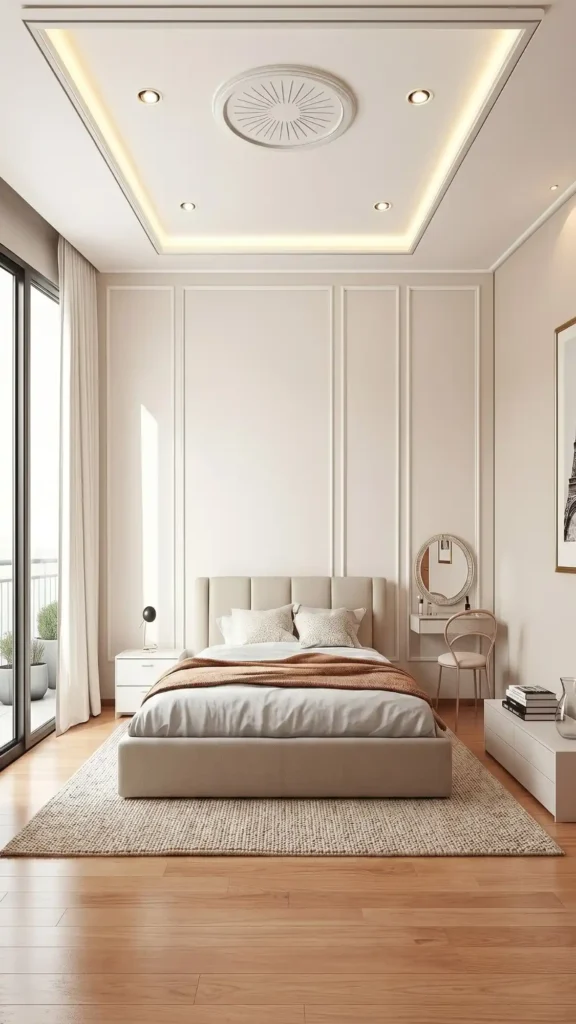
Recessed panel ceilings deliver minimalist sophistication through geometric precision and architectural restraint. You’ll install inset rectangular or square panels — typically 3/4-inch to 1-inch deep — creating subtle dimensional shadow lines without visual clutter. The structured grid pattern introduces clean, deliberate geometry that transforms an otherwise flat overhead plane into a refined architectural statement.
Neutral finishes like matte white, warm ivory, or soft dove gray maintain serene, light-reflective atmospheres while emphasizing the crisp panel edges. This ceiling style integrates seamlessly with recessed LED downlights, flush-mount fixtures, or perimeter cove lighting, turning the overhead surface into a functional yet visually cohesive element. Contemporary and transitional furniture collections — think low-profile platform beds, streamlined nightstands, and monochromatic textiles — pair exceptionally well with this overhead treatment, reinforcing clean horizontal and vertical design lines throughout the room. For those seeking to introduce color through vertical surfaces, green bedroom wall ideas ranging from soft sage to deep forest green can create a striking yet balanced contrast with the ceiling’s restrained geometry.
Two-Tone Designs: Create Visual Contrast and Drama
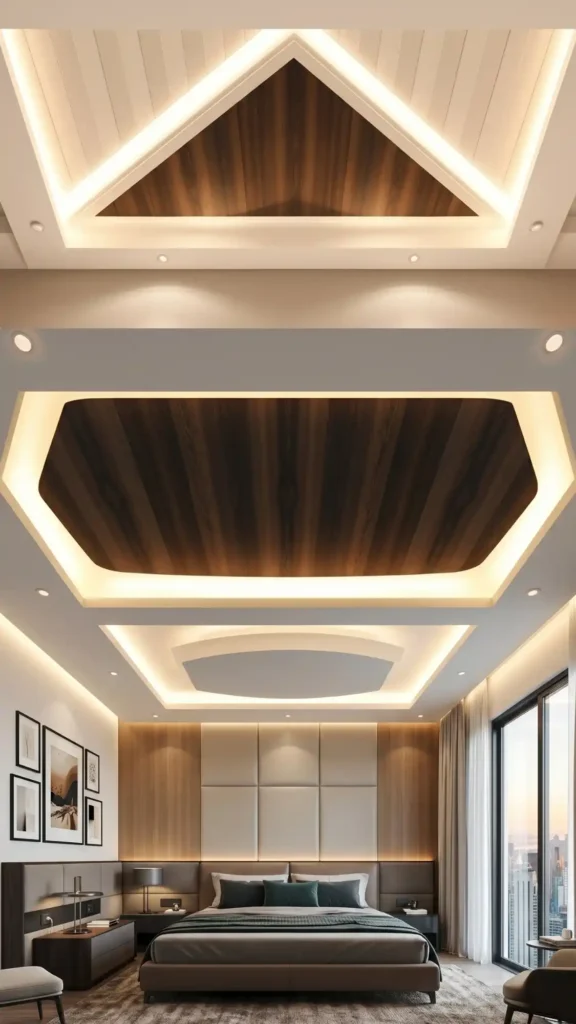
Two-tone ceiling designs introduce bold visual contrast that transforms your bedroom into a dynamic architectural space. You can pair deep navy with crisp white, creating visual depth that anchors the room, or combine warm taupe with soft gray for sophisticated, understated elegance.
This deliberate chromatic layering highlights structural features like crown molding, coffered edges, and recessed boundaries, drawing the eye upward while establishing strong focal points that define your bedroom’s spatial character and overall aesthetic identity.
Drawing from Japandi bedroom ideas that balance bold architectural statements with serene simplicity, two-tone ceilings can achieve dramatic impact without overwhelming the room’s sense of calm.
Textured Finishes: Add Interest to Plain Surfaces
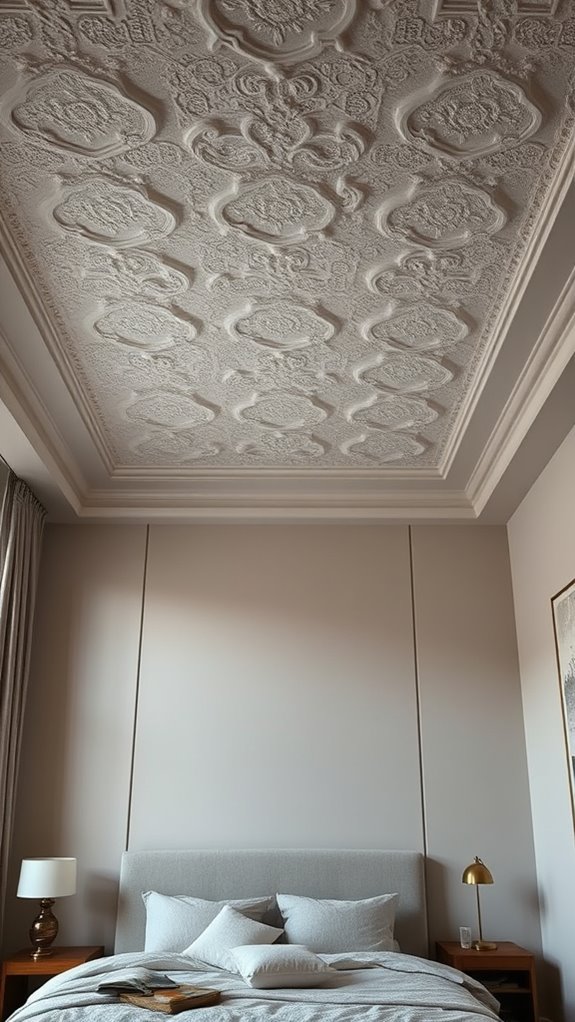
Textured finishes — including coarse-grained popcorn ceilings, perforated acoustic panels, and geometrically precise stamped patterns — introduce multidimensional surface relief that elevates an otherwise static overhead plane into an architectural statement. These tactile surfaces interact with natural and artificial light in distinctly different ways, casting subtle shadows and amplifying highlights that shift throughout the day as ambient conditions change. Beyond their visual impact, acoustically engineered finishes reduce sound reverberation and echo within enclosed bedroom environments, delivering measurable improvements in overall sound clarity and spatial comfort. When thoughtfully combined with soft, warm bedroom lighting ideas distributed across multiple fixtures rather than centralized overhead sources, textured ceilings reveal their full dimensional character through layered illumination that eliminates harsh shadows and creates enveloping warmth.
Geometric Patterns: Bold Shapes for Modern Bedrooms
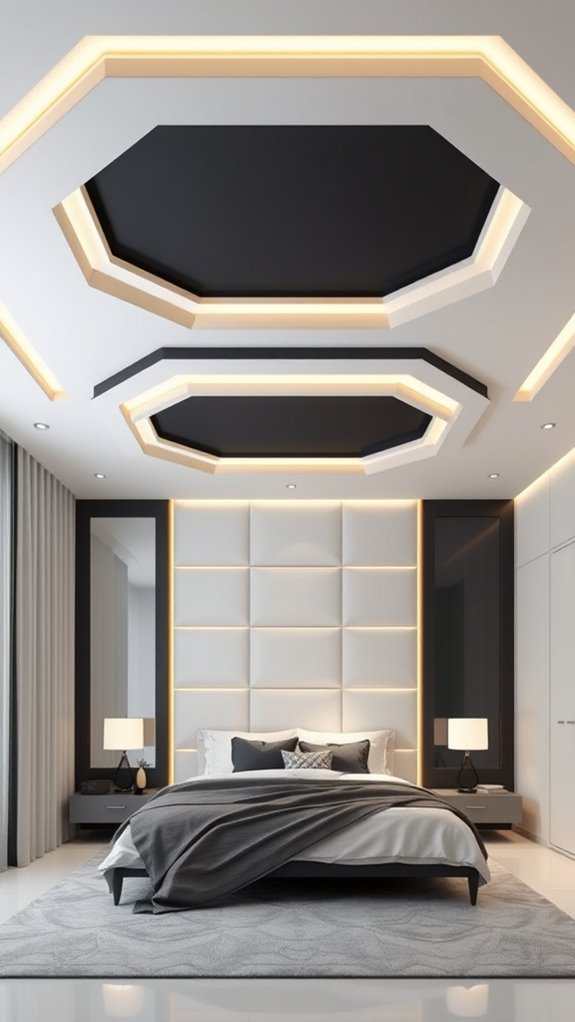
Geometric patterns on your bedroom ceiling create visual interest through bold shapes, clean lines, and contemporary design elements that complement modern décor styles. You can choose hexagons, triangles, or squares in neutral tones or contrasting colors.
These patterns work exceptionally well with minimalist furniture featuring low-profile silhouettes, matte finishes, and streamlined forms, enhancing your room’s sophisticated aesthetic while maintaining visual balance and spatial flow throughout the bedroom environment. To achieve truly effortless design results, consider selecting ceiling color combinations that professional designers use repeatedly in bedroom spaces.
LED-Integrated Ceilings: Built-In Lighting as Focal Point
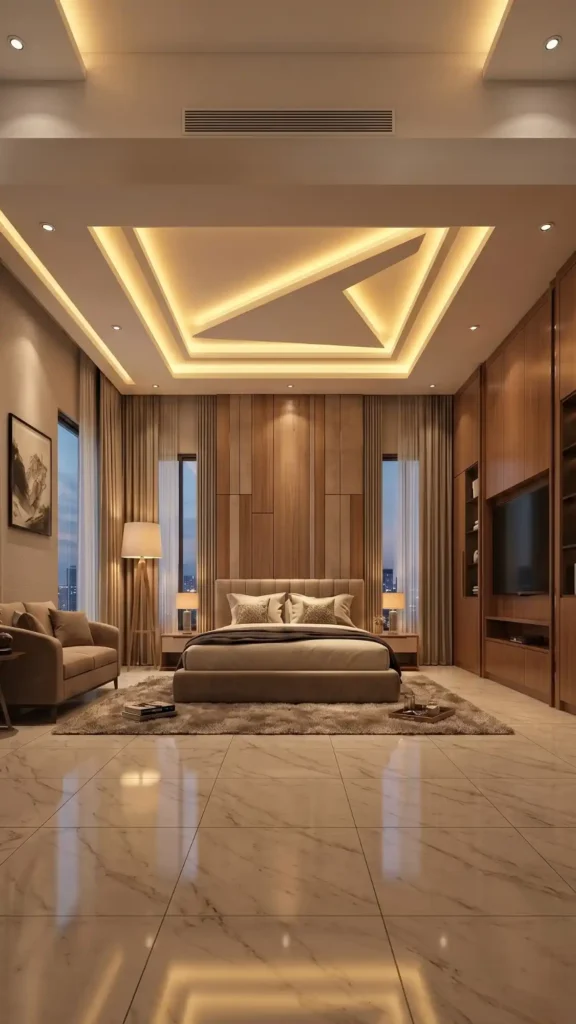
A luxurious modern bedroom featuring a large flat ceiling embedded with glowing geometric recessed LED strip lighting arranged in clean rectangular coffer patterns, emitting a warm amber glow that casts soft graduated shadows along smooth white plaster walls, a low-profile platform bed dressed in crisp linen bedding positioned below, polished concrete flooring reflecting the ceiling illumination, floor-to-ceiling dark charcoal drapery panels flanking a wide window, minimalist floating nightstands with brushed brass accents, atmospheric dim ambiance, wide-angle architectural interior photography, high resolution, photorealistic. This timeless design approach ensures the space evolves gracefully as her taste matures, avoiding the need for costly renovations when childhood phases pass.
Stretch Ceilings: Versatile, Budget-Friendly Modern Option
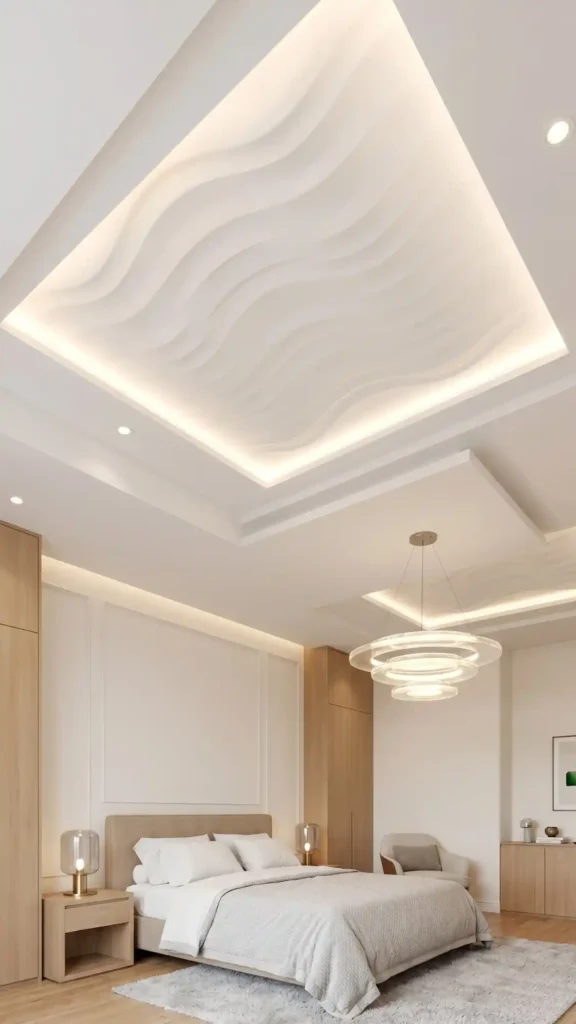
How do you achieve a sophisticated ceiling transformation without the expense of traditional plasterwork? Stretch ceilings offer a practical solution, featuring tensioned PVC vinyl or woven fabric membranes mechanically stretched across precision-engineered aluminum perimeter tracks.
These lightweight, low-profile systems install rapidly with minimal structural disruption, producing seamless, joint-free surfaces available in matte, satin, gloss, metallic, printed, and translucent finishes across hundreds of color options.
They deliver impressive functional performance alongside aesthetic versatility — inherently moisture-resistant and mold-inhibiting properties make them particularly suited to humidity-prone environments, while their tensioned structure accommodates integrated recessed LED downlights, concealed strip lighting channels, and backlit translucent panels effortlessly.
Highly customizable to complement any bedroom’s existing design language, stretch ceilings represent a cost-effective, contemporary alternative that combines long-term durability with striking visual impact. The textured surface quality mirrors the dimensional interest found in upscale wall treatments, bringing that same luxurious sensibility overhead.
Metal Grid Ceilings: Industrial Edge for Eclectic Spaces
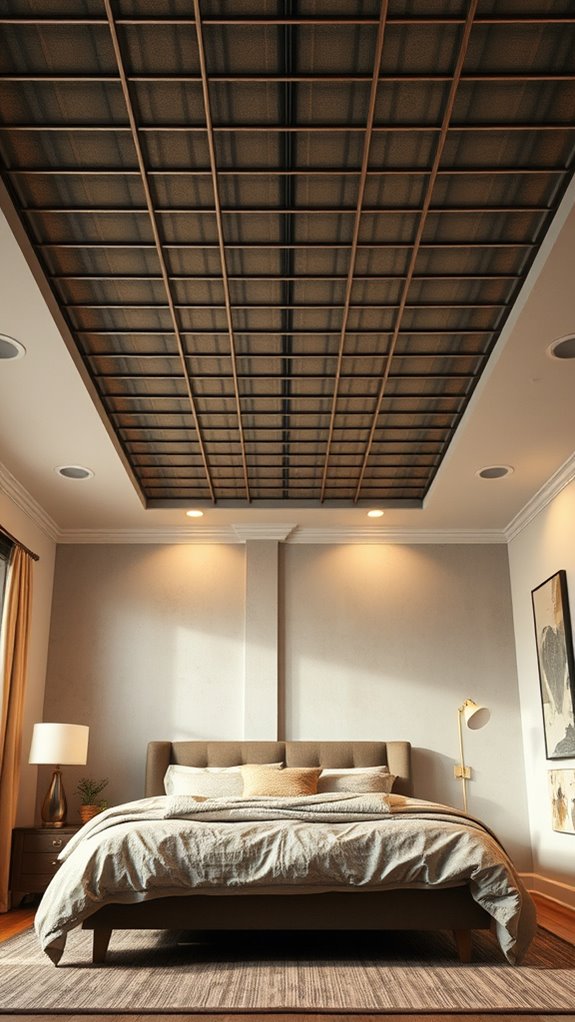
Metal grid ceilings deliver industrial character through exposed frameworks, typically constructed from powder-coated aluminum or cold-rolled steel. These raw, structural elements celebrate an unfinished aesthetic rather than concealing the bones of a space, creating a design-forward environment that feels intentionally unrefined yet architecturally deliberate.
You’ll pair these ceilings with polished concrete walls, Edison-bulb pendant lighting, and minimalist furnishings in matte black or weathered oak finishes. This layered material approach works particularly well in loft bedrooms and open-plan living spaces, generating compelling visual depth while maintaining an edgy, contemporary atmosphere with strong urban sensibility.
Final thoughts
You’ve explored eleven distinct false ceiling styles, each offering unique visual and spatial advantages for your bedroom. Whether you’re drawn to coffered elegance, curved sophistication, or industrial metal grids, there’s a design that complements your aesthetic while enhancing your room’s proportions, lighting distribution, and overall ambiance.
The key is selecting a style that aligns with your existing décor — factoring in ceiling height, material finishes, and lighting integration — while balancing visual interest with the calm, restful atmosphere your bedroom requires for optimum function and comfort.