11 Korean Bedroom Aesthetic Ideas That Xiaohongshu Made Famous
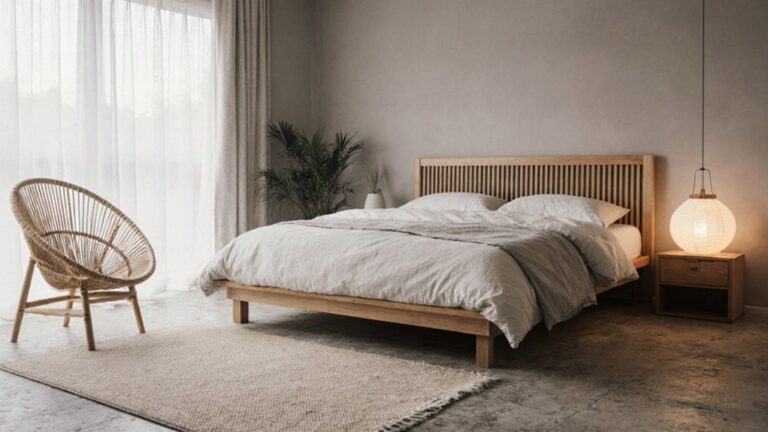
You’ve probably seen those calm, cloud-soft bedrooms flooding Xiaohongshu feeds lately, and there’s a reason they stop your scroll. Korean bedroom aesthetics rely on low-profile solid oak or walnut platform frames, undyed linen and cotton bedding in warm ecru and chalk tones, and deliberate negative space that lets each curated object breathe.
These eleven ideas break down exactly how that intentional, pared-back look works — from the grain of the wood to the weight of the textile.
The Soft Neutral Korean Bedroom Color Palette
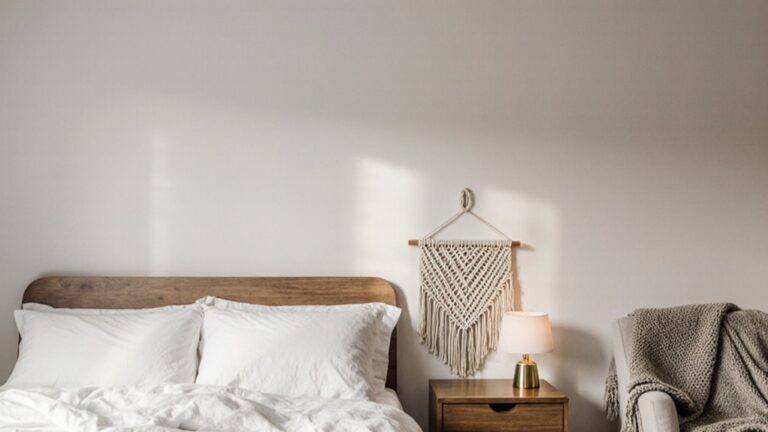
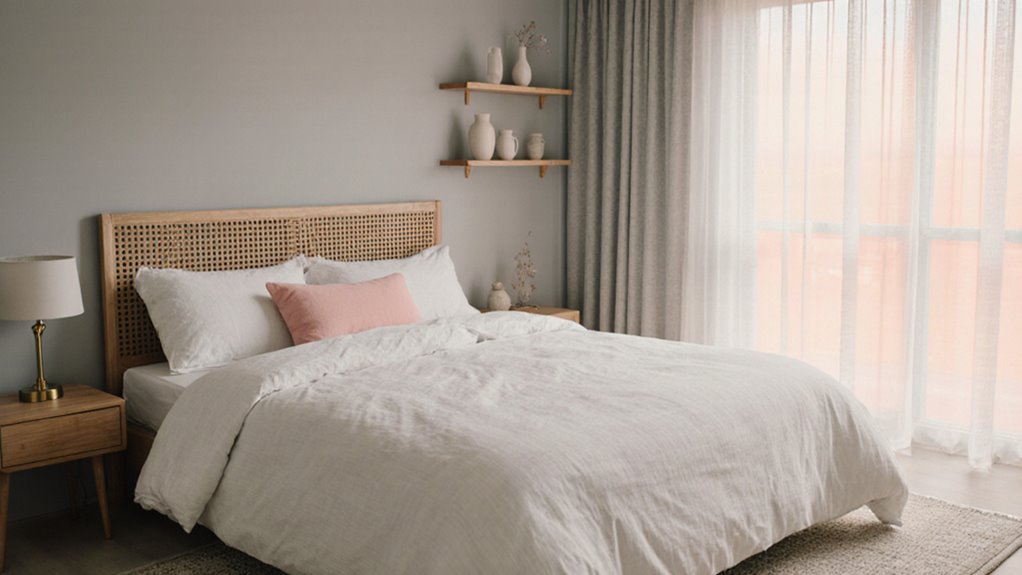
The soft neutral color palette is one of the most defining features of Korean bedroom aesthetics, built around warm whites, muted beiges, and gentle grays. You’ll want to anchor your space with foundational tones like ivory, greige, and oatmeal, applying them consistently across large surface areas including walls, bedding sets, and solid-wood or lacquered furniture pieces.
These carefully selected hues work together to create seamless visual cohesion without overwhelming the eye, allowing each individual element — from linen duvet covers to natural oak bed frames — to breathe within the composition. The result is a calm, understated elegance rooted in tonal harmony, where no single color competes for dominance. Much like Japandi minimalism’s Nordic warmth, this restrained approach prioritizes serenity through purposeful material selection and muted, cohesive tones.
Korean Bedroom Bedding That Feels Like Sleeping on a Cloud
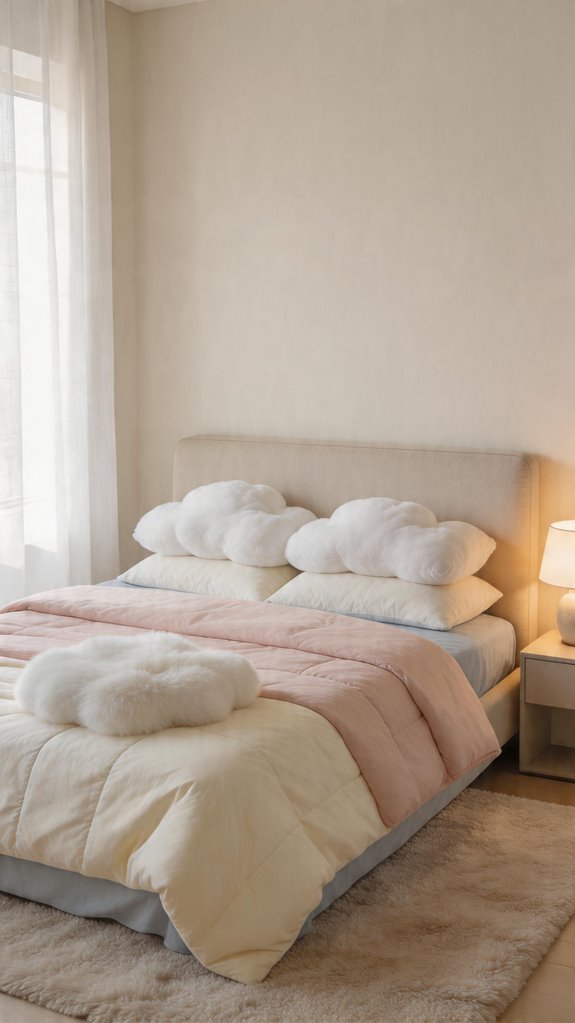
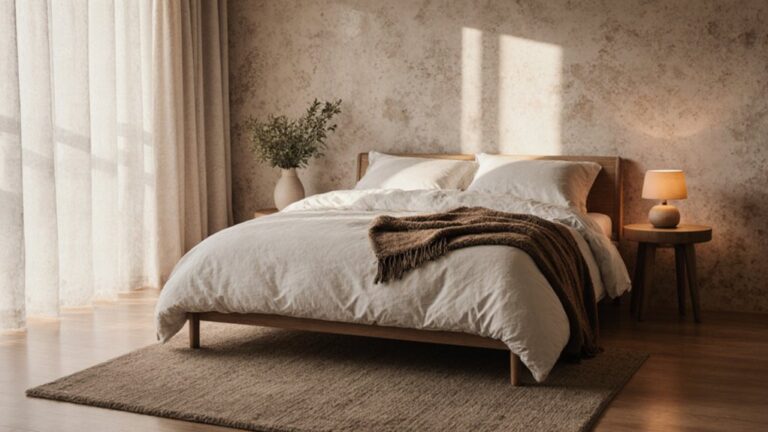
Once you’ve locked in your neutral color palette, the bedding becomes your next most impactful layer. Choose oversized duvets in ivory, oat, or cloud white — filled with high-loft goose down or microfiber clusters for that signature weightless-yet-cozy drape. Layer them with waffle-knit cotton throws or crisp 400-thread-count percale cotton flat sheets in warm white or pale sand.
Korean bedding prioritizes loft, volume, and breathable texture, so your bed should look plush, cloud-like, and slightly undone — as if you’ve just stepped out of it and the duvet has naturally settled into soft, billowing folds.
While grey and beige have dominated past bedroom trends, Korean aesthetics are embracing warmer neutral alternatives that feel more inviting and less clinical.
Low Bed Frames That Define the Korean Bedroom Look
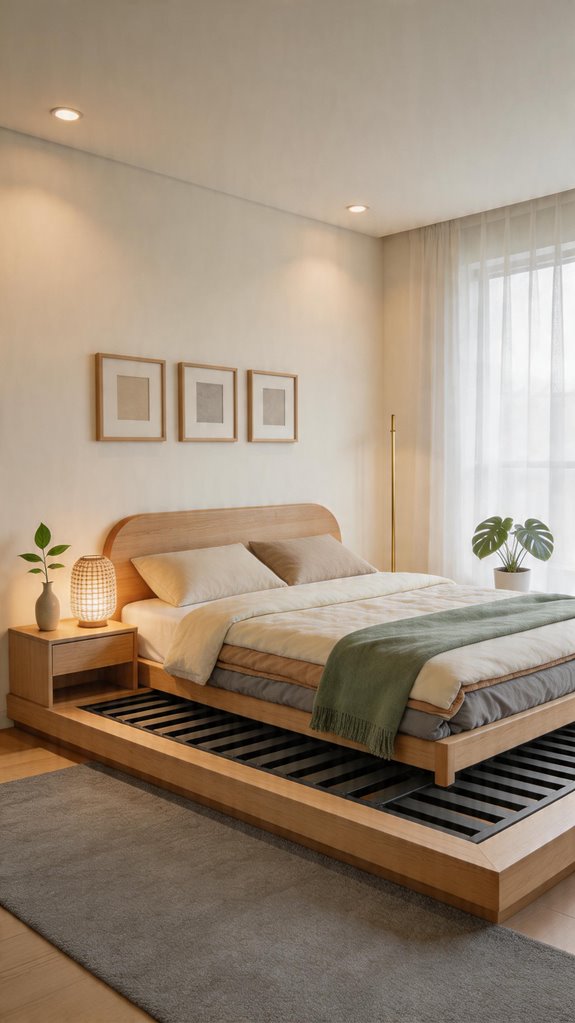
Few furniture choices shape the overall feel of a Korean bedroom more decisively than the bed frame. You’ll want a low platform frame, ideally in natural oak or walnut, sitting close to the floor — typically no more than 15–20cm in total height.
This minimalist silhouette lowers the room’s visual weight, creating that grounded, airy quality Xiaohongshu users consistently favor in their shared bedroom layouts. The compressed vertical profile draws attention outward across clean linen bedding, matte walls, and negative space rather than upward toward the ceiling. Best of all, this foundation supports a temporary teen bedroom makeover approach that requires no nails, no paint, and no landlord permission.
Curtain Styles That Shape Light in Korean Bedrooms
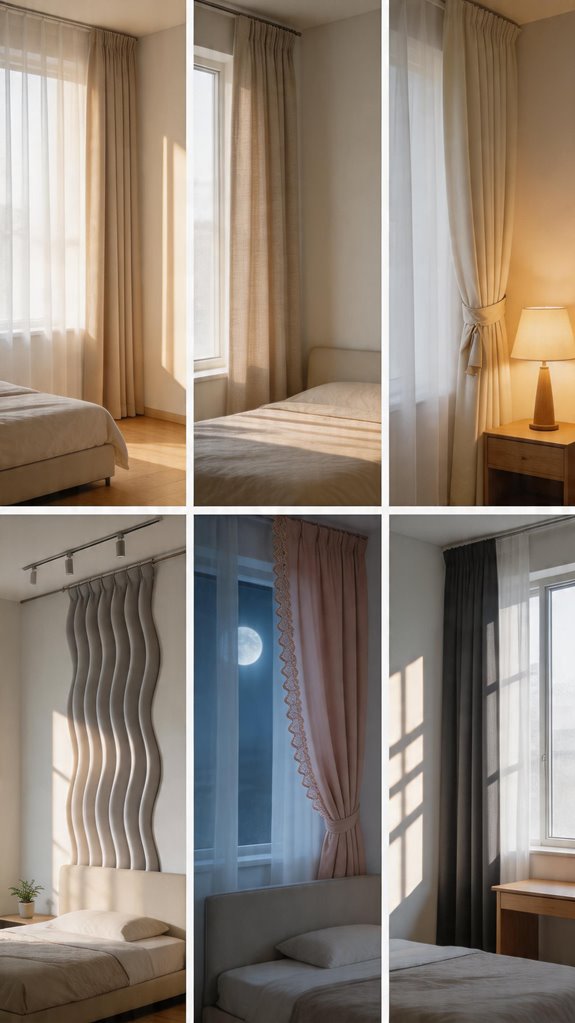
Curtains do more than block light — they actively shape the mood and spatial quality of a Korean bedroom. Choose sheer linen or cotton panels in ivory, warm white, or soft beige to diffuse natural light softly, creating a gentle, luminous ambient glow that feels calm and unhurried.
Floor-to-ceiling lengths with minimal pleating or pinch-top headers elongate walls visually, drawing the eye upward and making low-profile, floor-level sleeping arrangements feel more expansive and grounded. These warm neutrals and soft tones are bedroom color combinations that professional designers return to again and again for effortless results.
Warm Layered Lighting Ideas for a Korean Bedroom Glow
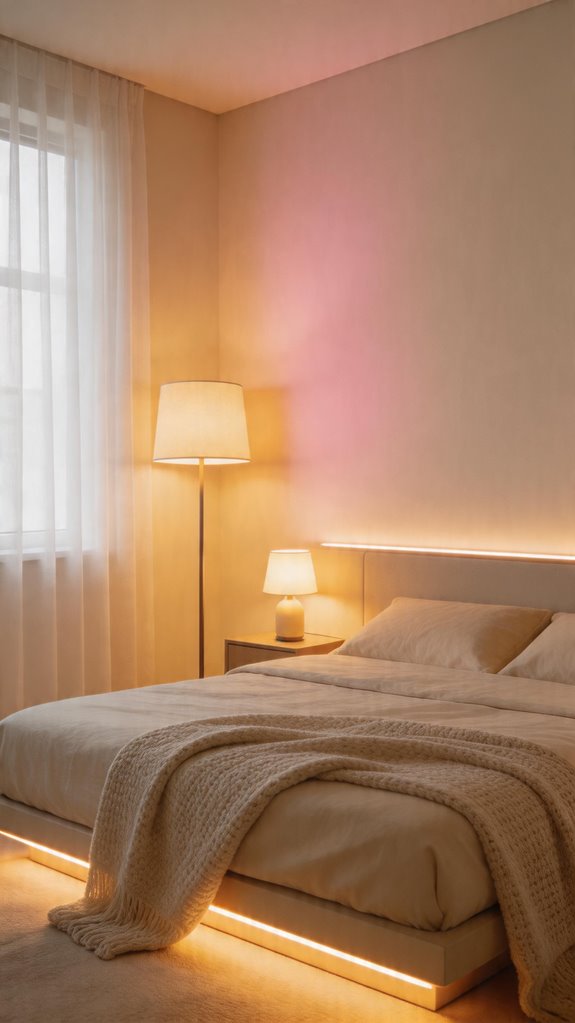
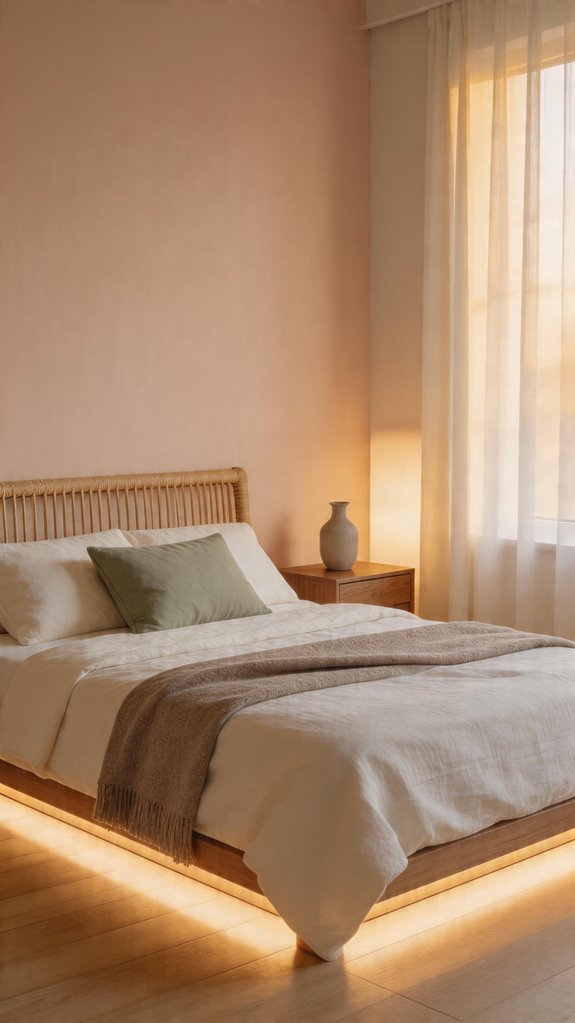
Lighting transforms a Korean bedroom more than almost any other design element, shifting the space from functional to genuinely restful. Layer warm bulbs across multiple sources — a flush or semi-flush ceiling fixture, a ceramic or linen-shaded bedside lamp, and adhesive LED strip lighting tucked behind a slatted wooden headboard or along a floating shelf edge.
Keep color temperatures between 2700K and 3000K for a soft, amber-toned output that avoids the harshness of cool-white bulbs. This diffused, honeyed layering creates the intimate, cocoon-like glow that Xiaohongshu interior accounts consistently recreate across their bedroom styling content. Like intentionally styled gallery walls, these lighting arrangements require thoughtful placement and curation to feel cohesive rather than cluttered.
The Minimal, Cozy Styling Approach Korean Bedrooms Use
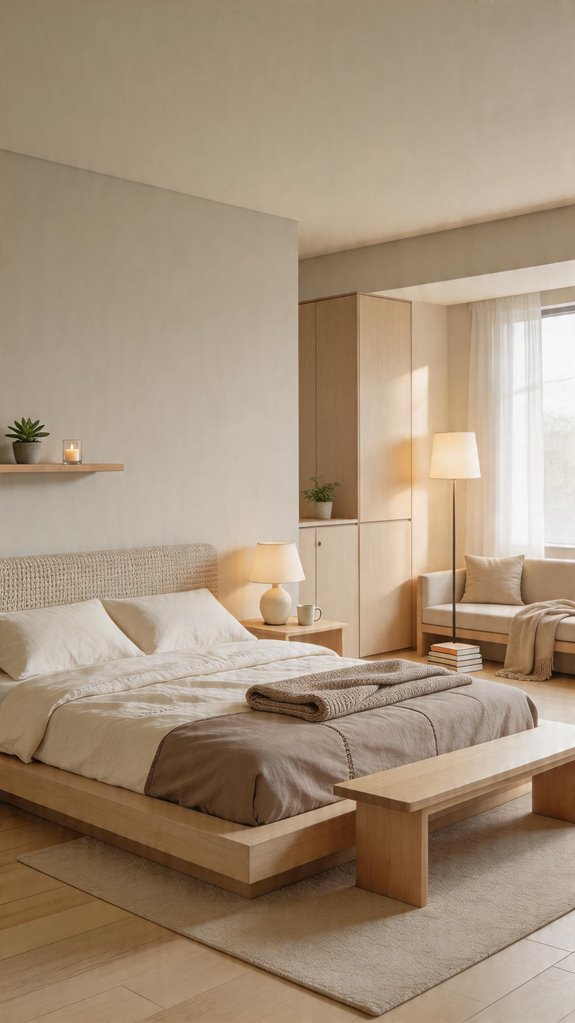
What separates a Korean bedroom from a standard minimalist space is the deliberate layering of texture and warmth within a restrained, edited layout. Undyed linen bedding in warm cream, a low-profile solid oak bed frame sitting just 10–15cm off the floor, and muted warm taupe walls work together to establish that signature grounded aesthetic. Keep surfaces mostly clear, but introduce one or two soft textiles — a chunky knit throw or a nubby boucle cushion — to prevent the room from reading as cold or sterile. Korean bedrooms often feature muted warm taupe walls that pair effortlessly with furniture across any design style, from modern to traditional.
Vintage Wood Pieces That Ground a Korean Bedroom
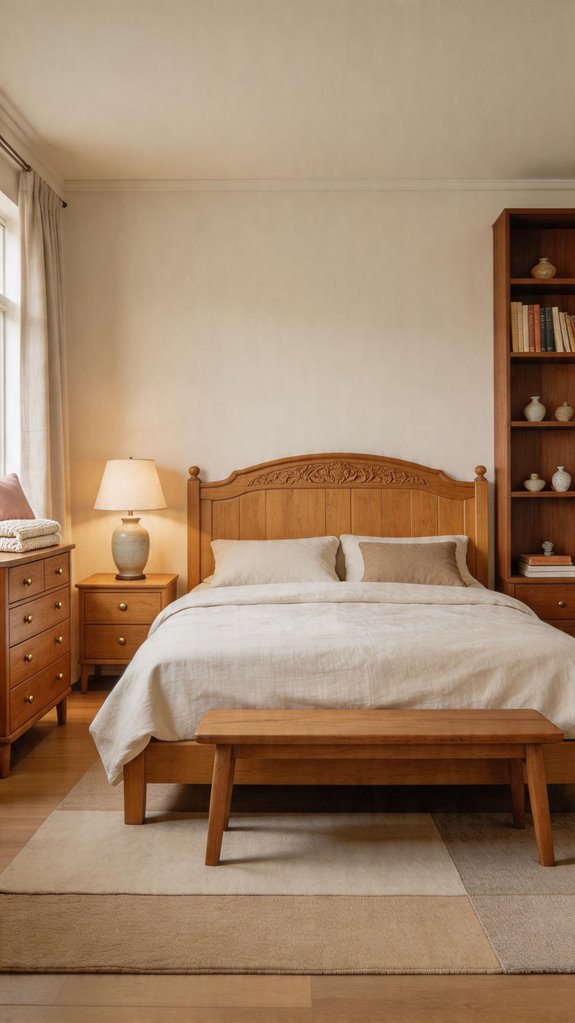
Aged wood furniture brings a quiet, rooted quality to Korean bedrooms that newly manufactured pieces simply can’t replicate.
Seek out low tansu chests with iron hardware and dovetail joinery, worn white oak stools with hand-rubbed surfaces, or solid black walnut side tables carrying decades of natural amber-toned patina.
These grounding pieces introduce warmth without visual noise, anchoring your space through tight wood grain, hand-worn edges, and matte earthy tones — organic counterweights that balance the room’s lighter linen textiles, pale plaster walls, and minimal silhouettes.
For those considering wall panelling as an alternative grounding element, the same principles of organic texture and understated warmth apply, creating cohesion between vertical and horizontal wooden surfaces in your bedroom.
Desk and Study Corner Setups in Korean Bedroom Designs
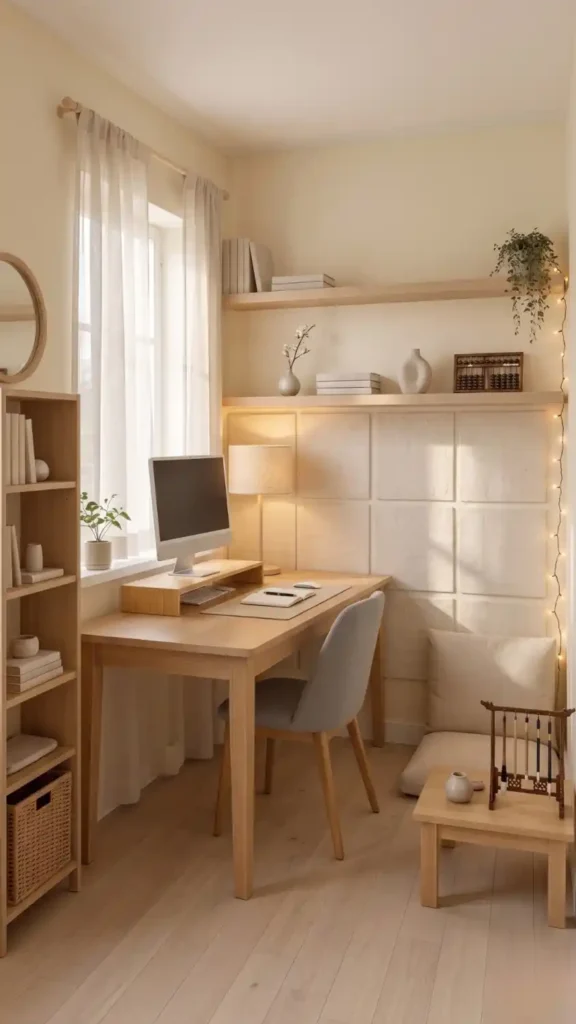
The desk corner in a Korean bedroom functions as a quiet anchor — a zone where utility dissolves into aesthetic intention. Opt for a light oak desk with a matte finish, clean-lined legs in solid wood or powder-coated steel, and a surface depth of at least 60cm to accommodate a slim monitor on a low-profile bamboo or lacquered wood riser. Route cables through a discrete management tray or recessed grommet, keeping the desktop visually uninterrupted.
Neutral tones form the chromatic backbone of the space — warm white walls with a slight yellow undertone, soft beige textiles, and natural wood grains in pale ash or honey oak. Wall-mounted shelving in open, thin-frame steel or pale timber should hold no more than three to five objects: a single ceramic bud vase, a small stack of linen-bound notebooks, or one sculptural object in matte stone or unglazed porcelain. Every surface element should earn its placement through both form and restrained visual weight. Unlike a K-pop stan cave, this style prioritizes curated restraint over collection display.
How Korean Bedrooms Use Plants Without Overcrowding
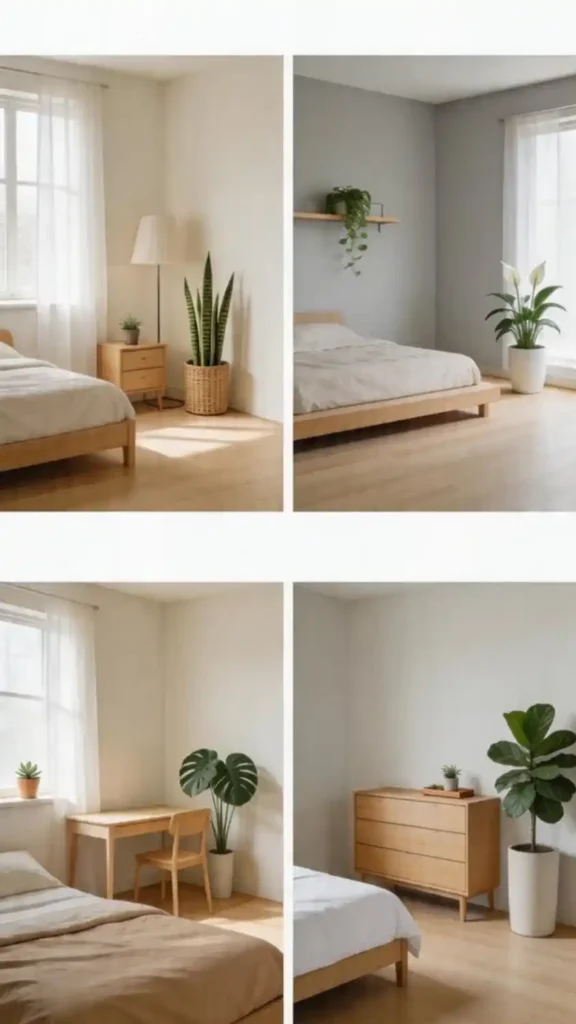
Korean bedrooms typically feature just one or two plants — a trailing pothos with waxy, heart-shaped leaves or a compact monstera with fenestrated, deep-green foliage — positioned deliberately near a window to catch soft, indirect natural light.
Each plant sits in a low-profile ceramic pot with a matte or satin finish in warm white, pale grey, or earthy terracotta tones. The surrounding surfaces remain intentionally bare, allowing negative space to function as the primary design element rather than as emptiness waiting to be filled.
This curated minimalism mirrors how Korean design treats the entire wall behind the bed as one cohesive statement, letting each carefully chosen element breathe.
Mirror Placement Ideas That Open Up a Korean Bedroom
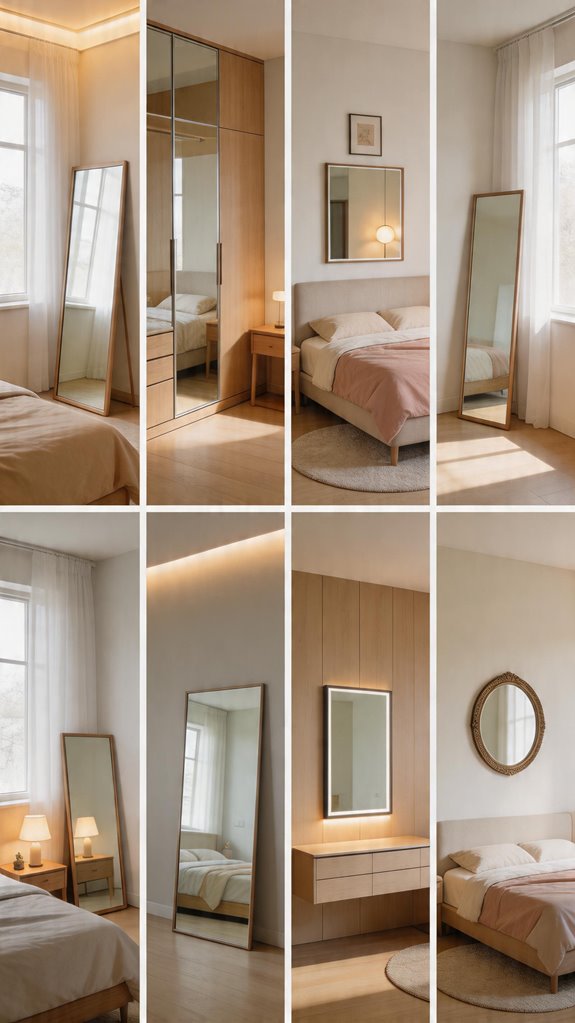
Mirrors in Korean bedrooms work best when you treat them as architectural elements rather than decorative afterthoughts. A floor-to-ceiling or full-length frameless mirror with a matte black or natural oak border, positioned beside a south-facing window, bounces diffused natural daylight across low-profile platform beds and muted linen bedding.
Leaning a wide-format mirror against a bare, warm-white or greige plaster wall keeps the composition intentional and spatially grounded, avoiding the visual noise of overcrowded surfaces. Positioning a rectangular mirror directly opposite a paper lantern or warm-toned LED wall sconce doubles the ambient glow, expanding perceived square footage without introducing additional furniture mass or structural changes.
This approach creates timeless design foundations that adapt as preferences evolve, ensuring the space remains relevant through changing phases rather than requiring complete overhauls.
Xiaohongshu Finds That Finish a Korean Bedroom Aesthetic
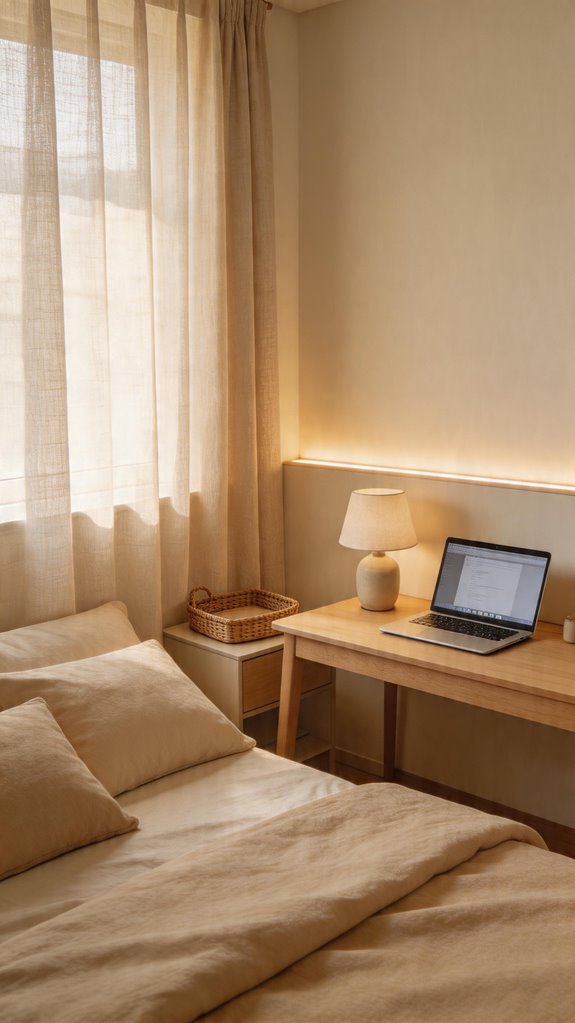
Xiaohongshu—China’s visual discovery platform built around user-generated lifestyle content and peer recommendation—has quietly become one of the most reliable sources for Korean bedroom finishing touches that Western design feeds consistently overlook. You’ll find matte ceramic bud vases in celadon and ivory, undyed linen drawer liners with raw-edge hems, and handcrafted hanji paper lampshades casting warm diffused light trending there with remarkable regularity.
Add a low rectangular wooden tray in pale ash or whitewashed oak to corral your nightstand essentials—a ceramic candle, a folded hand towel, a single skincare vessel—keeping surfaces intentional, edited, and uncluttered, which defines the Korean domestic aesthetic with quiet precision.
Final thoughts
You don’t need to overhaul your entire room to capture the Korean bedroom aesthetic. Start with a low-profile solid oak or pine bed frame sitting just 15–20 cm off the ground, layer in oat-toned linen or cotton-blend bedding with a thread count between 200–400, and let generous negative space do the compositional work.
Swap harsh cool-white overhead fixtures for warm 2700K bulb sources — think paper-shade floor lamps or recessed Edison-style sconces — add one restrained potted plant like a monstera deliciosa or trailing pothos in an unglazed ceramic vessel, and keep nightstands and shelving surfaces intentionally bare. These Xiaohongshu-inspired design choices work in deliberate combination, producing a bedroom environment that reads as calm, considered, and quietly cohesive.