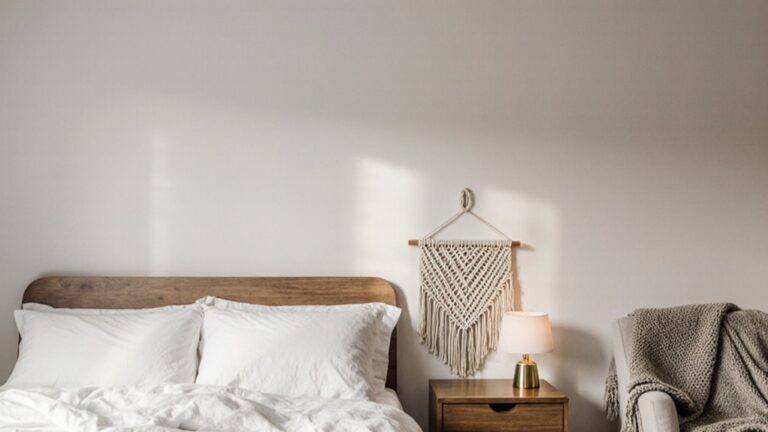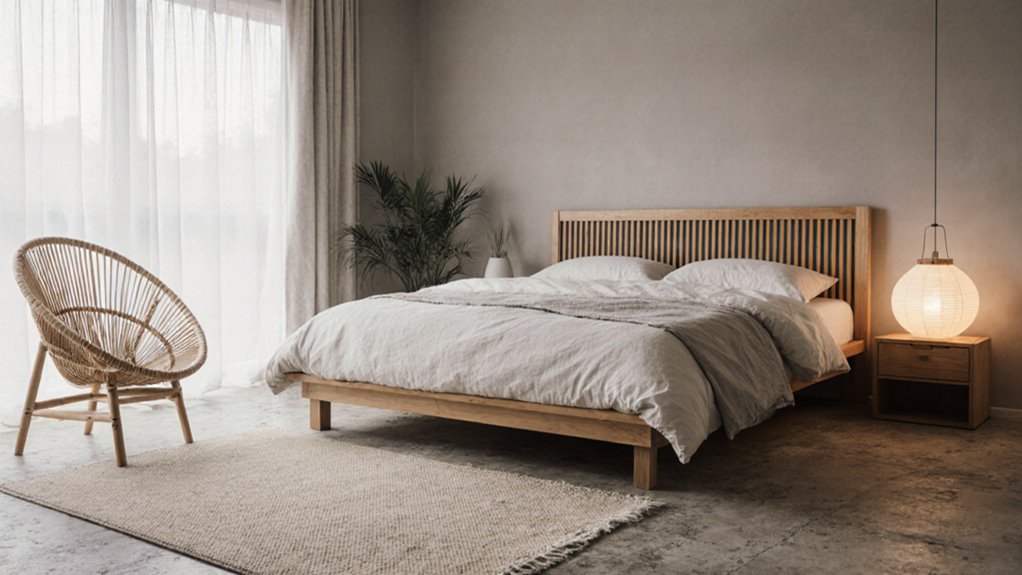
21 Japandi Bedroom Ideas That Make Every Room Feel Like a Retreat
If you’re tired of bedrooms that feel busy or cold, Japandi design offers a quieter path forward. It blends Japanese minimalism with Scandinavian warmth, using tactile materials like hand-oiled white oak, stonewashed linen, undyed wool, and muted sage-toned clay paint to create spaces that register as genuinely restful rather than merely styled.
You don’t need a large room or an aspirational budget to execute it well. What you do need is the right framework—low-profile platform furniture, a restrained palette of warm neutrals and earthy greens, layered natural textures, and intentional negative space—and that’s exactly what these 21 ideas provide.
Low Platform Beds That Ground a Japandi Bedroom
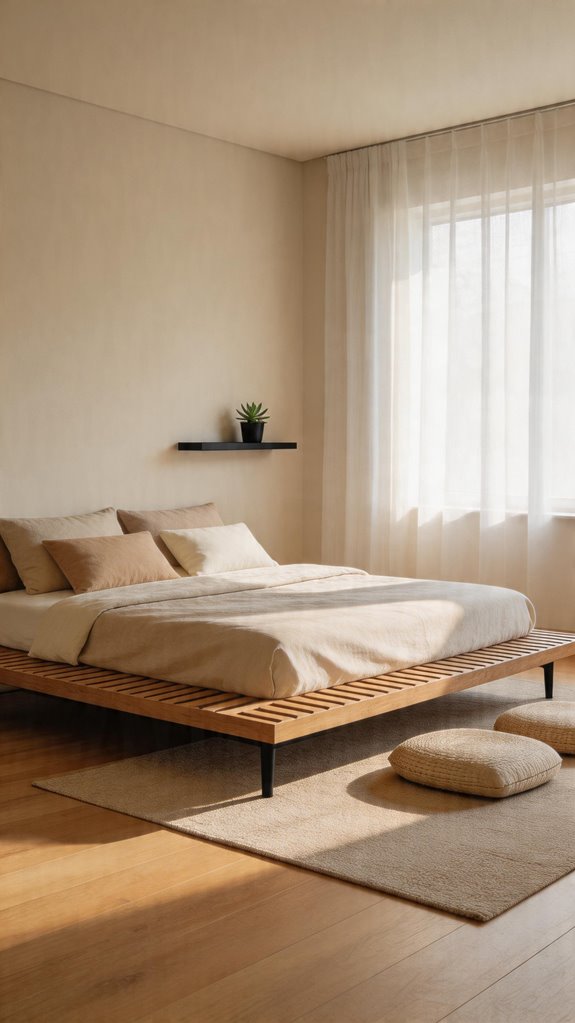
A low platform bed is the foundation of any true Japandi bedroom, anchoring the space with a grounded, horizontal presence that feels intentional and calm. Choose solid oak or walnut frames in muted, natural tones, prioritizing tight wood grain patterns, mortise-and-tenon joinery, and a satin or raw matte finish that resists visual noise.
You’ll want clean lines, minimal slab headboards no taller than 12 to 16 inches, and zero unnecessary ornamentation or hardware. Keep your bed sitting 6 to 12 inches from the floor, reinforcing that signature Japandi sense of stillness, visual weight, and deliberate spatial restraint. This deliberate restraint embodies how Japanese minimalism and Scandinavian warmth together create bedrooms that function as true retreats.
The Japandi Neutral Color Palette Done Right
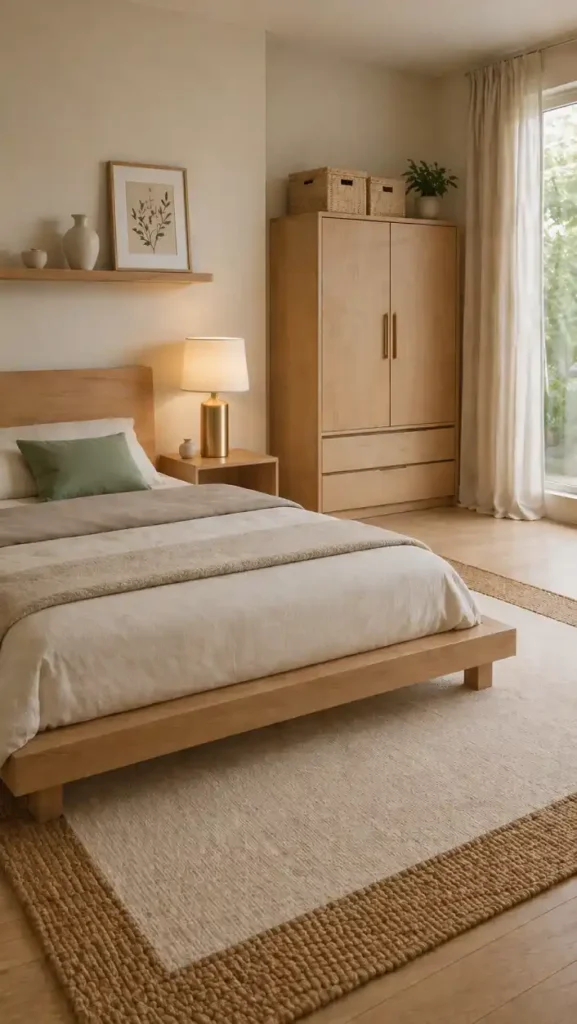
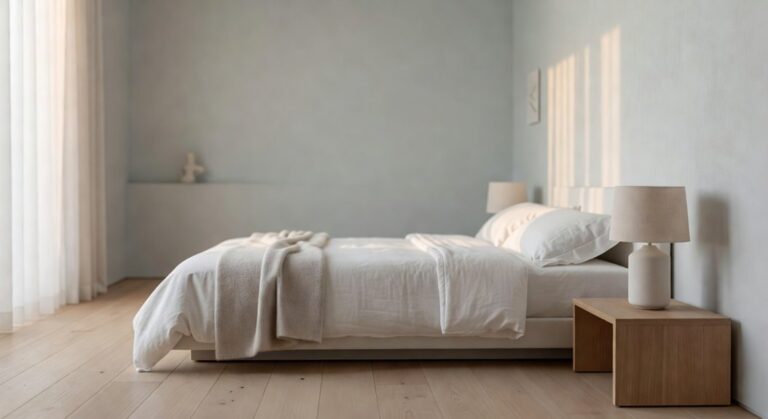
A serene, minimalist interior room bathed in soft diffused natural light, featuring warm white plaster walls with subtle texture, a low-profile solid oak platform bed dressed in undyed heavyweight linen bedding, a single muted sage ceramic vase on a raw-edge walnut side table, sheer linen curtains filtering afternoon sunlight, smooth concrete flooring with a natural jute area rug, clean architectural lines throughout, shallow depth of field, warm golden hour tones, ultra-realistic photography style, high resolution. This harmonious blend of soft warm whites, natural wood tones, and muted sage demonstrates why neutral bedroom color schemes remain a designer favorite for creating effortless, calming spaces.
Where and How to Use Natural Wood in a Japandi Bedroom
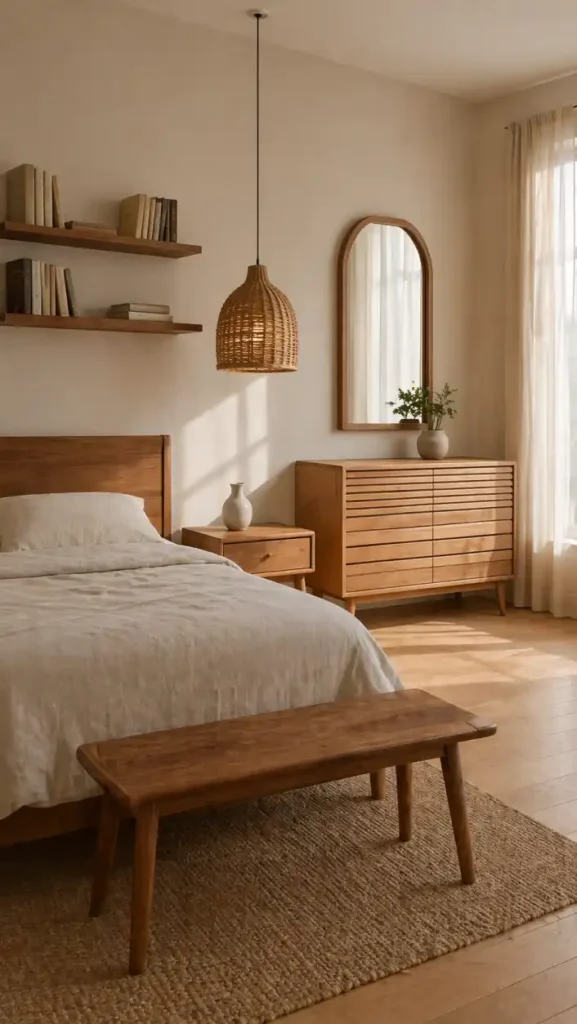
Wood is one of the most essential materials in Japandi design, and knowing where to place it makes all the difference in your bedroom. Focus on low-profile furniture like a solid oak platform bed frame with a matte satin finish or wall-mounted walnut nightstands with clean, handle-free drawer fronts.
You can also layer in natural wood through hand-hewn ceiling beams in aged ash, wide-plank white oak flooring with a wire-brushed texture, or open-backed pine shelving units to create radiant warmth without introducing visual clutter or decorative excess. Intentionally curated vintage bedroom furniture can add quiet character to a Japandi space when selected with restraint and purpose.
Linen Bedding Choices That Fit the Japandi Aesthetic
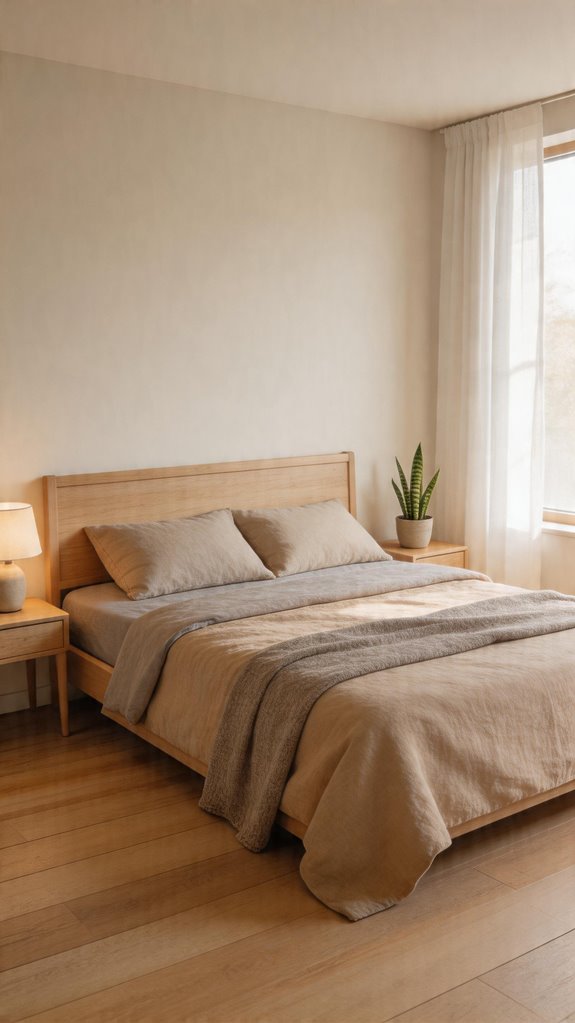
Linen bedding is the natural companion to a Japandi bedroom grounded in raw timber and organic materials. As a fabric, linen brings inherent texture through its loosely woven, slightly irregular flax fiber construction — a quality that adds tactile and visual depth without introducing pattern or visual noise. This depth is what makes linen such a deliberate fit for Japandi design: it contributes complexity through material honesty rather than decoration. Because linen bedding requires minimal styling effort and no complicated installation, it ranks among the easiest bedroom aesthetic updates you can complete in a single afternoon.
For color selection, lean into muted, low-saturation tones that echo the warmth of the wood beneath. Warm oatmeal, undyed natural flax, dusty slate gray, and soft ivory all sit comfortably within Japandi’s restrained palette. Avoid bright, cold whites, which tend to feel clinically sharp against the amber and honey undertones of natural oak or walnut — creating visual tension where the aesthetic calls for cohesion.
Wabi-Sabi Textures That Add Depth Without Clutter
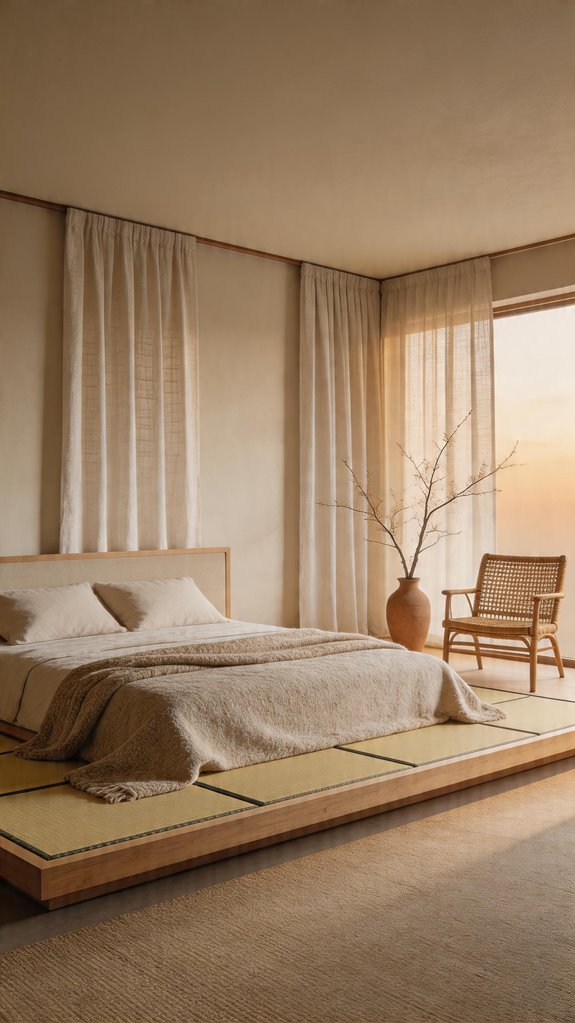
In Japandi design, texture performs the quiet work that color and pattern aren’t invited to do. Rough linen with its open-weave, hand-spun irregularities, unglazed stoneware ceramics bearing kiln-kiss marks and natural ash deposits, and weathered oak or hinoki cypress with visible grain striations and silver-gray oxidation — these materials layer together to build visual depth without introducing noise. Each surface remains deliberate, selected for its inherent imperfections rather than despite them. This careful orchestration of materials proves equally effective when planning precise furniture placement in compact bedrooms where every element must earn its presence through intentionality.
These tactile contrasts — coarse against smooth, matte against brushed — generate warmth and dimensional interest while preserving the space’s characteristic calm, edited atmosphere. The wabi-sabi principle at work here values the authentic over the pristine, favoring hand-thrown vessels with slight asymmetry, undyed natural fiber textiles, and reclaimed timber with honest wear over their machine-finished counterparts.
When to Mix Japanese and Scandinavian Design Elements
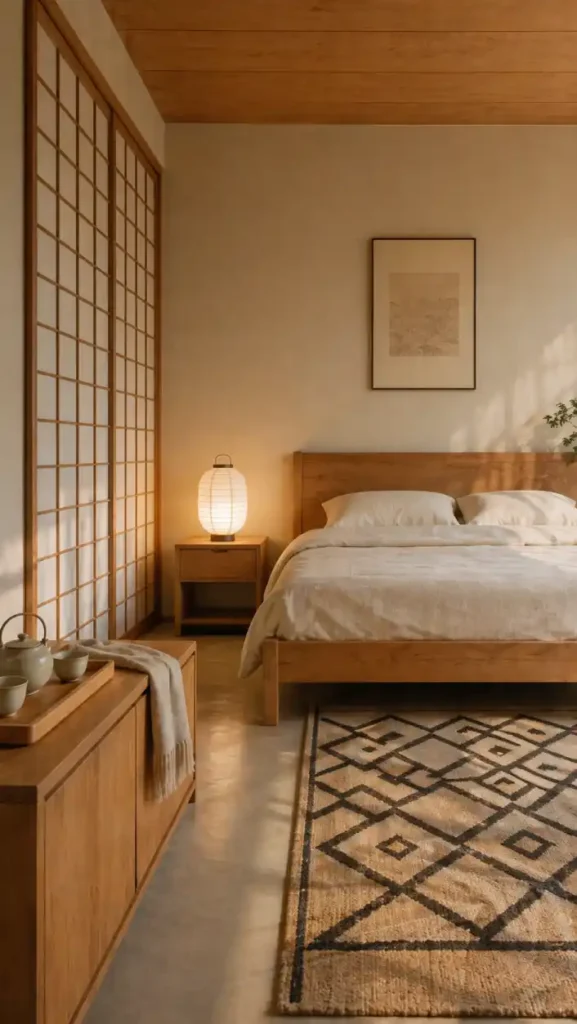
The tactile layering you’ve built with wabi-sabi materials — raw linen, unglazed ceramic, and aged timber — sets the foundation for a bigger decision: knowing when to lean Japanese, when to lean Scandinavian, and when to blend both intentionally.
Choose Japanese minimalism for high-impact focal points like a low lacquered platform bed, hand-oiled shoji screens with white rice paper panels, or a single asymmetric ikebana arrangement. Pull in Scandinavian hygge through warm blonde oak finishes, chunky undyed wool throws, and soft ambient candlelight to counterbalance the austerity with sensory warmth.
The key is ensuring your space maintains cozy minimalist bedroom ideas that feel inviting rather than cold, creating a retreat that welcomes rather than intimidates.
Japandi Bedroom Furniture Worth Every Penny
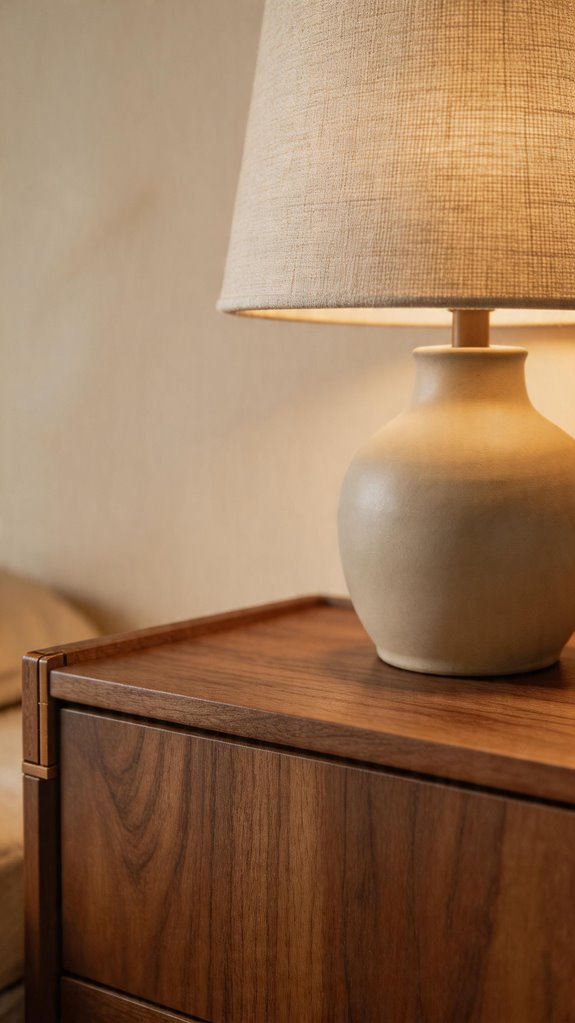
Furniture is where Japandi design either holds together or falls apart, so every piece you choose needs to carry its weight in both form and function. Look for low-profile platform beds in solid white oak or walnut with minimal headboards, paired with slim-legged nightstands featuring dovetail joinery and hand-rubbed matte finishes. Clean-lined dressers with recessed finger-pull drawers, flush fronts, and warm ash or smoked oak veneers complete the core composition.
You’re investing in longevity over trends, so prioritize handcrafted construction, FSC-certified hardwoods, and mortise-and-tenon joinery over particleboard shortcuts. Intentional silhouettes — low, grounded, and unadorned — should serve your space quietly without demanding visual attention, while natural linseed oil finishes and wabi-sabi-influenced imperfections add depth and earned character to every surface. Just as the best girls bedroom ideas are designed to evolve with changing tastes rather than expire after a single phase, Japandi furniture rewards the same forward-thinking approach to lasting design.
Soft Japandi Lighting Ideas That Set the Right Mood
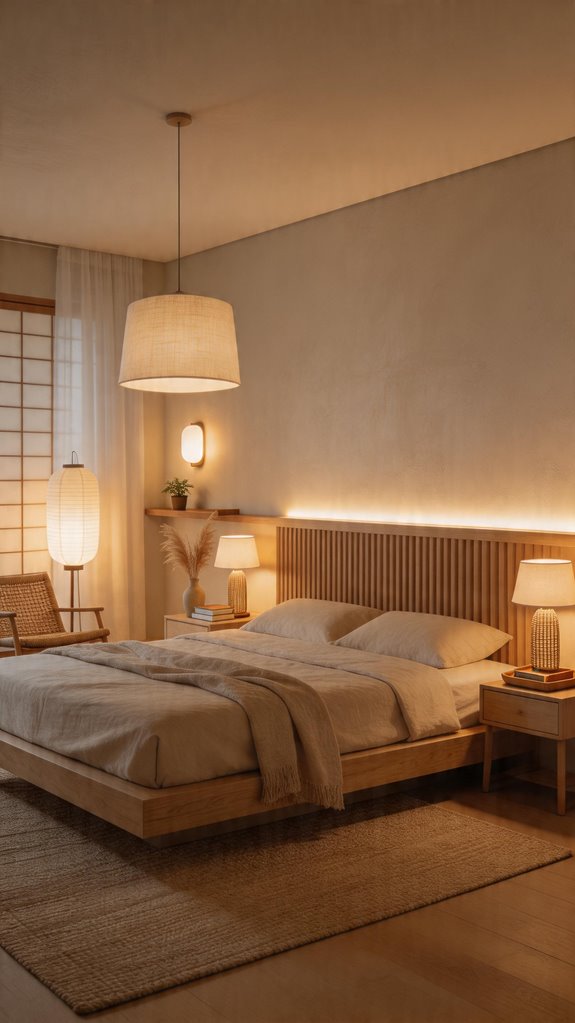
Lighting shapes how every other element in your Japandi bedroom feels, so choosing the right sources matters as much as the furniture itself. Warm-toned bulbs with a color temperature between 2200K–2700K, handcrafted washi paper lanterns, and open-weave rattan pendant fixtures work together to produce soft, diffused, shadow-minimizing illumination across natural wood surfaces and neutral linen textiles. For added warmth and visual depth, consider extending this soft glow to a bedroom accent wall finished in muted clay plaster or limewash to complement the serene atmosphere.
Wall sconces fitted with undyed linen drum shades or pleated fabric diffusers perform particularly well on either side of a low-profile platform bed, replacing high-contrast overhead ceiling fixtures with gentle, horizontally layered ambient light that reinforces a grounded, meditative atmosphere throughout the room.
Shoji-Inspired Screens That Add Privacy and Style
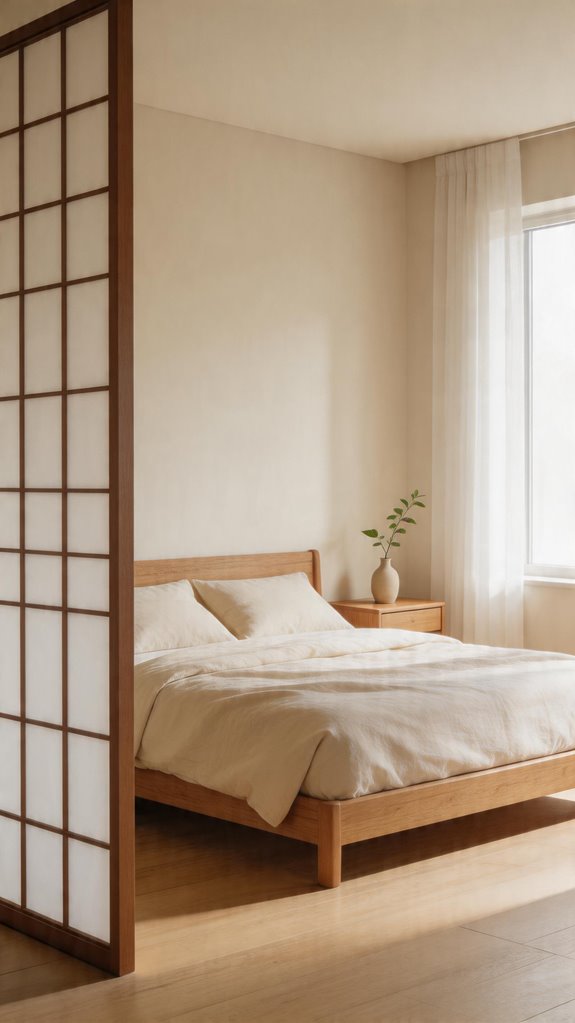
Few additions transform a Japandi bedroom as quietly and effectively as a shoji-inspired screen, offering both soft visual separation and a distinctive architectural layer. Constructed from translucent washi rice paper stretched across mortise-and-tenon joinery, these lightweight panels diffuse harsh directional light into a warm, ambient glow when positioned near east-facing windows or alongside a low-profile platform bed frame. Much like bedroom hanging light ideas that replace generic flush mounts, these screens elevate the space with intentional design worth noticing.
Choose natural wood frames in pale, kiln-dried white oak or richly grained black walnut to stay true to Japandi’s restrained material palette. These solid hardwood lattice structures, finished with matte water-based sealants, complement neutral linen bedding, unbleached cotton textiles, and matte ceramic vessels characteristic of the aesthetic.
How Negative Space Makes a Japandi Bedroom Feel Intentional
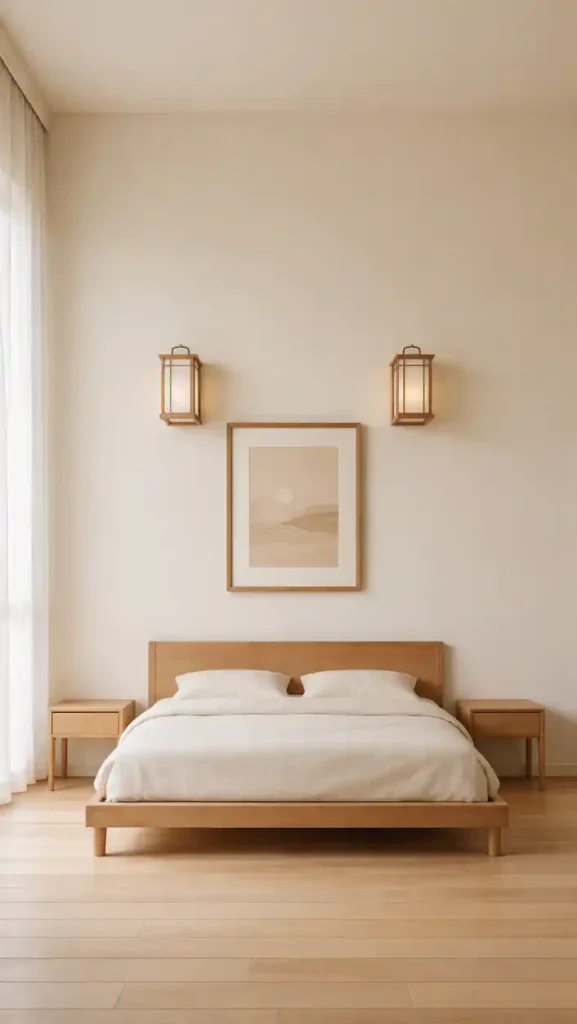
When you leave a corner of your Japandi bedroom intentionally empty, you’re making a design choice that’s just as deliberate as selecting a hand-crafted walnut platform bed or a single ceramic vase on a low oak shelf. Negative space slows the eye, creating visual rest between your platform bed’s clean-lined silhouette, matte-finish linen bedding, and minimal floating shelving mounted flush against a warm white wall. Textured wall panelling can further elevate this sense of intentionality, adding subtle depth that makes even the simplest spaces feel significantly more expensive without disrupting the calm.
That breathing room signals calm and purpose, drawing attention to the intentional placement of each object — the worn texture of a natural jute rug, the soft glow of a paper pendant lamp, the grain pattern in untreated wood furniture. The result transforms your bedroom into a high-contrast, low-clutter retreat that feels deeply curated rather than sparse or unfinished.
The Best Indoor Plants for a Japandi Bedroom
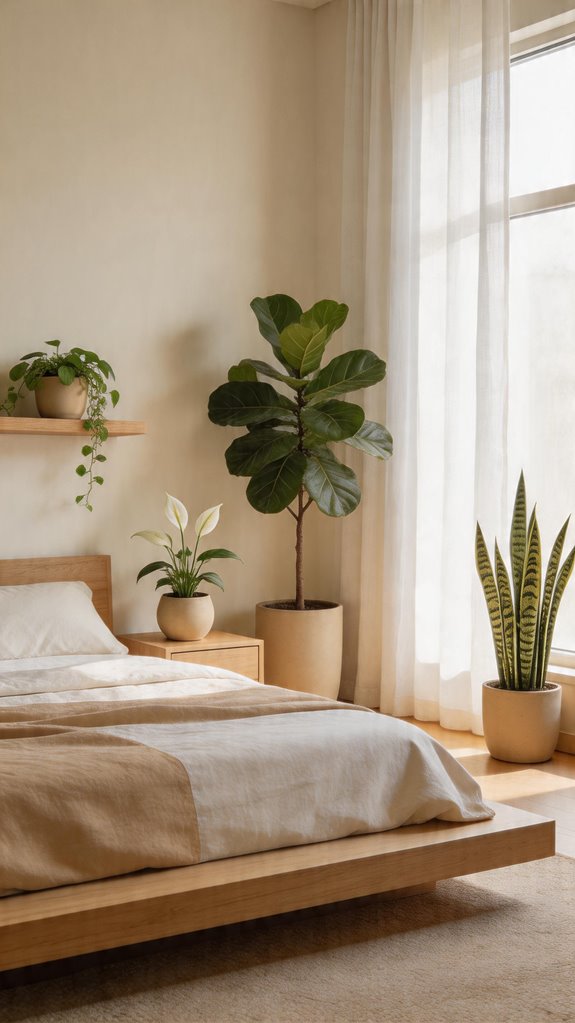
Plants bring quiet life to a Japandi bedroom without disrupting the room’s carefully controlled visual calm. Choose sculptural varieties like snake plants (*Dracaena trifasciata*), peace lilies (*Spathiphyllum wallisii*), or trained bonsai specimens, which echo the aesthetic’s emphasis on deliberate negative space and architectural form.
Place them in matte stoneware ceramic vessels or hand-woven natural rattan pots to reinforce the palette of organic, unfinished textures central to Japandi design. A single plant positioned with clear spatial intention — beside a low-profile oak platform bed or against a limewash plaster wall — carries more visual weight than several plants scattered without compositional purpose.
Japandi Bedroom Ideas That Work on a Tight Budget
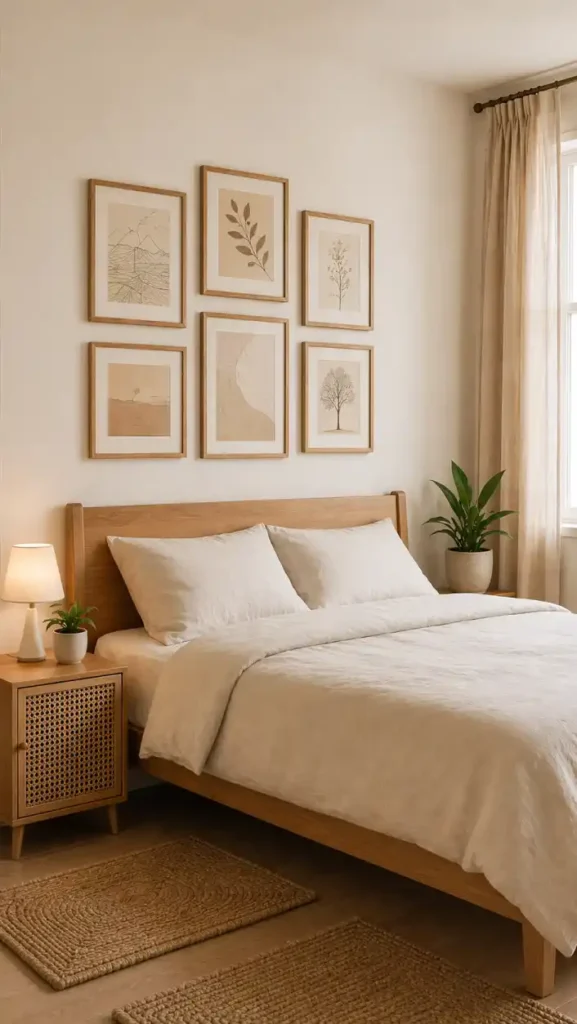
Achieving a Japandi bedroom doesn’t require a large budget — the aesthetic’s core values of deliberate restraint, wabi-sabi imperfection, and Scandinavian minimalism actually work in your favor. Shop secondhand markets and thrift platforms for low-profile solid-wood or walnut-veneer bed frames sitting close to the floor, and anchor the color palette with a stone-washed linen duvet in warm greige, ivory, or muted sage.
Declutter aggressively, keeping only functional, intentional objects with clean silhouettes and matte finishes. Introduce one raw wooden element — a birch bedside table, a bamboo ladder shelf, or a hand-turned oak bowl — then layer tactile depth through affordable undyed jute rugs, chunky cotton throws, and linen-blend cushions in terracotta or charcoal. Less always costs less.
Hidden Storage Solutions Built Into Japandi Design
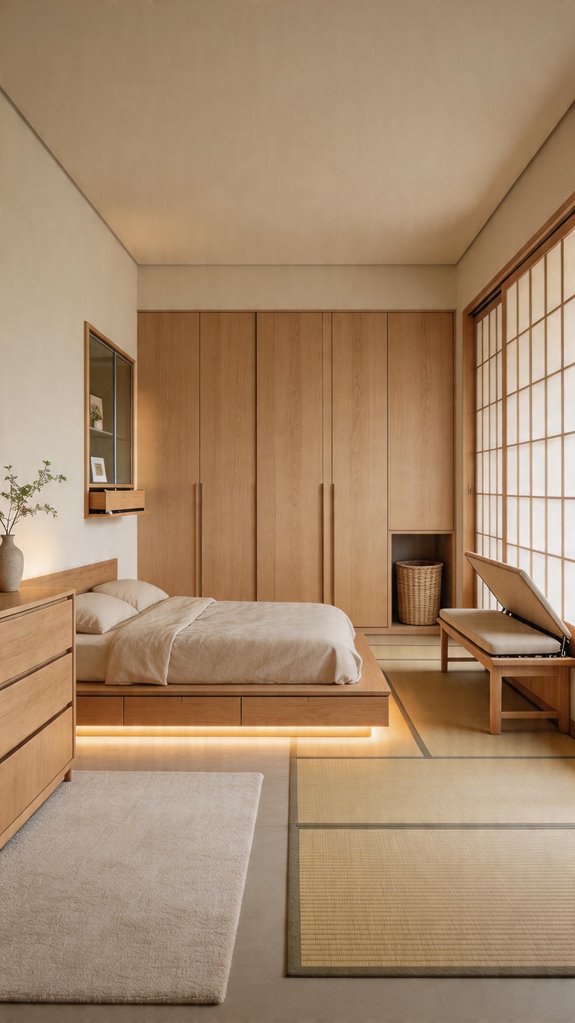
Clutter is the single greatest threat to a Japandi bedroom’s sense of calm, yet visible storage solutions contradict the aesthetic’s clean-line philosophy entirely.
Choose platform beds with built-in drawer systems featuring soft-close mechanisms and solid white oak or charcoal ash veneers, recessed wall niches with flush-mounted shelving in matte lacquered birch, and handleless flat-front cabinetry with push-to-open hardware finished in warm greige or deep charcoal tones. These deeply integrated, low-profile solutions conceal belongings completely behind seamless joinery and precision-cut panels, preserving the uninterrupted horizontal sightlines, negative space, and quiet visual rhythm that define authentic Japandi serenity.
Earthy Japandi Color Schemes That Work in Small Bedrooms
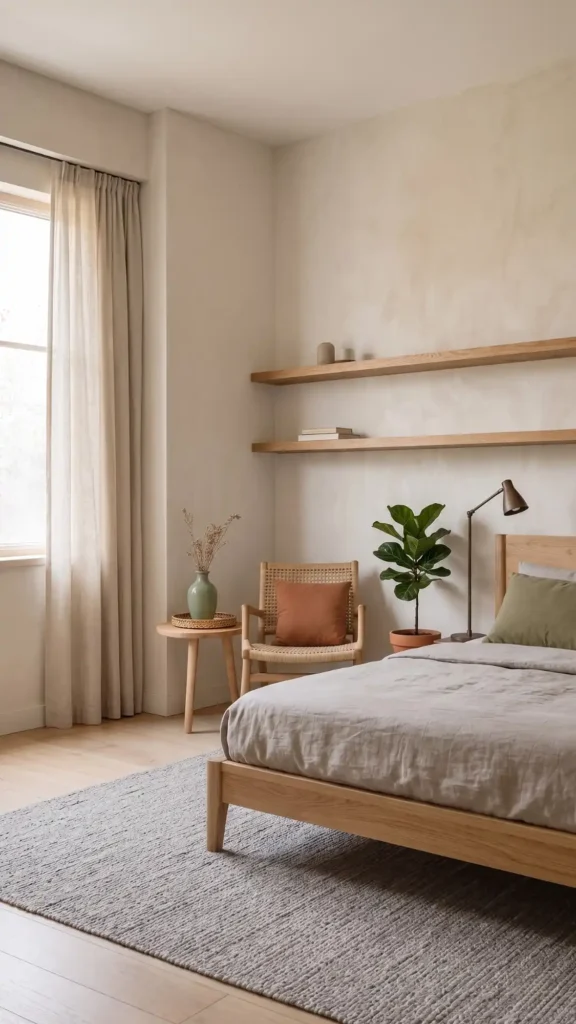
When you’re working with a small bedroom, earthy Japandi color schemes do more heavy lifting than most people realize. Choose warm whites like alabaster or rice paper tones, soft clay hues in terracotta and adobe, and muted sage greens with low saturation to visually expand your walls.
Layer in natural linen bedding with visible slub texture, raw white oak furniture with a matte finish, and woven jute rugs in a flat-weave or chunky braid to anchor the palette. These cohesive, low-contrast tones create visual continuity across surfaces, making tight spaces feel curated and intentional rather than cramped or cluttered.
Simple Japandi Wall Decor That Earns Its Place
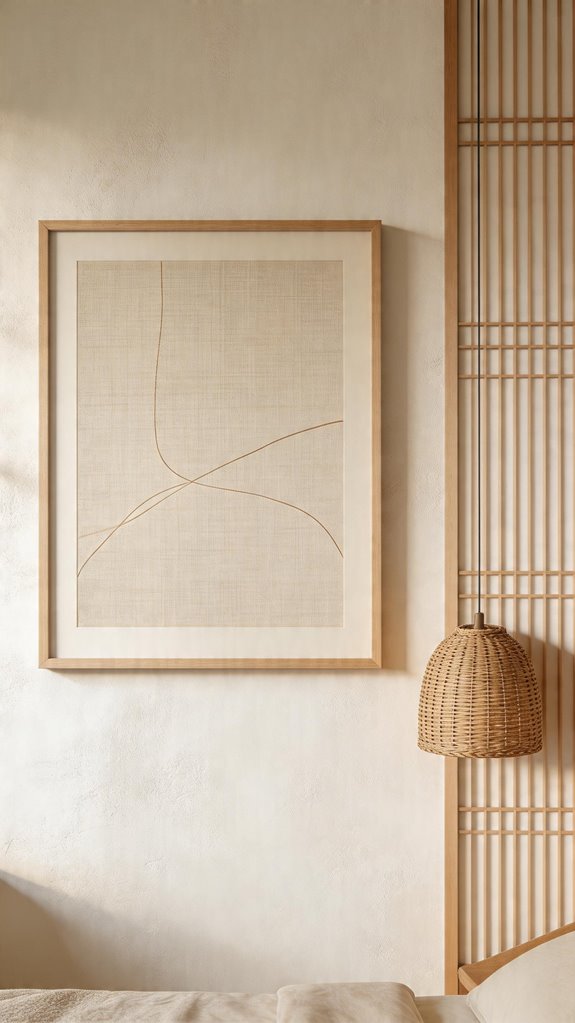
In a Japandi bedroom, every piece of wall decor needs a clear reason to exist, because empty space is treated as a deliberate design element — textured plaster walls, raw linen backdrops, and matte-finished surfaces all carry visual weight on their own, without embellishment.
Choose a single framed botanical print rendered in muted sage or charcoal ink, a hand-loomed jute or wool textile with organic fringe detailing, or a small stoneware ceramic wall piece with a wabi-sabi glaze in earthy ash or warm taupe tones. Let each piece breathe with generous negative space around it — you’re curating intentional, high-contrast moments against a restrained backdrop, not filling gaps with decorative noise.
Handcrafted Pieces That Give a Japandi Bedroom Character
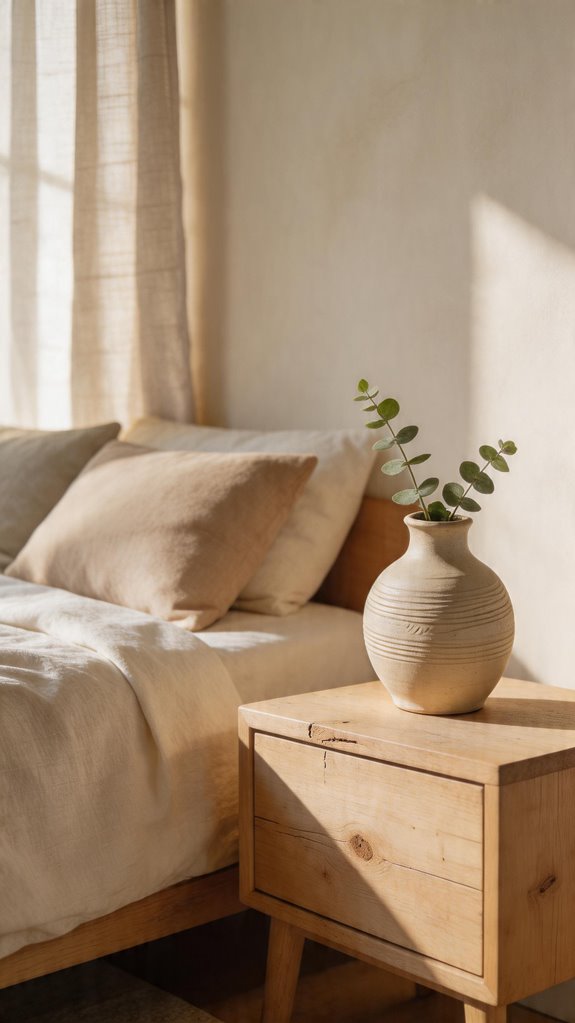
Handcrafted pieces are what separate a Japandi bedroom that feels curated from one that simply looks minimal. Choose a hand-thrown stoneware ceramic vase with an irregular rim, a tightly woven natural rattan tray, or a smooth hand-carved walnut or oak wooden bowl to introduce warmth and organic texture.
These objects carry visible maker’s marks — deliberate thumb impressions in clay, exposed warp-and-weft fiber patterns, raw chisel lines along a bowl’s interior — giving your space quiet, unpretentious authenticity. Place one or two intentionally on a low-profile nightstand or a solid oak floating shelf, letting each sculptural, tactile piece command its own negative space.
Natural Light Strategies That Shape the Whole Aesthetic
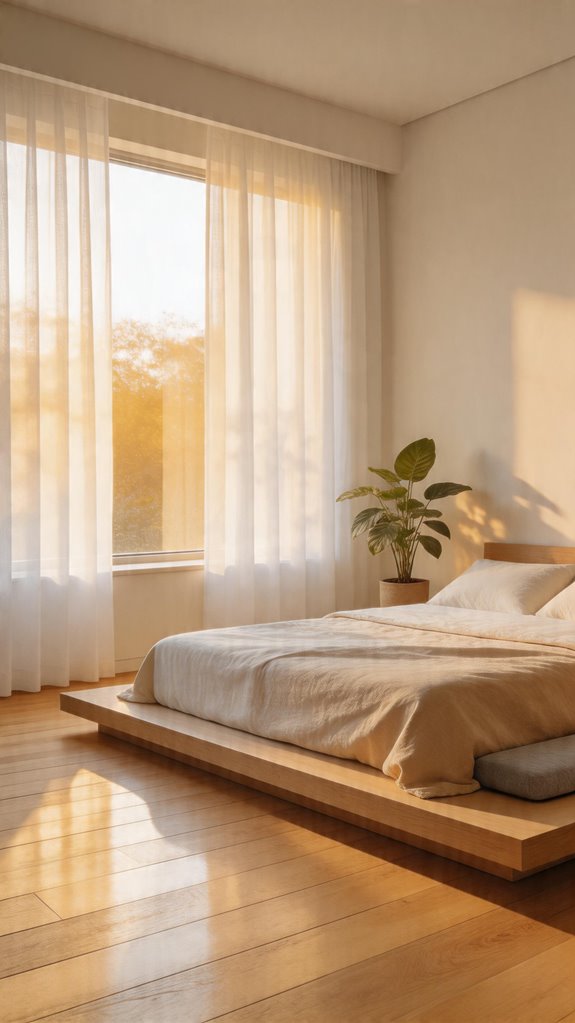
Those handcrafted objects — hand-thrown ceramic vessels, hand-stitched textiles, and matte-lacquered wooden trays — only reach their full visual potential when natural light moves across them at precisely the right angle and intensity.
Position your bed facing east or near a shoji-style rice paper screen to diffuse soft, golden morning light across linen pillowcases and aged timber headboards.
Sheer, undyed linen panels filter harsh midday ultraviolet rays without blocking the warm ambient brightness that animates a room.
You’ll want directional, raking light to graze open wood grain, hand-applied plaster walls, and coarsely woven textile surfaces, gradually revealing their layered depth and tactile dimensionality throughout the arc of the day.
Rattan and Wool Accents Grounded in Japandi Style
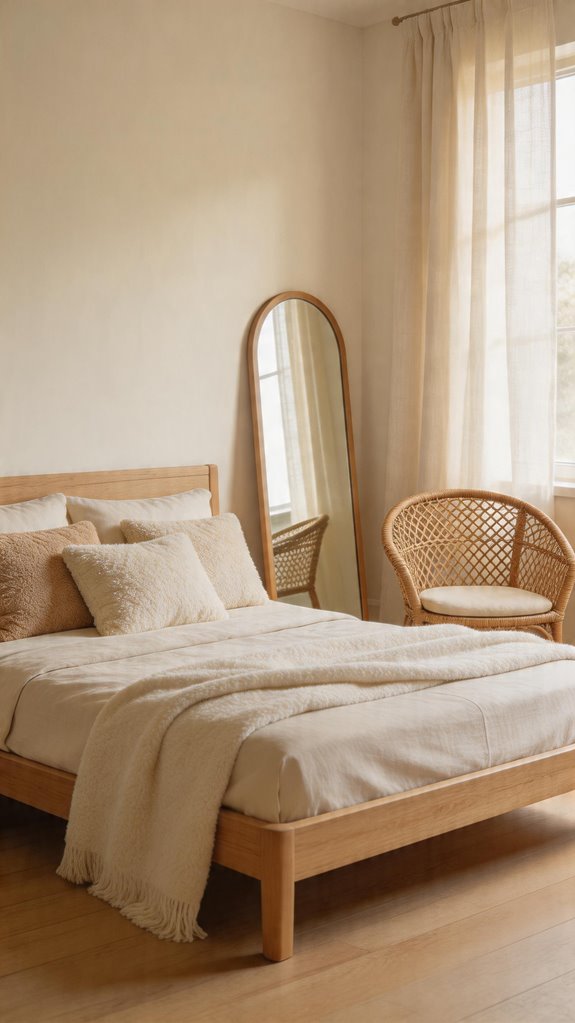
Rattan and wool bring warmth and organic texture to a Japandi bedroom without overwhelming its quiet restraint. You can layer a chunky-knit wool throw in undyed ecru or soft charcoal across a low-profile platform bed with a walnut or white oak frame, or hang a hand-woven rattan pendant light with an open lattice weave above a minimalist nightstand.
These natural, sustainably sourced materials complement muted, neutral palettes of warm white, greige, and muted sage with effortless cohesion. Together they ground the space in wabi-sabi principles — embracing imperfection, natural aging, and tactile authenticity — while maintaining a clean, intentional compositional balance throughout the room.
Floor-Level Seating That Completes a Japandi Bedroom
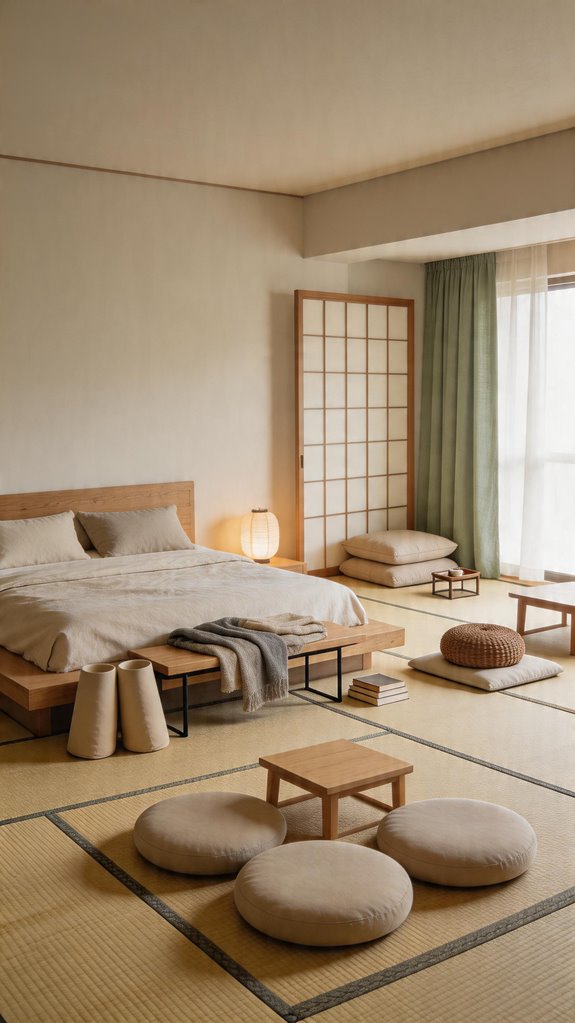
Floor-level seating transforms a Japandi bedroom from simply minimal to genuinely livable, adding a grounded, human-scaled layer that invites stillness. Place a zabuton cushion or low meditation bench near a window, positioning it to capture natural light while maintaining visual breathing room within the composition.
Choose natural linen, muted charcoal, or warm sand tones to stay cohesive with existing neutral palettes, ensuring textural consistency across cotton, wool, and woven hemp materials. Keep legs short or absent entirely, reinforcing that signature low-profile aesthetic Japandi consistently prioritizes across its Japanese wabi-sabi and Scandinavian hygge influences.
Small Japandi Bedroom Layouts That Maximize Every Inch
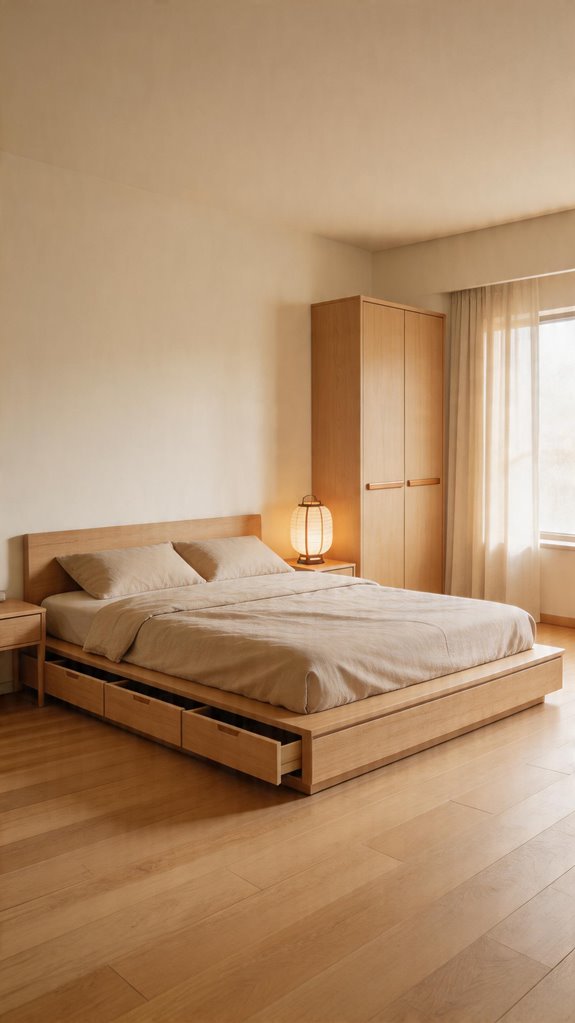
Small spaces become genuinely functional Japandi bedrooms when you prioritize a single, low-profile platform bed frame — ideally crafted from light oak or whitewashed pine — as the room’s visual anchor, with a slatted base that sits no more than 12 inches off the floor.
Mount floating wall shelves in a staggered asymmetric arrangement rather than introducing a bulky six-drawer dresser, and commit to a restrained neutral palette of warm white, matte ash gray, and soft linen beige to maintain a cohesive, airy atmosphere. Slim, wall-hugging nightstands in dark walnut or matte black steel, each fitted with a recessed pull drawer, keep the floor plan visually open and circulation paths completely unobstructed.
A Japandi Color Scheme That Matches Your Personal Style
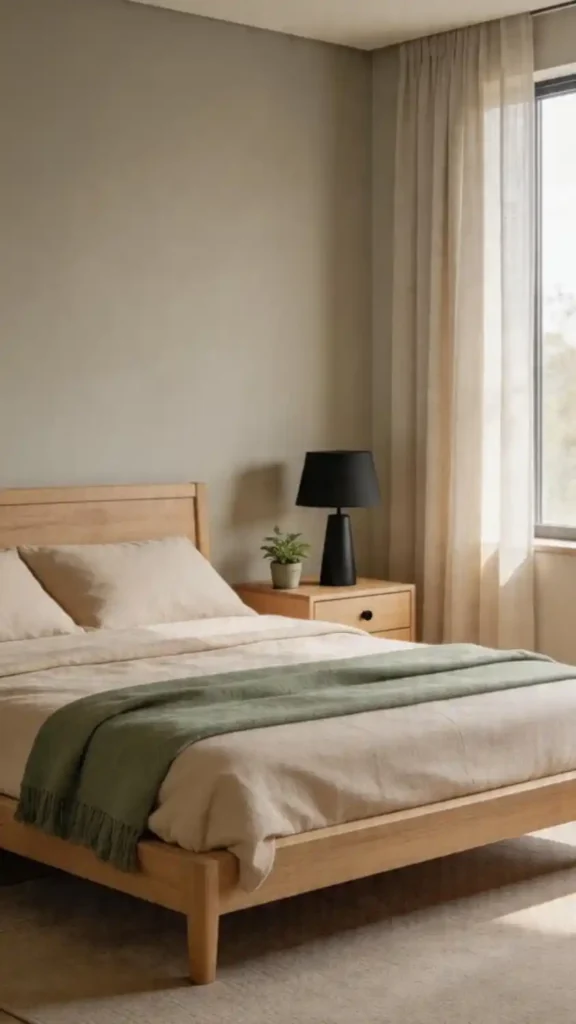
Japandi’s color philosophy is more flexible than most design guides suggest, and how you interpret it shapes the entire mood of your bedroom. You can lean toward warmer Japanese earth tones — think unglazed terracotta, raw umber, and sun-warmed sand beige — or pull from cooler Scandinavian shades like charcoal slate gray, muted dusty blue, and pale birch white.
Layer your chosen palette deliberately through linen and cotton textiles, matte or limewash wall paint finishes, and natural wood furniture in light ash, oiled oak, or dark walnut to create a cohesive, tonally unified interior.
Final thoughts
You don’t need a complete overhaul to create a Japandi bedroom that feels like a retreat. Start with one foundational element—a low-profile solid oak platform bed, stone-washed linen bedding in warm greige tones, or a hand-turned walnut accent piece—and build intentionally from there.
Keep your palette anchored in muted, earthy neutrals like warm ivory, soft charcoal, and aged clay. Prioritize tactile, organic materials such as unbleached cotton, hand-thrown ceramic vessels, rattan basketweave, and wire-brushed hardwood. When you strip away visual clutter and commit to pieces that are both structurally purposeful and aesthetically refined, every corner of your room earns its place—calm, grounded, and quietly restorative.