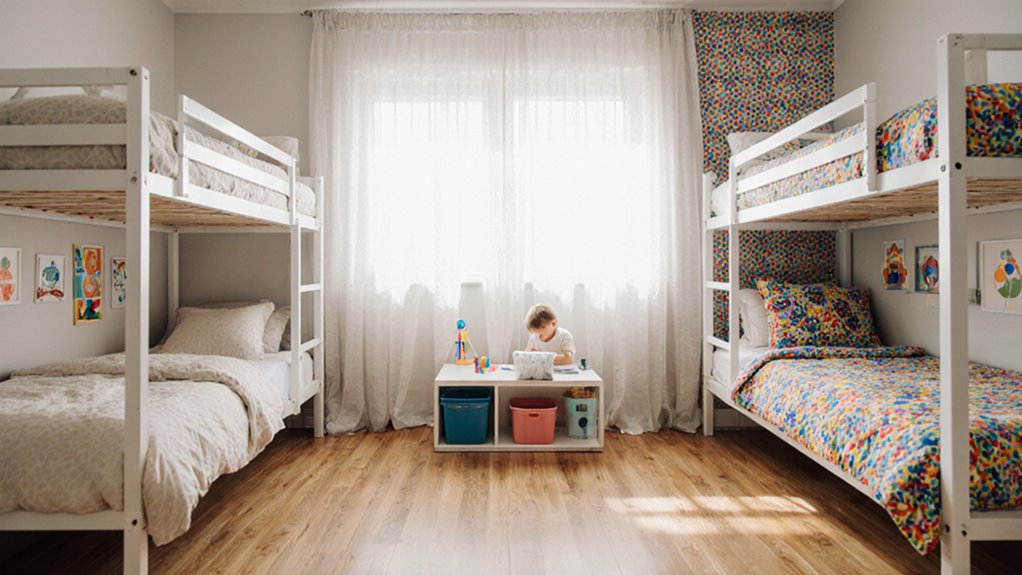
13 Shared Kids Bedroom Ideas for Two Children Who Do Not Share Taste
When your children have opposing aesthetics — one drawn to bold, energetic spaces filled with saturated color and dynamic pattern, the other gravitating toward calm minimalism with clean lines and neutral tones — you’re facing a genuinely complex interior design challenge.
Rather than forcing an uncomfortable stylistic compromise, you can strategically divide the shared bedroom into two distinct zones, each one functioning as a personal sanctuary that honors an individual child’s visual identity and spatial preferences. The key lies in establishing clear physical and visual boundaries through deliberate color blocking, intentional furniture placement, and curated personal touches.
When executed well, this zoning approach creates a cohesive shared room that feels harmonious rather than chaotic, without requiring either child to sacrifice the aesthetic environment that makes them feel most at home.
Start With Adaptability: Design a Layout That Grows With Your Kids
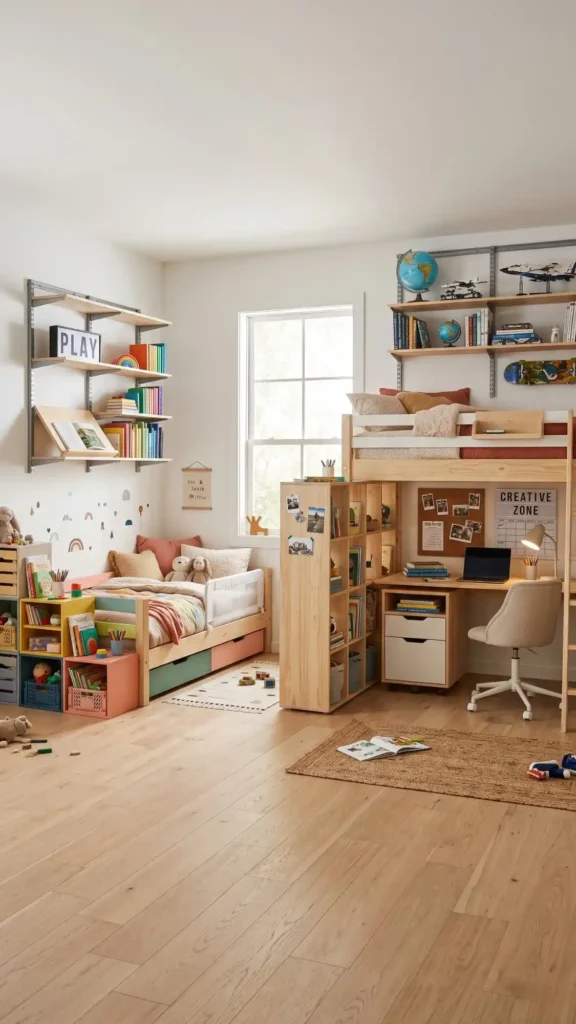
Since children’s needs change dramatically over time, designing a bedroom layout with long-term adaptability becomes a strategic investment. Modular furniture systems — including reconfigurable bed frames, stackable storage units, and convertible desks — allow the space to evolve seamlessly from a toddler-safe environment into a functional teen retreat.
Adjustable wall-mounted shelving tracks, multi-height storage towers, and flexible organizational inserts accommodate shifting interests, growing book collections, and evolving hobby equipment without demanding costly complete redesigns. This intentional, future-proof approach honors children’s developing preferences while maximizing both spatial functionality and overall furniture longevity. Creating clear boundaries between zones, even within a shared room, helps each child feel ownership over their personal space and supports healthier sleep and study habits as they grow.
Split the Room Down the Middle (or Diagonally)
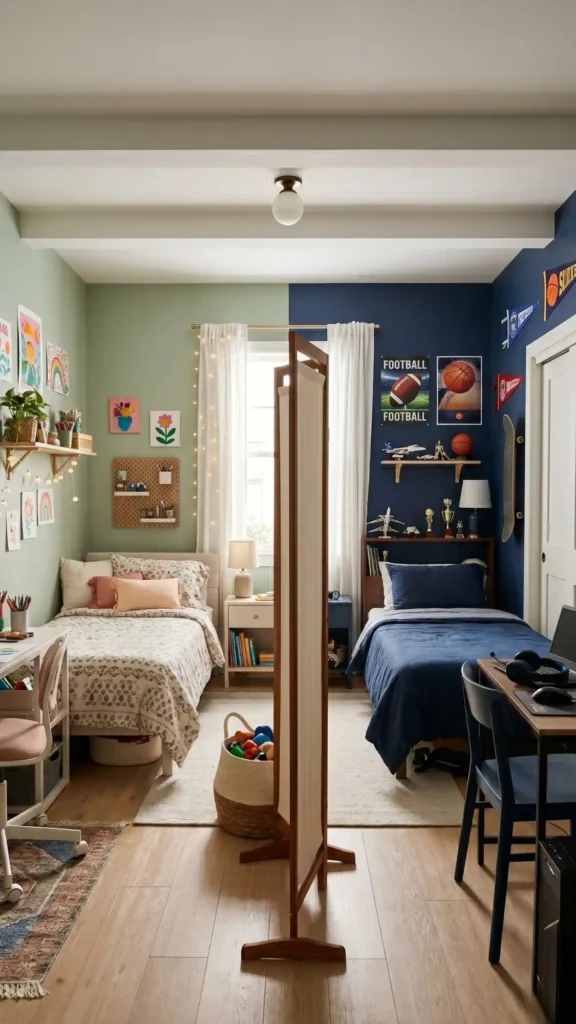
When you’ve got two kids with completely different styles sharing one bedroom, creating distinct personal zones becomes essential for their comfort and autonomy. You can divide the space vertically down the middle or diagonally, using a room divider, curtain rod, or contrasting paint colors on opposing walls.
This physical separation lets each child personalize their half independently — choosing their own color palettes, shelving arrangements, bedding textures, and decorative accents — while maintaining shared responsibility for common areas like doorways, closets, and central floor space.
If you rent your home, consider temporary dividers and peel-and-stick solutions that require no nails and no landlord permission, similar to approaches used in temporary teen bedroom makeovers.
Create Distinct Color Zones for Each Child

A symmetrically divided shared children’s bedroom featuring two distinctly colored zones side by side — one saturated in warm coral and golden yellow tones with coordinated bedding, painted accent wall, and matching textile accessories, the other in cool ocean blue and seafoam green with its own cohesive bedding set, painted wall section, and decorative storage elements, soft natural light streaming through sheer curtains illuminating both zones, hardwood flooring visible throughout, plush area rugs anchoring each space in their respective color families, wooden bookshelves and low-profile beds framing each zone, photographed from a wide-angle perspective showing the full room depth and the seamless visual separation between the two distinct territories. Incorporating earth tone bedroom ideas throughout the connecting elements helps ground the bold zones and creates a cohesive, natural foundation that prevents the space from feeling chaotic or mismatched.
Use Personalized Accent Walls to Define Territory
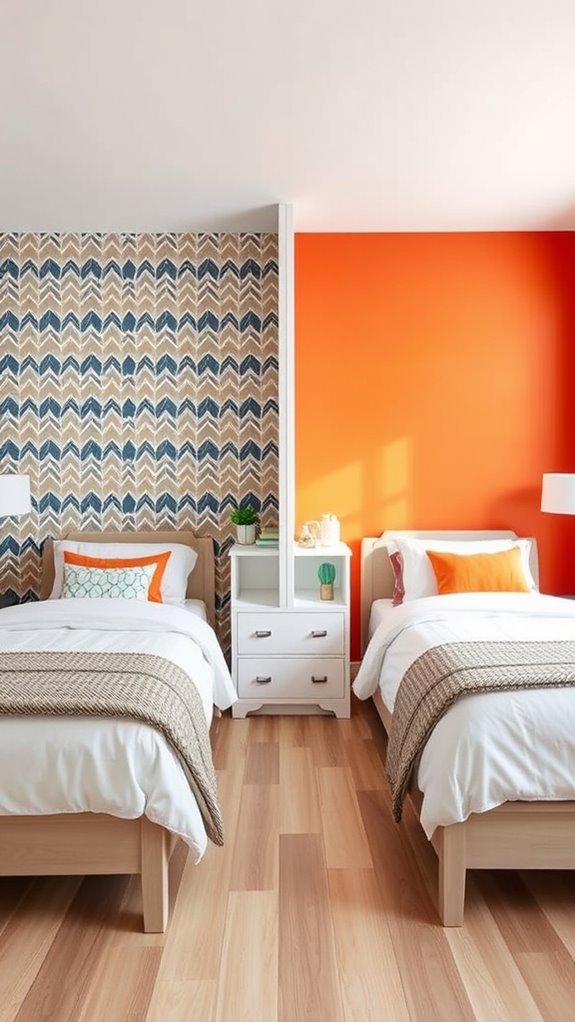
Painting each child’s designated accent wall in a distinct, personalized color creates powerful visual territorial boundaries without requiring costly structural renovations or room dividers. Bold jewel tones — deep sapphire blue, emerald green, or rich amethyst purple — communicate strong, vibrant personalities, while soft dusty rose, lavender mist, or warm buttercream yellow reflect gentler, more subdued temperaments.
This chromatic zoning strategy simultaneously preserves the room’s overall spatial cohesion and flow while giving each child a psychologically distinct, ownership-affirming corner of the shared environment. Complementary furniture placement, personalized bedding patterns, and coordinating accent accessories further reinforce each individualized zone within the unified bedroom layout. Selecting designs that remain functional and cool throughout the elementary years ensures the space evolves gracefully with both children from age six through twelve.
Choose Furniture Styles That Complement Both Kids Without Clashing
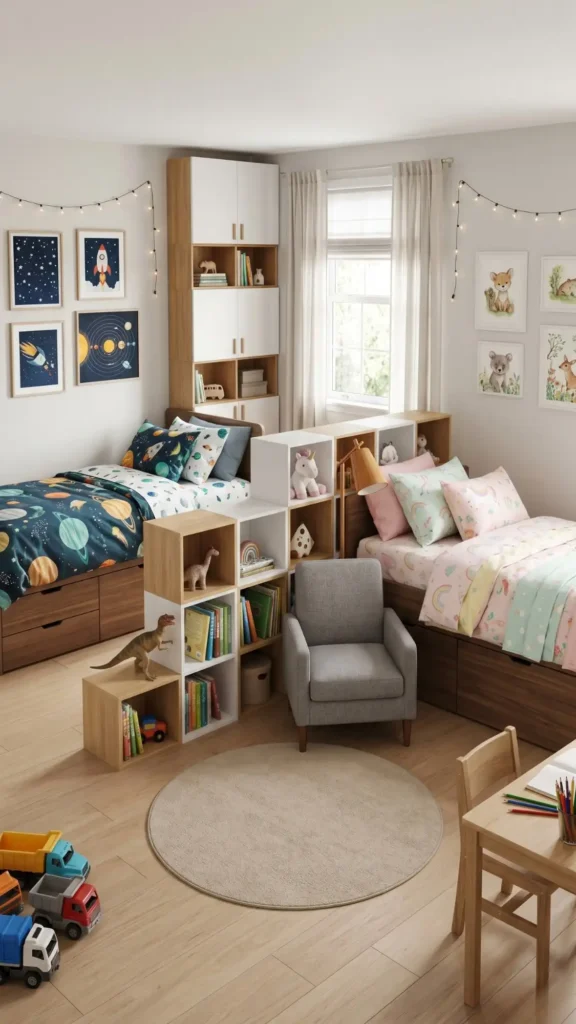
Furniture selection acts as the connective tissue binding two distinct personalities into a cohesive shared bedroom environment. Choosing neutral hardwood or MDF pieces with clean Scandinavian or mid-century lines allows each child’s personalized décor — wall art, bedding patterns, and accent accessories — to shine independently without competing visually.
Consider mixing warm oak and cool walnut tones strategically, incorporating multifunctional storage units like dual-drawer captain’s beds or modular cube shelving systems, and selecting upholstered pieces in performance-grade, stain-resistant fabrics such as microfiber or crypton. This layered approach prevents visual chaos while simultaneously honoring each child’s distinct aesthetic preferences and establishing a unified, harmonious spatial foundation.
For rooms without built-in closets, vertical storage solutions maximize limited floor space while keeping each child’s belongings organized and accessible.
Install Separate Storage Systems for Each Child’s Belongings
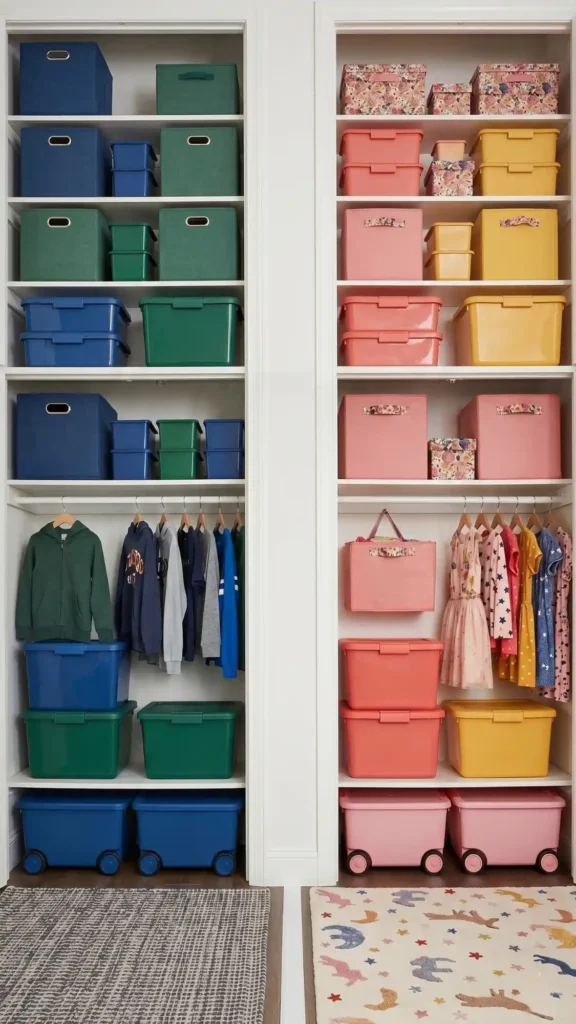
When two children with distinct aesthetic preferences and contrasting personal styles share a bedroom, separate storage systems become essential for maintaining household organization and preserving individual ownership boundaries. Install dedicated closets with adjustable hanging rods, clearly labeled plastic bins with snap-lock lids, or designated dresser drawers assigned exclusively to each child.
Color-coded storage solutions—such as matching baskets, file folders, and toy organizers in each child’s signature hue—help young occupants identify and retrieve their belongings with speed and independence. Stackable under-bed storage containers with wheeled bases and transparent sidewalls, combined with wall-mounted floating shelves rated for moderate weight loads, allow both children to display cherished personal items, collectibles, and decorative objects without visual clutter conflicts or recurring territorial disputes over shared surfaces. Thoughtful space-efficient strategies ensure that even compact shared rooms can accommodate two distinct personalities without sacrificing comfort or organization.
Use Shelves to Create Invisible Boundaries
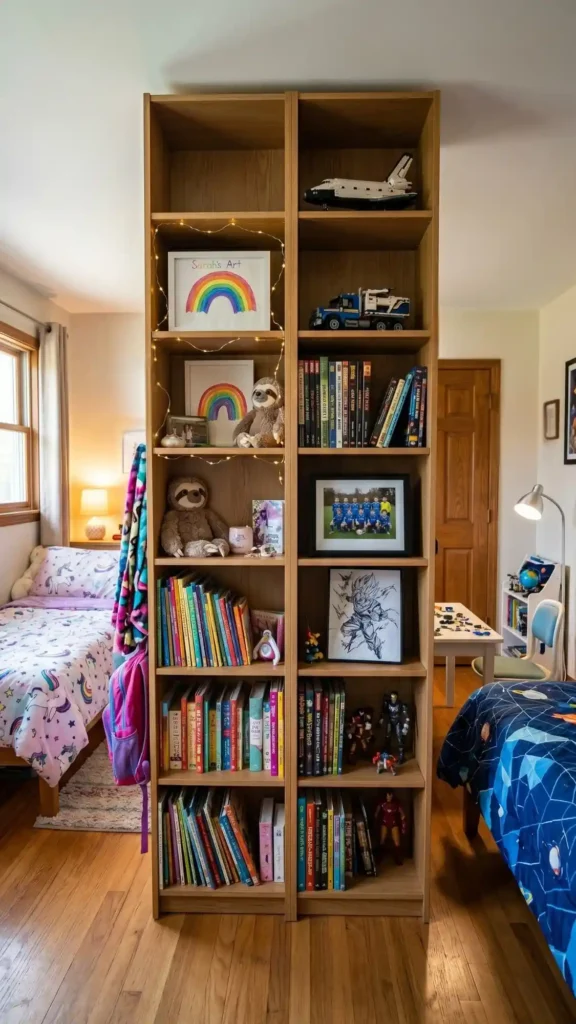
Strategic shelf placement offers an effective way to establish distinct personal zones without constructing permanent walls or barriers between your children’s sides of the shared room. Position tall, freestanding bookcases — ideally six feet or higher, in neutral wood tones or painted finishes — vertically to divide the space into clearly defined territories. In a 10×10 bedroom layout, maximizing vertical storage becomes essential when floor space is limited, making back-to-back shelving particularly effective for maintaining open pathways while creating separation.
Each child can then display personal items, curated book collections, framed artwork, and decorative objects that reflect their individual style, age-appropriate interests, and unique personality across dedicated shelf sections.
Arrange Twin Beds to Maximize Personal Space
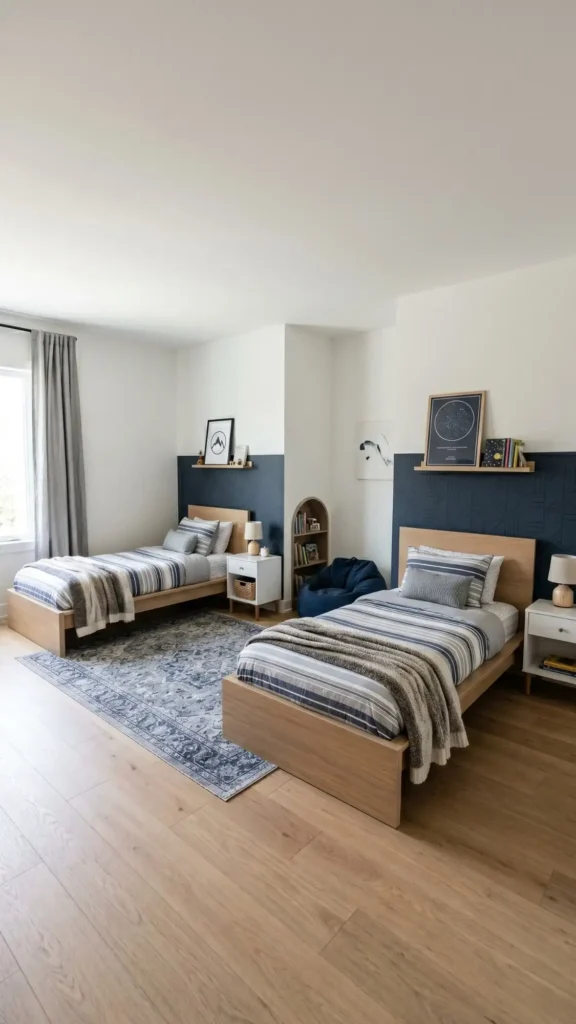
How you position twin beds within a shared bedroom considerably impacts each child’s sense of ownership and comfort in their personal zone. Position beds on opposite walls, creating distinct territories that minimize sibling conflict. This strategic placement allows each child independent access without crossing the other’s space.
Consider perpendicular placement for smaller rooms with limited square footage, maximizing usable floor area while maintaining clear visual and physical boundaries between dedicated sleeping zones. This L-shaped configuration creates two well-defined quadrants, each functioning as a self-contained personal area with its own circulation path.
A cohesive headboard wall behind each bed can further define these separate territories while contributing to a unified room aesthetic.
Install a Room Divider or Curtain You Can Open or Close
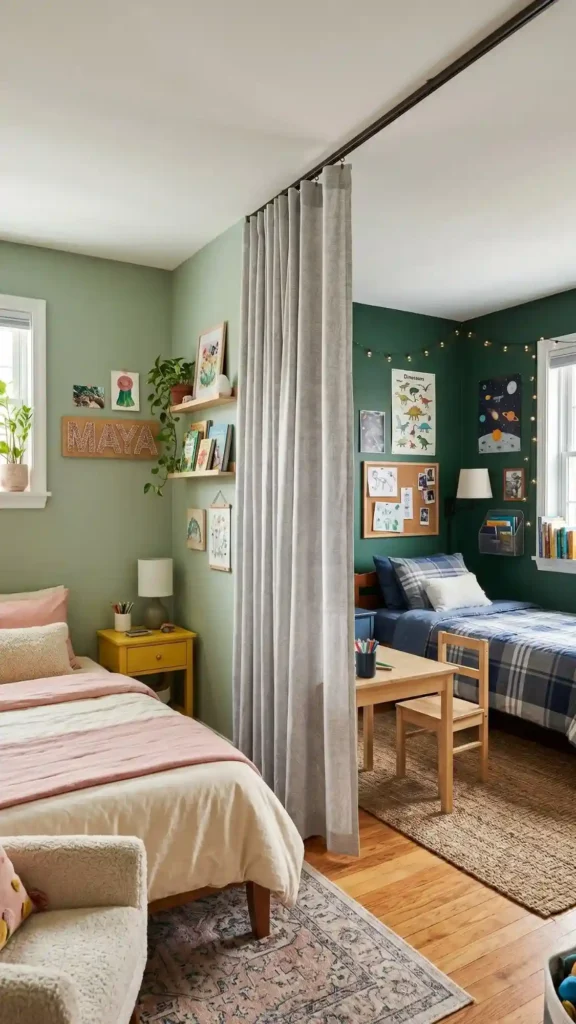
A room divider or retractable curtain system offers your children the flexibility to create privacy on demand, transforming a shared bedroom into two distinct zones whenever they need separation. You can choose from fabric panels, sliding barn doors, or tension rod curtains that match each child’s aesthetic preferences.
This solution lets them control their shared environment independently while maintaining an open, airy floor plan during collaborative play or study sessions.
Consider painting each divided zone in green bedroom wall ideas ranging from soft sage to deep forest green to further distinguish their personal spaces while maintaining visual harmony.
Design Individual Reading or Activity Nooks
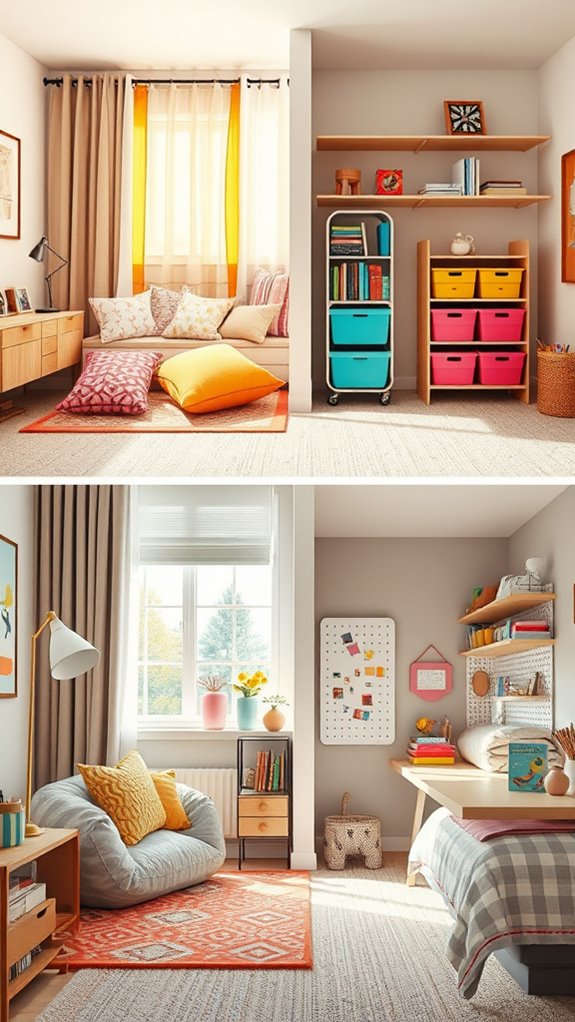
Designate corner zones featuring ergonomic seating options — bean bags, reading chairs, or floor cushions — paired with adjustable task lighting and dedicated storage units for each child’s books, art supplies, or hobby materials. Apply coordinating yet distinct color palettes, pulling from complementary hues, to honor individual personalities while maintaining visual cohesion across the shared space.
Install wall-mounted floating shelves, compact 3-to-5-tier bookcases, or modular cube organizers to display each child’s curated collections — figurines, chapter books, trophies, or artwork — transforming functional storage into personalized gallery walls. These intentional design decisions convert simple corners into immersive, semi-private retreats that give each child genuine ownership over their slice of the shared room. Layered lighting design incorporates ceiling, bedside, and ambient sources to ensure each reading nook feels fully designed and individually tailored after dark.
Let Each Child Pick Bedding That Reflects Their Style
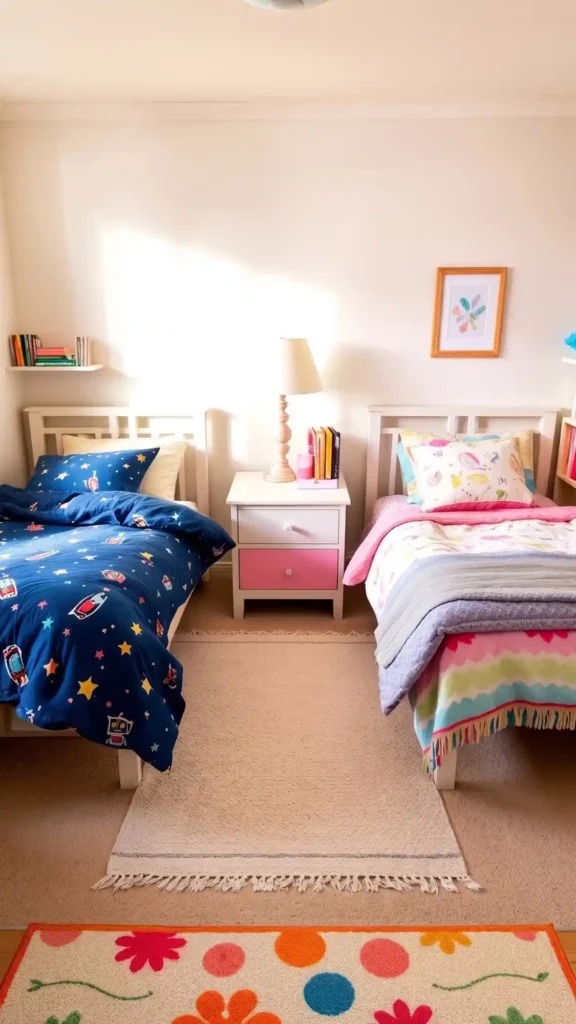
A sunlit shared children’s bedroom featuring two twin beds positioned symmetrically against a light gray wall, one dressed in crisp white and navy geometric-patterned cotton bedding with matching euro shams and a textured knit throw.
The other layered in warm terracotta solid-colored microfiber bedding with contrast piping and a chunky woven blanket draped at the foot, wooden nightstands between the beds holding small potted succulents and brass table lamps.
Natural oak hardwood flooring, sheer linen curtains diffusing afternoon light, neutral area rug anchoring both beds, soft shadows creating depth across the quilted surfaces.
Add Removable Decor Each Child Controls
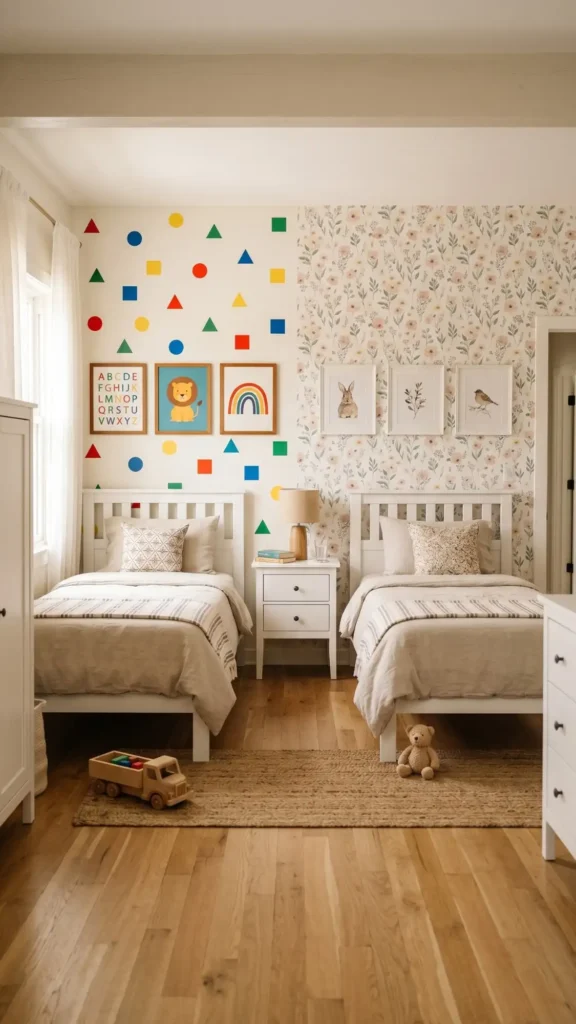
While matching bedding sets establish a cohesive visual foundation, removable decor empowers each child to express their distinct personality without permanently altering the shared space. Peel-and-stick adhesive wall decals, repositionable wallpaper panels, and gallery-style poster frames give each child autonomous control over their designated zone, layering personal character onto neutral backdrops.
This modular, low-commitment decorating strategy preserves overall room harmony while accommodating rapidly shifting childhood interests and aesthetics. Each child can refresh their section independently, swapping out decals, rotating artwork, or replacing wallpaper accents as preferences evolve across seasons and developmental stages.
Create a Split Gallery Wall Where Both Styles Shine
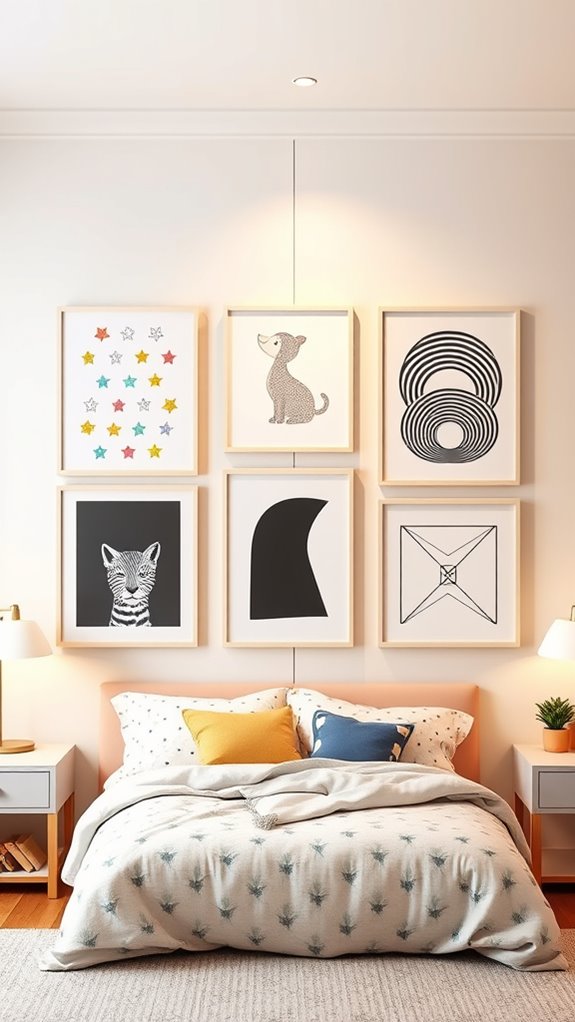
A split gallery wall divides the space into two distinct visual zones, each showcasing artwork, posters, photographs, and framed prints that reflect your children’s individual tastes, personalities, and creative identities. Matching frame styles — whether sleek black metal, natural wood, or painted white — unify the overall aesthetic while preserving each side’s unique character and thematic expression.
This intentional layout grants each child genuine ownership over their curated wall section, reinforcing personal identity without disrupting the room’s overall compositional balance, symmetry, or color harmony.
Final thoughts
You’ve now got the framework to create a bedroom where both kids thrive without compromising their individuality. By combining adaptable furniture, distinct color zones, and personalized touches, you’re building a space that respects each child’s unique preferences while maintaining visual cohesion throughout the room.
As your kids grow and their tastes evolve, these flexible design strategies — modular shelving units, adjustable lighting systems, and reconfigurable layout options — allow you to refresh specific zones without undertaking complete, costly redesigns. Your shared room ultimately becomes a balanced, harmonious sanctuary that actively supports both children’s developmental needs, creative expression, and personal identity.