Red Interior Design for Dark Rooms With No Natural Light
Every piece of advice about dark rooms says the same thing: go light, go white, go bright. Never paint it a dark color.
I painted my windowless home office a deep terracotta red. It’s now the room I want to spend the most time in.
The conventional wisdom about dark rooms is built on one goal: make them look bigger and brighter. But what if that’s the wrong goal? What if a dark room, treated correctly, can feel intentional, cozy, and dramatic rather than dim and depressing?
Here’s how red — used the right way — transforms a dark room into one of the most atmospheric spaces in your home. And Tip #3 is the counterintuitive approach that makes all the difference.
Reframe the Goal: Cozy Over Bright
Most dark room advice aims at the wrong target. It tries to fight the room’s nature — adding mirrors, white paint, and bright lighting in an attempt to make it feel like a sun-drenched space it will never be.
A smarter approach is to work with the room’s nature. A dark room has one quality that light-filled rooms don’t: the ability to feel truly enveloping, intimate, and separate from the outside world.
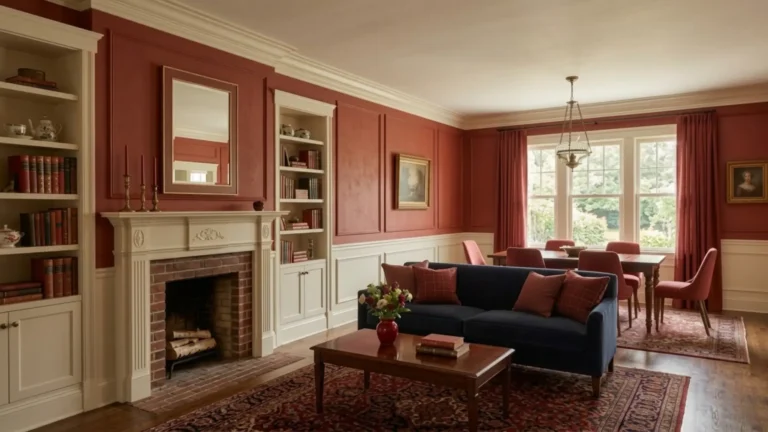
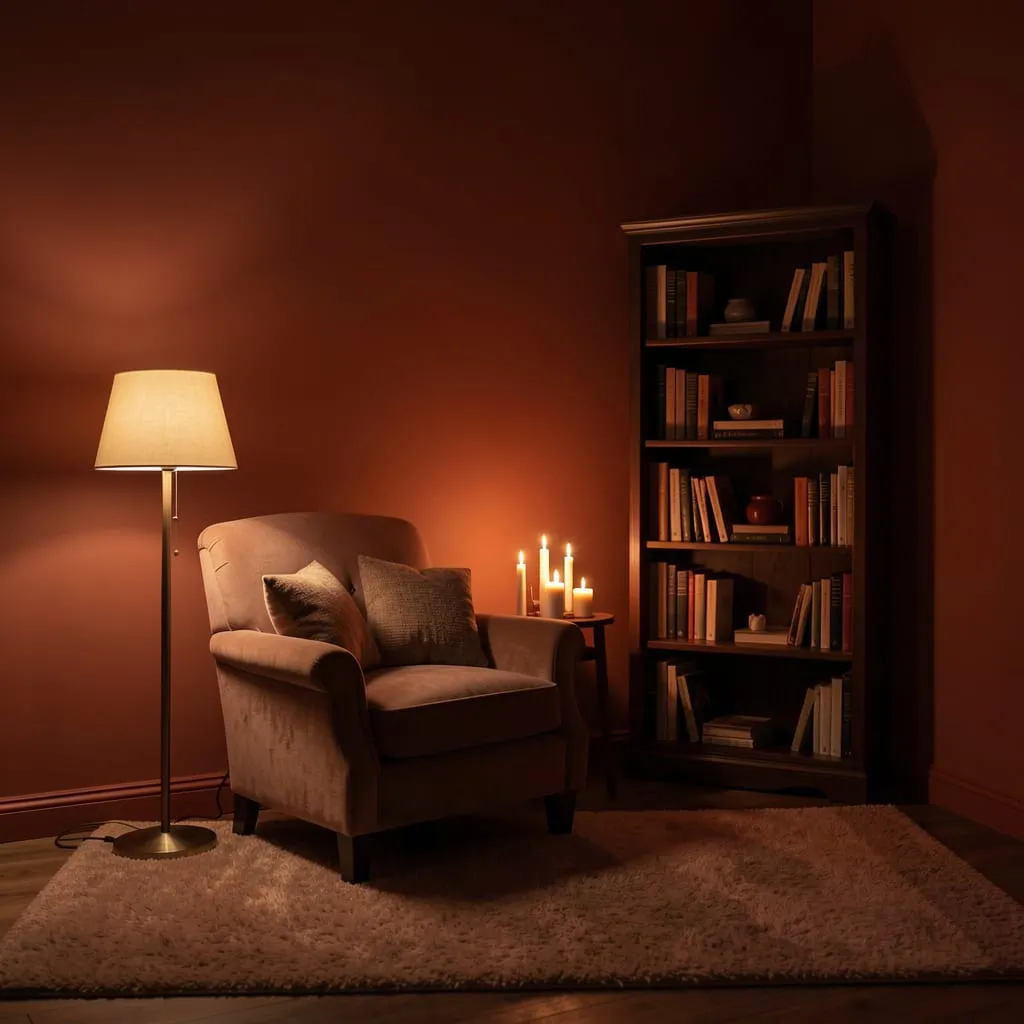
Red — particularly warm, muted reds like terracotta, brick, and burgundy — amplifies the cozy intimacy of a dark room rather than fighting its natural light conditions. The result isn’t a room that looks dim. It’s a room that looks like a deliberate retreat.
Choose Warm-Undertoned Reds That Glow Under Artificial Light
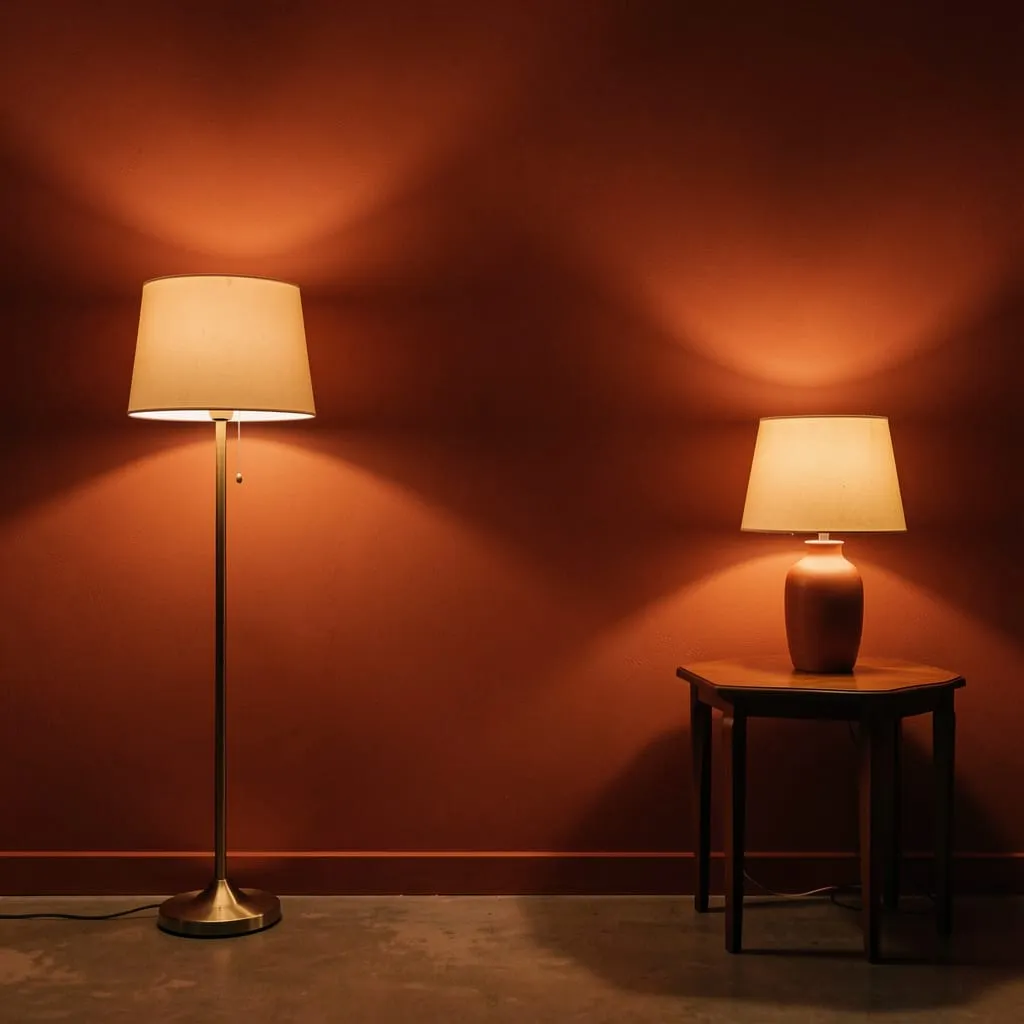
In a dark room, undertone is everything. Cool reds — those with blue or purple undertones — look flat, muddy, and slightly depressing under artificial light. Warm reds — those with orange or brown undertones — glow beautifully under incandescent and warm LED light.
Best reds for dark rooms:
- Terracotta: The warmest option. Glows like firelight under warm bulbs.
- Brick red: Natural, earthy, never looks garish even in the dimmest light.
- Burnt sienna: Between orange and red — impossibly warm under artificial light.
- Deep rust: Rich without being heavy. Works especially well with dark wood and warm metals.
Avoid cool reds in dark rooms — they’ll look dull and slightly purple under most artificial light conditions.
Use Artificial Lighting as Your Primary Design Tool
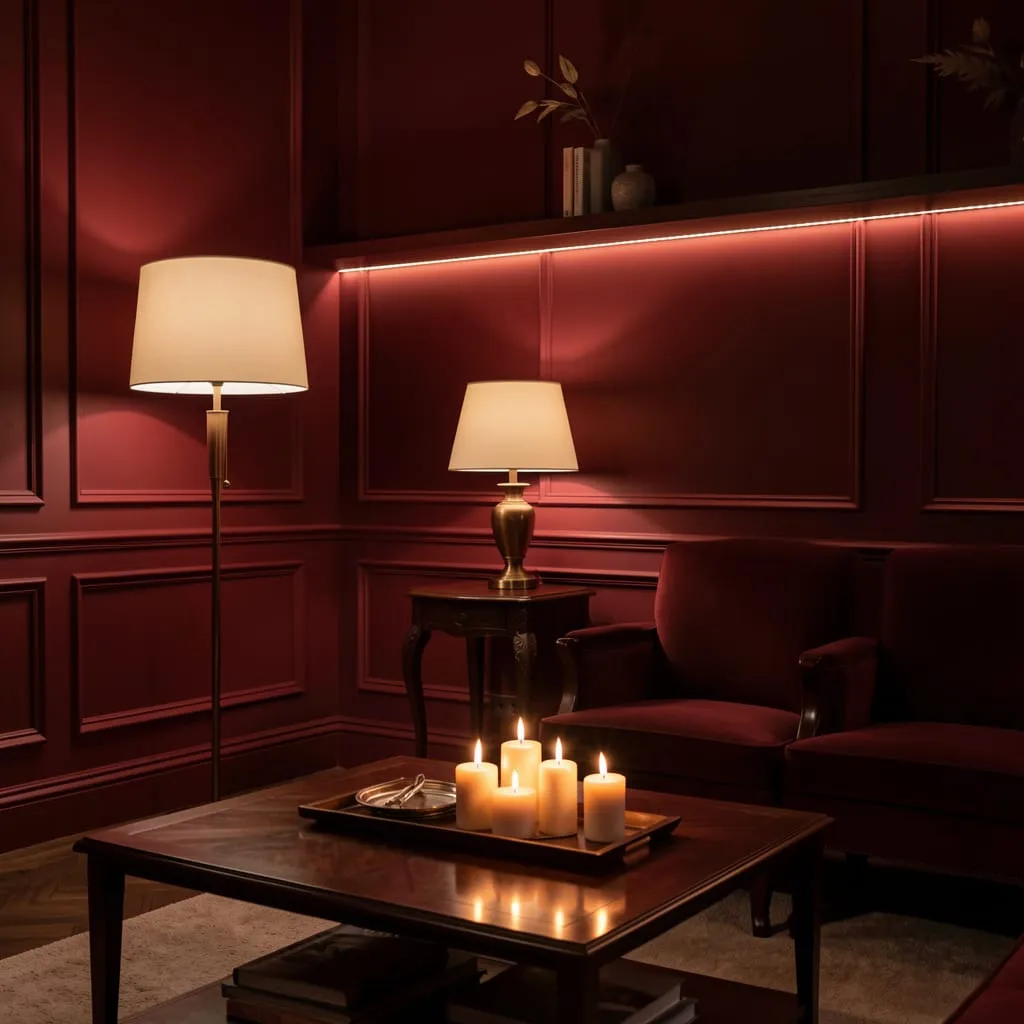
In a room without natural light, artificial lighting isn’t a supplement — it’s the entire atmosphere. The dark room lighting system:
- Never rely on a single overhead source. Overhead-only lighting in a dark room is the enemy.
- Layer at multiple heights. Floor lamp, table lamp, wall sconce, and accent strip lighting.
- Go warmer than you think you need. 2200K–2700K bulbs. Candlelight-warm.
- Add real candles or flameless alternatives. The moving light of candles against a red wall creates an atmosphere no electric fixture can fully replicate.
- Use dimmers on everything possible.
Embrace Rather Than Fight the Enclosure
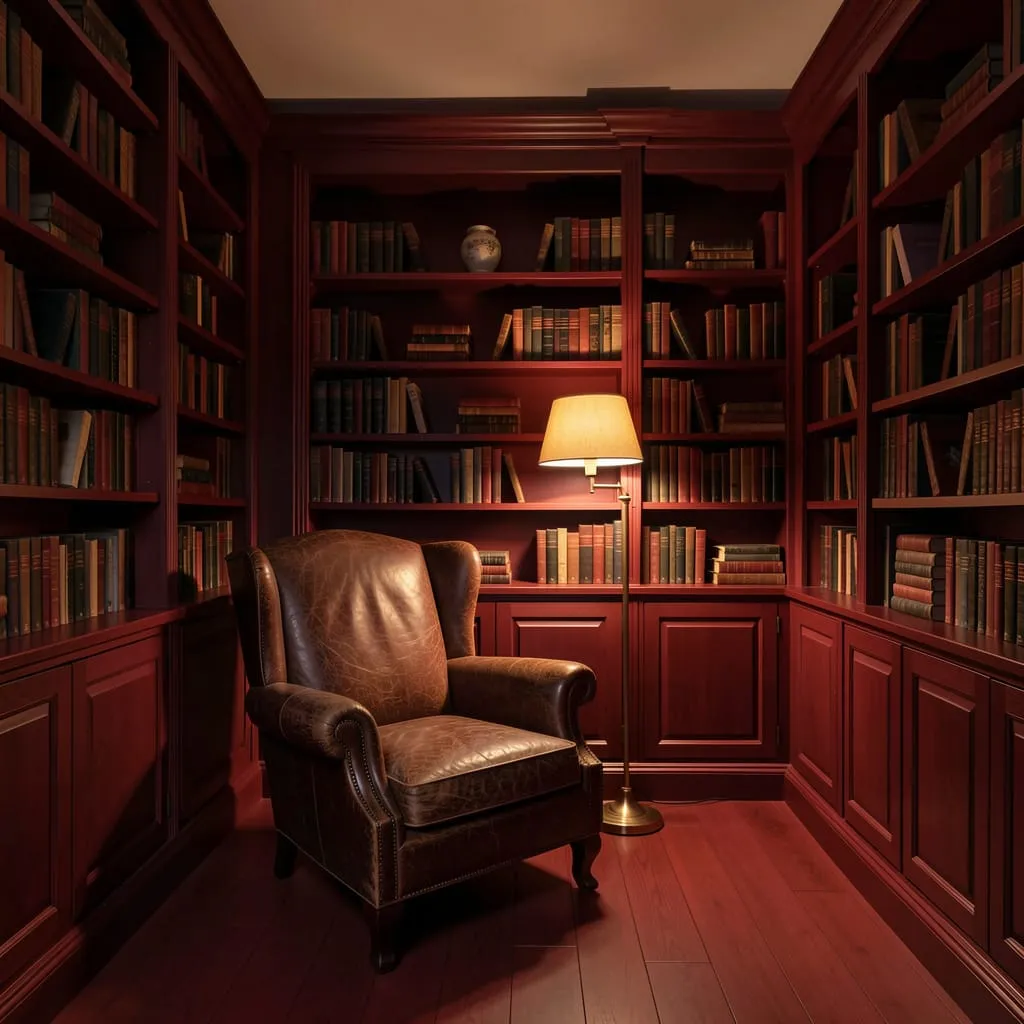
Dark rooms without natural light often feel like architectural failures. The reframe: some of the world’s most beloved interior spaces — private libraries, intimate dining rooms, old hotel bars — are deliberately enclosed, dark, and rich in color.
Give the dark red room a purpose that suits its atmosphere:
- A reading room or home library: Dark walls let bookshelves and lamp glow become the focal points
- A home office or study: Enclosure promotes focus
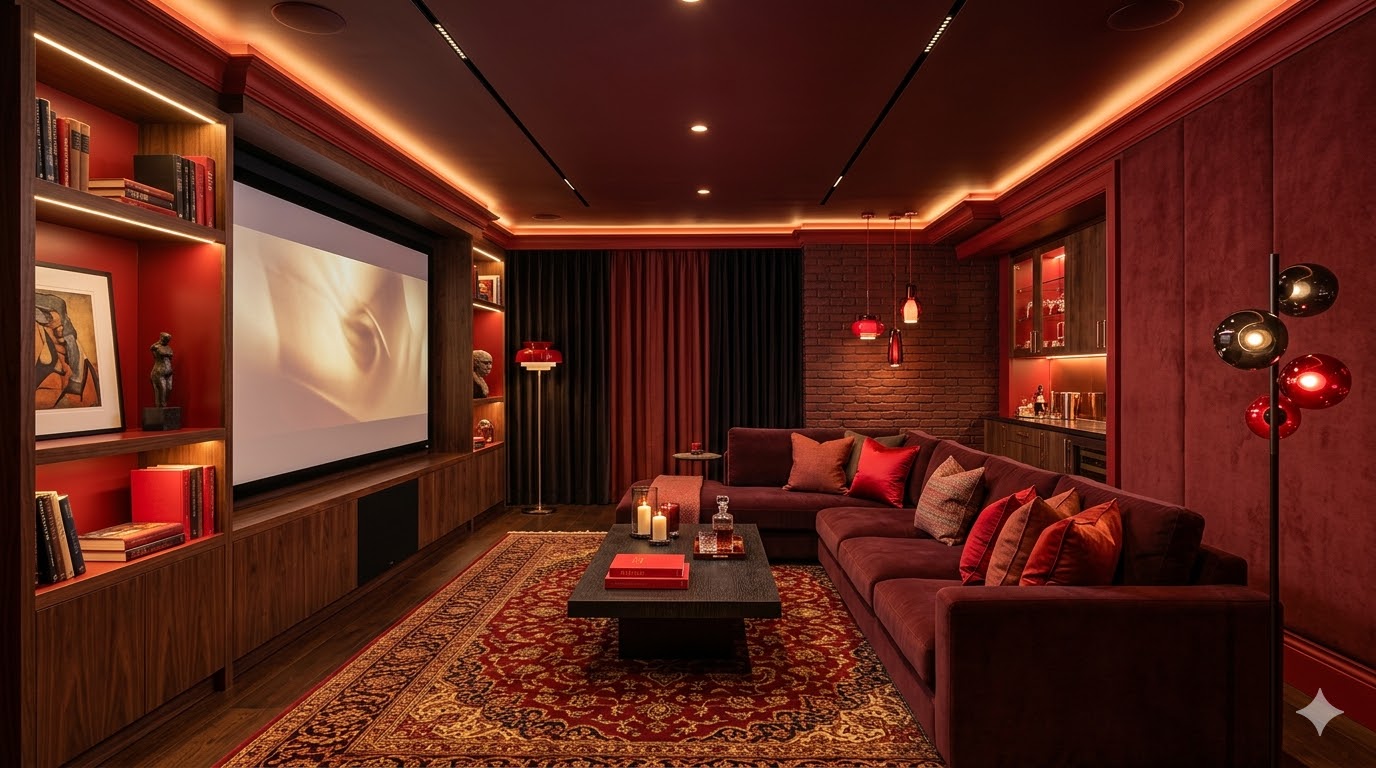
- A media room: Red walls with controlled lighting create the perfect cinema atmosphere
Name the room’s identity, and the dark red walls become a feature rather than a limitation.
Choose Furniture and Accessories That Reflect Light Strategically
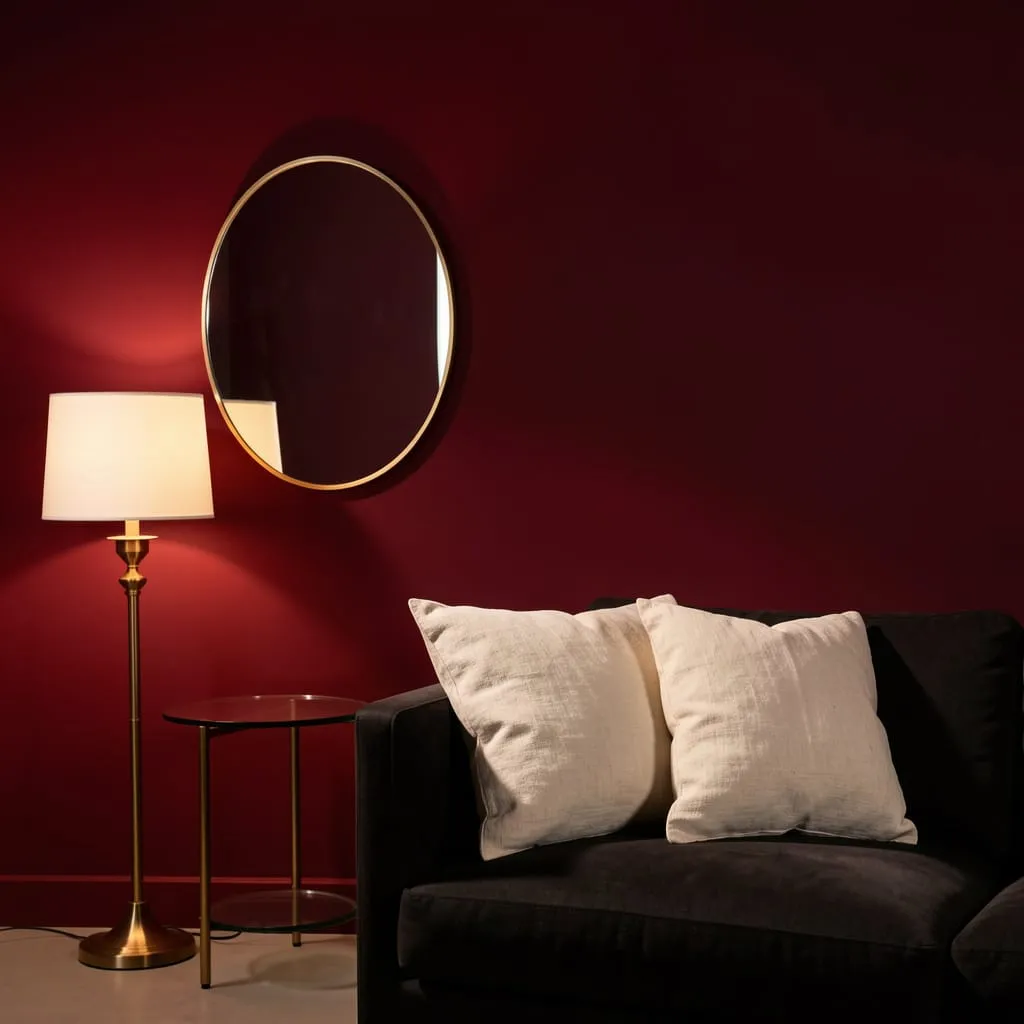
Even in a room where you’re embracing darkness, you need a few elements that bounce light around — otherwise the space will feel genuinely gloomy rather than atmospherically moody.
The tools for strategic light reflection in a dark red room:
- One large mirror: Reflects lamp light and creates the illusion of depth
- Warm metallic finishes: Brass, gold, and bronze catch light beautifully against red walls
- Glass surfaces: A glass coffee or side table reflects light upward
- Light-colored upholstery accents: Cream or ivory cushions brighten the seating area
Add Scent and Texture to Complete the Sensory Atmosphere
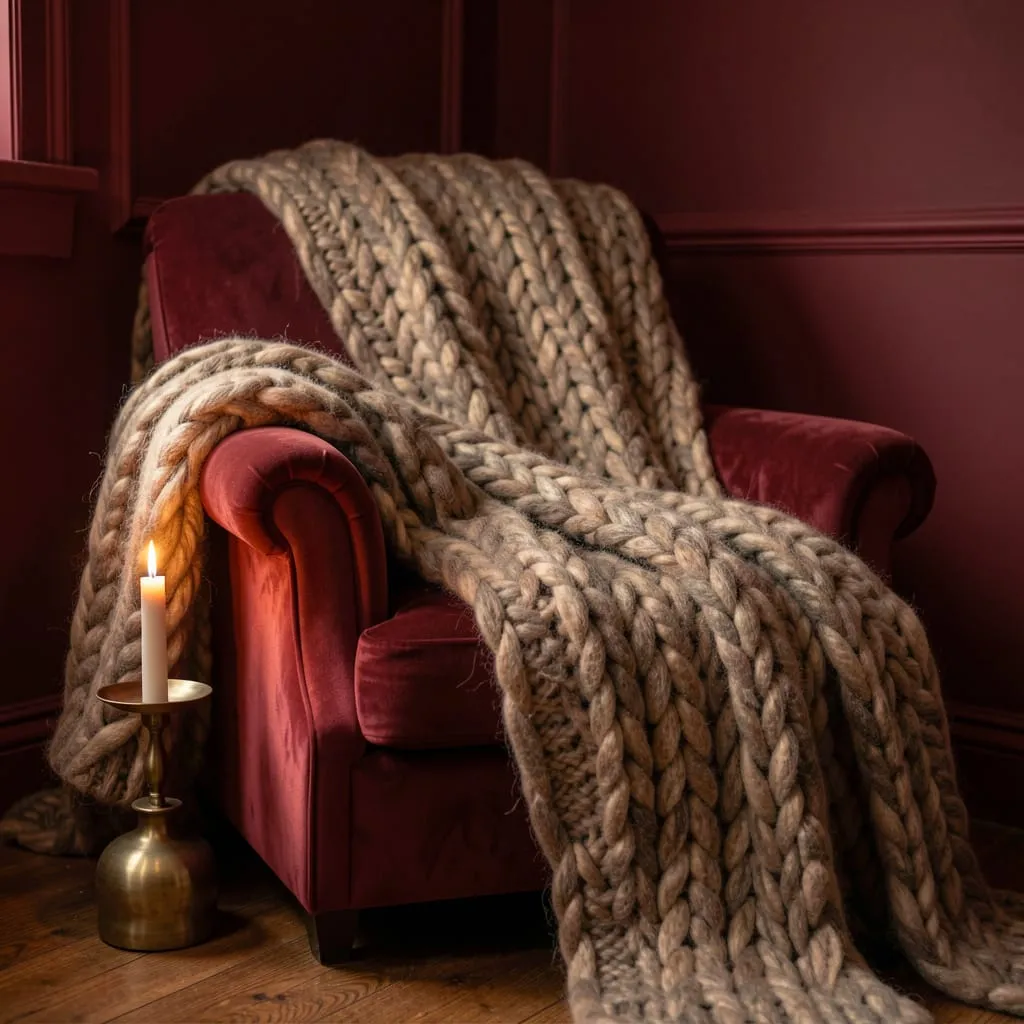
A dark red room engages more than just sight. The best versions feel atmospheric in a total-sensory way:
- Velvet and boucle: Look incredibly rich against red walls and invite physical comfort
- Layered rugs: A sheepskin over a flatweave adds texture and acoustic softness
- Candles and diffusers: Scent deepens the sense of atmosphere
- Heavy curtains: Even without windows, floor-length curtains add vertical drama
Dark Rooms Deserve Better Than White Paint
The dark room problem isn’t solved by fighting the darkness. It’s solved by designing with it.
Your next step:
See how the same approach works in a bedroom setting with our guide: [Red Bedroom Ideas That Actually Help You Sleep →]
Or explore the full [Red Interior Design category →] for every room type and lighting condition.