Moody Dark Red Interior Design for Introverts Who Love Cozy Spaces
There is a specific kind of room that introverts dream about — one that feels genuinely separate from the world outside, where the light is warm and low, where every surface invites rest, and where the color itself seems to wrap around you.
Dark red is that room’s color.
Not the bright, stimulating red of restaurants and warning signs. The deep, enveloping red of old library studies, candlelit dining rooms, and the kind of hotel suite that makes you never want to leave. This version of red is one of interior design’s most powerful tools for creating true sanctuary — and it’s chronically underused in contemporary homes that have defaulted to grey and white.
Here’s how to create it — and Tip #5 is the element that makes these rooms feel genuinely different from simply “dark.”
Embrace the Cave — It’s a Feature, Not a Bug
The design trend toward bright, airy, open spaces assumes that more light and more openness is always better. For introverts who find large, bright, exposed spaces exhausting rather than energizing, this assumption is simply wrong.
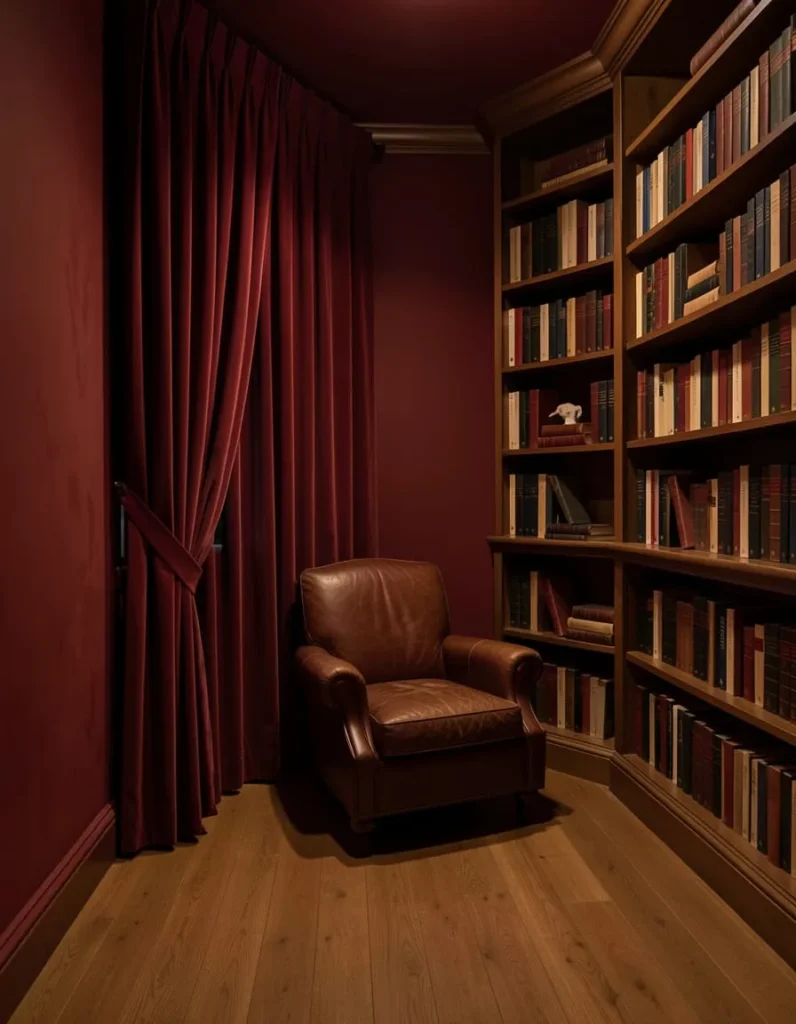
A dark red room with low lighting, enclosed proportions, and heavy textiles creates what psychologists call a “restorative environment” — a space that actively replenishes rather than demands. The enclosure is not claustrophobic; it’s intentional. The darkness is not depressing; it’s protective.
Lean into this completely. This room is not trying to appear larger or brighter than it is. It’s trying to be the best possible version of small, dark, and warm.
Choose the Darkest, Most Complex Red You Can Find
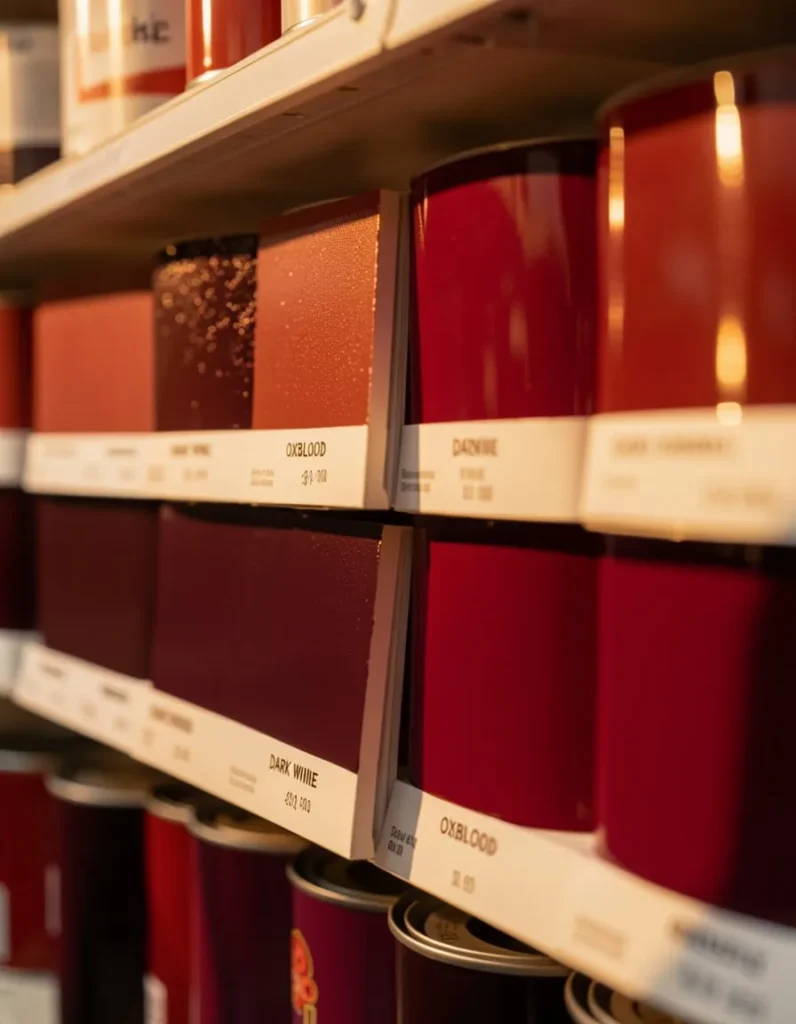
In dark red design, saturation is not the goal — depth is. The most atmospheric dark reds are complex, almost mysterious: they suggest burgundy, brown, and shadow simultaneously.
Top choices for dark, moody red:
- Oxblood: The definitive dark red. Earthy, complex, ancient-feeling.
- Bordeaux: Deep wine with cool undertones. The most sophisticated option.
- Dark Crimson: More red than the others, but still deep enough to avoid stimulation.
- Farrow & Ball Radicchio: A deeply beautiful, complex dark red that photographs magnificently.
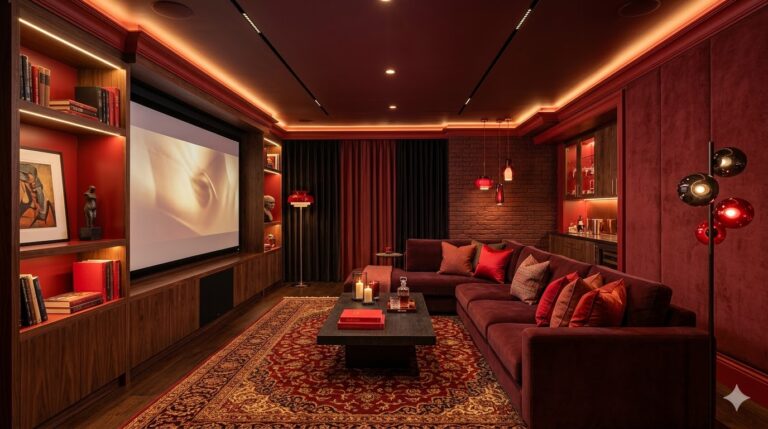
For this style, consider painting all four walls — or the ceiling too, for the ultimate cocoon effect. In a dark, moody red room, the single-accent-wall rule doesn’t apply. The goal is total immersion.
Layer Textiles Until the Room Feels Like a Nest
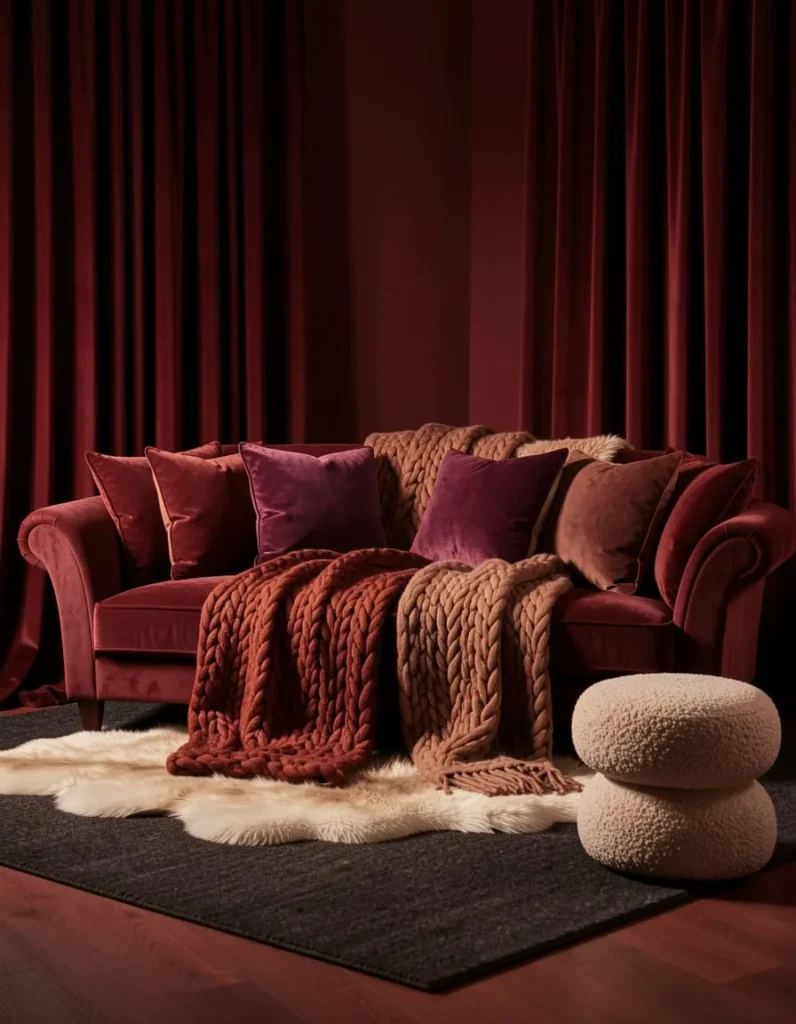
Dark red rooms require more textile layering than almost any other interior style — because the goal is a room that feels physically as enveloping as it looks visually.
The textile checklist for a dark red sanctuary:
- Velvet: On the sofa, armchair, or cushions. Non-negotiable.
- Chunky knit or boucle throws: At least two. One for the sofa, one for the reading chair.
- Layered rugs: A large base rug with a smaller textured piece on top.
- Heavy curtains: Floor to ceiling, pooling slightly. Velvet or heavy linen. Lined for blackout capability.
The tactile density of a well-layered dark red room is part of what makes it restorative — it communicates safety through texture.
Curate the Light With Obsessive Care
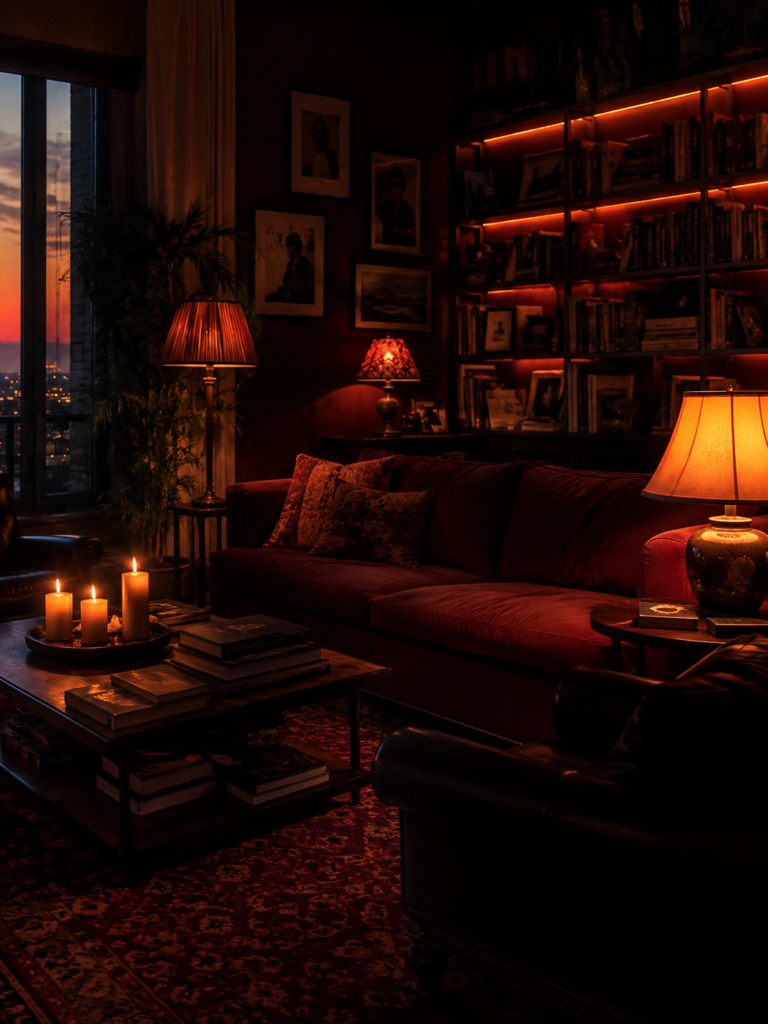
In a dark red room, lighting is the most important design decision you will make. Get this wrong and the room feels gloomy. Get it right and it feels like the most desirable place in your home.
The dark red lighting system:
- No overhead lighting at all in the evening. Remove the bulb if you have to.
- Minimum three warm light sources at floor and table height
- Candles: Real candles create moving light that no electric fixture can replicate
- Warm LED strips: Behind bookshelves, under furniture, or along architectural features
- All bulbs at 2200K–2700K: The warmer end of warm. Candlelight temperature.
The goal is a room that glows rather than illuminates.
Add Brass and Dark Wood — Nothing Else
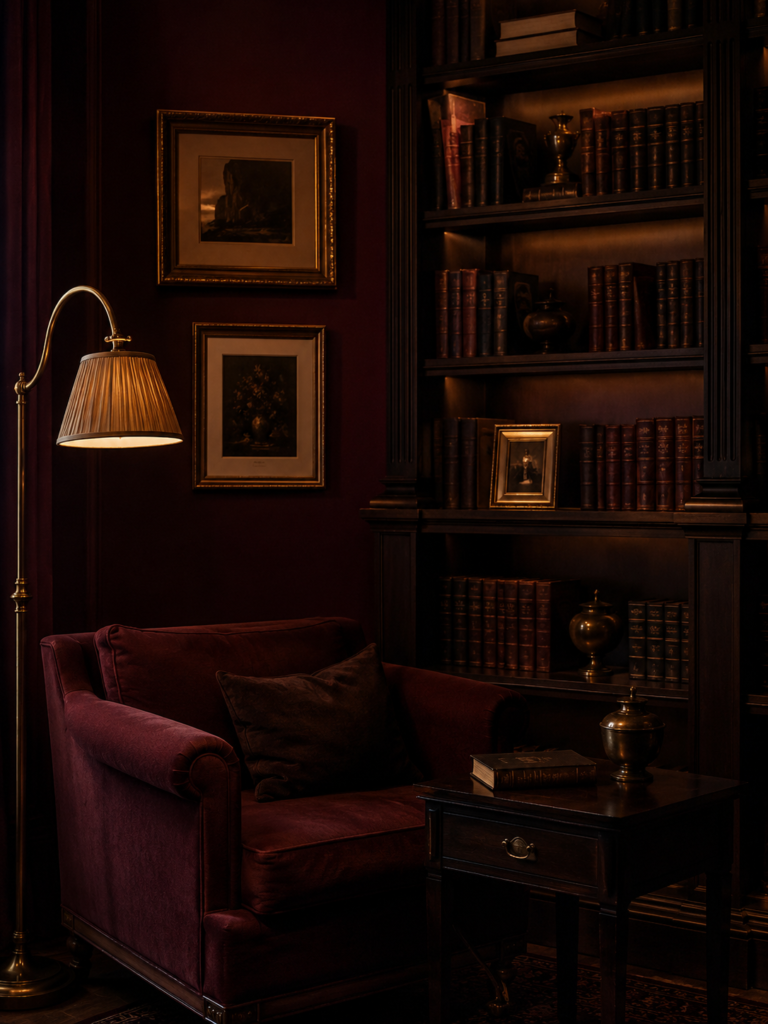
In a dark red room, material restraint is everything. Two materials — brass (or bronze) and dark wood — are the only non-textile additions you need.
Brass catches the warm light of your carefully curated lamps and glows against dark red in a way that nothing else does. Dark walnut or mahogany furniture adds depth without adding competing color. Everything else — chrome, white ceramics, bright colors, glossy surfaces — fights the mood and should be removed.
Build a Room for One Activity — and Do It Completely
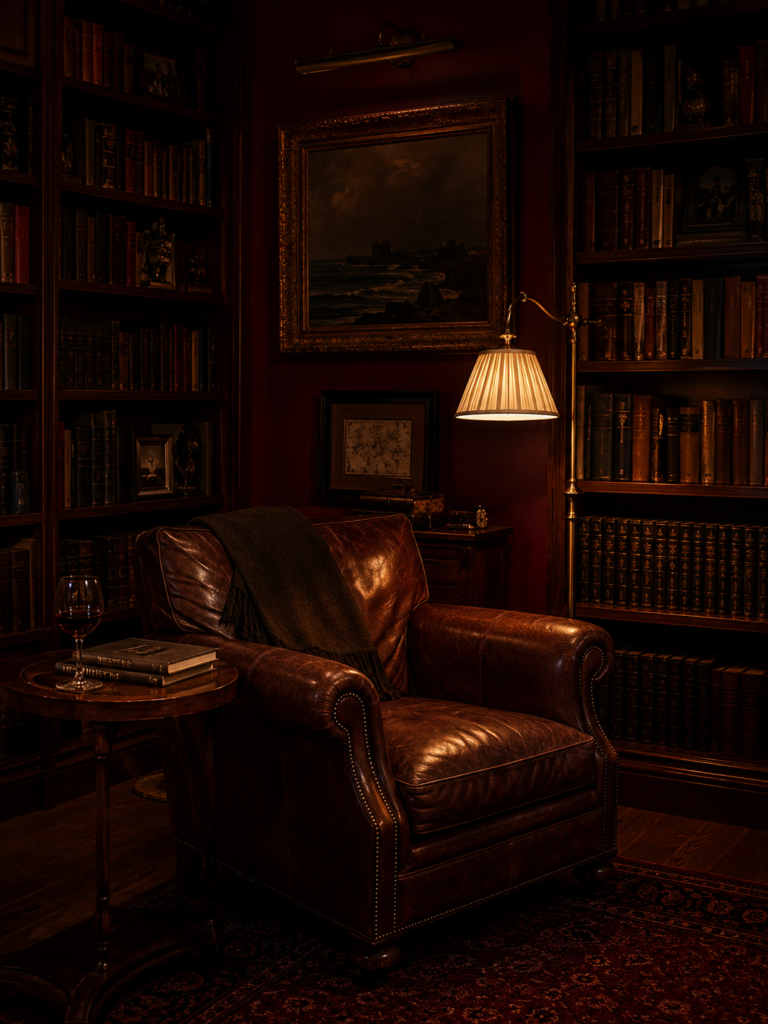
The dark red rooms that feel most restorative are built around a single activity. Choose your activity and build the room around it completely:
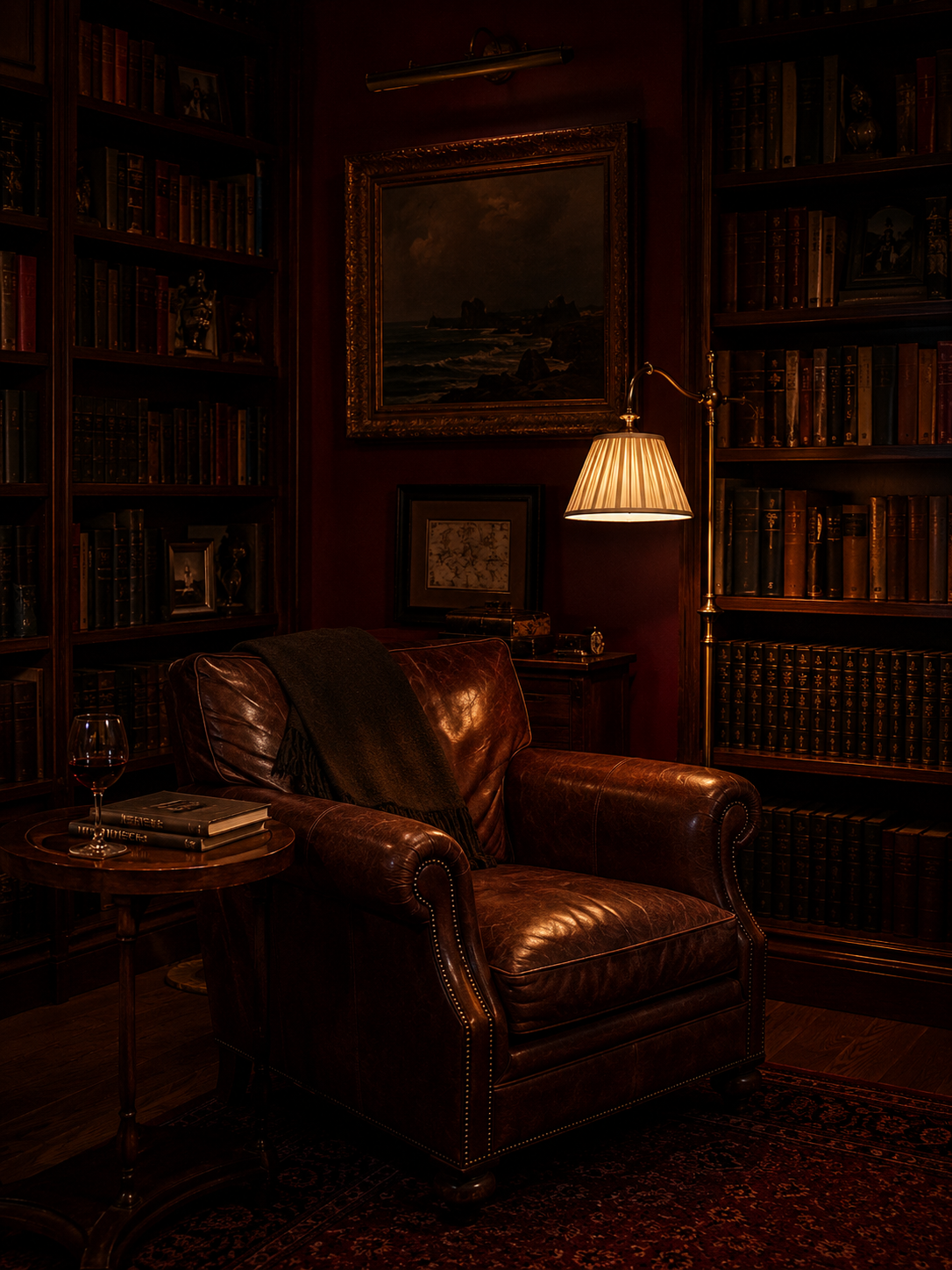
- Reading: The best armchair you can find, a floor lamp at exactly the right height, a small side table, floor-to-ceiling bookshelves, no television
- Music: A quality audio system, comfortable seating, acoustic treatment through textiles, no visual distractions
- Quiet conversation: Two armchairs angled toward each other, a small table between, candlelight
Singular purpose, complete execution. This is the dark red room at its best.
The World Has Too Many Beige Rooms
Introverts have been told for decades that bright, open spaces are aspirational. But some people restore in the dark, in the warm, in the small. A dark red room built for sanctuary is not a compromise. It’s a choice — and for the right person, it’s the best choice in the house.
Ready to build yours?
Our guide on [Red Bedroom Ideas That Actually Help You Sleep →] brings the same principles into the most private room in your home.
Or explore the full [Red Interior Design category →] for every shade, every room, and every mood.