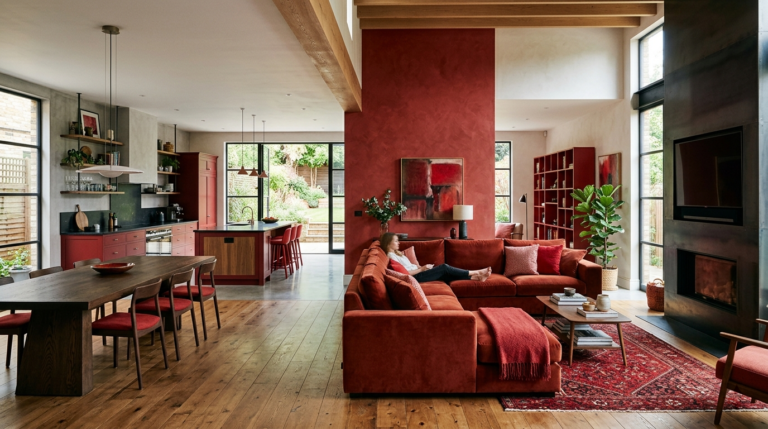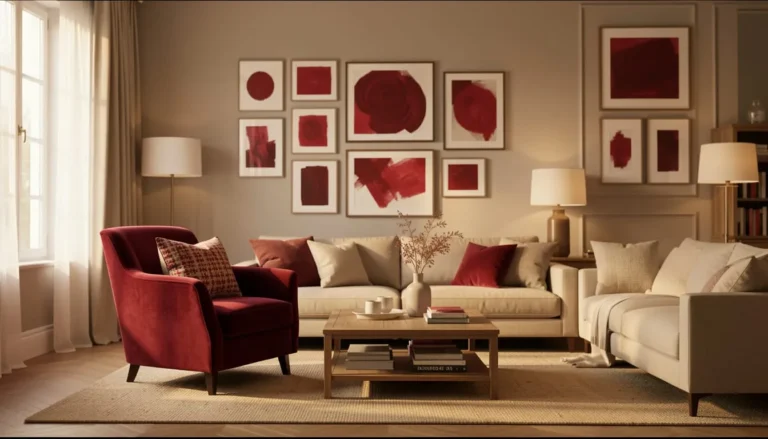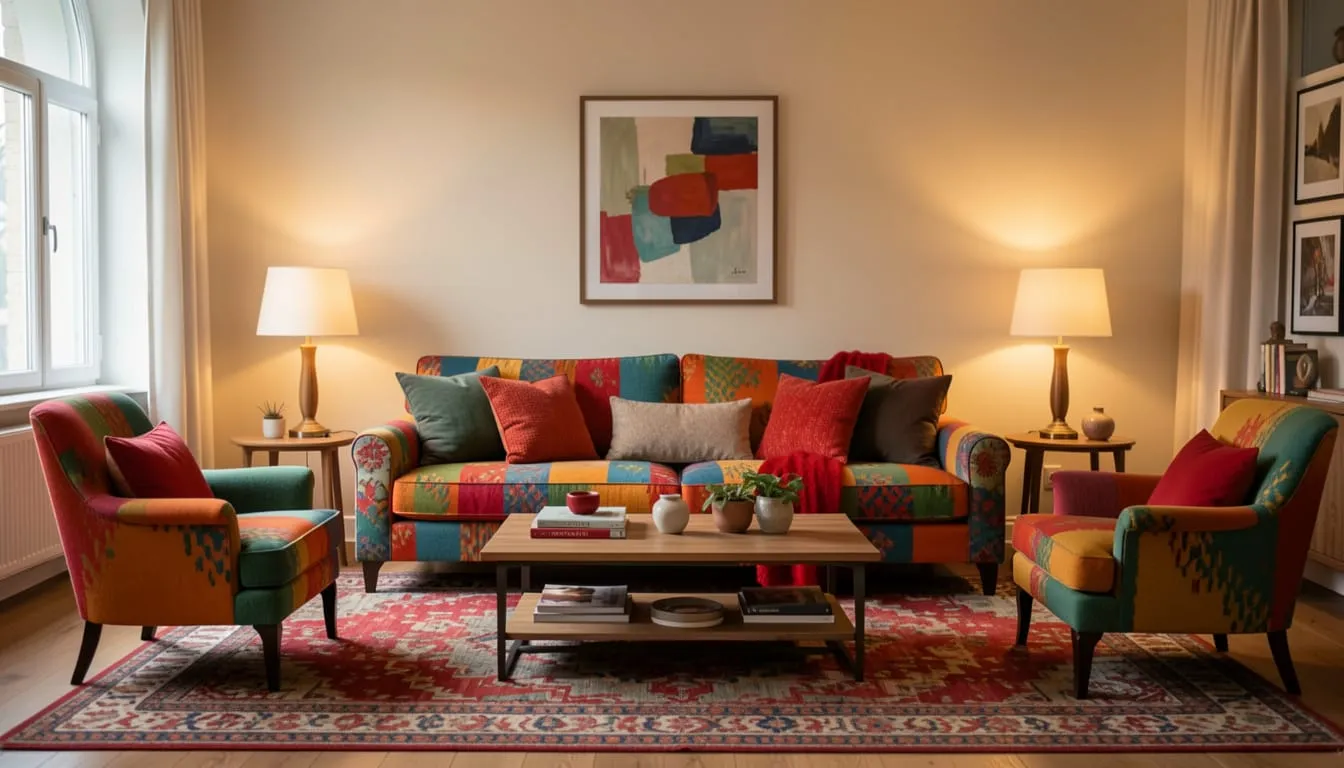
How to Use Red Accents When You Have Colorful Furniture Already
Most red interior design advice assumes you’re starting with a blank, neutral room. White walls. Beige sofa. Clean slate.
But what if you already have a green velvet sofa? A blue Persian rug? A yellow armchair you love? What if your room is already colorful and you want to add red without creating a visual argument between every piece in the space?
This is actually a more interesting design challenge than the blank-slate scenario — and it has a more interesting solution. Here’s how to introduce red into an already-colorful room without chaos, and why Tip #4 changes the whole approach.
Map Your Existing Colors Before Adding Anything
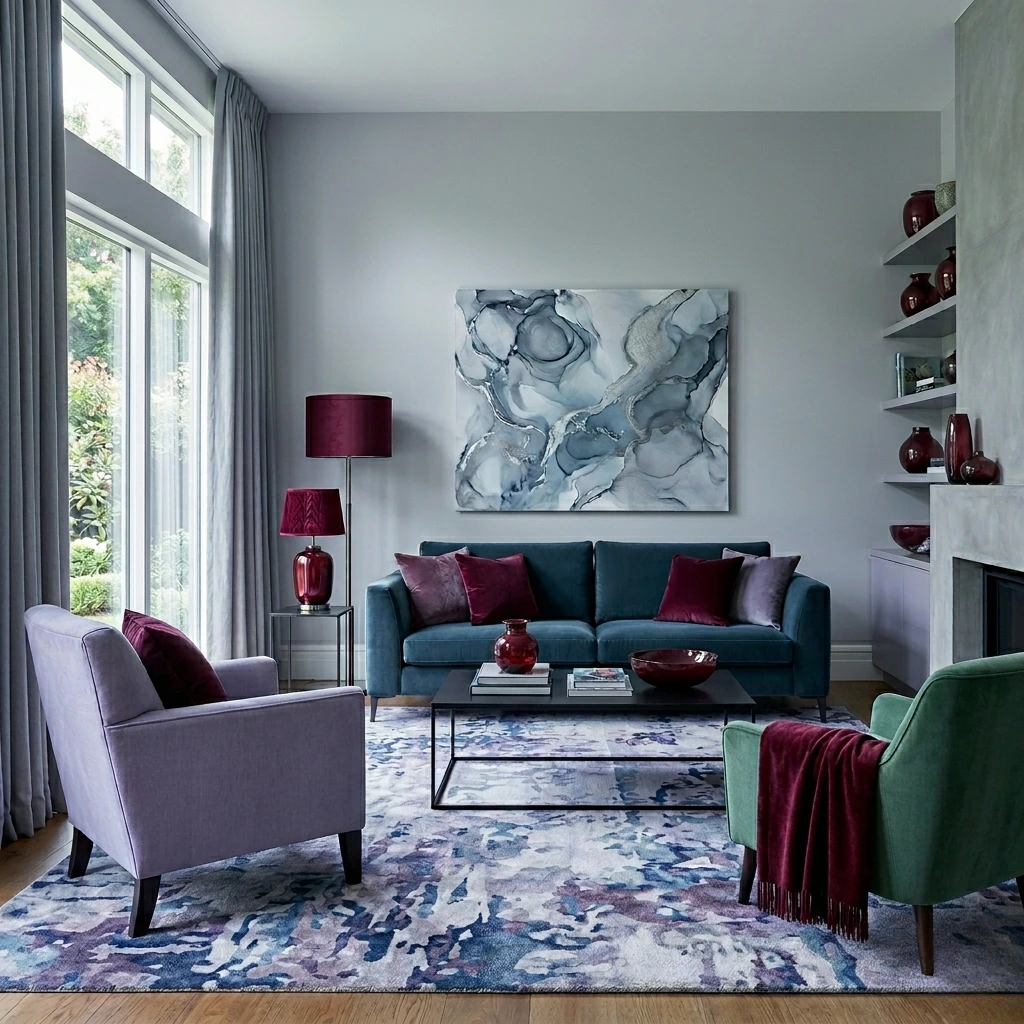
Before introducing red into a colorful room, you need to understand the color logic already present. Pull the dominant colors from your existing pieces and identify their undertones.
The key question: are your existing colors warm-toned or cool-toned?
- Warm-toned existing palette (mustard, olive, terracotta, warm teal): Red — particularly earthy, warm reds — will feel cohesive.
- Cool-toned existing palette (blue, lavender, cool green, grey): A cooler red — burgundy or wine — will integrate better. A warm red will clash.
- Mixed palette: Look at which direction the majority leans and use that as your guide for red shade selection.
Look for Red Already Hidden in Your Existing Colors
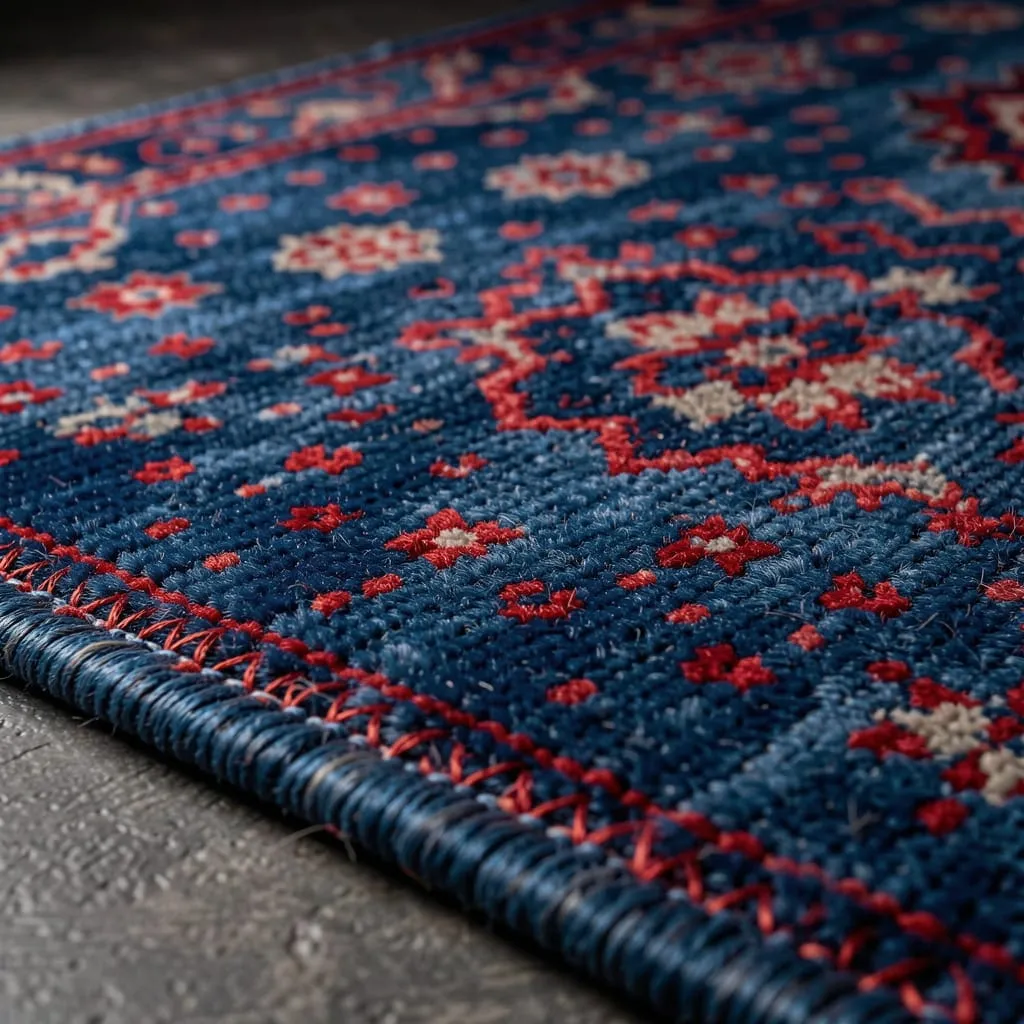
Red is almost always already present in a colorful room. It hides in the undertones of burgundy cushions, in the warm threads of a patterned rug, in the red-orange of a terracotta pot, in the warmth of brass hardware.
Look at your existing pieces with this question: where is red already quietly living? The answer tells you which shade of red to introduce explicitly — the one that amplifies something already present rather than introducing something new.
Introduce Red Through the Pattern Layer First
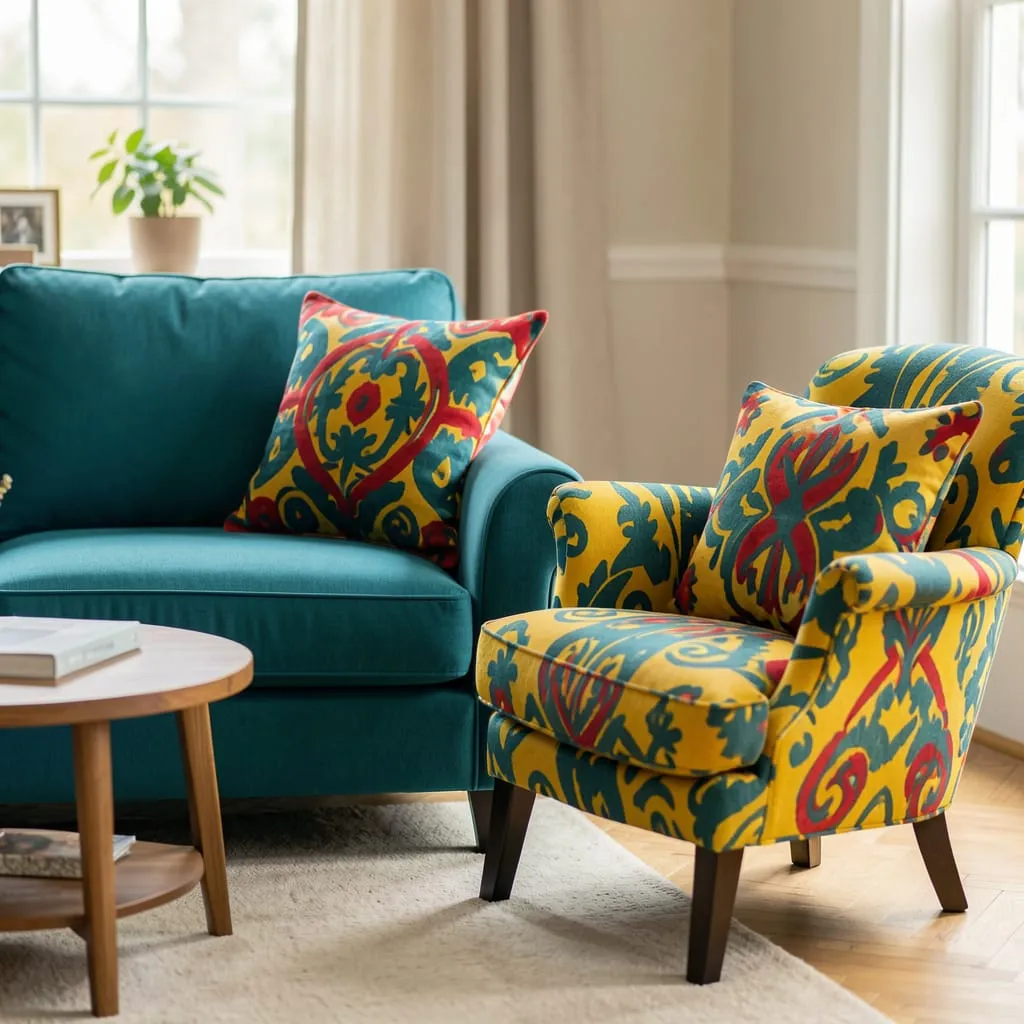
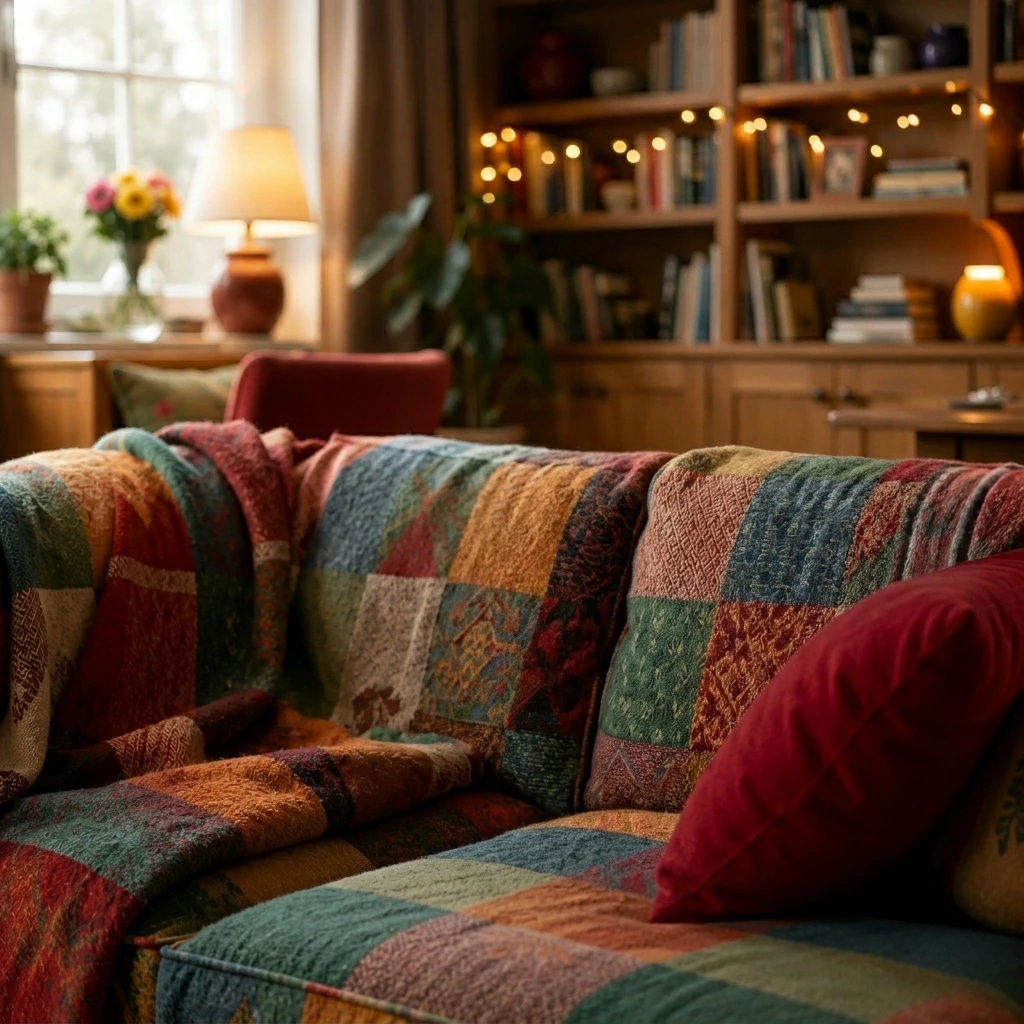
In a colorful room, the safest and most effective place to introduce a new color is through a pattern that contains both the new color and the existing ones. A patterned cushion, throw, or rug that includes red alongside your existing sofa color acts as a bridge — visually legitimizing the new addition by showing the room how red and the existing colors can coexist.
Once you’ve established red through pattern, adding a solid red piece feels natural rather than jarring — because the room has already demonstrated that it can handle the combination.
Use Red as the Room’s Unifying Element, Not Another Competing One
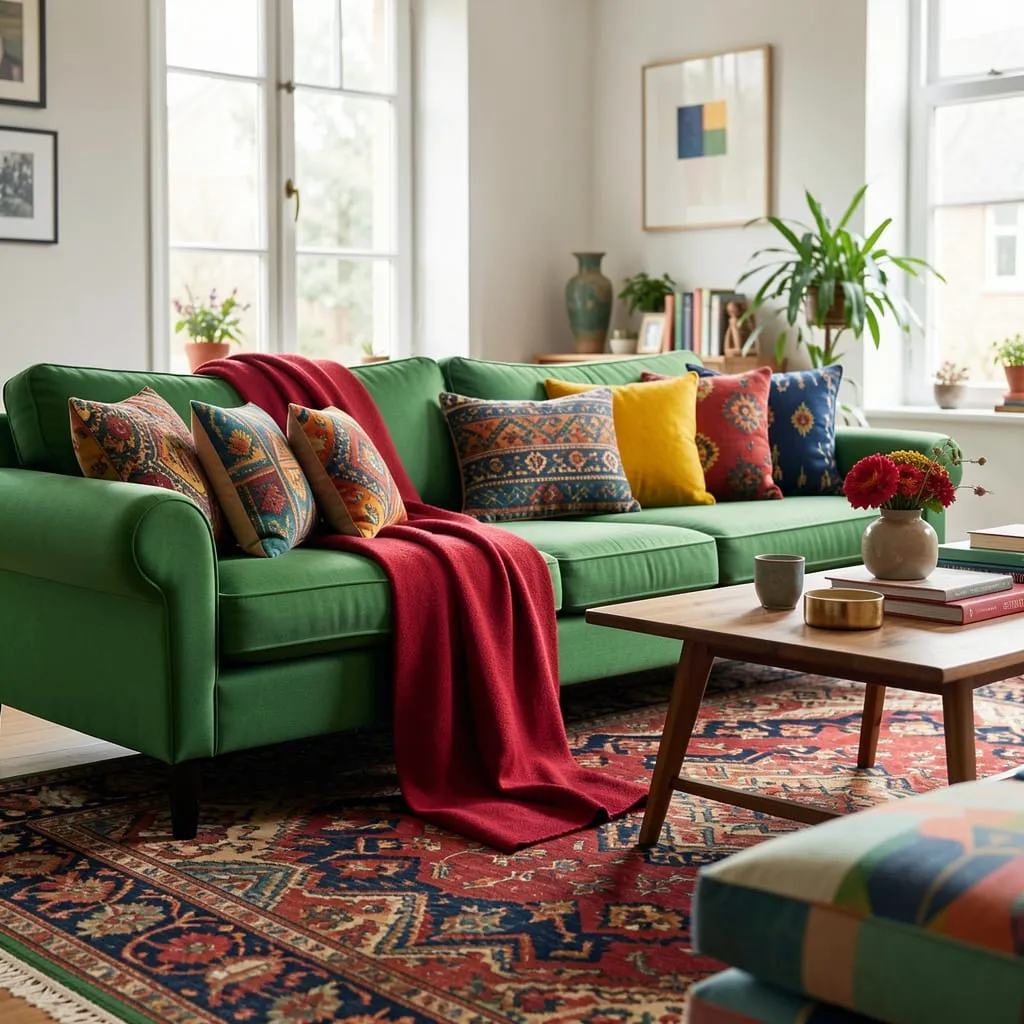
In the right position and shade, red doesn’t add to the visual competition. It resolves it.
Red is the warmest color in the spectrum — and warmth, in the right shade, acts as an anchor for a room with multiple competing colors. A deep red throw on a teal sofa, a burgundy cushion on a patterned chair, or a terracotta rug under a colorful seating arrangement can bring visual order to what was previously feeling chaotic.
Test this principle by draping a red blanket over your existing furniture and stepping back. If the room suddenly feels more cohesive, red is doing exactly this job.
Keep Red Contained to One or Two Elements Maximum
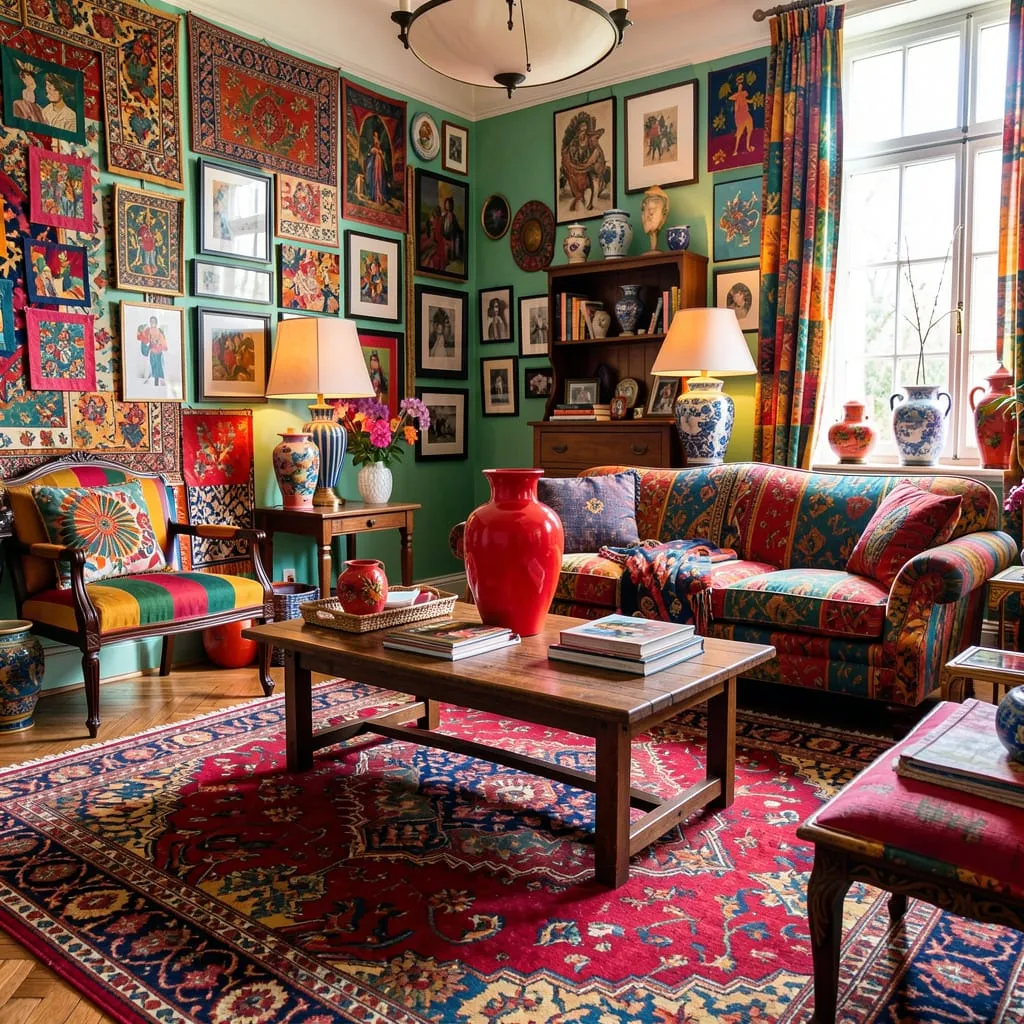
In a room that already has significant color, the amount of red that works is much smaller than it would be in a neutral room. One or two red elements — not five or six — is almost always the right amount.
The more existing color competition in a room, the smaller and more restrained your red introduction should be. A neutral room might absorb a red accent wall and red sofa without issue. A colorful room needs only a red vase and two cushions to register red as a considered addition.
Assess and Adjust After Each Addition
In a colorful room, the feedback loop between additions is more important than in a neutral room — because the interactions between colors are more complex and less predictable.
Add one red element. Wait a few days. Assess from multiple positions in the room and in different lighting conditions. Ask: does this feel right, or is there a specific clash that bothers me? Then adjust — change the shade, move the element, or try a different position.
Colorful Rooms Are Ready for Red — They Just Need the Right Approach
The rooms that are already full of color often look most spectacular with red — because the existing warmth and energy makes red feel completely at home.
Ready to take the next step?
See how a specific colorful pairing works in our guide on [Red and Blue Interior Design: 10 Unexpected Pairings That Stun →]
Or browse the full [Red Interior Design category →] for every color pairing and room application.