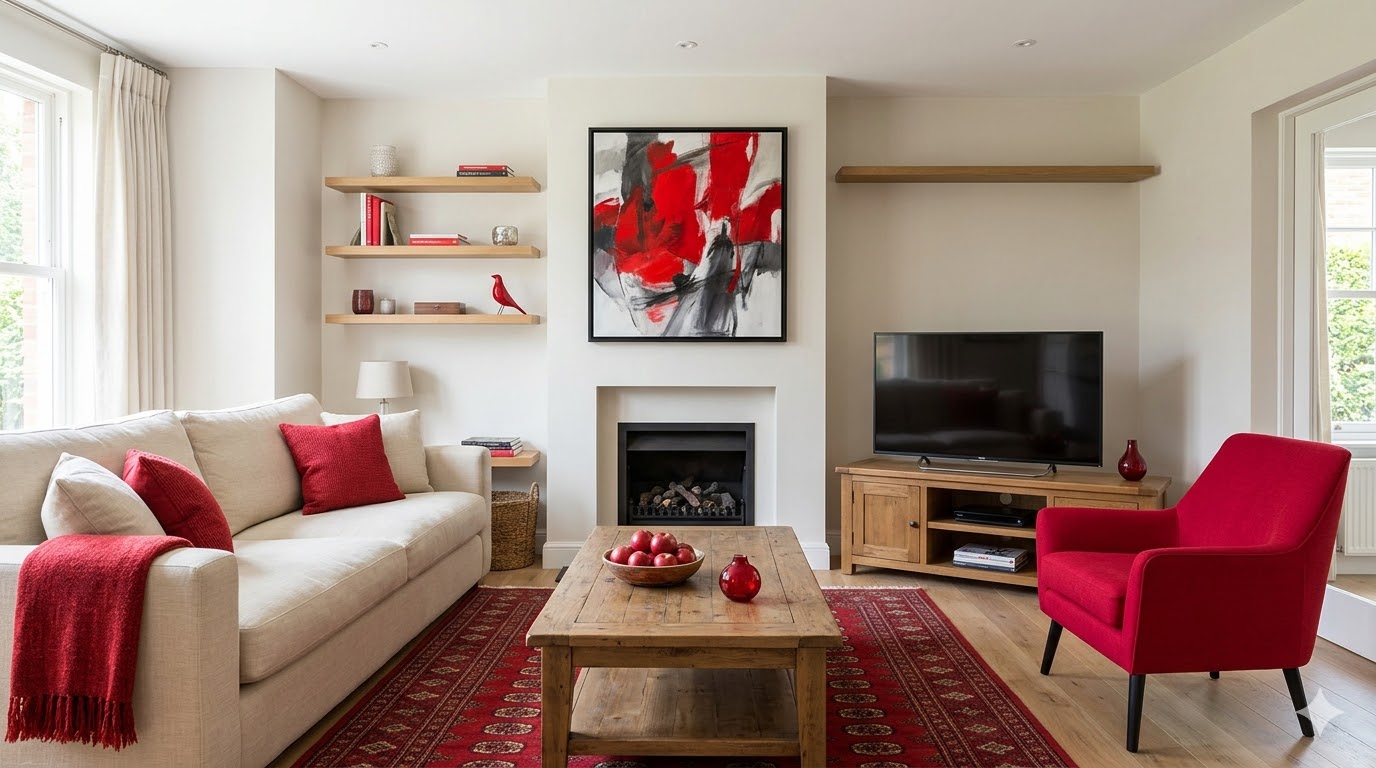
How to Transition Out of Red If You’ve Overdone It
There’s a specific moment most people who’ve overdone red can pinpoint exactly. You walk into your own living room after being away for a few days, and the first thing you feel is: too much.
It happens. Red is a bold color, and bold colors can be overdone — particularly when you added things quickly, enthusiastically, without quite stepping back enough between decisions. The room that felt exciting when you were building it can start to feel exhausting to live in.
The good news: transitioning out of too much red doesn’t require gutting the room. It requires a few specific subtractions — and sometimes, one or two additions that rebalance what’s already there.
Here’s the exact process — and Tip #3 is the one that saves most people from having to repaint anything.
Diagnose the Problem Before Reaching for the Paintbrush
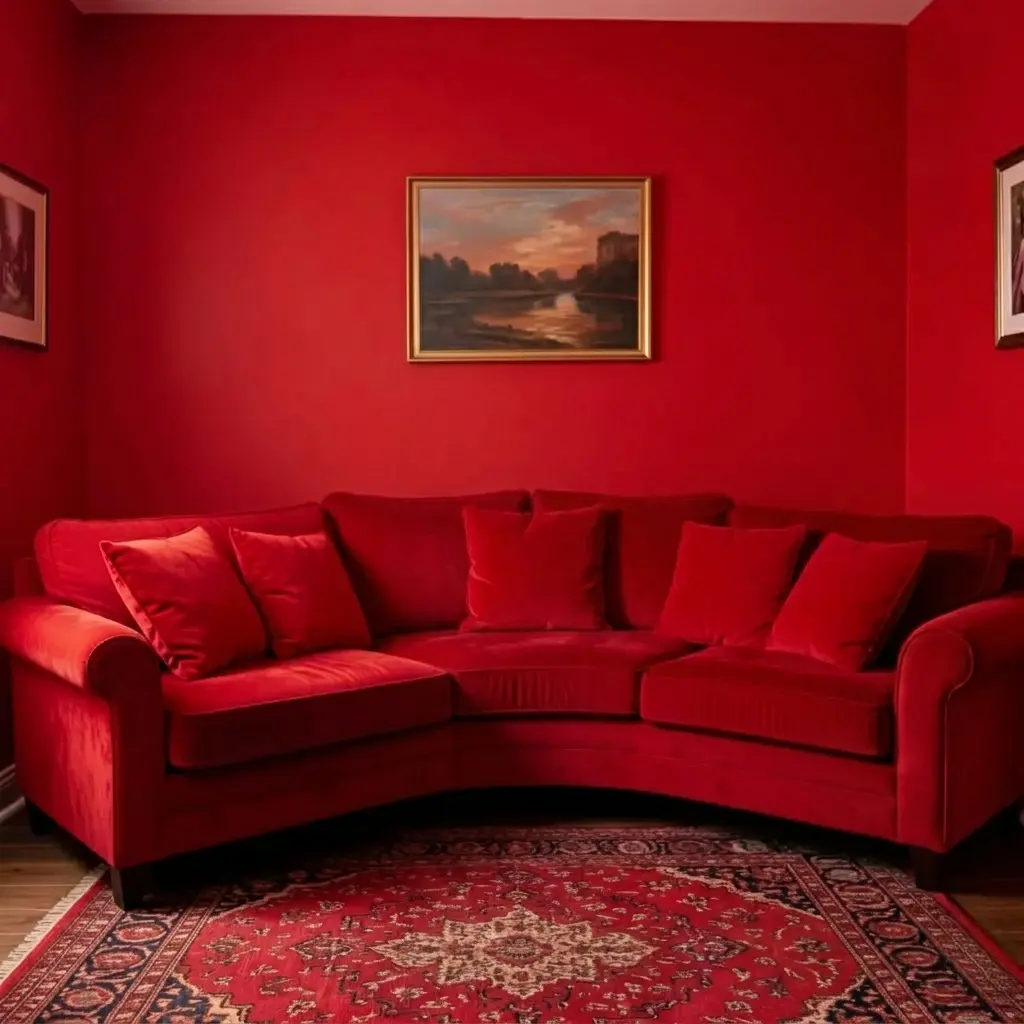
Before changing anything, identify specifically what’s creating the overwhelm. Most “too much red” situations are caused by one of three things:
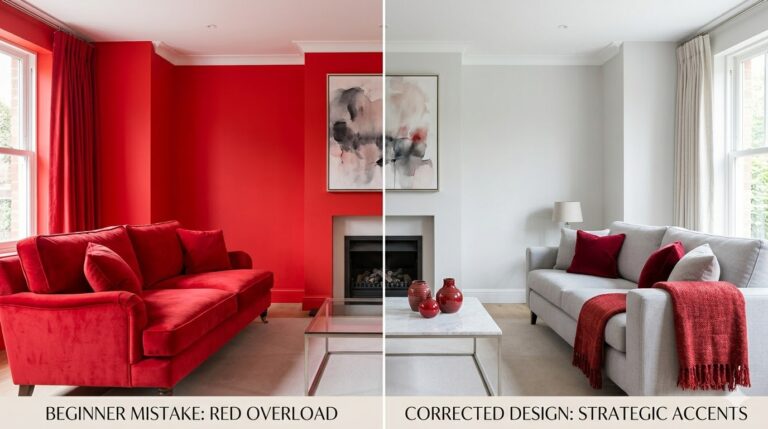
- Too many red surfaces simultaneously: Red walls + red sofa + red rug = nowhere for the eye to rest
- Wrong shade in wrong light: A red that looked great in the store looks aggressive in your specific room’s light
- Insufficient neutral contrast: Not enough white, cream, or natural wood to give the red breathing room
Each diagnosis has a different solution — and most of them don’t involve repainting.
Remove the Easiest Red Element First
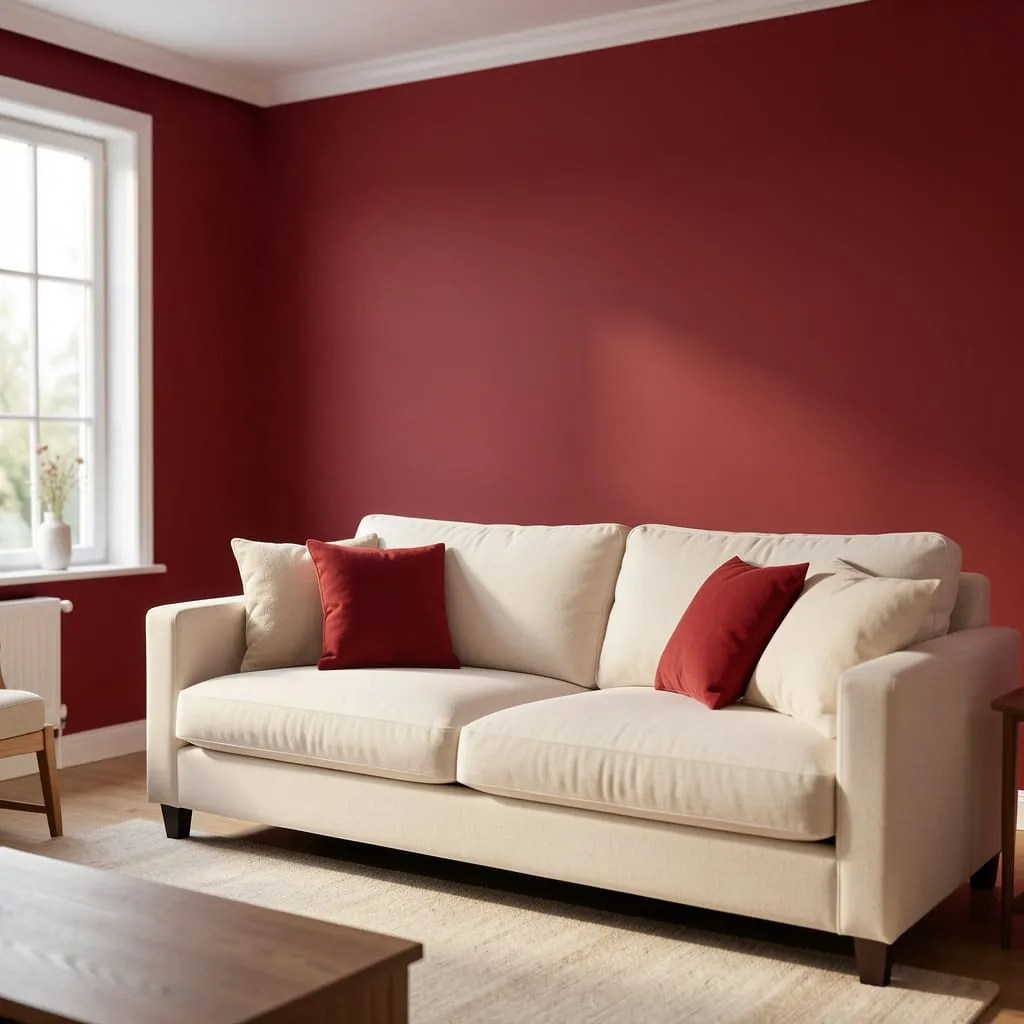
The fastest way to reduce red overwhelm without any permanent change is to remove or replace the most easily changed red elements: cushions, throws, rugs, and accessories.
Work from smallest to largest:
- Remove red cushions and replace with cream or neutral alternatives
- Replace or remove a red throw
- Roll up a red rug and replace with a neutral alternative
- Remove red accessories from shelves and surfaces
After each removal, stop and assess. Most people find that removing two or three smaller red elements resolves the overwhelm entirely — without touching the walls.
Add White or Cream to Rebalance — Before Removing Red
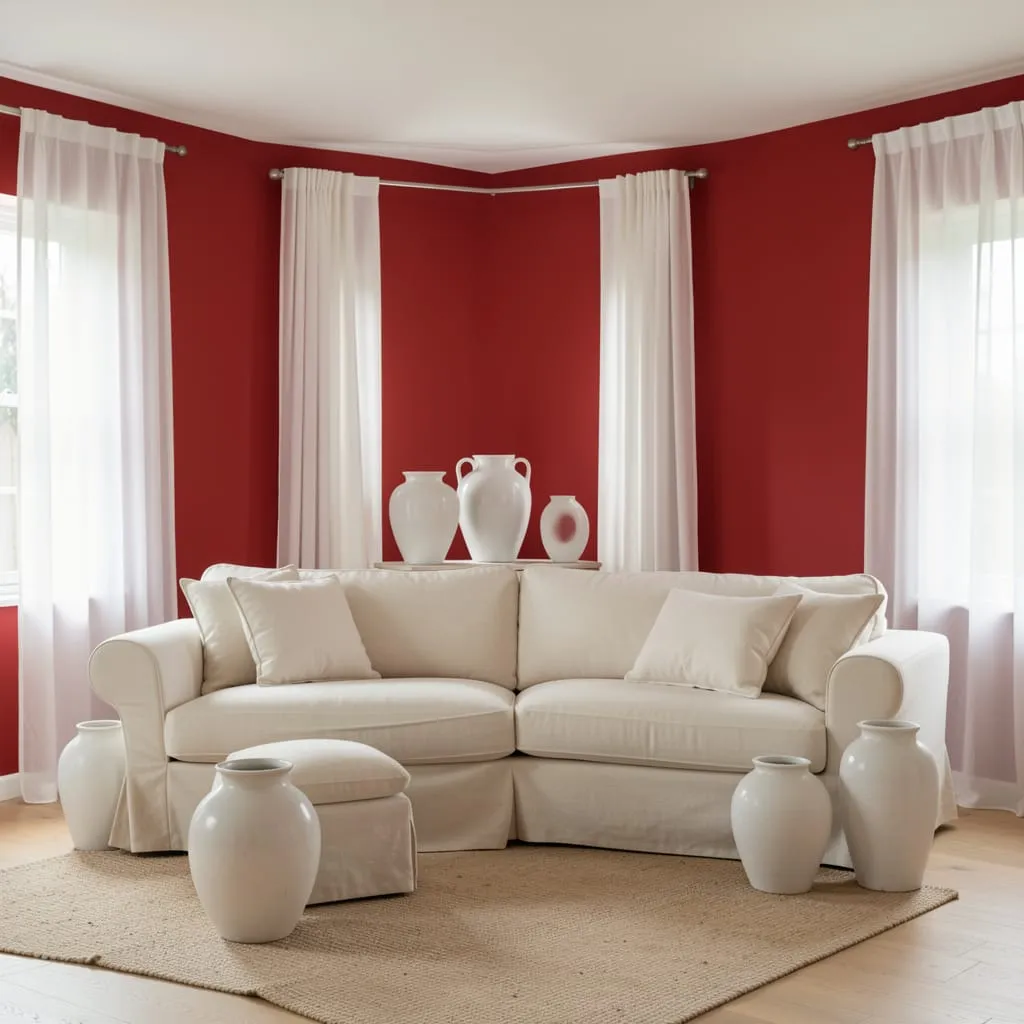
Instead of removing red, add white. This is the counterintuitive move that saves most red rooms from a complete overhaul.
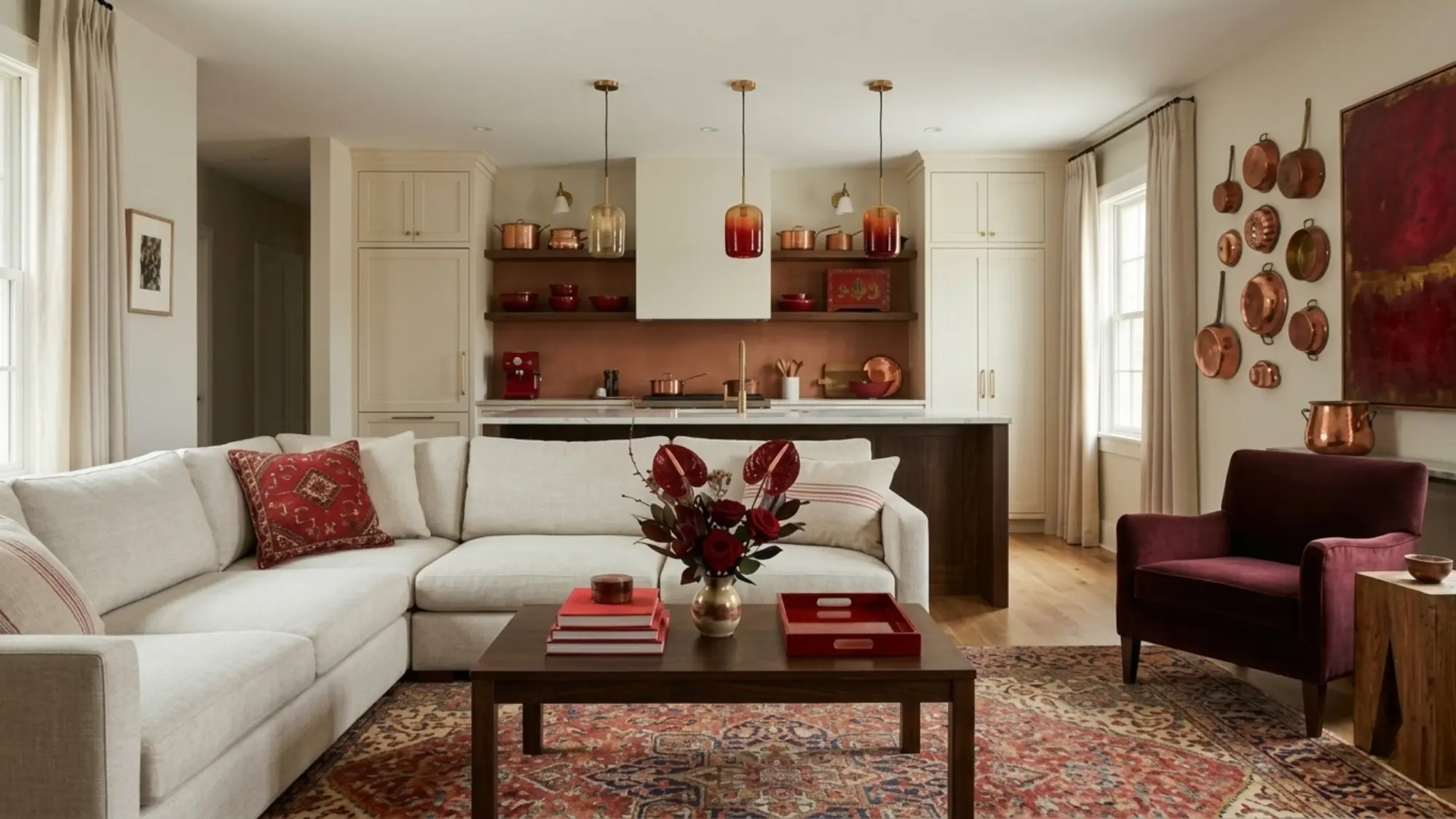
A cream slipcover over a red sofa. White ceramic accessories replacing darker ones. A large white or cream throw draped visibly across furniture. Sheer white curtains added inside any existing darker curtains.
Each white addition doesn’t reduce the amount of red in the room — it creates contrast that makes the red feel more intentional and less overwhelming. The red stays; it just has more room to breathe.
Rebalance the Lighting Before Deciding on Paint
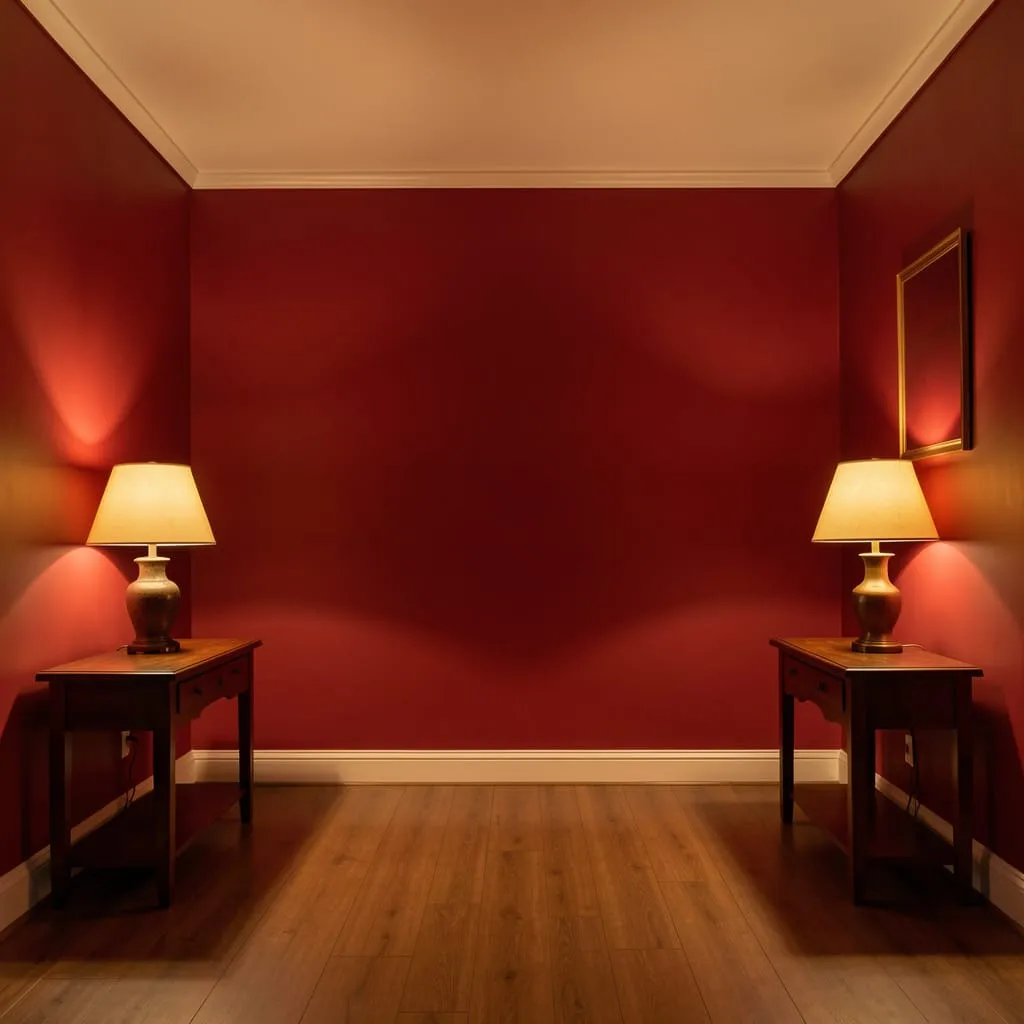
Before repainting a single wall, change the lighting. Replace any cool bulbs with warm 2700K ones. Turn off overhead lighting. Add a floor lamp. Dim whatever you can.
Sit in the room for an evening with only warm lamp light. For many people, this single change transforms a room they were about to repaint into one they’re happy to live in. Red under warm light is a completely different experience than red under cool, bright overhead lighting.
If the room still feels wrong after the lighting change, then consider the next steps.
Introduce a Strong Second Color to Compete With the Red
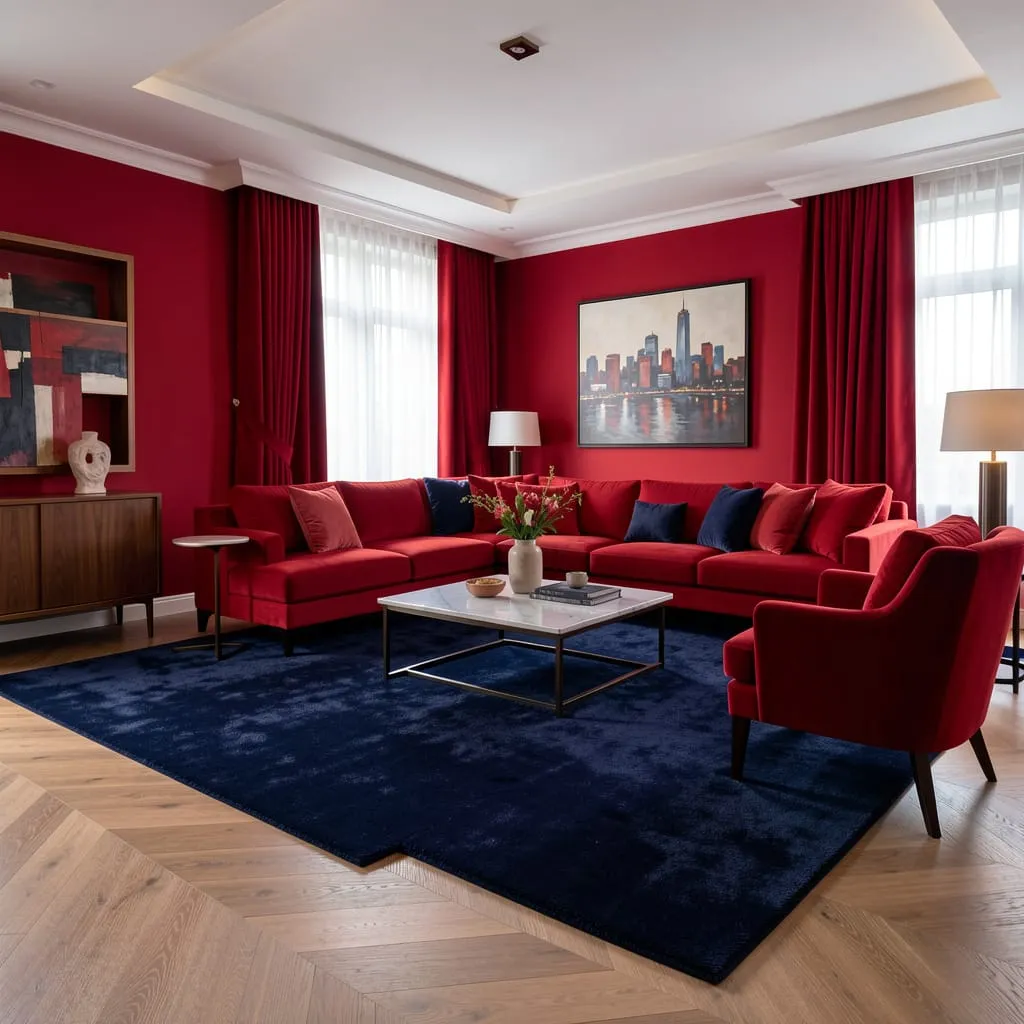
Sometimes the problem isn’t too much red — it’s not enough competition. A room where everything supports and echoes red has no visual tension, no place for the eye to rest.
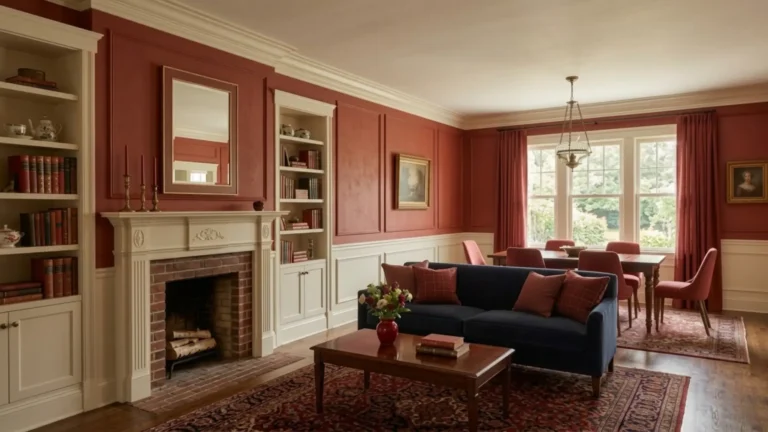
Introducing a strong second color — navy, deep olive, charcoal, or dark teal — creates the visual tension that makes red feel purposeful rather than excessive.
A navy rug in a very red room. An olive green armchair. A large piece of art with dark blue or green as the primary color. These additions don’t reduce the red; they give it a partner that makes it make sense.
If You Must Repaint — Do One Wall, Not All of Them
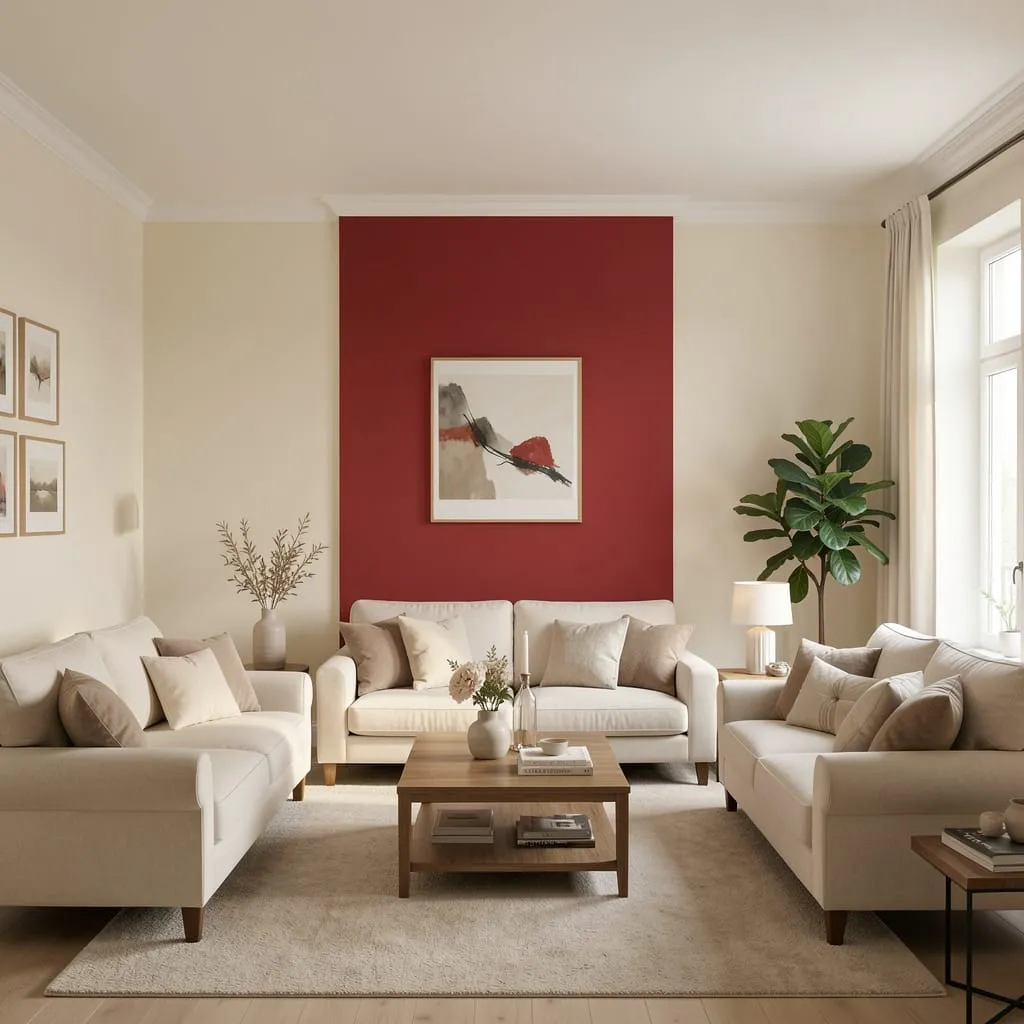
If you’ve tried the previous steps and still feel the room needs repainting, start with the walls you’ve done too many of — not the one you want to keep.
In a four-wall red room, repainting three walls to cream and keeping one creates a much more balanced result than starting over entirely. You preserve the investment and intention of the original color choice while solving the specific problem of too much coverage.
Paint the three less-prominent walls cream. Keep the primary accent wall. Step back and live with the result for two weeks before making any further decisions.
You Haven’t Failed — You’ve Iterated
Every great room goes through revision. The first version is rarely the last. Transitioning out of too much red is not undoing a mistake. It’s the natural next step in a design process that was working.
Your next step:
Now that you understand how to pull back from red, our guide on [How to Add Red to a Neutral Home Without Starting Over →] shows you the controlled, step-by-step approach that builds toward the right amount from the beginning.
Or browse the full [Red Interior Design category →] to find the specific red application that works for your space, your light, and your life.