Red Interior Design for Couples Who Can’t Agree on a Color
My partner wanted red. I wanted white. We compromised on beige and resented each other for two years.
Don’t do what we did.
The real solution to the “we can’t agree on a color” problem isn’t compromise in the traditional sense — where both people get less than they wanted. It’s finding the version of the idea that genuinely satisfies both people’s underlying needs.
Red is one of the most polarizing colors in home design. One person sees drama and warmth. The other sees aggression and overwhelm. Both are right — about different versions of red. Here’s how to find the version that works for both of you, and Tip #5 is the one that saved our living room.
Figure Out What You’re Each Actually Reacting To

Before you can agree on red, you need to understand what you’re actually disagreeing about. In most couples’ color conflicts, the issue isn’t the color — it’s a specific version of it.
Ask each other:
- “When you picture red in this room, what specifically worries you?”
- “What feeling do you want this room to have?”
- “Is there a room you’ve seen that felt right to you?”
Common answers reveal the real issue:
- “It’ll be too dark” → concern is light and space, not color
- “It’ll look aggressive” → concern is saturation, not hue
- “I’ll get tired of it” → concern is longevity, not the choice itself
Once you identify the actual objection, you can address it directly — and usually find a version of red that resolves it completely.
Find the Shade of Red You Both Actually Like
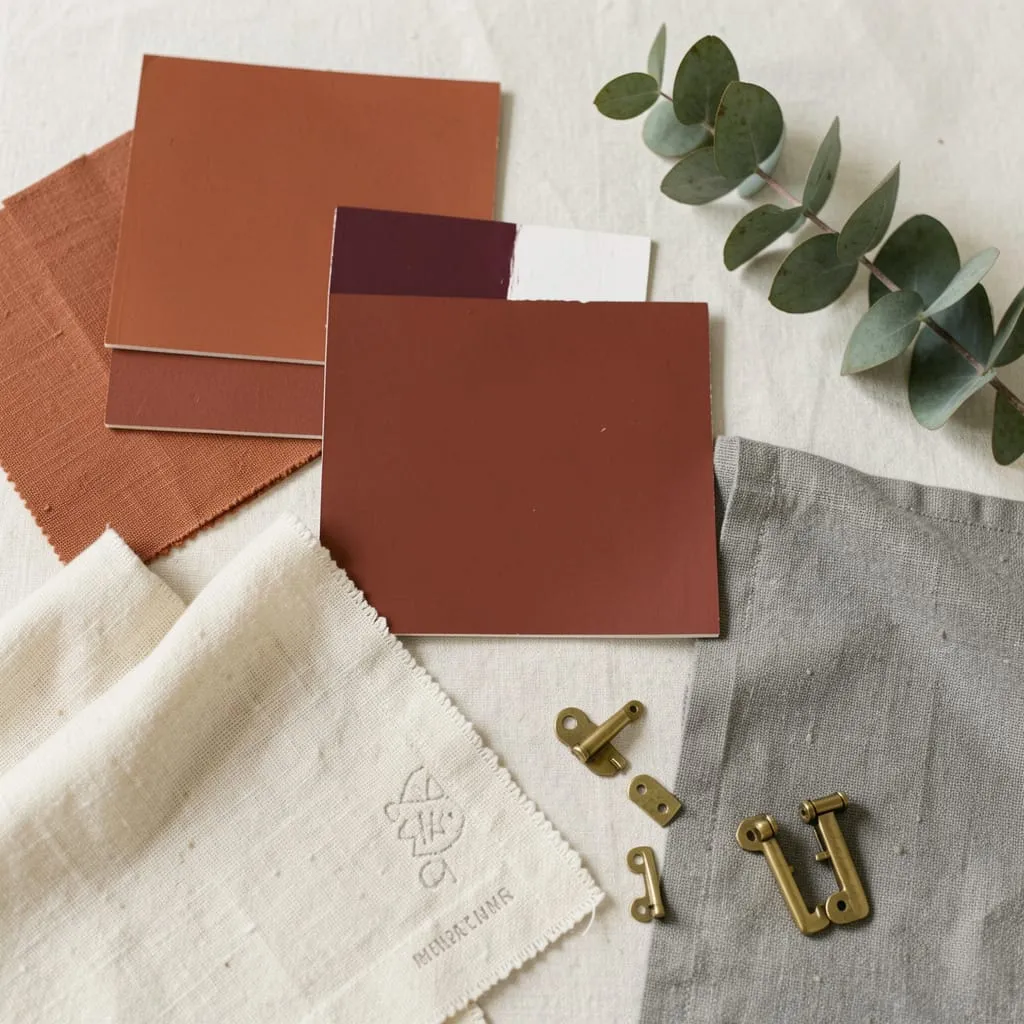
Run this exercise together: pull up 10–15 real room images featuring different shades of red and rate each one independently (1–5). Compare your ratings. You’ll almost always find two or three shades you both scored highly.
Common middle-ground discoveries:
- Terracotta: Earthy and warm, feels natural rather than bold. Frequently loved by both partners.
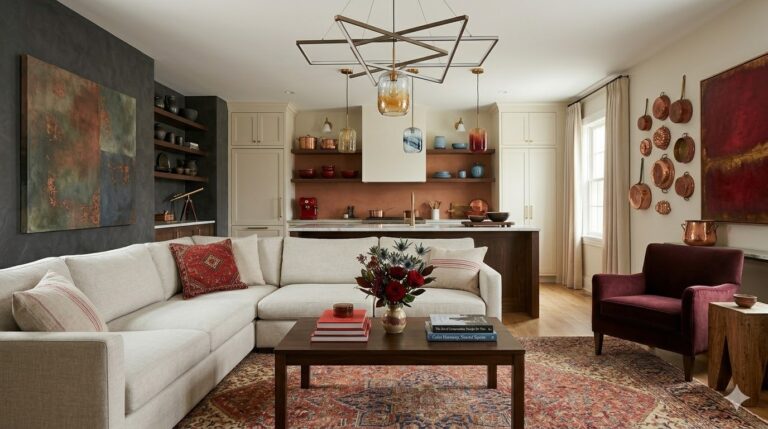
- Burgundy/oxblood: Deep and sophisticated. Often approved by people who initially resisted red.
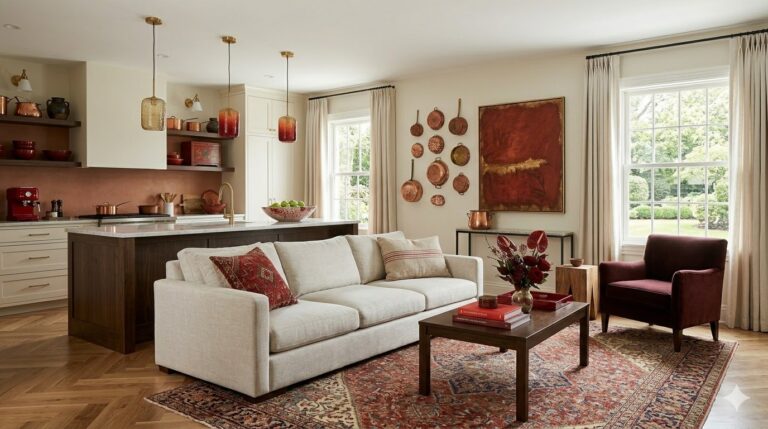
- Brick red: Muted, textural, reminiscent of natural materials. Bridges bold and neutral.
The shade you both score highest is your starting point — not the shade either of you imagined when the argument started.
Agree on Reversibility Before You Commit
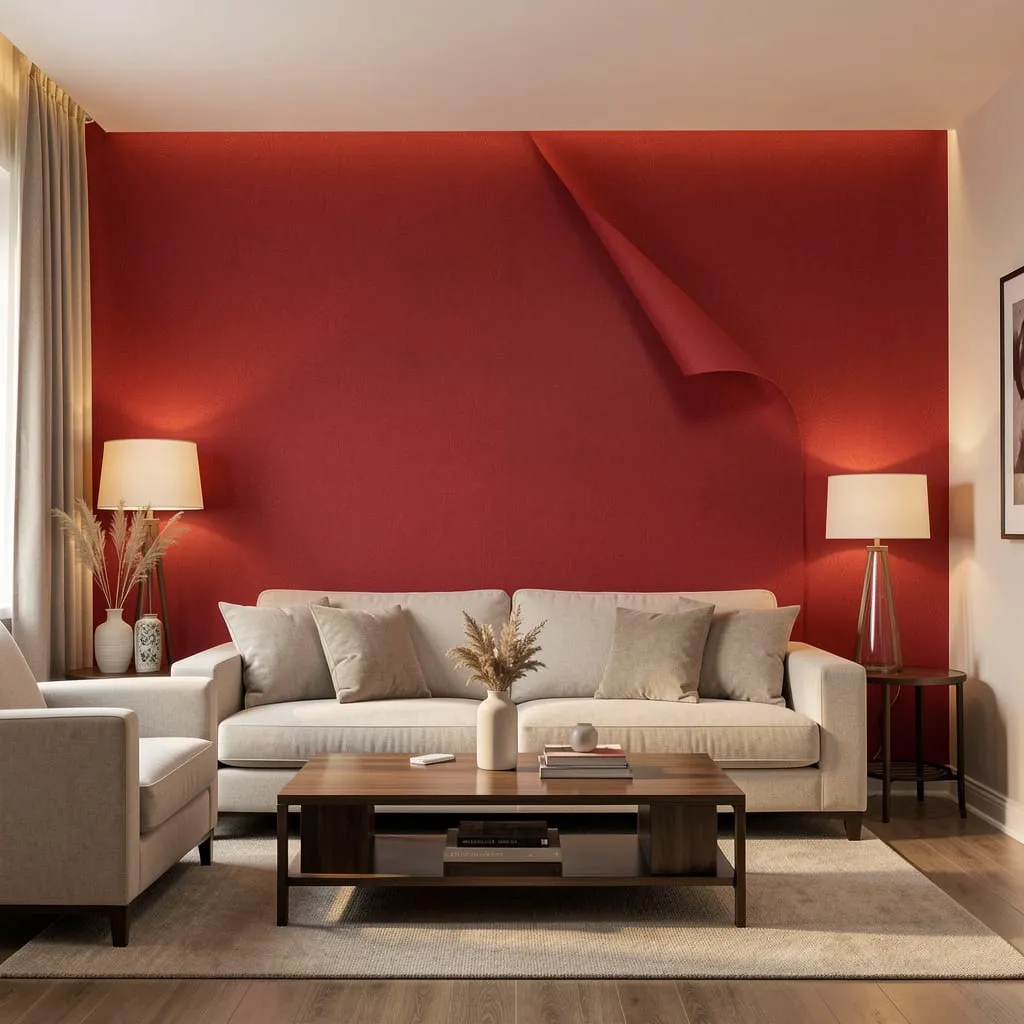
One of the biggest sources of resistance in color disagreements is permanence anxiety. Address this directly before you start:
- Start with one wall, not all four. Agree that if it doesn’t feel right after 30 days, you’ll reassess.
- Consider removable wallpaper for the first round. High-quality peel-and-stick options look virtually identical to painted walls and remove cleanly.
- Set a review date. Agree to live with the change for 60 days before making any final calls.
Reversibility turns a scary permanent decision into a low-stakes experiment — and experiments are much easier to say yes to.
Let the Hesitant Partner Control the Surrounding Elements
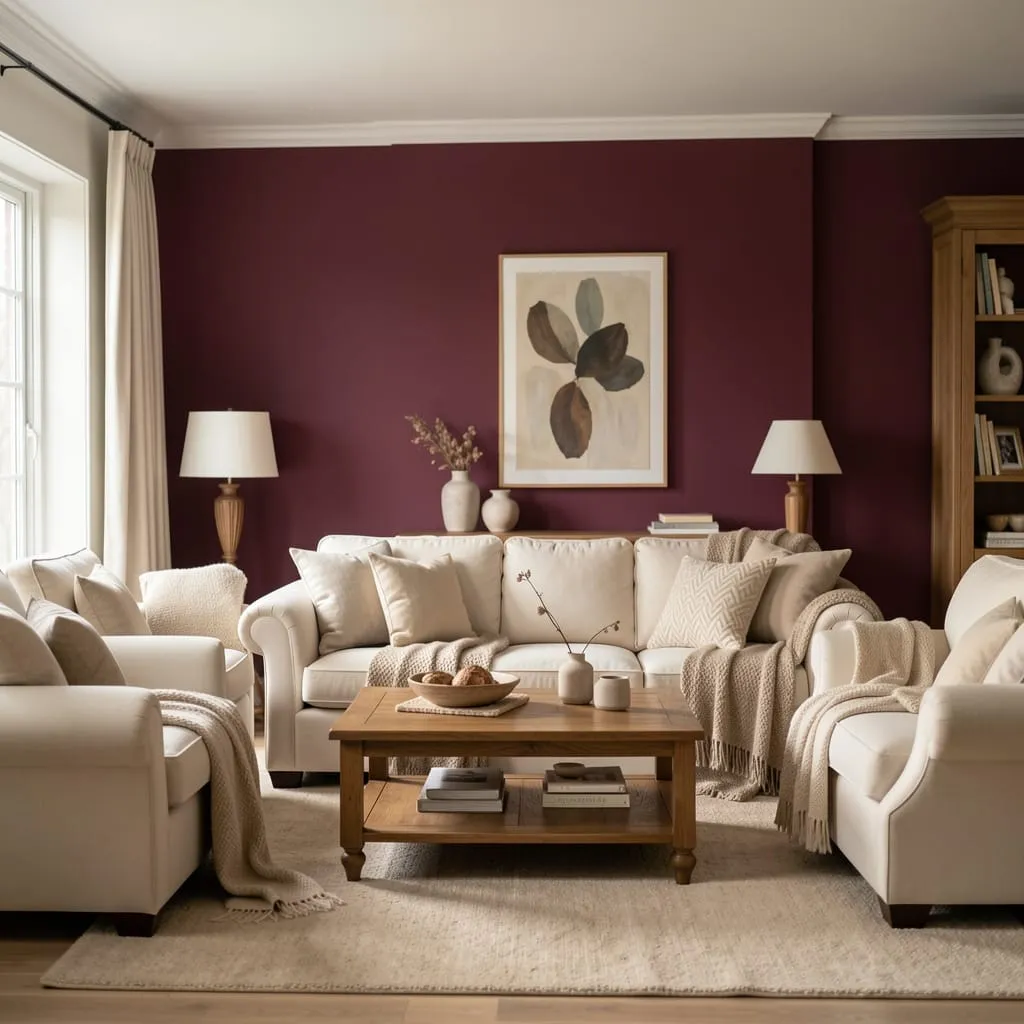
The most successful color compromises happen when one person owns the bold choice and the other person owns everything around it.
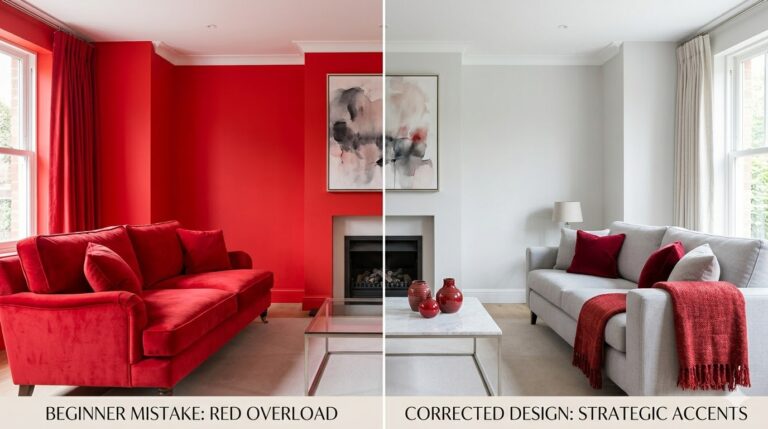
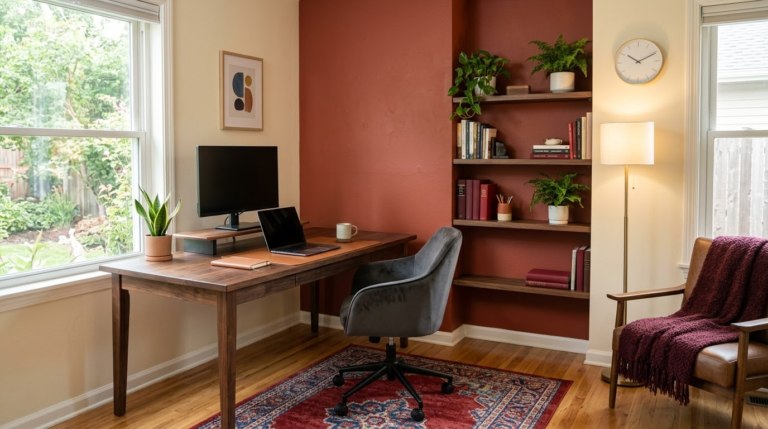
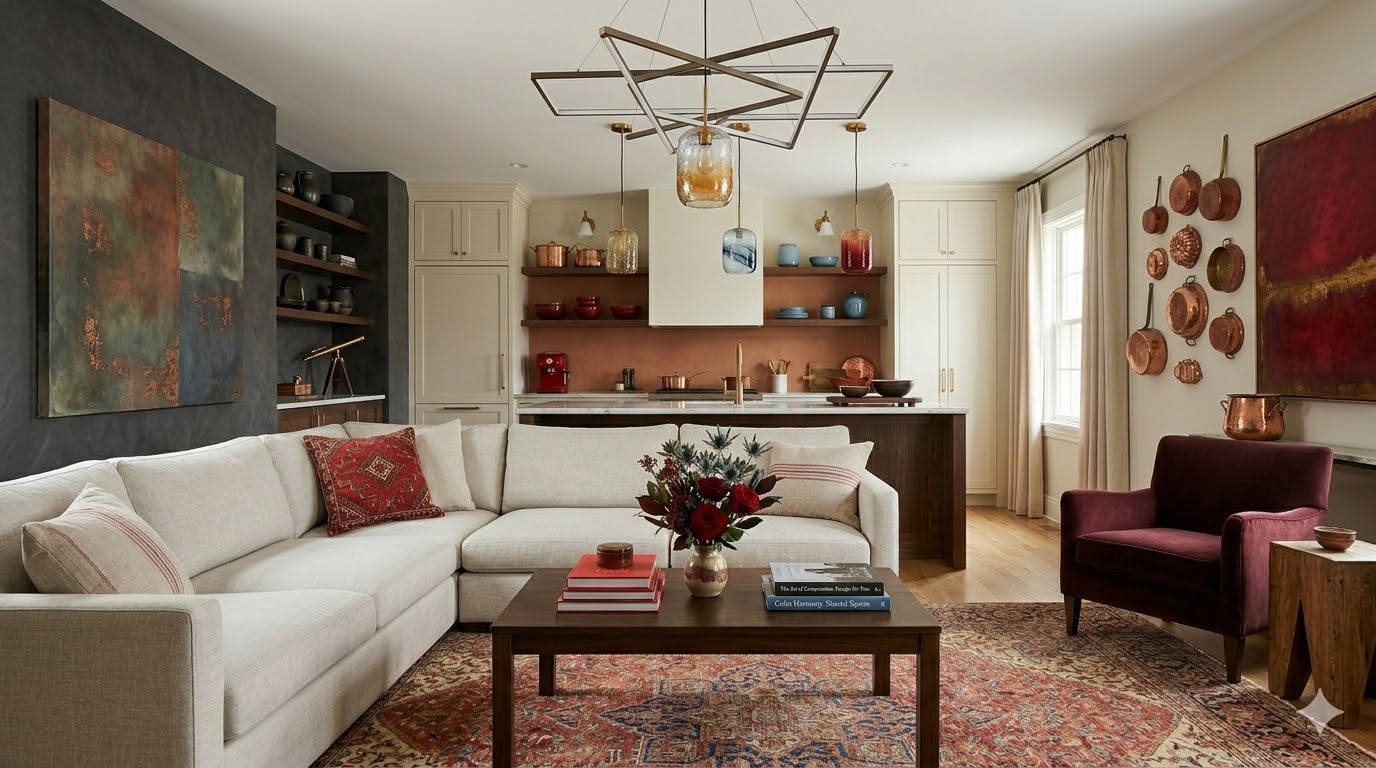
If your partner agrees to a red accent wall, give them full control of the sofa, the rug, the curtains, and the accessories. Their job is to make the surrounding space feel safe, calm, and balanced. Your job is to make the red wall worth it.
This division of creative ownership gives the hesitant partner genuine agency — and naturally produces the contrast that makes red look intentional rather than overwhelming.
Start Small, Build Confidence Together
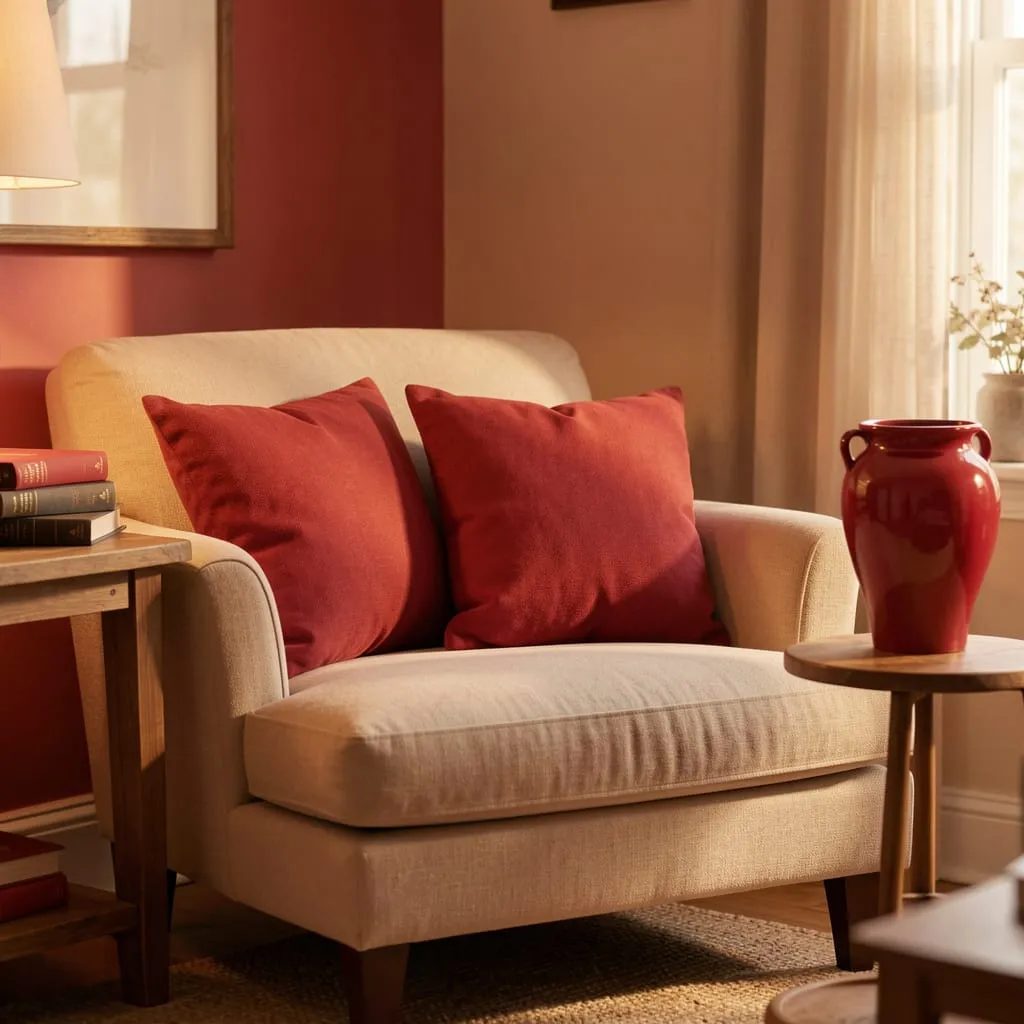
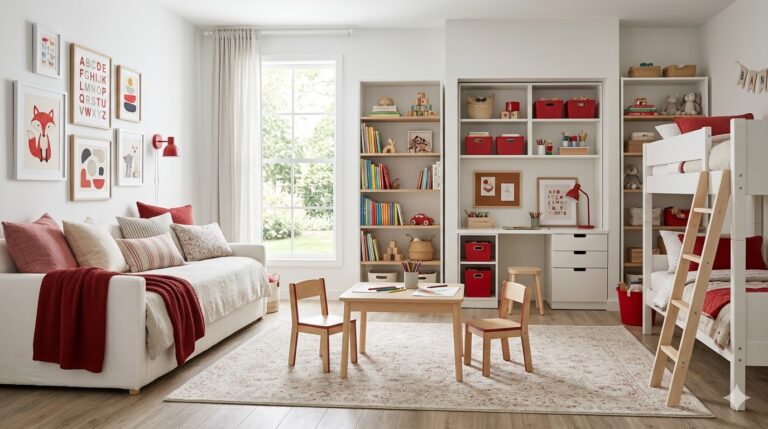
If you can’t yet agree on a red wall, start smaller. Introduce red through accessories first — cushions, a throw, a ceramic vase, a piece of art. Live with it for a month.
This lets the hesitant partner experience red in the room on their own terms, at their own pace. Most people who were nervous about red in the abstract become genuinely fond of it once they see it working in their actual space.
The Best Rooms Come From Both People Caring
The couples who create the most beautiful homes aren’t the ones where one person wins every design argument. They’re the ones where both people’s instincts show up in the result.
Ready for the next step?
If you’ve agreed on red and want to build the full room, our guide on [Red and White Interior Design: 10 Timeless Home Ideas →] walks you through the neutral foundation that makes red sing for everyone.
Or browse the [Red Interior Design category →] for room-specific guides you can explore together.