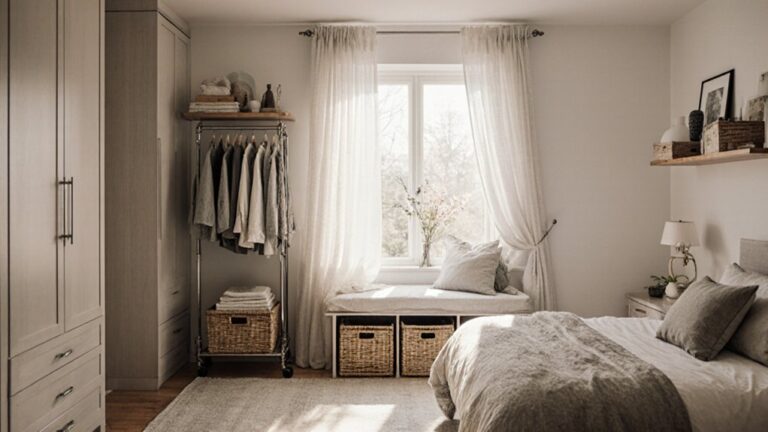
12 Minimalist Chill Rooms That Reduce Stress
You’re constantly surrounded by visual clutter that exhausts your mind before you even realize it. Your bedroom, living room, and workspace bombard you with competing colors, patterns, and unnecessary objects. Strategic minimalism—using neutral palettes, natural materials, and intentional emptiness—can transform these spaces into refuges that genuinely calm your nervous system. What specific design choices actually work?
Minimalist Bedroom: Neutral Tones for Deep Relaxation
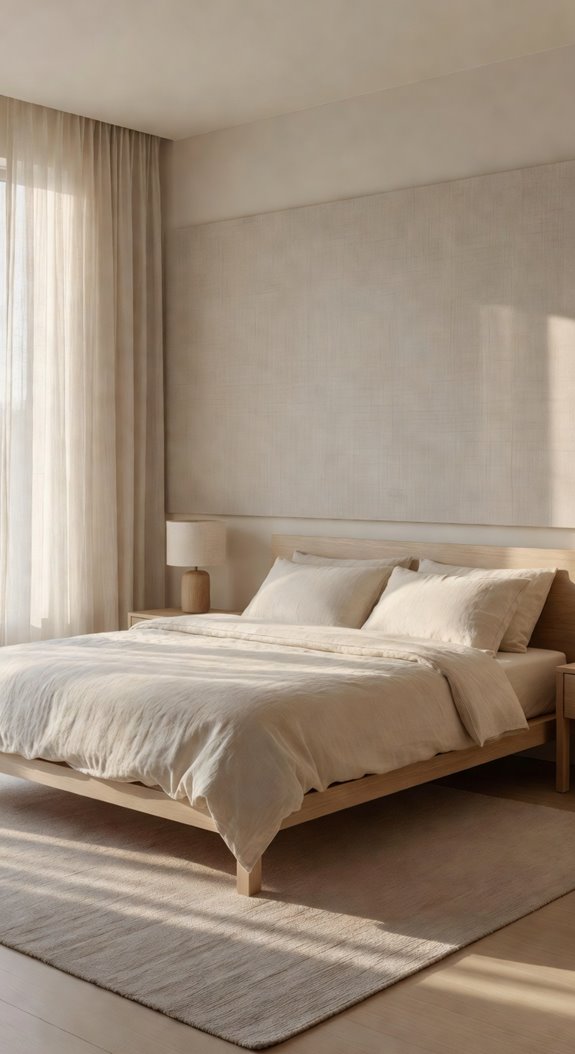
How can you transform your bedroom into a sanctuary that actively promotes rest? Choose neutral tones like beige, soft gray, and warm white for your walls and bedding. These calming colors reduce visual stimulation, allowing your nervous system to relax deeply.
Incorporate natural materials such as linen sheets and wooden furniture, which create an organic, grounding atmosphere conducive to quality sleep and genuine restoration. You can even extend this grounding effect by drawing inspiration from forest-themed decor, weaving in earthy textures and natural wood accents that echo the calming presence of the woods.
Monochrome Bedrooms: Shades That Calm and Focus
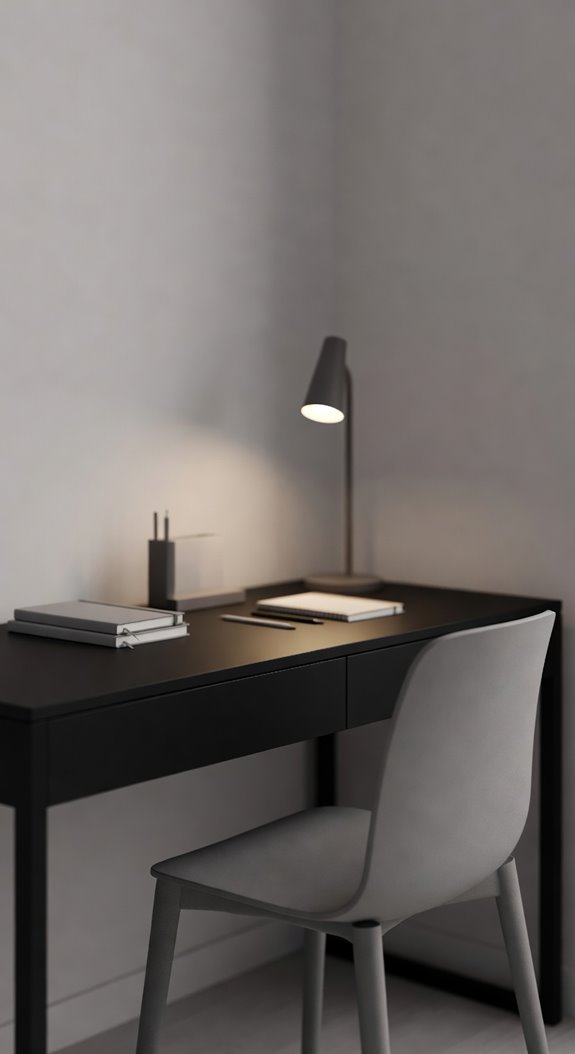
Why do monochromatic color schemes work so effectively in bedroom design? You’ll find that using single-color palettes, like soft grays or warm whites, eliminates visual clutter, reducing cognitive overload.
Monochrome bedrooms create visual coherence through layered textures, allowing your mind to settle into focused relaxation. This unified approach, employing varied tones within one color family, promotes consistent calm throughout your sleeping space. Designers often pair these schemes with clean minimalist concepts to reinforce simplicity and support deeper, more peaceful sleep.
Bedroom With Natural Light: Sunlight as a Design Tool
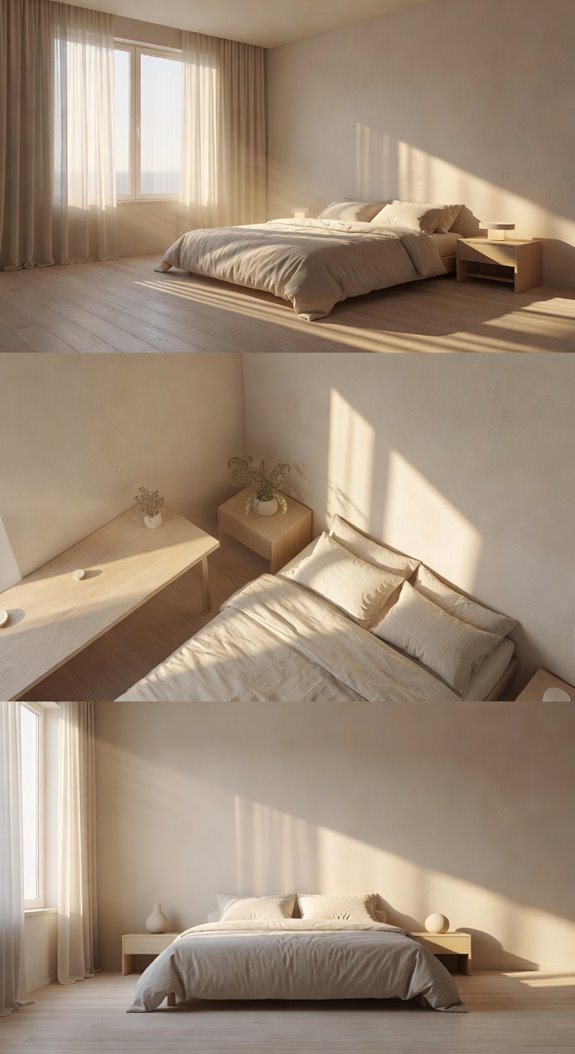
While monochromatic palettes create visual calm through color unity, natural light offers you a different yet equally powerful design strategy for stress reduction. Position your bed near windows to maximize sunlight exposure throughout the day. Light-colored linens and minimal furnishings amplify brightness, creating an airy atmosphere that naturally elevates mood and regulates your circadian rhythm effectively. For a touch of whimsy after dark, consider incorporating ethereal nocturnal designs that glow softly and complement your room’s serene daytime aesthetic.
Scandinavian Living Room: Light and Airy Simplicity
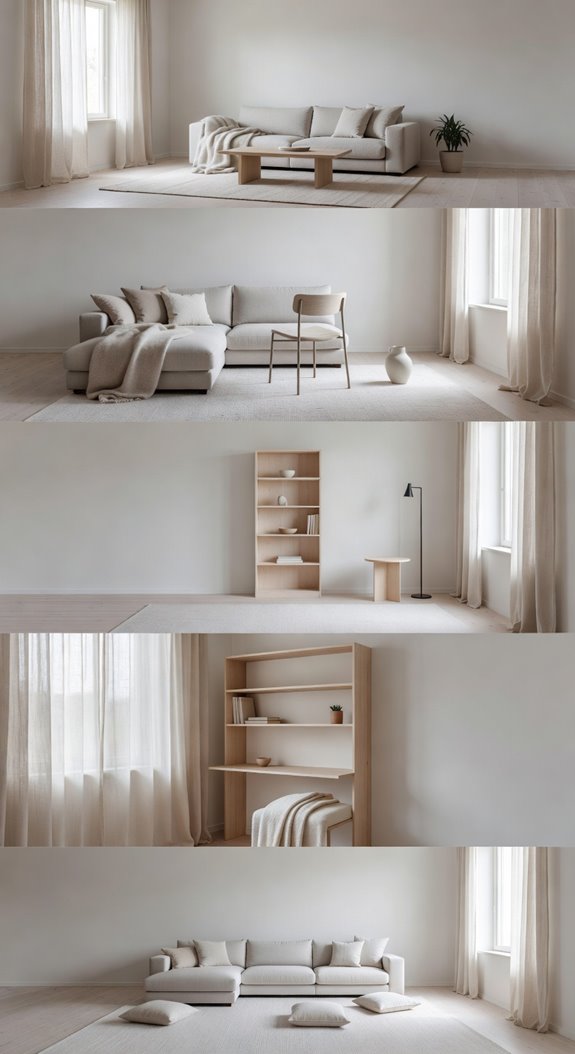
Scandinavian design brings together minimalism and functionality, creating living rooms that feel both spacious and intentionally calm. You’ll find light wood furniture, neutral palettes, and uncluttered surfaces that promote relaxation. Natural fibers like linen and wool add warmth without visual noise. Large windows amplify natural light, while simple geometric shapes maintain visual harmony throughout your space. Incorporating soft pastel lighting into your Scandinavian space can further enhance its calming atmosphere and support a more restful environment.
The Reading Nook: Intentional Comfort in Small Spaces
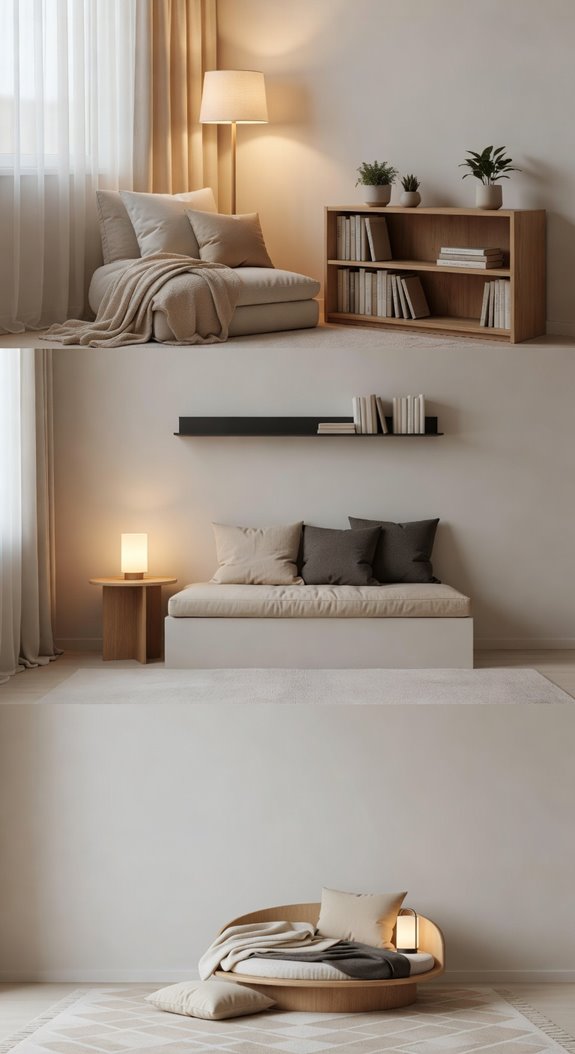
How do you transform a corner of your home into a sanctuary designed specifically for reading and reflection? You’ll need a comfortable chair, soft lighting, and minimal distractions. Choose neutral tones like beige or soft gray, add a small side table, and incorporate natural materials like wood. Position your nook near a window when possible, ensuring adequate illumination without glare. For an even cozier atmosphere, consider drawing inspiration from Hobbit-inspired earthy designs that emphasize warmth, organic textures, and a deeply grounded sense of comfort.
Minimalist Home Gym: Clean Lines, Clear Mind
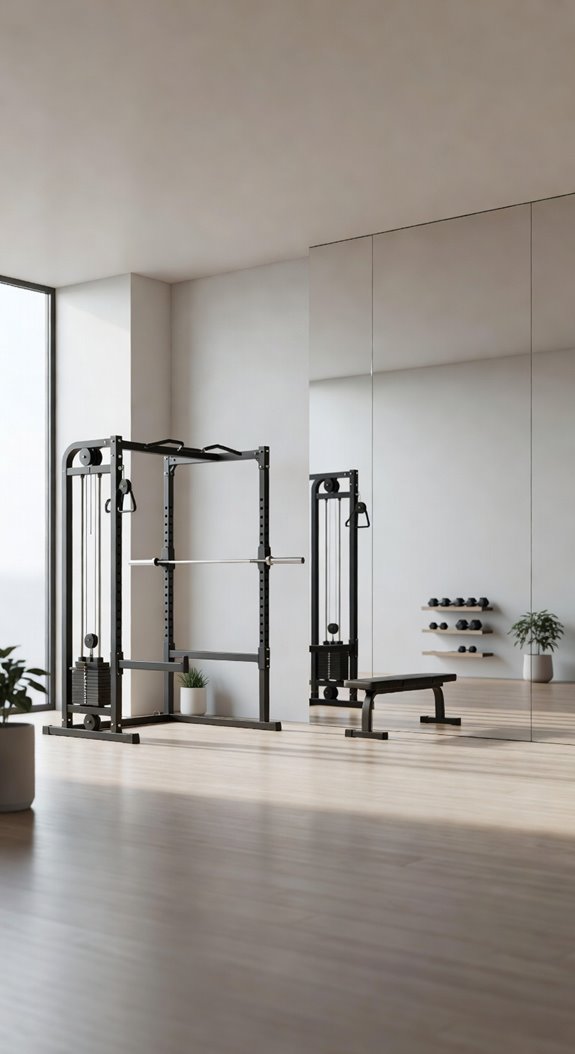
Why settle for cluttered exercise spaces when you can create a gym that clears your mind as effectively as it strengthens your body? Choose neutral wall colors, minimal equipment, and open floor space. Incorporate a single focal point like a mirror or mat. Essential pieces—a yoga mat, adjustable dumbbells, resistance bands—serve multiple purposes. This intentional design reduces visual stress while you exercise. For a touch of whimsy, consider drawing inspiration from enchanted decor ideas to add a single magical element, like a nature-themed print or fairy tale-inspired accent, that sparks joy without creating clutter.
Minimalist Home Office: Eliminating Distractions to Boost Focus
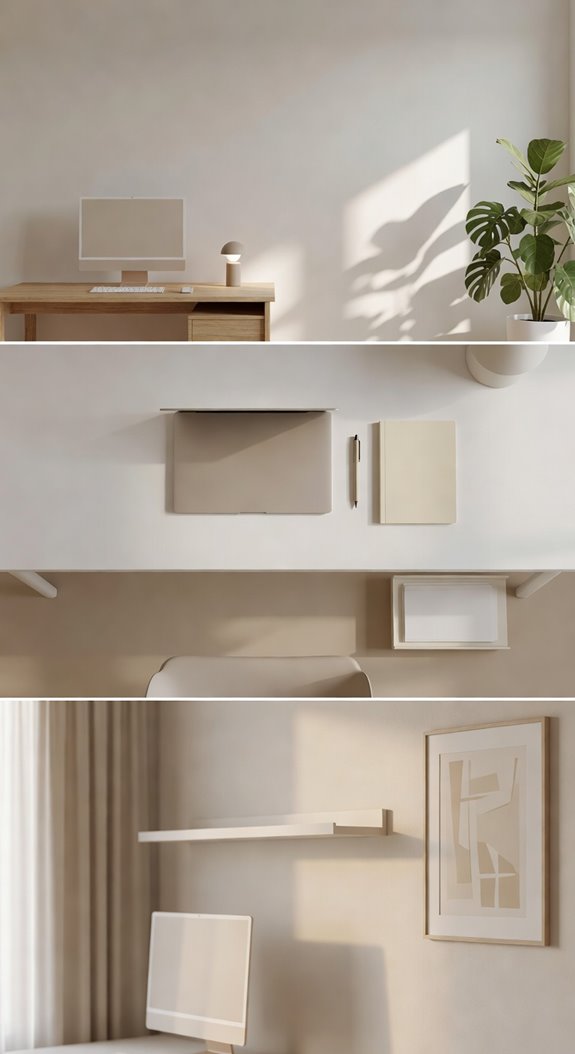
When you’re working from home, your environment either supports your productivity or undermines it, and a minimalist office design creates the foundation for sustained focus.
Choose a neutral color palette, like soft grays or whites, reducing visual noise.
Position your desk near natural light, minimizing eye strain.
Keep only essential items visible—a computer, notebook, and one lamp.
This intentional simplicity strengthens concentration and reduces decision fatigue throughout your workday. Applying the same stress-reducing minimalist principles used in bedroom design to your home office can further deepen your sense of calm and mental clarity.
Minimalist Kitchen: Function as a Path to Peace
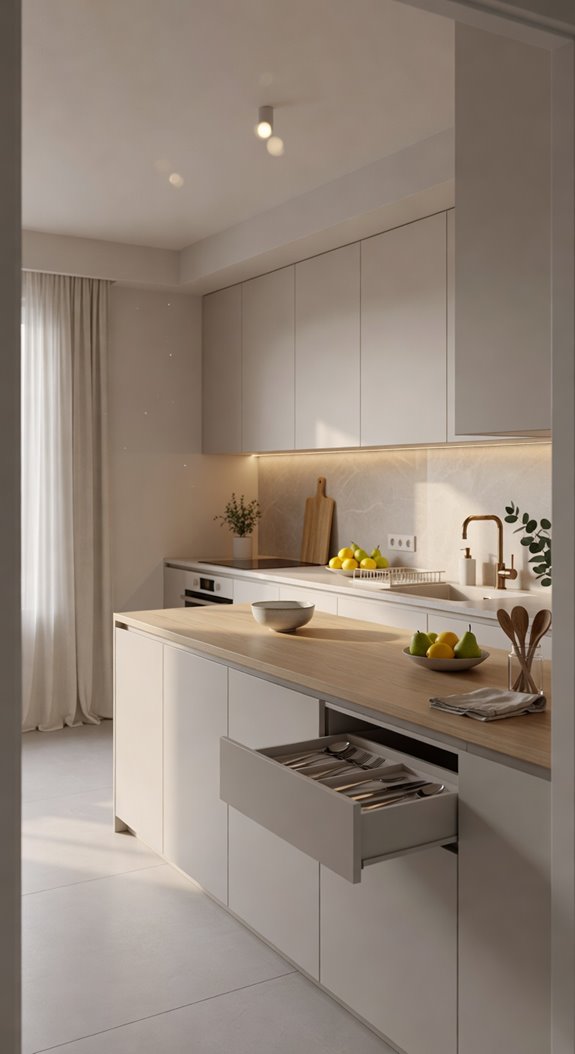
Your kitchen is where daily routines unfold, and its design directly shapes your stress levels and efficiency. You’ll reduce mental clutter by organizing essentials into designated zones, eliminating countertop items, and choosing neutral palettes like white or soft gray. Streamlined cabinetry, minimal hardware, and open shelving create visual calm. Functional layouts decrease decision fatigue, allowing you to move through meal preparation with ease and intention. Incorporating tranquil environmental design principles into your kitchen ensures the space actively supports relaxation rather than contributing to daily tension.
Japanese-Inspired Bathroom: Essential Materials, Sensory Calm
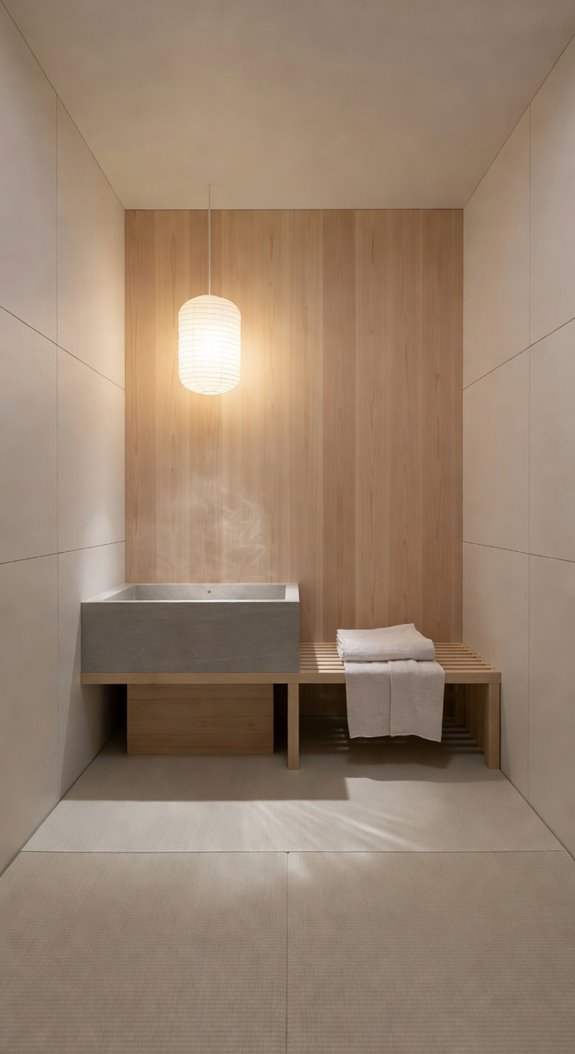
How does transforming your bathroom into a Japanese-inspired sanctuary reduce daily stress? You’ll incorporate natural materials like stone and wood, creating a serene environment. Soft, neutral tones—whites, grays, and warm beiges—calm your nervous system. Include minimalist fixtures and uncluttered surfaces. A deep soaking tub becomes your centerpiece for mindful bathing rituals, promoting relaxation and mental clarity. For an even deeper sense of escape, draw inspiration from storybook bedroom design, where natural materials and narrative-rich aesthetics transform ordinary spaces into immersive sanctuaries.
Minimalist Entryway: Calm First Impressions
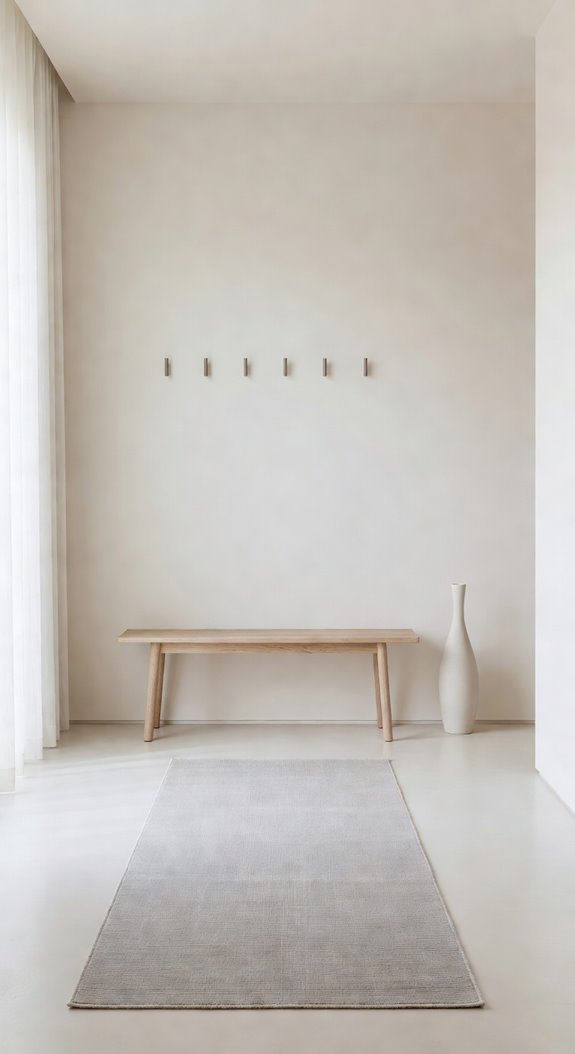
The entryway serves as your home’s threshold, setting the tone for everything beyond it. You’ll want minimal furniture, neutral colors like soft grays or whites, and clear floor space. A single console table, a mirror, and hooks for coats create functional calm. Remove clutter immediately, letting natural light fill the space. This approach grounds visitors and yourself in serenity. Drawing from timeless fantasy aesthetics, you can introduce one subtly ornate mirror or a softly carved console detail that bridges enduring beauty with your minimalist calm.
Zen Meditation Room: Strategic Emptiness and Mental Space
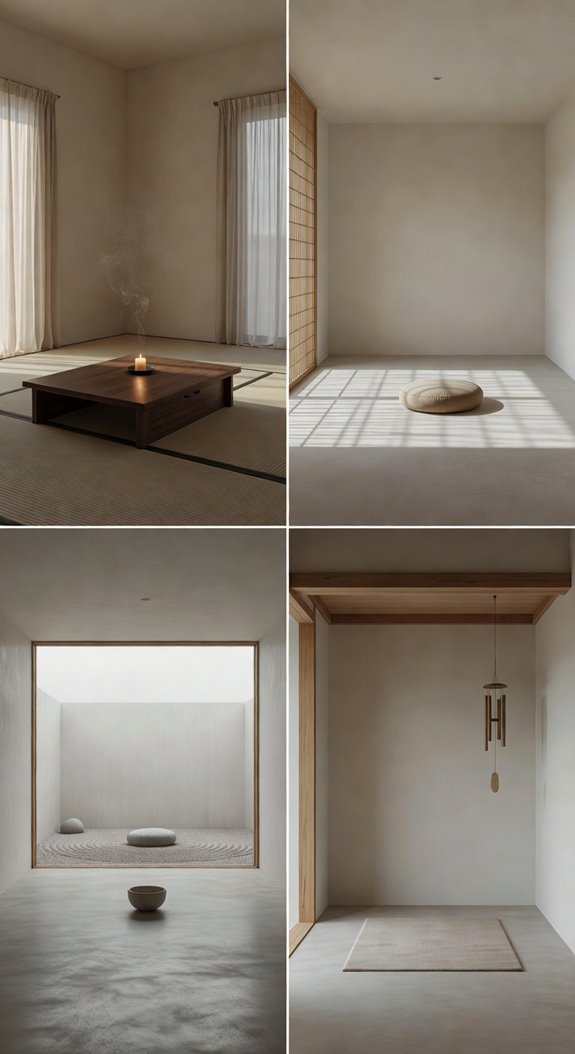
Creating a dedicated meditation space requires intentional emptiness, strategic furniture placement, and deliberate removal of visual distractions. You’ll want neutral walls, minimal furniture, and soft lighting to support deep focus. A simple cushion, natural materials like wood or stone, and controlled color palettes establish calm. Experts note that “environmental simplicity directly enhances mental clarity,” making your space a sanctuary for practice.
Minimalist Guest Room: Welcoming Without Overstimulation

While meditation spaces prioritize solitude and internal focus, guest rooms must balance calm aesthetics with functional hospitality. You’ll want neutral walls, minimal furniture, and soft lighting that won’t overwhelm visitors. Choose quality linens in natural fibers, keep surfaces clear of clutter, and incorporate subtle storage solutions. This approach creates a restful environment where guests feel welcomed and comfortable without sensory overstimulation.
Prioritize Natural Light First

How much natural light does your room receive throughout the day? Natural light reduces stress and improves your mood considerably. Position your bed, desk, or seating near windows to maximize exposure. Keep windows unobstructed with minimal window treatments, using sheer curtains instead of heavy drapes. Light-colored walls reflect sunlight throughout your space, creating a brighter, calmer environment naturally.
Common Mistakes
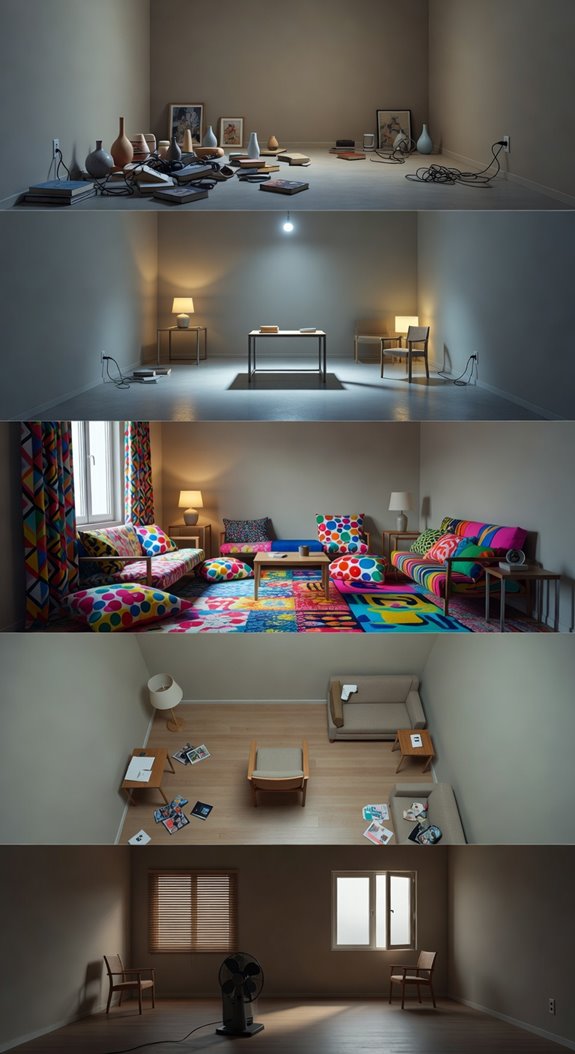
Many people unknowingly sabotage their minimalist rooms by overcrowding spaces with too many decorative objects and furniture pieces.
You’ll want to resist filling empty wall space with art, and avoid cluttering surfaces with knickknacks.
Stick to essential items only, keeping your palette neutral.
This intentional restraint prevents visual chaos, allowing your room to maintain its calming atmosphere effectively.
Final thoughts
You’ve now discovered how to transform your spaces into stress-reducing sanctuaries. By embracing neutral palettes, natural materials, and purposeful furniture arrangements, you’ll cultivate environments that genuinely support calm and focus. Start with one room, prioritize natural light, and eliminate visual clutter systematically. Your commitment to these minimalist principles creates lasting psychological benefits, allowing your mind to rest and recharge daily in spaces designed specifically for your wellbeing.