11 Chill Rooms With Plants & Natural Light
You’ve likely noticed how natural light transforms a space, yet pairing it with plants creates something more purposeful. Strategic greenery placement—from fiddle leaf figs anchoring home offices to pothos trailing along bathroom walls—doesn’t just enhance aesthetics. It fundamentally shifts how you inhabit each room. Understanding which plants thrive in specific light conditions, however, separates mediocre attempts from genuinely restorative environments.
The Sunlit Reading Nook: Your Personal Escape
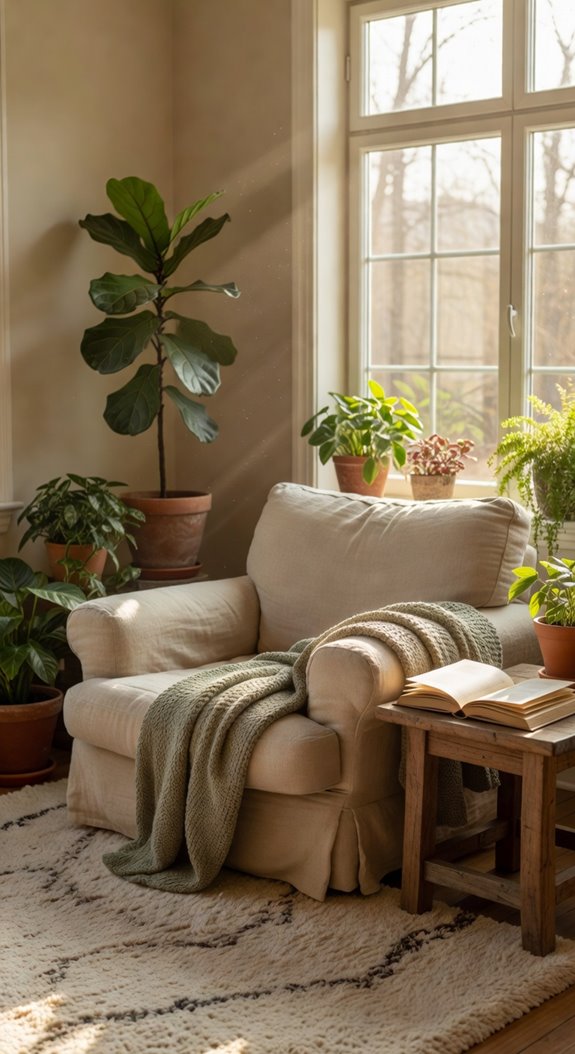
Because natural light directly enhances reading comfort and reduces eye strain, positioning your reading nook near a south-facing or west-facing window creates an ideal foundation for this calming space.
You’ll want comfortable seating with proper lumbar support, layered lighting for evening hours, and nearby potted plants that thrive in bright conditions.
Soft, neutral wall colors amplify natural light throughout your personal retreat.
Incorporating light and airy design principles into your reading nook can further spark joy and transform the entire feel of your bedroom space.
Bedroom Oasis With Floor-to-Ceiling Greenery
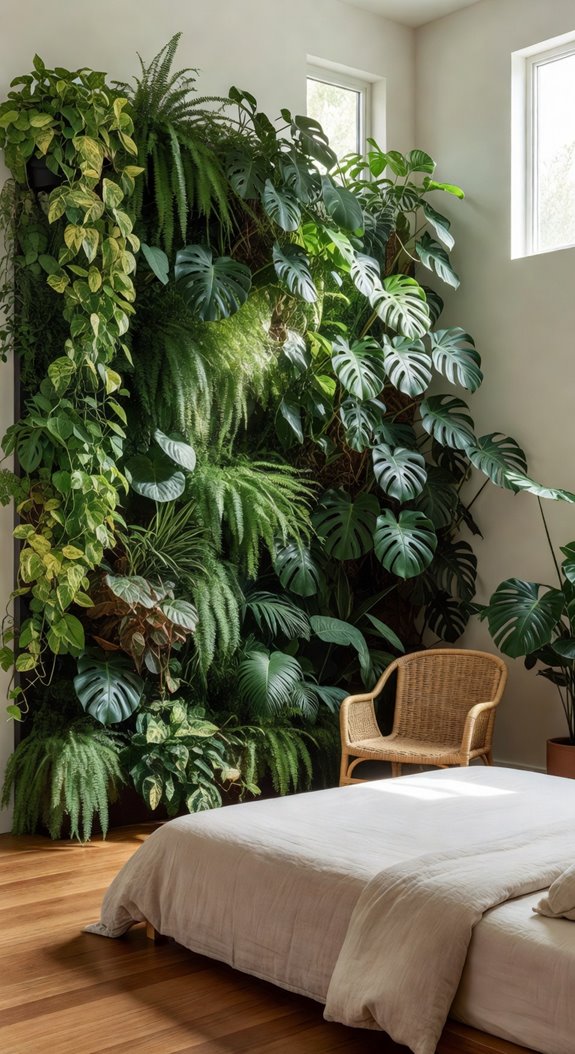
How can you transform your bedroom into a restorative sanctuary? Layer floor-to-ceiling plants along walls, creating vertical greenery that maximizes your space. Position trailing pothos and philodendrons near windows for natural light exposure, enhancing air quality and visual interest. Choose low-maintenance varieties requiring minimal care, allowing you to rest undisturbed. This botanical approach establishes calming biophilic design elements throughout your personal retreat. For a softer aesthetic, consider incorporating whimsical pastel hues into your plant display shelving and pots to add a playful, dreamy quality to the space.
Productive Home Office With Strategic Plant Placement
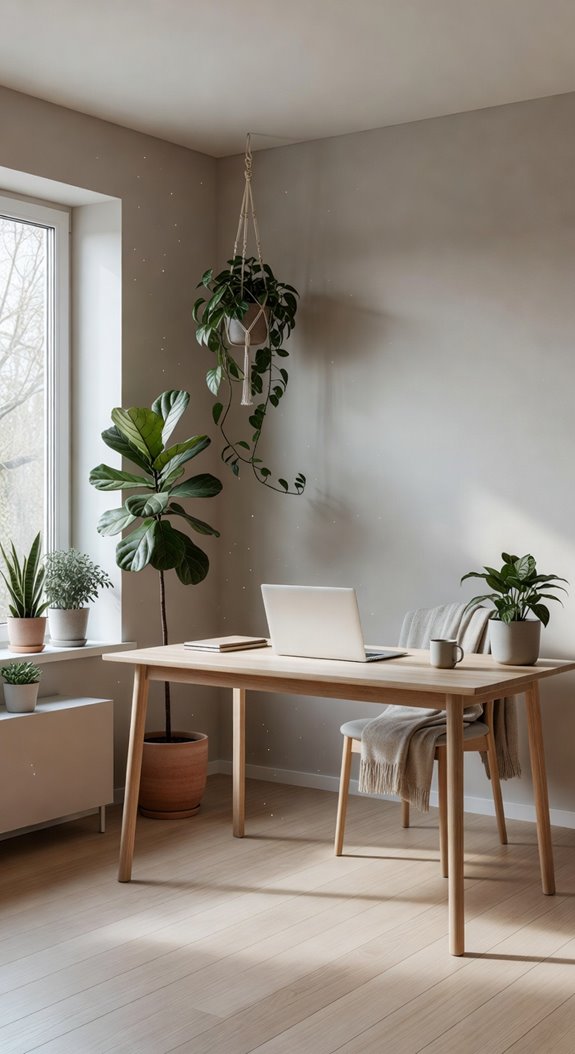
Your home office’s productivity depends on thoughtfully positioning plants around your workspace, creating an environment that sharpens focus and reduces mental fatigue.
Place trailing pothos near your desk corner, maximizing vertical space while filtering air.
Position a fiddle leaf fig beside your window, anchoring the room’s natural light.
These strategic placements establish visual interest and promote sustained concentration throughout your workday.
Complement your plant arrangement with gentle palettes and textures that soften the workspace and invite a sense of calm alongside your greenery.
Bright Kitchen Garden Window for Fresh Herbs
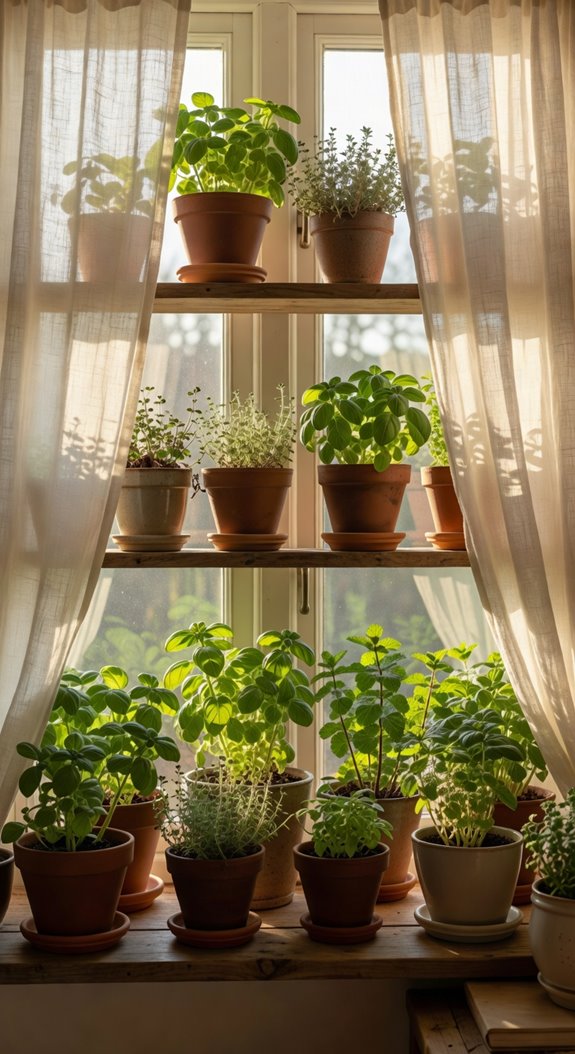
Why not transform a sunny kitchen window into a thriving herb garden that supplies fresh ingredients while brightening your cooking space?
You’ll cultivate basil, parsley, and thyme in shallow containers, positioning them where they receive six to eight hours of direct sunlight daily.
This arrangement combines functionality with aesthetics, creating an accessible growing station that enhances both your kitchen’s visual appeal and culinary capabilities. For an even more enchanting touch, consider incorporating forest-themed fantasy decor elements like moss-covered pots or woodland-inspired planters to bring a whisper of the woods into your kitchen.
Living Room Plant Wall as Focal Feature
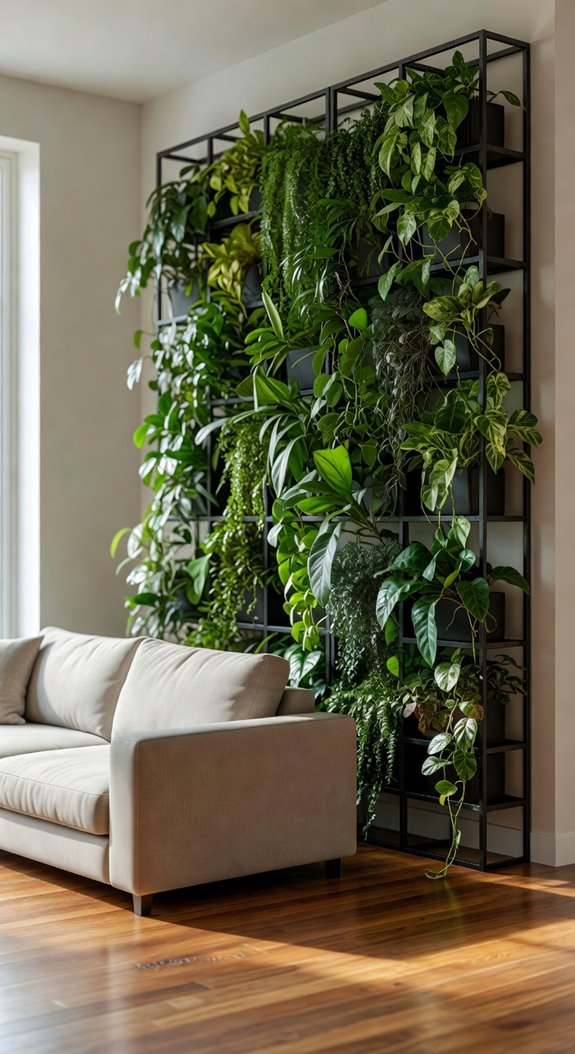
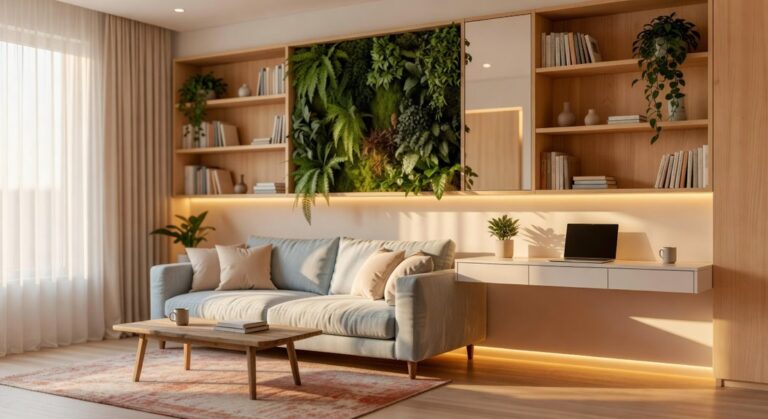
A living room plant wall transforms an ordinary vertical surface into a striking green backdrop, anchoring your entire space with natural color and texture.
You’ll arrange cascading pothos, trailing philodendrons, and upright ferns across shelving or wall-mounted planters, creating visual depth.
Position your plant wall opposite windows to maximize natural light exposure, ensuring healthy growth while establishing a calming focal point that balances furniture placement and enhances your room’s overall atmosphere. For an even more immersive effect, pairing your plant wall with dreamy room design elements can transport your living space into an entirely different realm.
Minimalist Bedroom: Less Greenery, Maximum Light
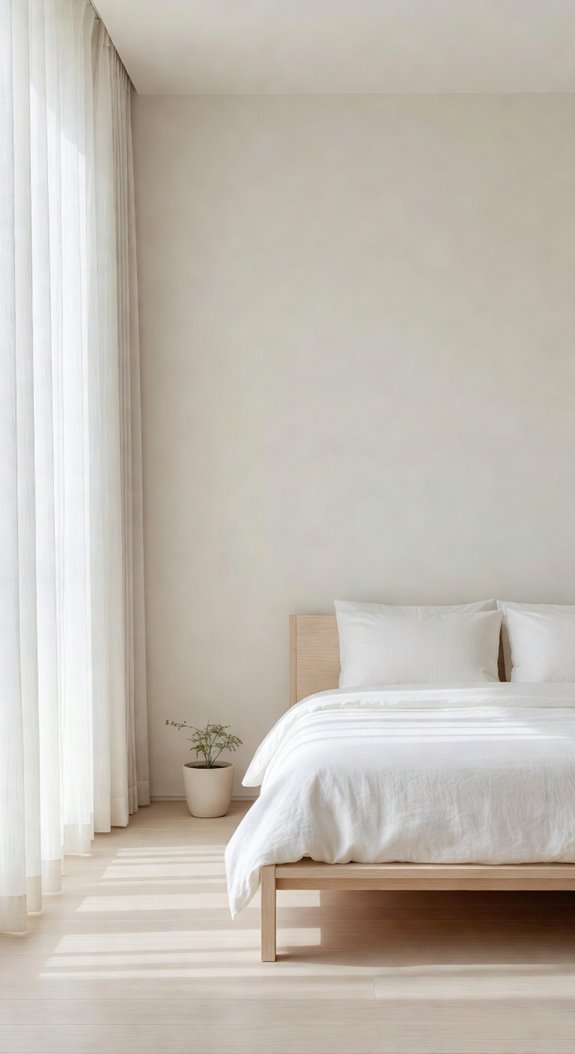
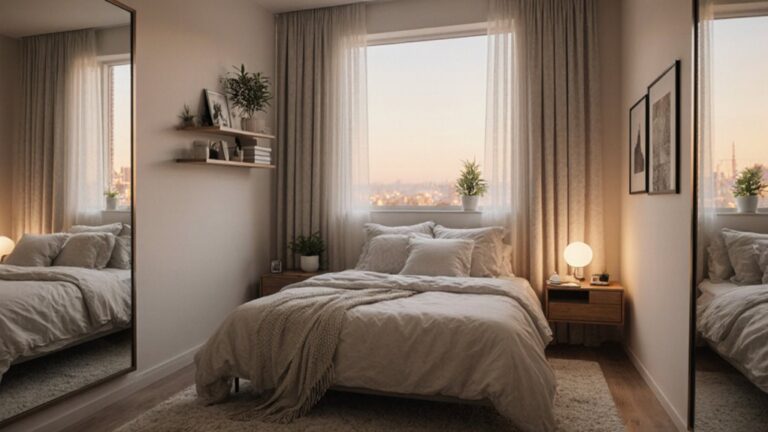
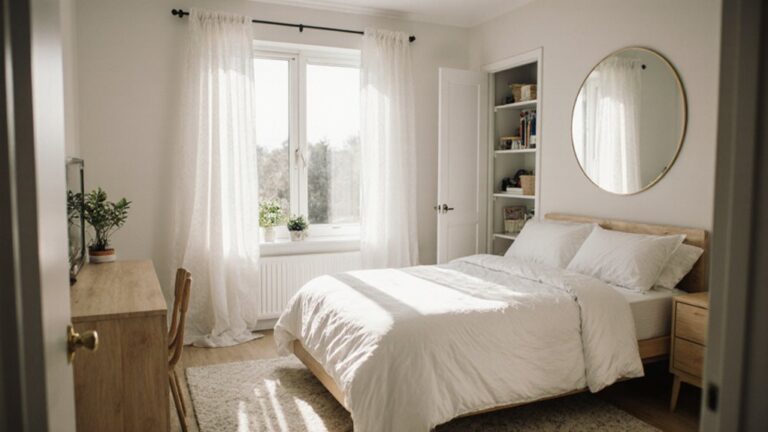
When you’re designing a minimalist bedroom, strategic plant placement and abundant natural light create a serene retreat without visual clutter. Choose one statement plant, like a fiddle leaf fig, positioned near your window.
Install sheer curtains that diffuse sunlight evenly, then arrange neutral-toned furniture to maximize floor space. This approach prioritizes calm functionality over decorative abundance. Incorporating natural elements like plants into your space is one of the most effortless ways to cultivate a tranquil environment designed for ultimate relaxation.
Bathroom Spa Sanctuary With Plants and Skylights

While a minimalist bedroom relies on restraint and strategic placement, your bathroom offers an ideal opportunity to embrace a spa-like atmosphere through layered greenery and natural illumination from above. Install a skylight to flood the space with daylight, then position humidity-tolerant plants like pothos and ferns near moisture sources, creating a tranquil retreat that rejuvenates daily. Applying stress-reducing design principles from minimalist bedroom concepts—such as limiting decorative objects and choosing a neutral color palette—can further enhance the calming effect of your bathroom sanctuary.
Morning Light Meditation Corner
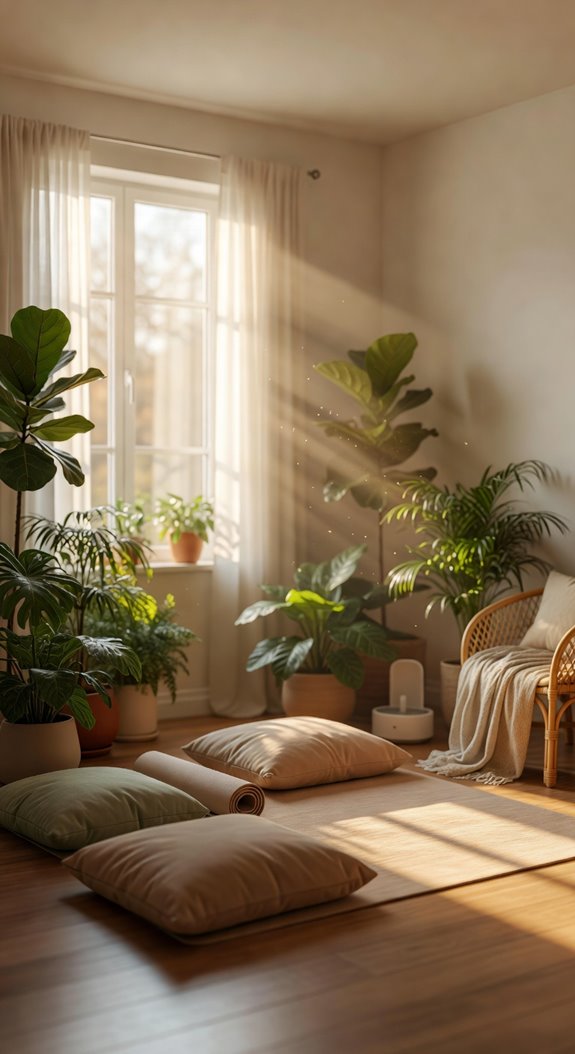
How can you transform a corner of your home into a dedicated space for morning meditation and reflection? Position a comfortable cushion or low chair near an east-facing window, allowing soft morning light to fill your space. Add pothos or snake plants for air purification, then incorporate neutral tones through a meditation mat and simple décor that minimizes visual distractions. Enhance the earthy witchy aesthetic of your meditation corner by adding crystals, dried herbs, or small candles that deepen the sense of grounded, mystical calm.
Dining Space With Living Plant Walls
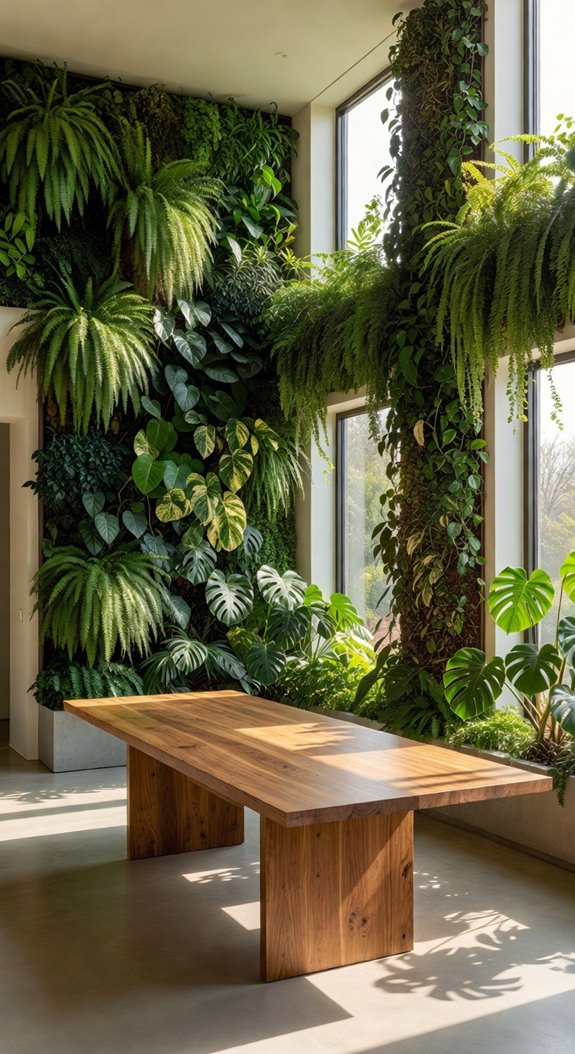
Imagine transforming your dining area into a vibrant, living ecosystem that nourishes both body and mind during meals.
You’ll install vertical plant walls featuring pothos, philodendrons, and ferns along one accent wall, creating natural air filtration.
Position your dining table near windows for optimal natural light exposure.
This biophilic design approach enhances your dining experience while improving air quality and establishing a calming atmospheric presence. For an even more immersive retreat, consider drawing inspiration from cozy fantasy bedrooms that masterfully blend extreme comfort with storybook charm to create spaces that feel both magical and livable.
Bedroom With Climbing Vines Under Glass
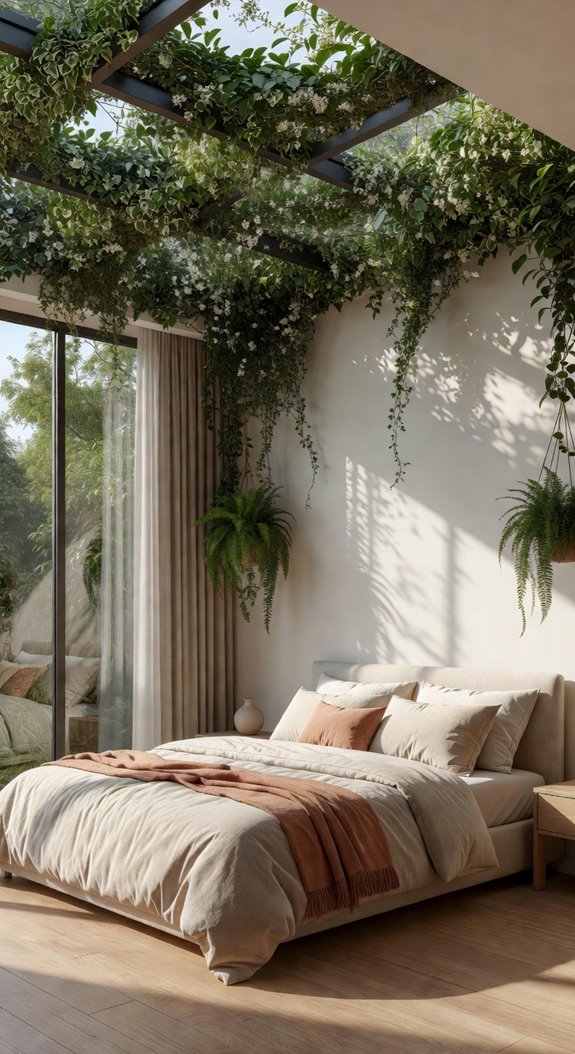
Creating a serene bedroom retreat becomes possible when you install climbing vines beneath a glass ceiling or skylight, merging nature with your personal sleep sanctuary.
You’ll cultivate pothos or jasmine varieties, which thrive in filtered light and require minimal maintenance.
This biophilic design reduces stress while improving air quality, transforming your sleeping space into a naturally cooling, peaceful environment that promotes restorative rest. For a bolder approach, consider incorporating surreal room concepts that blend unexpected natural elements with whimsical design touches, pushing your vine-covered sanctuary beyond the conventional.
Studio Apartment: Maximizing Natural Light and Greenery
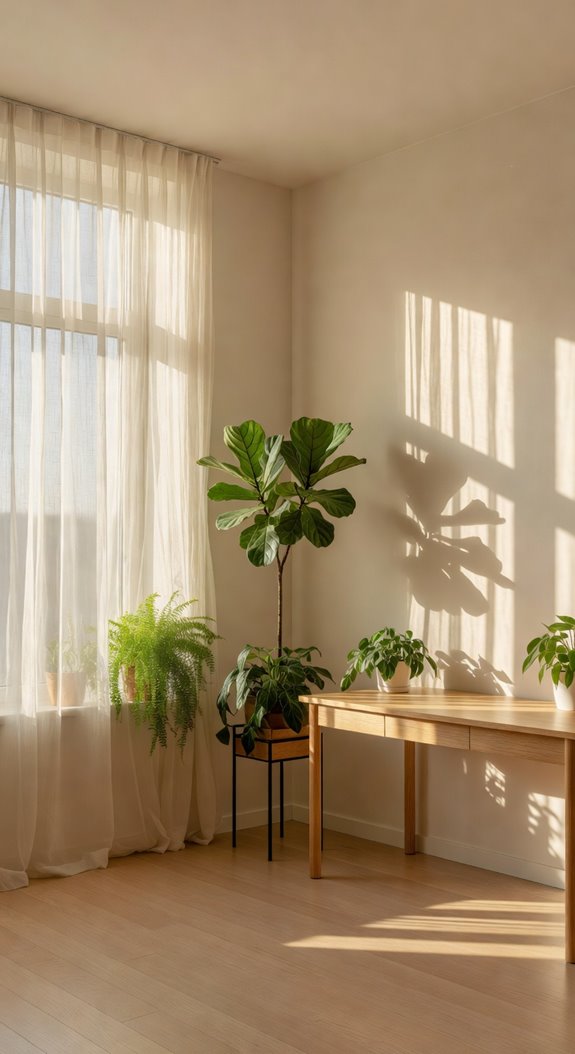
While bedroom sanctuaries benefit from overhead plant installations, studio apartments demand a different approach to combining greenery with limited square footage and natural light.
You’ll want to position tall plants near windows, maximizing sunlight exposure.
Use floating shelves for trailing varieties, creating vertical interest without consuming floor space.
Light-colored walls reflect natural rays deeper into your compact layout, enhancing both brightness and plant health simultaneously.
Selecting Plants by Light Conditions
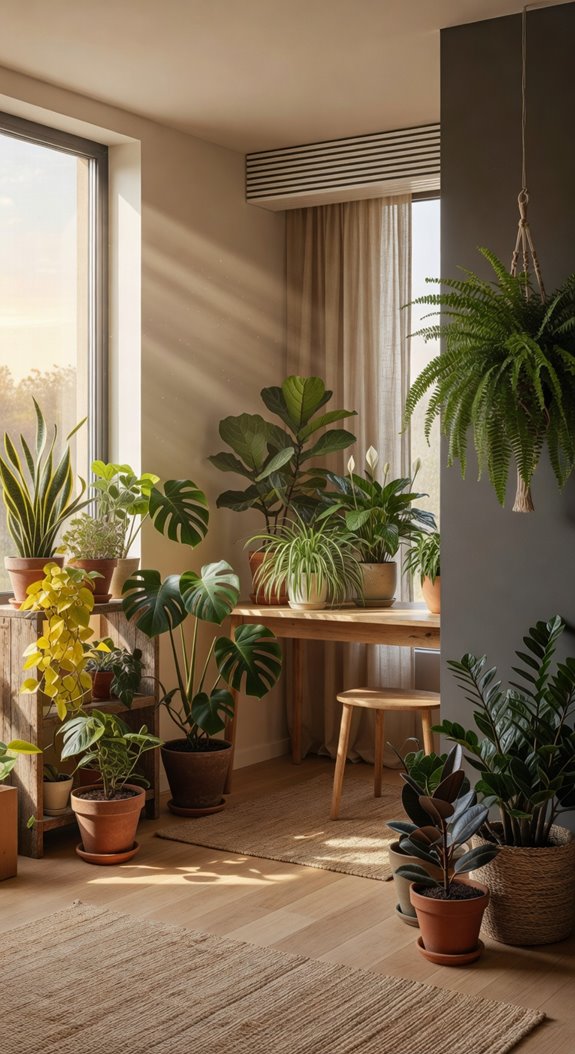
How can you choose the right plants if you don’t understand your room’s light conditions? Assess your space first, noting where direct sunlight hits throughout the day. Low-light areas suit pothos and snake plants, while bright spots accommodate succulents. Medium light zones work well for philodendrons. Match plant requirements to your specific conditions, ensuring they’ll thrive and flourish consistently.
Common Mistakes

Most plant enthusiasts inadvertently undermine their indoor gardens by making predictable errors in watering, placement, and container selection. You’ll want to avoid overwatering, which causes root rot in poorly draining pots. Position plants away from heating vents and cold drafts that stress foliage. Choose containers with drainage holes, and match light-loving species to bright windowsills for optimal growth.
Final thoughts
You’ve now discovered how to transform your spaces with plants and natural light, creating rooms that calm and refresh. By matching plants to your light conditions, you’ll ensure they thrive while you enjoy the benefits. Start with one room, observe how the greenery responds, then expand gradually. Your investment in these elements pays dividends through improved air quality, reduced stress, and enhanced daily living environments.