16 Chill Bedroom Ideas That Feel Calm and Clean
Your bedroom should be a refuge from daily stress, yet most people overlook how design choices directly impact sleep quality and mental clarity. Creating a genuinely calm space requires more than just decluttering—it demands intentional decisions about color, texture, lighting, and storage that work together. The difference between a bedroom that merely looks clean and one that genuinely feels restorative comes down to understanding which specific strategies actually work.
Start With a Neutral Color Palette
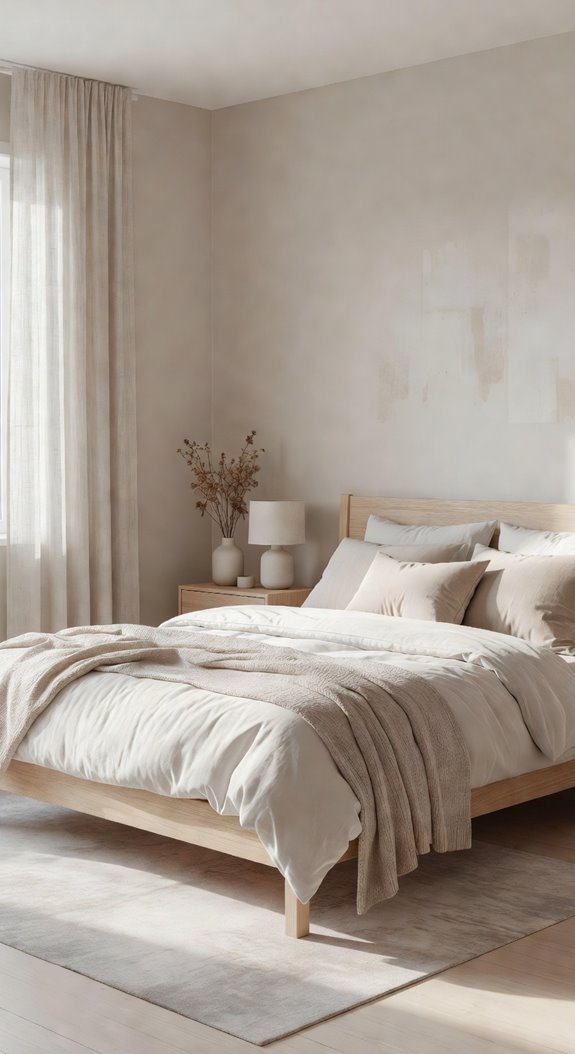
How do you want your bedroom to feel when you step inside after a long day? Choose neutral tones like beige, gray, and soft white, which create visual calm and reduce mental stimulation. These colors establish a restful foundation for your space. Layer in natural materials such as wood and linen to enhance the serene atmosphere. Neutral palettes allow accent pieces to stand out without overwhelming your senses. Embracing minimalist bedroom concepts centered on simplicity can further promote peace of mind and support more restful sleep.
Clear Your Surfaces and Floors
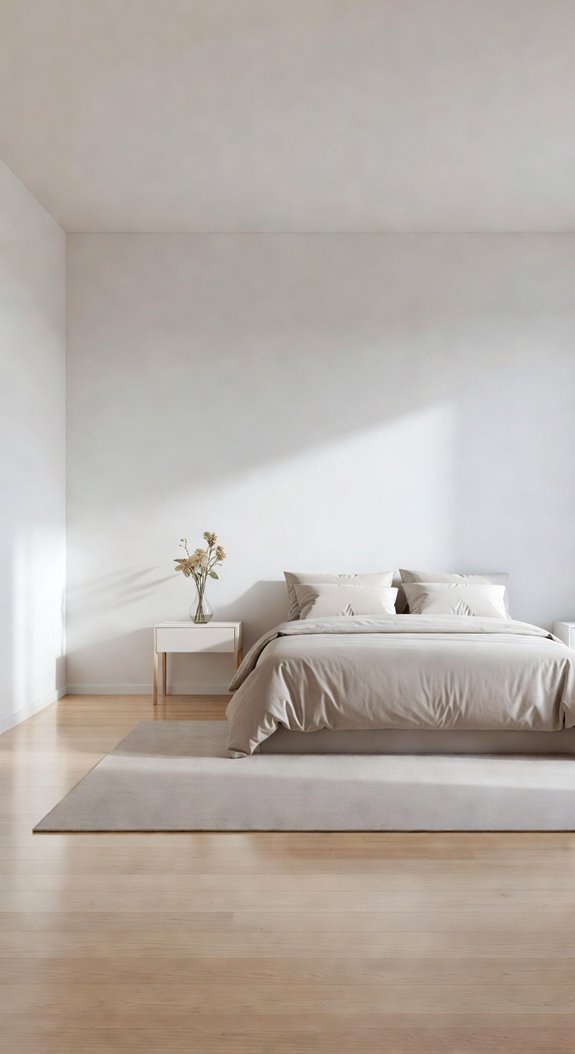
Now that you’ve established a calm foundation with neutral colors and natural textures, clearing your surfaces and floors becomes your next priority. Remove clutter from nightstands, dressers, and shelving, keeping only essential items visible. Vacuum and sweep regularly to maintain clean floors. Minimal surfaces create visual calm, reducing mental overstimulation and promoting better relaxation in your bedroom space. For a touch of warmth, consider adding a small piece of forest-themed fantasy decor to a single surface, bringing the grounding energy of nature into your serene space without overwhelming it.
Invest in Quality Bedding and Layers

Your bedding serves as the foundation for quality sleep and relaxation, making it essential to prioritize comfort and durability when selecting sheets, pillows, and blankets.
Choose high-thread-count cotton or linen in neutral tones like white, beige, or soft gray.
Layer your bed with a quality duvet, lightweight throw blanket, and supportive pillows to create depth and comfort for better rest. Incorporating gentle palettes and textures into your bedding choices can further enhance the sense of serenity in your space.
Add Soft, Dimmable Lighting
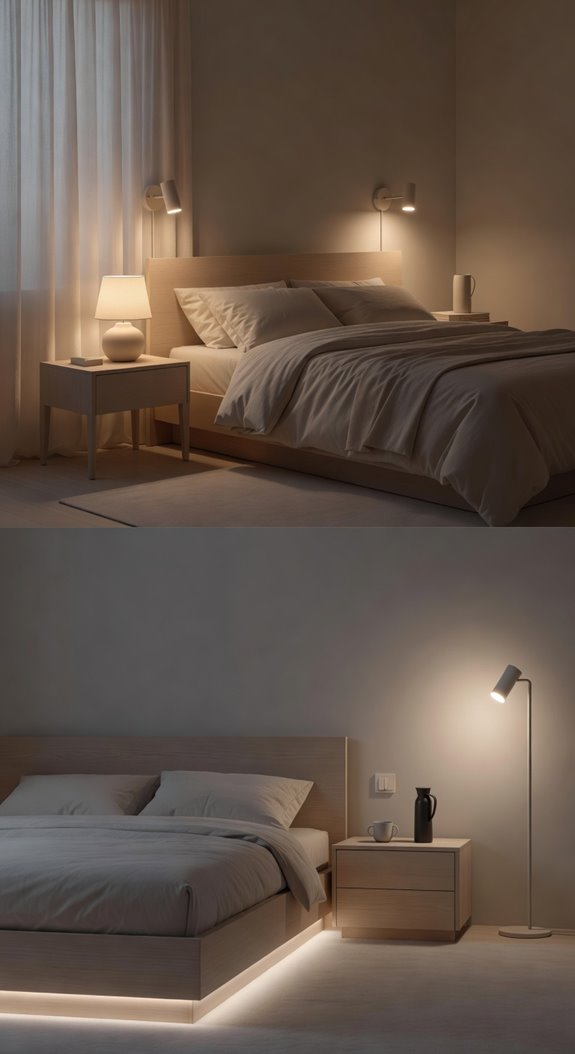
Lighting plays an equally essential role in creating a restful bedroom environment, working alongside your comfortable bedding to establish the perfect atmosphere for relaxation and sleep.
Install dimmer switches on overhead fixtures, allowing you to adjust brightness throughout the day.
Choose warm-toned bulbs with color temperatures between 2700K and 3000K, which promote melatonin production.
Consider bedside lamps with soft shades that diffuse light evenly, eliminating harsh glare that disrupts your sleep quality.
For a more whimsical touch, fairycore nocturnal designs use ethereal, glowing light sources that can inspire softer, dreamlike bedroom lighting arrangements.
Choose Smart Storage Solutions

A clutter-free bedroom environment directly supports the relaxation and sleep quality you’ve already enhanced through thoughtful lighting choices.
You’ll want to invest in under-bed storage containers, floating shelves, and multifunctional furniture pieces that eliminate visible clutter.
Choose neutral-toned organizers that blend seamlessly with your décor, keeping surfaces clear and your mind calm. If you ever want to break from minimalism, consider incorporating surreal room concepts that use unexpected storage elements as playful, artistic features.
Go Easy on Window Treatments

Window treatments play a significant role in creating a serene bedroom atmosphere, working alongside your organized spaces to maintain the calm you’ve cultivated.
You’ll want to choose lightweight fabrics, like linen or cotton, that filter light softly without blocking it completely.
Sheer curtains or simple roller shades work well, allowing natural light to diffuse gently throughout your room while maintaining privacy and tranquility. For a more imaginative approach, storybook-inspired bedroom designs can offer creative window treatment ideas that balance whimsy with a soft, tranquil aesthetic.
Layer in Natural Materials and Textures
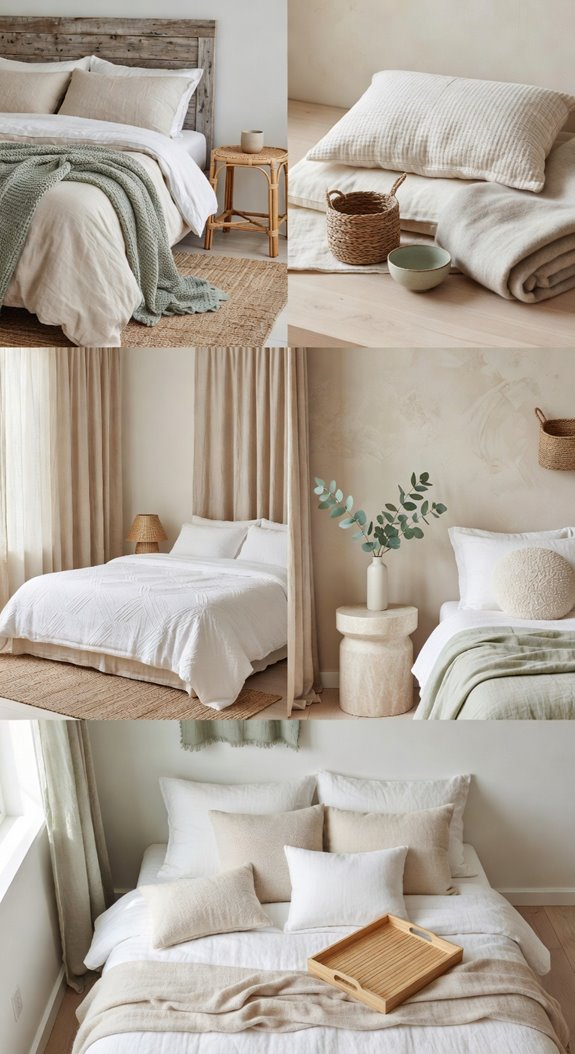
How can you deepen the calm you’ve created through thoughtful material choices? Layer natural fibers like linen, cotton, and wool throughout your bedroom. Add a jute rug, wooden nightstands, and stone accessories. These materials create visual warmth while maintaining the serene aesthetic you’ve established. Natural textures reduce visual clutter, grounding your space in organic simplicity. Incorporating stress-reducing minimalist designs into your material selections ensures each element serves both a functional and calming purpose.
Design a Minimal Nightstand
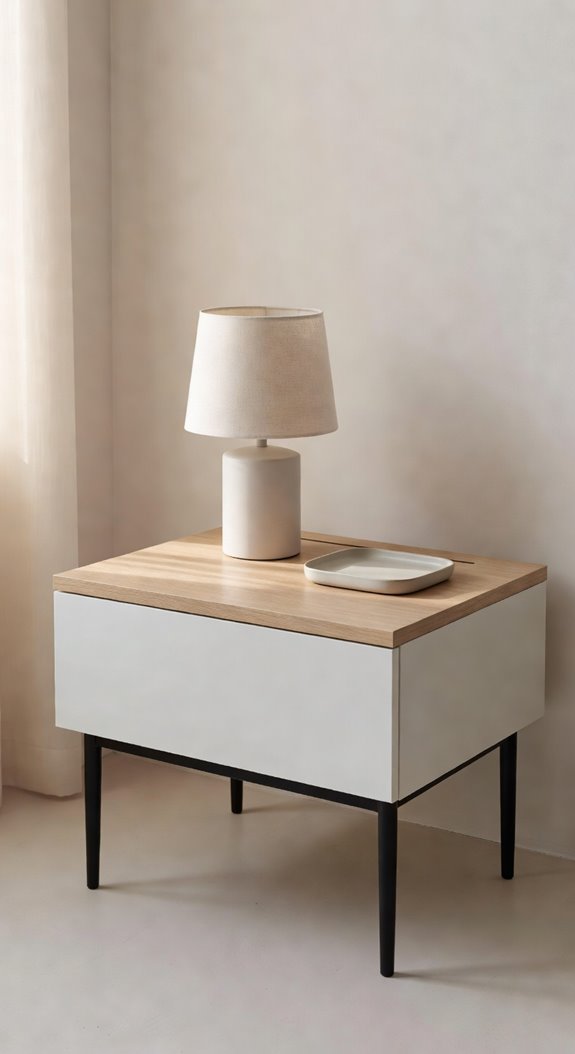
Your nightstand serves as either a visual anchor or a source of unnecessary distraction in your bedroom’s minimalist design. Choose a simple wooden nightstand with clean lines, keeping its surface clear except for a lamp and book.
One floating shelf works well too, reducing visual clutter while maintaining functionality and promoting the calm atmosphere you’re cultivating. If you ever want to introduce more personality into the space, taking cues from cozy fantasy bedrooms can help you layer in warmth and charm without sacrificing simplicity.
Add Plants for Cleaner Air
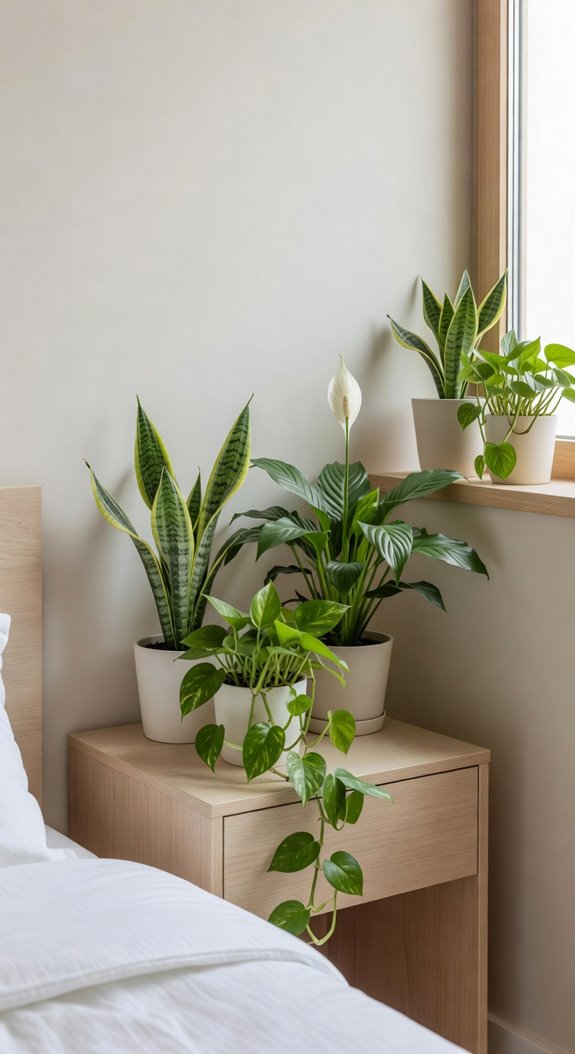
Plants naturally purify your bedroom air while adding organic texture to your minimalist space.
Choose low-maintenance varieties like pothos or snake plants, which thrive in indirect light and require minimal watering.
Position them on your nightstand or floating shelves to maximize visual balance.
These living elements improve air quality, creating a healthier, calmer sleeping environment for you. Incorporating plants is one of many budget-friendly design hacks that can help you achieve a high-end, relaxing look without spending a lot of money.
Carve Out a Dedicated Relaxation Spot

Within your bedroom, designating a specific area for relaxation transforms your space into a functional sanctuary. Position a comfortable chair, soft throw blanket, and reading lamp in a corner, creating an inviting retreat. Use warm, neutral colors like beige or soft gray to enhance calmness. This dedicated zone encourages you to unwind, separate from sleep and work activities. For an added layer of charm, incorporate earthy witchy decor elements like crystals, dried herbs, or small potted plants to bring a grounded, mystical energy to your relaxation corner.
Keep Wall Art and Décor Light
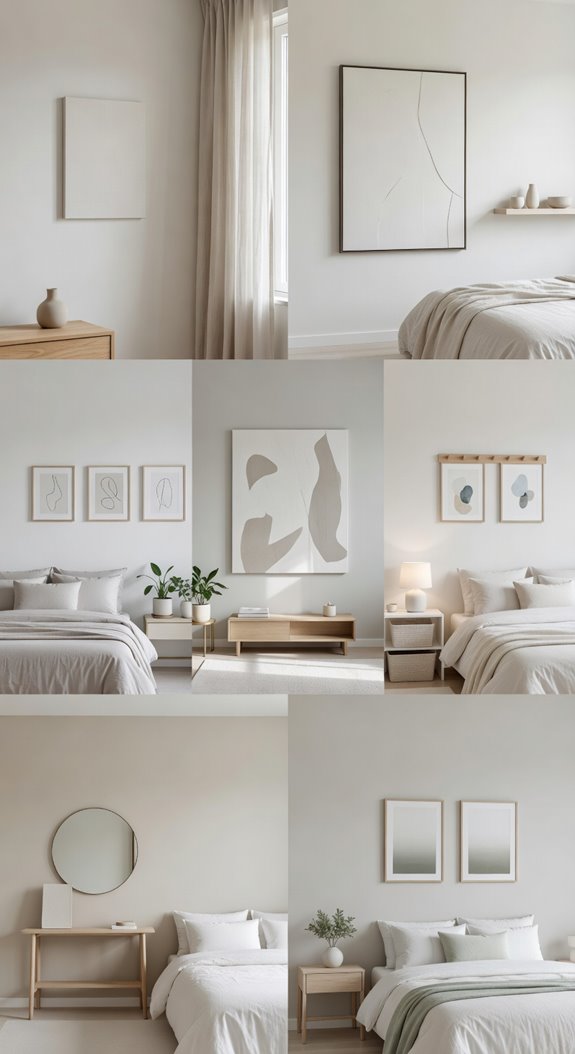
How can you prevent wall art and décor from overwhelming your bedroom’s calm atmosphere? Choose minimal, neutral-toned pieces that complement your space without creating visual clutter. Select one or two larger artworks rather than numerous small prints, allowing walls breathing room. Soft colors like whites, grays, and muted earth tones maintain serenity while adding subtle interest and personality.
Organize Your Closet Strategically

A cluttered closet undermines your bedroom’s tranquil environment, so strategic organization becomes essential for maintaining that calm aesthetic you’ve cultivated. Use matching hangers, arrange clothing by color and category, and implement storage bins for seasonal items. This systematic approach reduces visual chaos, making your closet a functional extension of your serene bedroom space.
Use Scent to Set the Mood
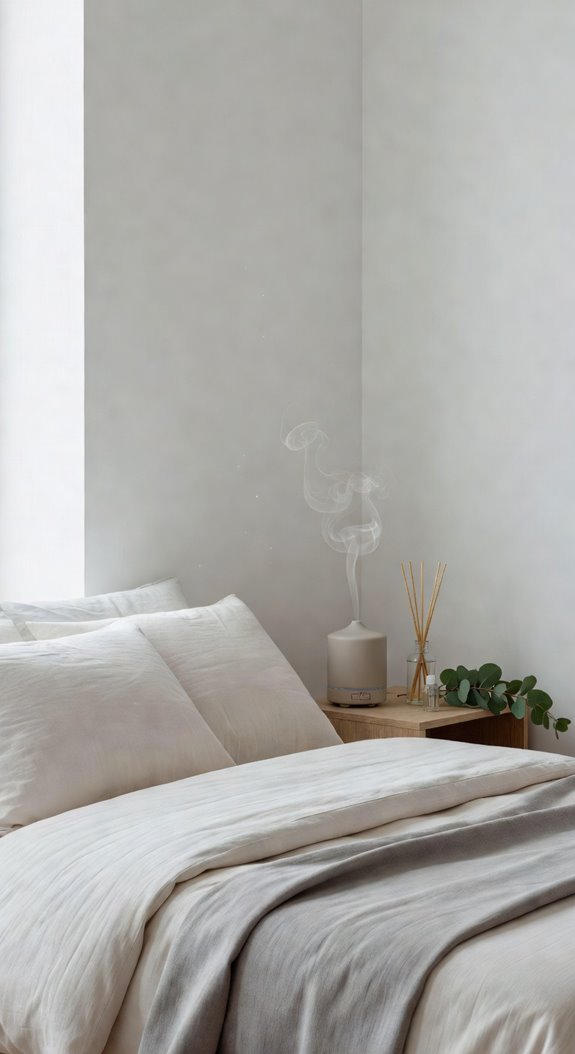
What role does scent play in creating your ideal bedroom environment? Subtle fragrances like lavender, eucalyptus, or chamomile activate your parasympathetic nervous system, promoting relaxation and better sleep quality. You’ll want to use diffusers, sachets, or linen sprays strategically placed on nightstands or shelves. Experts confirm that consistent scent cues condition your mind for rest, making aromatherapy an essential element of your calming sanctuary.
Hide Electronics From View
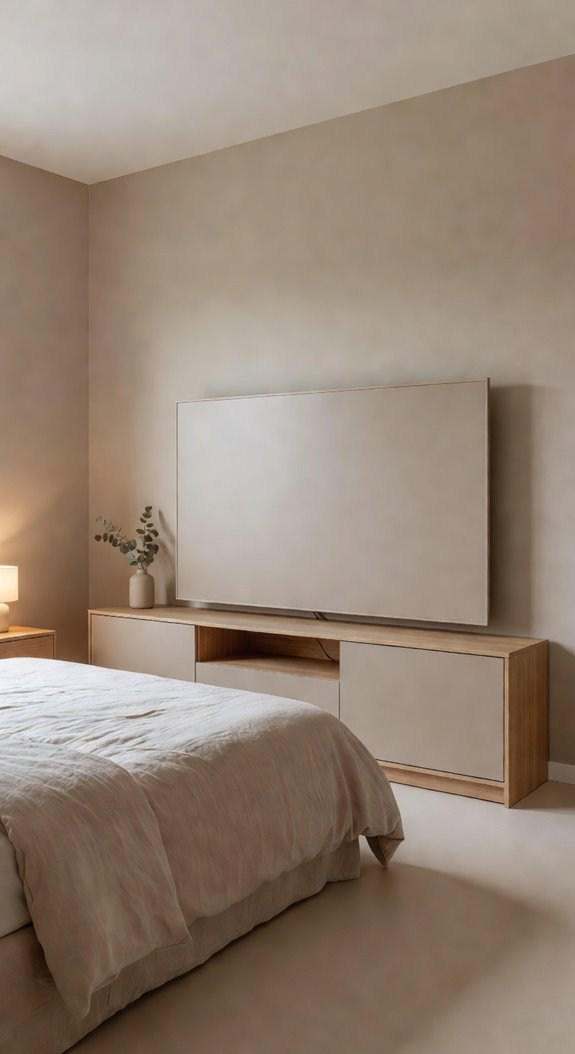
Why do so many sleep experts recommend removing televisions, phones, and charging cables from your bedroom’s view? These devices emit blue light, disrupting your circadian rhythm and delaying sleep onset.
You’ll benefit from concealing electronics behind closed cabinet doors, under beds, or in dedicated storage boxes. This simple approach cultivates a serene environment that naturally promotes deeper, more restorative rest.
Build Habits to Keep Clutter Out
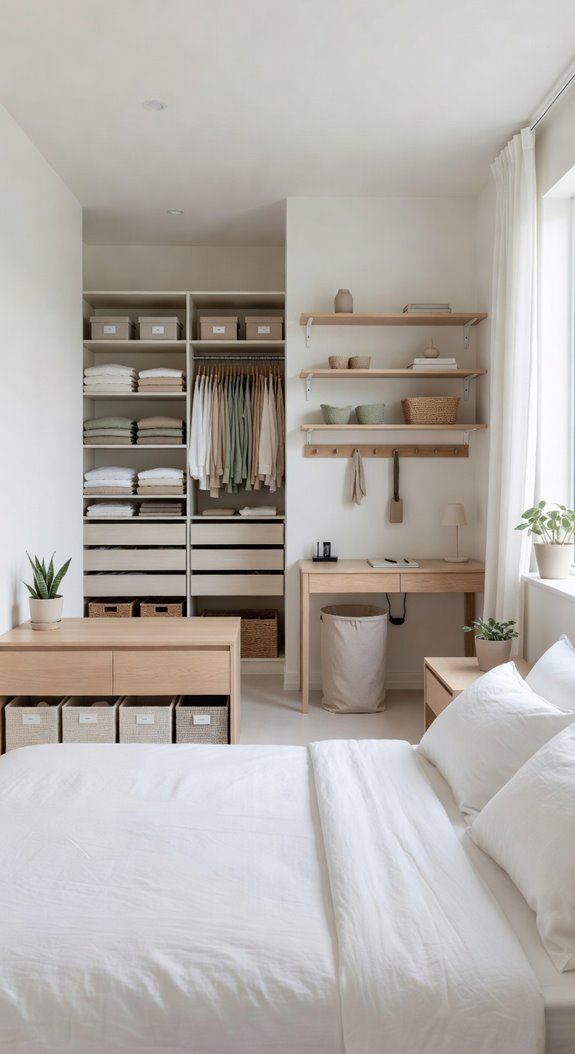
Once you’ve hidden your electronics, maintaining that clean slate requires deliberate daily habits that prevent clutter from creeping back in.
Make your bed each morning, designate specific homes for items, and commit to a nightly ten-minute reset routine.
Organizational experts suggest that consistent habits reduce decision fatigue, making cleanliness feel effortless rather than burdensome over time.
Choose Furniture That Serves a Purpose
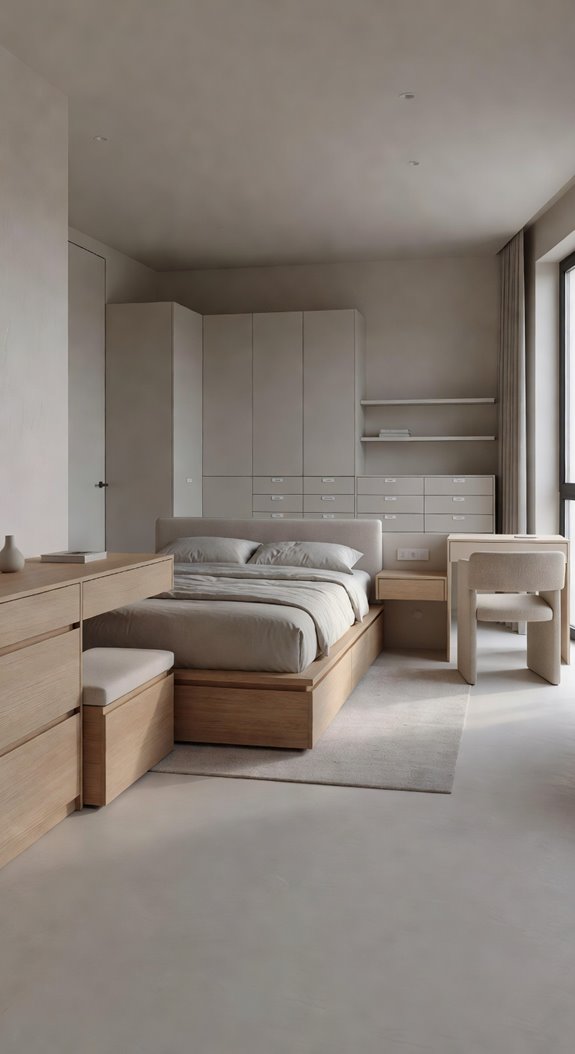
How you furnish your bedroom directly impacts both its function and its calm atmosphere. Select pieces that serve multiple purposes, like storage ottomans or nightstands with drawers, reducing unnecessary clutter. Choose furniture in neutral tones and natural materials such as wood or linen. Avoid overcrowding your space with decorative items that don’t contribute to relaxation or functionality.
Color Palette Selection Matters
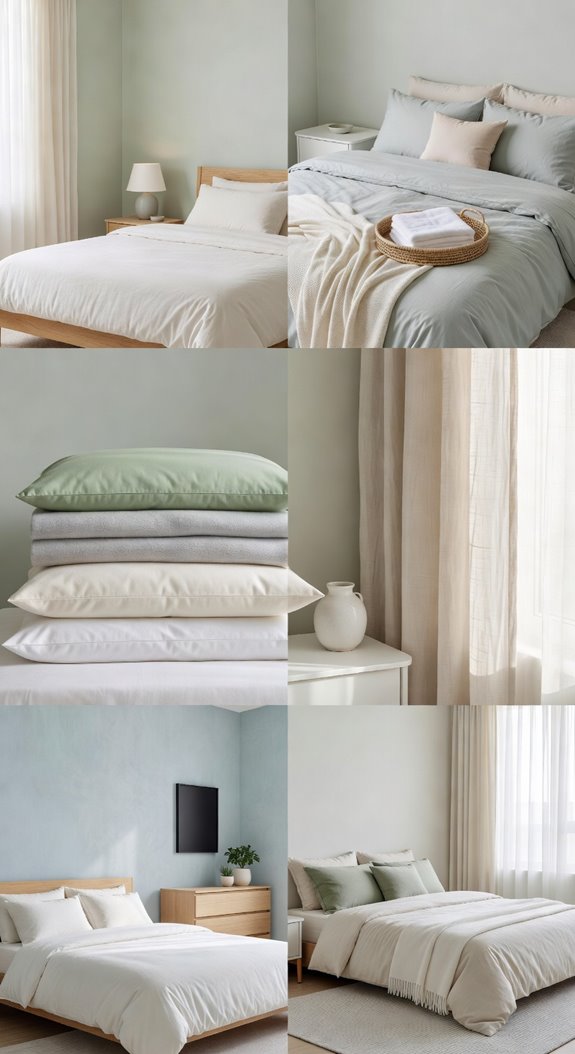
The colors you select for your bedroom walls, bedding, and accessories work together to establish the room’s overall atmosphere, building on the calm foundation you’ve created through thoughtful furniture choices.
Soft blues, greens, and neutrals promote relaxation, while warm earth tones create comfort.
Avoid overly bright or saturated hues that stimulate rather than soothe your senses and mental state.
Common Mistakes
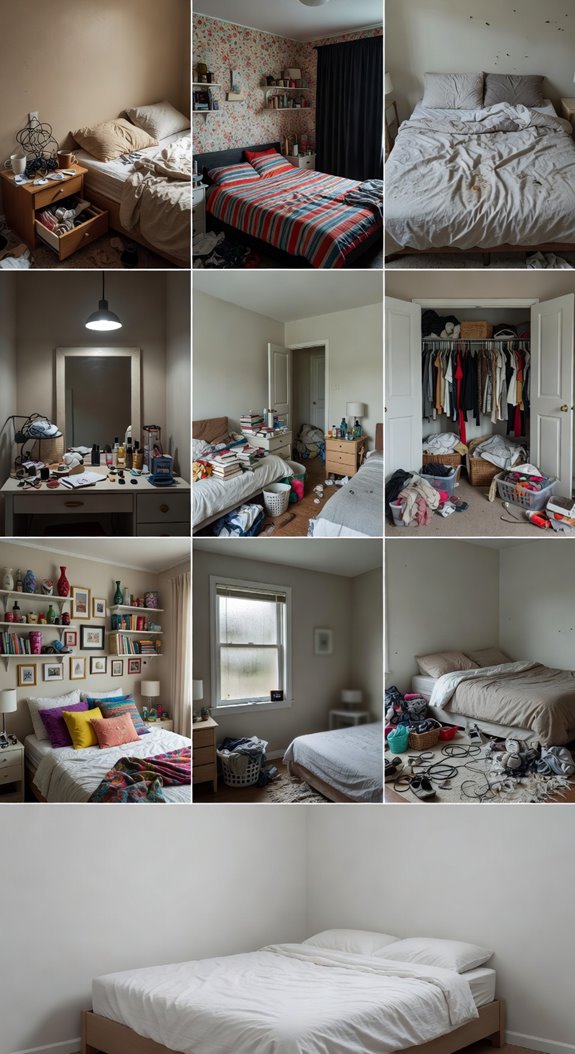
When creating a chill bedroom, you’ll want to sidestep several design pitfalls that undermine relaxation. Avoid cluttering surfaces with excessive décor, which creates visual noise and tension. Don’t choose stimulating colors like bright red or orange; opt for muted tones instead. Resist over-accessorizing with too many patterns, as this overwhelms the senses and disrupts calm atmospheres.
Final thoughts
You can create a calm, clean bedroom by committing to these practical strategies. Start with neutral colors, quality bedding, and purposeful furniture that reduces visual clutter. Establish consistent habits to maintain your space, use smart storage solutions, and invest in soft lighting that promotes relaxation. Your bedroom becomes a restful retreat when you prioritize simplicity, functionality, and intentional design choices that support better sleep.