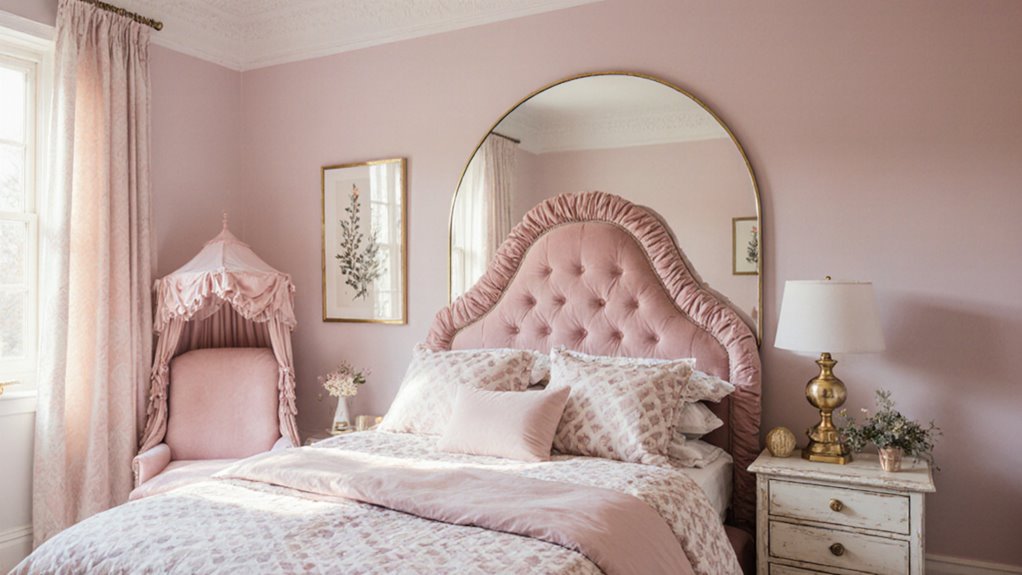
19 Pink Bedroom Ideas That Work Long After the Princess Phase
You’re ready to move beyond bubblegum walls and princess canopies. Pink doesn’t have to disappear from your daughter’s room—it just needs to evolve.
By shifting toward dusty roses, deep magentas, and blush tones paired with sophisticated neutrals like warm greige, charcoal linen, and raw oak, you’ll create a space that matures alongside her. The right textures—think velvet throw pillows, woven wool rugs, and brushed brass hardware—combined with deliberate color layering transform pink into something refined and intentional. What specific approach will work best for your space?
Soft Blush: The Foundation That Grows With Her
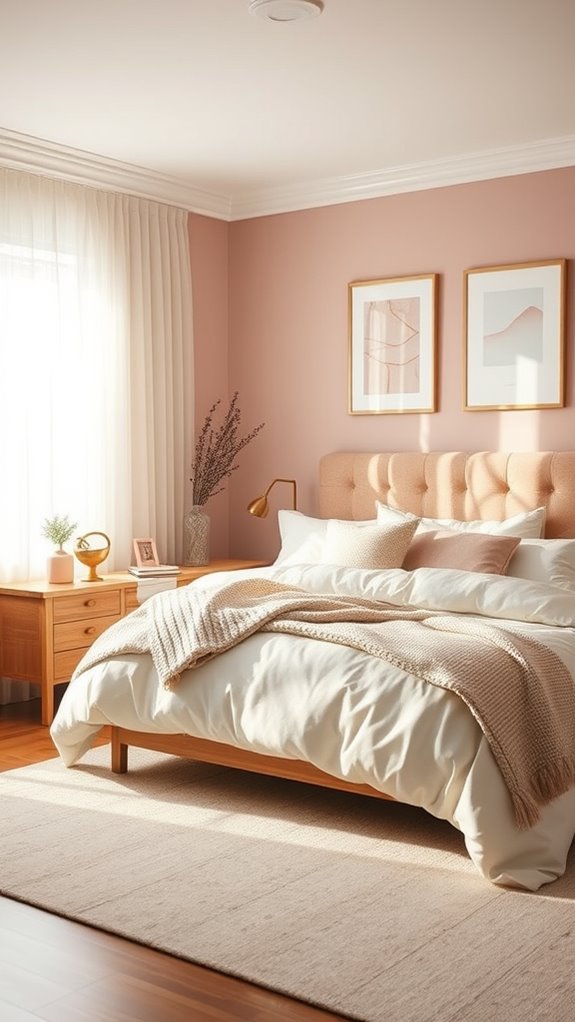
Soft blush walls establish a sophisticated foundation for a girl’s bedroom, balancing youthful appeal with mature elegance. This neutral-leaning, dusty-rose pink adapts seamlessly as her tastes evolve through childhood and adolescence, eliminating the need for costly, disruptive repaints. Drawing from Japandi design principles, the warmth of blush pink harmonizes with natural materials and clean lines for enduring style. Pair blush with quality furnishings in warm natural wood or crisp white finishes, creating timeless, layered interiors that transition effortlessly from playful early years through teen sophistication and beyond.
Dusty Rose for a More Sophisticated Space
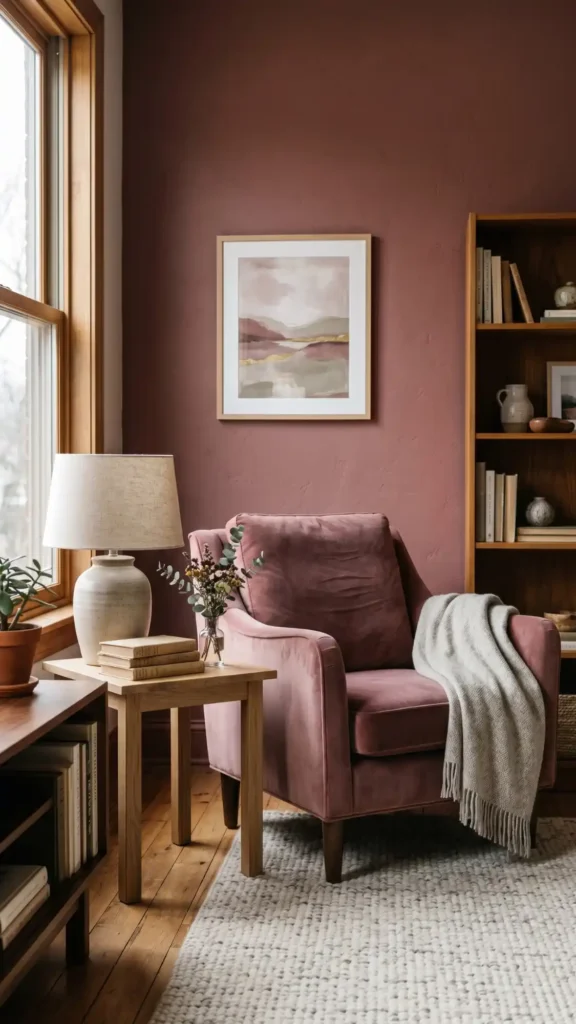
When you’re ready to move beyond soft pastels, dusty rose offers a deeper, more refined alternative that doesn’t sacrifice versatility or timeless appeal. This muted mauve-pink tone, characterized by its gray-muted undertones and warm pigmentation, pairs beautifully with natural wood furniture — think raw oak, walnut, and teak — creating an understated elegance rooted in tonal harmony.
Dusty rose works wonderfully as a feature accent wall, paired with warm greige, ivory, or charcoal neutrals, or incorporated through upholstered pieces like linen sofas, velvet armchairs, and wool-blend ottomans that anchor the room with sophistication and visual maturity.
Professional designers frequently rely on color combinations that deliver effortless results, making this shade a smart long-term investment.
Deep Magentas That Feel Mature and Intentional
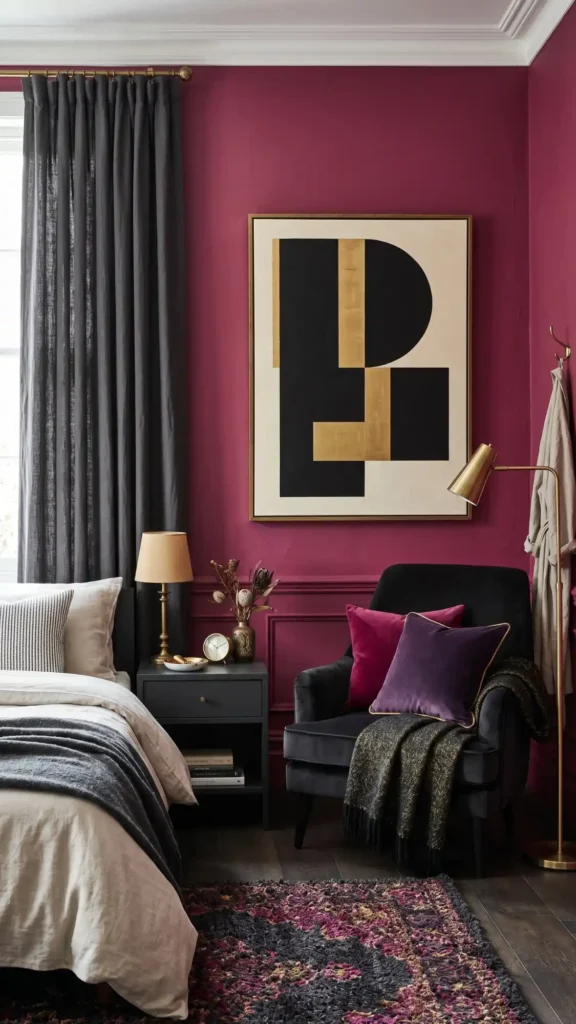
Deep magentas offer a bold yet sophisticated departure from conventional pink palettes, delivering striking visual impact without sacrificing refinement.
These rich, jewel-toned hues — saturated with cool-leaning crimson and violet undertones — pair beautifully with charcoal matte accents, aged brass fixtures, and plush velvet upholstery in complementary jewel tones, creating a layered, intentional aesthetic with remarkable depth.
Deep magenta walls serve as a dramatic backdrop that anchors neutral linen bedding, textured wool throws, and curated modern artwork with bold graphic compositions.
This chromatic approach ensures your bedroom maintains its stylish, elevated character across shifting design trends and maturing personal taste, making it a mid-difficulty bedroom aesthetic that rewards the effort with lasting appeal.
Use Deep Pink as Your Main Wall Color
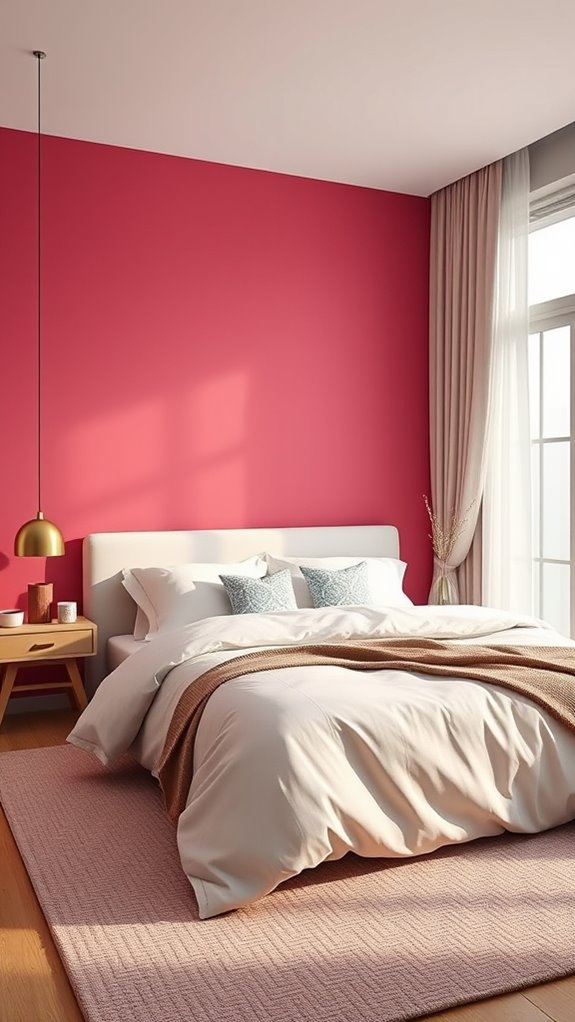
Deep pink walls create an elegant, grounding foundation that transforms a bedroom from ordinary to intentionally sophisticated. Unlike pale blush or dusty rose hues, deep pink carries chromatic density and visual weight, anchoring furnishings with a sense of maturity and deliberate design direction. This rich, saturated wall color reads as a confident, permanent choice rather than a transitional or timid one.
Pair these jewel-toned walls with warm-toned neutral furniture — think natural oak, creamy linen upholstery, or matte ivory lacquered pieces — alongside brushed brass or antique gold metallic accents to maintain chromatic balance without competing with the walls. This layered, texture-forward approach produces a cohesive, timeless aesthetic that avoids the dated, one-dimensional quality associated with softer pink shades while preserving warmth, depth, and sustained visual interest across every corner of the room. Timeless pink bedrooms maintain their sophisticated appeal long after youthful decorating phases have passed.
Let Pink Pop Against Neutral Walls
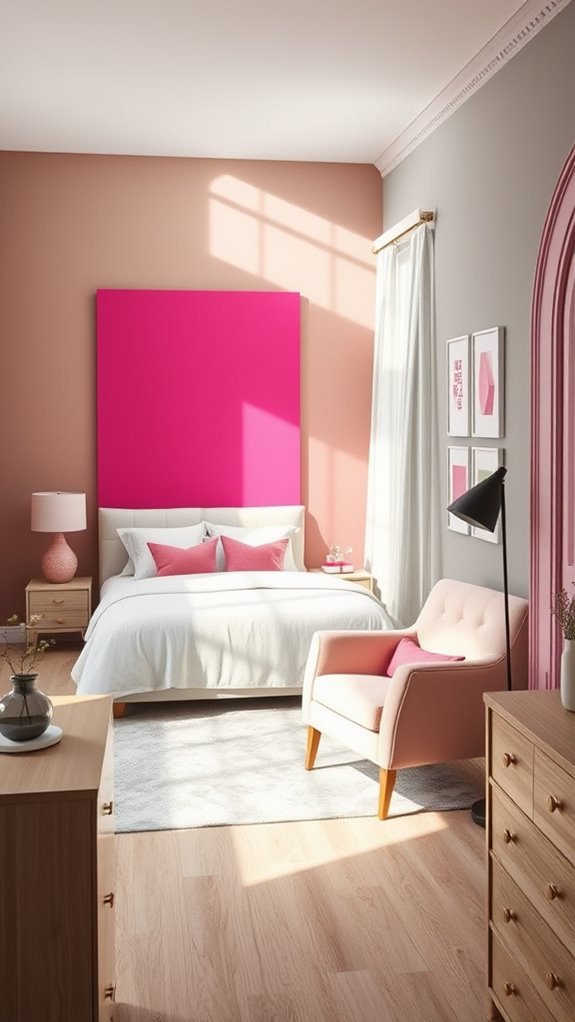
Neutral walls in soft gray, crisp white, or warm beige create an ideal backdrop that allows pink to function as a deliberate, high-impact design statement rather than an afterthought. The chromatic restraint of these foundational tones amplifies pink’s visual weight, giving it room to breathe and assert itself with confidence. Demonstrating that restrained palettes can still deliver personality and depth, this pairing of neutral foundations with intentional color creates a sophisticated tension.
Blush-toned velvet upholstery, rose-hued linen bedding, dusty pink abstract artwork, and deep magenta throw pillows all serve as vehicles for introducing pink’s full tonal spectrum into a neutrally anchored space. This layered, intentional approach produces a refined aesthetic that maintains long-term design flexibility as personal preferences shift.
Bold Accent Walls Without Overwhelming the Room
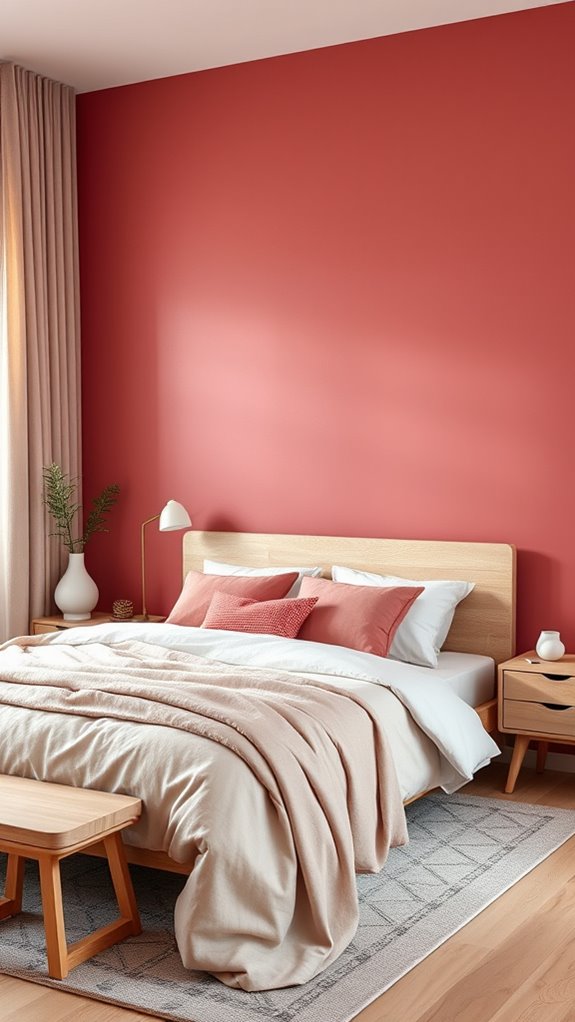
When you’re ready to introduce a bolder pink accent wall, strategic placement and color selection become your most valuable tools for maintaining visual balance. Choose one wall — ideally the wall directly behind the bed’s upholstered headboard or the desk’s centered position — avoiding corner walls that fragment the room’s spatial continuity and diminish the wall’s architectural impact.
Pair matte-finish dusty rose or warm mauve with crisp white crown molding, baseboards, and window trim, then anchor the palette with neutral furnishings in natural linen, bleached oak, or warm greige tones. This layered approach creates a sophisticated, age-resilient focal point that transitions gracefully from a child’s bedroom into a teenager’s retreat without requiring costly repaints. For even more architectural depth, consider extending your pink statement beyond paint to full wall panelling, which adds timeless texture and elevates the room’s sophistication without sacrificing the color’s warmth.
Choose Pink Bedding That Works Beyond Childhood
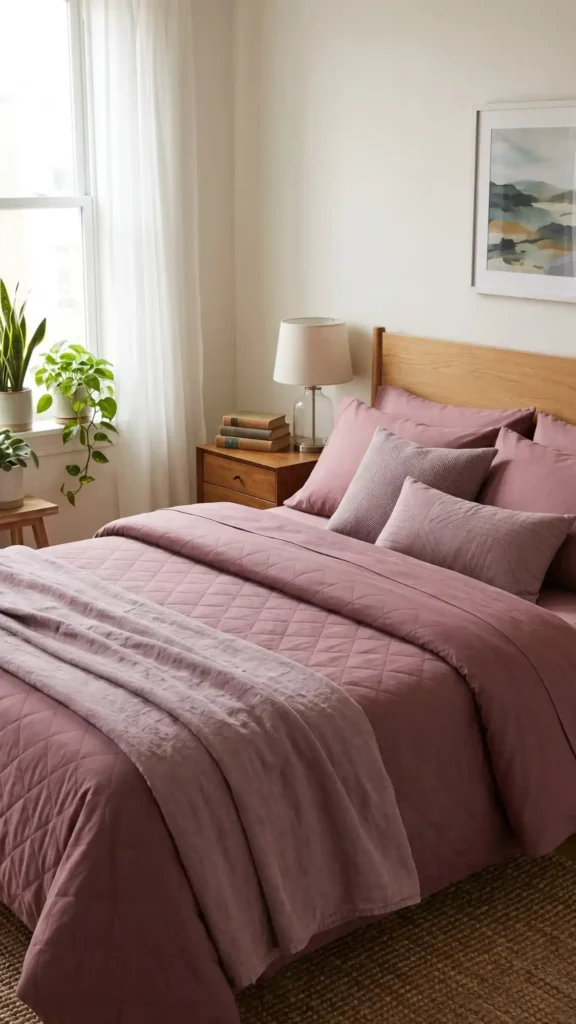
Pink bedding serves as the foundation of your room’s design, so selecting pieces that mature alongside your child requires thoughtful consideration of color depth, fabric quality, and timeless styling. Choose muted dusty rose or mauve tones over saturated bubblegum pink shades, as the deeper, grayer undertones of these sophisticated hues transition seamlessly from a toddler’s nursery through teenage years without feeling juvenile or dated. No-permission renter strategies ensure your bedding investment remains portable even when you can’t modify walls or fixtures in temporary living spaces.
Invest in high-thread-count Egyptian cotton or stone-washed linen materials featuring tight, durable weaves that withstand frequent high-temperature washing cycles while maintaining structural integrity and color vibrancy. Opt for solid colors or subtle geometric patterns — think tone-on-tone diamond quilting or minimalist herringbone weaves — rather than licensed character prints or novelty motifs, ensuring your bedding set remains visually relevant and stylistically adaptable through adolescence and into early adulthood.
Add Texture to Make Pink Feel Grown-Up
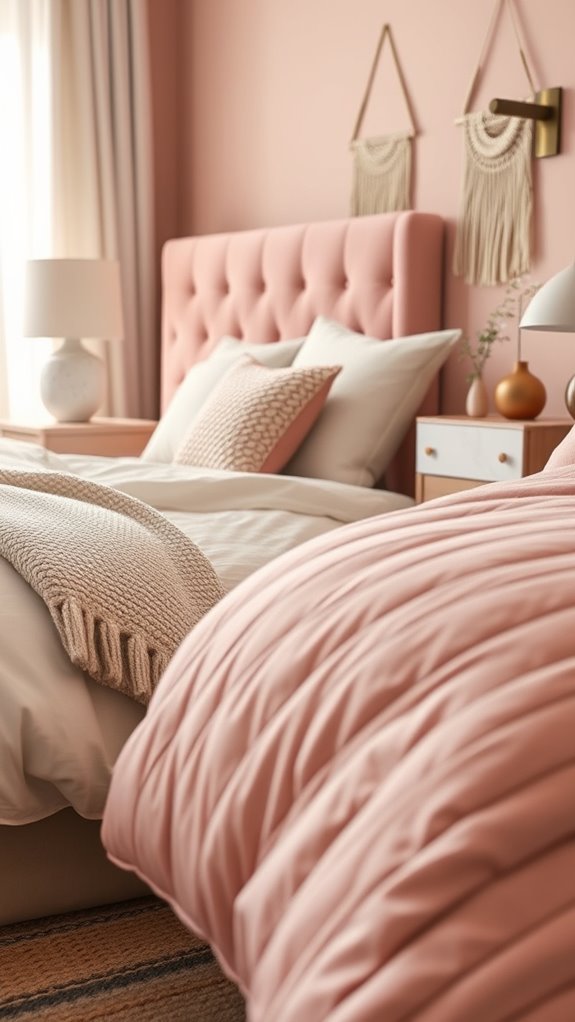
How can you elevate dusty rose from looking childish to genuinely sophisticated? Layer contrasting textures — think tightly woven Belgian linen, plush crushed velvet, and heavyweight merino wool — to introduce visual depth and tactile maturity into the space.
Incorporate a chunky hand-knit throw draped over an upholstered headboard, embossed grasscloth wallpaper with a subtle botanical repeat, or a hand-loomed Moroccan area rug in blush and ivory. These deliberately chosen, richly tactile elements transform dusty rose into a refined, adult aesthetic while sustaining warmth and layered visual interest throughout the bedroom. This approach creates a vintage-inspired atmosphere that feels intentionally curated rather than assembled from random finds.
Choose Warm Wood Finishes to Ground Pink
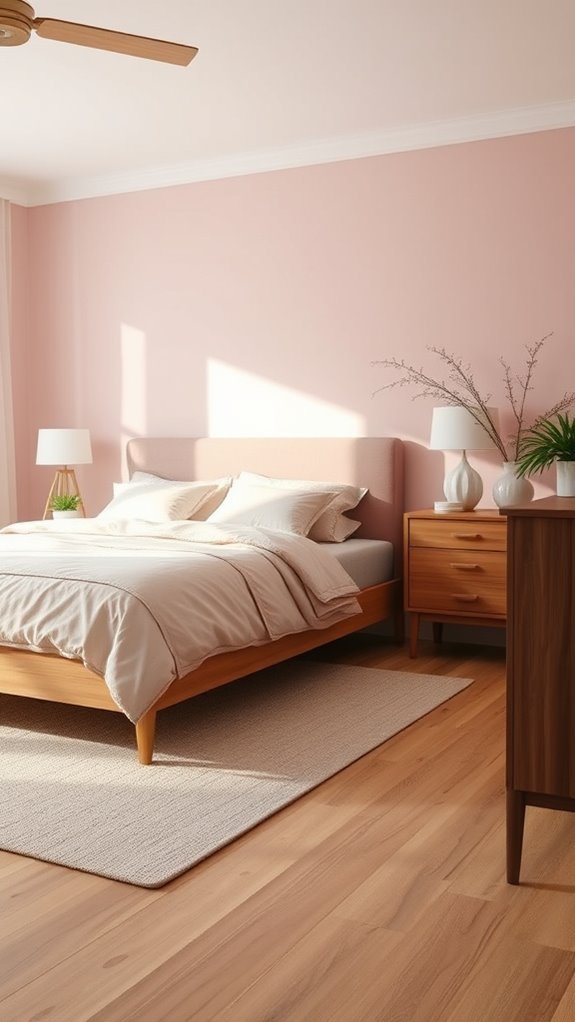
To keep dusty rose from feeling insubstantial or overly feminine, you’ll need to anchor the space with warm wood finishes that provide visual weight and grounding. Oak with its open, cathedral grain patterns, rich walnut with its deep chocolate undertones, and cherry wood with its reddish-amber warmth all create a sophisticated, tactile foundation that commands presence in a room.
Consider a substantial wooden bed frame with visible joinery and mortise-and-tenon construction, a six-drawer dresser with dovetailed corners and brushed brass hardware, or solid nightstands with tapered legs in medium-to-deep honey or espresso tones. These structurally grounded, naturally textured elements balance blush and dusty rose walls while simultaneously introducing a sense of warmth, permanence, and design maturity to your bedroom aesthetic. Just as green bedroom walls range from sage to forest to suit different moods, wood tones offer a spectrum of warmth that can similarly transform a space.
Add Edge With Metal Accents
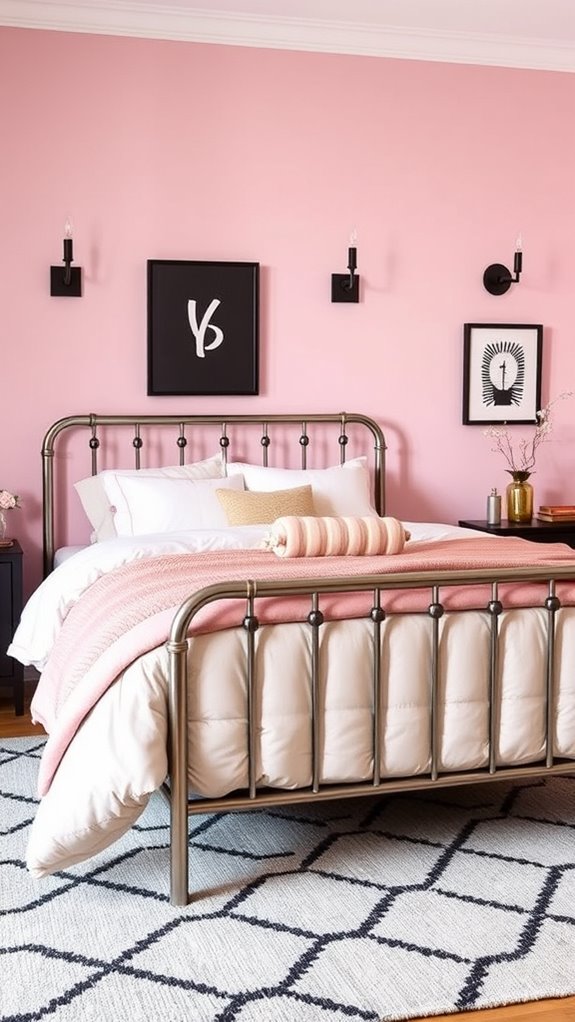
While warm wood grounds your space beautifully, strategic metal accents prevent your bedroom from feeling too soft or overly romantic. Incorporate brushed bronze or matte black fixtures, hardware, and frame details, creating visual interest and sophistication through deliberate material contrast. Just as earthy bedroom ideas rely on grounded, natural elements to avoid feeling muddy or flat, metal accents provide essential definition that keeps pink from overwhelming the space.
Metal bed frames with slim welded joints, beveled mirror surrounds, and articulating lighting elements introduce contemporary contrast that energizes the overall composition. These industrial touches balance pink’s delicate nature, establishing mature, layered aesthetics that age gracefully well beyond childhood phases.
Mix Patterns Without Clashing
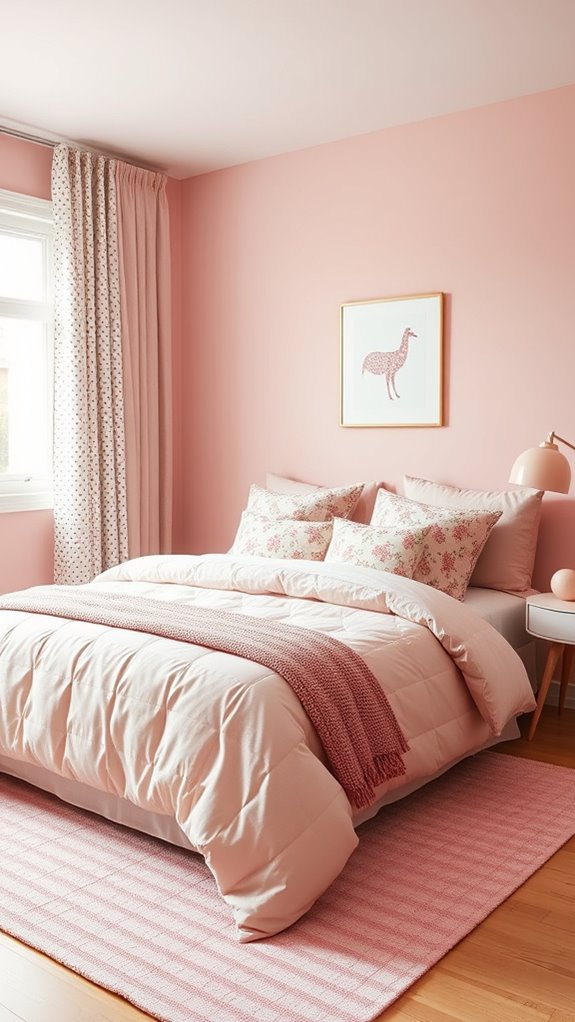
Pattern mixing requires a deliberate, design-forward approach — one that keeps your bedroom feeling curated and intentional rather than visually chaotic. Choose a single dominant pattern, such as a large-scale geometric or bold botanical print, then layer complementary secondary designs in smaller doses across pillowcases, throws, and accent textiles.
Pair angular geometric prints with soft organic florals, anchoring both within a consistent, tightly controlled color palette to visually unify the competing motifs. Stick to two or three patterns maximum, deliberately balancing high-activity, detail-dense elements with solid-colored furniture upholstery and neutral-toned walls to create essential moments of visual rest.
Select Pink Furniture That Serves Multiple Purposes
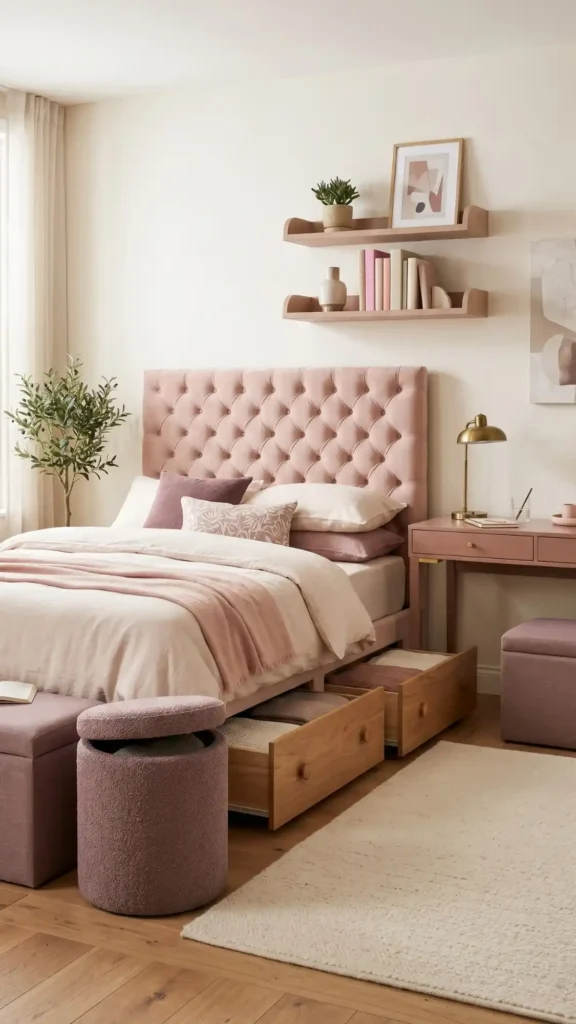
Furnishing your room with multifunctional pink pieces guarantees your space adapts as your style evolves. Consider a blush pink upholstered storage bed with a tufted velvet headboard and deep under-bed drawers featuring smooth wooden slides, or a dusty rose lacquered writing desk paired with floating wall-mounted shelving units in a coordinating rose-beige tone, offering dedicated study surface and curated display space simultaneously.
Cylindrical and rectangular upholstered ottomans in muted mauve linen or bouclé fabric deliver flexible additional seating while concealing generous interior storage compartments secured by hinged lids, making them durable, long-lasting investments that accommodate shifting functional needs and evolving aesthetic preferences across multiple life stages.
Layer Pink Tones With an Ombre Wall Effect
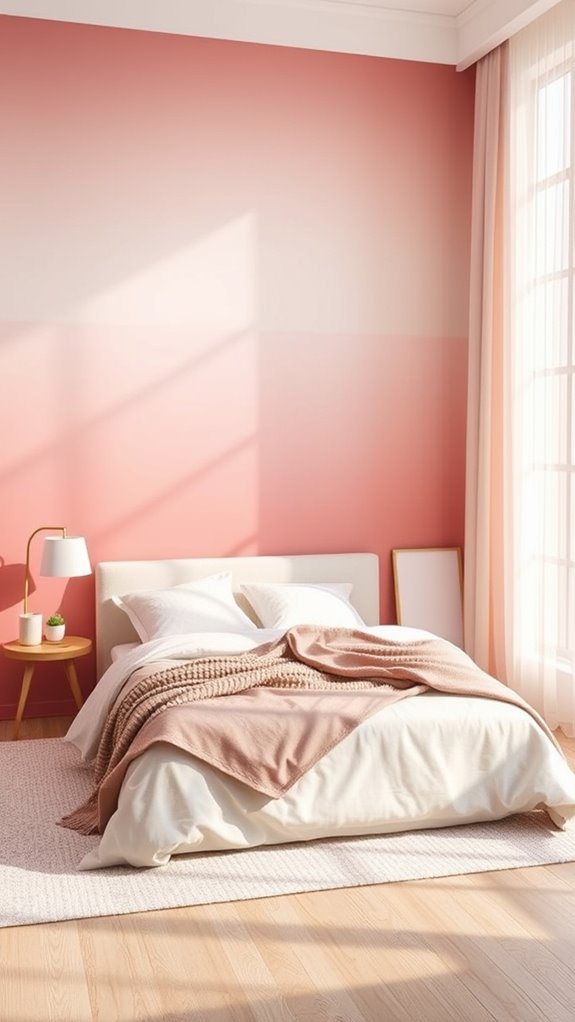
An ombre wall effect layers pink tones from light to dark, creating sophisticated visual depth without committing to a single, static color. This gradient painting technique transitions smoothly across the wall surface, moving from soft blush and pale rose at the top to deeper dusty mauve and rich magenta toward the base.
You’ll apply progressively deeper, pigment-saturated shades using wide-bristled blending brushes and a feathering technique that eliminates harsh color boundaries. The seamless chromatic shift generates a three-dimensional illusion, making the room feel taller, more expansive, and architecturally dynamic.
This versatile approach integrates effortlessly with existing furniture pieces, upholstered headboards, wooden nightstands, and fabric-draped windows, eliminating the need for costly complete redesigns as your aesthetic preferences evolve over time.
Use Lighting to Complement Pink Walls
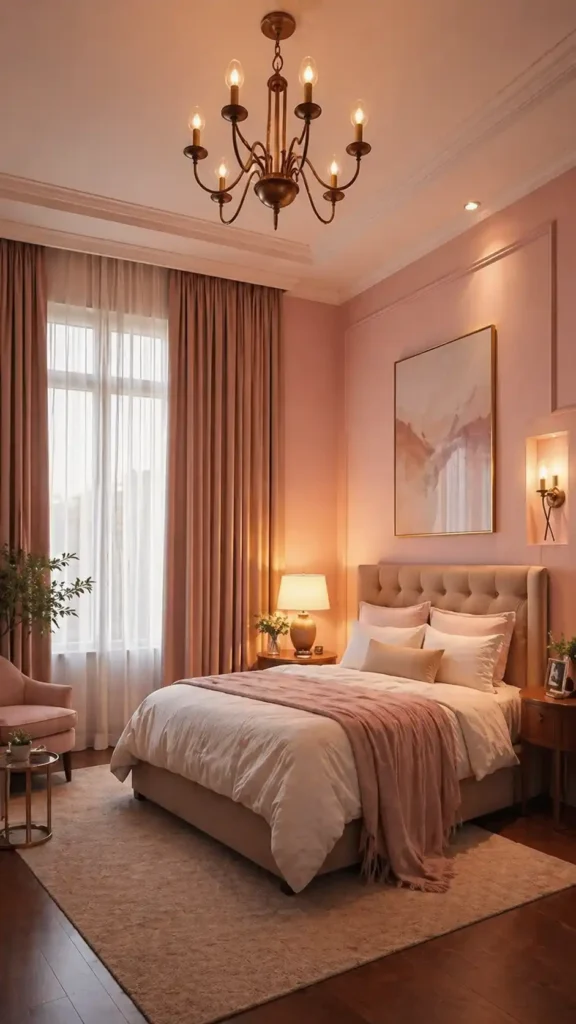
Strategic lighting choices amplify visual depth and establish the overall mood of your bedroom. Install warm-toned fixtures — think soft amber bulbs ranging from 2700K to 3000K color temperature — to soften pink walls and prevent the washed-out flatness that harsh overhead fluorescents create.
Layer ambient lighting with dedicated task lighting positioned near your desk or reading nook for functional contrast. Consider installing dimmer switches rated for LED compatibility, which allow you to adjust brightness levels throughout the day and create long-term flexibility as your personal style evolves.
Display Artwork and Gallery Walls That Elevate Pink
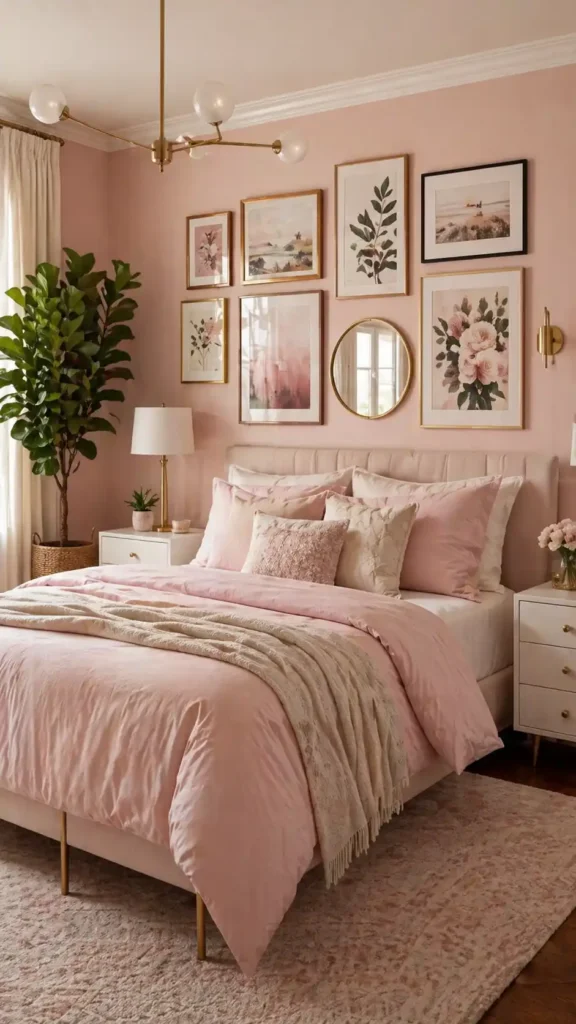
A thoughtfully curated gallery wall transforms a pink bedroom from one-dimensional to visually dynamic. Select artwork featuring complementary neutrals like warm ivory and soft taupe, rich jewel tones such as emerald and sapphire, or reflective metallics in gold and brushed silver—each element interacting deliberately with your existing pink palette.
Frame selection and material mixing generate layered depth across the composition. Pair warm-toned walnut or oak wood frames alongside cool-finish black metal or antiqued brass frames, distributing contrasting finishes at varying heights and scales to prevent visual monotony.
This intentional, attribute-rich approach ensures your bedroom aesthetic remains sophisticated and adaptable, maturing gracefully alongside your evolving personal style.
Bring Life to Pink Rooms With Plants
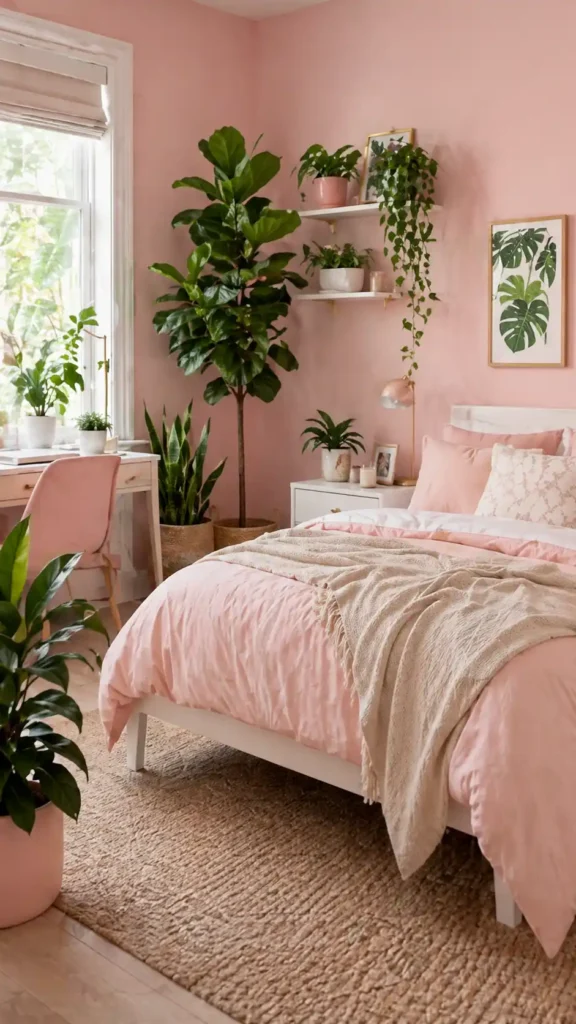
Plants are one of the most effective ways to soften a pink bedroom’s intensity while adding natural texture and visual interest. Trailing pothos with their cascading, heart-shaped leaves, architectural fiddle leaf figs with their broad, glossy foliage, and sculptural snake plants with their upright, variegated blades all work beautifully in this context. Housing these specimens in matte ceramic planters or hand-woven rattan baskets grounds the space with organic, tactile elements that contrast richly against blush, dusty rose, or hot pink wall tones.
Lush greenery introduces a full spectrum of natural greens — from deep emerald to pale sage — that establish visual balance and elevate the room’s overall sophistication. Layering botanical elements at varying heights, from floor-level statement plants to shelf-displayed trailing varieties, enhances dimensional depth while reinforcing a mature, intentional aesthetic throughout the space.
Organize Storage in Coordinating Pink Tones
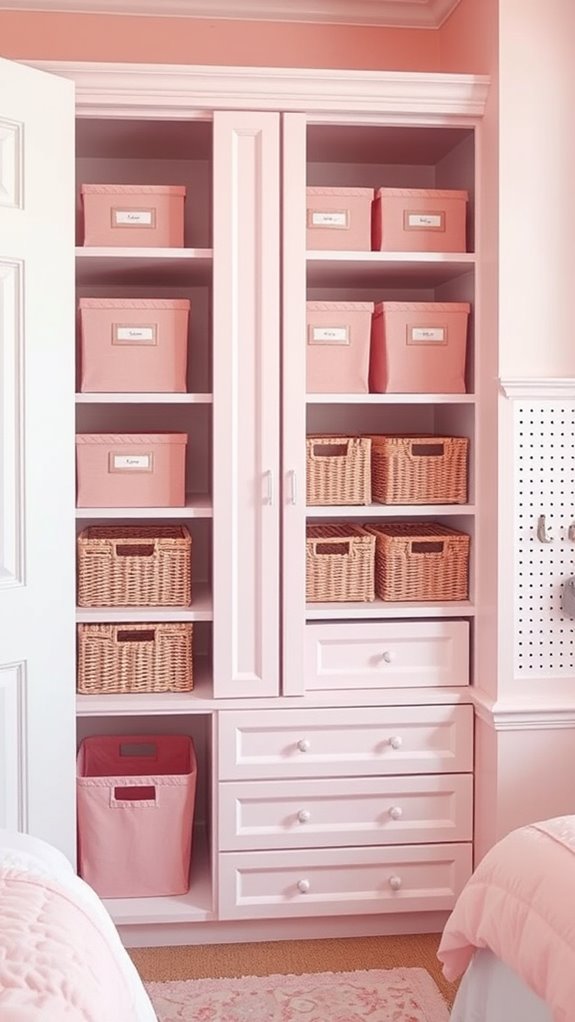
A serene, well-organized adult bedroom featuring matte-finish dusty rose and mauve storage boxes stacked on open white oak shelving units, a vintage-inspired mauve six-drawer dresser with brushed brass hardware, blush pink linen fabric bins tucked beneath a platform bed frame, soft natural afternoon light streaming through sheer linen curtains, muted sage green houseplants in terracotta pots on shelves, pale pink wallpapered walls with subtle textured weave pattern, warm-toned hardwood flooring, a plush ivory area rug, and neatly folded textiles in tonal pink and cream hues arranged throughout the space.
Pair Pink and Blue for a Timeless Look
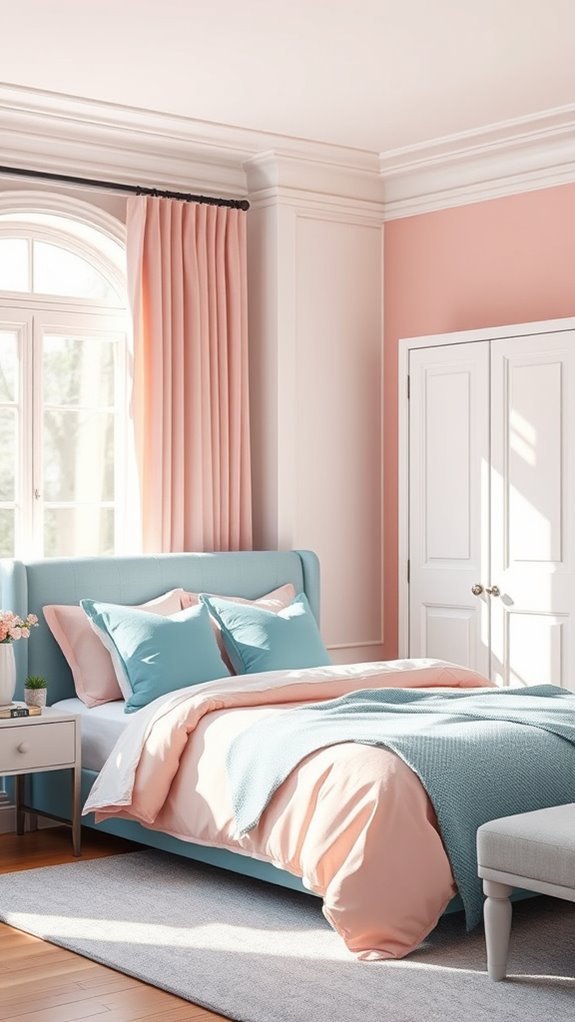
Pairing pink and blue creates a balanced, sophisticated foundation for any age. Soft blush pink with slate blue offers understated elegance, while deeper magentas complement navy tones.
This color combination transcends childhood trends, providing a mature aesthetic that adapts easily to evolving décor styles and personal preferences.
Update a Pink Room Without Starting Over
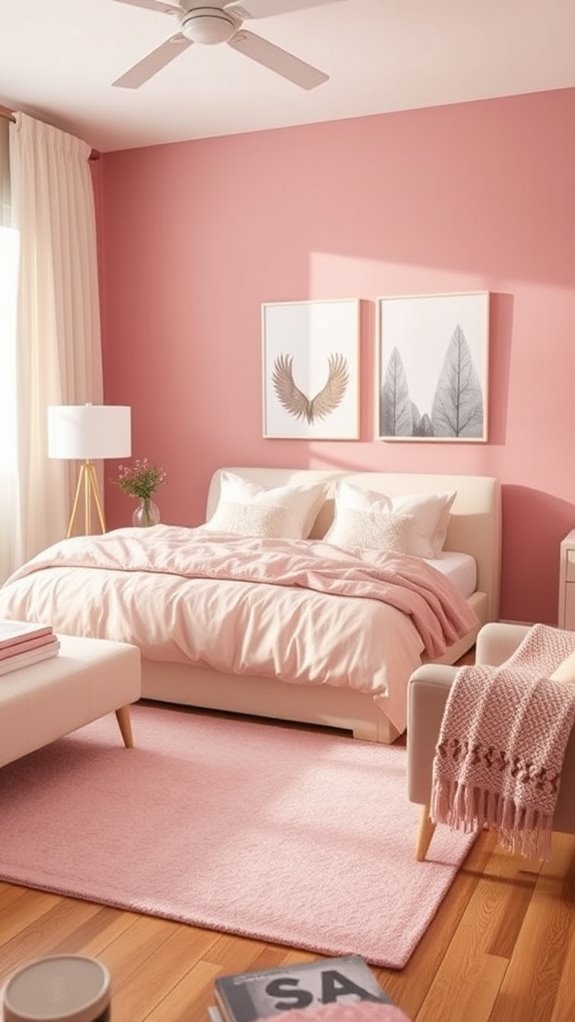
If you’ve lived with pink walls for years, rejuvenating your space doesn’t require a complete overhaul. Replace existing bedding, window curtains, and decorative accessories with warm neutral tones—think ivory linen duvet covers, cream-colored cotton curtains, and ceramic vases in bone white—creating a sophisticated, layered foundation that anchors the room’s evolving palette.
Paint a single accent wall in soft warm gray or taupe, introducing visual depth and architectural interest without overwhelming the remaining blush-toned surfaces. Layer in solid oak or walnut furniture pieces alongside brushed brass or aged-br Bronze metallic accents—bedside table lamps, drawer pulls, and decorative trays—to establish a polished, mature aesthetic that grows and transitions with your personal style over time.
Final thoughts
Creating a pink bedroom that matures with you starts with selecting sophisticated shades — dusty rose, antique blush, and deep magenta — rather than saturated bubble-gum tones that skew juvenile. These nuanced, pigment-rich hues carry visual weight and pair naturally with warm neutrals like aged linen, raw oak, and soft greige.
Layer in quality textures — nubby bouclé throw pillows, matte velvet headboards, brushed cotton duvet covers — to build depth and tactile richness that elevates the palette beyond novelty. Treat pink either as a bold, saturated primary color across walls and upholstery, or as a precise accent woven through ceramic table lamps, framed artwork, and woven area rugs. This intentional, attribute-conscious approach ensures your space maintains an elegant, enduring aesthetic that adapts gracefully as your personal style evolves across years and design phases.