13 10×10 Bedroom Layout Ideas With Exact Furniture Placement
When you’re working with a 10×10 bedroom, strategic furniture placement becomes essential. You’ll find that thoughtful arrangement transforms cramped quarters into functional spaces, with every square foot carrying measurable weight in both comfort and usability.
The challenge lies in balancing circulation pathways against storage capacity, openness against visual density. Whether you’re positioning a queen-sized bed flush against a load-bearing wall or floating a full-sized frame toward the center for spatial expansion, each layout decision directly impacts traffic flow, natural light distribution, and overall livability. Understanding these placement strategies will reveal high-efficiency configurations you hadn’t previously considered.
The Classic Bed-Against-Wall Layout for Maximum Floor Space
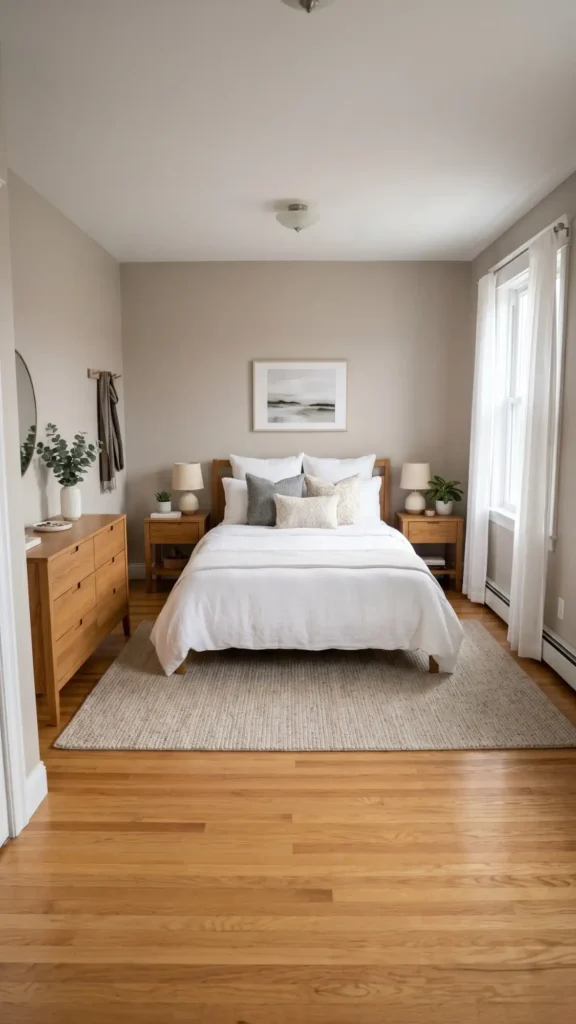
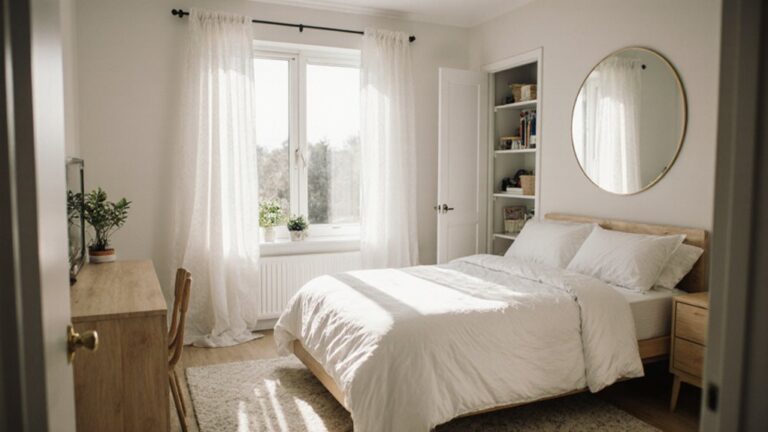
A compact, symmetrically arranged bedroom photographed in natural daylight, featuring a neatly made bed with white linen bedding and decorative throw pillows positioned flush against a light taupe painted wall, flanked by matching wooden nightstands with small table lamps casting warm light, a six-drawer wooden dresser against the adjacent wall, hardwood flooring with a neutral area rug, soft morning light streaming through sheer white curtains on a single window, clean open floor space visible in the foreground, shot from a slightly elevated wide-angle perspective to emphasize room depth and spatial flow. The light taupe wall color avoids the common mistake of using dark or overly bold paint that visually shrinks the available space.
Floating Bed Design to Create an Illusion of Spaciousness
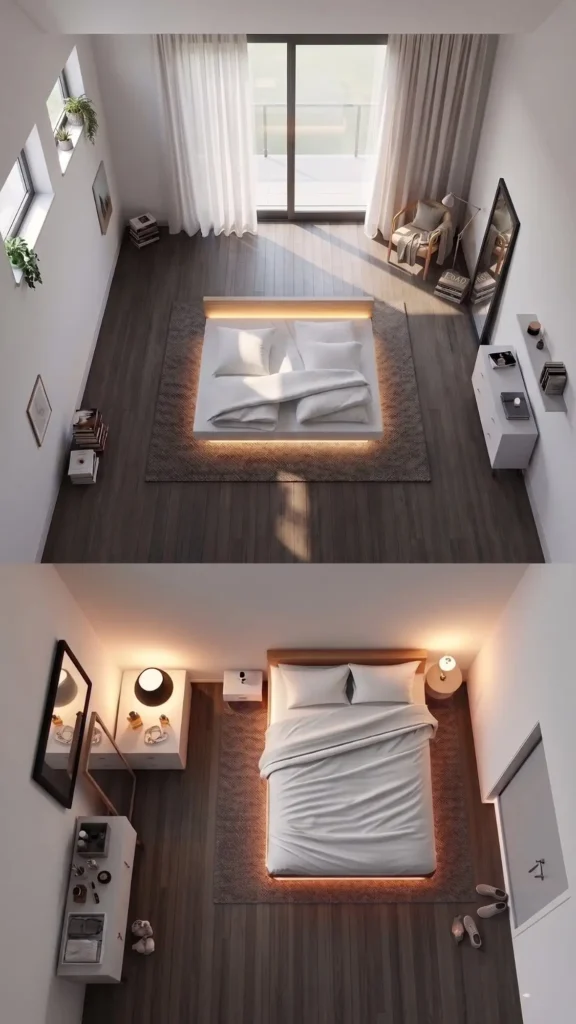
Floating your bed away from the walls creates visual separation that makes your bedroom feel significantly larger than its actual square footage. Unlike wall-adjacent placement, which maximizes usable floor space, a centrally positioned bed draws the eye outward toward the perimeter, expanding the perceived boundaries of the room.
You’ll need a minimum clearance of two feet on each side of the frame to allow comfortable circulation and unrestricted movement around the bed. This layout performs particularly well in rectangular rooms, where centering the bed along the longer axis naturally establishes distinct functional zones — a dedicated sleeping area anchored by the bed and a defined dressing zone positioned toward the periphery. The perimeter space you create around the bed frame becomes an ideal location for incorporating cozy reading nooks that maximize every square foot without sacrificing the room’s open, airy feeling.
Corner Bed Placement With Dual Nightstands
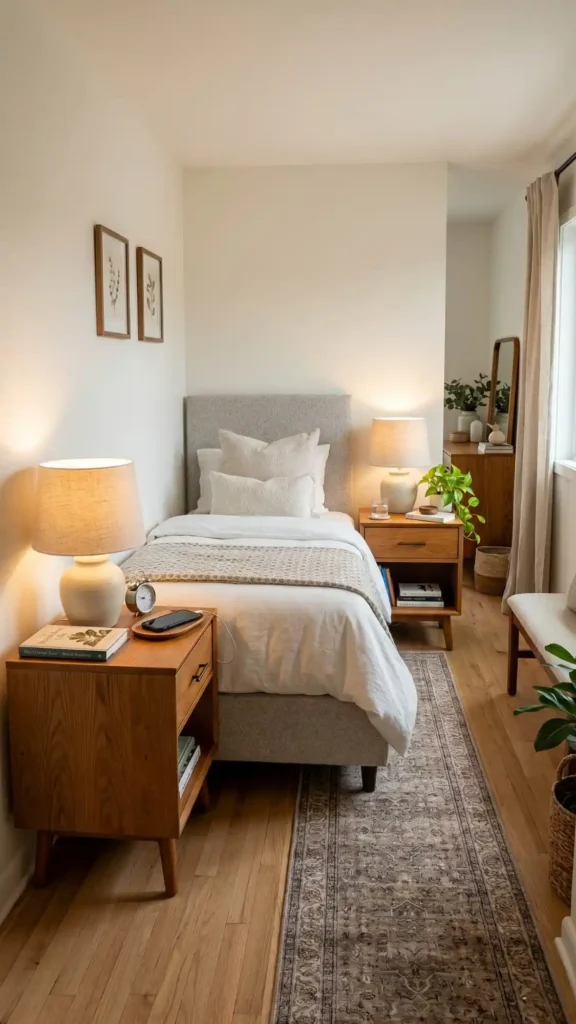
Corner bed placement with dual nightstands transforms a compact bedroom into an organized, functional retreat.
Positioning a queen or full-sized upholstered bed frame flush against two adjoining walls maximizes usable floor space while establishing a strong architectural anchor point.
Flanking the bed with two matching solid-wood or lacquered nightstands — each featuring drawer storage, open shelving, or cabinet compartments — creates bilateral symmetry that visually balances the room.
These dual surfaces accommodate ceramic table lamps, charging cables, hardcover books, alarm clocks, and personal essentials within arm’s reach of both sleeping positions.
The corner configuration naturally improves interior traffic flow by consolidating the bed’s footprint, freeing central floor area for dressers, upholstered benches, or open walking paths.
Combined with the paired nightstands’ storage capacity, this layout delivers maximum functionality without expanding the room’s physical square footage.
Opting for neutral bedroom ideas with a restrained palette allows the symmetrical furniture arrangement to deliver personality and depth through texture and form rather than bold color.
Bed Under the Window With Dresser Opposite
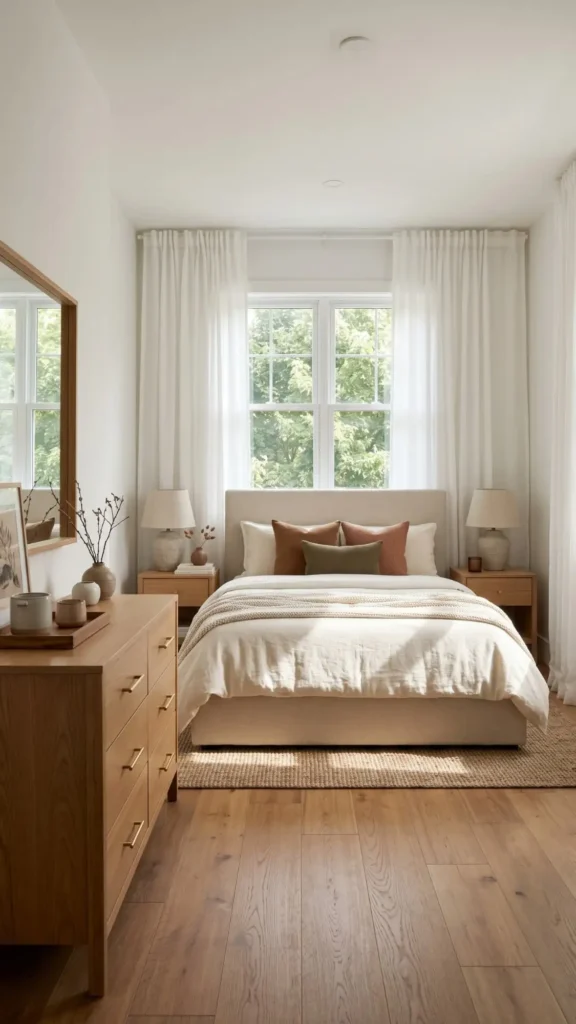
A symmetrically arranged 10×10 bedroom featuring a queen-sized upholstered platform bed centered beneath a large double-hung window with sheer linen curtains cascading on either side, the headboard positioned flush against the wall, natural daylight streaming across cream-colored bedding with decorative throw pillows in muted earth tones, a six-drawer solid wood dresser with brushed brass hardware placed directly opposite on the far wall, a rectangular mirror mounted above the dresser reflecting ambient light, warm oak hardwood flooring, soft white walls, two matching ceramic table lamps on wooden nightstands flanking the bed, late morning sunlight casting soft diagonal shadows across the room. This serene space embodies Japandi design principles, merging Japanese minimalism with Scandinavian warmth to create a calm, clutter-free retreat.
Narrow Room Layout: Lengthwise Bed Against Long Wall
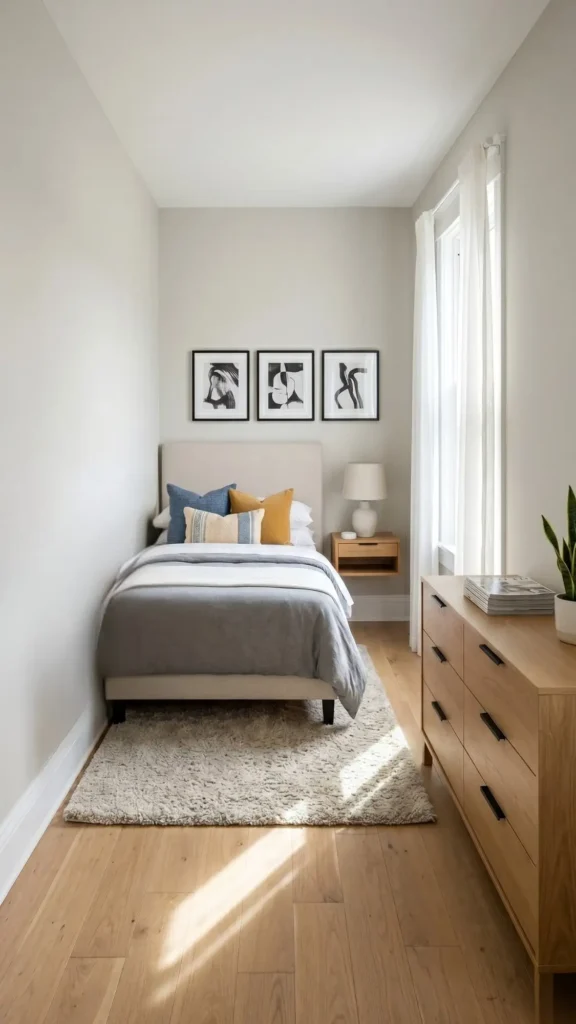
When your bedroom stretches long and narrow, placing your bed lengthwise against the longer wall maximizes usable floor space and creates a more functional, visually balanced layout. This strategic positioning frees up the central walking path, reduces spatial congestion, and allows natural light from windows to travel unobstructed across the room’s full length. Choosing flexible furniture arrangements from the start supports a timeless design approach that adapts as preferences evolve rather than requiring complete overhauls.
The opposite long wall becomes a prime location for a low-profile six-drawer dresser, a pair of matching floating nightstands, or a combination of both. Anchor the bed’s solid wood or upholstered headboard flush against the wall, then layer in symmetrical elements — matching ceramic table lamps, framed artwork centered above the headboard, and a plush area rug beneath the lower two-thirds of the bed frame — to visually widen the room and balance its elongated proportions.
L-Shaped Setup: Bed and Dresser in Corner Formation
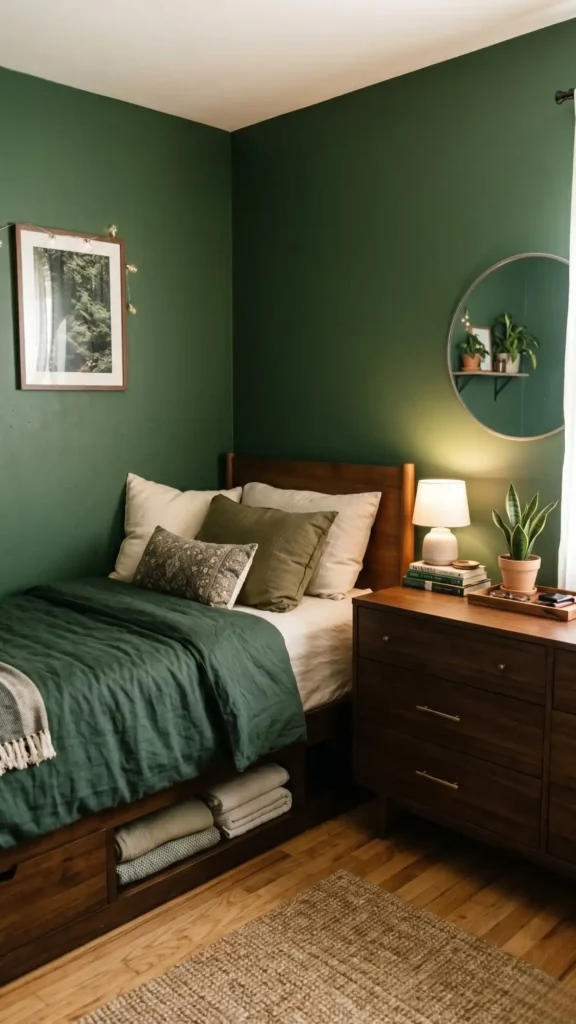
Leverage your room’s corner space to create an efficient, tucked-away sleeping zone. Position your bed along one wall, then angle a dresser perpendicular to it, forming a clean L-shaped configuration that maximizes underutilized corner square footage.
This deliberate arrangement anchors the room’s overall layout with a strong geometric focal point, provides immediately accessible drawer and surface storage, and establishes a visually defined sleeping area without consuming excessive central floor space. For a calming atmosphere that complements this tucked-away arrangement, consider forest green walls to enhance the cocoon-like feel of your corner sleeping zone.
Bed Perpendicular to Door for Better Traffic Flow
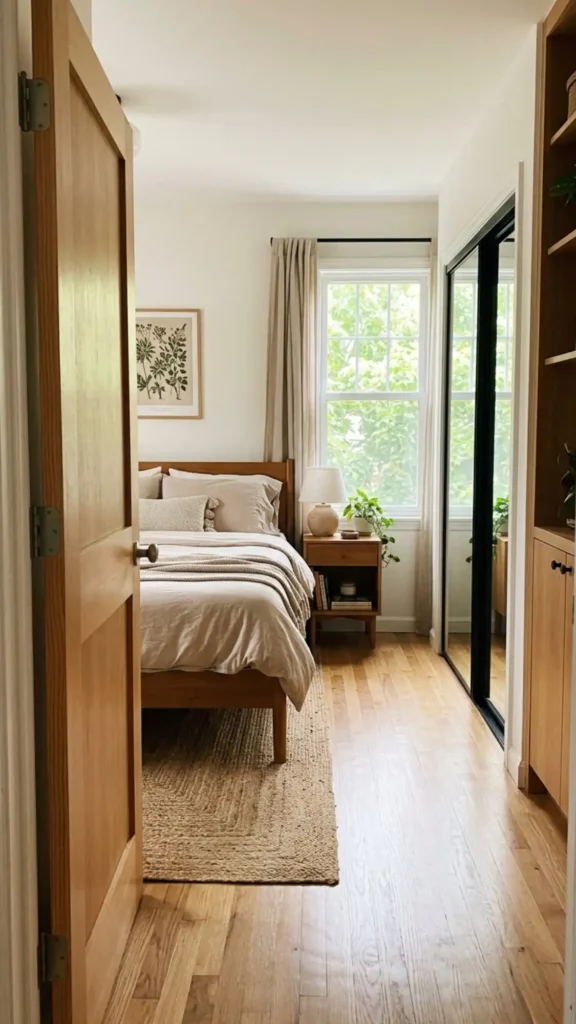
Placing your bed perpendicular to the door creates a natural traffic corridor that guides movement through the room without disrupting your sleeping zone. This spatial configuration establishes a defined circulation path — typically 36 inches wide — running parallel to the bed’s longest side, connecting the entry point to secondary destinations like double-hung windows, sliding closet doors, and built-in storage units.
This arrangement keeps your bed’s focal position intact as the room’s dominant visual anchor while maintaining unobstructed pathways to surrounding furniture pieces, including nightstands, dressers, and seating areas. Foot traffic flows smoothly along hardwood or carpeted floor surfaces, bypassing your personal rest space entirely and reducing nighttime disturbances in shared sleeping environments. For renters seeking similar spatial improvements without permanent changes, no nails bedroom makeovers offer flexible solutions that don’t require landlord permission.
Ultra-Minimal Layout: Bed, Nightstand, and Dresser Only
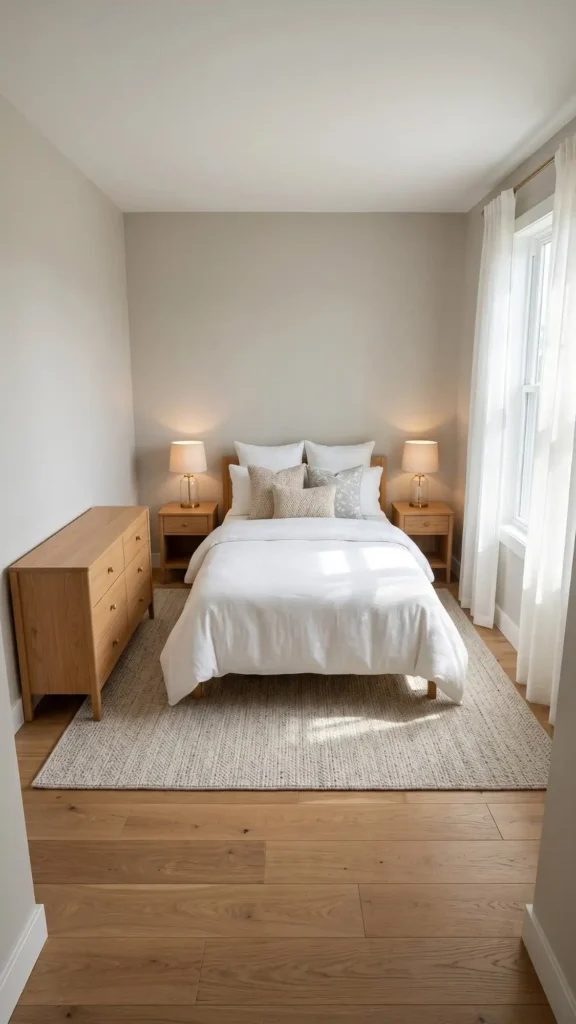
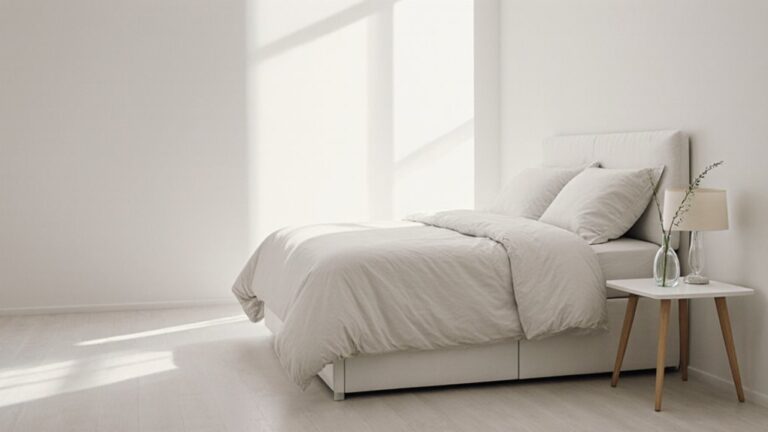
A 10×10 bedroom achieves maximum spatial efficiency through deliberate, restrained furniture selection — three core pieces that serve distinct ergonomic and storage functions without competing for floor dominance. Position a low-profile platform bed, ideally queen-sized with a slim upholstered headboard, flush against the longest wall to anchor the room’s primary axis and preserve open walking paths on three sides.
A single hardwood nightstand with a drawer sits immediately adjacent to the bed, providing surface-level accessibility for essentials while maintaining the room’s uncluttered sightlines. A six-drawer solid wood dresser, approximately 36 inches wide and 48 inches tall, occupies the wall directly opposite the bed, creating visual symmetry and serving as the room’s sole storage unit — eliminating the need for wardrobes, shelving units, or additional case goods that would compress the available square footage.
This approach creates cozy and inviting atmosphere through intentional restraint rather than visual clutter.
Two-Sided Bedroom Layout for Shared 10×10 Spaces
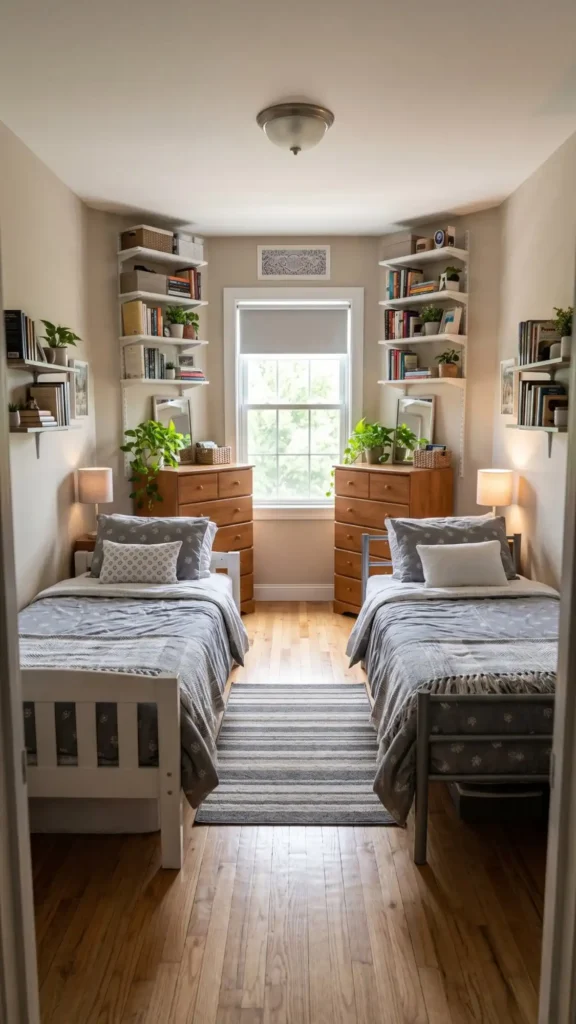
A symmetrical 10×10 shared bedroom featuring two neatly made twin beds positioned against opposite walls, each flanked by a compact wooden nightstand with a small lamp, two matching six-drawer dressers angled at the far corners of the room, neutral beige walls with soft overhead lighting, light hardwood flooring, a narrow central walkway between the beds, coordinated gray and white bedding on both sides, natural light streaming through a single window centered on one wall. Since this layout lacks built-in closets, vertical storage solutions maximize the limited wall space available.
Bed in Corner With Workspace Along the Wall
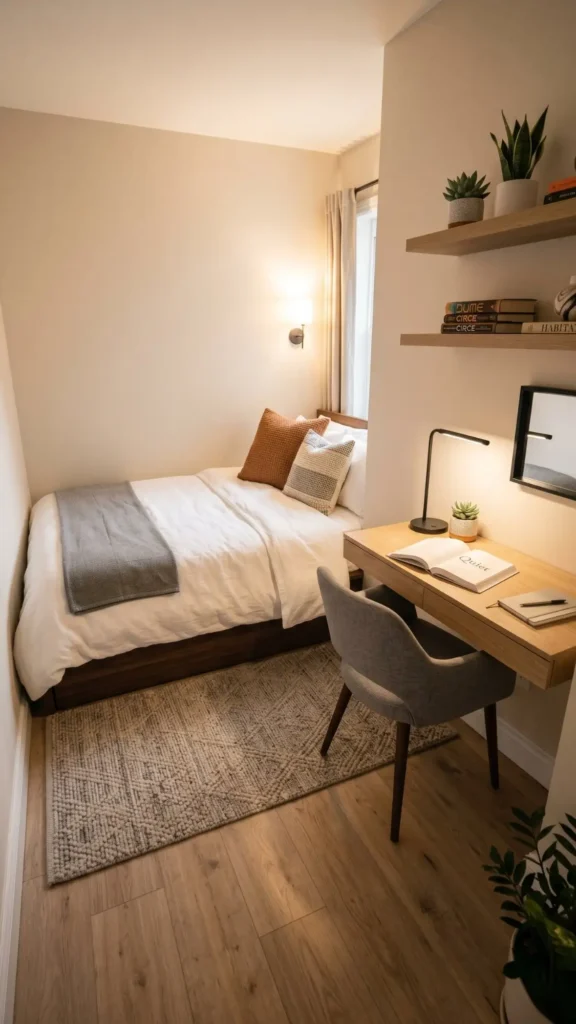
A small 10×10 bedroom with a low-profile platform bed with a dark wood frame, crisp white bedding, and two textured throw pillows pushed into the corner where two walls meet, with a slim wall-mounted floating desk in light oak finish positioned along the adjacent perpendicular wall, a modern task chair in muted gray upholstery tucked beneath the desk, open floating wall shelves holding small potted succulents, hardcover books, and a minimalist desk lamp, warm ambient lighting casting soft shadows across light beige walls, light oak laminate flooring, and a small area rug in neutral tones anchoring the bed, shot from a slightly elevated wide angle perspective that captures the full L-shaped layout of the room. The desk placement along a separate wall from the bed helps maintain physical boundaries between your workspace and sleep zone for better rest.
Layout With Integrated Storage Solutions
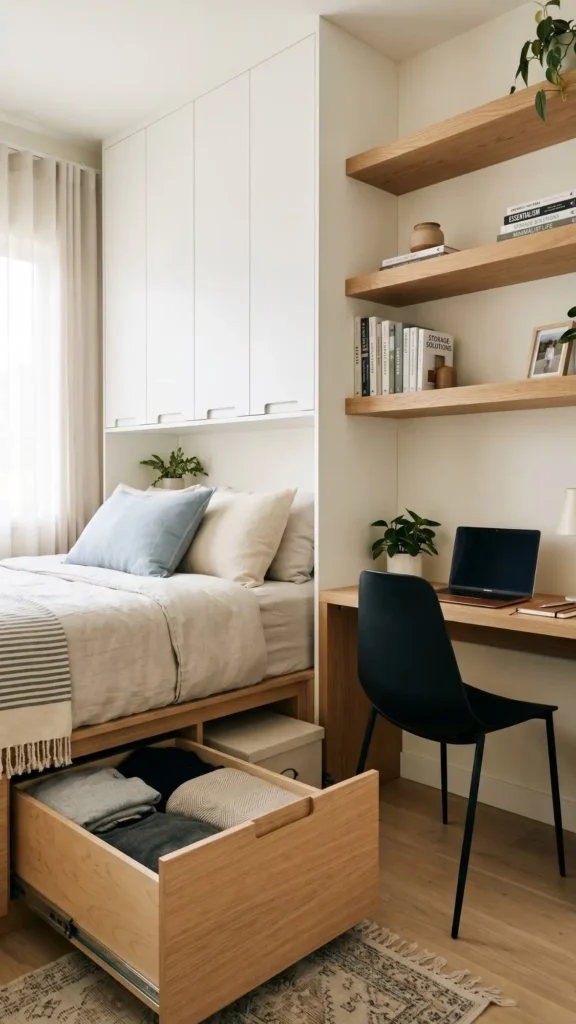
Incorporating built-in storage throughout your 10×10 bedroom creates both functional efficiency and visual calm. Install floating shelves above your desk area, add pull-out under-bed storage drawers with full-extension slides, and utilize wall-mounted cabinets with recessed handles along unused vertical surfaces.
These integrated solutions maximize cubic footage from floor to ceiling, eliminate surface clutter, and keep daily essentials immediately accessible without consuming the limited floor area required for comfortable movement and ergonomic workspace operation.
Small Master Bedroom Layout With Seating Area
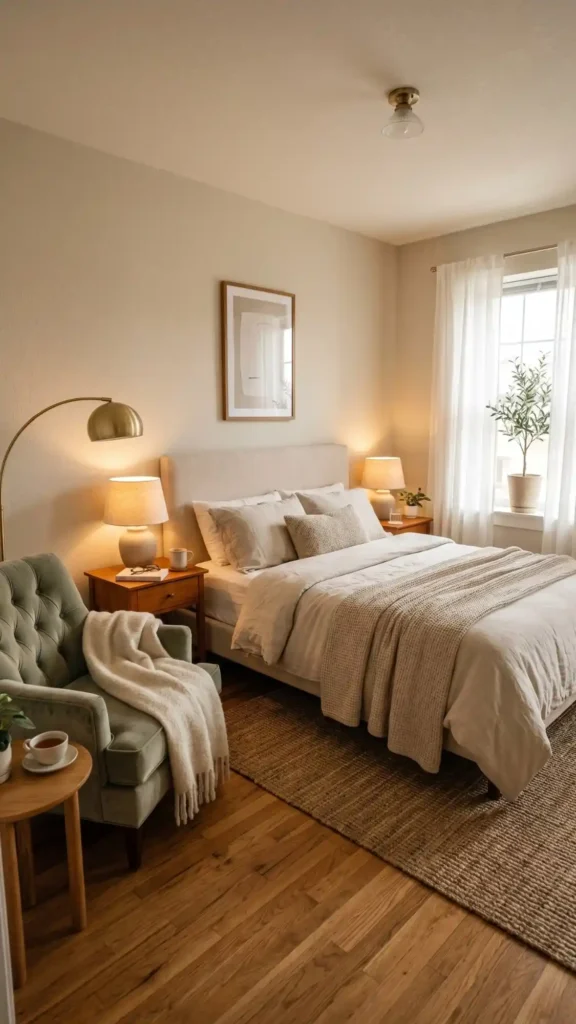
A 10×10 master bedroom can successfully balance a comfortable sleeping zone with a relaxing retreat through strategic furniture placement. Position your full or queen-sized bed flush against the longest wall, anchored by a upholstered headboard and symmetrical nightstands with integrated storage drawers.
In the corner opposite, place a compact accent armchair with plush cushioning alongside a slender, round side table no wider than 18 inches in diameter. This arrangement preserves maximum open floor space while establishing a distinct, intimate reading nook with layered ambient lighting from a small arc floor lamp.
Compact Bedroom Layout With Defined Zones
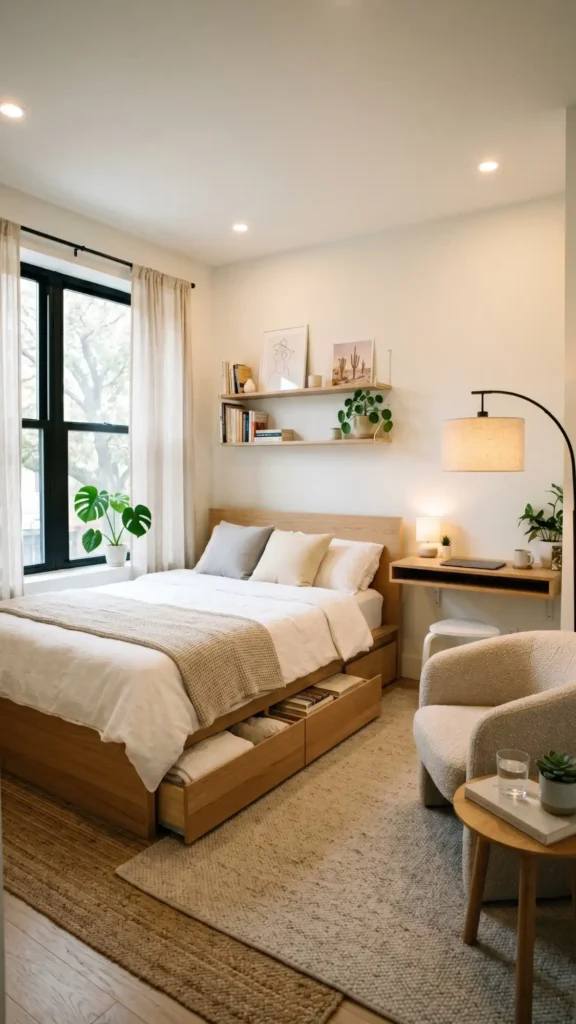
Defining separate functional zones within a compact 10×10 bedroom creates a powerful illusion of spaciousness while serving distinct purposes for sleeping, working, and relaxing. A low-profile platform bed with integrated storage drawers positioned flush against the primary wall establishes the sleeping zone, while a wall-mounted floating desk with slim-profile task lighting anchors the dedicated workspace in the adjacent corner.
Layered wool or jute area rugs in complementary textures visually segment each zone without consuming floor space, and strategic warm-toned recessed lighting overhead paired with directional adjustable sconces reinforces each area’s individual function. A compact barrel chair with a narrow side table and articulating floor lamp tucked into the remaining corner completes a defined reading nook, creating clear spatial boundaries through thoughtful furniture placement, material contrast, and lighting differentiation rather than physical walls or bulky partitions.
Final thoughts
Maximizing a 10×10 bedroom requires thoughtful furniture placement, strategic vertical space utilization, and deliberate zone definition. By positioning a full or queen-sized bed flush against a load-bearing wall, incorporating wall-mounted floating desks, and utilizing 90-degree corner seating areas with compact armchairs or floor cushions, you create functional traffic flow without visual clutter or spatial compromise.
Clearance measurements around furniture matter considerably — a minimum 24-inch pathway alongside bed frames, 36-inch egress routes toward doorways, and 18-inch standing clearance in front of low-profile dressers all contribute directly to both safe circulation and perceived spaciousness. These compact bedroom layouts consistently demonstrate that small 100-square-foot rooms thrive through intentional, geometry-driven design decisions rather than aesthetic or functional sacrifices.