Red Interior Design for Couples Who Can’t Agree on a Color
Every design article will tell you red bedrooms are a terrible idea. Too stimulating. Too energizing. Too everything.
I ignored that advice, did my research, and created a deep red bedroom that I sleep better in than any room I’ve ever had.
The science on color and sleep is more nuanced than “warm colors = bad.” What matters isn’t whether a color is warm or cool — it’s the shade, the saturation, and critically, how the room is lit. Get these three things right and a red bedroom becomes one of the most deeply restful spaces you’ve ever slept in.
Here’s exactly how — and the lighting tip at #5 is what makes or breaks the whole thing.
The Science: Why Some Reds Help Sleep and Others Hurt It
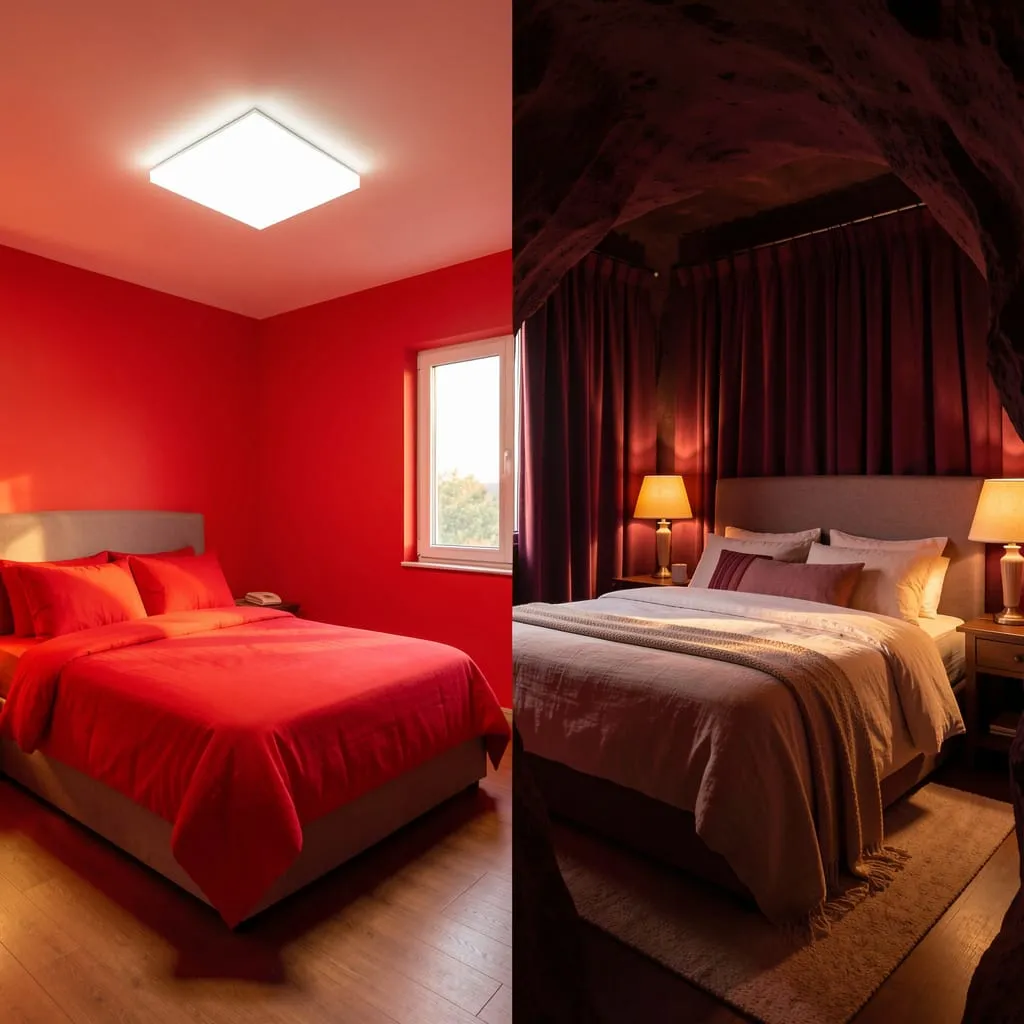
The conventional wisdom against red bedrooms comes from studies on bright, highly saturated red — the kind that raises heart rate and increases alertness. This is real. Fire-engine red walls with cool overhead lighting will absolutely make sleep harder.
But deep, muted reds — burgundy, oxblood, wine, dark crimson — behave very differently. They absorb light rather than reflecting it, create a cave-like sense of enclosure that many sleep researchers associate with better rest, and in warm low-level lighting, read more like a sophisticated neutral than a bold color.
The two non-negotiables for a red bedroom that promotes sleep:
- Low saturation: Muted, deep, earthy reds only
- Warm, dim lighting: The lighting transforms everything
Choose Shades That Absorb Light Rather Than Bounce It
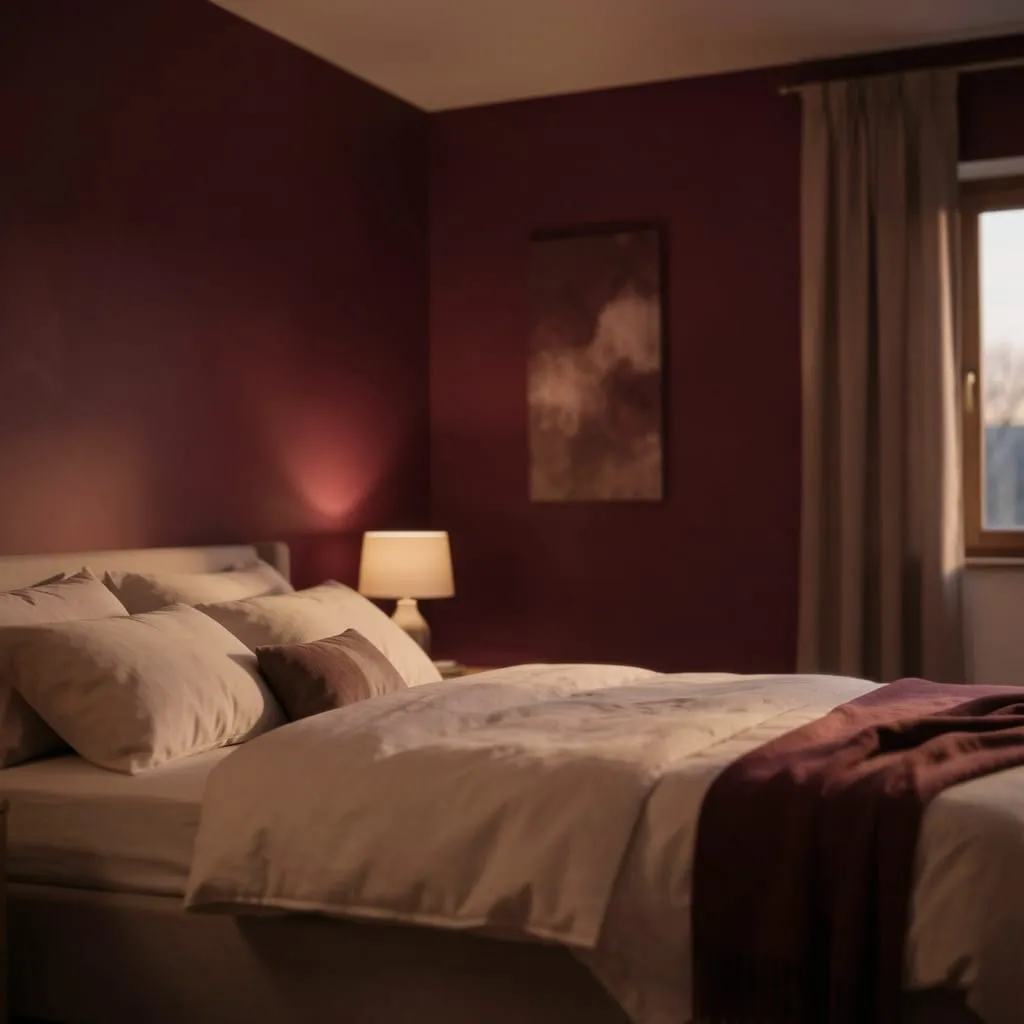
For a bedroom, your red should feel like it’s pulling you in, not pushing at you. This means going darker, more complex, and more muted than you think you need to.
Best bedroom reds:
- Oxblood: Deep, rich, and complex. Feels grounded and pairs beautifully with dark wood.
- Burgundy/Wine: Romantic and enveloping. Works especially well with soft grey and cream.
- Dark Terracotta: Earthy and warm. Less intense than pure red — ideal for a first move toward bold bedroom color.
- Dusty Crimson: A muted, slightly greyed red that feels sophisticated and calm.
Avoid anything described as “bright,” “vibrant,” or “fire.” These shades belong in living rooms and kitchens — not spaces designed for rest.
Use Bedding as Your Primary Red Element If Walls Feel Like Too Much
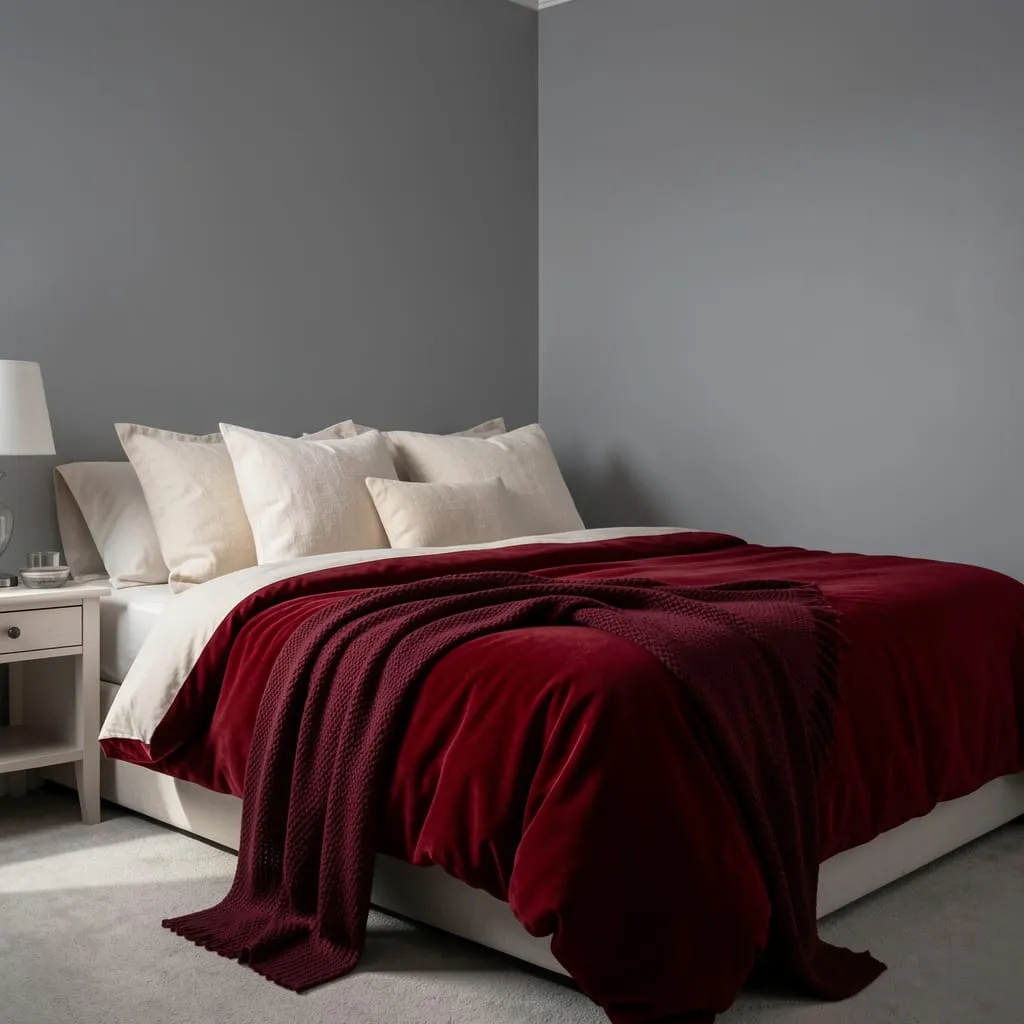
The bed is the largest visual element in any bedroom, which means red bedding delivers a significant portion of the impact of red walls at a fraction of the commitment.
The bedding layering formula for red:
- Base: Deep red or burgundy duvet or quilt (the primary statement)
- Middle: Cream, white, or warm grey pillowcases (breathing room)
- Top: One textured throw in a complementary tone — rust, terracotta, or blush — at the foot of the bed
This approach gives you the richness of a red bedroom without permanent wall commitment.
Choose Furniture That Grounds the Intensity
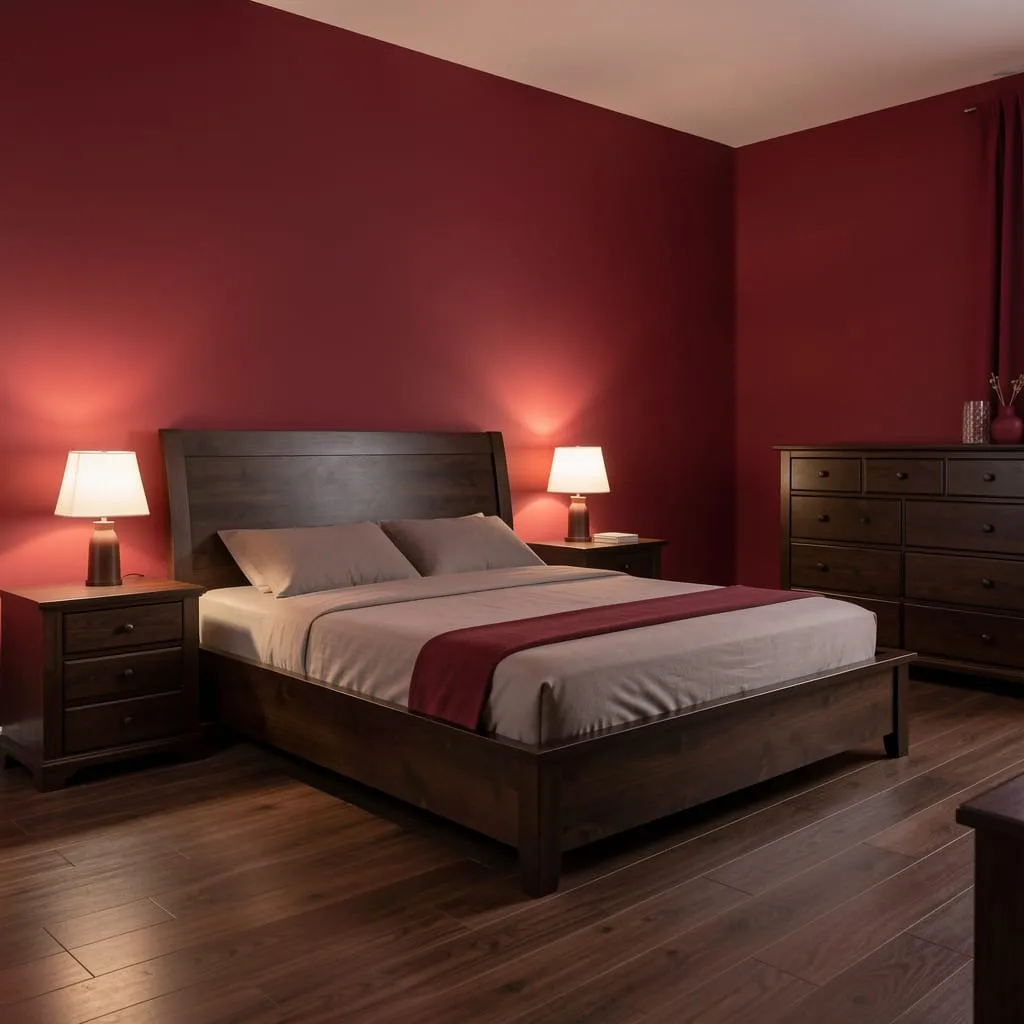
In a red bedroom, furniture choices either amplify the drama or balance it. Two directions that work:
Dark wood (walnut, mahogany): Creates a rich, enveloping look. Dark wood with deep red reads as sophisticated — think old library or boutique hotel suite.
Bleached or natural wood (raw oak, whitewashed pine, rattan): Creates contrast and prevents heaviness. Works especially well with dusty or muted reds.
Avoid: white lacquered furniture with deep red walls — the contrast is too stark and gives the room a graphic, alert energy that disrupts sleep.
Layer Your Lighting — This Is the Most Critical Step
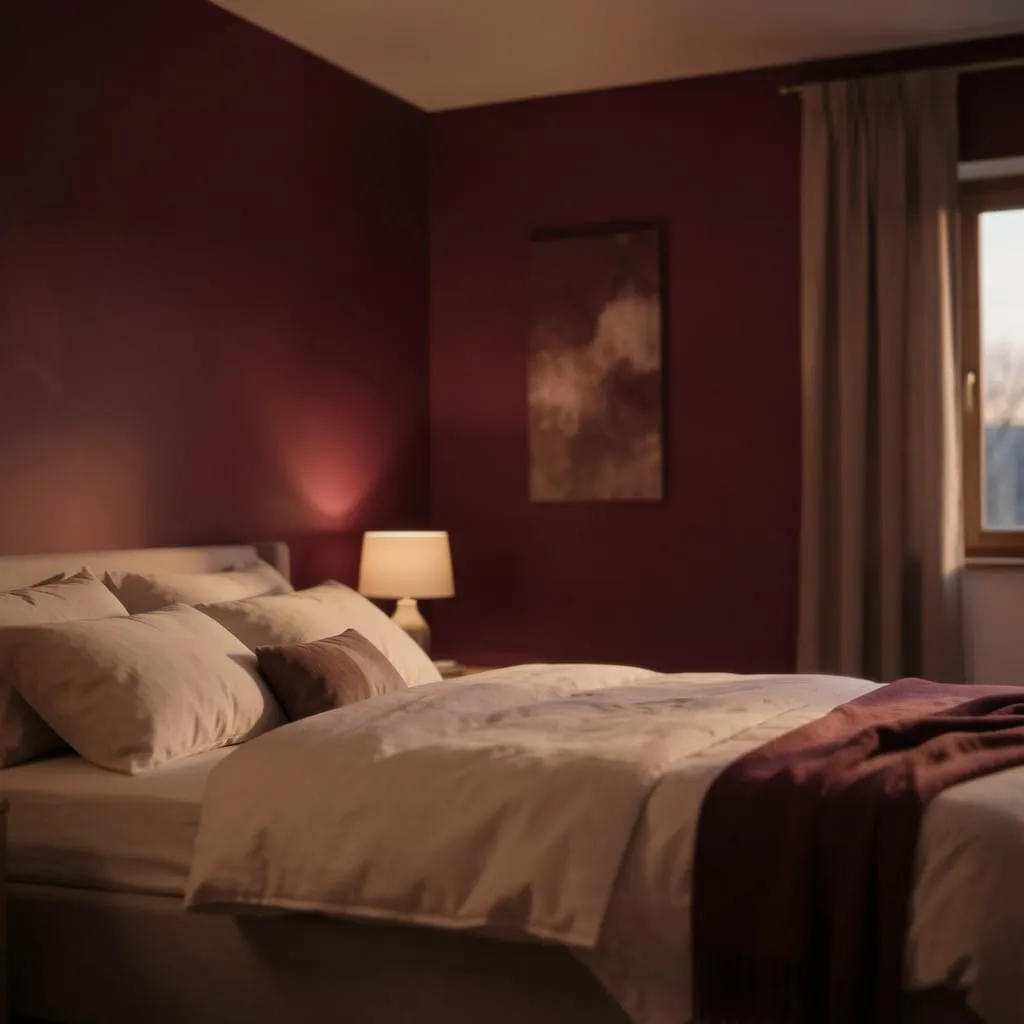
This is the tip that makes or breaks a red bedroom entirely. Red under cool, bright overhead lighting looks aggressive. The exact same red under warm, dim, layered lighting looks like the most restful room you’ve ever stepped into.
The bedroom lighting formula for red:
- Remove or dim the overhead entirely for evening use
- Bedside lamps with warm bulbs (2700K maximum)
- Indirect accent lighting — a warm LED strip behind the headboard creates a soft ambient glow
- No blue-toned screens near the walls in the evening
Invest in the right bulbs before anything else. A $12 investment in the right warmth changes the entire character of the room.