15 Galaxy Ceiling Ideas That Make Your Room Feel Infinite
Your ceiling is wasted space if it’s just painted white. A galaxy ceiling transforms that blank canvas into something that pulls the eye upward and makes any room feel larger. You’ll find 15 distinct approaches here, from fiber optic installations to hand-painted nebula murals, each with different budgets and skill levels in mind. The right choice depends on your room, your timeline, and how permanent you want the result to be.
Hand-Painted Galaxy and Nebula Ceilings for a One-of-a-Kind Look
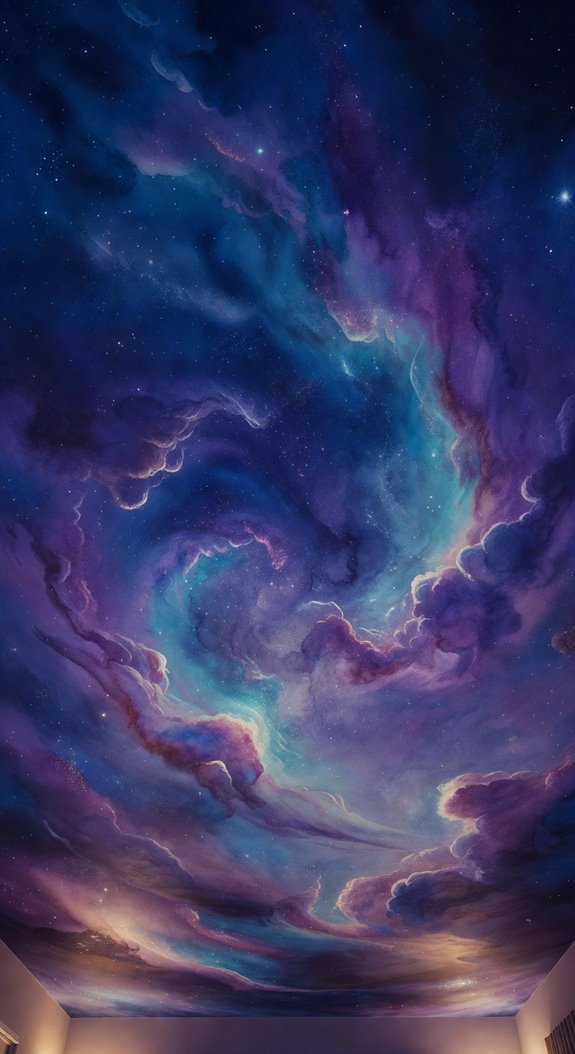
Hand-painted galaxy and nebula ceilings give your room a completely custom look that no wallpaper or projector can replicate.
You’ll need acrylic paints in deep navy, violet, and black, plus sponges and fine brushes for detailing.
A skilled muralist can blend swirling nebulae and star clusters directly onto your drywall, creating depth that’s truly unique to your space.
Fiber Optic Star Ceilings That Actually Twinkle
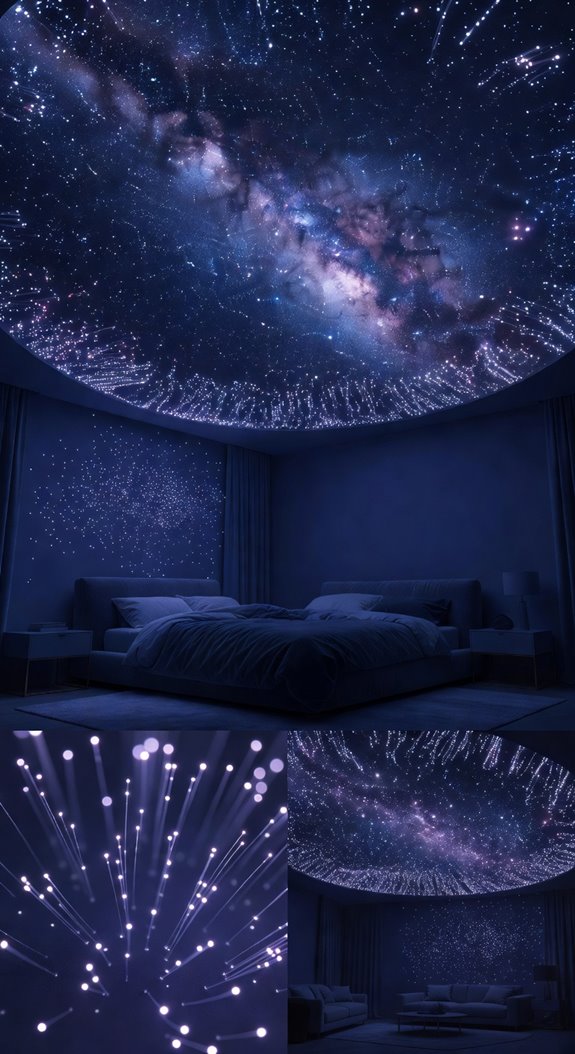
Fiber optic star ceilings take the galaxy aesthetic further by embedding actual light-emitting strands directly into your ceiling panel or drywall finish.
You’ll connect these strands to an illuminator box, which controls brightness and twinkle speed.
Choose cool white or warm amber points depending on your room’s color palette.
This system works especially well in bedrooms with dark, matte ceilings.
Glow-in-the-Dark Galaxy Ceilings on a Budget
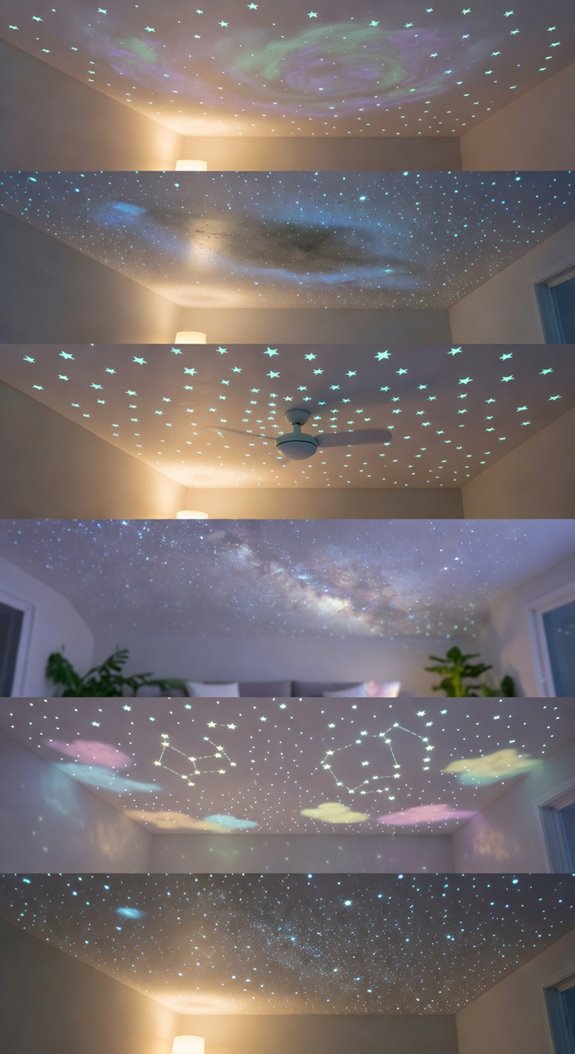
If you’re working with a tight budget, glow-in-the-dark paint offers a surprisingly effective way to create a galaxy ceiling without complex wiring or professional installation.
You’ll apply star clusters in layered dots using phosphorescent paint, varying sizes for depth.
Charge the paint with UV light before bed, and your ceiling transforms into a glowing nebula each night.
Projector Systems That Turn Any Ceiling Into Deep Space
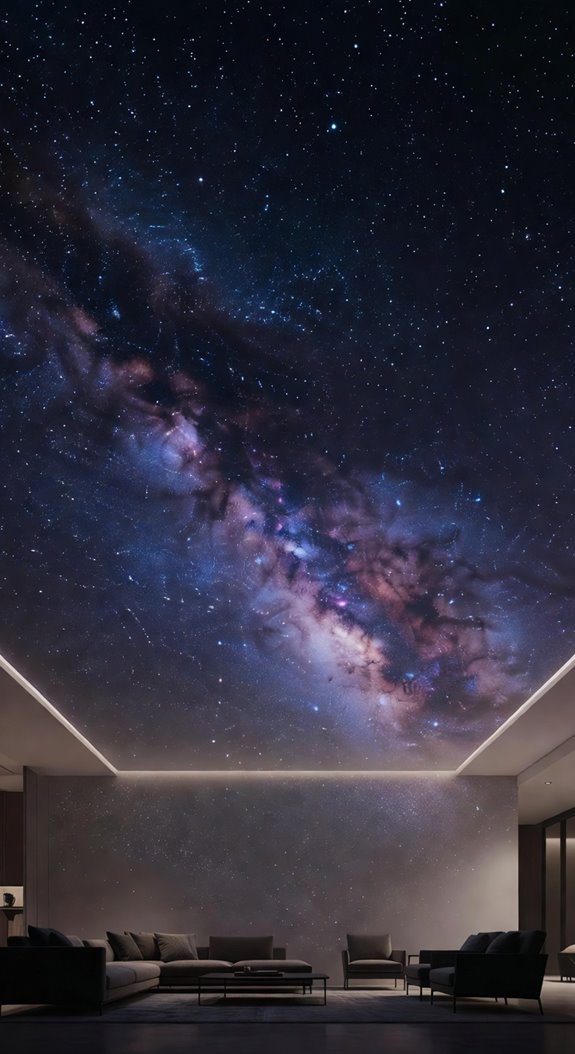
Projector systems offer one of the fastest ways to transform a plain ceiling into a convincing deep-space display without permanent modifications. You can mount a star projector on a nightstand or shelf, then adjust the rotation speed and color settings. Many models include nebula effects, rotating constellations, and adjustable brightness, giving you full control over your room’s atmosphere.
Dark Blue and Purple Galaxy Ceilings for Moody Bedrooms

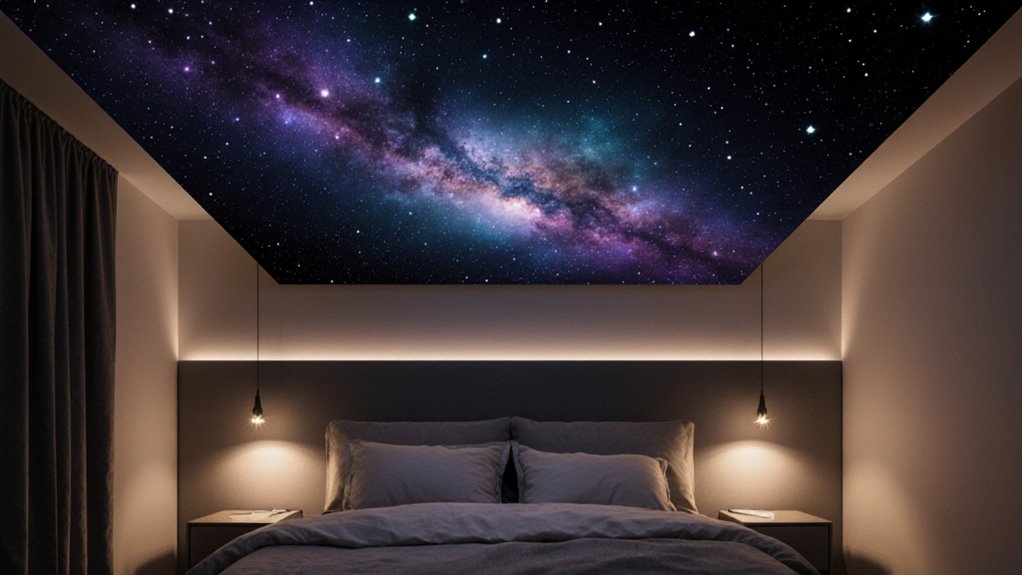
Dark blue and purple tones work together to create a galaxy ceiling that feels both immersive and visually grounded, making them a strong choice for moody bedrooms. You’ll want to layer navy and deep violet using matte finish paint, then add lighter purple highlights.
Pair this ceiling with dark wood furniture and blackout curtains to complete the aesthetic.
Galaxy Ceilings Mapped to Real Constellations
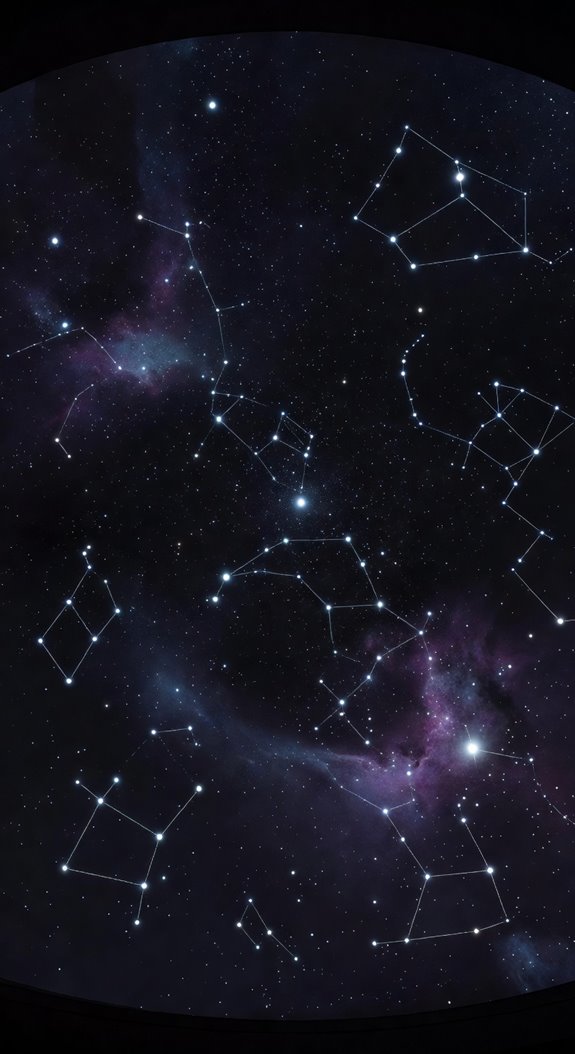
Why settle for a made-up star pattern when you can map your ceiling to the actual night sky?
Use star chart apps like SkySafari to plot real constellations accurately.
You can arrange fiber optic lights or glow-in-the-dark paint dots to match Orion, Cassiopeia, or Ursa Major, giving your ceiling genuine astronomical authenticity.
Metallic and Holographic Galaxy Ceiling Finishes That Shimmer
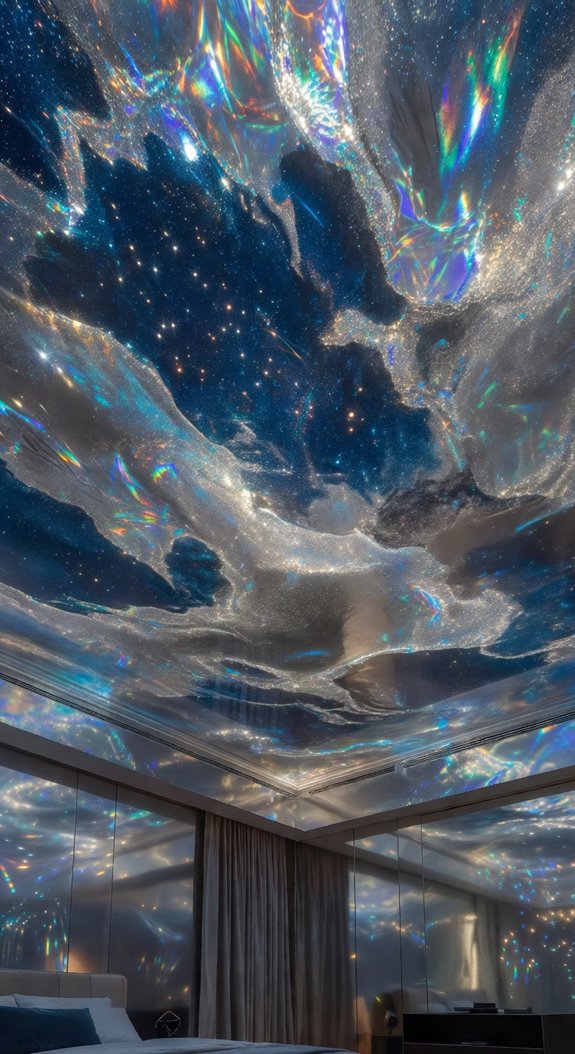
Metallic and holographic finishes take your galaxy ceiling far beyond flat paint, adding a dynamic, light-catching dimension that shifts as you move through the room. You can apply iridescent foil sheets, chrome spray paint, or holographic adhesive film to create this effect. These materials reflect ambient light beautifully, producing color shifts across deep navy and violet base coats.
Galaxy Ceiling Murals You Can Paint With Stencils and Sponges
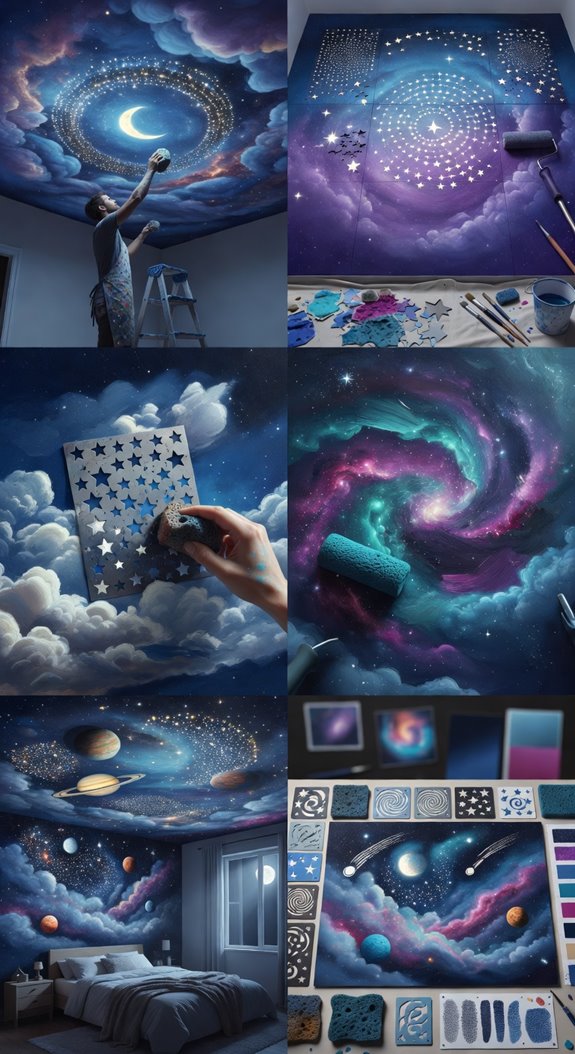
Stencils and sponges give you precise control over a galaxy ceiling mural, letting you layer nebula clouds, star clusters, and deep-space gradients without freehand painting skills. Start with a deep navy or black base coat, then dab purple and teal acrylic clouds using a sea sponge. Finish by pressing star stencils with white and silver paint.
How to Use LED Strip Lighting to Fake a Galaxy Ceiling Glow
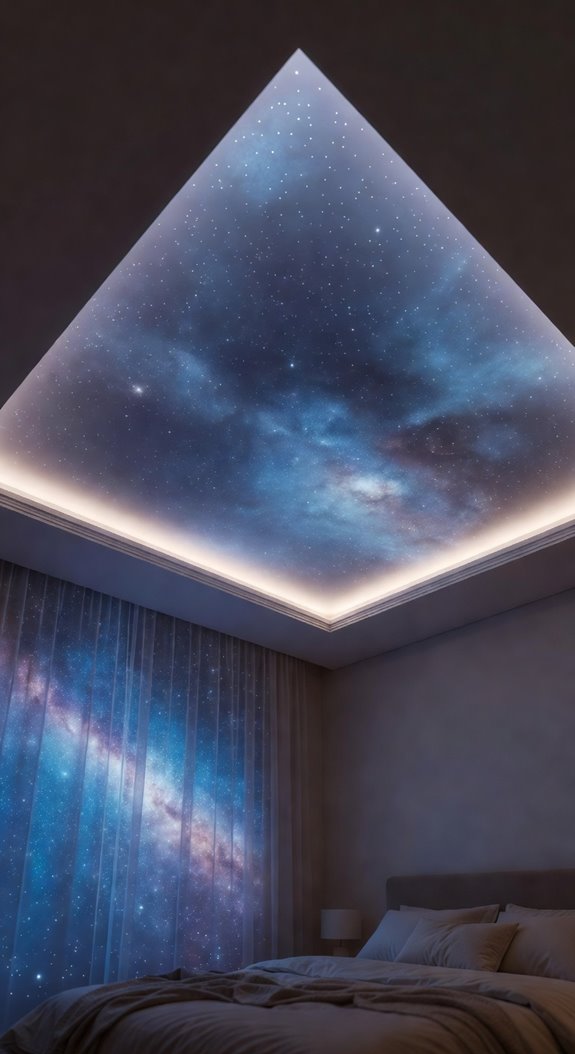
How you light a ceiling matters just as much as how you paint it, and LED strip lights can mimic the soft, ambient glow of a galaxy without any paint at all. Mount deep blue or cool white strips along your ceiling’s perimeter, then dim them low. You’ll create an indirect, diffused glow that suggests depth and vastness instantly.
Galaxy Ceilings That Extend Down the Walls for Full Immersion
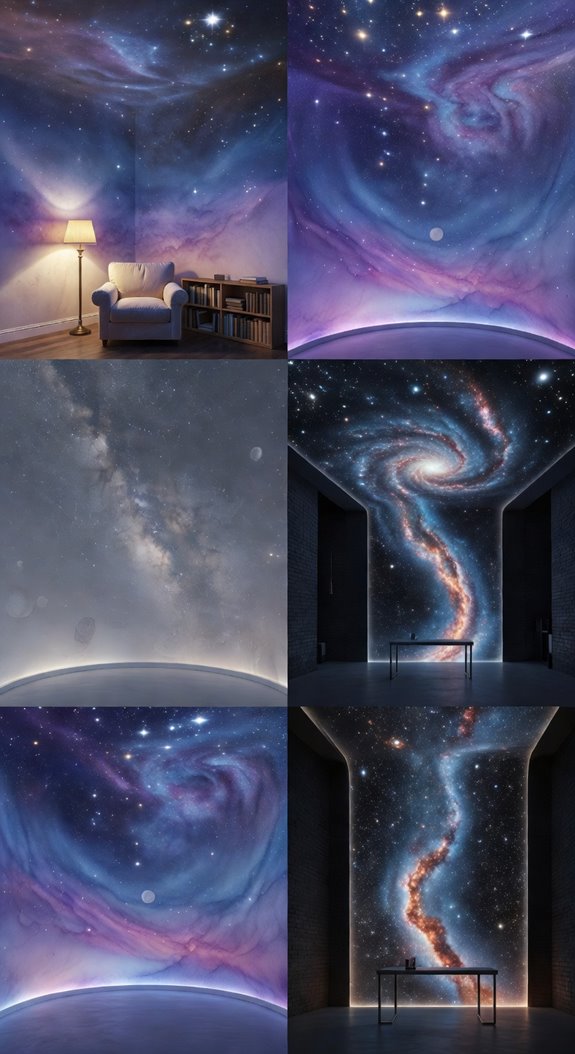
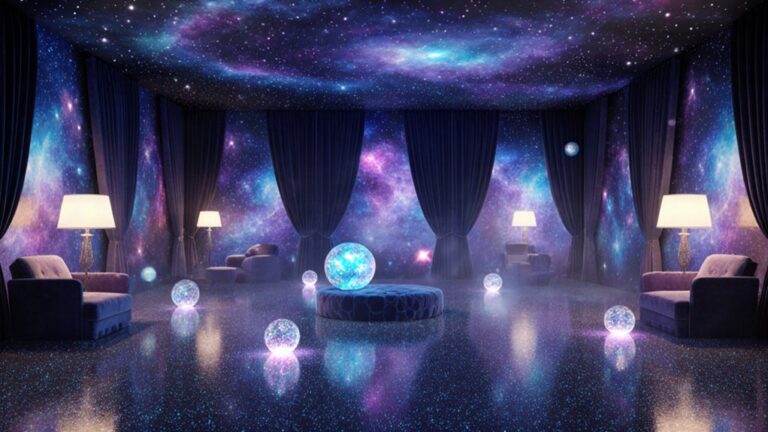
When a galaxy ceiling bleeds down the walls, the effect shifts from decorative to fully immersive, wrapping the entire room in deep space.
You’ll want to blend the transition seamlessly using gradient painting or continuous fiber optic runs.
Keep furniture low-profile, like platform beds or modular seating, so nothing interrupts the wraparound effect you’re creating.
Nursery Galaxy Ceilings That Grow With Your Child
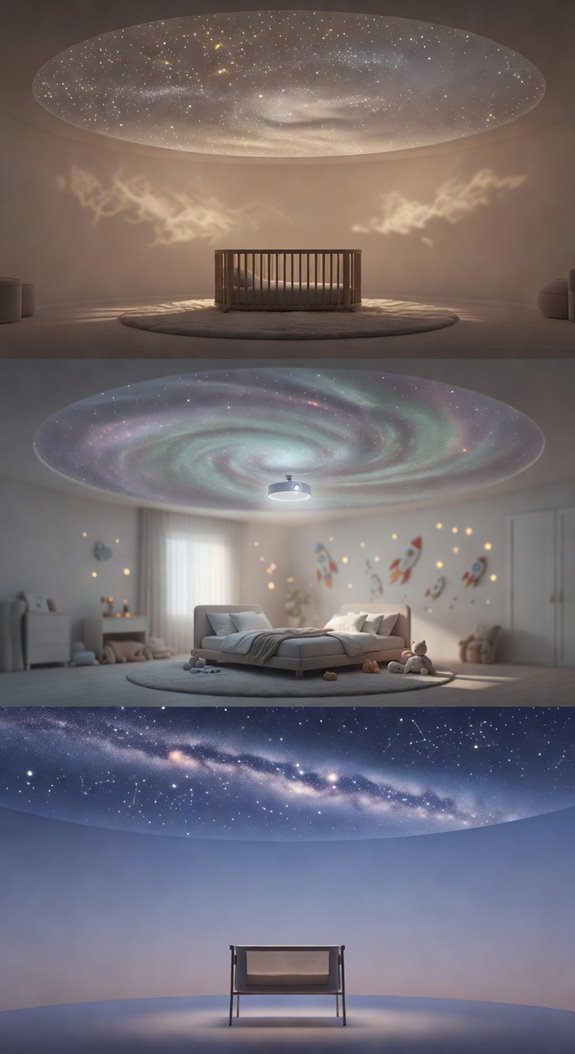
Designing a nursery galaxy ceiling with longevity in mind saves you from repainting every few years as your child’s tastes evolve.
Choose a deep navy base with fiber optic star clusters, which you can adjust in intensity over time.
Add removable constellation decals that you’ll swap out as interests shift, keeping the foundational mural intact and relevant.
Galaxy Ceilings for Master Bedrooms That Want a Dramatic Statement
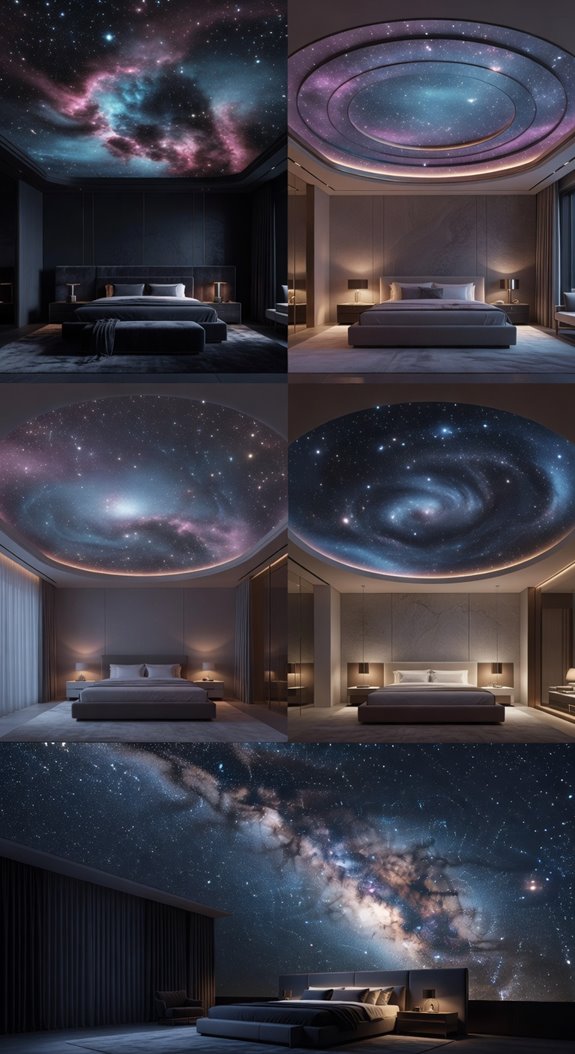
Your master bedroom deserves a ceiling that commands attention, and a galaxy mural can transform the entire room’s atmosphere instantly. Choose deep indigo and violet tones layered over matte black, then add metallic gold accents for richness. Pair your ceiling with upholstered bedframes and dimmable lighting to enhance the cosmic depth. The result feels intentional, dramatic, and unmistakably sophisticated.
How Much Does a Galaxy Ceiling Actually Cost?
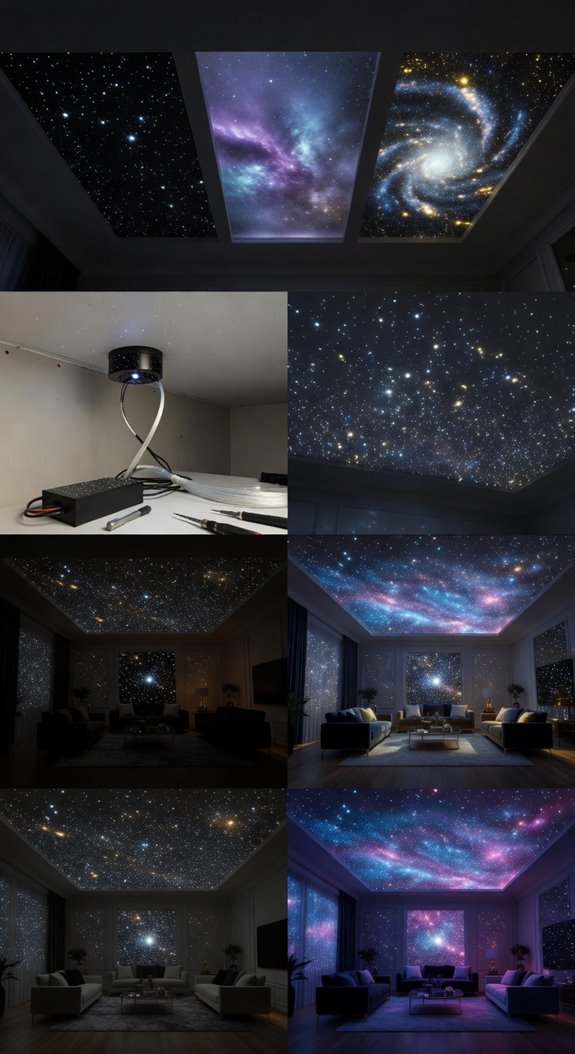
Creating a dramatic galaxy ceiling sounds appealing, but the cost depends heavily on your chosen method, materials, and whether you hire a professional. DIY paint kits run $50–$150, while fiber optic systems cost $500–$2,000. Hiring a muralist adds $300–$1,500 in labor. Your room’s size directly affects your total budget, so measure carefully before committing.
DIY Galaxy Ceiling vs. Hiring a Professional Muralist
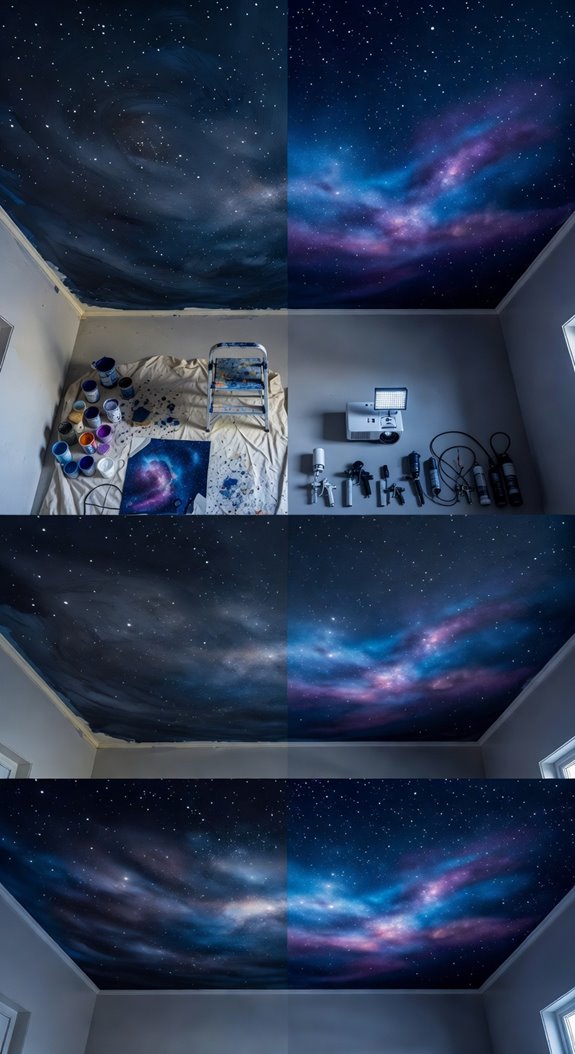
Deciding between a DIY approach and hiring a muralist comes down to your budget, skill level, and how polished you want the final result to look. DIY kits using glow-in-the-dark paint cost less but demand patience. A professional muralist delivers detailed nebula gradients and realistic depth. If you want seamless blending across drywall, hiring an expert is worth the investment.
The Best Paints, Tools, and Materials for a Galaxy Ceiling
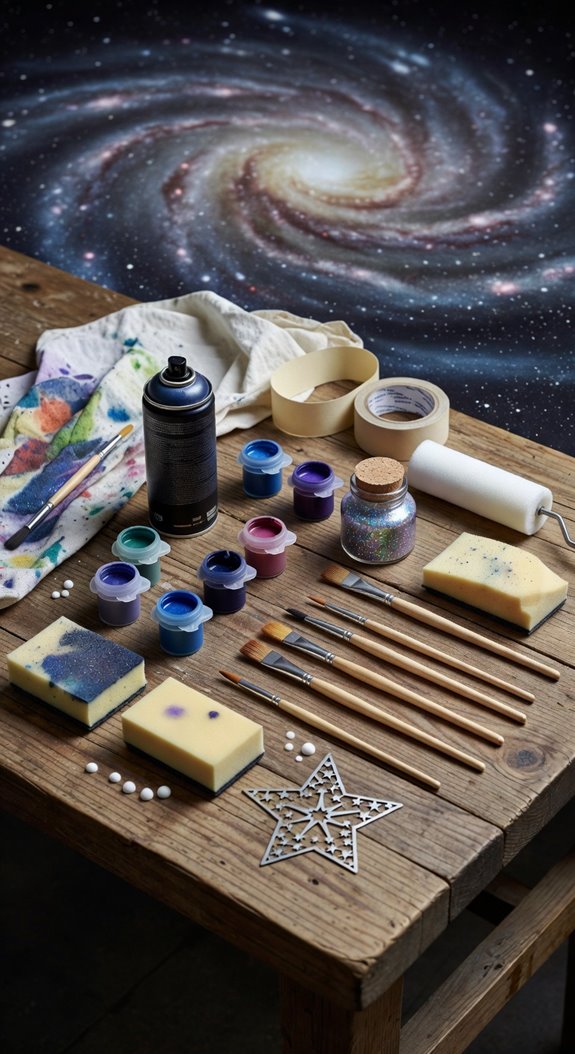
The right materials make all the difference between a flat, unconvincing result and a ceiling that genuinely looks like deep space. You’ll want matte black acrylic paint as your base, plus navy, purple, and deep teal for nebula layers. Use a sea sponge, fine-bristle brush, and splatter technique with white and silver paint for realistic star fields.
Picking the Right Paint Colors
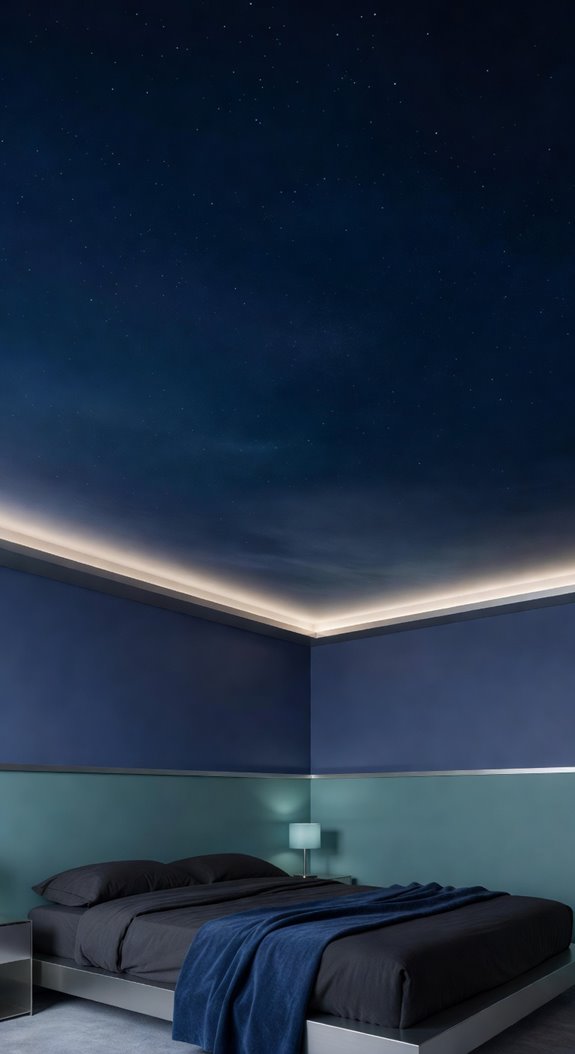
Now that you know which tools and materials to gather, choosing the right paint colors is where your galaxy ceiling really starts to take shape.
Start with a deep black or navy base coat, then layer in purples, blues, and teals.
Add soft whites and pale yellows to suggest distant stars and nebulae within your composition.
Common Mistakes
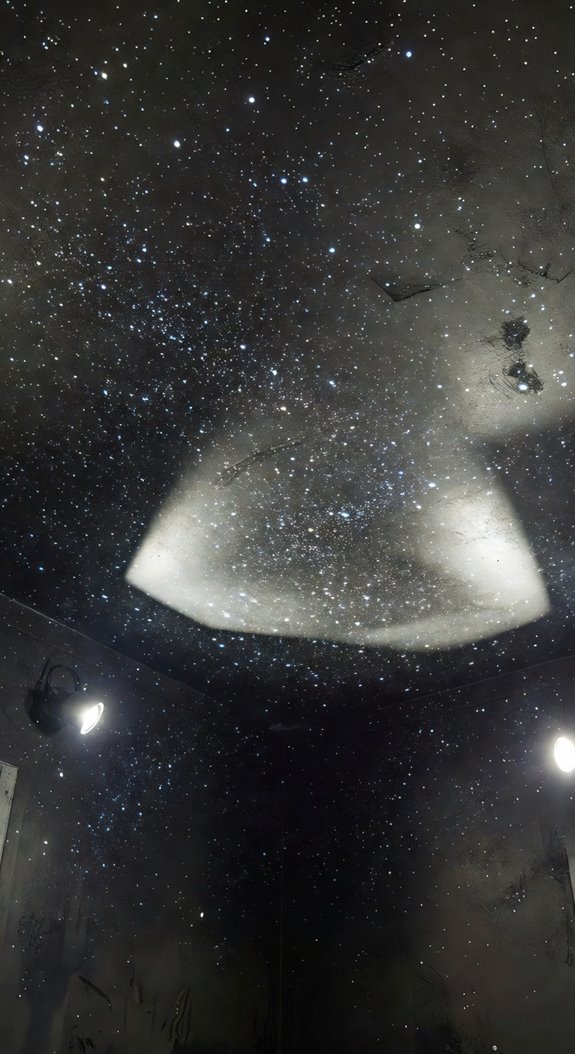
Even the most carefully planned galaxy ceiling can fall apart when a few key mistakes sneak in during the process.
Don’t skip the base coat, since dark blue or black creates essential depth.
Avoid using too many colors, which muddies the composition.
You’ll also want to seal your work properly, preventing premature fading and protecting your finish long-term.
Final thoughts
Your galaxy ceiling doesn’t have to be complicated or expensive to make a real impact. Whether you choose fiber optic strands, glow-in-the-dark paint, or a hand-painted nebula mural, the right approach depends on your budget, skill level, and the mood you’re creating. Start with a dark base, layer your colors intentionally, and don’t rush the process. With the right materials and a clear plan, you’ll transform an ordinary ceiling into something that feels genuinely limitless.