Red Interior Design for Kids’ Rooms That Aren’t Overwhelming
Red in a kids’ room sounds like a recipe for chaos. Every parenting article will tell you it’s too stimulating, too aggressive, too wake-inducing.
And then you look at the rooms kids actually love — the coziest, most joyful, most genuinely magical ones — and you’ll find warm color everywhere.
The truth is that red, used thoughtfully in a child’s room, isn’t overstimulating. It’s energizing in a positive way during play, and when the lighting changes for sleep, it recedes into warmth. The problem isn’t red itself. It’s the wrong application.
Here’s how to use red in a kids’ room that actually works — for the child and the parents.
Match the Red to the Child’s Age and Temperament
Not all children need the same relationship with color — and not all ages respond to it the same way.
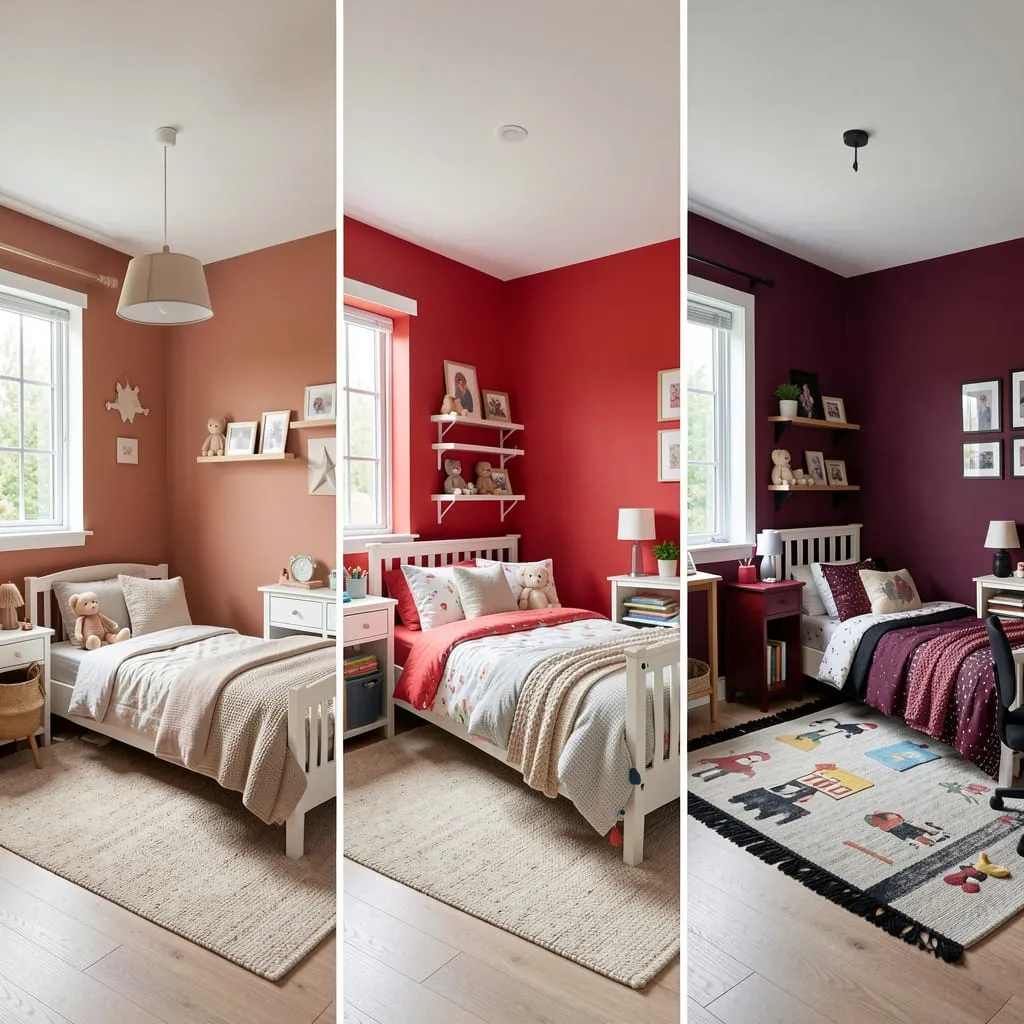
Toddlers and babies: Go muted and warm rather than bright. Terracotta, dusty rose-red, and brick red are stimulating enough to be visually engaging without the overstimulation risk of saturated primary red.
School-age children: This is the sweet spot for bolder red. A red accent wall behind the bed or a red reading nook creates excitement in a room where a child spends lots of active, engaged time.
Tweens and teenagers: Deeper, cooler reds — burgundy, wine, dark crimson — provide the sophistication teenagers crave while keeping warmth that makes a bedroom genuinely comfortable.
Ask the child what they respond to. Their answer is almost always the right one.
Use Red as an Accent, Not the Dominant Color
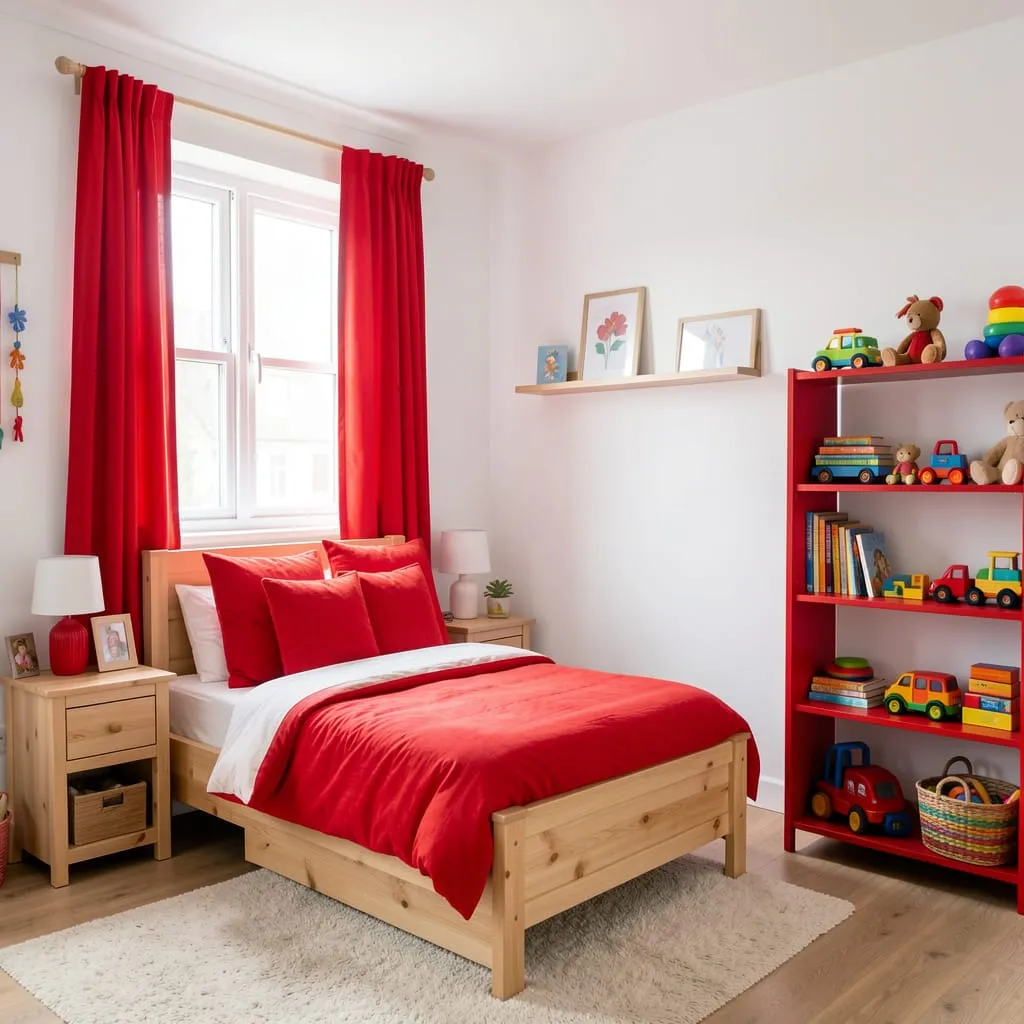
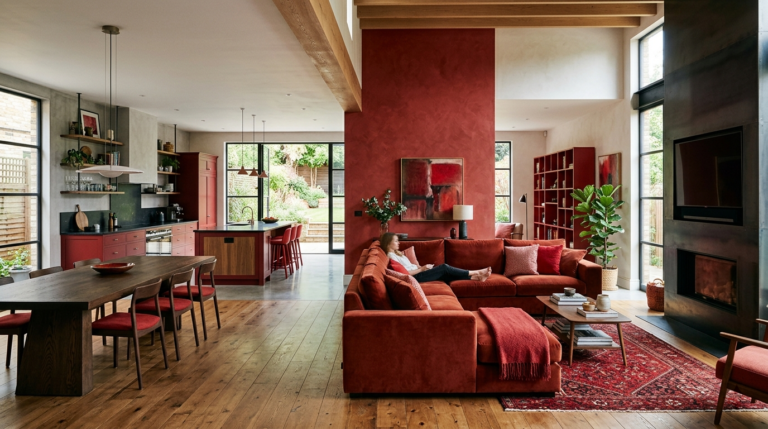
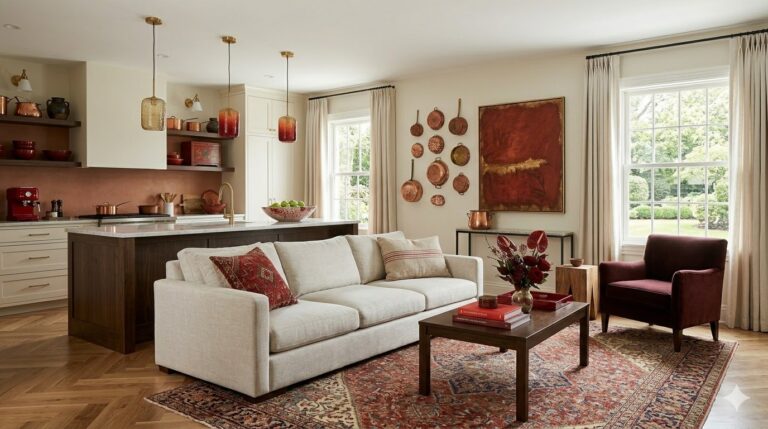
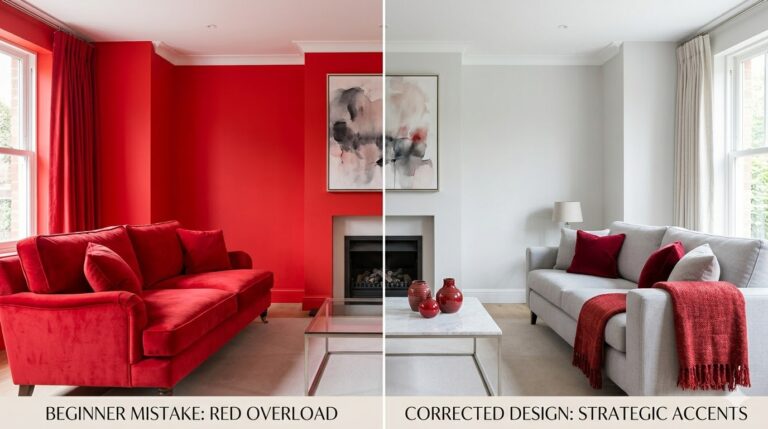
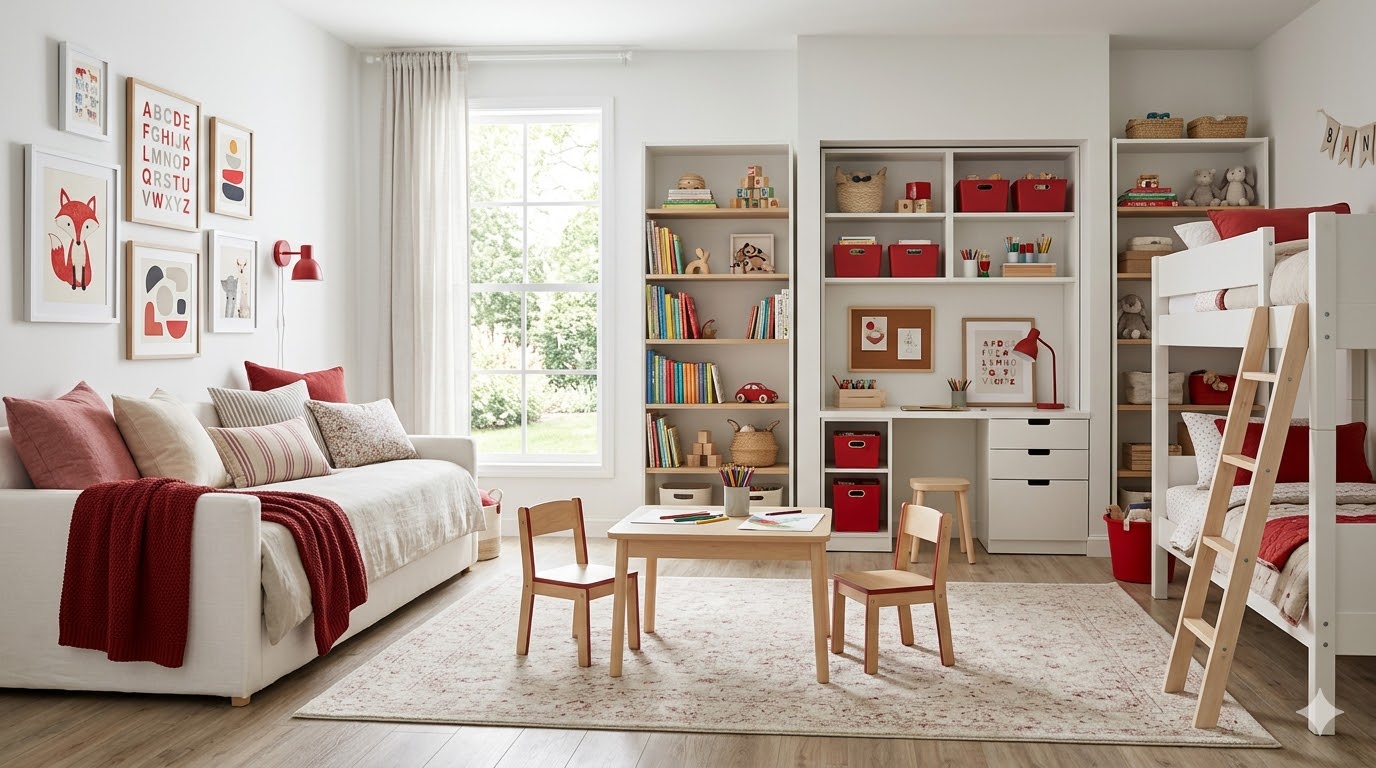
The most successful red kids’ rooms keep red as a supporting player against a largely neutral backdrop. White or cream walls, natural wood furniture, and a light floor provide the visual breathing room that allows red accents to energize without overwhelming.
The 70-20-10 rule for kids’ rooms:
- 70% neutral (white walls, natural wood, light flooring)
- 20% red (one accent wall, curtains, bedding, or a painted piece of furniture)
- 10% additional accents (artwork, accessories, plants)
Choose Furniture That Grows With the Child
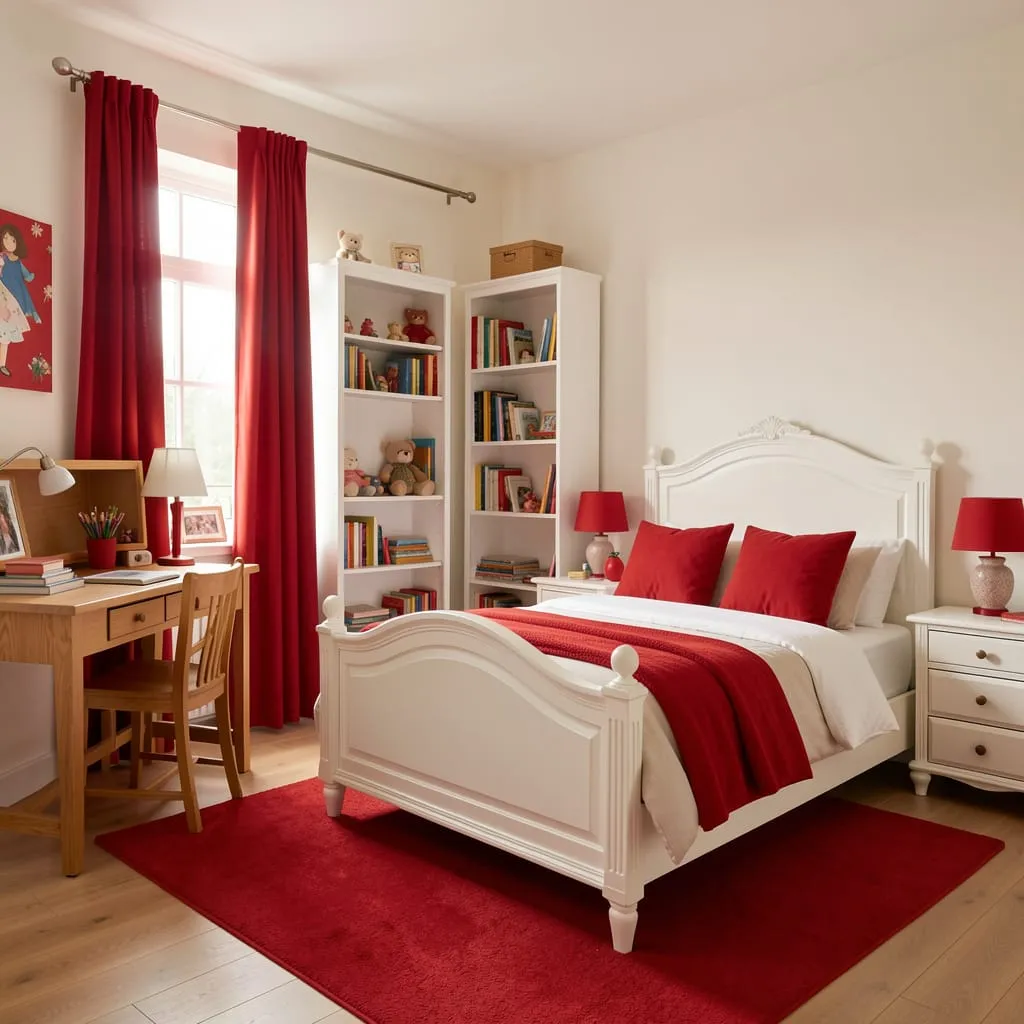
Children’s rooms change faster than any other room in the house. The furniture you invest in should be able to evolve; the red elements should be easy to replace.
This means:
- White or natural wood furniture: Both work with red at any stage of childhood and continue working as the child ages
- Red through textiles, not painted walls: Curtains, bedding, cushions, and rugs can be swapped as tastes evolve
- One painted red element maximum: If you go bold on one piece (a bookshelf, a desk), make everything else neutral
Create a Red Reading Nook as a Defined Play Space
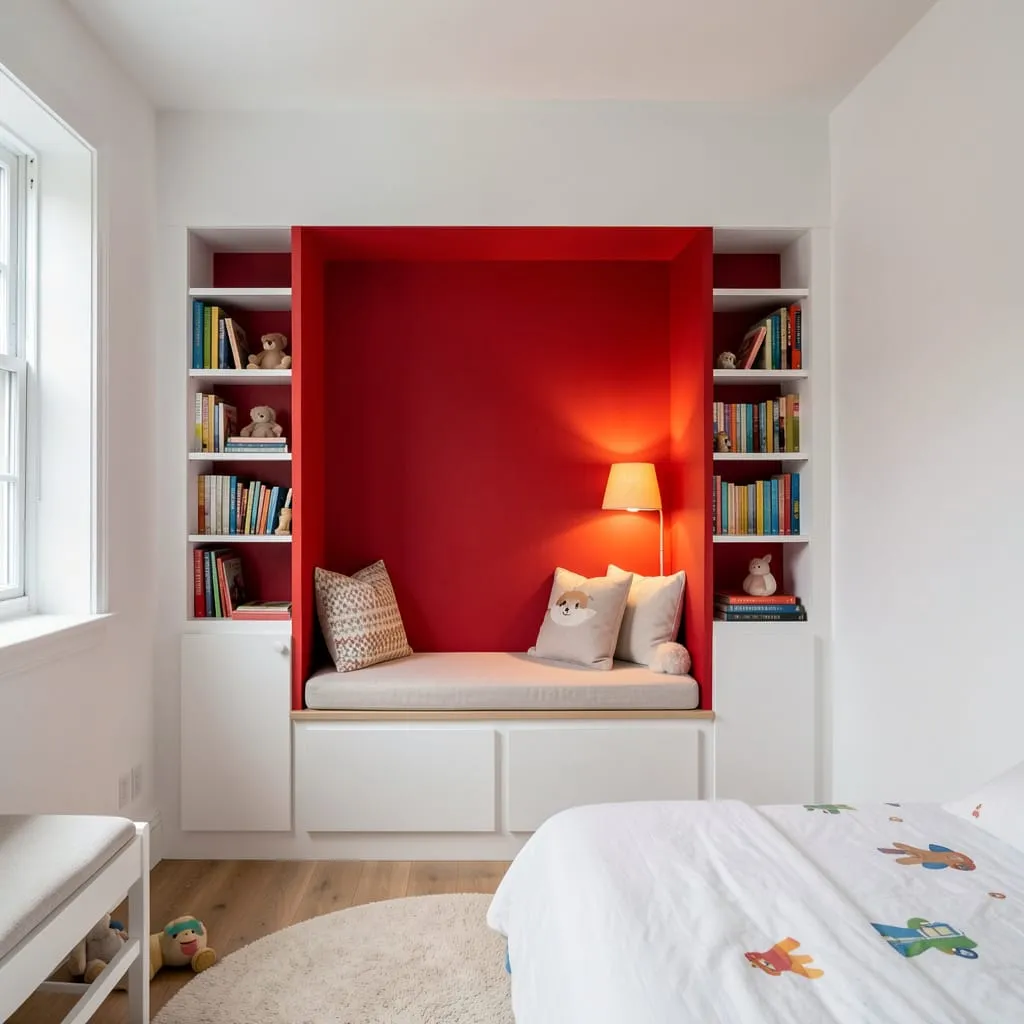
A red reading nook achieves several things at once:
- It gives the child a sense of ownership over a defined, special space
- It contains the bold color within boundaries that feel designed
- It creates a genuinely magical corner that every child will want to spend time in
- It leaves the rest of the room neutral and versatile
Paint three walls of a corner alcove red. Add a cushioned bench, built-in shelving, and a warm lamp. High-impact design with minimal red coverage — and the element children will remember about their room as adults.
Make Lighting Work for Both Play and Sleep
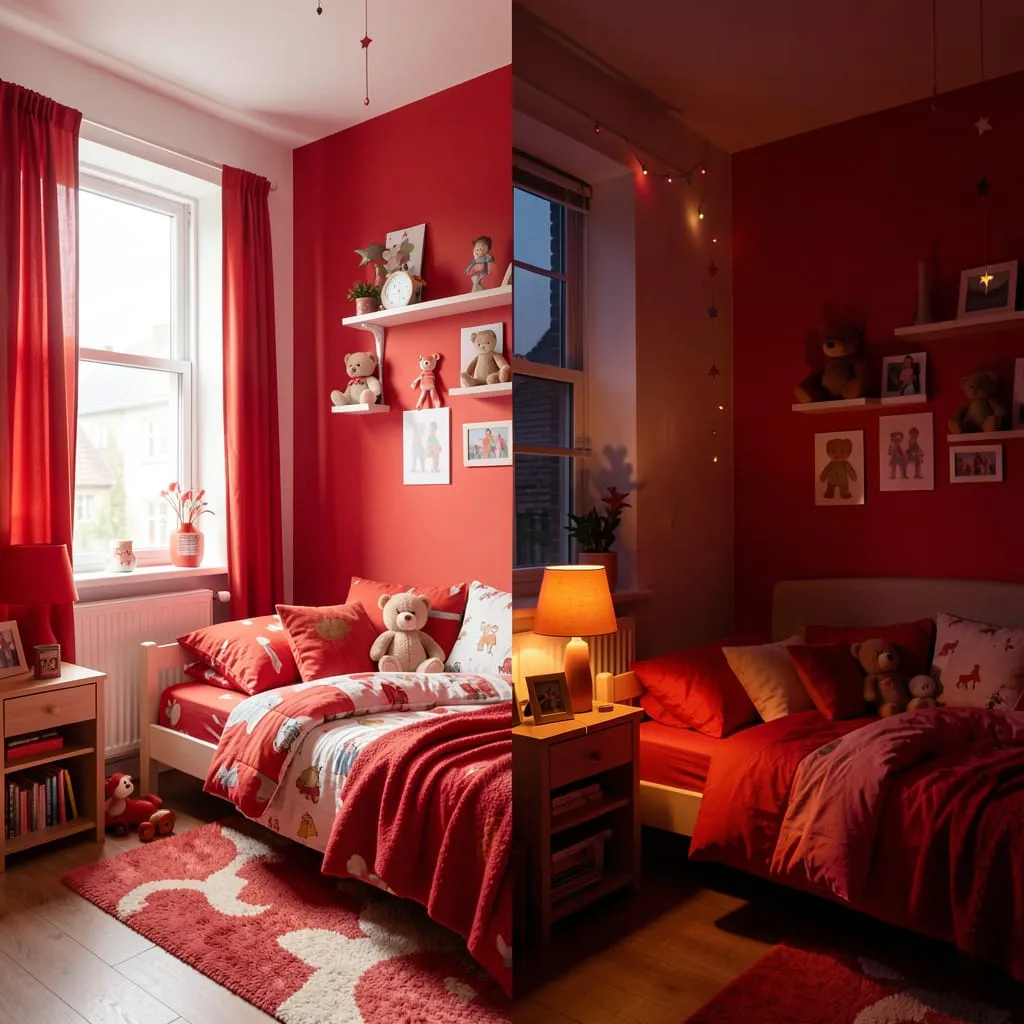
For a child’s room, you need both modes:
Daytime: Bright overhead lighting for play, homework, and activity.
Bedtime: Warm night light (2200K–2700K), dimmer on overhead, and a small lamp on the nightstand the child can control themselves. At this light level, even a bold red accent wall reads as warm and enveloping rather than stimulating.
Install a dimmer switch. It’s the single most useful tool for making a colorful child’s room work for sleep.
Involve the Child in the Process
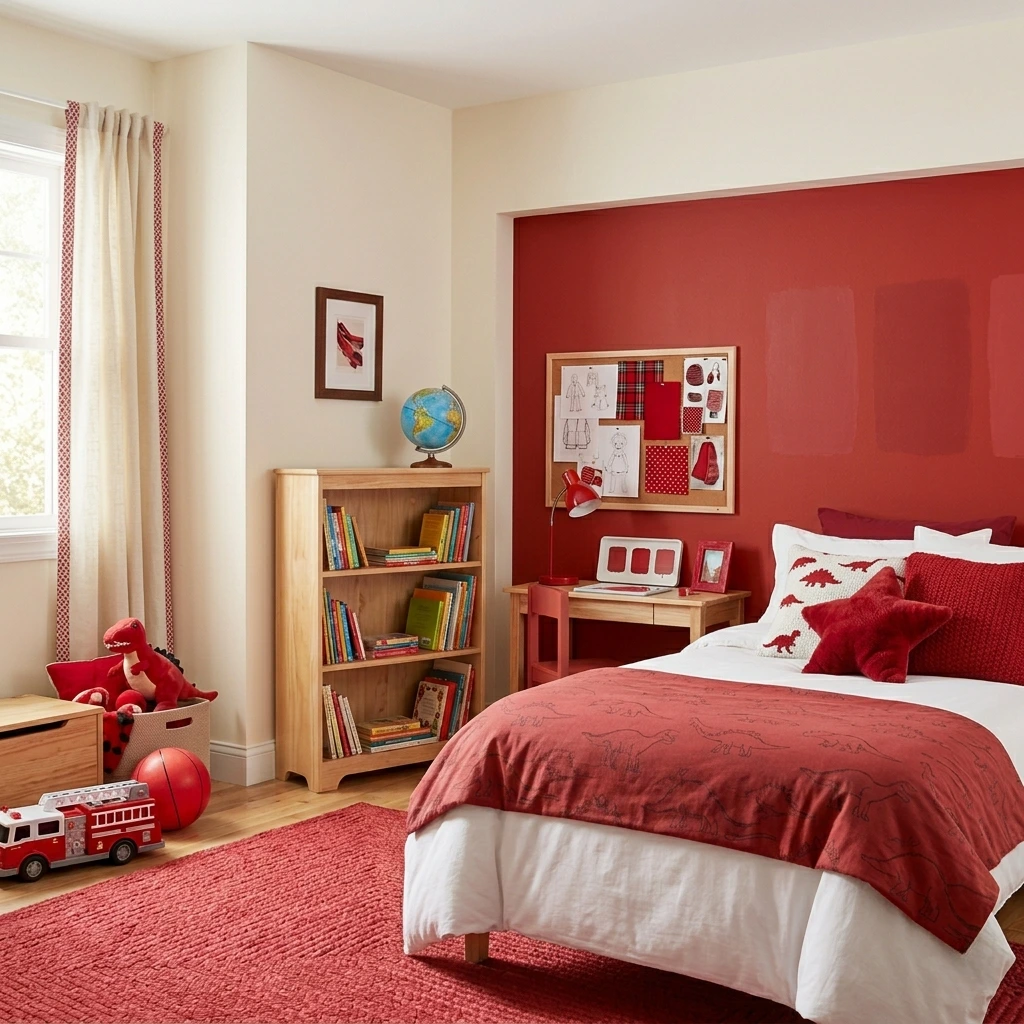
Children who participate in designing their own room take ownership of it in a way that manufactured “kids’ rooms” never achieve. Let them choose between two or three pre-approved shades. Let them pick the accessories. Let them decide whether the red goes on the wall, the bookshelf, or the curtains.
A Red Kids’ Room Is a Room Kids Actually Love
The goal of a child’s room isn’t to satisfy adult design principles. It’s to create a space where a child genuinely wants to play, learn, and rest. Red, used well, does all three.
Ready to keep going?
See how red works in another energetic context with our guide on [Red Home Office Ideas That Boost Focus (Not Anxiety) →]
Or browse the full [Red Interior Design category →] for room-by-room guidance on making red work at every stage of life.