How to Add Red to a Neutral Home Without Starting Over
You’ve spent years building a beautiful neutral home. Cream walls, natural wood, warm whites. It’s calm, it’s cohesive — and lately, it’s started to feel a little flat.
You want more. You keep saving red rooms on Pinterest. But the idea of undoing a carefully built neutral palette is terrifying.
Here’s the good news: you don’t have to start over. Adding red to an existing neutral home is a layering process — and when done in the right sequence, each addition feels natural rather than jarring. In fact, the best red rooms almost always live on a neutral foundation.
Here’s the exact sequence, and Tip #4 is the one that makes the whole transition feel effortless.
Understand Why Neutral Homes Accept Red So Well
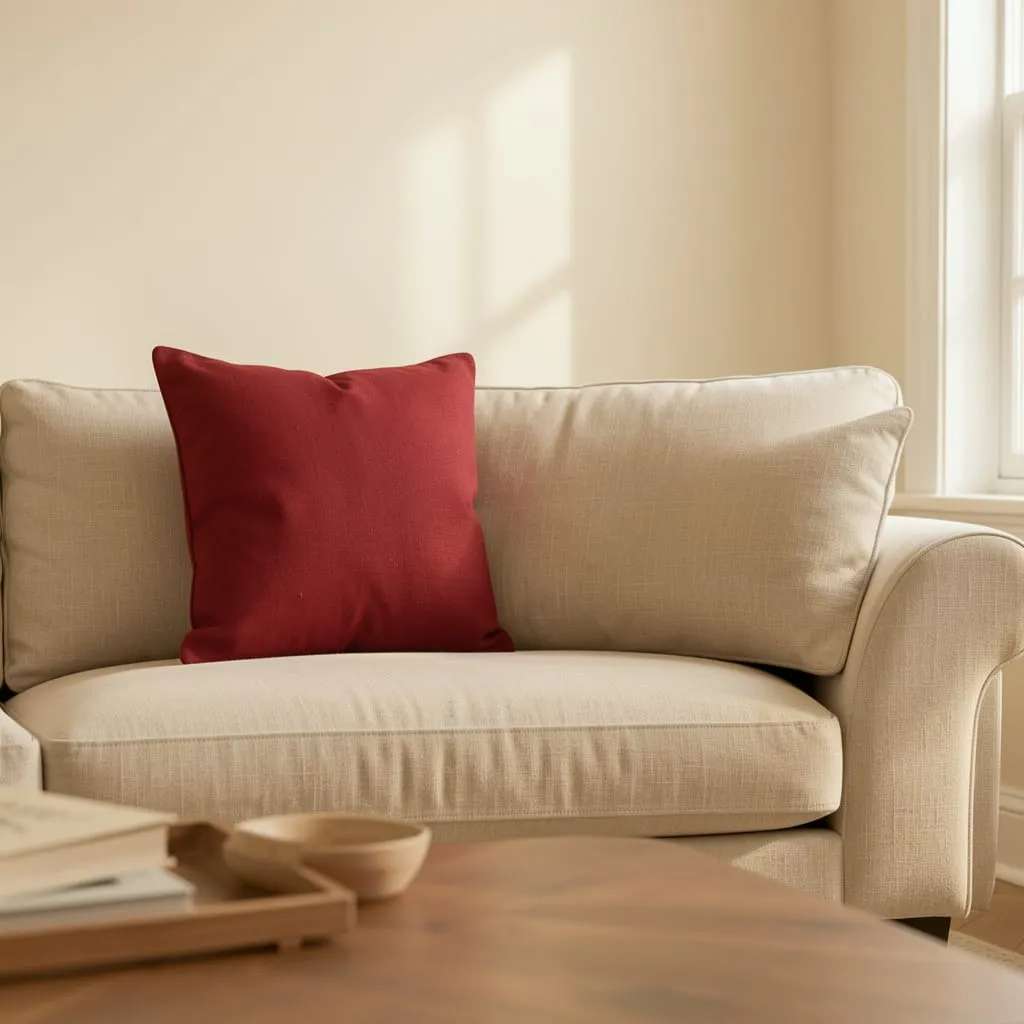
Neutral palettes are built on undertones — warm beiges, creamy whites, greige walls — that already have red hiding in them. When you introduce actual red into these spaces, it doesn’t clash. It resonates.
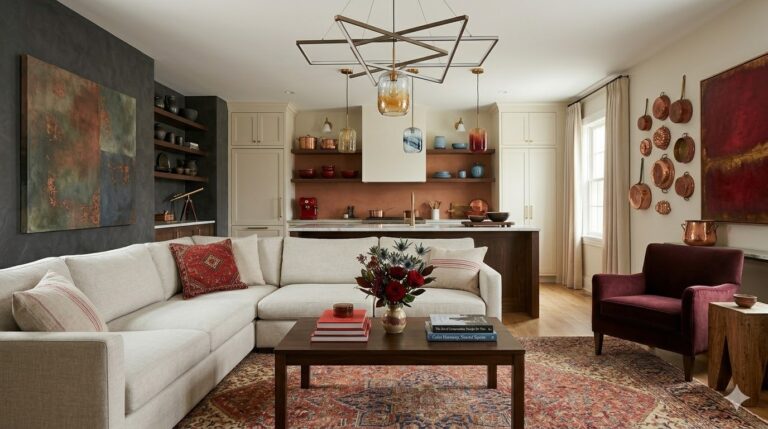
This is the reason red accent pieces look so natural in neutral rooms that were never designed around red. The warm undertones in your existing palette are already quietly leaning in that direction. You’re not adding a foreign element — you’re amplifying something that was already there.
Begin With One Small Accessory in the Right Shade
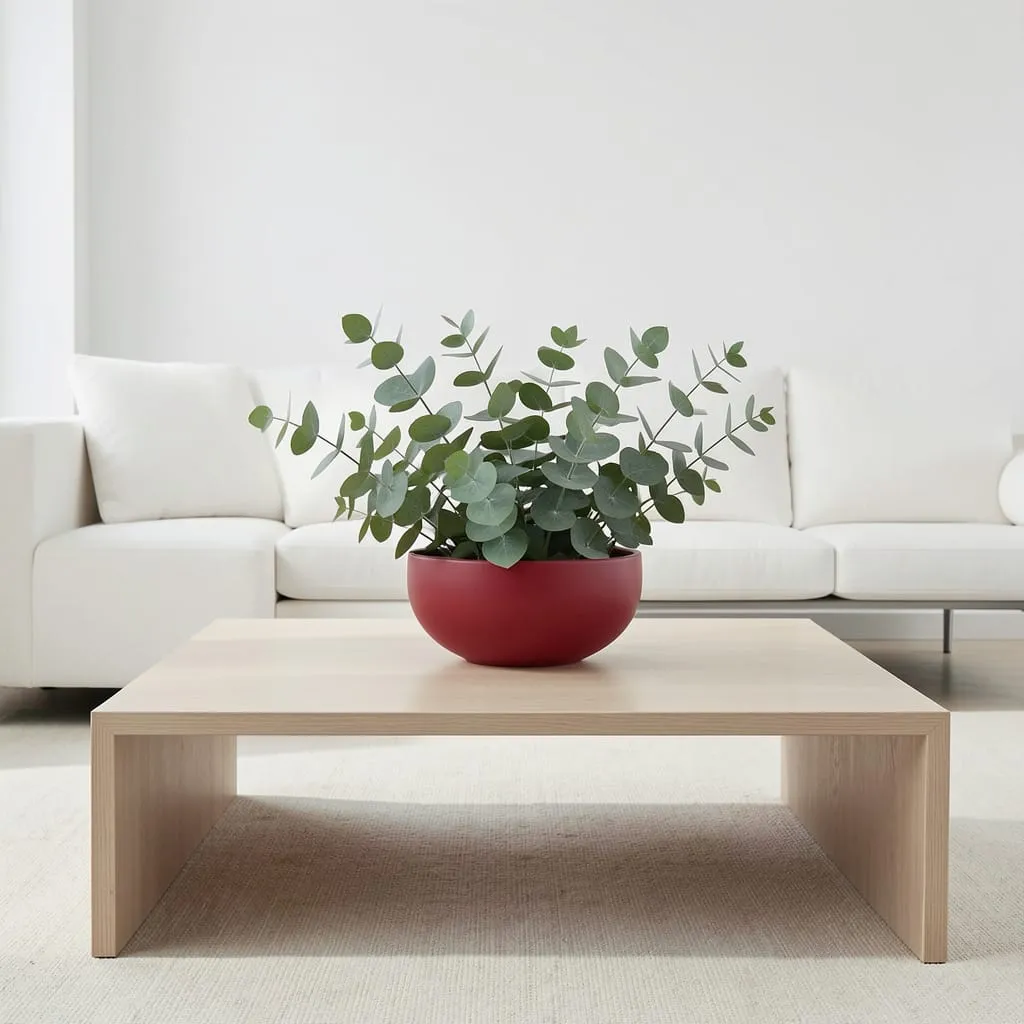
The first step is always the smallest one — and it should cost you under $30.
Choose one accessory in the shade of red you’re drawn to and place it in your most-used room. A ceramic vase, a candle holder, a decorative bowl, a small throw pillow. Live with it for two weeks.
This gives your eye time to adjust and gives you real data about how that specific shade works in your specific light. Watch how the color behaves morning, afternoon, and evening. Notice which pieces in your existing room it resonates with and which it fights.
Add a Textile Layer — Cushions, Throws, or a Rug
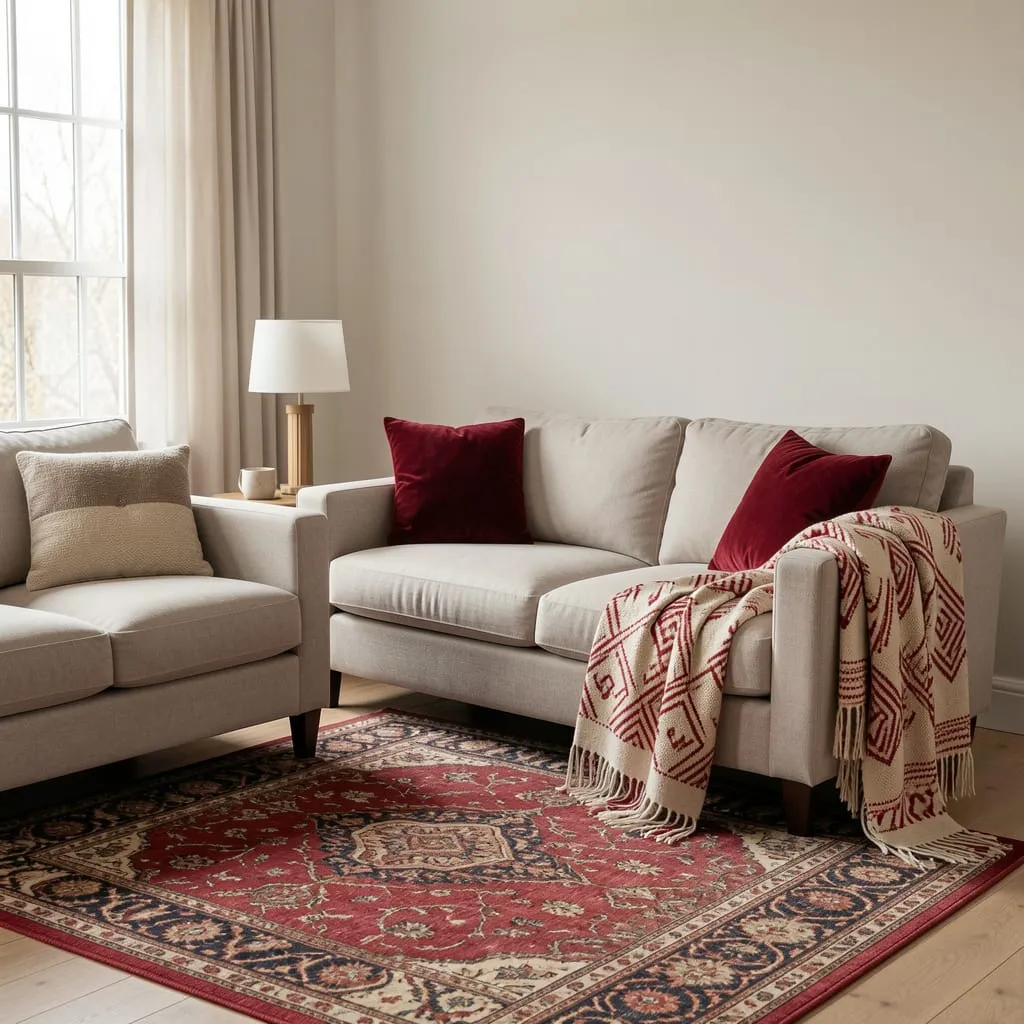
Once you’re confident in your shade, introduce red through textiles — the most flexible and reversible category in interior design.
The sequence within textiles:
- One cushion in your chosen red
- A throw in a complementary or patterned red-adjacent tone
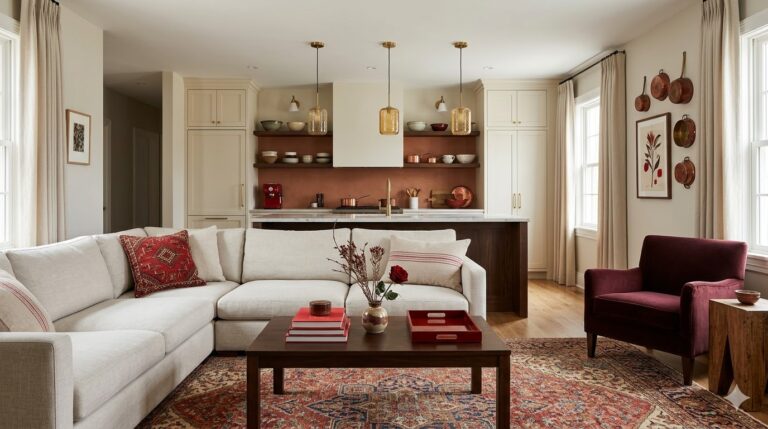
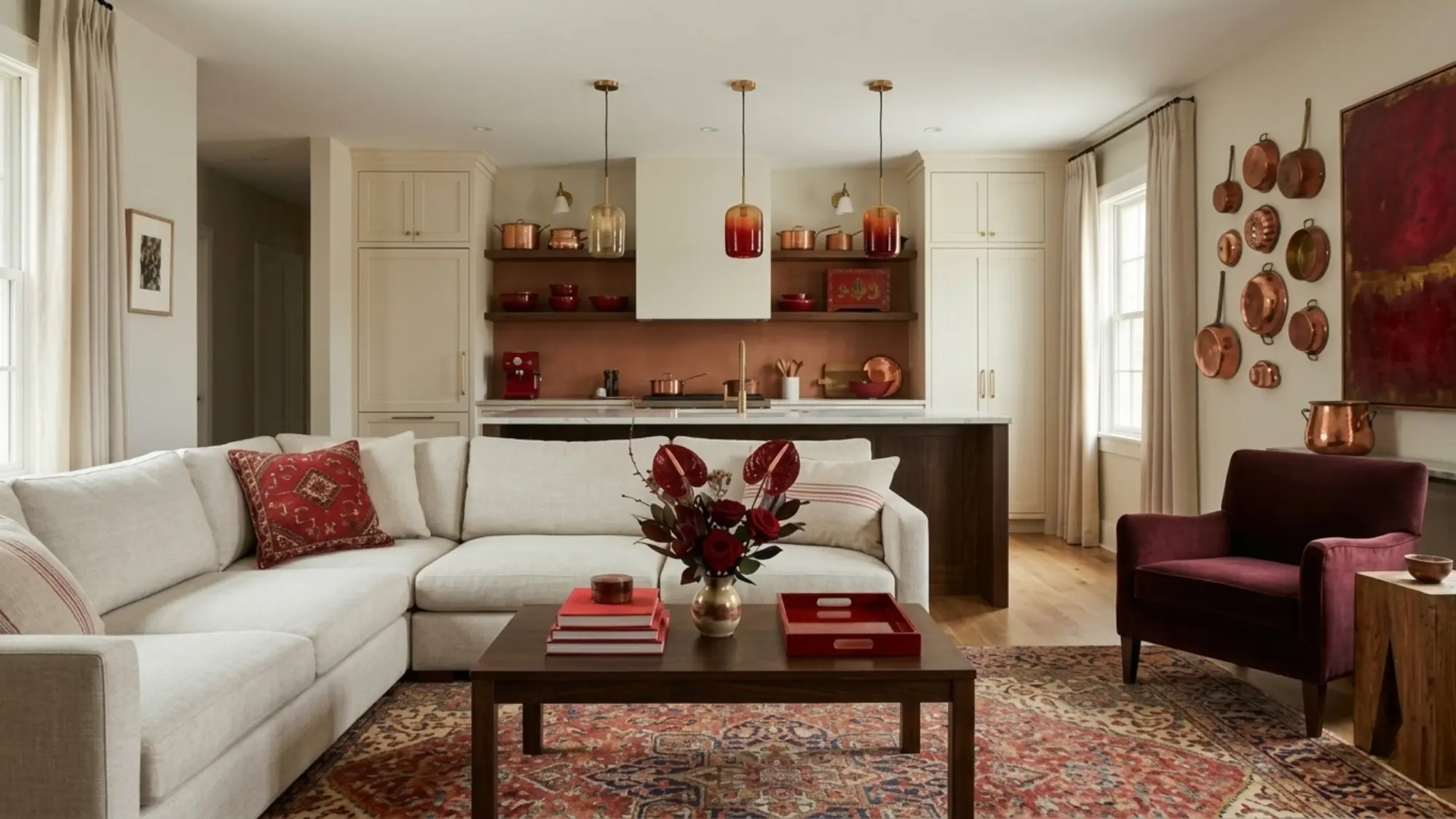
- A rug where red appears alongside neutrals (the most impactful textile addition)
With each addition, step back and assess the room as a whole. The right pace is one item at a time, with at least a few days between additions.
Introduce a Statement Furniture Piece
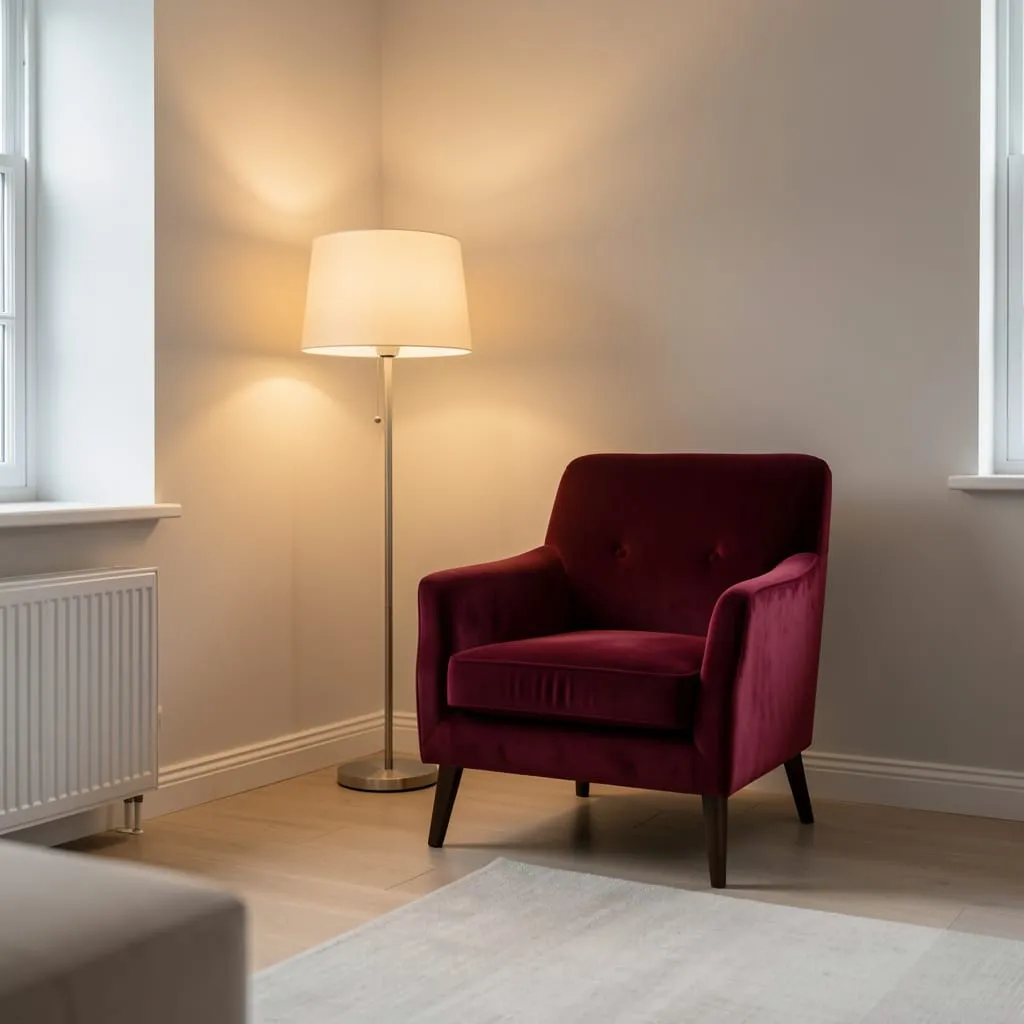
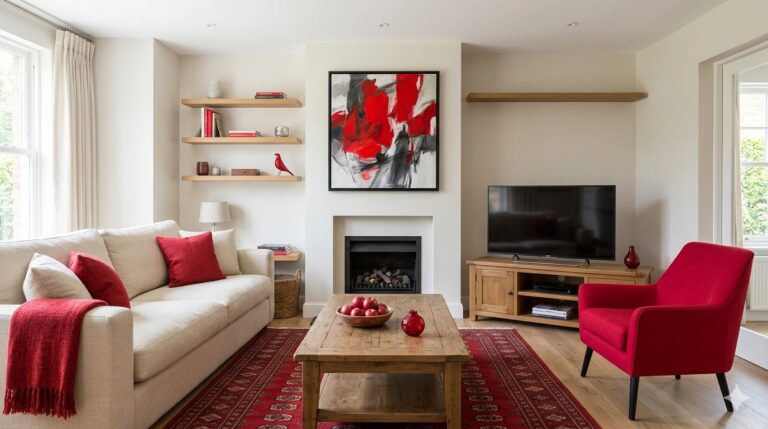
This is the transition point where the room shifts from “neutral with touches of red” to “a room with a clear red personality.” A red armchair is the ideal entry-point piece because:
- It’s large enough to make a real statement
- It’s small enough to feel reversible
- It creates an immediate reading nook that the room can build around
- It signals intentionality — a red chair looks designed, not accidental
Position it near your existing lamp, add a small side table, and suddenly you have a fully considered corner.
Consider One Architectural Element — Painting a Single Wall
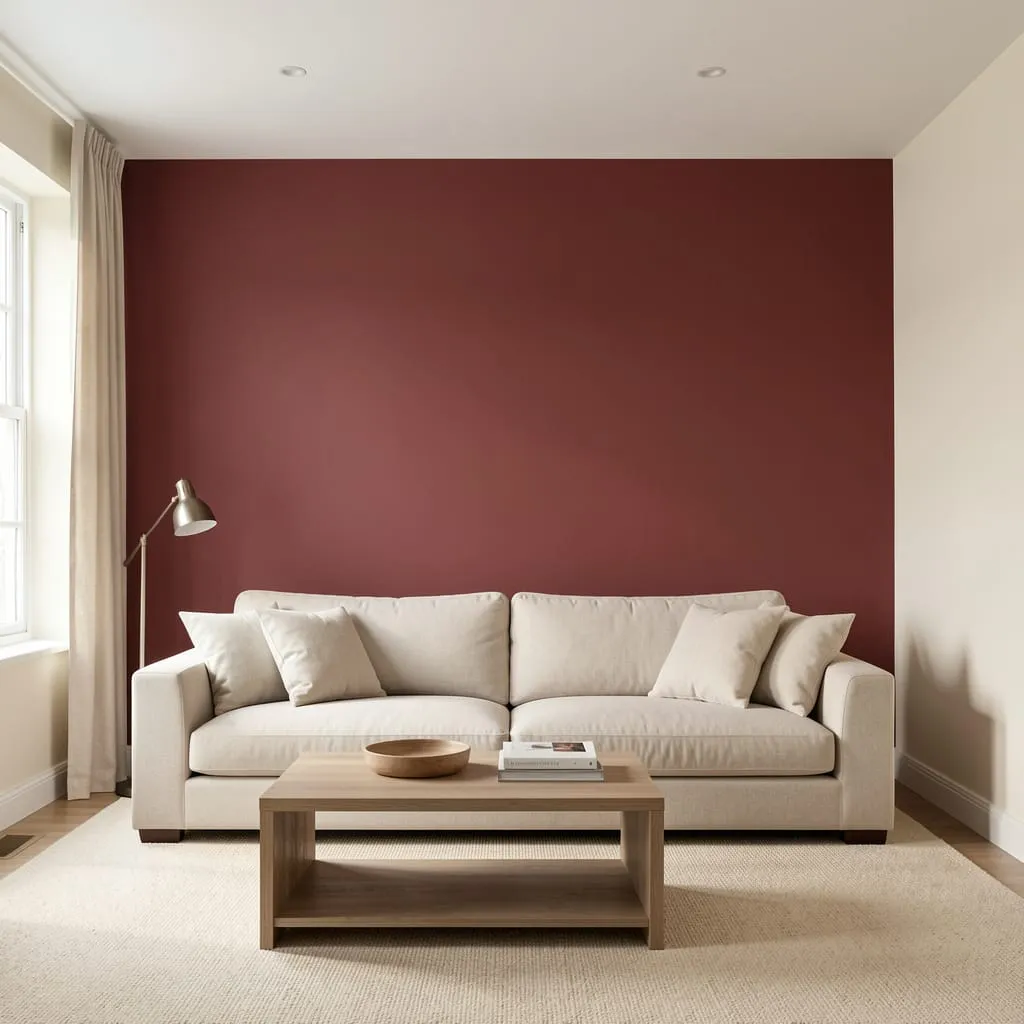
If you’ve made it through the previous four steps and love what you see, you’re ready to consider painting one wall.
By this point, you already know your shade works in your space. The painted wall won’t be a leap of faith — it’ll be the confident conclusion of a process you’ve already been living.
Choose the wall that your red chair faces, or the wall your sofa is angled toward. Keep every other wall at its current neutral. The contrast is exactly what makes the single red wall work.
Fine-Tune With Lighting and Plants
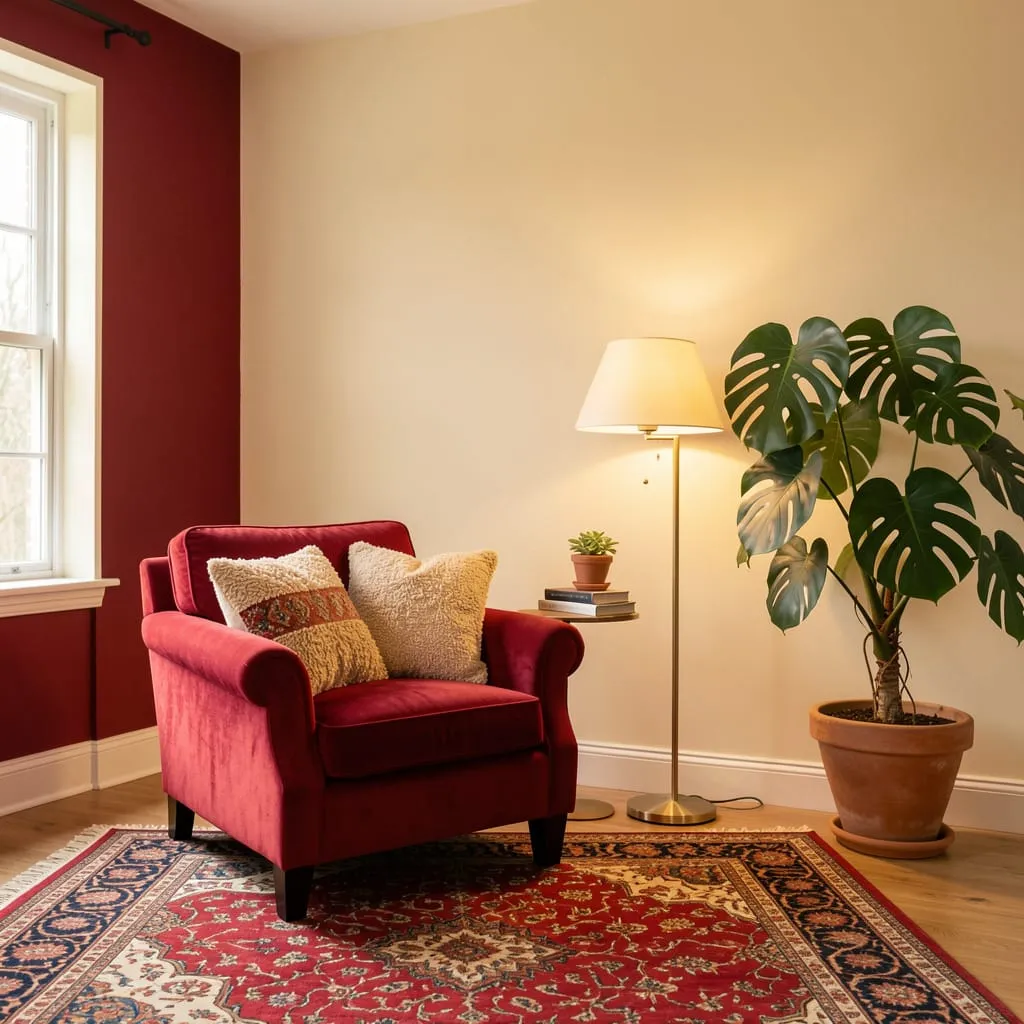
Replace any cool-toned bulbs with warm ones (2700K). Add a floor lamp aimed at your red wall. Introduce one large plant near the red wall to provide the organic counterbalance that keeps red from feeling aggressive.
These final touches don’t change the room dramatically. They elevate everything you’ve already built.
Red Doesn’t Replace Your Neutral Home — It Completes It
The rooms that feel most alive are rarely purely neutral or purely bold. They’re the ones where a strong neutral foundation gives a bold color somewhere to breathe.
Ready for the next step?