12 Bedroom Plants That Are Almost Impossible to Kill
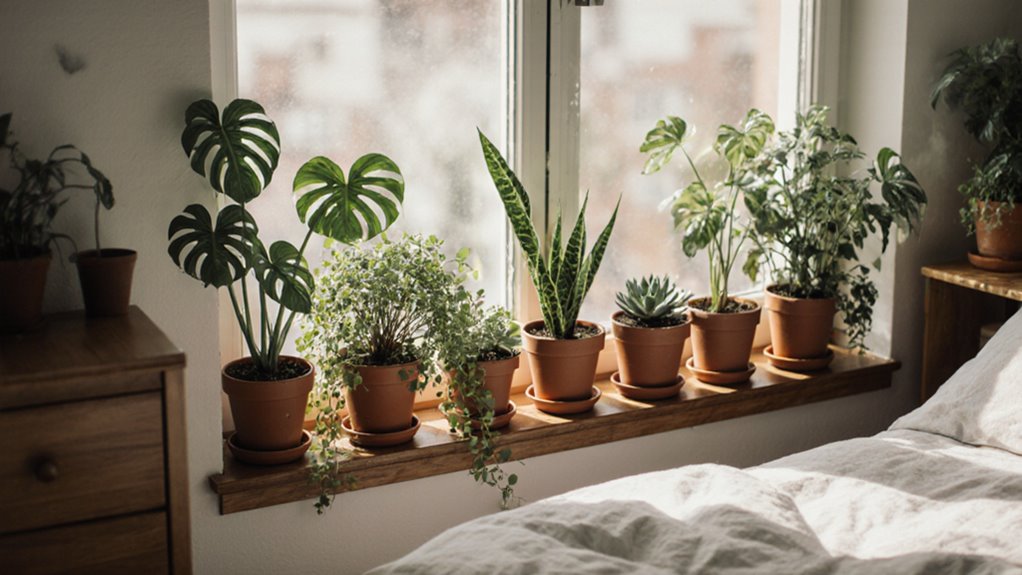
You don’t need a green thumb to keep bedroom plants alive—you just need the right ones. Some plants survive low light, dry air, and irregular watering without missing a beat. Choosing wisely means less effort and more greenery. The twelve plants ahead are nearly foolproof, and at least one of them will change how you think about indoor plants entirely.
Snake Plant: The Best Bedroom Plant for Beginners
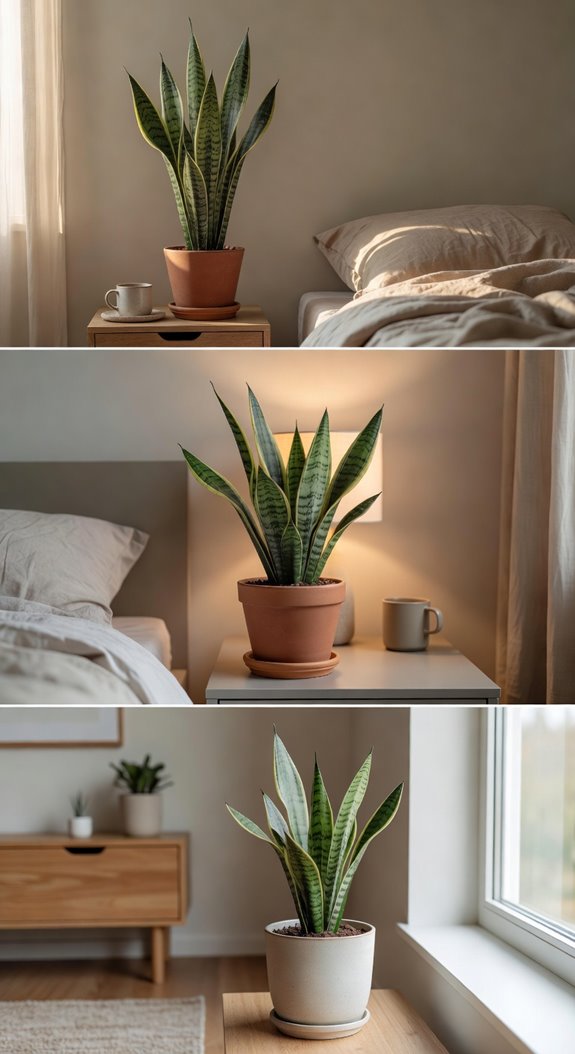
If you’re new to keeping houseplants, the snake plant (*Sansevieria trifasciata*) is one of the most forgiving options you can choose for your bedroom. It tolerates low light, irregular watering, and dry air without complaint. You can place it in a corner, on a nightstand, or beside a dresser, and it’ll still thrive.
ZZ Plant: Thrives in Low Light With Almost No Watering
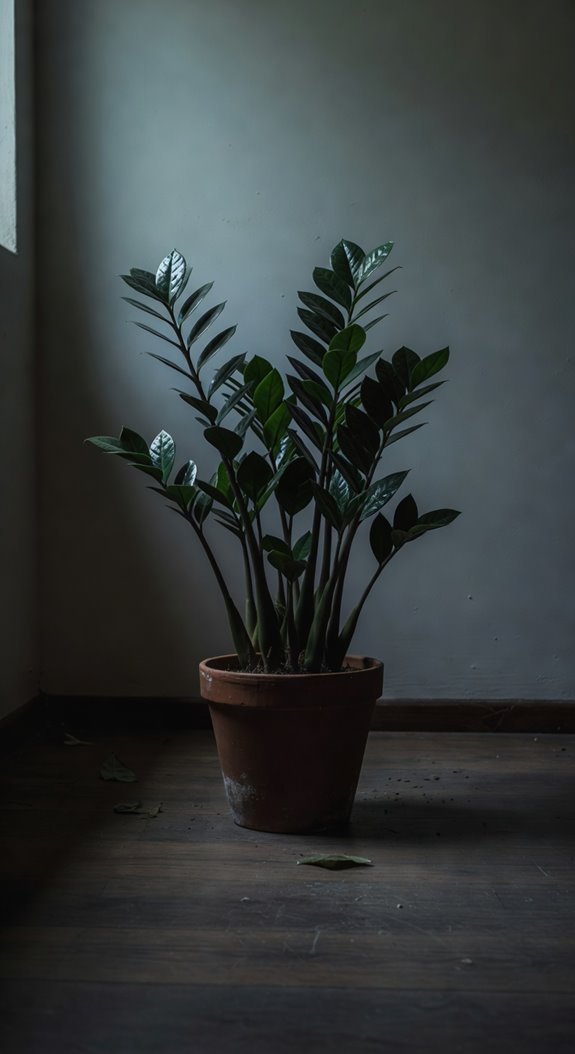
Want a plant that practically takes care of itself? The ZZ plant thrives in low light and stores water in its thick rhizomes, so you won’t need to water it often. Place it on a nightstand or dresser, and it’ll stay healthy for weeks without attention. Its waxy, dark green leaves add a sleek, architectural quality to any bedroom.
Pothos: The Bedroom Plant That Grows No Matter What You Do
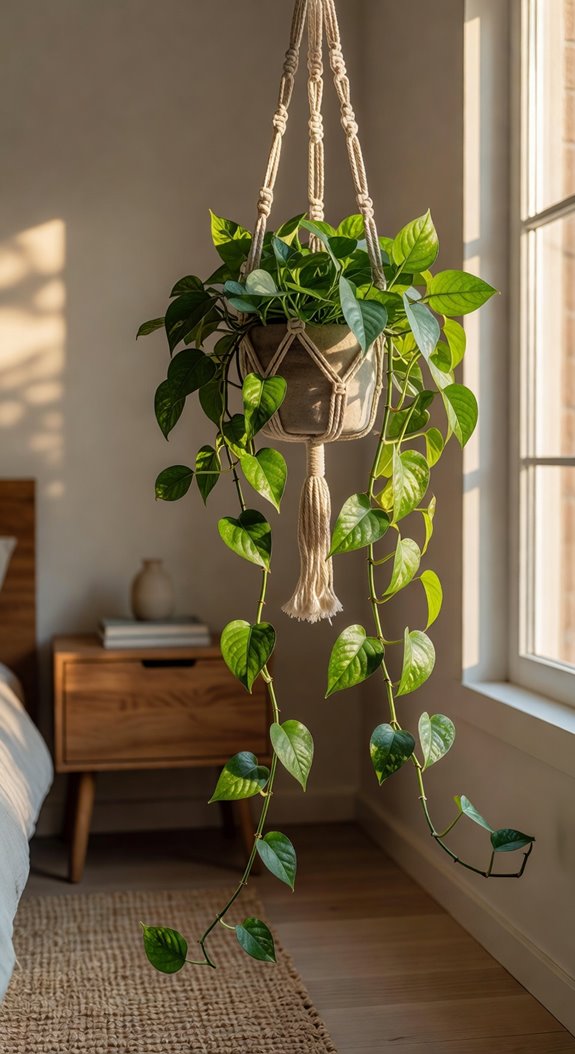
Few plants match the pothos when it comes to sheer resilience, making it one of the most forgiving choices for any bedroom. You can underwater it, forget it entirely, or place it in low light, and it’ll still trail beautifully from your nightstand or dresser. Its cascading vines add visual depth, filling vertical space effortlessly.
Dracaena: A Tall, Low-Maintenance Plant That Handles Neglect
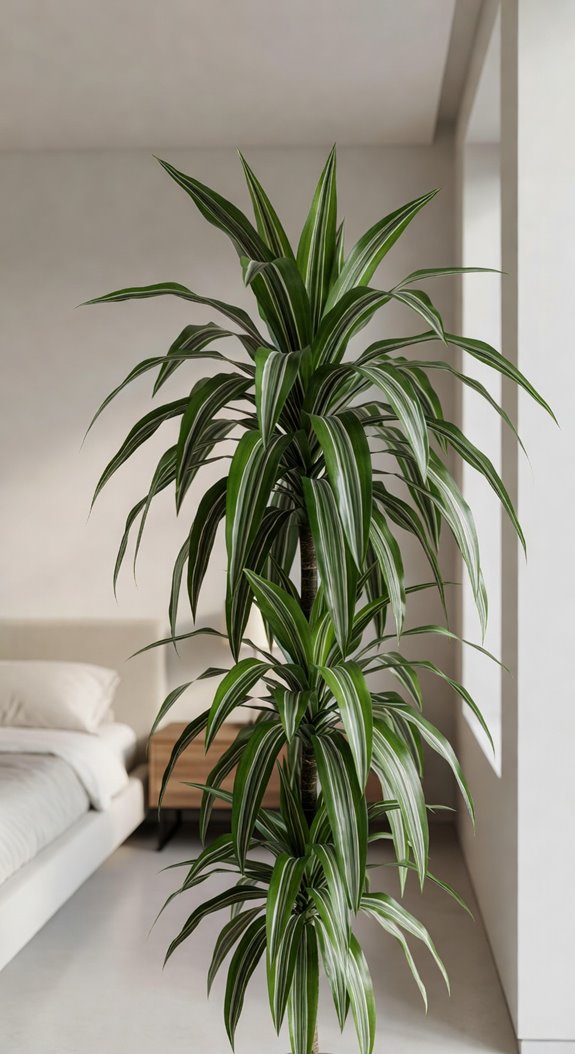
Dracaena is one of those bedroom plants that genuinely thrives on neglect, making it a smart pick if you’re not a dedicated plant parent. It tolerates low light and irregular watering without complaint. Place it in a corner near dark wood furniture to add vertical interest. Water it every two weeks, and you’re set.
Cast Iron Plant: The Bedroom Plant That Genuinely Cannot Be Killed
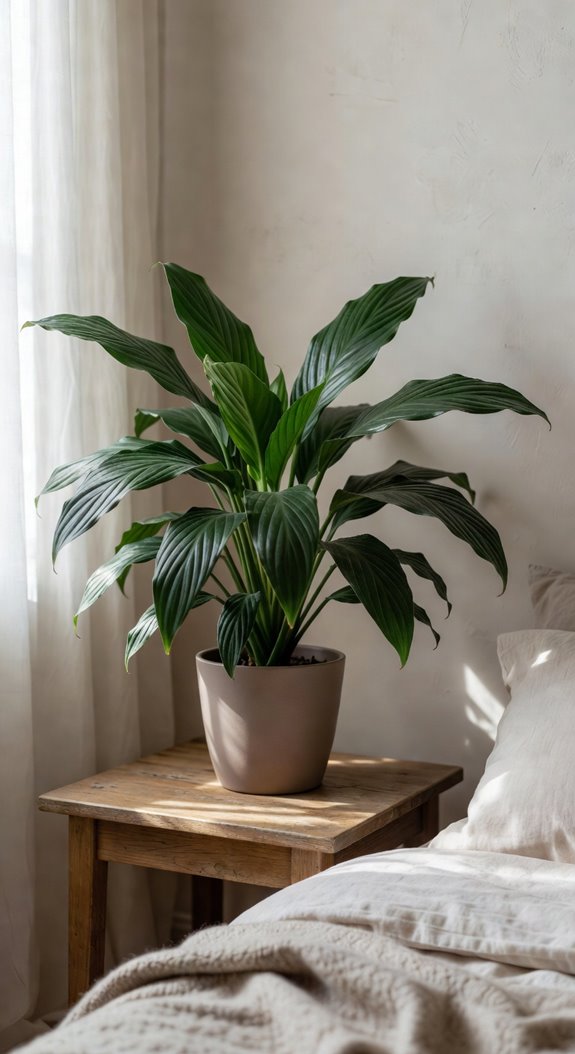
If Dracaena handles neglect well, the cast iron plant takes that quality even further, earning its name through sheer toughness. You can place it in low light, forget to water it for weeks, and it’ll still thrive. Its dark, glossy leaves complement wood furniture beautifully, making it ideal for bedrooms where natural light is minimal.
Chinese Evergreen: Colorful Leaves That Need Almost No Attention
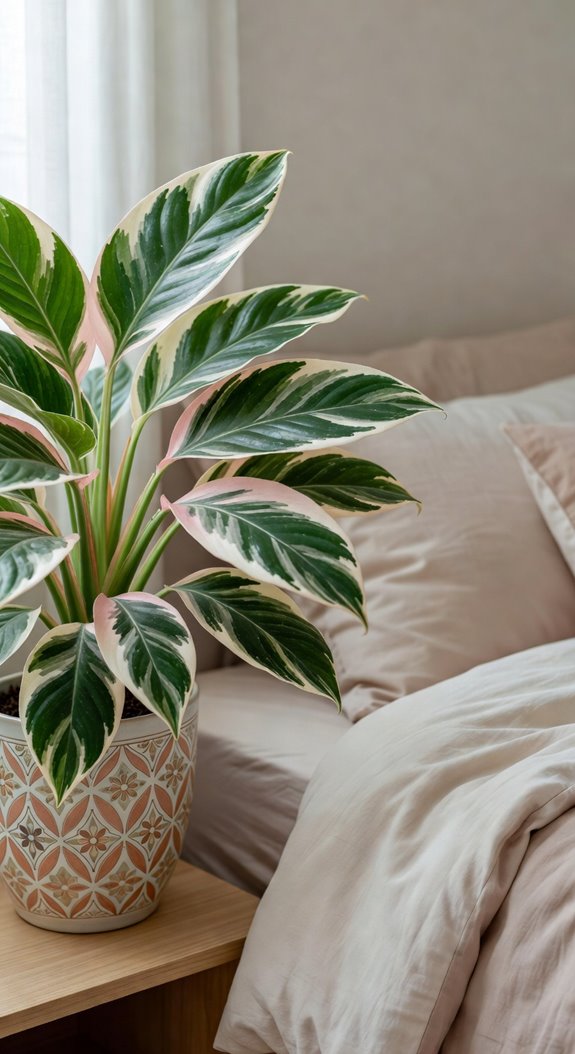
What makes Chinese evergreen stand out is its range of leaf colors, which include green, silver, pink, and red, giving you real decorative flexibility. It tolerates low light, infrequent watering, and dry air, making it ideal for bedrooms. You can place it on a nightstand or dresser, and it’ll thrive with minimal intervention.
Rubber Plant: Big Visual Impact for People Who Forget to Water
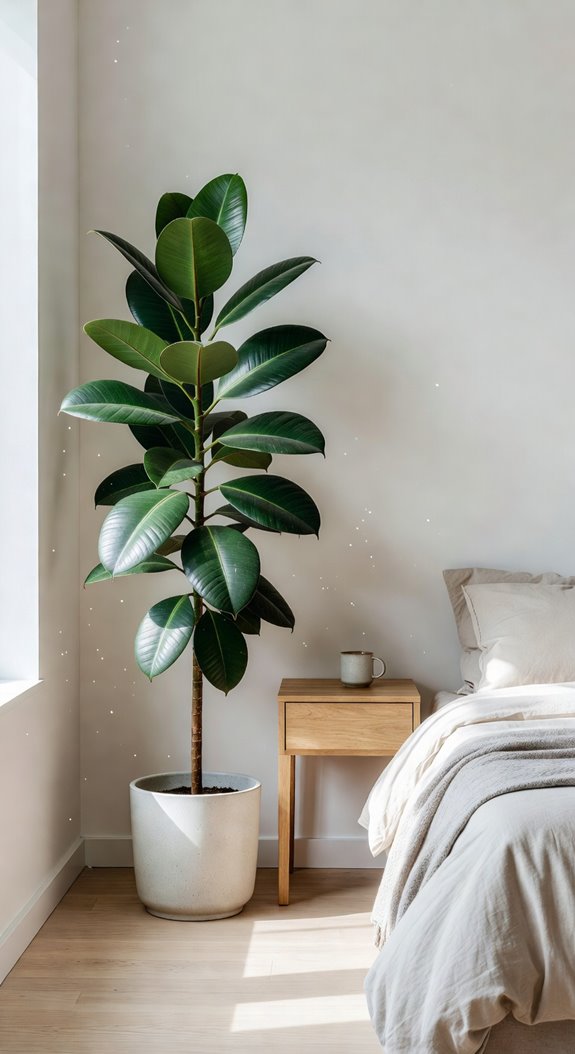
For a plant with even more visual weight, the rubber plant delivers bold, glossy leaves in deep burgundy or rich green that can anchor a bedroom corner beautifully. You can water it every one to two weeks, and it tolerates low light well. It grows tall over time, giving you a strong vertical element without much effort.
Peace Lily: Low Light, Air Purification, and Minimal Watering
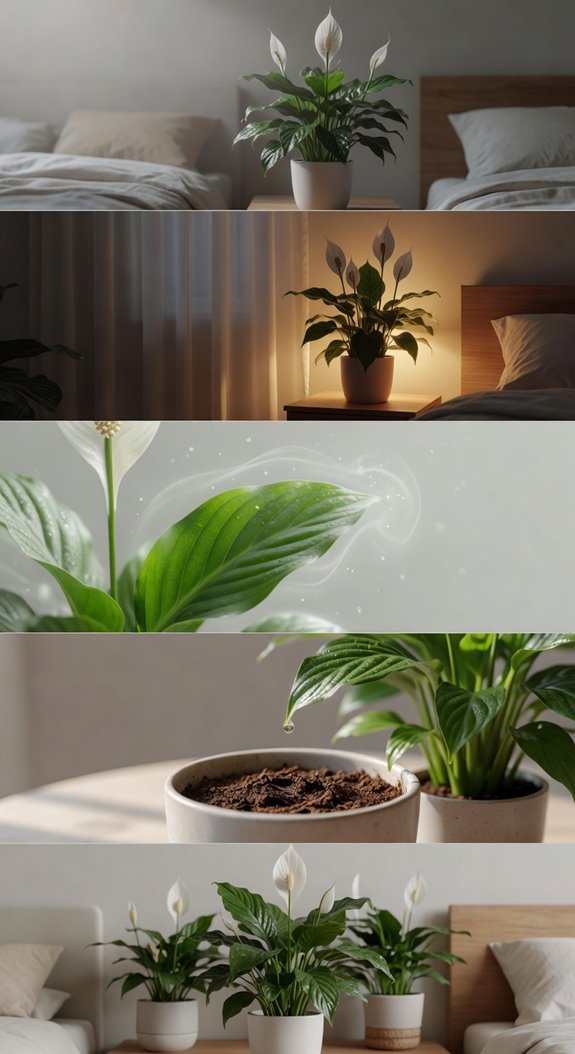
When you want a plant that handles low light, cleans the air, and forgives inconsistent watering, the peace lily checks every box. It thrives in indirect light and removes toxins like benzene and ammonia from your bedroom air. Water it weekly, and it’ll stay healthy. If you forget, it droops visibly, signaling exactly when it needs attention.
Heartleaf Philodendron: Grows Fast in Low Light With Infrequent Watering
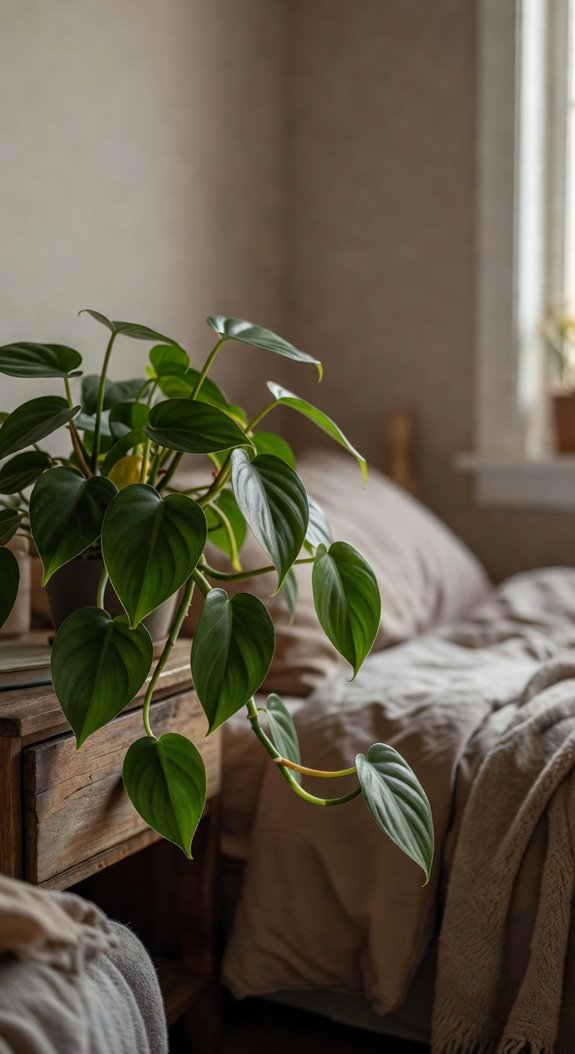
Few bedroom plants match the heartleaf philodendron’s ability to grow quickly in low light while needing very little care. Its heart-shaped, deep green leaves trail beautifully from shelves or nightstands, adding lush texture to your space. You’ll only need to water it every one to two weeks, and it’ll thrive even in dimly lit corners.
Spider Plant: Survives Neglect and Cleans Your Bedroom Air
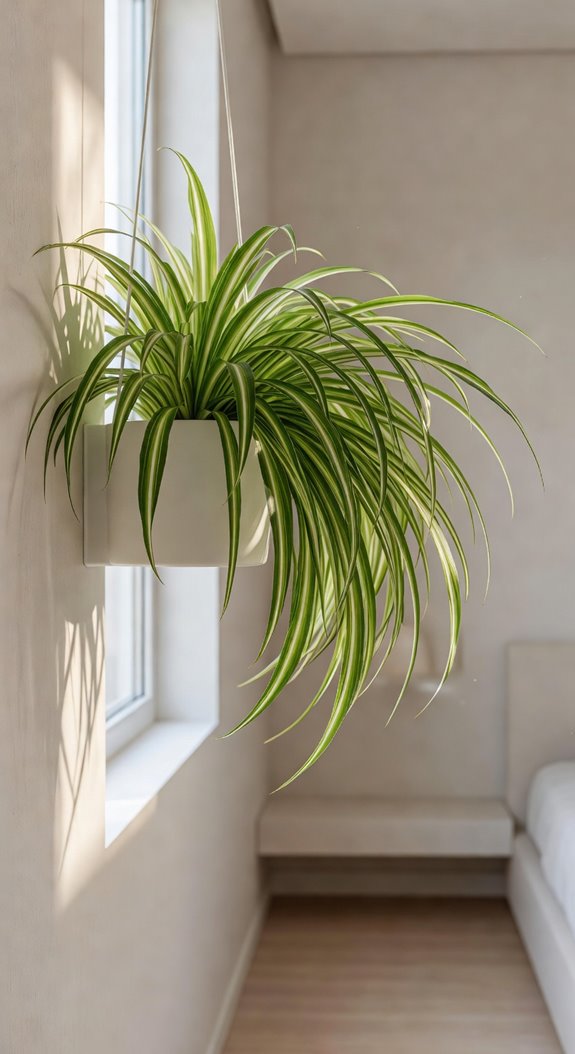
Another resilient option worth adding to your bedroom is the spider plant, which thrives on neglect and actively filters indoor air.
You can water it every one to two weeks, and it’ll still look healthy. Its arching green-and-white variegated leaves suit most bedroom aesthetics, from minimalist to eclectic. It also produces offshoots you can propagate easily.
Aloe Vera: A Low-Maintenance Bedroom Plant With a Useful Bonus
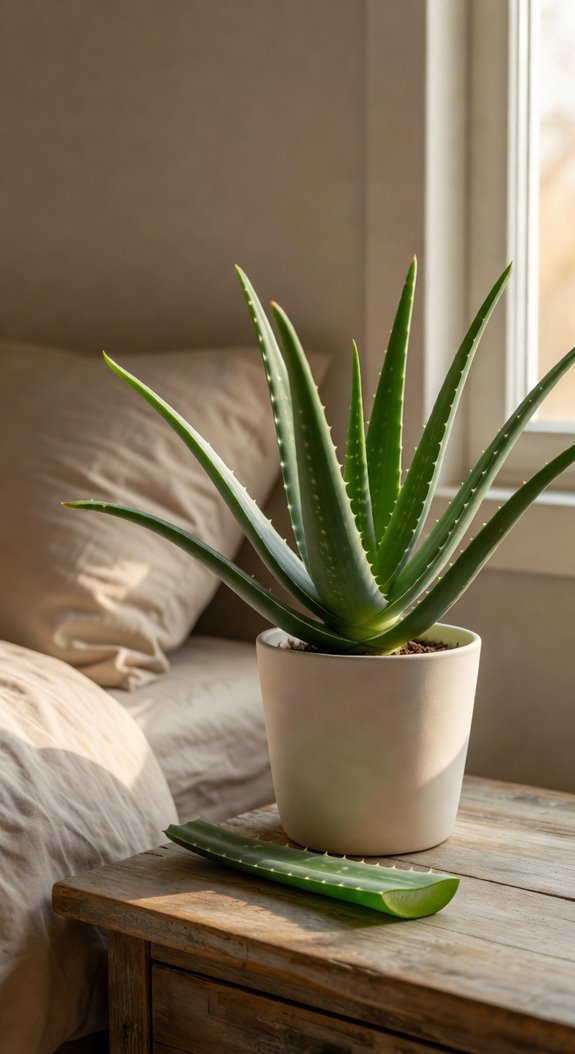
Aloe vera is one of the most practical plants you can keep in a bedroom, requiring almost no effort to maintain. It thrives in bright, indirect light and needs watering only every two to three weeks.
You also get a built-in remedy for minor burns and skin irritation, making it genuinely useful beyond its aesthetic appeal.
Air Plants: No Soil, No Fuss, No Problem
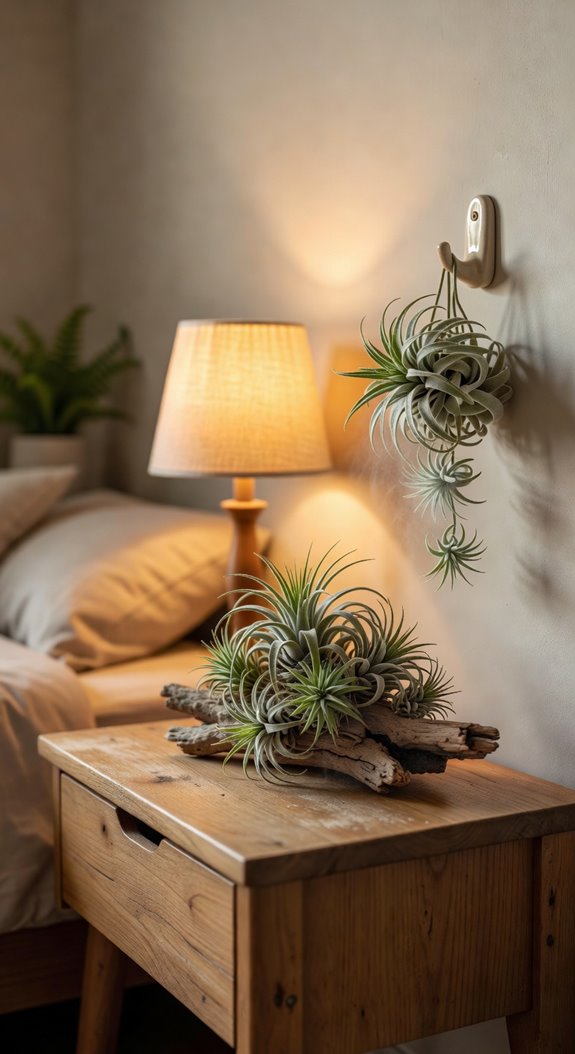
What makes air plants so appealing is that they don’t need soil at all, drawing moisture and nutrients directly from the air around them. You simply mist them a few times a week and set them on a shelf or windowsill.
Their sculptural, spiky forms add textural contrast to minimalist bedroom décor without demanding much from you.
Lighting Requirements to Consider
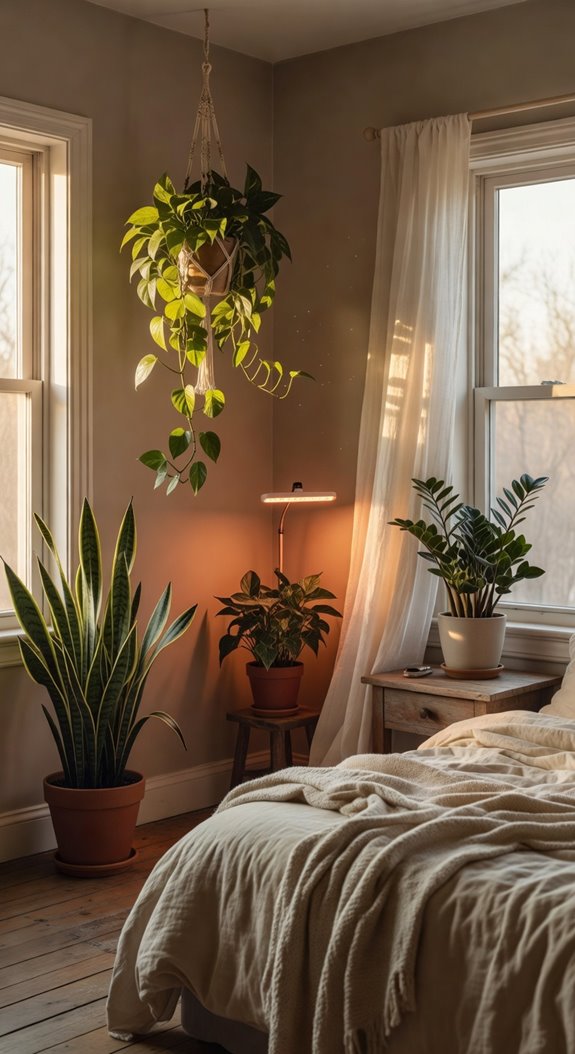
Before choosing any plant for your bedroom, you need to understand how much natural light your space actually receives each day. South-facing windows provide the most intense light, while north-facing rooms stay dim. Assess your window size, nearby obstructions, and seasonal changes.
Low-light plants like pothos thrive in darker corners, while succulents need bright, direct exposure near windows.
Common Mistakes
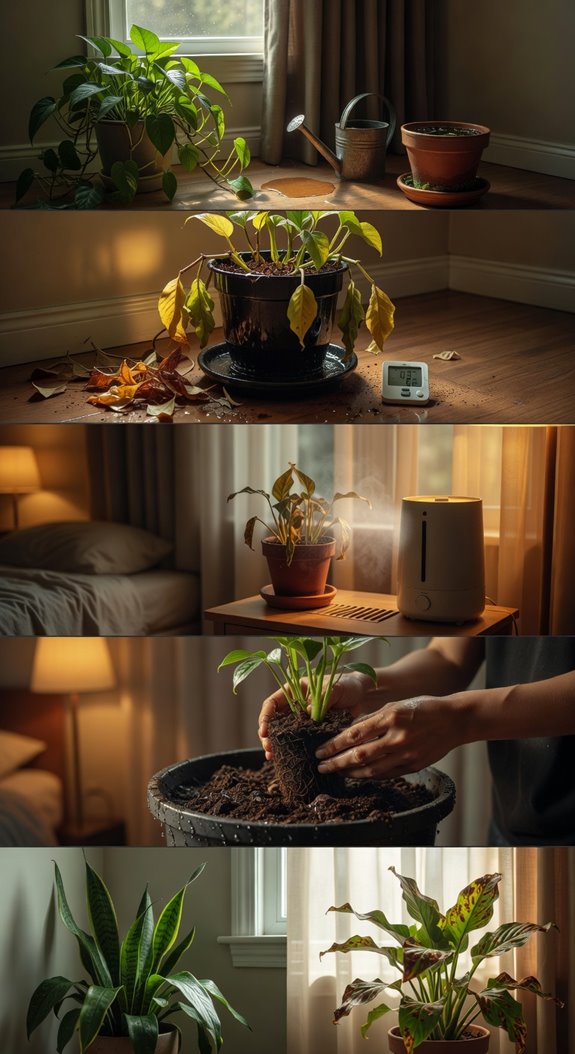
Even the hardiest bedroom plants will struggle if you’re making a few common care errors that most people overlook. Overwatering kills more houseplants than neglect ever does, so always check the soil before adding moisture. You should also avoid placing plants directly against cold windows, where temperature fluctuations cause leaf damage and stunted growth.
Final thoughts
You don’t need a green thumb to fill your bedroom with thriving plants. Start with one or two forgiving choices, like a snake plant or pothos, then expand as your confidence grows. You’ll find that most of these plants reward minimal effort with steady growth and cleaner air. With the right match for your light conditions and schedule, keeping bedroom plants alive is easier than you think.