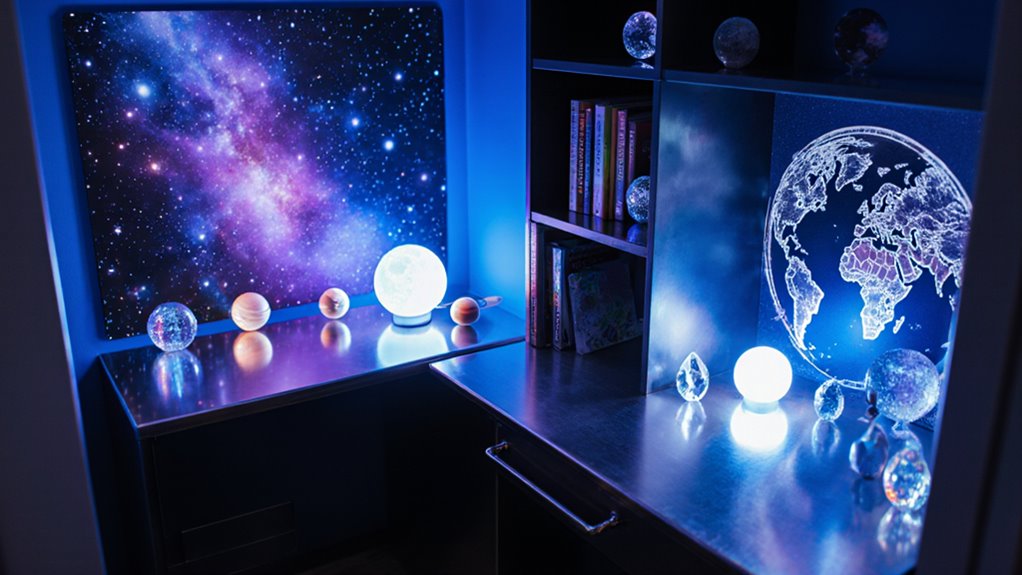
10 Small Space Cosmic Setups That Still Feel Out of This World
You don’t need a sprawling backyard to study the night sky seriously. Small balconies, rooftop corners, and bedroom windows can support capable setups with the right gear and layout. Compact Dobsonians, short-tube refractors, and smart storage solutions change what’s possible in tight quarters. Each section ahead covers a specific challenge you’re likely facing, from light pollution to gear organization, so keep going.
The Apartment Balcony Telescope Nook That Actually Delivers
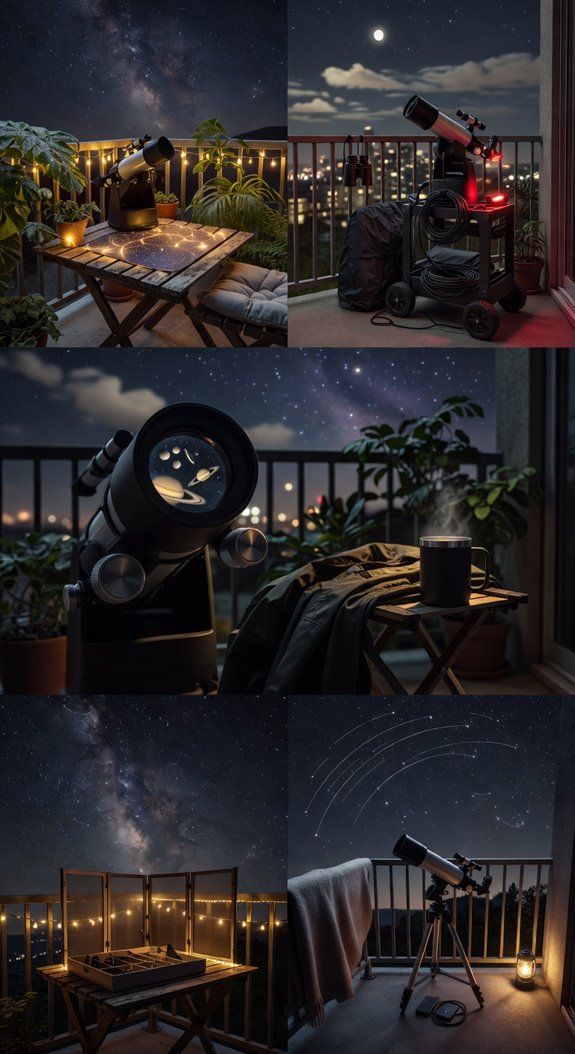
You don’t need a sprawling backyard to set up a functional stargazing station, because a compact apartment balcony can work surprisingly well. Position a refractor telescope near the railing, and use a small folding table for your star charts. Keep a red-light headlamp nearby to protect your night vision while you work.
Rooftop Stargazing Setups That Rival Backyard Observatories
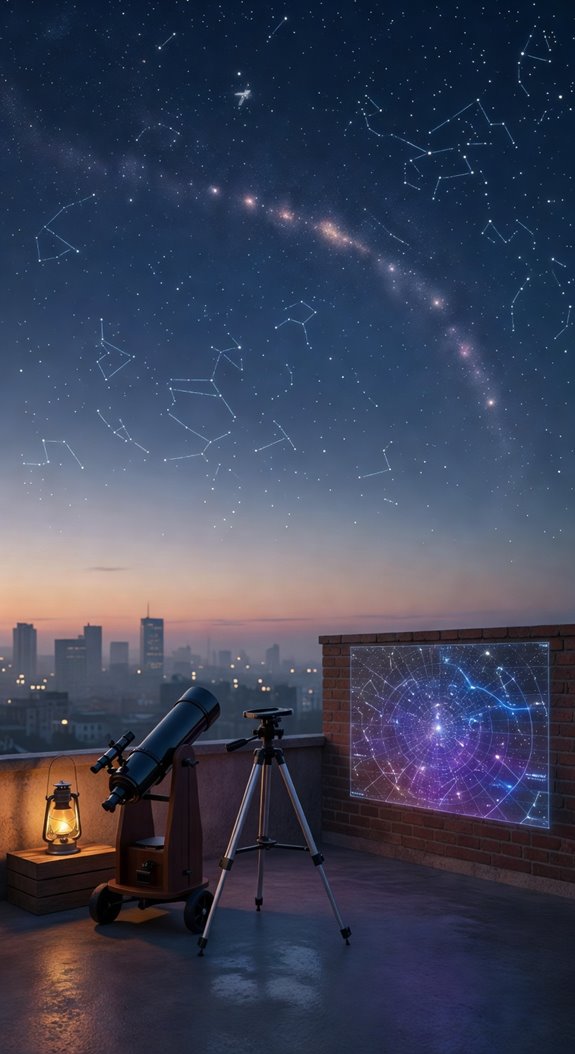
Rooftops offer some of the most underutilized stargazing real estate in urban environments, giving you elevated sightlines and reduced ground-level light interference. Pair a compact Dobsonian reflector with a weatherproof storage bench and low-profile folding chairs.
Use non-reflective, dark matte surfaces to minimize stray light. A red-film lantern keeps your night vision intact while you navigate your setup comfortably.
The Bedroom Window Setup That Works for Real Observations
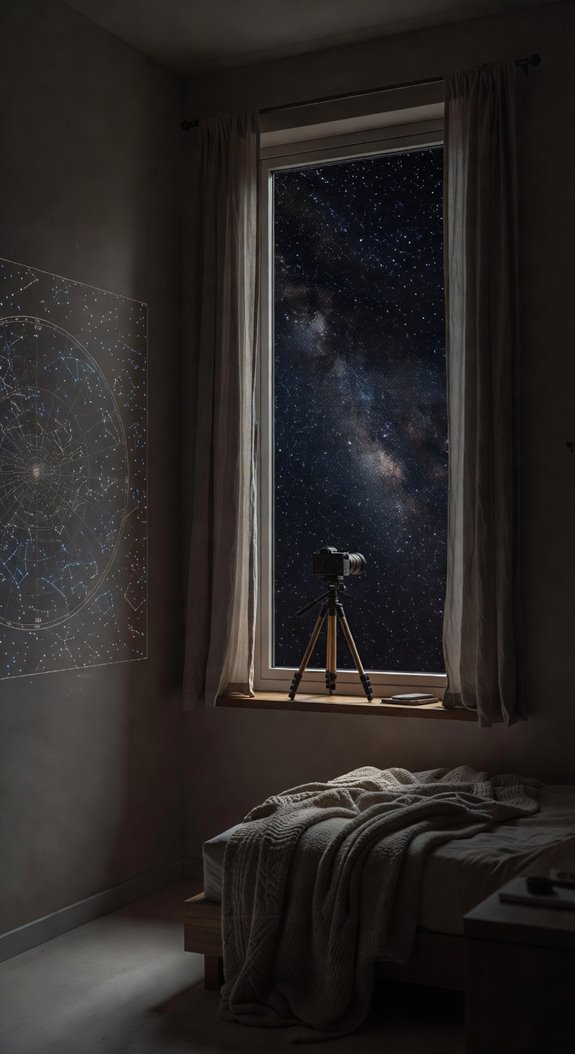
Most people assume a bedroom window is too limited for real astronomical observation, but with the right approach, it can serve as a surprisingly capable fixed station. Position your telescope perpendicular to the glass, never through it, to avoid distortion. A blackout curtain minimizes light pollution. You’ll get cleaner views of the Moon, planets, and double stars this way.
Powerful Compact Gear Built for Small-Space Stargazing
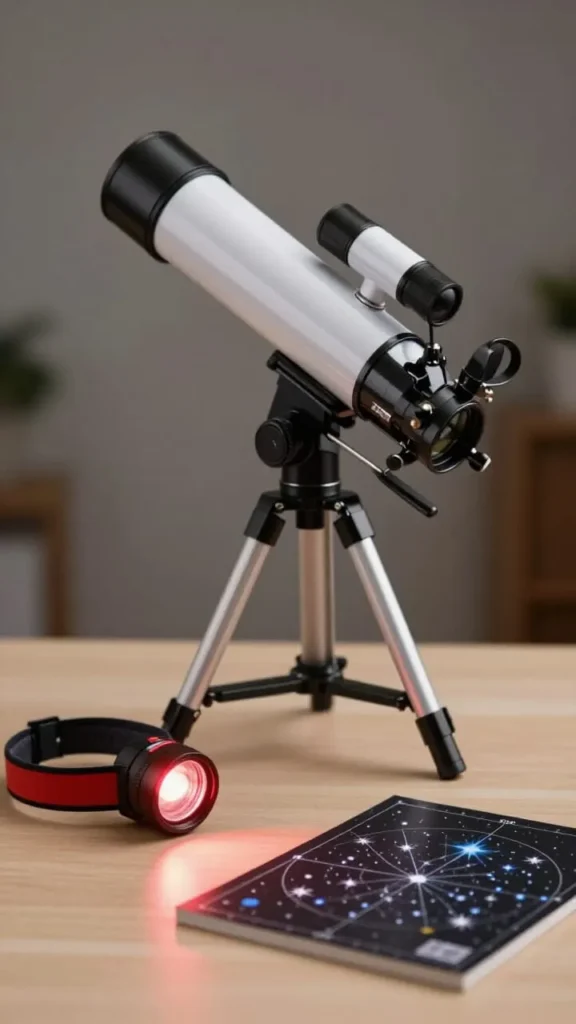
Gear matters just as much as the space you’re working with, and today’s compact astronomy tools punch well above their size. A tabletop Dobsonian or a short-tube refractor fits easily on a desk or windowsill. You can pair either with a red-light headlamp and a compact star atlas, keeping your setup practical, efficient, and ready for real observing sessions.
How to Reduce Light Pollution From a Tiny Urban Setup

Having the right gear is only part of the equation, and even the best telescope won’t perform well if stray light is washing out your view.
Use blackout curtains, dark shrouds, and light-blocking panels around your setup.
Position yourself away from direct lamp sources, and choose a narrow-band filter to isolate specific wavelengths, cutting urban glow considerably.
How to Build a Stargazing Corner When You Have No Outdoor Access
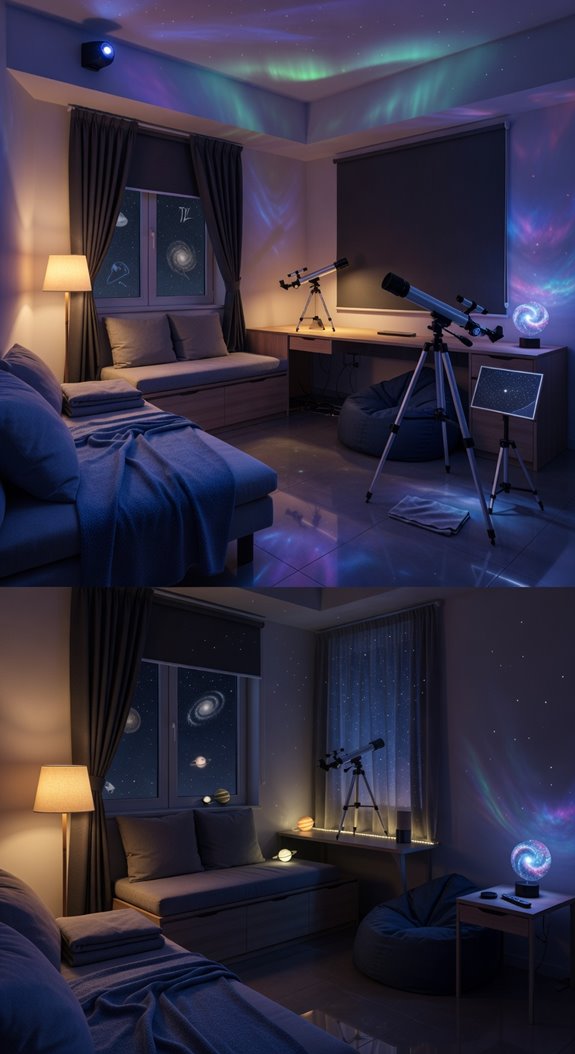
What do you do when you’re passionate about stargazing but don’t have a balcony, rooftop, or yard to work with?
Set up a dedicated indoor corner near your largest window.
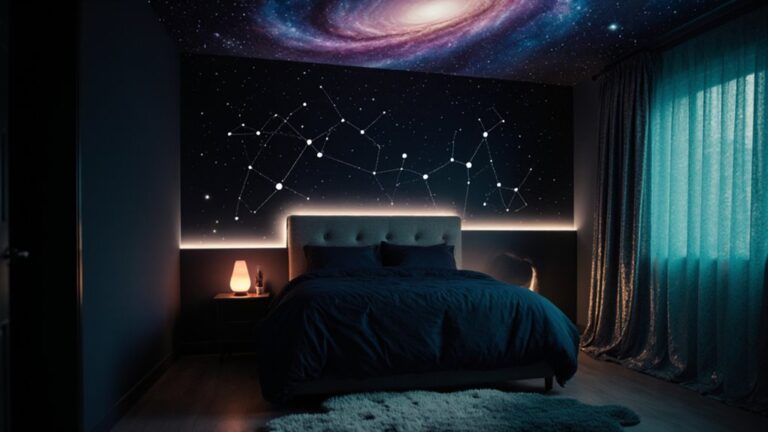
Use a dark navy or charcoal accent wall, a reclining chair, and a quality star atlas.
A compact refractor telescope positioned at an angle can still capture lunar and planetary detail effectively.
Small Patio Telescope Setups You Can Use for Real Observations
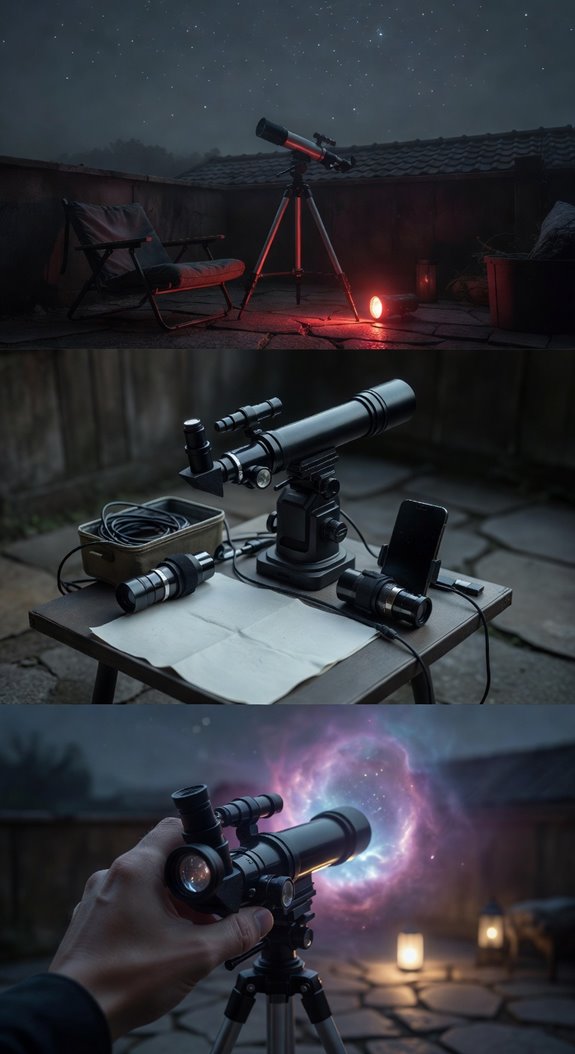
A small patio can serve as a surprisingly capable observing platform if you set it up with intention and the right equipment.
Choose a compact refractor or tabletop Dobsonian, since both handle light pollution reasonably well.
Keep your gear on a stable, low-profile mount, and use a red-light flashlight to preserve your night vision during sessions.
Choosing a Telescope When You’re Stuck in One Spot
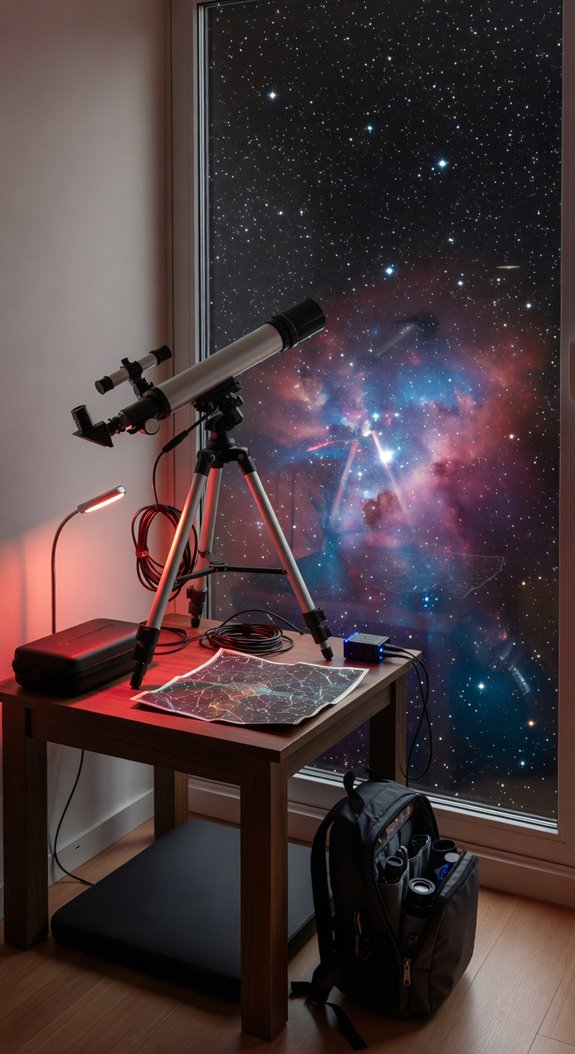
When you’re locked into a single observing spot, the telescope you choose makes or breaks your entire setup.
A compact refractor or short-tube reflector works best for tight spaces, since both offer decent aperture without demanding wide clearance.
You’ll want a slow focal ratio for broader views.
Prioritize a stable, low-profile mount that handles vibration well.
Storage Solutions That Keep Your Small-Space Setup Ready in Minutes
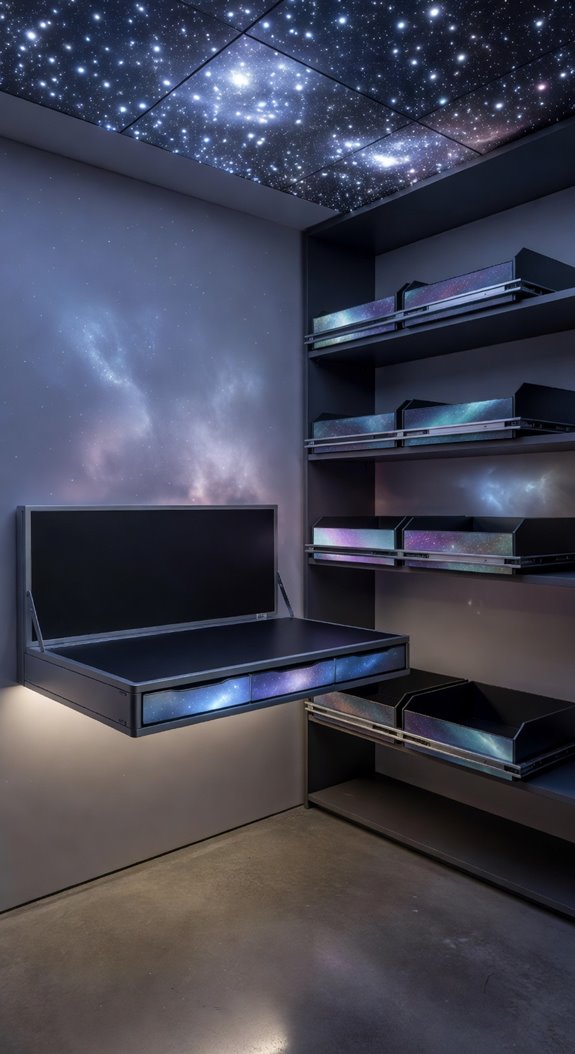
How you store your gear determines whether you’ll actually use it on a clear night or let the opportunity pass. Keep your telescope in a padded rolling case near the door, and store accessories in a labeled, stackable organizer. A dedicated shelf or small cabinet lets you grab everything quickly, cutting your setup time to under five minutes.
The Coziest Small-Space Stargazing Nooks That Still Deliver Real Views
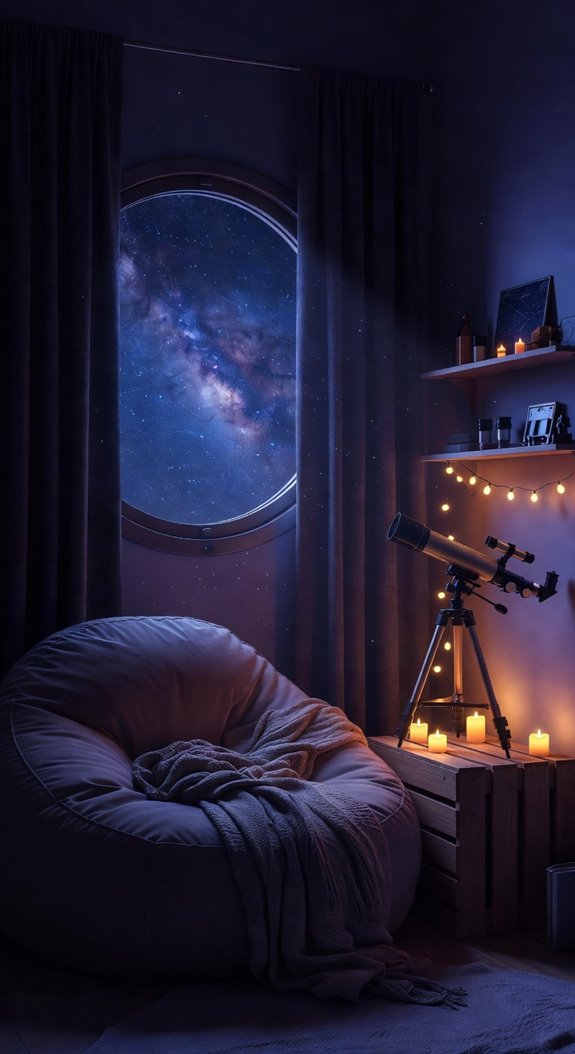
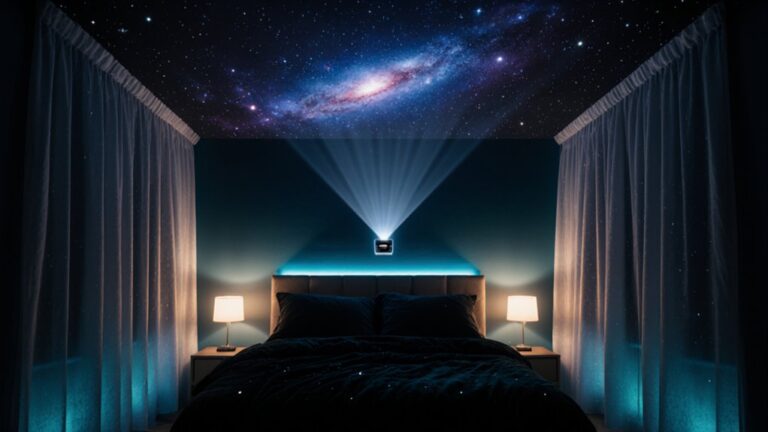
Transforming a small corner into a stargazing nook doesn’t require a dedicated room or a sprawling backyard. You can layer a window seat with dark navy cushions, add blackout curtains on each side, and position a compact refractor nearby. Keep your star charts, red flashlight, and eyepiece case in a slim caddy. This setup stays functional and ready without consuming extra floor space.
Prioritize Scale Over Aesthetics
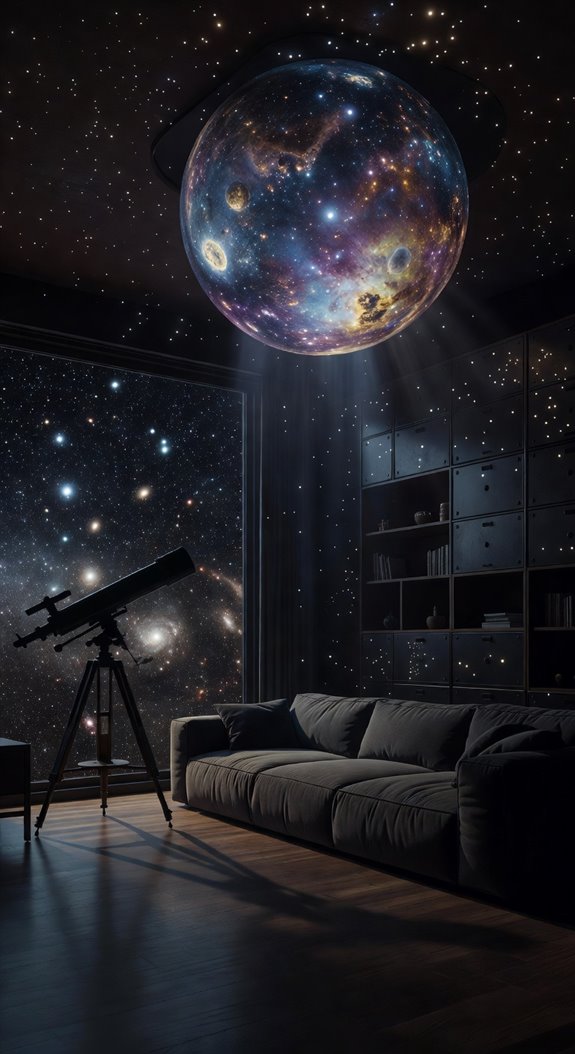
Scale matters more than style when you’re working with a compact cosmic setup, so choose your telescope and mount based on the actual dimensions of your space. A tabletop Dobsonian fits tighter rooms better than a full-height equatorial mount. Measure your ceiling clearance, floor footprint, and doorway width before buying any equipment, ensuring everything fits without forcing awkward repositioning.
Common Mistakes
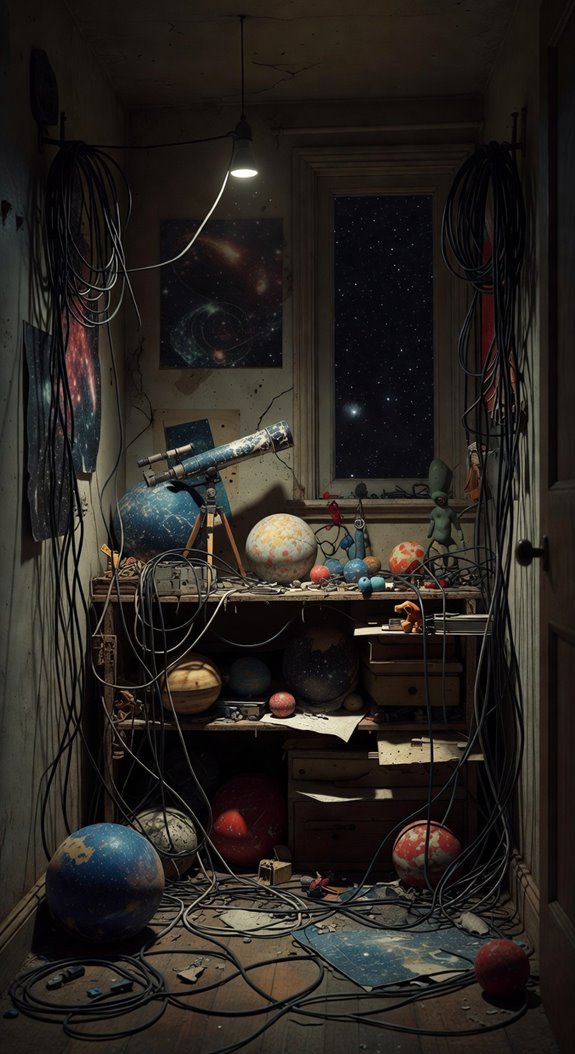
Even experienced hobbyists make avoidable errors when setting up a compact cosmic space, and recognizing these pitfalls early saves you time, money, and frustration.
Overcrowding shelves with oversized telescopes ruins visual flow and limits movement.
You’ll also want to avoid cool-toned lighting that washes out warm nebula prints.
Don’t neglect vertical space, since low furniture shrinks your setup considerably.
Final thoughts
You don’t need a backyard observatory to explore the night sky seriously. With compact gear, smart storage, and a few light-control strategies, even a small balcony or bedroom window becomes a functional setup. Start with one solid piece of equipment, reduce surrounding light sources, and build your space deliberately. Every choice you make, from mount selection to gear placement, directly shapes how quickly and clearly you’ll observe.