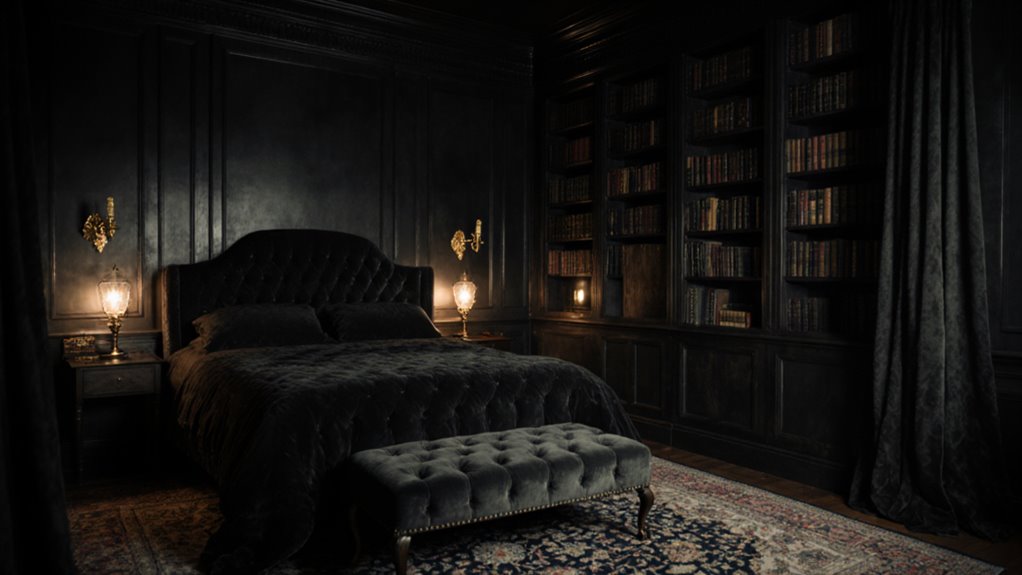
18 Dark & Cozy Bedrooms That Feel Like a Secret Library
You’re drawn to darker spaces, yet you worry they’ll feel cramped or depressing. The key lies in understanding how strategic color choices, layered lighting, and thoughtful textures transform shadowy walls into intimate retreats.
Forest greens, charcoal grays, and burgundy tones create depth without claustrophobia when balanced correctly. What separates a sanctuary from a dungeon comes down to specific design decisions you’ll discover throughout these eighteen examples.
The Psychology of Dark Bedrooms: Why Moody Spaces Feel Like Sanctuaries
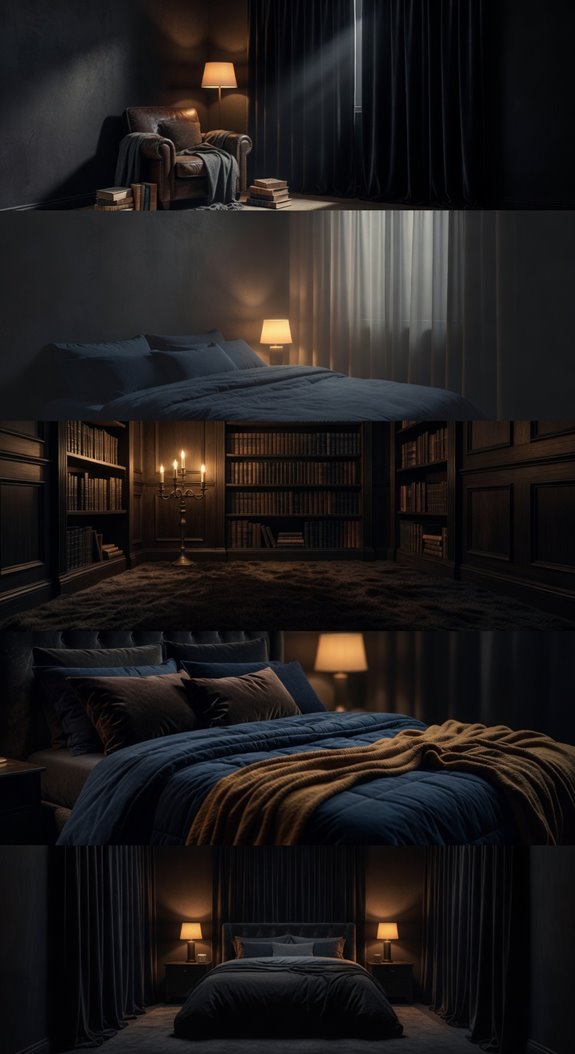
The psychology behind dark bedrooms runs deeper than simple aesthetic preference. Darkness actively triggers melatonin production in the pineal gland, sending powerful neurochemical signals that prime your body for deep, restorative sleep. This biological response explains why high-contrast, low-luminance environments feel instinctively safer and more conducive to genuine rest than their bright, stimulation-heavy counterparts.
Deep jewel tones — think midnight navy, forest emerald, and oxblood burgundy — combined with matte charcoal and slate-grey wall finishes work together to create strong psychological boundaries within a space. These visual cues activate a sense of containment and protection, reducing the brain’s need to continuously scan its environment for potential threats. The resulting cocoon-like atmosphere systematically strips away external stimuli, allowing the prefrontal cortex to disengage and the nervous system to downregulate into a state of natural, effortless calm. Extending this sanctuary inward with forest-themed fantasy decor — think moss-covered accents, gnarled wood textures, and leafy motifs — deepens the psychological sense of shelter by connecting the space to the primal comfort of nature.
Choosing Your Dark Color Palette (Greens, Grays, Burgundies & Blacks)
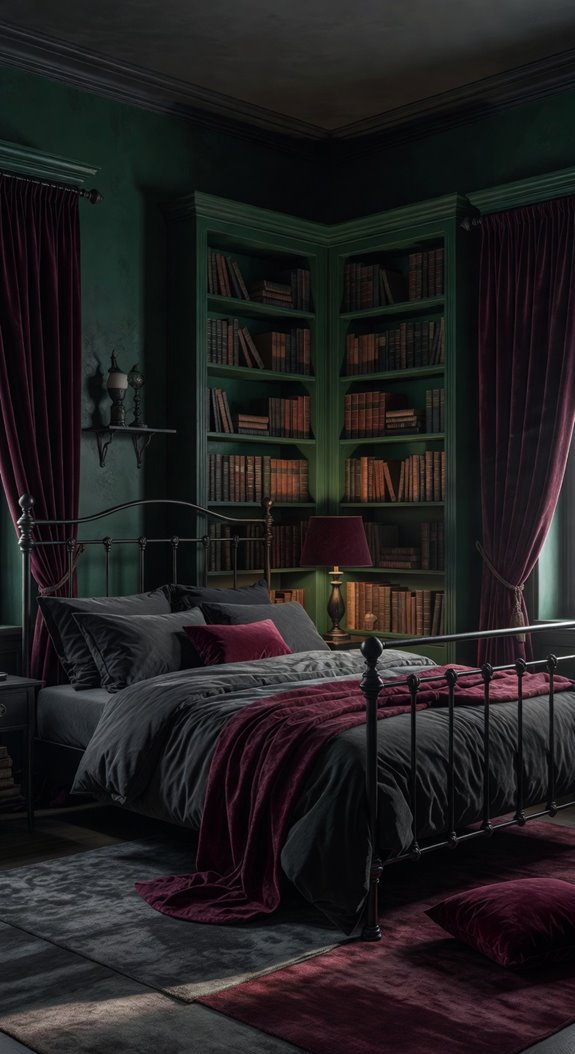
Now that you understand how darkness shapes your body’s chemistry and creates psychological safety, selecting the right colors becomes your next strategic decision. Forest greens — deep, muted, and saturated with natural undertones — evoke an organic calm that lowers cortisol and signals refuge. Soft grays, ranging from cool slate to warm greige, provide a neutral sophistication that recedes visually and prevents overstimulation.
Burgundy, rich with red-wine depth and earthy warmth, adds dimensional contrast without introducing harsh brightness. Black — whether matte, satin, or near-black charcoal — anchors the entire palette with visual weight and grounding authority. Layer these colors deliberately across paint finishes, heavyweight textiles, velvet upholstery, linen drapery, and solid wood furnishings to build a cohesive, tonally unified, and deeply restful environment. Candlelight layered within this palette amplifies the intimacy of each tone, as the warm amber flickering of a flame draws out the richness in burgundy and the organic depth of forest green in ways that artificial lighting simply cannot replicate.
Deep Greens: Forest Tones and Woodland Library Vibes
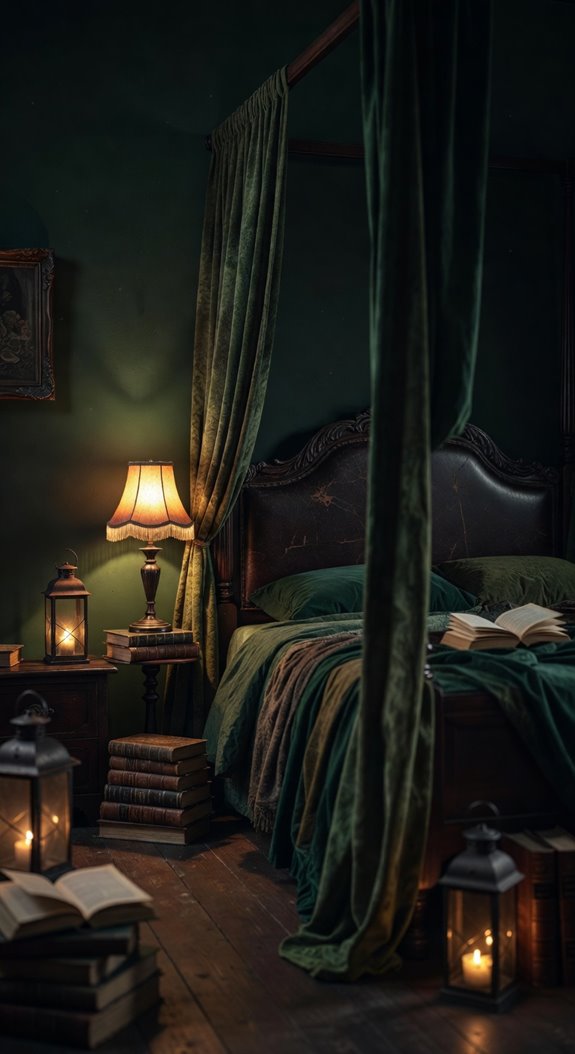
Forest green creates the foundation of a woodland library bedroom, drawing its restorative power from nature itself — rooted in the earthy chlorophyll depth of old-growth canopies rather than synthetic or trend-driven color palettes. These saturated, cool-leaning tones anchor the room with a quiet visual weight, grounding high-ceilinged spaces and intimate alcoves alike.
Deeper forest hues pair with exceptional harmony alongside warm-toned walnut and mahogany furniture, tufted leather armchairs in aged cognac and espresso, and vintage brass fixtures with an unlacquered, oxidized patina. Together, these layered, tactile elements evoke a mood of unhurried contemplation — transforming your bedroom into a secluded, book-lined retreat that feels deliberately hidden from the outside world. To further soften the atmosphere, consider layering in soft pastel lighting concepts that introduce gentle warmth without disrupting the room’s deep, enveloping color palette.
Charcoal & Slate: Sophisticated Gray Bedroom Design
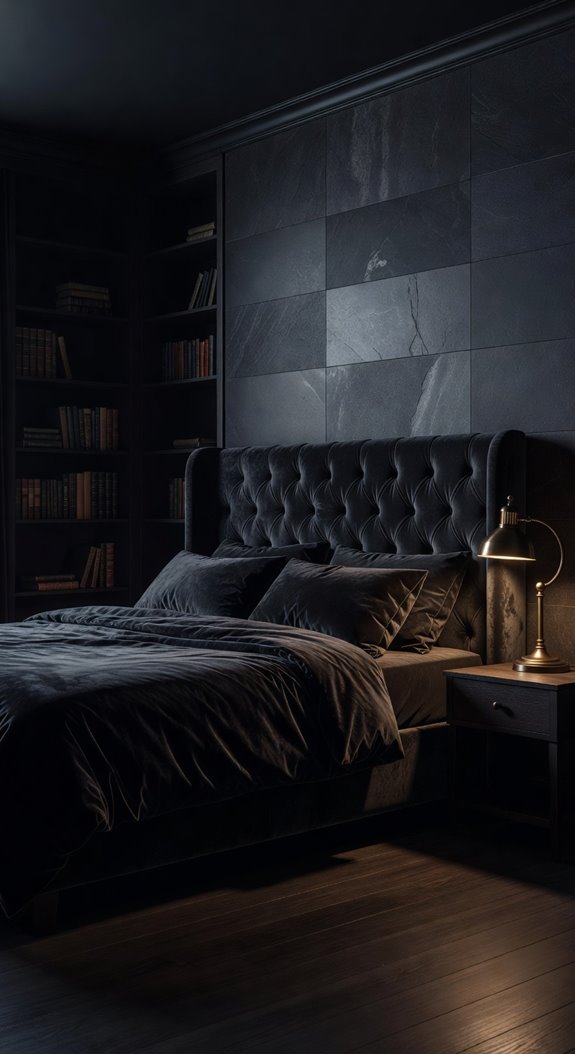
A sophisticated urban bedroom featuring deep charcoal-painted walls and slate-gray layered bedding with textural depth, a large upholstered headboard in dark charcoal linen, concrete-textured matte slate nightstands flanking the bed, gunmetal pendant lights suspended from the ceiling, pewter hardware on low-profile furniture, burnished steel lamp bases catching ambient light, cool ash tonal variations across pillows and throws, soft directional lighting casting subtle shadows across textured surfaces, wide-angle architectural photography perspective, cinematic moody atmosphere. Much like whimsical bedroom designs that blur the line between dreams and reality, this space transforms the ordinary into an immersive sanctuary where imagination quietly thrives.
Burgundy & Wine: Jewel-Toned Luxury Bedrooms
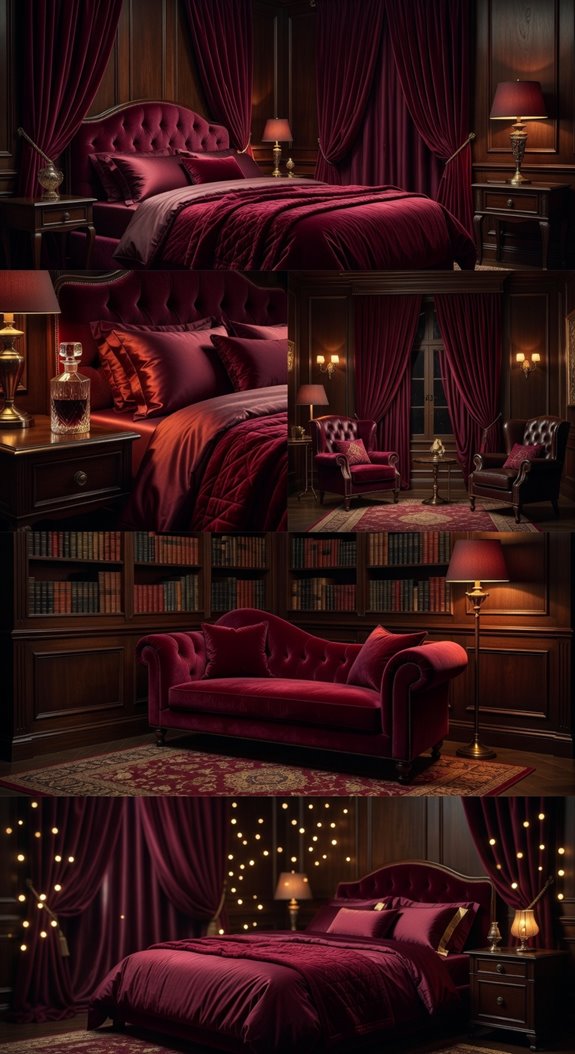
A luxurious master bedroom bathed in deep burgundy and wine-red tones, featuring a tufted velvet upholstered headboard in rich merlot, layered bedding in jewel-toned damask fabrics of deep crimson and plum, aged brass bedside sconces casting warm amber light, heavy floor-length silk drapes in dark wine pooling onto dark hardwood floors, a Persian-style area rug with garnet and gold medallion patterns, plush velvet throw pillows in varying shades of ruby and deep rose, antique brass candle holders on a dark mahogany nightstand, moody atmospheric lighting creating dramatic shadow play across richly textured surfaces, ornate ceiling molding, and a tufted chaise lounge in deep burgundy velvet positioned near a draped window. To make the space feel truly one-of-a-kind, consider incorporating DIY personalized accents like hand-painted decorative objects or custom-crafted trinkets that reflect your personality and add an unexpected layer of whimsical charm to the rich, moody palette.
Near-Black Walls: Making the Darkest Palette Work
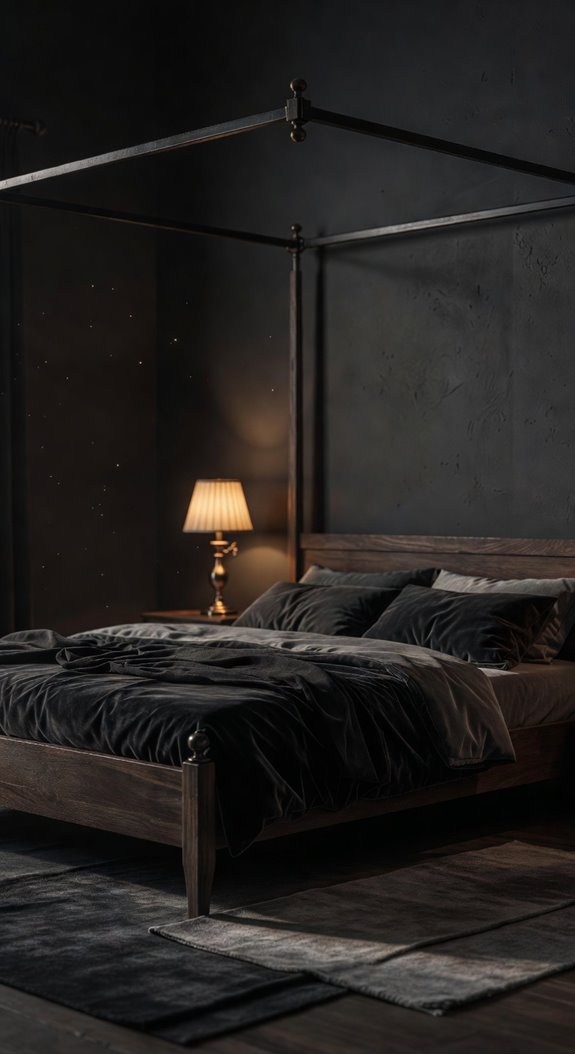
Can you transform your bedroom into an intimate sanctuary using near-black walls without creating a claustrophobic cave? Yes, strategic lighting and reflective surfaces are the cornerstones of this design approach. Install warm-toned brass or bronze sconces at eye level, and layer in ambient ceiling fixtures alongside targeted task lighting to build dimensional illumination throughout the room.
Near-black paint varieties — including smoky charcoal, deep slate, and midnight navy — possess high light-absorption properties that demand a deliberate balancing act. Introduce polished metallic accents in gold or aged silver, select crisp white or ivory linen bedding with substantial thread counts, and position statement mirrors on opposing walls to bounce light and visually expand the space. For an added layer of warmth and personality, draw inspiration from earthy fantasy design principles that emphasize natural textures, curved organic forms, and richly layered materials to soften the drama of a near-black palette.
Layered Lighting: The Secret to Cozy Dark Rooms
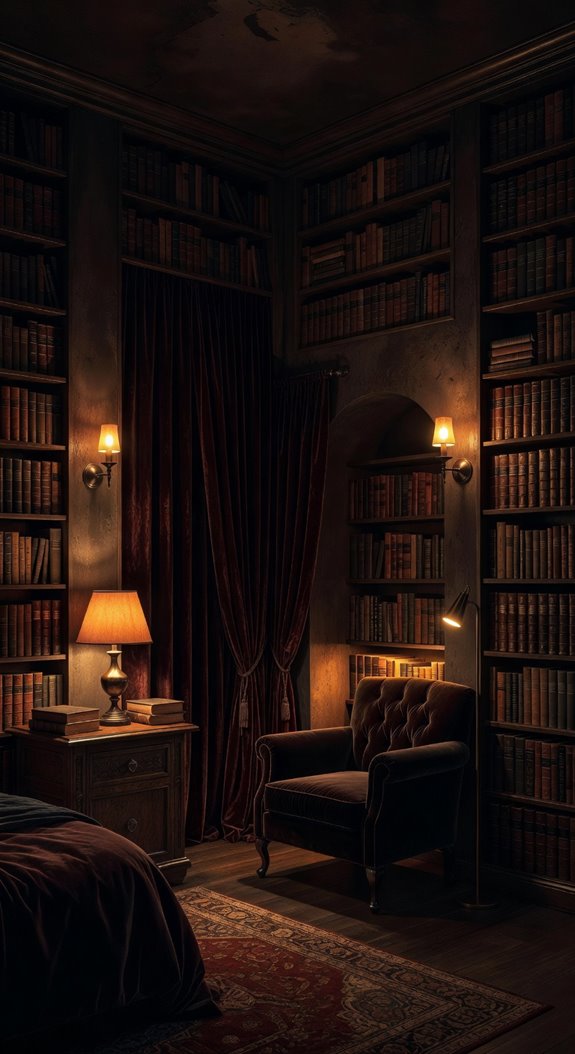
Why does layering lighting matter in dark bedrooms? You’ll need multiple light sources at different levels to avoid harsh shadows, creating depth and warmth throughout your space.
Install bedside lamps with warm-toned Edison bulbs, brushed brass wall sconces positioned at eye level, and dimmable overhead fixtures like a flush-mount ceiling light or a low-hanging pendant. This layered combination lets you calibrate brightness across a spectrum of intensities, transforming your light-deprived bedroom into a texturally rich, atmospherically warm sanctuary tailored to your mood. If your dark bedroom feels overwhelming rather than restful, adopting minimalist bedroom design principles can help you reduce visual clutter while preserving the cozy, intimate atmosphere you’re after.
Textures That Define Dark Bedrooms (Velvet, Linen & Leather)
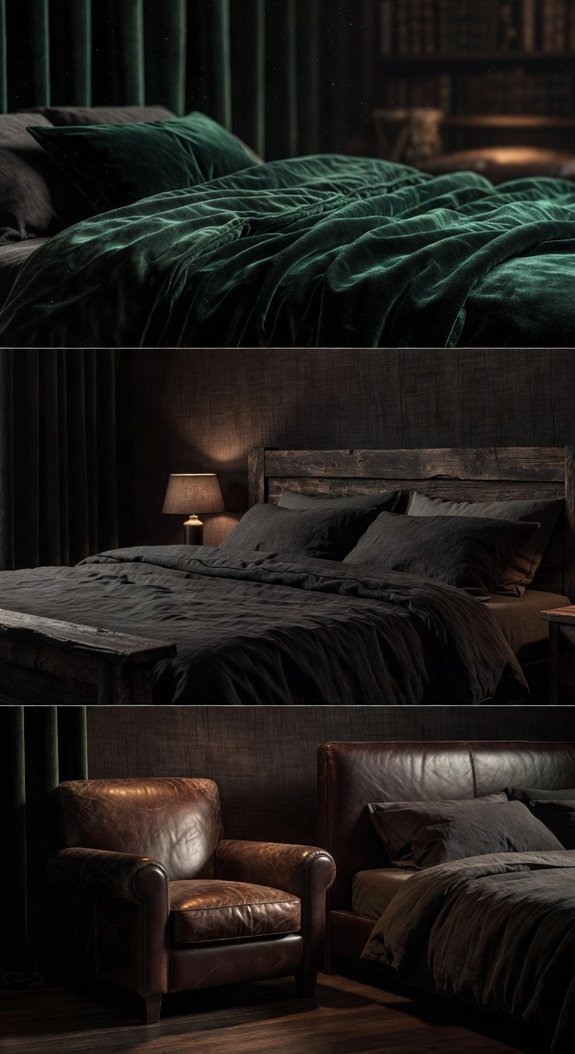
While layered lighting creates the atmosphere in your dark bedroom, texture does the heavy lifting of making the space feel inviting and intimate. Velvet upholstery on accent chairs adds depth and visual richness through its light-absorbing pile and color-shifting sheen, while heavyweight linen bedding in charcoal, slate, or bone provides breathable comfort with its naturally irregular weave and matte finish.
Leather elements — whether a tufted headboard, a rolled-arm ottoman, or a brass-riveted bench — introduce a refined sophistication and long-wearing durability that deepens with age. These three materials work in deliberate contrast: the crushed softness of velvet against the coarse, organic grain of linen, and the firm, cool smoothness of full-grain leather. Together, they build a layered tactile environment that gives your room the collected, library-like warmth of a well-curated sanctuary. For an even bolder aesthetic, dark gothic fantasy bedroom concepts lean into these same textures as foundational tools for creating spaces that feel simultaneously dramatic and deeply personal.
Furniture & Layout: Arranging Dark Bedrooms for Comfort
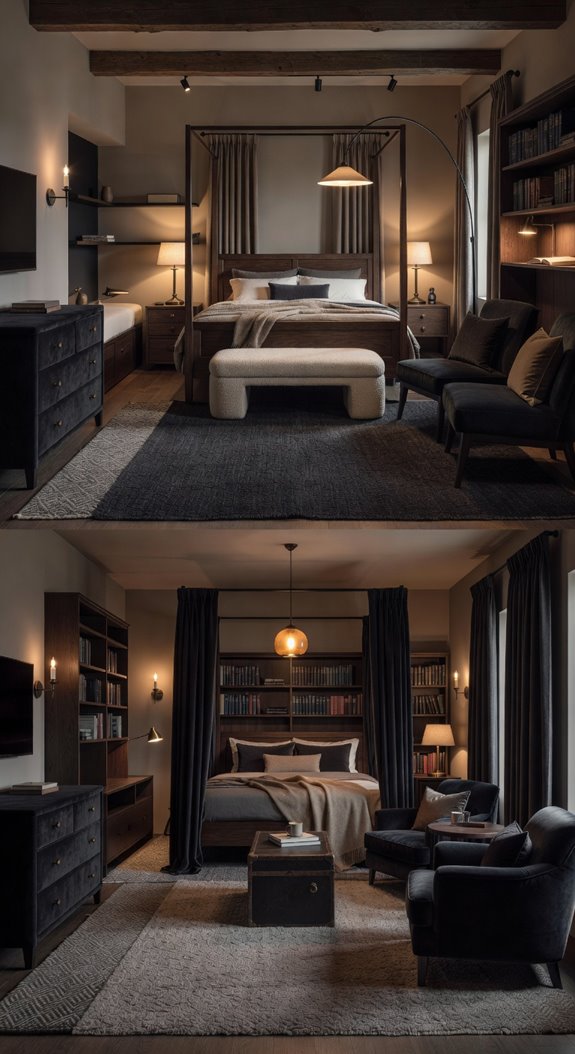
In dark bedrooms, furniture placement becomes the structural foundation for creating spaces that feel both visually balanced and genuinely livable. Position your bed — ideally an upholstered platform or low-profile frame in a matte, light-absorbing fabric — as the room’s primary focal point, anchoring the overall layout against the longest or most architecturally significant wall.
Keep pathways clear and uncluttered, maintaining a minimum 36-inch clearance corridor for natural, unobstructed movement flow between key furniture pieces. Choose low-profile, streamlined pieces with tapered legs or raised bases to preserve a sense of spatial openness, and arrange cushioned seating — such as a compact accent chair or slim loveseat — near windows to capitalize on available ambient and natural light without sacrificing the room’s deliberately intimate, cocoon-like atmosphere. Introducing floating pendant lights above bedside areas or along low shelving can further amplify the sense of weightless dimension, drawing the eye upward while preserving the grounded, cocooning quality of the overall layout.
Brass & Gold: Warm Metallics Against Dark Walls
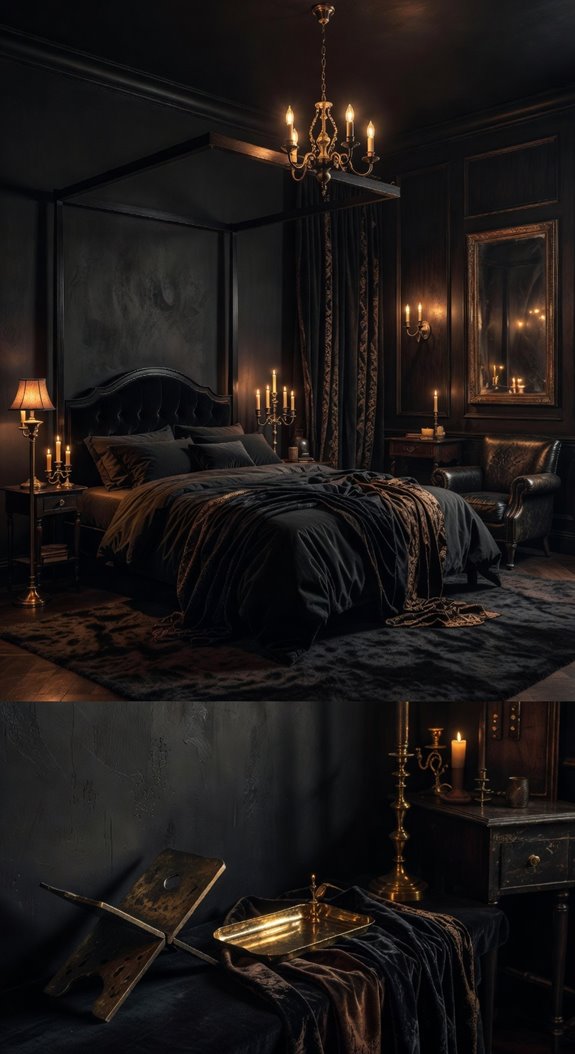
Brass and gold metallics serve as powerful counterpoints to dark bedroom walls, introducing warmth and luminosity without compromising the room’s intimate, enveloping aesthetic. These high-reflectivity, warm-toned metals create a dynamic tension against deep jewel-toned surfaces — think inky navy, forest green, or charcoal — by bouncing ambient and directional light across matte or satin-finish painted walls.
Incorporate these elements through sculptural brass bed frames with antiqued or unlacquered finishes, hand-cast drawer pulls on dark-stained hardwood nightstands, and arched wall sconces with burnished gold shades that cast directional, amber-hued pools of light. Brass accents with their distinctive yellow-orange undertones generate striking visual contrast against saturated, cool-dominant jewel tones, while brushed or polished gold fixtures — pendant lights, curtain rod finials, mirror frames — reinforce the warm, layered, library-like atmosphere defined by rich textures, leather-bound volumes, and dark lacquered surfaces. This same warmth translates beautifully into lo-fi bedroom aesthetics, where nostalgic, laid-back design sensibilities embrace dim lighting, tactile materials, and an overall sense of cozy, unhurried intimacy.
Wallpaper & Paneling: Textured Alternatives to Paint
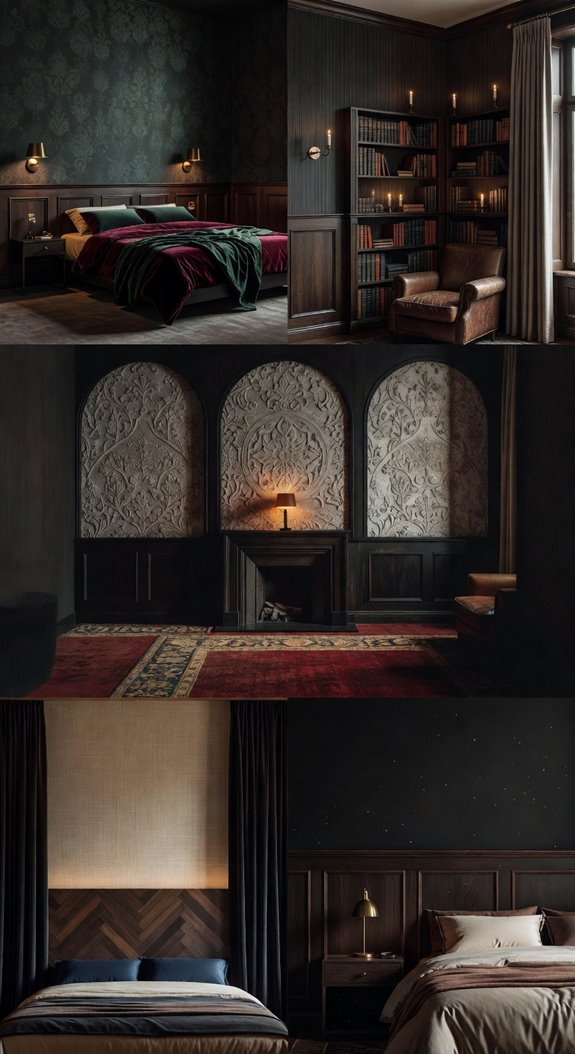
Wallpaper and paneling offer textured depth that flat paint simply can’t achieve, transforming a dark bedroom into a sophisticated retreat brimming with visual richness and tactile interest. Consider deep damask patterns with intricate botanical motifs, forest green florals rendered in velvety matte finishes, or jewel-tone geometrics in sapphire and amethyst that complement a curated library aesthetic with layered, intellectual character.
Wood paneling — particularly narrow-profile shiplap, raised-panel wainscoting, or tongue-and-groove installations finished in charcoal, ebony stain, or matte black lacquer — creates substantial architectural dimension that anchors the room with structural gravitas. These richly textured surfaces absorb ambient light subtly and unevenly, enhancing the enveloping coziness of low-lit spaces while lending a refined, deliberate intentionality to your intimate sanctuary.
Built-In Shelves & Reading Nooks: Your Bedroom Library
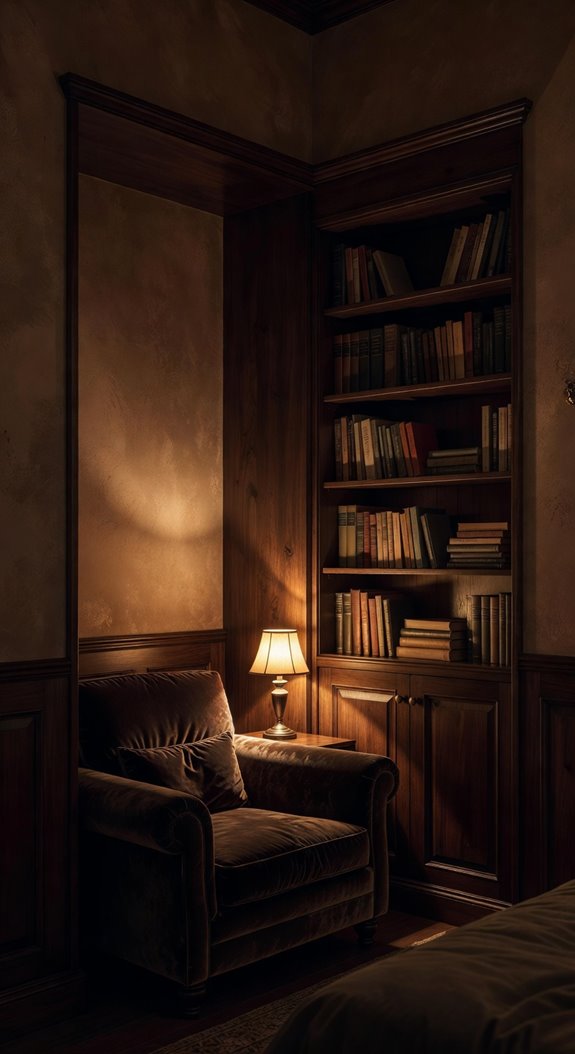
The textured walls you’ve established now become the perfect backdrop for transforming your bedroom into an actual library space. You’ll install floor-to-ceiling built-in shelves crafted from dark-stained mahogany or painted millwork, displaying leather-bound volumes in burgundy, emerald, and sapphire alongside brass bookends, antique globes, and ceramic vessels in deep jewel tones.
A cushioned window seat or corner nook — upholstered in velvet or linen, layered with oversized throw pillows in coordinating rich hues — becomes your personal reading sanctuary. This seamless integration delivers functional, architecturally anchored storage while deepening your room’s intimate, literary atmosphere with warmth, texture, and curated visual weight.
Window Treatments: Curtains That Enhance Darkness
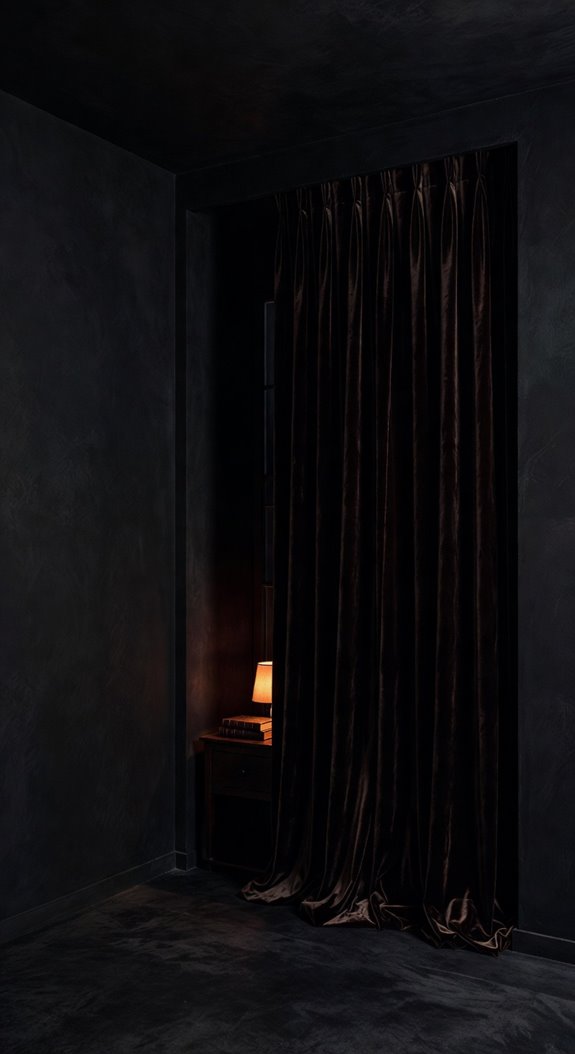
How can you control light while maintaining your bedroom’s intimate aesthetic? Choose blackout curtains in deep jewel tones — sapphire, emerald, or oxblood — or dense charcoal weaves, which block solar radiation effectively while complementing a rich, library-inspired atmosphere. Layer 100% polyester or linen-blend lightweight sheers underneath for daytime diffusion and softness.
For precision control, install motorized roman shades with programmable light-filtering settings. Velvet curtains — particularly those with triple-woven blackout lining and weighted hemlines — deliver superior tactile richness and photon-blocking performance, creating the fully cocooning, sensory-dampened effect a true bedroom sanctuary demands.
Warm Wood Tones: Natural Materials That Ground Dark Rooms
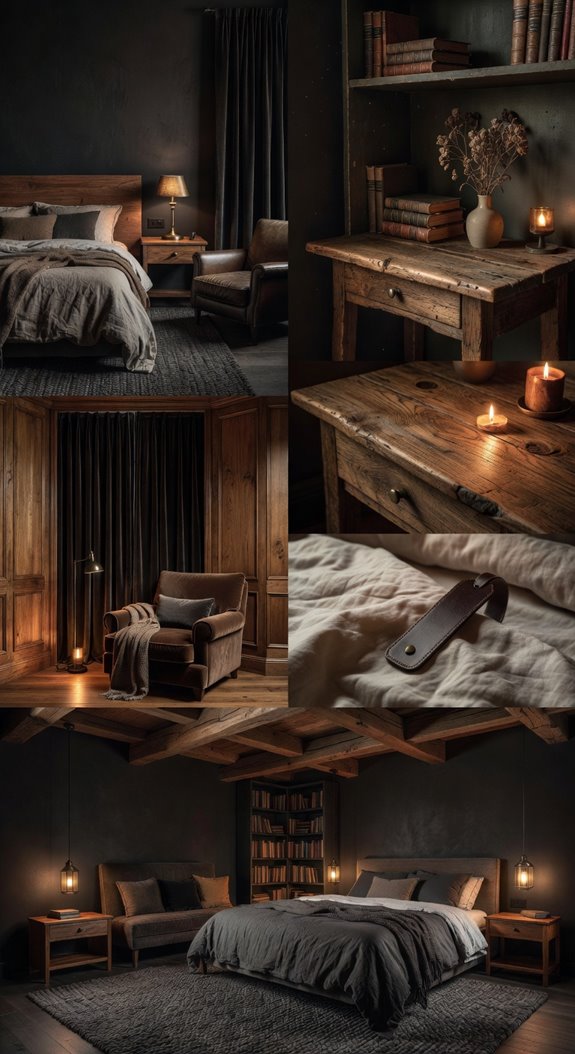
Dark bedrooms need grounding elements, and warm wood tones provide exactly that balance. Honey-colored maple furniture, rich espresso-stained walnut pieces, and wide-plank oak flooring create visual warmth without compromising the intentional darkness of your space.
These natural materials anchor the room’s atmosphere, preventing that hollow, cold, or cave-like feeling that untextured dark spaces often develop. Consider solid walnut nightstands with dovetail joinery, hand-carved hardwood bed frames, or open-faced shelving units that echo the layered aesthetic of a Victorian reading library while reinforcing your cocoon-like, intimate environment.
Styling Your Dark Bedroom: Books, Art & Accessories
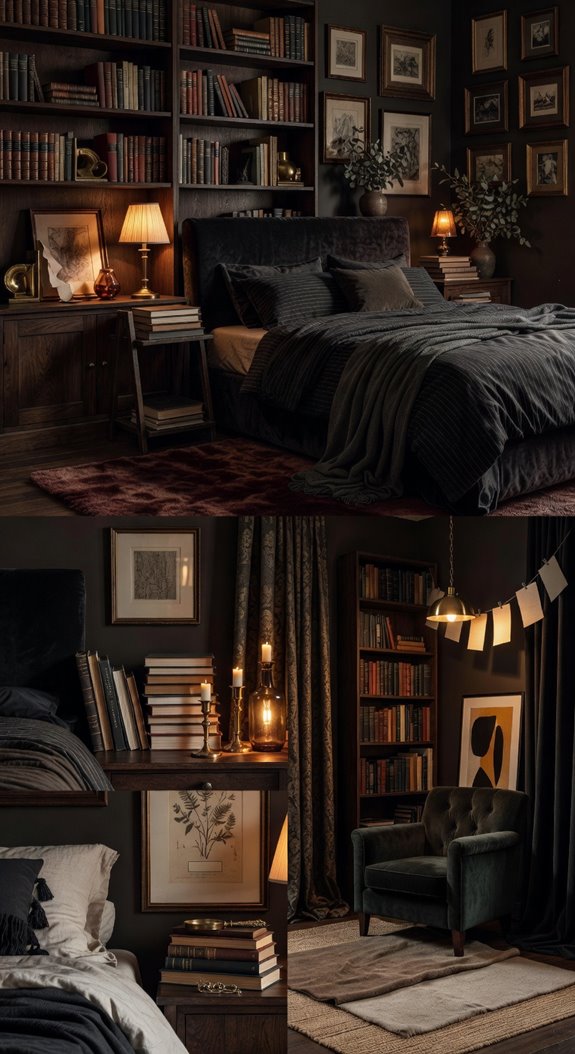
Once you’ve anchored your dark bedroom with warm wood tones, it’s time to layer in the accessories that transform your space into a genuine secret library. Arrange vintage book collections — think aged leather spines, gilt lettering, and cloth-bound hardcovers — on raw-edge oak floating shelves, positioning them alongside framed botanical copper-plate prints and moody oil-painted landscape artwork in ornate gilded frames.
Incorporate antique brass swing-arm reading lamps, tufted cognac leather ottomans with brass nail-head trim, and hand-woven seagrass baskets for textile storage, creating layered functional beauty that deepens the richly atmospheric, scholar’s-retreat quality of your cozy dark bedroom.
Plants for Low-Light Bedrooms: Bringing Nature Into Moody Spaces
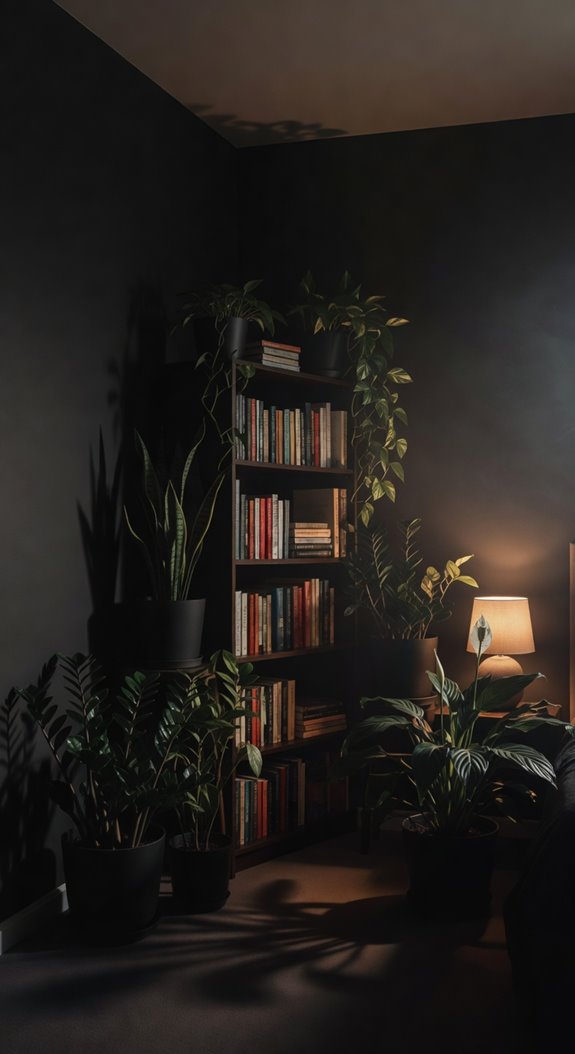
Low-light plants like pothos (*Epipremnum aureum*), snake plants (*Dransevieria trifasciata*), and peace lilies (*Spathiphyllum wallisii*) thrive in dim, low-lumen environments, requiring as little as 50–250 foot-candles of indirect illumination to sustain healthy growth.
These resilient, air-purifying species add layered texture, cascading trailing vines, and rich emerald-to-deep-green foliage that complements a bedroom’s moody, shadow-heavy aesthetic. Position them strategically on reclaimed wood nightstands, floating wall shelves, or matte-black iron plant stands, allowing their arching leaves and draping tendrils to soften angular furniture edges while reinforcing a cultivated, botanically grounded atmosphere.
Small Dark Bedrooms: Maximizing Coziness in Tight Spaces
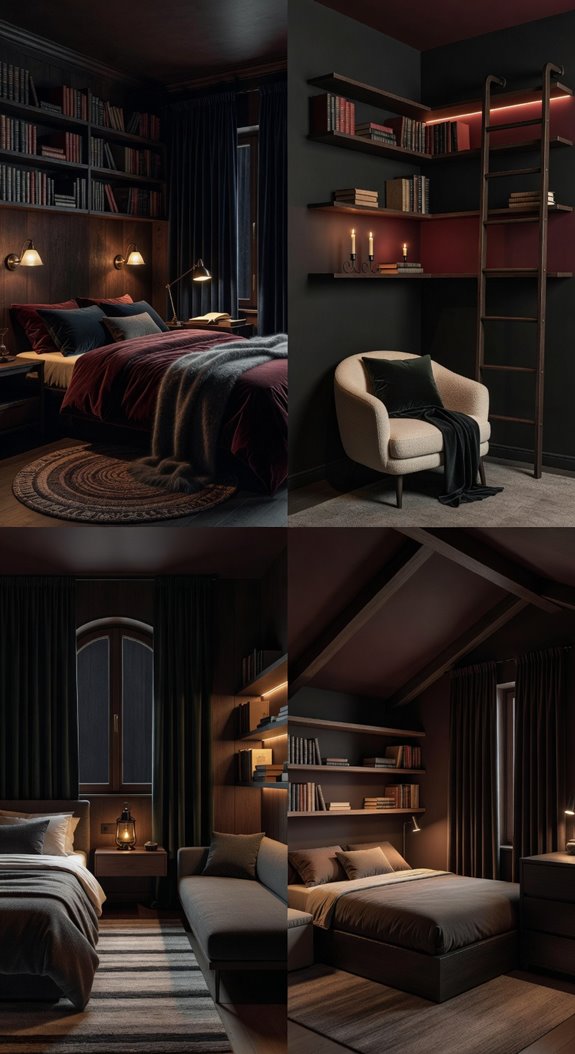
Constraint and intimacy often work in harmony when designing a small, dark bedroom, transforming limitations into distinct advantages. You’ll maximize coziness by selecting multifunctional furniture — low-profile platform storage beds with integrated side-sliding oak-veneer drawers, wall-mounted floating shelves with brass bracket hardware, and compact upholstered ottomans featuring hinged lift-top storage compartments.
Choose warm, saturated deep colors — rich charcoal, midnight navy, or forest emerald — applied to all four walls and ceiling for an immersive enveloping effect, paired with layered ambient lighting through dimmable recessed LED downlights, Edison-bulb Edison-style filament sconces, and low-wattage terracotta ceramic table lamps. Strategically positioned large-format antiqued or smoked mirrors with slim matte-black metal frames reflect available light sources back into the room, visually doubling perceived square footage and depth.
Layer tactile textiles generously throughout — chunky-knit wool throw blankets in oatmeal and rust tones draped across upholstered headboards, plush high-pile Moroccan-style area rugs in deep burgundy anchoring the bed zone, and floor-length blackout velvet curtains in charcoal hung ceiling-to-floor on matte gunmetal rods to enhance both thermal insulation and sound-dampening acoustic qualities.
Light Bedding & Bright Textiles: Balance Without Clashing
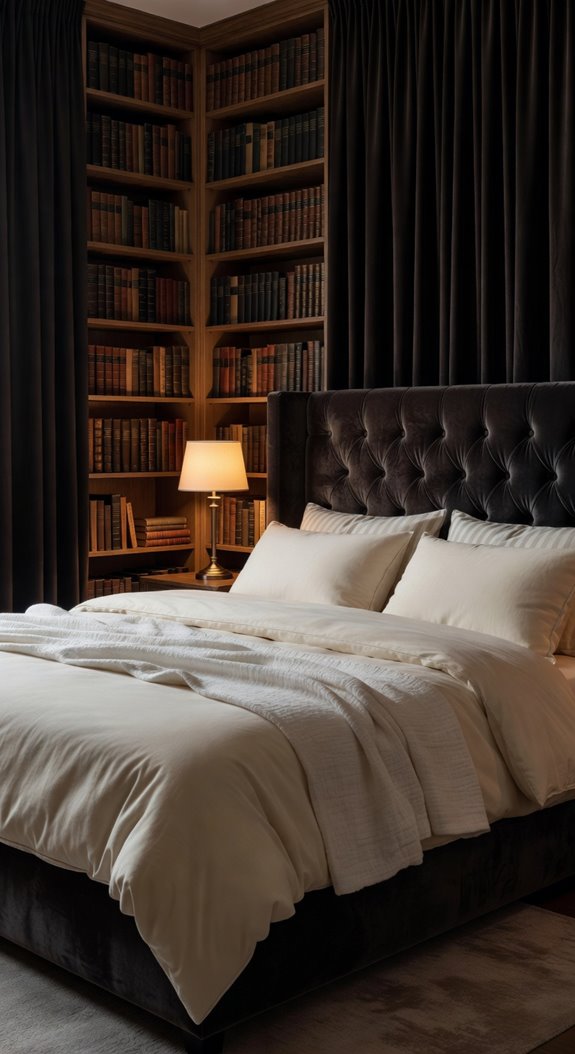
A close-up, softly lit bedroom scene featuring cream and soft gray layered bedding on a low-profile upholstered bed frame in charcoal fabric, styled with deep dusty mauve and forest green accent pillows of varying textures, including visible linen weave and sateen sheen, positioned against a dark moody wall in deep slate, warm ambient light from a brass bedside lamp casting a soft golden glow across the textiles, shallow depth of field, editorial interior photography style
How to Choose
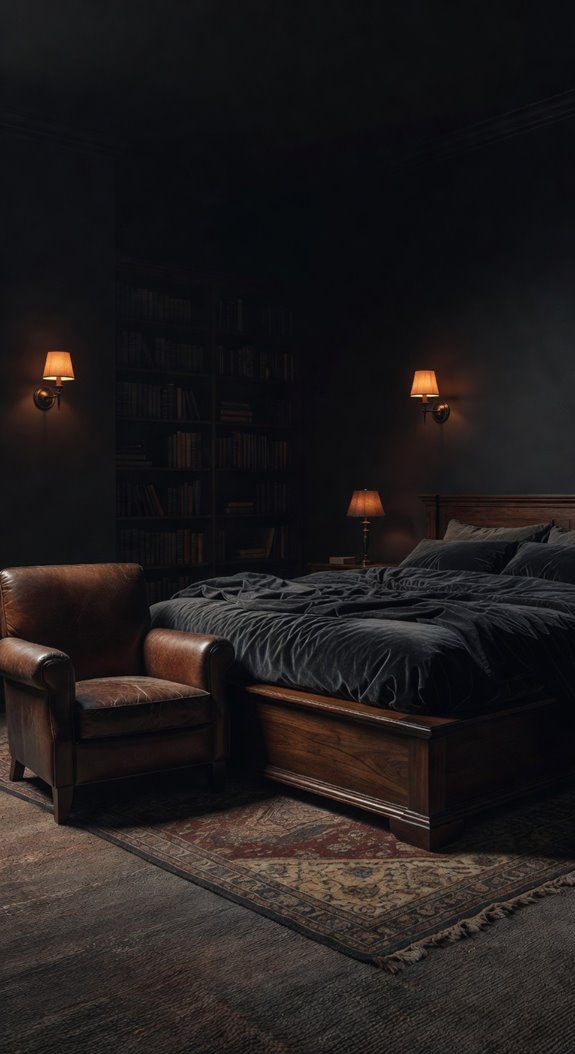
When selecting light bedding and bright textiles for your dark bedroom, start by considering your room’s existing color palette, ambient lighting conditions, and architectural undertones. Choose neutral-weight linens in warm cream, cool ivory, or soft white tones, then layer with subtle geometric or organic-patterned throws in complementary hues.
Test fabric swatches directly under your bedroom’s actual lighting conditions — both natural daylight and artificial evening light — before committing to a purchase.
Prioritize high-thread-count Egyptian cotton or stonewashed linen fabrics with natural fiber construction that maintains long-term brightness and structural integrity, creating balanced tonal contrast without overwhelming your moody, shadow-rich sanctuary.
Common Mistakes
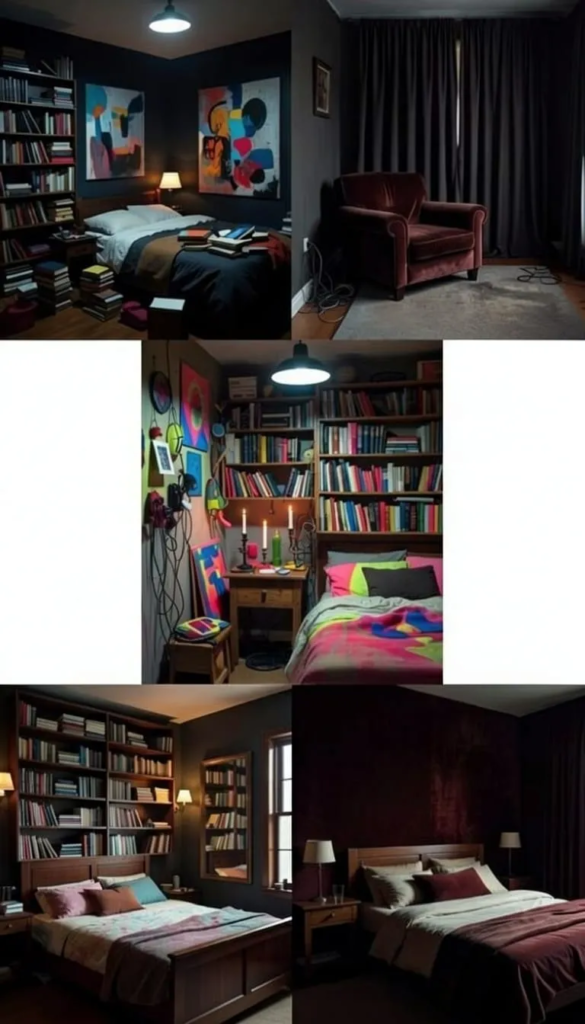
Why do so many people underestimate the power of lighting when decorating dark bedrooms with bright textiles?
Layering too many competing geometric, floral, or striped patterns without neutral linen anchors creates jarring visual chaos that overwhelms the eye.
Avoid oversaturating walls with deep charcoal, navy, or forest-green paint without balancing those rich pigments with warm ambient lighting from multiple layered sources.
Don’t neglect furniture scale either, as oversized oak bed frames, bulky upholstered armchairs, or wide mahogany dressers can dramatically overwhelm compact, low-ceilinged spaces.
Final thoughts
Dark bedrooms create sanctuaries through intentional color choices, layered lighting, and thoughtful textures. By balancing deep-pigmented walls with light-toned linen bedding and incorporating warm-grain wood elements, you’ll craft a cozy retreat steeped in scholarly atmosphere. Brass hardware accents, velvet-upholstered furnishings, and floor-to-ceiling built-in shelves deepen the rich, intimate character of the space.
Your dark bedroom transforms into a personal refuge for reflection and rest when you avoid overcrowding the layout and maintain strong visual depth throughout. Curated negative space between furniture pieces, deliberate focal points, and a restrained color palette work together to sustain that enveloping, library-like quality that makes the room feel both purposeful and restorative.