10 Fantasy Bedrooms Inspired by Medieval Castles
You’ve likely imagined yourself in a stone-walled bedroom featuring a hand-carved oak four-poster canopy bed draped in heavy velvet curtains, dramatic wool tapestries depicting hunting scenes or heraldic crests, and the warm amber glow of wrought-iron candelabras holding thick tallow candles.
Creating this medieval castle aesthetic requires thoughtful choices about raw materials like limestone, aged timber, and hammered iron hardware, alongside deliberate lighting strategies and furniture placement that respects the visual weight of each piece. The difference between a fully immersive knightly retreat and an overwrought, cluttered space depends entirely on understanding which period-accurate elements complement one another without overwhelming the room’s natural proportions. Let’s examine how specific design decisions — from arched stone accent walls to hand-stitched linen bedding in deep burgundy and forest green — transform your bedroom into an authentic fortress sanctuary.
Stone Walls and Tower Bedrooms
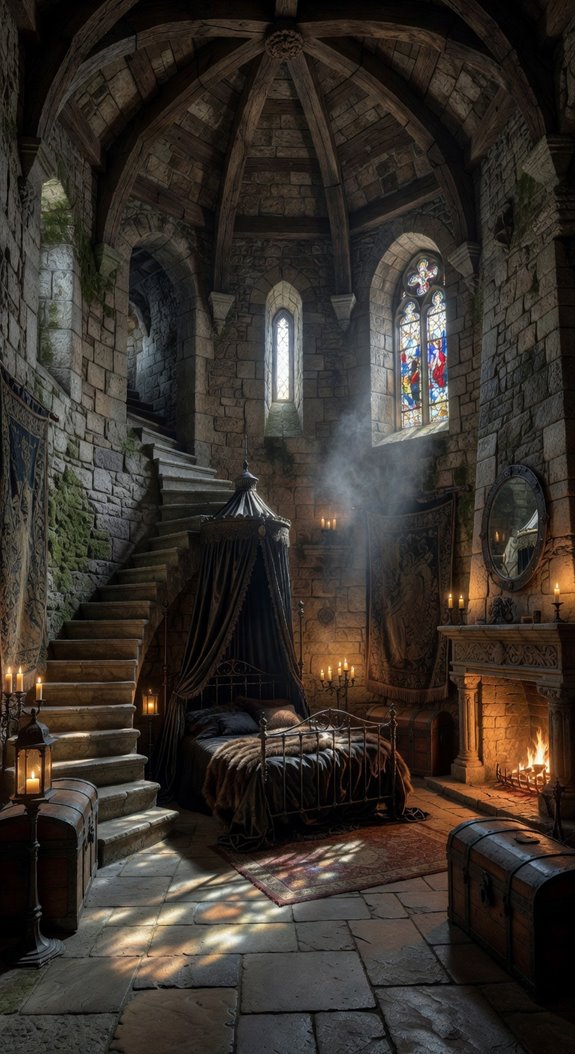
Stone walls can transform an ordinary bedroom into a medieval retreat through careful material selection and architectural detail. Install faux stone panels or textured wallpaper rendered in deep charcoal gray, weathered limestone tan, and mottled granite tones to establish authentic ambiance across load-bearing accent walls.
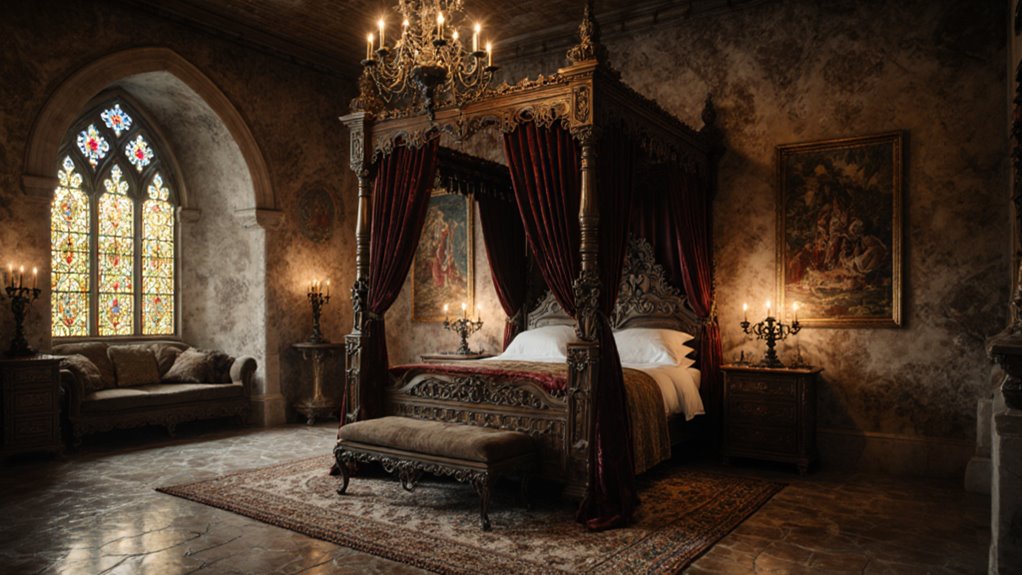
Anchor the space with a four-poster bed featuring heavy reclaimed oak frames, hand-forged wrought-iron canopy brackets, and richly woven tapestry accents in burgundy, forest green, and gold thread patterns. Arched doorways with rounded stone keystones and thick wooden plank doors reinforce the castle aesthetic, while deliberately oversized iron chandelier fixtures with pillar candles suspended from rough-hewn timber ceiling beams complete the period-accurate spatial composition. Much like sky and earth inspiration drives whimsical bedroom designs, drawing from natural textures such as weathered stone and organic timber grounds a medieval space in elemental beauty that feels both timeless and imaginative.
Medieval Canopy Beds: A Knight’s Chamber Essential
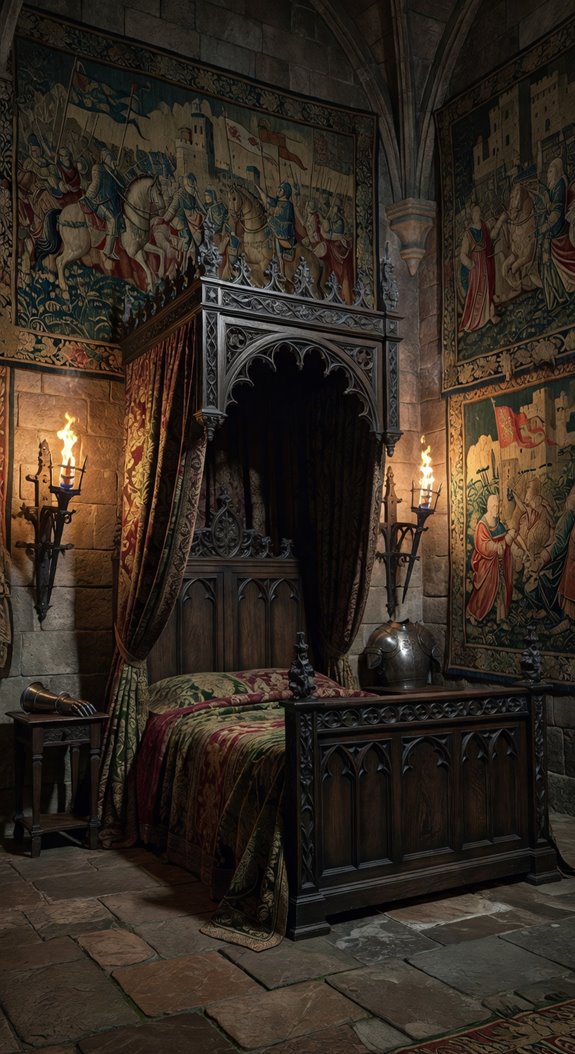
Medieval canopy beds serve as the centerpiece of any authentic knight’s chamber, creating both visual drama and functional privacy within your fantasy bedroom.
You’ll find heavy wooden frames, draped fabrics, and ornamental details that evoke castle aesthetics.
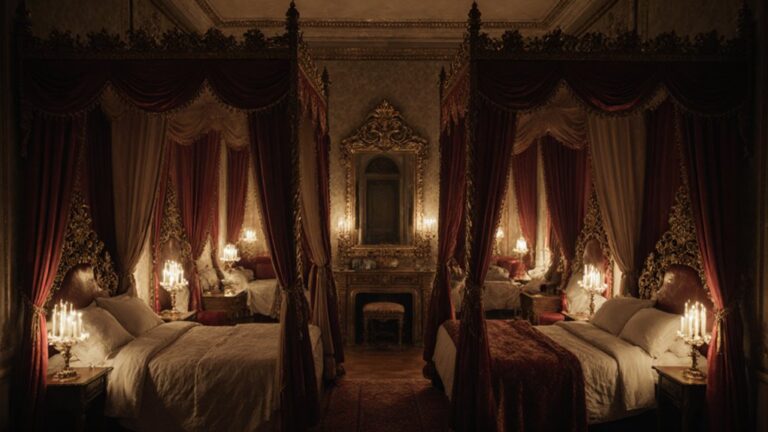
Dark oak or mahogany construction, combined with burgundy or deep blue velvet curtains, establishes period authenticity while maximizing the room’s dramatic impact.
To further enhance the atmosphere, incorporating soft pastel lighting along the canopy’s interior can transform the sleeping space into an ethereal dreamscape that softens the room’s otherwise bold medieval elements.
Wrought Iron Accents and Gothic Hardware
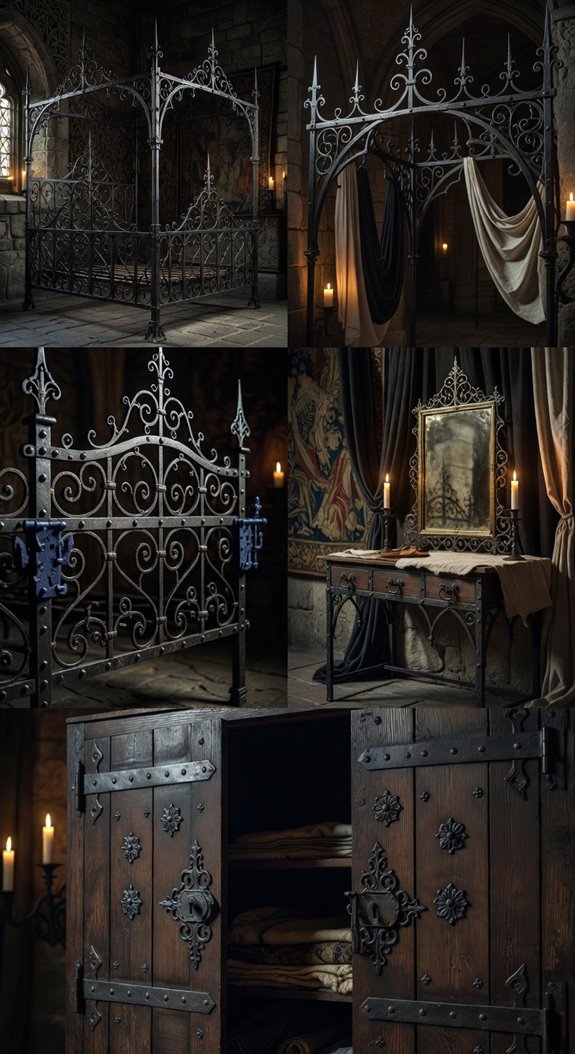
Wrought iron fixtures and gothic hardware transform your bedroom’s architectural details into authentic castle elements that complement the canopy bed you’ve already established. Install black iron door hinges, window latches, and decorative wall sconces throughout your space.
These hand-forged metallurgical pieces, featuring intricate scrollwork patterns, hammered surface textures, and deliberately aged patina finishes, create visual depth and historical authenticity that elevates your medieval aesthetic considerably. For those seeking even more inspiration, dreamy room designs can transport you to an entirely different realm beyond the medieval aesthetic alone.
Medieval Tapestries and Heraldic Artwork
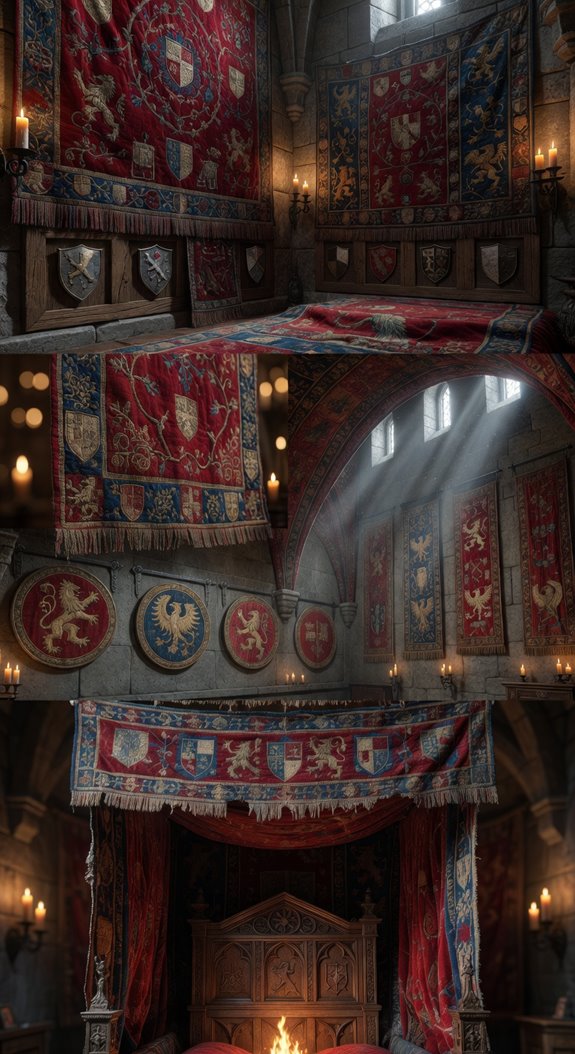
Medieval tapestries and heraldic artwork transform a castle bedroom more effectively than almost any other decorative element. You’ll find medieval-inspired textiles in rich jewel tones — deep crimson, sapphire blue, and forest green — depicting elaborately detailed hunting scenes, mythological creatures, or intricately embroidered family crests, all of which establish powerful historical authenticity.
These densely woven wool or silk pieces anchor your room’s aesthetic with substantial visual weight, while hand-painted heraldic shields, gilded escutcheons, and embroidered silk banners bearing quartered coats of arms reinforce the fortified fortress atmosphere. Combine floor-to-ceiling tapestries with rough-hewn stone-textured walls, iron torch sconces, and carved oak furniture for maximum period-accurate impact. Beyond visual drama, arranging these heavy textile elements strategically throughout the space also contributes to ultimate relaxation by softening acoustics and creating a deeply immersive, cocoon-like atmosphere.
Warm Lighting That Feels Cozy, Not Cavernous
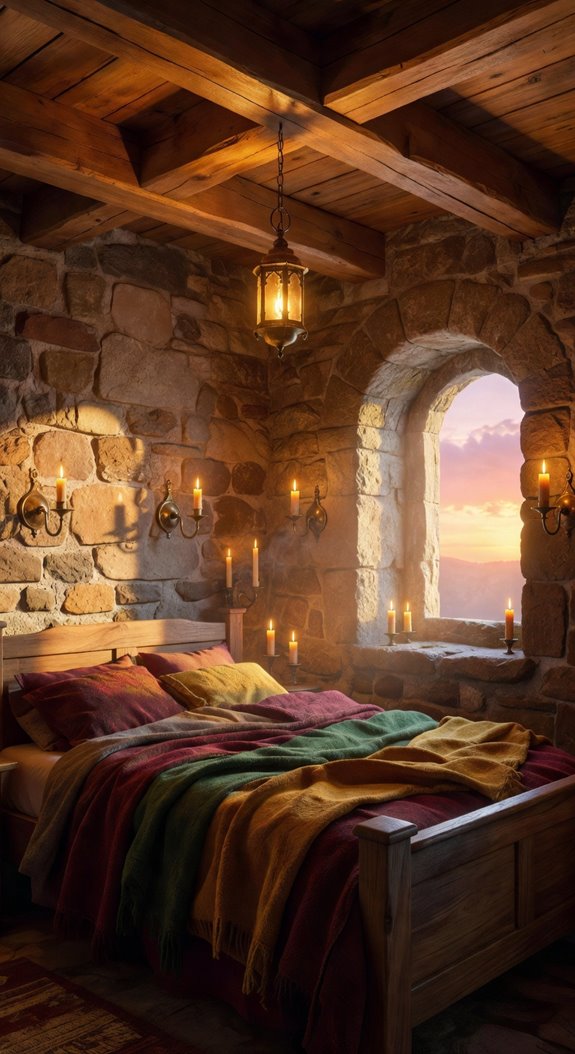
How do you balance authenticity with comfort when lighting a medieval bedroom? Layer warm-toned fixtures, combining wrought-iron wall sconces with ceramic or brass-finished table lamps, avoiding harsh overhead lighting that casts unflattering shadows across textured stone walls and rough-hewn timber beams.
Choose amber or gold-tinted bulbs operating at roughly 2700K color temperature, closely mimicking the soft, flickering warmth of historical tallow candlelight. Position these light sources strategically around high-backed wooden seating areas, recessed reading nooks lined with velvet cushions, and heavy oak bedside tables, ensuring adequate illumination across the entire room without surrendering to the cold, oppressive cavernous darkness that authentically constructed medieval stone castles naturally possessed. Complement your lighting arrangement by incorporating earthy witchy decor elements like dried herb bundles, raw crystal clusters, and hand-dipped taper candles, which reinforce the mystical warmth of a medieval atmosphere while adding deeply organic texture throughout the space.
Medieval Jewel Tones and Velvet Textures
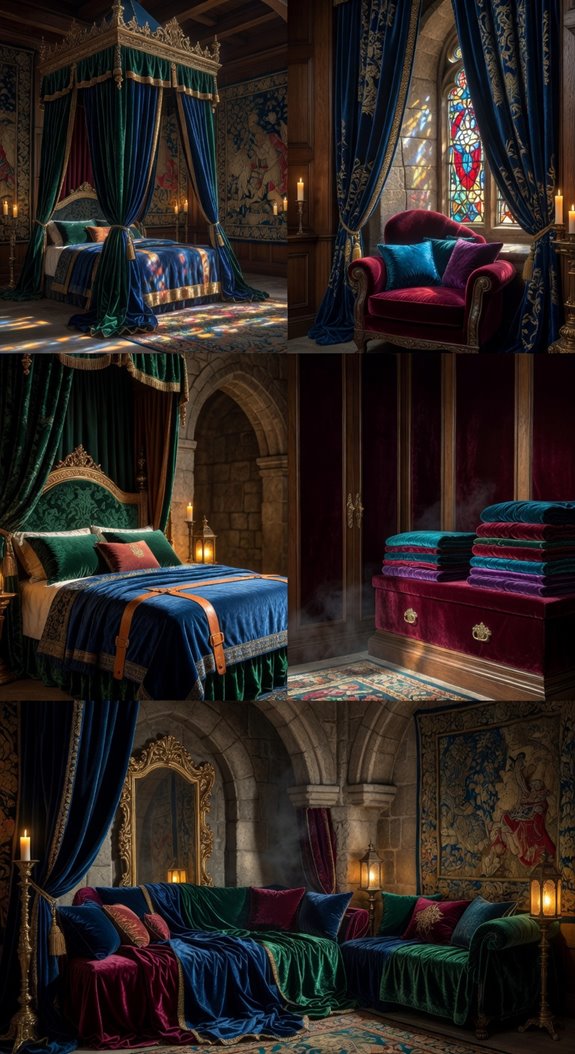
The opulence of a medieval castle begins with a commanding jewel-toned color palette — deep emerald greens reminiscent of forest canopies, rich sapphire blues evoking stained glass cathedral windows, and dark burgundy reds suggesting aged wine and royal heraldry. These saturated, historically grounded hues work together to establish an atmosphere of regal authority and centuries-old grandeur throughout your bedroom space.
Layer crushed velvet and heavyweight velvet textures across your bedding ensemble, floor-length curtains, and oversized accent pillows to build dimension and tactile opulence within the room. These lush, light-absorbing fabrics create dramatic visual depth while delivering substantial warmth and sensory richness. Hammered gold or aged bronze hardware, decorative trim, and accent pieces reinforce the castle-inspired aesthetic with an authentic, historically resonant metallic warmth that elevates the entire composition. Strategically placed candles and candelabras throughout the space introduce a moody candlelight atmosphere that enhances the jewel tones and velvet textures with flickering warmth, deepening the sense of medieval intimacy and drama.
Arched Windows and Stone Architectural Details
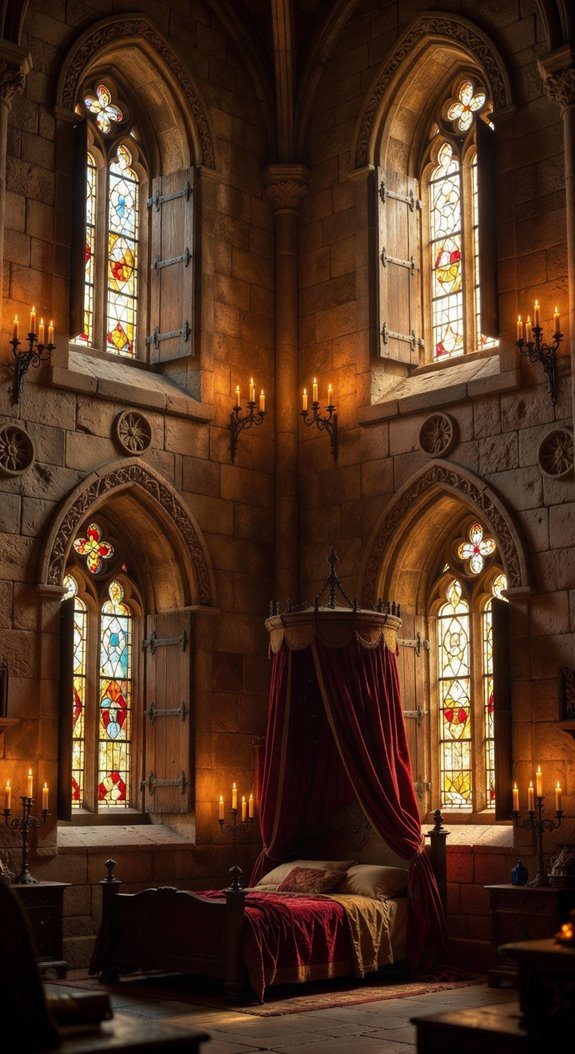
A medieval castle bedroom interior featuring tall Gothic arched windows with carved stone mullions casting dramatic natural light across rough-hewn exposed stone walls in cool gray and warm beige tones, a massive four-poster bed flanked by decorative stone corbels, a carved stone archway framing the sleeping area, reclaimed limestone flooring with irregular surface patina, thick mortared joints between aged stone blocks, vaulted ceiling with ribbed stone arches, iron candle chandelier suspended overhead, heavy woven textile wall hangings, narrow embrasure window reveals with deep stone sills, ambient warm candlelight mixing with pale exterior daylight. The deep stone window sills and thick walls naturally limit light exposure in the evening hours, supporting the body’s circadian rhythm and making it easier to decompress before sleep.
Torches, Candles, and Modern Fixtures That Work
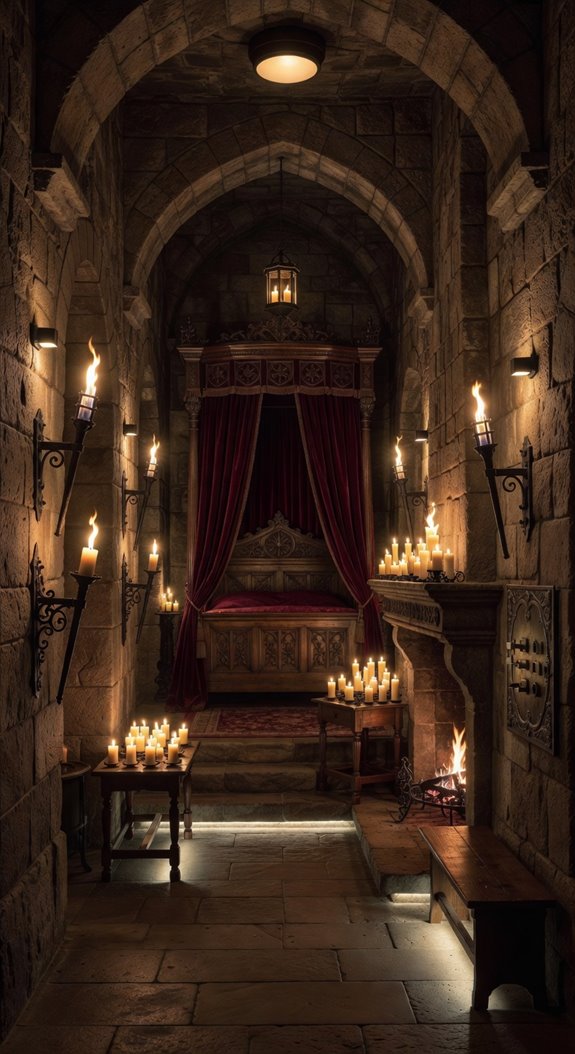
Creating authentic medieval castle ambiance in your bedroom requires thoughtfully layering multiple lighting sources that blend historical authenticity with modern safety and functionality. Install wrought-iron wall sconces at eye-level intervals mimicking traditional torch placement along stone-textured accent walls, positioning them at roughly 5-foot heights to replicate the warm, directional glow of pitch-soaked medieval torches.
Use flickering flameless LED candles housed in aged-bronze or blackened-iron candelabras for safe, convincing candlelight simulation, and incorporate Z-Wave or Lutron dimmer switches controlling overhead fixtures fitted with amber-tinted Edison bulbs. This layered, multi-source approach maintains authentic castle aesthetics while ensuring reliable, fully controllable illumination that protects delicate tapestry furnishings, carved wooden bedframes, and velvet drapery from heat damage or fire hazards. This same philosophy of blending extreme comfort with storybook charm extends naturally into how you curate every decorative element surrounding your lighting scheme.
Statement Seating and Royal Furnishings
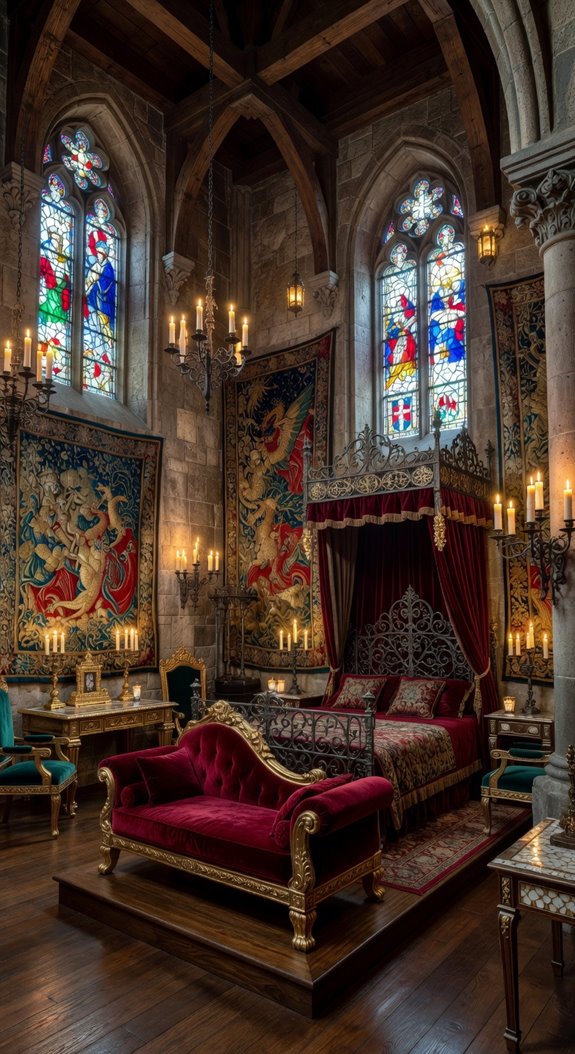
How do you transform your bedroom seating into focal points that reflect royal sophistication and medieval heritage? Choose upholstered wingback chairs in deep jewel tones — rich emerald, sapphire, or burgundy velvets — pairing them with ornate hardwood frames hand-carved with intricate gothic tracery, pointed arch motifs, and quatrefoil detailing along the legs and armrests.
Add a tufted velvet bench at your bed’s foot, incorporating wrought iron nail head trim, dark espresso-stained timber legs, and channel-stitched upholstery in complementary jewel tones. These deliberate statement pieces — each selected for their authentic craftsmanship, historical silhouette, and tactile material richness — establish a genuine castle ambiance while delivering substantial functional comfort throughout the space. For deeper design inspiration, fantasy bedroom designs drawn from classic literature offer sixteen richly imagined narratives that pair storytelling atmosphere with intentional, character-driven interiors.
Medieval Bedrooms on Any Budget
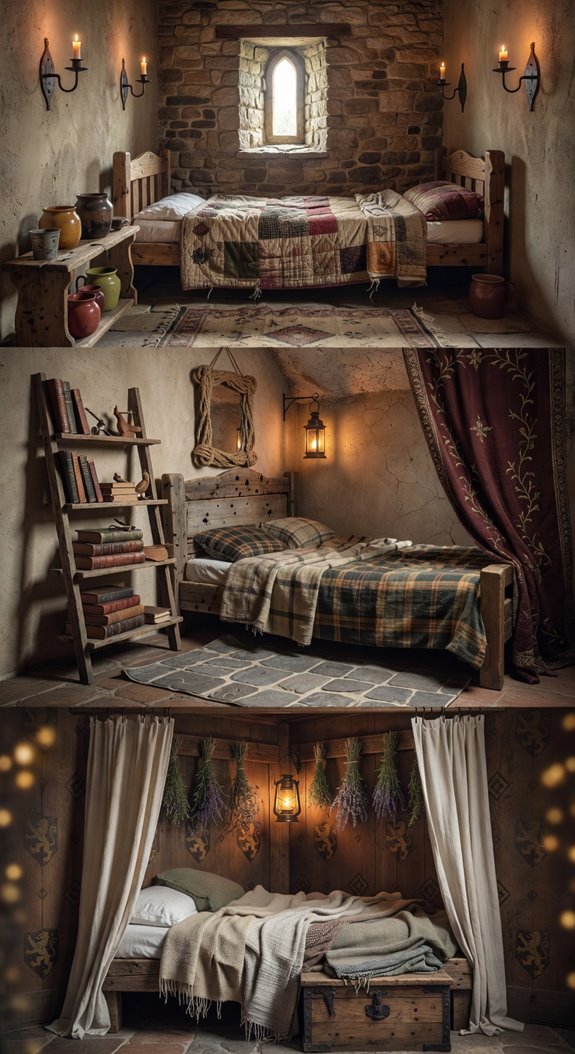
While those opulent wingback chairs and hand-carved oak furnishings capture medieval authenticity, you don’t need a castle’s budget to recreate the same dramatic, torch-lit atmosphere in your own bedroom.
You can source richly-textured, affordable alternatives through thrift stores, online marketplaces like Facebook Marketplace and eBay, and budget-friendly home retailers such as IKEA and HomeGoods. Choose deep jewel tones — burgundy, forest green, and midnight sapphire — paired with wrought iron accent pieces and stone-textured wallpaper panels to establish immediate period authenticity. Layer inexpensive wool-blend tapestries featuring heraldic motifs and incorporate solid wooden bed frames with Gothic arched headboard details for genuine medieval character. For an enchanting finishing touch, weave in fairycore aesthetic lighting through delicate string lights and glowing lanterns to soften the stone-and-iron heaviness with a dreamy, ethereal warmth.
How to Choose
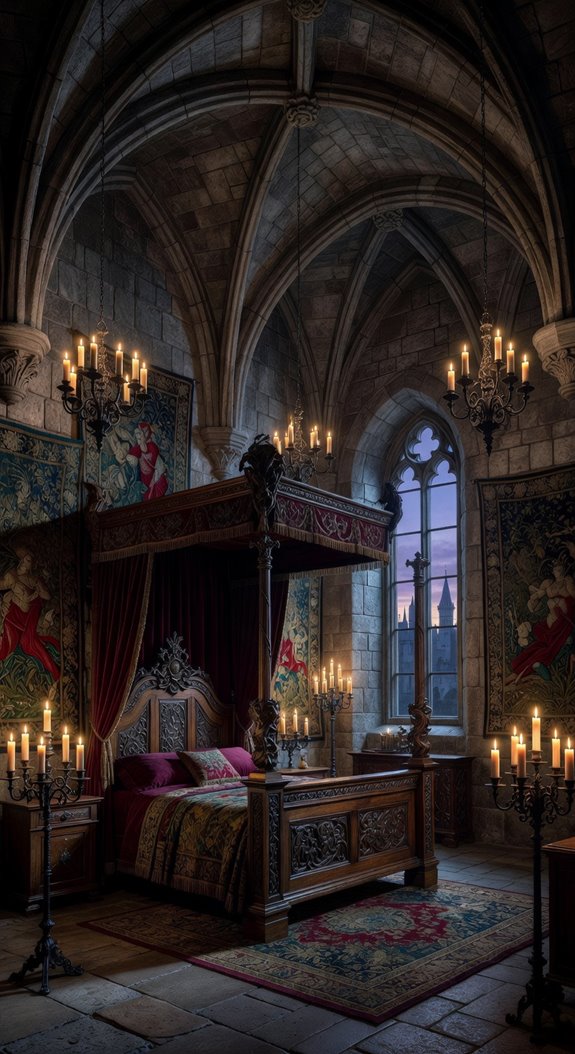
What elements matter most when selecting medieval castle bedroom pieces for your space? You’ll want to prioritize authentic materials like hand-forged wrought iron, reclaimed dark oak or walnut wood, and rough-hewn limestone or granite stone textures that evoke genuine fortress architecture.
Consider your room’s proportions, ceiling height, and existing structural elements like exposed beams or arched doorways when sourcing oversized canopy beds, trestle-style tables, and barrel-vaulted storage chests.
Choose a cohesive color palette featuring deep jewel tones — burgundy, sapphire, forest green — or rich earthen neutrals like charcoal, umber, and aged parchment.
Evaluate each piece’s functional durability alongside its dramatic visual weight and atmospheric contribution to your overall Gothic-inspired design scheme.
Common Mistakes
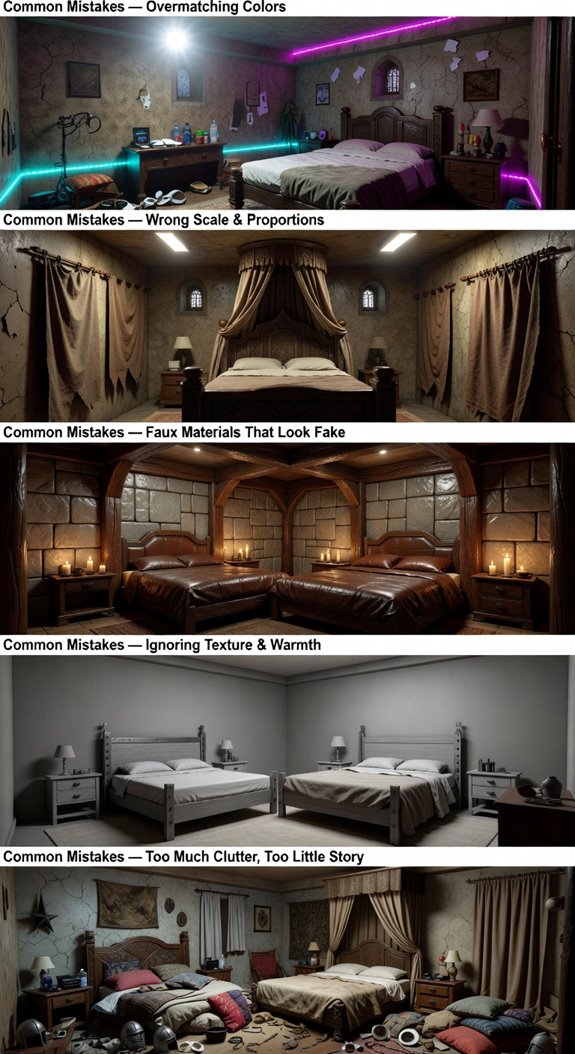
When designing a medieval castle bedroom, many people overcrowd their spaces with too many dramatic pieces, creating visual chaos instead of authentic atmosphere. The most frequent offenders include clashing color palettes of mismatched burgundies, golds, and blacks, excessive ornamental details like superfluous ironwork and unnecessary tapestries, and oversized canopy beds or armoires that physically dominate compact stone-walled rooms.
Select a restrained color scheme featuring deep jewel tones — sapphire, forest green, oxblood — or muted earthy neutrals like aged linen, weathered limestone, and ash grey. Prioritize quality over quantity, choosing fewer high-impact statement pieces — a hand-carved oak bed frame, a single richly embroidered wall hanging, wrought iron candleholders with genuine patina — that authentically reflect medieval craftsmanship rather than theatrical, costume-drama interpretations.
Final thoughts
Creating an authentic medieval bedroom requires layering stone textures, wrought iron fixtures, and jewel-toned fabrics with deliberate intentionality. Start with foundational architectural elements — a substantial four-poster bed crafted from dark oak or reclaimed timber, alongside arched doorways, ribbed vaulting details, or lancet window surrounds — then build upward with purposeful candlelit sconces, iron chandeliers, and heraldic tapestries featuring bold emblematic imagery.
Whether you’re working with a substantial renovation budget or more modest means, these core design principles remain consistently applicable. Prioritize quality materials — hand-hammered iron hardware, velvet or brocade in deep crimson, sapphire, or forest green — and maintain authentic medieval proportions rather than overcrowding your space with excessive ornamentation that dilutes the period aesthetic.