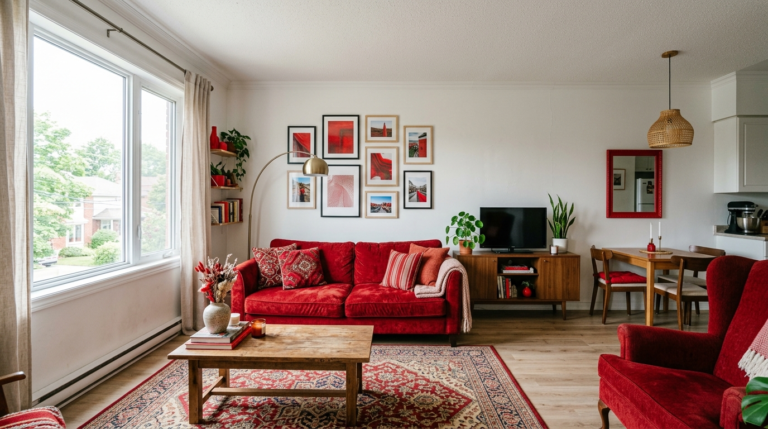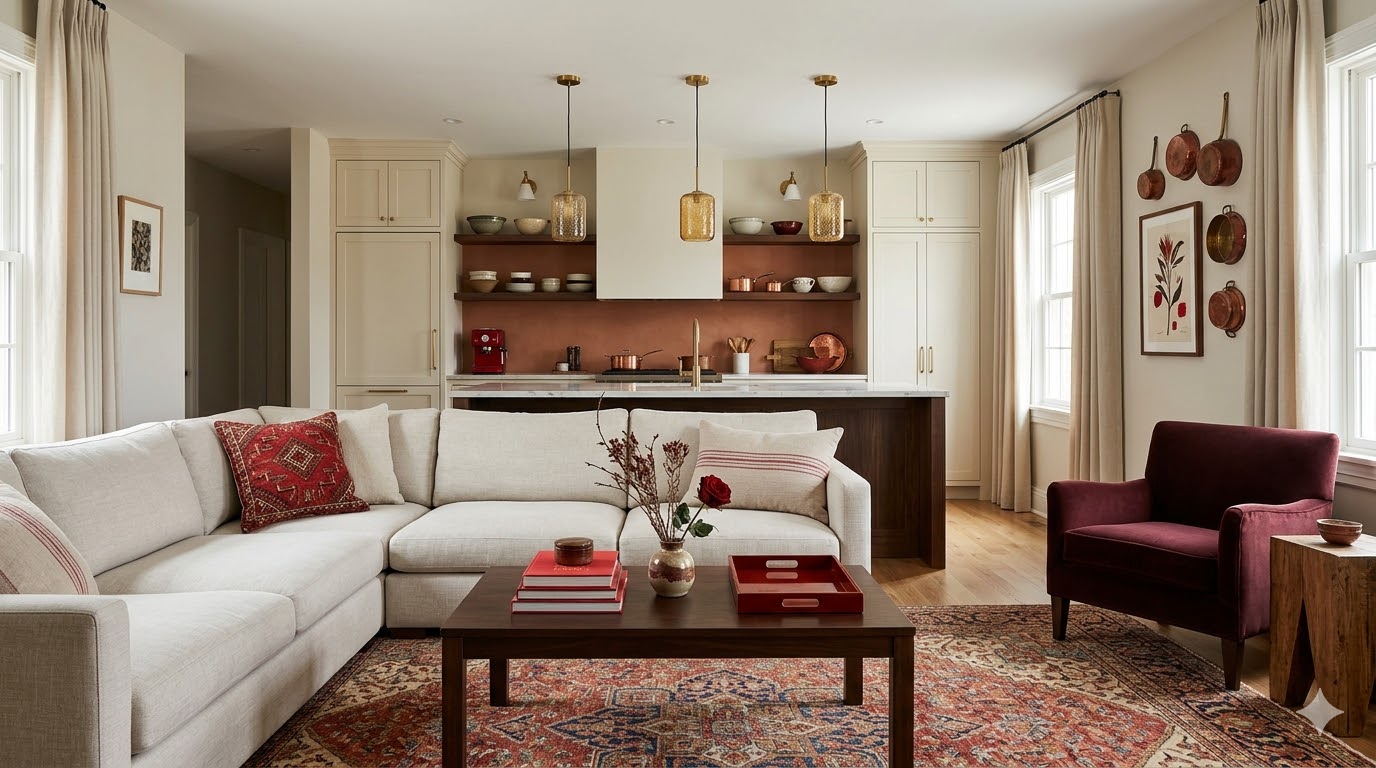
Red Interior Design for People Who Are Afraid of Bold Colors
If you’ve spent your adult life in beige rooms, the idea of introducing red probably feels like jumping off a cliff.
I understand. I lived in greige for six years. Not because I loved it — because I was terrified of getting color wrong and living with the consequence.
What finally got me over the fear wasn’t courage. It was a system — a low-stakes, fully reversible, step-by-step approach that let me test red in my actual space before committing to anything permanent. By the time I painted my first wall, I’d already lived with red for three months and knew exactly what I was doing.
Here’s that same system — and Tip #2 is the step that made everything else possible.
Name What You’re Actually Afraid Of
Color fear in interior design is almost never about color itself. It’s about specific, concrete outcomes that feel risky. Naming those outcomes is the first step to addressing them.
Common fears and their actual solutions:
- “I’ll get tired of it” → Start with accessories, not walls. Accessories change in an afternoon.
- “It’ll look cheap” → The right shade and the right finish never look cheap.
- “It won’t match my furniture” → Red matches more things than you think, particularly neutral furniture.
- “I’ll regret it” → Reversibility is built into the system. Nothing permanent happens until you’re confident.
Write down your specific fear. The rest of this guide addresses it directly.
Start With One $15 Accessory — Nothing Else
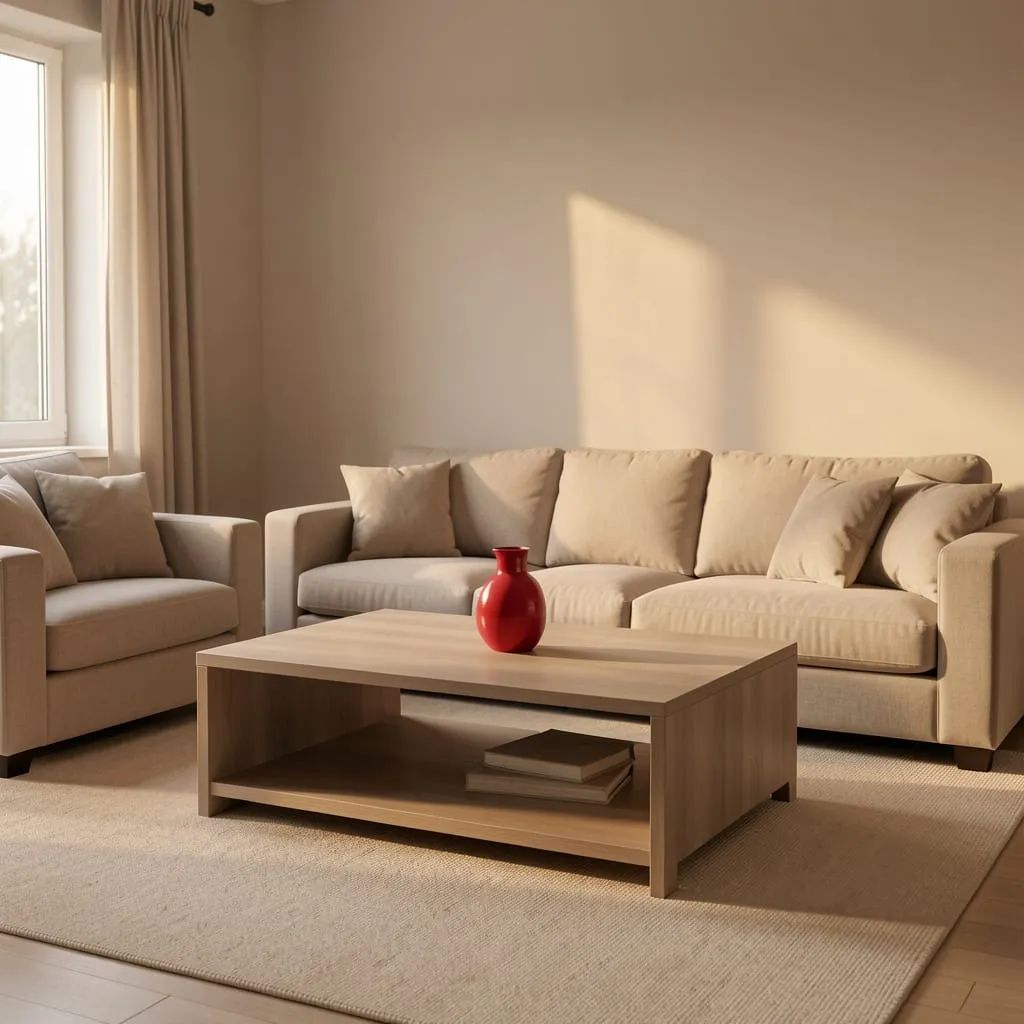
Before any other purchase, before any paint swatches, before any furniture decisions: buy one small red accessory in a shade you’re drawn to. A ceramic vase, a small throw cushion, a candle holder. Place it somewhere visible in your main living space.
Now live with it for two weeks. Don’t change anything else.
This step accomplishes three things:
- It shows you how red actually behaves in your specific light and against your specific furniture
- It starts the psychological process of associating red with your home
- It gives you real information about whether you’re drawn to this shade
Most people who complete this step are surprised by how naturally red integrates into a neutral space. The fear is almost always bigger than the reality.
Test Paint With Large Swatches Before Any Commitment
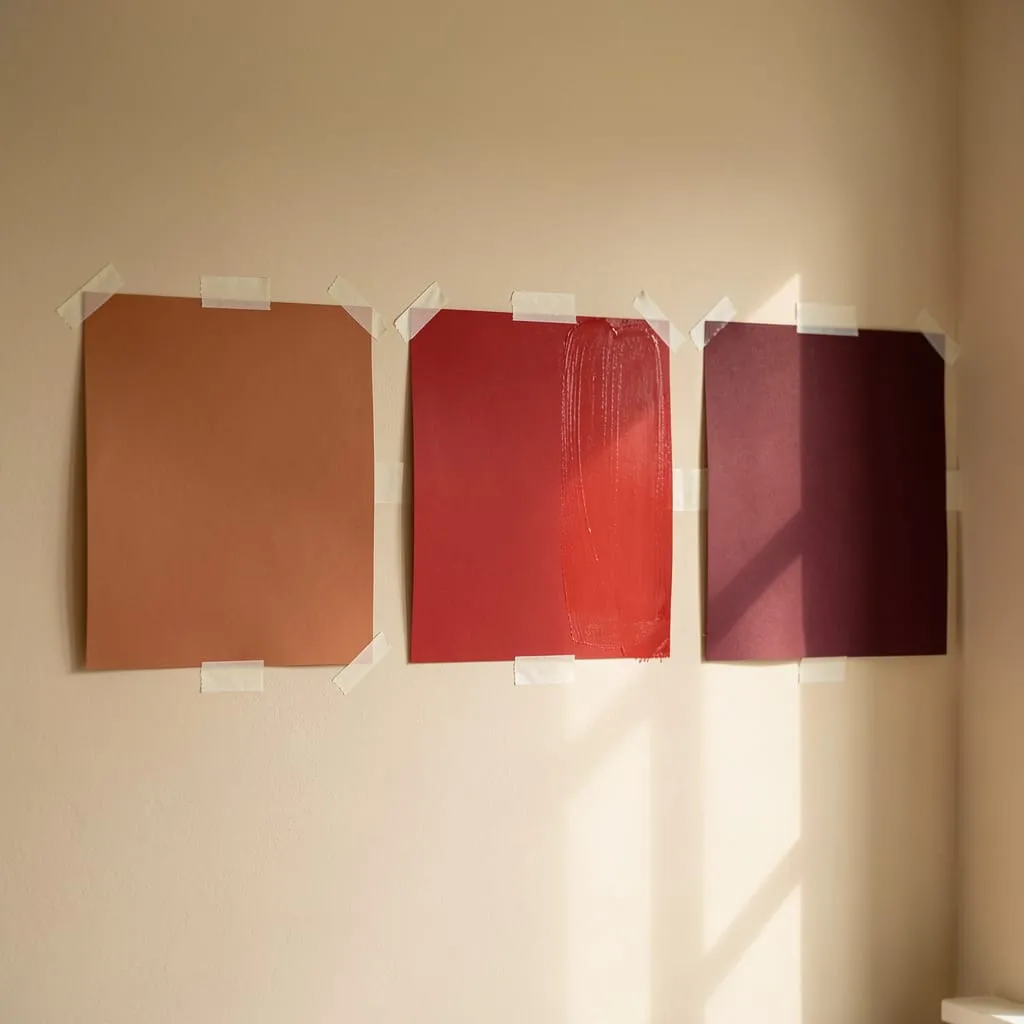
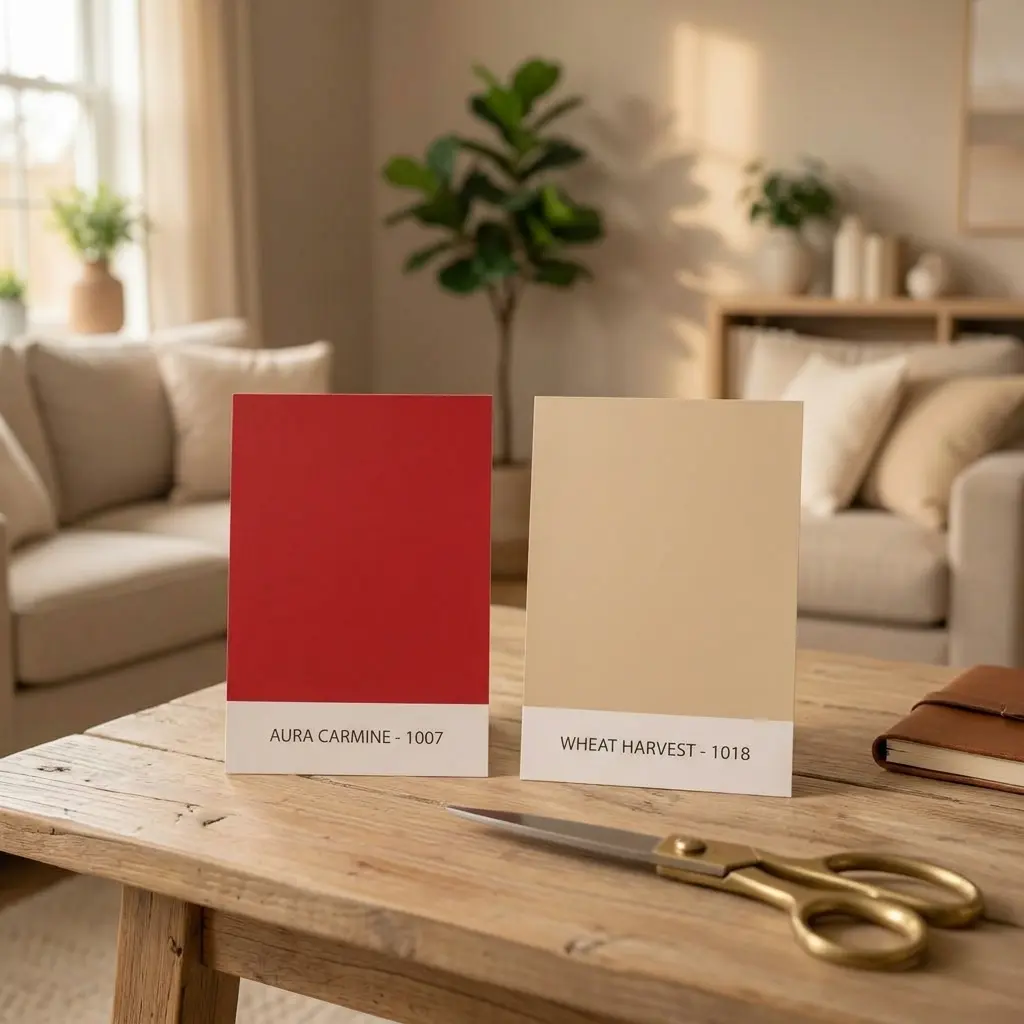
When you’re ready to think about a wall, don’t buy a full gallon. Buy sample pots ($5–$8 each) in two or three shades you’re considering and paint large swatches — at least 12×12 inches — directly on your wall.
Live with the swatches for a week. Look at them in the morning, afternoon, and evening. By the end of the week, you’ll know with certainty which shade works in your space — and you’ll feel significantly less afraid of it.
Progress Through Textiles Before You Touch the Walls
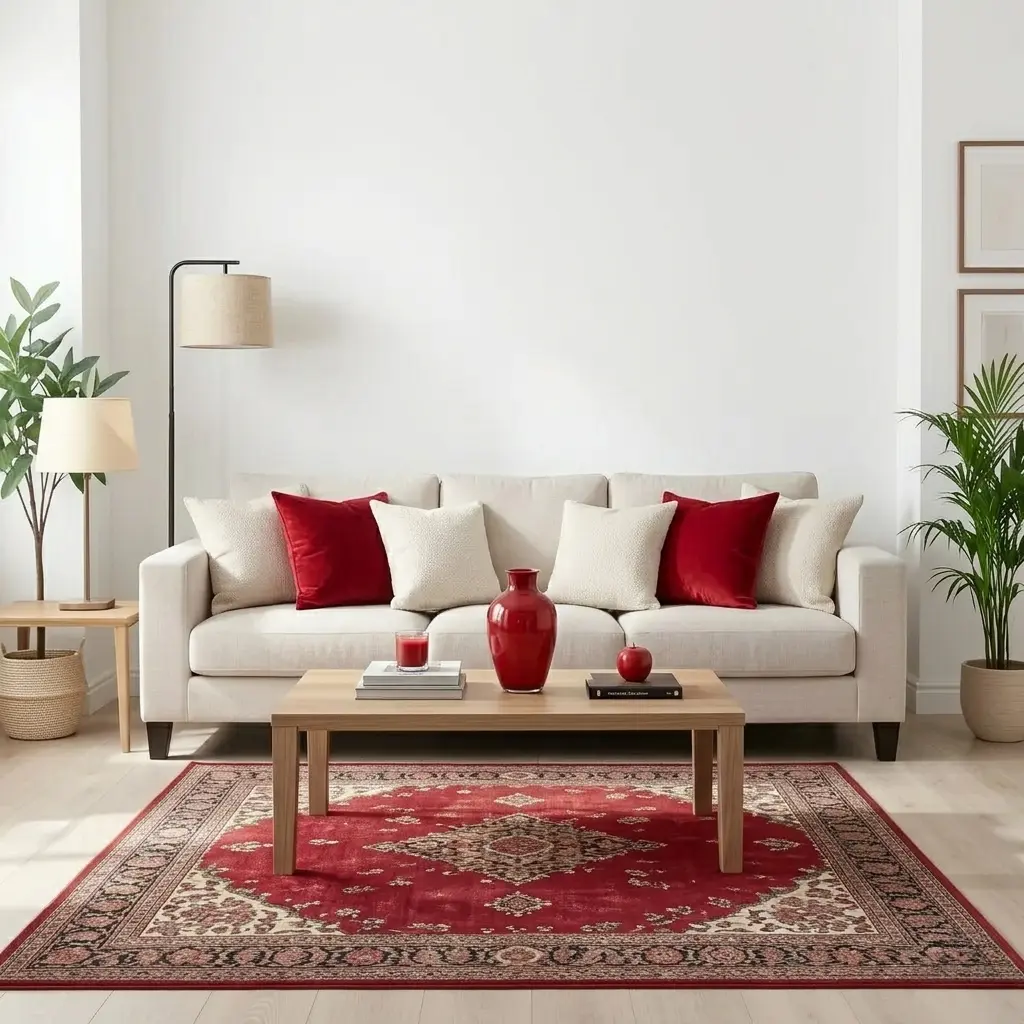
The textile progression is the safest path from a color-fearful neutral room to a confident red interior:
- Stage 1: One accessory
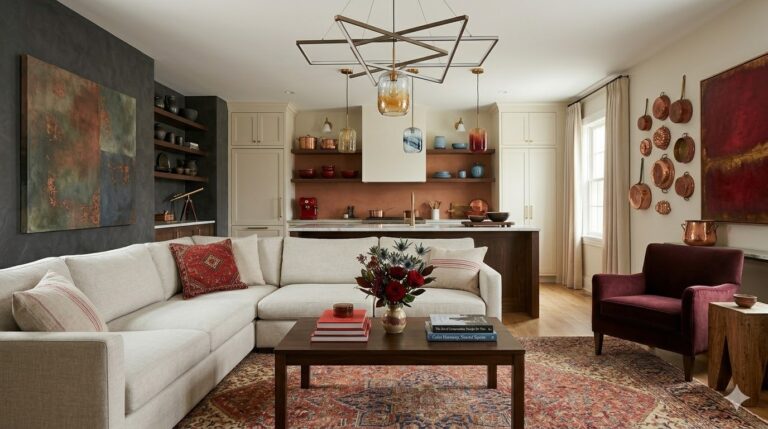
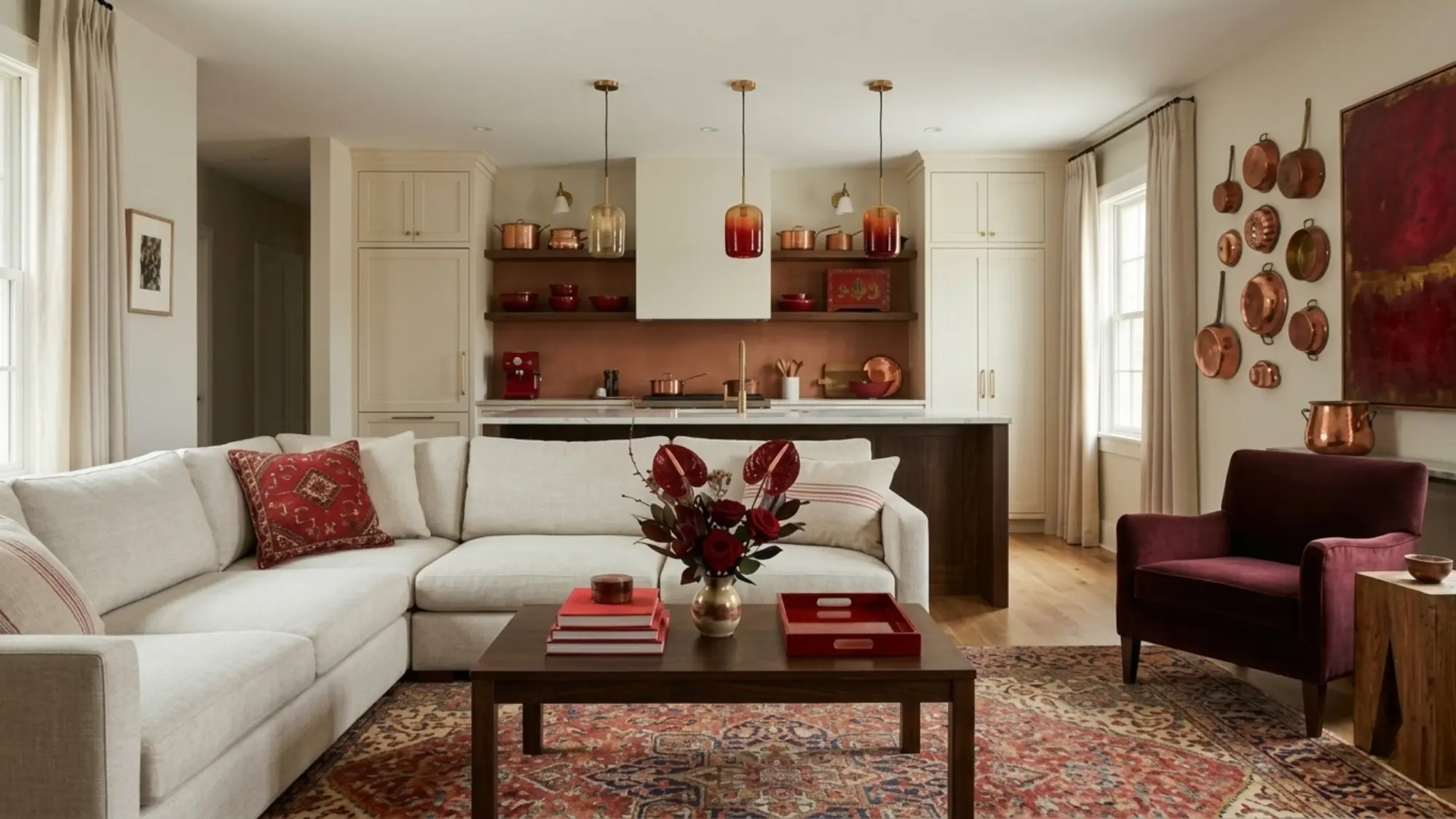
- Stage 2: Add cushions — two or three red cushions on your sofa transforms the seating area
- Stage 3: Add a rug — a patterned rug with red as a primary color anchors the room
- Stage 4: Add one furniture piece — a red armchair is the most impactful single investment
At any stage in this progression, you can stop. The room looks intentional and designed at every step. Only move to paint if you want more. And by Stage 4, most people do.
Choose a Forgiving Shade for Your First Bold Move
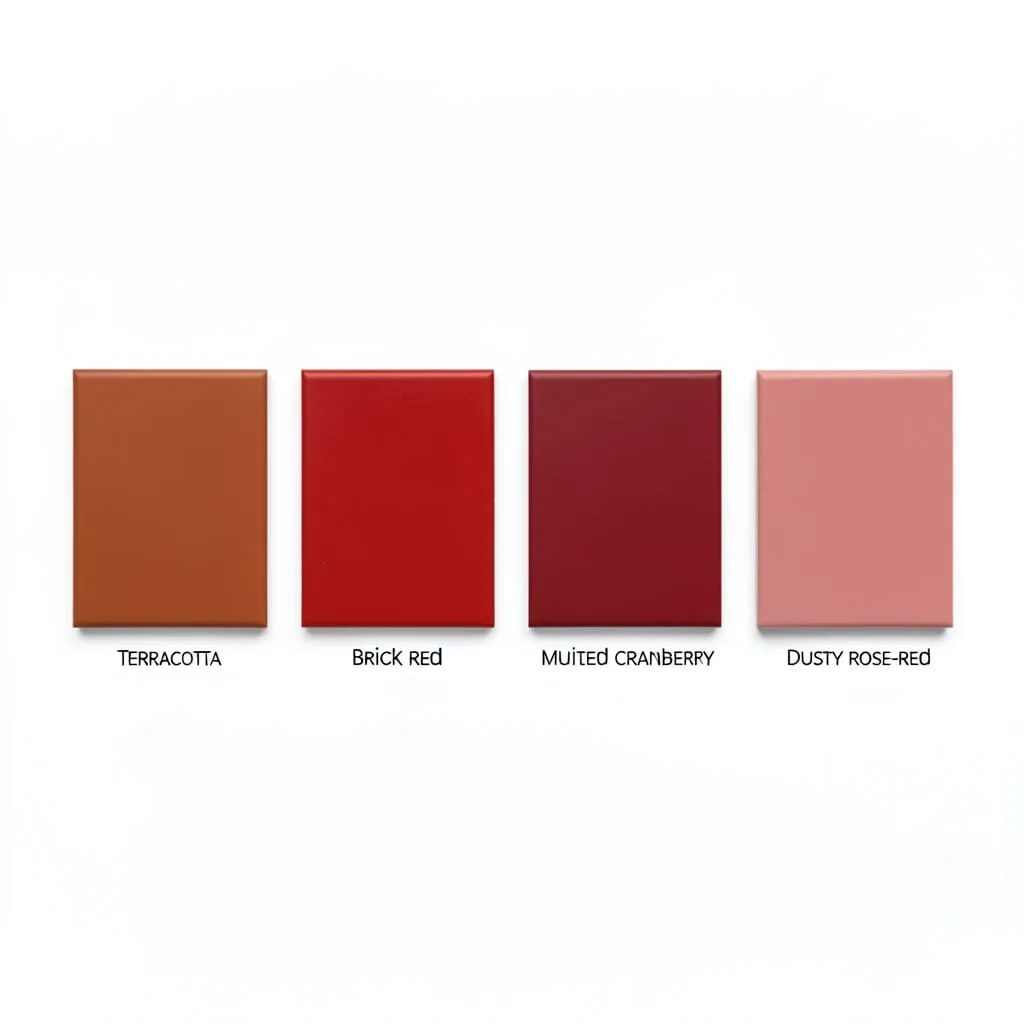
If you’re color-fearful, your first red should be a shade that does the least damage in a worst-case scenario — muted, complex reds with enough brown, grey, or earthy character that they read almost as neutrals.
Best first reds for color-fearful decorators:
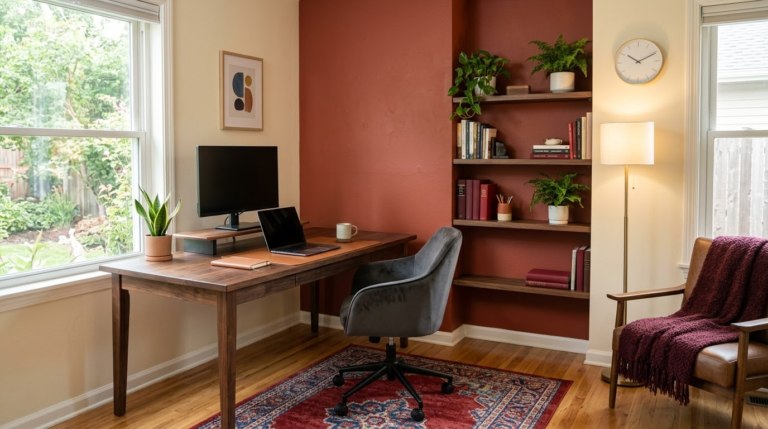
- Terracotta: The most forgiving. Rich and warm but instantly readable as earthy rather than bold.
- Brick red: Suggests the natural world. Hard to get wrong.
- Muted cranberry: Deep enough to be interesting, desaturated enough to avoid jarring.
- Rust: Almost a neutral. Pairs with everything. Never looks garish.
Give Yourself Permission to Change Your Mind
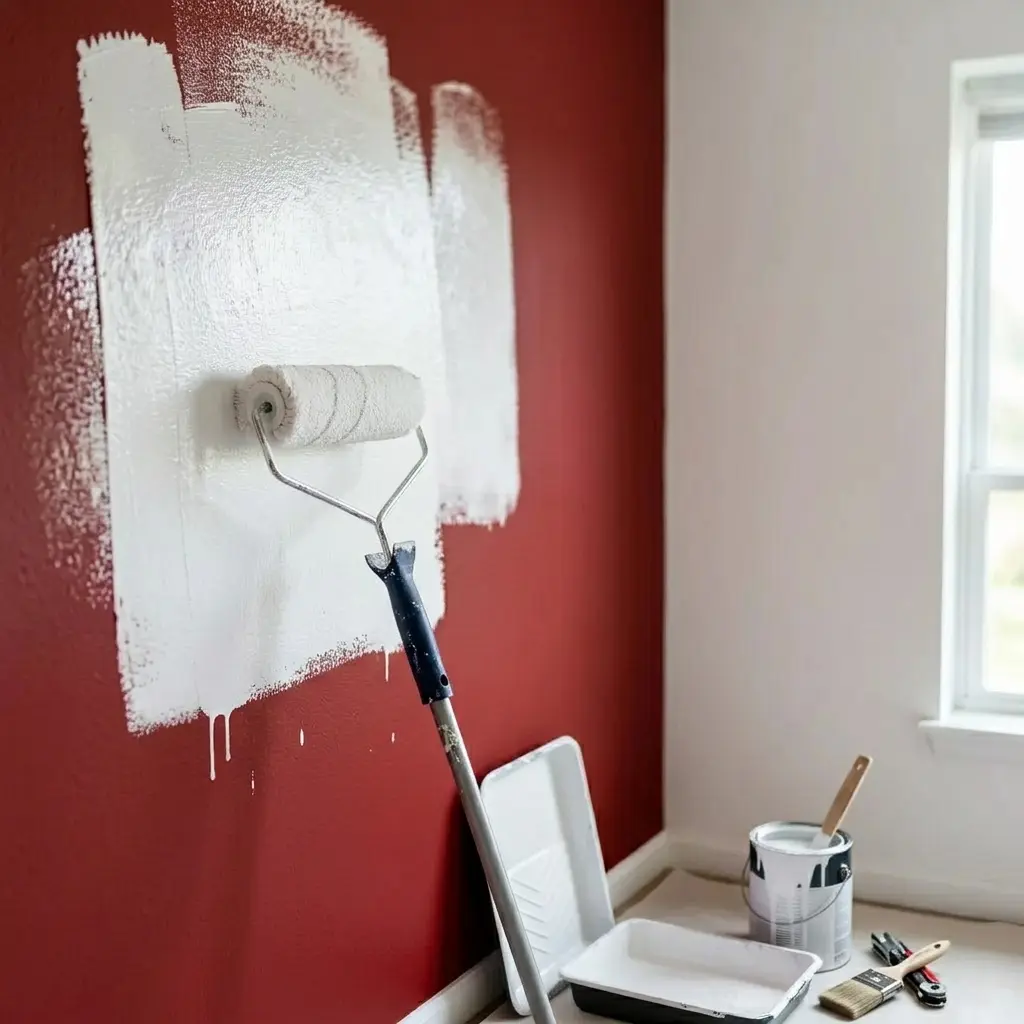
The worst-case scenario in interior design is not a red wall you end up not liking. It’s living in a beige room for twenty years because you were too afraid to find out.
Give yourself explicit permission to try, to adjust, and to change your mind. Every great room was the result of iteration — not perfection on the first attempt.
The Other Side of Fear Is a Room You Actually Love
Color confidence isn’t a personality trait. It’s a skill — and the system above builds it in small, manageable steps that cost almost nothing and risk even less.
Ready to take the next step?
Our guide on [Pop of Red Decor: 15 Small Accents With Big Visual Impact →] is the perfect next read — it shows exactly how small red additions transform neutral rooms without overwhelming them.
Or browse the full [Red Interior Design category →] for the complete journey from first accessory to finished room.