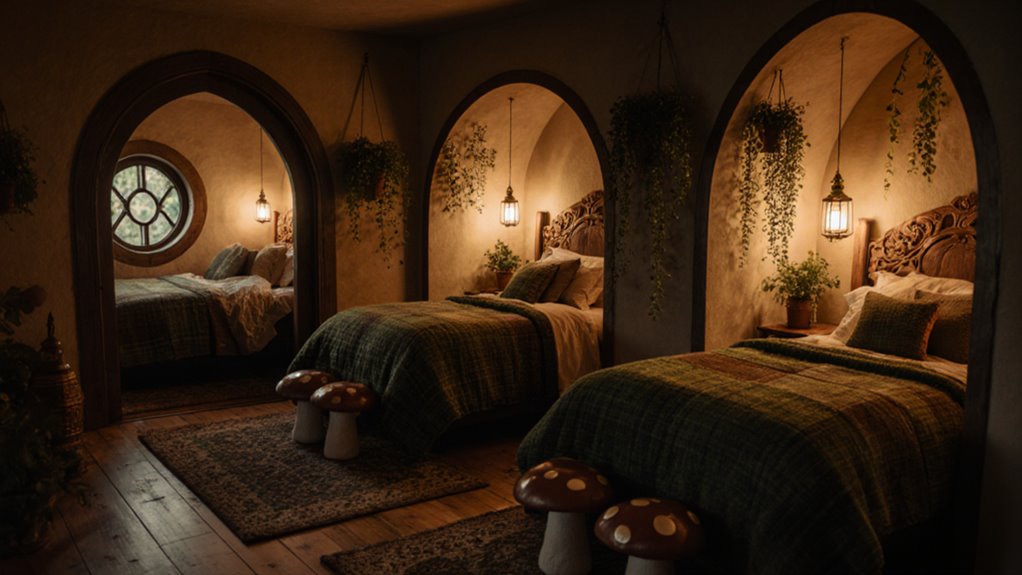
12 Hobbit-Inspired Bedrooms That Feel Cozy & Magical
You can transform your bedroom into a woodland sanctuary by adopting Hobbit-inspired design elements that prioritize warmth and tranquility. Rounded doorways, earth-tone palettes featuring chestnut and moss, and layered amber lighting create the foundation for this aesthetic.
Low-profile furniture crafted from dark-stained oak and weathered pine, paired with intimate nooks lined in tufted wool or aged leather, encourage deep relaxation. Natural textures — hand-knotted jute rugs, linen drapery, and rough-hewn stone accents — ground the space in organic authenticity. The specific techniques for achieving this cohesive look, from architectural modifications like curved archways to candlelit and Edison-bulb lighting strategies, require careful consideration of your space and budget.
Rounded Doorways: Your Hobbit-Hole Foundation
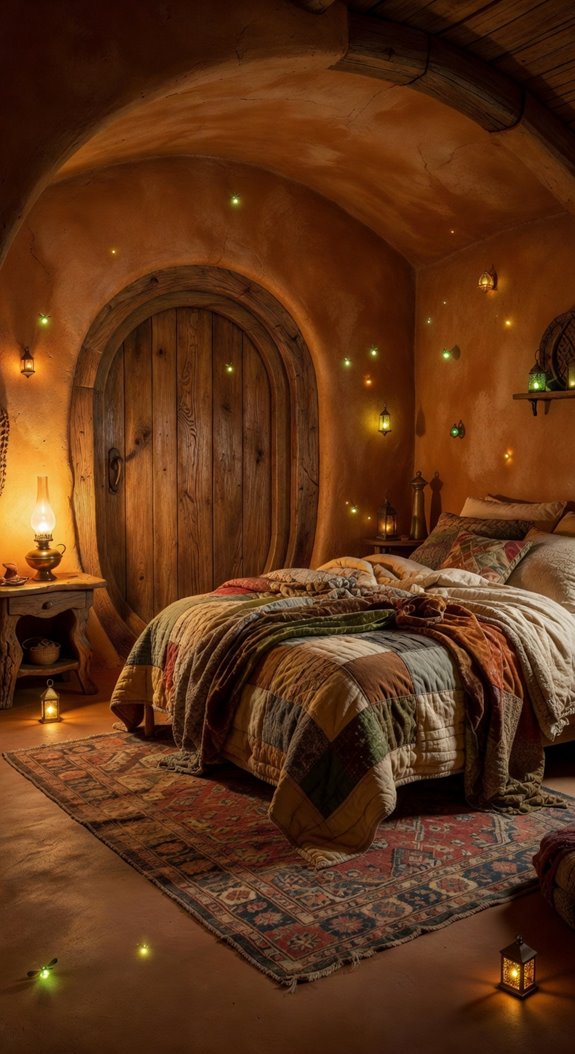
Rounded doorways establish your hobbit-hole foundation, creating an inviting entrance that defines the space authentically. This single architectural detail carries extraordinary transformative power, instantly transporting your bedroom into a convincing Middle-earth sanctuary through organic, nature-inspired geometry.
You’ll want to contemplate arched wooden frames crafted from warm-toned oak or reclaimed pine, painted in rich earth tones like aged cream, soft umber, or weathered moss green. The curved silhouette, ideally spanning 7-8 feet in height with a pronounced semicircular arch, immediately signals the whimsical Tolkien aesthetic, grounding your broader design vision with structural authenticity and unmistakable intentionality. Pairing your rounded doorway with forest-themed fantasy decor throughout the room deepens the enchanted woodland atmosphere and creates a cohesive, immersive interior narrative.
Earth Tones & Natural Textures: Building Your Shire Palette
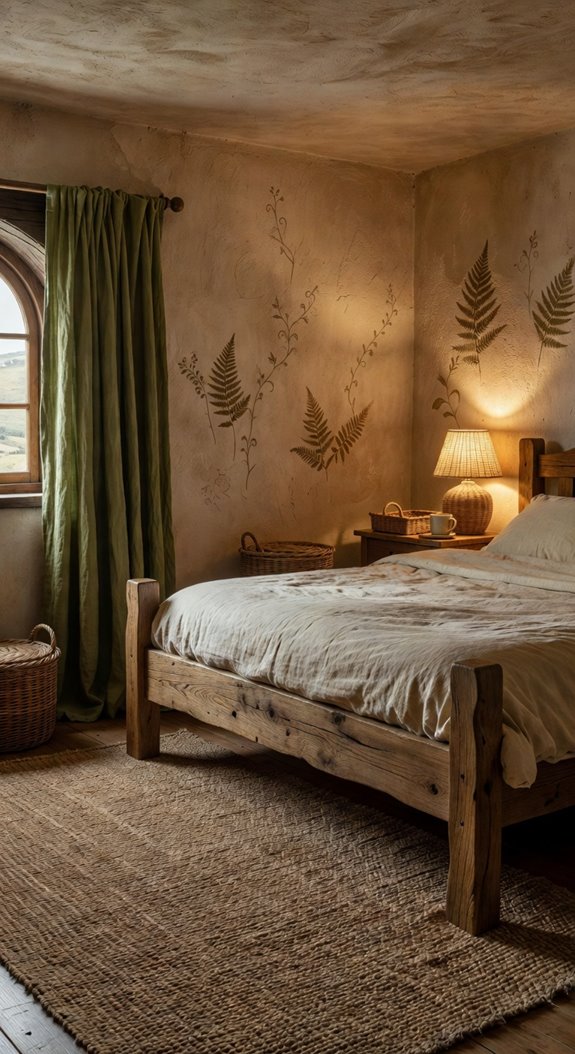
Earth tones form the chromatic foundation of any authentic Shire-inspired bedroom, with warm chestnut browns, mossy sage greens, and honeyed cream beiges working in harmonic balance across your walls. These pigments, drawn directly from the rolling meadows and ancient timber of Hobbiton’s landscape, should feel sun-warmed and organic rather than saturated or artificial.
Natural textures build the tactile richness that makes these spaces feel genuinely inhabited and loved. Layer a hand-loomed wool rug in heathered oatmeal tones across wide-plank oak flooring, dress your bed in stonewashed linen with subtle flaxen undertones, and introduce carved wooden furniture with visible grain patterns and rounded, softened edges. Each material should carry a sense of age, craft, and comfortable imperfection. Complement these earthy layers with soft warm lighting placed at low heights to cast a golden, amber-toned glow that deepens the richness of natural wood grains and enhances the soothing quality of your neutral palette.
Low Furniture For Intimate Spaces
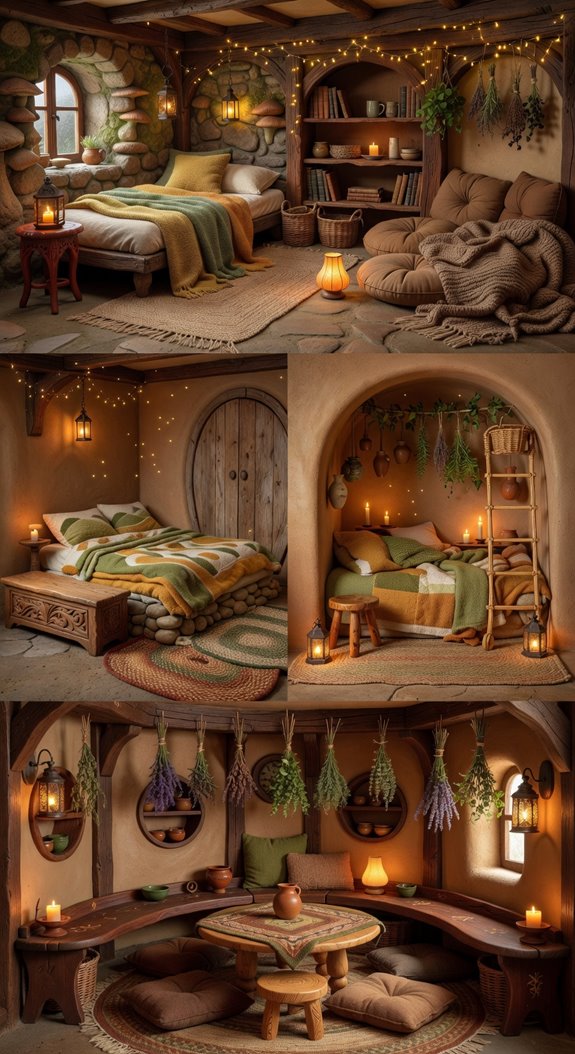
A cozy, dimly lit bedroom interior featuring extremely low-profile dark walnut bed frame positioned close to the floor, flanked by squat rounded nightstands with curved wooden legs, soft amber candlelight glowing across rough-hewn stone walls, thick wool blankets in deep forest greens and warm browns draped across the bed, a miniature tufted armchair positioned in the corner, exposed wooden ceiling beams overhead, moss and ivy cascading near a small circular window, warm golden-hour light filtering through, photorealistic, intimate atmosphere, earthy tones throughout. For an even more refreshing ambiance, consider incorporating sun-drenched plant-filled chill room concepts to bring natural vitality into the space.
Hobbit-Hole Lighting: Soft Glows & Candlelit Ambiance
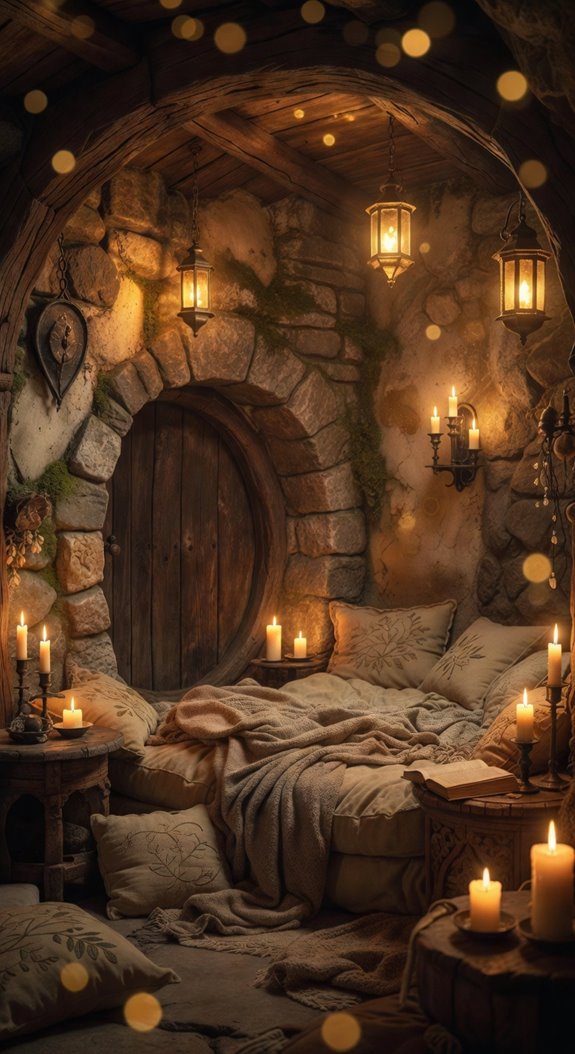
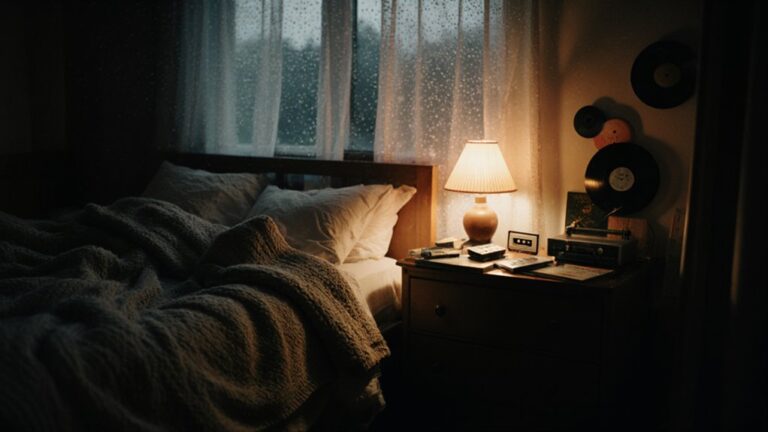
Transforming your bedroom into a genuine hobbit-hole retreat begins with deliberate, layered lighting choices that establish an intimate, cave-like warmth throughout the entire space. Install amber-tinted Edison bulbs with visible carbon filaments inside aged brass fixtures featuring patinated, oil-rubbed surfaces, positioning multiple low-wattage sources at varying heights to eliminate harsh overhead brightness.
Cluster beeswax and tallow-style pillar candles inside thick-walled glass hurricane holders and hand-thrown ceramic vessels, allowing their flickering flames to cast dancing, organic shadow patterns across curved walls and wooden ceiling beams. Place antique-style brass table lamps with fabric drum shades in warm ochre or burnt sienna tones on low, dark-stained oak furniture, directing soft pools of golden illumination downward onto worn wool rugs and leather-bound books. For those drawn to the whimsical side of cozy nocturnal design, incorporating fairycore ethereal lighting through delicate string lights with a warm amber cast can introduce a softly magical glow that complements the earthy, candlelit atmosphere of a hobbit-inspired space.
Arched Ceilings & Vaulted Nooks: Go High Without Leaving
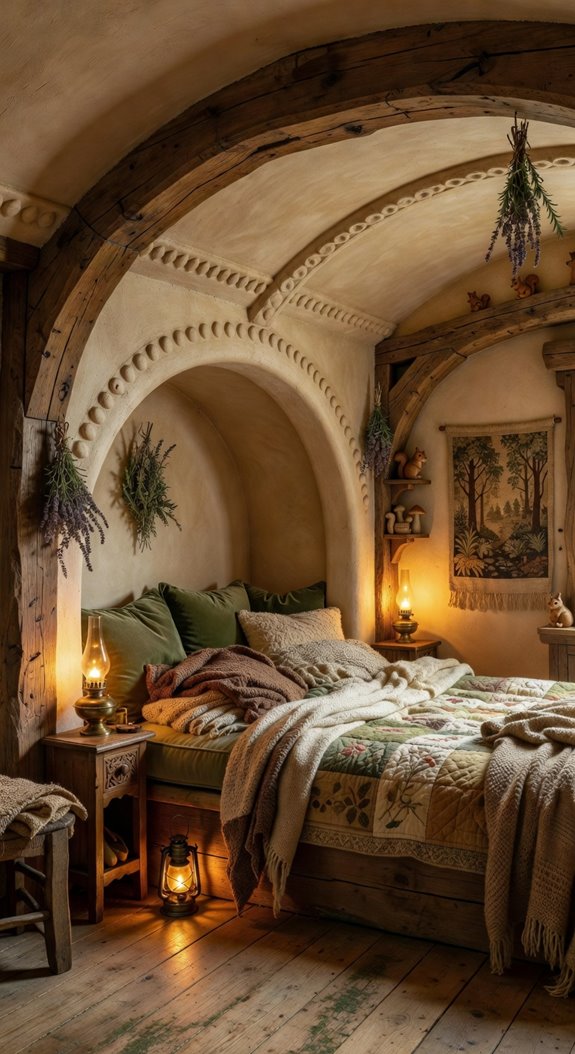
While your layered lighting establishes the intimate ground-level warmth of a true hobbit-hole, the architectural bones of your bedroom—specifically its ceiling height and overhead geometry—determine whether that cozy sanctuary feels cramped or genuinely magical. Arched ceilings, constructed from curved plaster, tongue-and-groove timber, or corbelled stone-effect panels, create sweeping vertical interest without requiring load-bearing structural modifications or professional demolition work.
Recessed alcoves and vaulted nooks—finished with barrel-vault profiles, ribbed woodwork, or rough-hewn sandstone texturing—provide functional built-in storage, candlelit reading spaces, and layered visual depth that reinforce the subterranean, earth-sheltered authenticity of the hobbit aesthetic you’re cultivating throughout your personal retreat. Tracing the curve of an arched ceiling with LED ambient accents softens the overhead expanse into a warm, glowing arc that deepens the sense of enclosure without sacrificing the airiness your vaulted geometry provides.
Living Greenery: Bringing The Shire Garden Indoors
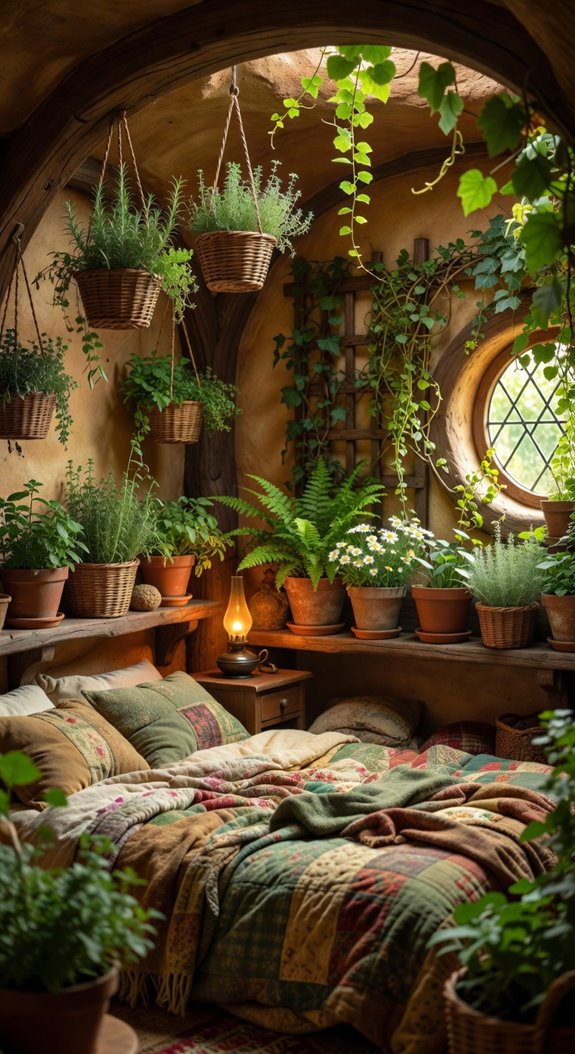
How can you transform your hobbit-inspired bedroom into a living, breathing extension of the Shire without overwhelming the intimate spaces you’ve already established?
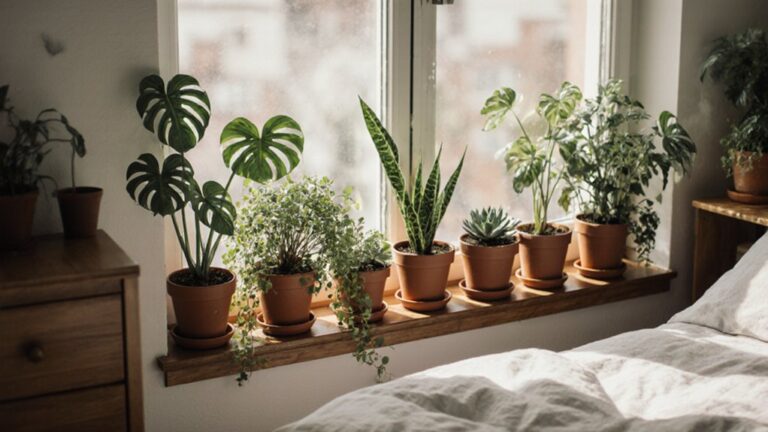
Incorporate cascading golden pothos (*Epipremnum aureum*) with their heart-shaped, variegated leaves alongside lush maidenhair ferns (*Adiantum raddianum*) displaying their delicate, fan-shaped fronds — both nestled within hand-woven rattan and jute baskets mounted on raw-edge oak floating shelves positioned directly above a low-profile, reclaimed wood bed frame. Layer drought-tolerant haworthia, echeveria rosettes, and trailing string-of-pearls (*Senecio rowleyanus*) across weathered ceramic nightstands glazed in earthy ochre and moss-green tones.
Consider anchoring one wall with a living moss panel constructed from preserved reindeer moss (*Cladonia rangiferina*) and sheet moss (*Hypnum cupressiforme*) in layered tonal greens, mounted on a reclaimed barnwood backing. These densely textured greenery elements work in concert to generate visual depth through varied leaf geometries and growth habits, actively filter volatile organic compounds from the air through natural phytoremediation, and collectively construct an immersive, mycorrhizal-adjacent woodland microenvironment that channels the organic, hand-cultivated aesthetic of the Shire across every surface and corner of the room. Weaving in small clusters of floating fairy lights among the trailing vines and moss panels introduces an enchanted, weightless luminosity that deepens the magical atmosphere of the space without competing with the organic textures already present.
Vintage & Handcrafted Decor: Where Hobbits Shop
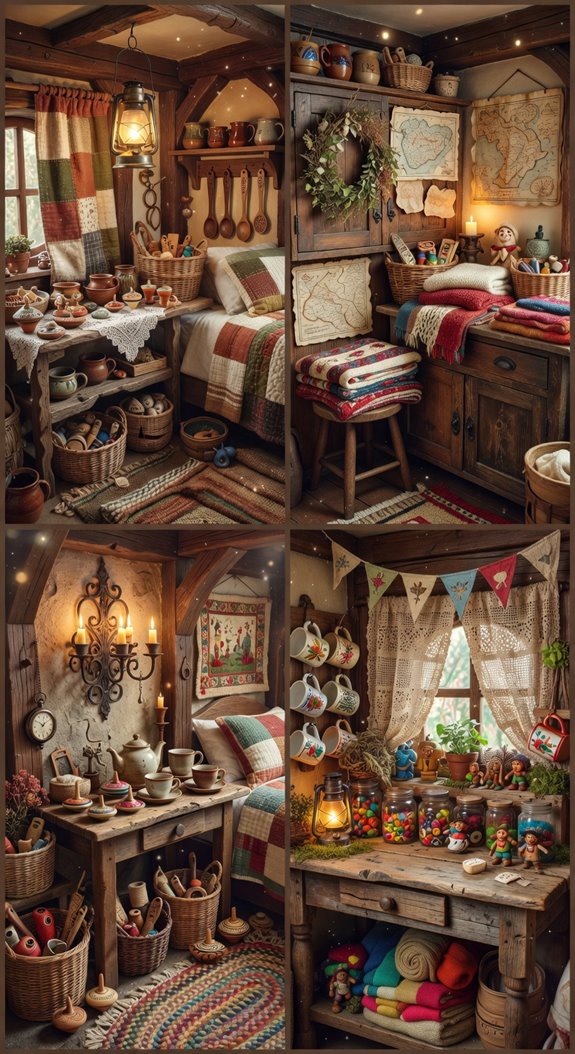
Where do you source the weathered furnishings, hand-thrown pottery, and artisan textiles that authentically capture the Shire’s lived-in character? Antique markets, local craft fairs, and specialty online retailers focusing on artisan goods offer a rich hunting ground for exactly these kinds of characterful, time-worn pieces.
Reclaimed wood furniture with visible grain patterns and natural imperfections, earthy ceramics glazed in warm cream and umber tones, and hand-woven wool or linen fabrics in muted, nature-inspired palettes form the essential material vocabulary of authentic Hobbit-hole interior design. Sourcing these elements not only deepens the visual authenticity of your space but actively supports skilled craftspeople who prioritize traditional hand-finishing techniques, ethically reclaimed raw materials, and slow, intentional production methods over mass manufacturing. To further enhance the atmosphere, consider incorporating light and airy elements that prevent the room from feeling too dark or cave-like, striking a balance between cozy enclosure and refreshing openness.
Round Windows & Porthole Details: Quirky Features That Work
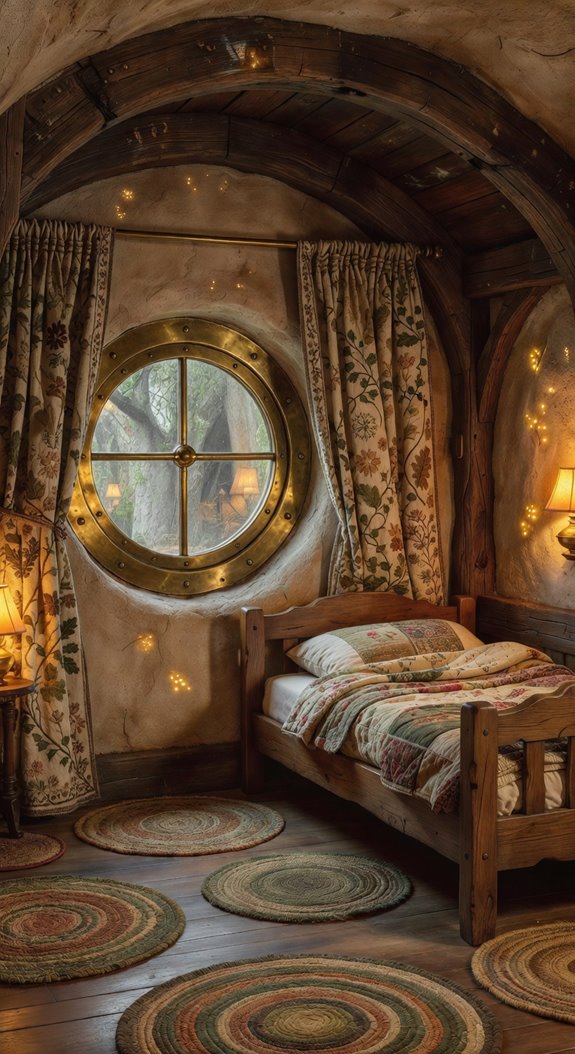
The circular window stands as perhaps the most distinctive architectural signature of Hobbit design, instantly transforming an ordinary bedroom into a distinctly fantastical, Middle-earth-inspired space. Crafted from weather-resistant timber or wrought iron, these geometric focal points feature deep-set frames, beveled edges, and multi-pane glazing that scatter warm, diffused light across curved plaster walls.
You can install round windows or porthole-style frames — measuring anywhere from 18 inches to four feet in diameter — to create authentic, structurally commanding focal points throughout your living space. These curved architectural elements work particularly well positioned above upholstered beds or recessed into exposed stone accent walls, drawing the eye upward while establishing layered visual interest across the entire room. To further enhance the enchantment, layer the surrounding walls with soft, textured fabrics and ambient lighting that deepens the warm, diffused glow filtering through each curved frame.
Layered Linens & Tactile Textures: Sink Into Comfort
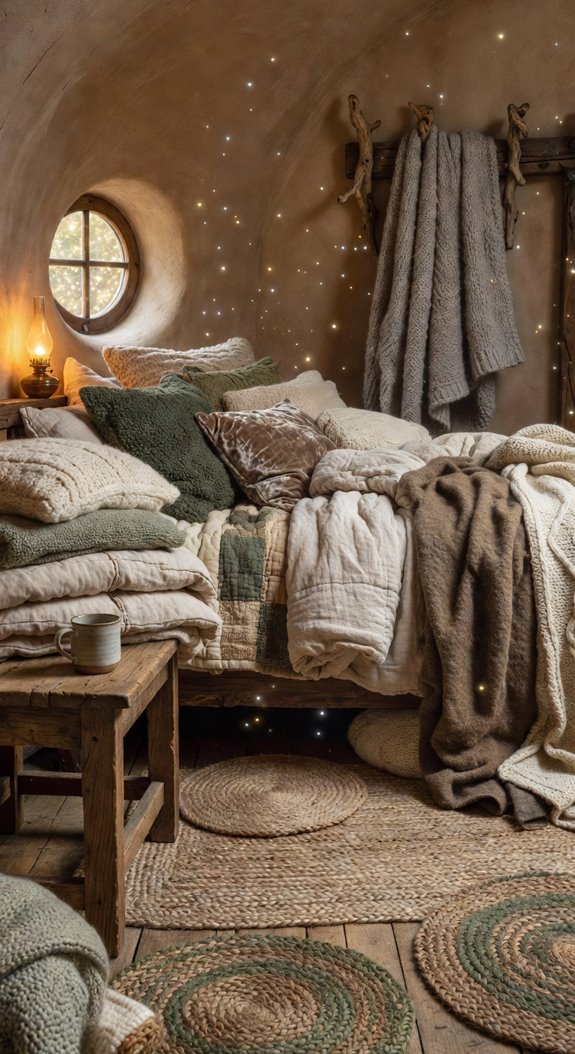
While round windows frame your view and draw the eye upward, your linens and textures ground the sensory experience, inviting you to actually rest within the space you’ve created. Layer organic cotton sheets — tightly woven, breathable, and naturally hypoallergenic — with chunky hand-knit merino wool blankets and heritage-weight wool throws in heathered, undyed tones, creating depth, visual warmth, and dimensional surface interest across your sleeping surface.
Choose earth-tone hues like muted sage green, warm unbleached cream, and oxidized rust, building a grounded, nature-inspired palette that soothes without feeling flat. Amplify the tactile landscape through stonewashed linen pillowcases with their characteristic rumpled, lived-in texture, alongside velvet cushions in plush cut-pile fabric that compress softly underhand, encouraging physical comfort, sensory deceleration, and genuine relaxation.
If you want to extend this cozy, grounded aesthetic beyond the bed itself, consider pulling oversized floor cushions and low-slung poufs into the room, since floor-seating arrangements naturally reinforce the same unhurried, hobbit-hole sensibility your layered textiles already establish.
—
Stone & Wood: Shire Materials For Authentic Charm
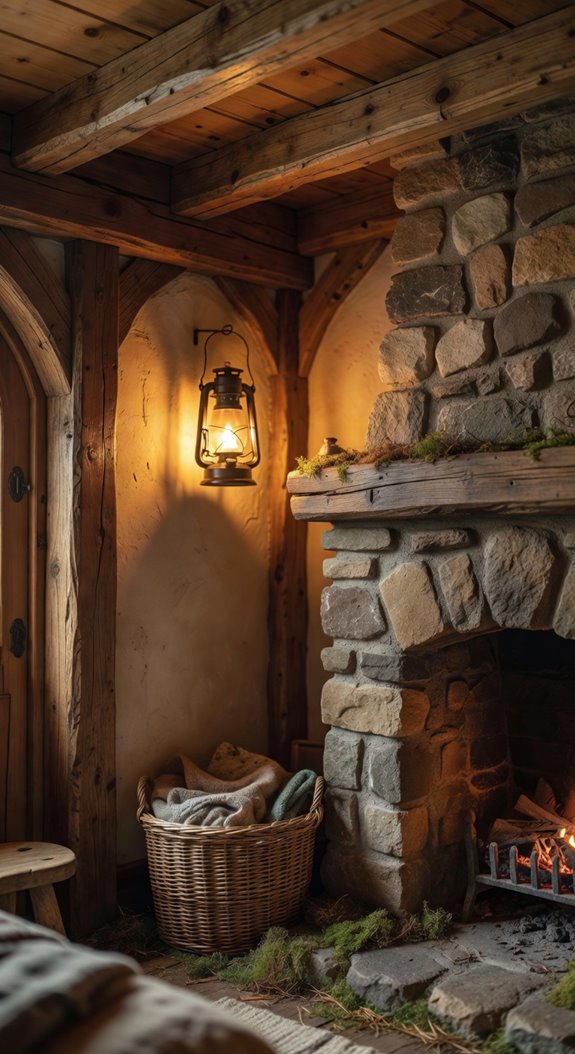
Materials ground a Hobbit-inspired bedroom in authenticity, connecting your space to Middle-earth’s tactile, enduring quality. Incorporate wooden bed frames with natural finishes, stone accent walls, or exposed wooden beams overhead.
Choose warm wood tones like oak or walnut, pairing them with slate or fieldstone elements. These carefully selected materials create visual warmth while establishing the rustic, organic foundation that defines Shire aesthetics throughout your bedroom design. Leaning into earth-centered fantasy design means prioritizing natural textures and handcrafted details that evoke the cozy, grounded charm of twelve Hobbit-inspired styles.
Reading Nooks: Built-In Shelving For Tolkien Fans
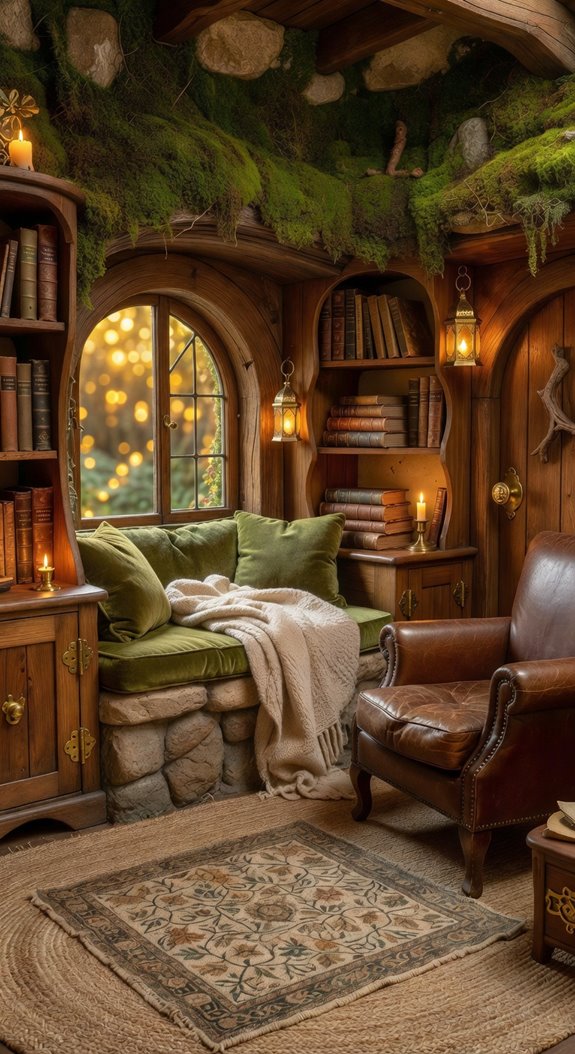
Where better to curl up with the complete works of Tolkien than in a custom reading nook built directly into your bedroom’s architecture? You’ll want built-in shelving crafted from rich, dark-stained oak or walnut, featuring deep, adjustable shelves with dovetail joinery and brass hardware, creating dedicated display space for leather-bound, gilt-embossed editions alongside hand-painted maps of Middle-earth.
Install recessed warm-toned Edison bulb lighting along the upper shelving crown molding, paired with a wall-mounted bronze sconce for directional task lighting. Add a thick, tufted cushioned window seat upholstered in forest-green velvet or aged burgundy leather, supported by a solid hardwood base with hidden storage drawers beneath. Complete the space with layered earth-toned textiles — heavyweight wool throws in moss green and burnt sienna, embroidered linen pillows, and a hand-knotted wool rug anchoring the floor space below.
Budget Hobbit Hacks: DIY Touches On Any Wallet
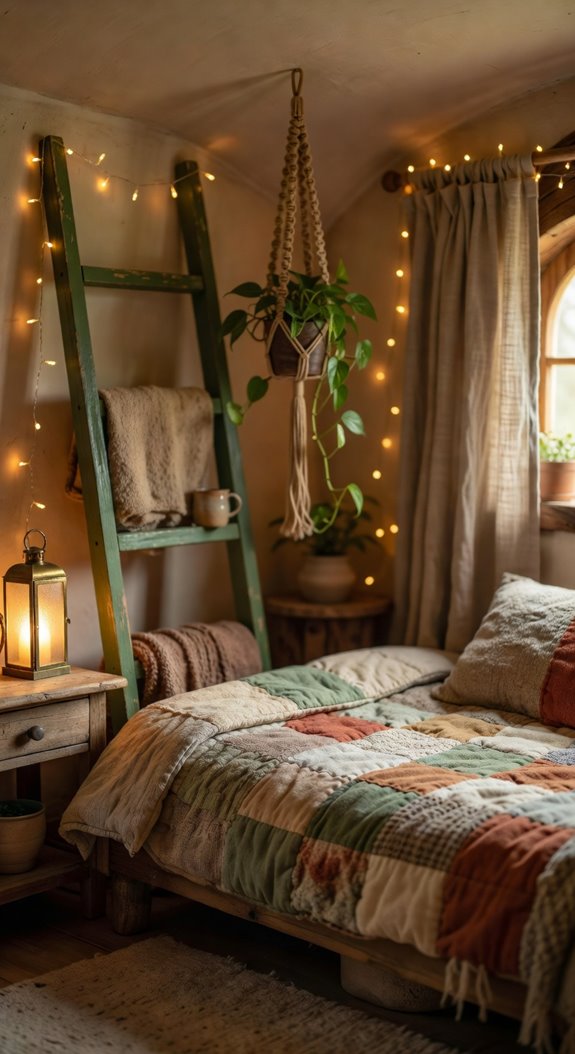
Paint accent walls in earthy tones like moss green, warm chestnut brown, or deep terracotta, then hang thrifted round wooden mirrors to mimic the iconic circular aesthetic. Seek out curved, low-profile secondhand furniture in dark oak or walnut finishes to anchor the space with organic authenticity.
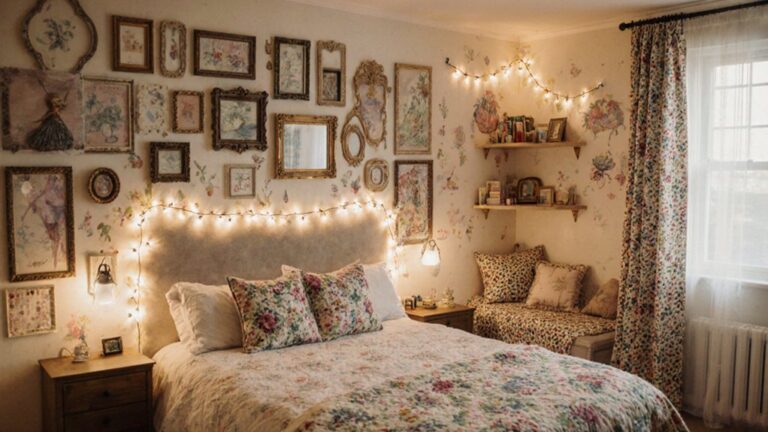
Layer budget-friendly warm-white string lights across exposed wooden ceiling beams or draped along canopy frames, then add linen, burlap, or velvet fabric swags to carve out cozy, cave-like nooks. Repurpose vintage wicker baskets, carved wooden crates, and ceramic crocks as textured storage solutions, weaving in tactile natural elements like jute rope, dried wildflowers, river stones, and wool throw blankets throughout every corner of the design.
How to Choose
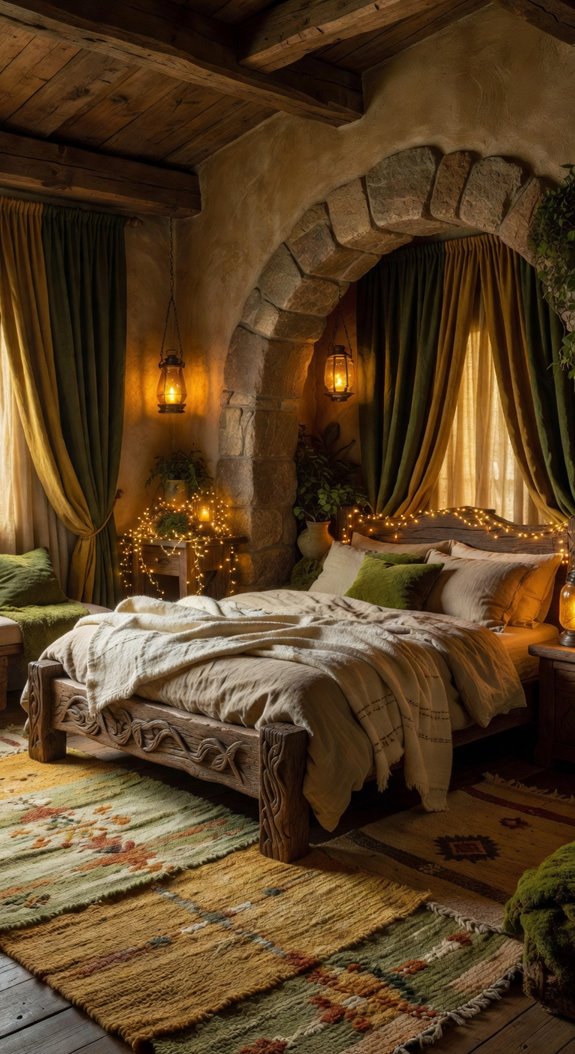
Once you’ve gathered thrifted pieces and painted your walls, selecting which elements actually belong in your space requires thoughtful consideration of scale, function, and overall cohesion. Measure doorways and furniture dimensions carefully, ensuring proportions match your room’s size — a queen-sized upholstered bed frame, for instance, demands at least 36 inches of clearance on each side for comfortable movement.
Prioritize ergonomic comfort and daily accessibility over purely decorative choices, placing frequently used items within arm’s reach. Group complementary colors, natural textures, and tactile materials together in intentional vignettes, avoiding visual clutter that disrupts the bedroom’s peaceful, restorative atmosphere.
Common Mistakes
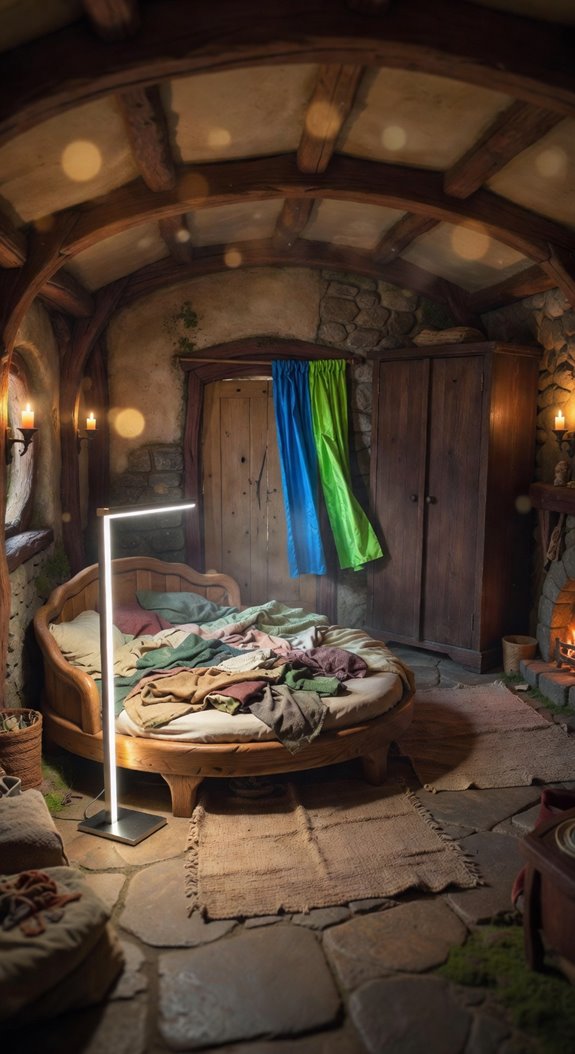
When designing a Hobbit-inspired bedroom, several pitfalls can undermine your vision and create a space that feels cluttered rather than enchanting. Overcrowding with excessive decorative elements — mismatched ceramic mushrooms, overlapping woven wall hangings, and stacked rustic wooden trinkets — disrupts the cozy, grounded aesthetic that defines the style. Neglecting warm, layered lighting in favor of harsh overhead fixtures creates a dim, sterile atmosphere that strips away the magical ambiance.
Using overly bright, saturated colors like electric blues or stark whites directly contradicts the essential warm, earthy palette of deep ochres, mossy greens, and rich chestnut browns. Ignoring scale and proportion when selecting furniture — particularly oversized angular pieces with sharp, modern lines — overwhelms the intimate, low-ceilinged spatial character that makes a Hobbit-inspired room feel authentically snug and intentional.
Final thoughts
Creating your Hobbit-inspired bedroom retreat begins with architectural character and foundational design choices. Incorporate rounded doorways with thick wooden frames, warm earth tones like burnt sienna, moss green, and deep ochre, and low-profile furniture — think squat oak bed frames and chunky upholstered armchairs — that cultivates an intimate, grounded atmosphere.
Layer your lighting intentionally, combining beeswax pillar candles in wrought-iron holders with amber-tinted Edison bulb fixtures to cast that signature golden, cave-like glow. Reinforce this warmth through natural textures: hand-hewn wooden shelving, linen and wool throws in heathered earth tones, braided jute rugs, and carved wooden accents throughout.
There’s no need to overhaul everything at once. Begin with one or two anchor elements — perhaps a curved doorway trim or a set of amber lanterns — then build your woodland sanctuary layer by layer over time.